



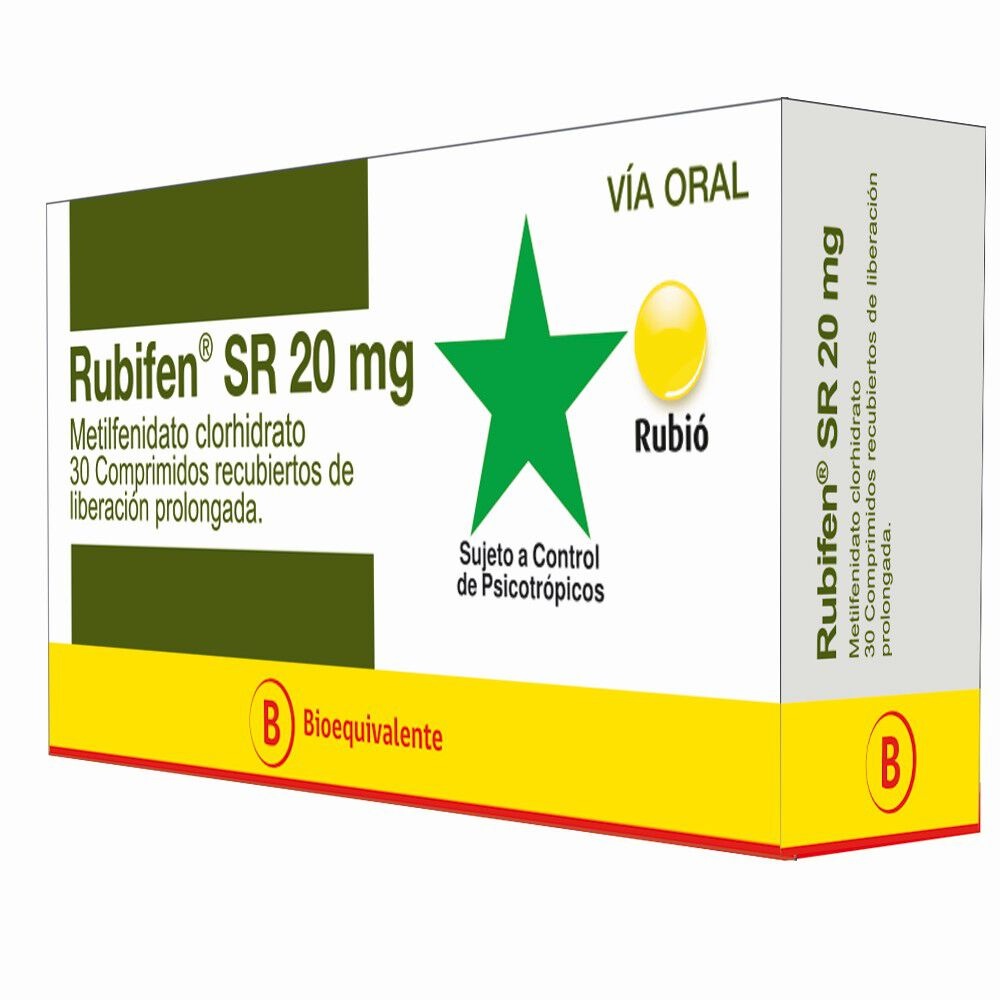
RUBIFEN 20 mg Tablets

Prescription review online
A doctor will review your case and decide whether a prescription is medically appropriate.

Talk to a doctor about this medicine
Discuss your symptoms and possible next steps in a quick online consultation.



How to use RUBIFEN 20 mg TABLETS
Contents of the leaflet
- Introduction
- What is Rubifen and what is it used for
- What you need to know before you or your child start taking Rubifen
- How to take Rubifen
- Possible Adverse Effects
- Storage of Rubifen
- Package Contents and Additional Information
Introduction
Patient Information: Summary of Product Characteristics
Rubifen 20 mg Tablets
Methylphenidate Hydrochloride
Read this entire leaflet carefully before you or your child start taking this medication, as it contains important information for you or your child.
- Keep this leaflet, as you may need to read it again.
- If you have any questions, consult your doctor or pharmacist.
- This medication has been prescribed to you or your child only, and you should not give it to others, even if they have the same symptoms as you or your child, as it may harm them.
- If you or your child experience side effects, consult your doctor or pharmacist, even if they are not listed in this leaflet. See section 4.
Contents of the Leaflet
- What is Rubifen and what is it used for
- What you need to know before you or your child start taking Rubifen
- How to take Rubifen
- Possible side effects
- Storage of Rubifen
- Package Contents and Additional Information
1. What is Rubifen and what is it used for
What it is used for
Rubifen is used to treat Attention Deficit Hyperactivity Disorder (ADHD).
- It is used in children and adolescents aged 6 to 18 years.
- It is used only after non-medication treatments, such as behavioral therapy and counseling, have been tried first.
Rubifen is not indicated for the treatment of ADHD in children under 6 years or in adults. Its safety and efficacy in these patients are not known.
How it works
Rubifen improves the activity of certain parts of the brain that are underactive. The medication may help improve attention (level of attention), concentration, and reduce impulsive behavior.
The medication is administered as part of a comprehensive treatment program, which usually includes:
- psychological therapy
- educational therapy and
- social therapy.
It is only prescribed by doctors who have experience in behavioral problems in children or adolescents. Although ADHD has no cure, it can be controlled using comprehensive treatment programs.
About ADHD
Children and adolescents with ADHD have:
- difficulty staying still and
- difficulty concentrating.
It is not their fault that they cannot do these things.
Many children and adolescents struggle to do them. However, patients with ADHD may have problems in daily life. Children and adolescents with ADHD may have difficulty learning and doing homework. They have difficulty behaving well at home, at school, and in other places.
ADHD does not affect the child's or adolescent's intelligence.

Not sure if this medicine is right for you?
Discuss your symptoms and treatment with a doctor online.
2. What you need to know before you or your child start taking Rubifen
Do not take Rubifen if you or your child:
- are allergic to methylphenidate or any of the other ingredients of this medication (listed in section 6)
- have a thyroid problem
- have high eye pressure (glaucoma)
- have a tumor of the adrenal glands (pheochromocytoma)
- have an eating disorder, loss of appetite, or do not want to eat, such as in "anorexia nervosa"
- have very high blood pressure or narrowing of the blood vessels, which can cause pain in the arms and legs
- have had heart problems such as a heart attack, irregular heartbeat, chest pain, heart failure, heart disease, or a congenital heart problem
- have had a problem with the blood vessels in the brain, such as a stroke, dilation or weakness of part of a blood vessel (aneurysm), narrowing or blockage of the blood vessels, or inflammation of the blood vessels (vasculitis)
- are taking or have taken in the last 14 days a certain type of antidepressant (known as a monoamine oxidase inhibitor). See "Other medications and Rubifen"
- have mental health problems such as:
- a "psychopathic" or "borderline personality" disorder
- abnormal thoughts or visions or a disease called "schizophrenia"
- signs of a severe mood disorder such as:
- suicidal thoughts
- severe depression, feeling very sad, worthless, and desperate
- mania, feeling exceptionally elated, more active than usual, and uninhibited.
Do not take methylphenidate if you or your child have any of the above. If you are unsure, inform your doctor or pharmacist before you or your child take methylphenidate. This is because methylphenidate may worsen these problems.
Warnings and precautions
Consult your doctor before starting to take Rubifen if you or your child:
- have liver or kidney problems
- have difficulty swallowing or swallowing whole tablets
- have a narrowing or blockage in the digestive system
- have had seizures (attacks, convulsions, epilepsy) or any alteration in the electroencephalogram (EEG, a brain study)
- have ever abused or been dependent on alcohol, prescription medications, or drugs
- are female and have started having periods (see below the section on "Pregnancy and breastfeeding")
- have difficulty controlling repetitive movements of some parts of the body or repeated sounds and words
- have high blood pressure
- have a heart problem not included in the previous section "Do not take methylphenidate if you or your child"
- have a mental health problem not included in the previous section "Do not take methylphenidate if you or your child". Other mental health problems include:
- mood changes (from being manic to being depressed, known as "bipolar disorder")
- experiencing aggressive or hostile behavior, or worsening aggression
- seeing, hearing, or feeling things that are not there (hallucinations)
- believing things that are not real (delusions)
- feeling unusually suspicious (paranoia)
- feeling agitated, anxious, or tense
- feeling depressed or guilty
- onset of puberty.
Inform your doctor or pharmacist if you or your child have any of the above before starting treatment. This is because methylphenidate may worsen these problems. Your doctor will want to monitor how the medication affects you or your child.
During treatment, children and adolescents may unexpectedly experience prolonged erections. Erections can be painful and occur at any time. It is essential to contact your doctor immediately if the erection lasts more than 2 hours, especially if it is painful.
Checks your doctor will perform before you or your child start treatment with methylphenidate
To decide if methylphenidate is the right medication for you or your child, your doctor will discuss with you:
- the medications you or your child are taking
- if you or your child have a family history of sudden unexplained death
- other diseases that you or your family (such as heart problems) may have
- how you or your child are feeling, if you or your child have mood swings, have unusual thoughts, or have had such feelings in the past
- if there have been cases of tics in your family (difficulty controlling repetitive movements of some parts of the body or repeated sounds and words)
- possible behavioral or mental health problems that you or your child have had. Your doctor will explain specifically if you or your child are at risk of experiencing mood changes (from being manic to being depressed, known as bipolar disorder). Your doctor will check your or your child's mental health history and check if any family members have a history of suicide, bipolar disorder, or depression.
It is essential to provide all the information you can. This will help your doctor decide if methylphenidate is the right medication for you or your child. Your doctor may decide that you or your child need other medical tests before starting to take this medication.
Other medications and Rubifen
Inform your doctor or pharmacist if you or your child are taking, have recently taken, or may need to take any other medication, including those purchased without a prescription.
Do not take methylphenidate if you or your child:
- are taking a medication called a "monoamine oxidase inhibitor" (MAOI) used for depression or have taken an MAOI in the last 14 days. Taking an MAOI with methylphenidate can cause a sudden increase in blood pressure.
If you or your child are taking other medications, methylphenidate may affect how they work or cause side effects. If you or your child are taking any of the following medications, consult your doctor or pharmacist before taking methylphenidate:
- other medications for depression
- medications for severe mental health problems
- medications for epilepsy
- medications used to decrease or increase blood pressure
- certain cough and cold remedies that contain medications that can affect blood pressure. It is essential to consult your pharmacist when purchasing any of these medications
- medications that thin the blood to prevent clot formation.
If you are unsure if any of the medications you or your child are taking are included in the above list, consult your doctor or pharmacist for advice before taking methylphenidate.
Before an operation
Inform your doctor if you or your child are going to have an operation. You should not take methylphenidate on the day of the operation with certain types of anesthetics, as it may cause a sudden increase in blood pressure during the procedure.
Drug tests
This medication may give a positive result in drug tests, even in tests used in sports.
Taking Rubifen with food, drinks, and alcohol
Taking methylphenidate with food may help alleviate stomach pain, nausea, or vomiting.
Do not drink alcohol while taking this medication. Alcohol may worsen the side effects of this medication. Remember that some foods and medications contain alcohol.
Pregnancy and breastfeeding
Available data do not suggest an increased risk of total congenital anomalies, although a small increased risk of cardiac malformations during its use in the first three months of pregnancy cannot be ruled out. Your doctor will provide more information about this risk. Consult your doctor or pharmacist before using methylphenidate if you or your daughter:
- are having sex. Your doctor will discuss contraception with you
- are pregnant or think you may be pregnant. Your doctor will decide if you should use methylphenidate
- are breastfeeding or plan to breastfeed. Methylphenidate may pass into human milk. Therefore, your doctor will decide if you or your daughter should breastfeed while using methylphenidate.
Driving and using machines
You or your child may experience dizziness, difficulty focusing, or blurred vision when taking methylphenidate. If this occurs, it may be dangerous to perform certain activities such as driving, operating machinery, riding a bicycle or horse, or climbing trees.
3. How to take Rubifen
How much to take
Follow your doctor's instructions for taking this medication exactly. If you are unsure, consult your doctor or pharmacist again.
Your doctor will usually start treatment with a low dose and gradually increase it as needed.
- The maximum daily dose is 60 milligrams.
- The tablet should be swallowed with a glass of water. It is recommended to take the tablets with meals.
The score line is only for breaking the tablet if you find it difficult to swallow it whole, but not for dividing it into equal doses.
If you or your child do not feel better after 1 month of treatment
If you or your child do not feel better, inform your doctor. They may decide if you need a different treatment.
Incorrect use of Rubifen
If Rubifen is not used correctly, it may cause abnormal behavior. This may also mean that you or your child start to depend on the medication. Inform your doctor if you or your child have ever abused or been dependent on alcohol, prescription medications, or drugs.
This medication is only for you or your child. Do not give this medication to anyone else, even if they have similar symptoms.
If you or your child take more Rubifen than you should
If you or your child take too many tablets, consult your doctor immediately or go to the emergency department of the nearest hospital and tell them how many tablets were taken. You can also contact the Toxicology Information Service, phone 91 562 04 20.
Signs of overdose may include: being sick, agitation, tremors, increased uncontrolled movements, muscle contractions, seizures (which can be followed by coma), feeling very happy, confusion, seeing, hearing, or feeling things that are not there (hallucinations), sweating, flushing, headache, high fever, changes in heart rate (slow, fast, or irregular), high blood pressure, dilated pupils, and dryness of the nose and mouth.
If you or your child forget to take Rubifen
Do not take a double dose to make up for forgotten doses. If you or your child forget a dose, wait and take the next dose at the scheduled time.
If you or your child stop taking Rubifen
If you or your child suddenly stop taking this medication, ADHD symptoms may reappear or unwanted effects such as depression may occur. Your doctor may want to gradually reduce the amount of medication you or your child take each day before stopping it completely. Consult your doctor before stopping treatment with Rubifen.
What your doctor will do while you or your child are on treatment
Your doctor will perform some tests
- before you or your child start treatment to ensure that Rubifen is safe and beneficial
- once treatment has started, at least every 6 months and even more often
- also when the dose is changed
- these tests will include:
- appetite control
- height and weight measurement
- blood pressure and heart rate measurement
- evaluation of mood-related problems, mental state, or any other unusual feelings. Or if these have worsened while taking Rubifen.
Long-term treatment
Rubifen does not need to be taken indefinitely. If you or your child take Rubifen for more than a year, your doctor should interrupt treatment for a short period, such as during school holidays. This allows demonstration of whether you or your child still need the medication.
If you have any further questions about the use of this medication, ask your doctor or pharmacist.

Started taking the medicine and have questions?
Discuss your symptoms and treatment with a doctor online.
4. Possible Adverse Effects
Like all medicines, this medicine can cause adverse effects, although not all people suffer from them. Although some people present adverse effects, most people metilfenidato helps. Your doctor will inform you about these adverse effects.
Some adverse effects can be serious. If you or your child have any of the following adverse effects, go to your doctor immediately:
Frequent (affects less than1in 10people)
- Irregular heartbeats (palpitations)
- Changes or alterations in mood or personality changes
Uncommon (affects less than 1 in 100 people)
- Suicidal thoughts or feelings
- Seeing, feeling, or hearing things that are not real, symptoms of psychosis
- Uncontrolled speech and body movements (Tourette's syndrome)
- Signs of allergy such as rash, itching, or hives on the skin, swelling of the face, lips, tongue, or other parts of the body, shortness of breath, difficulty breathing, or breathing problems
Rare (affects less than 1 in 1,000 people)
- Feeling exceptionally excited, more active than normal, and uninhibited (mania)
Very Rare (affects less than 1 in 10,000 people)
- Myocardial infarction
- Seizures (attacks, convulsions, epilepsy)
- Peeling of the skin or red purpuric spots
- Uncontrolled muscle spasms affecting the eyes, head, neck, body, and nervous system due to lack of blood circulation to the brain
- Paralysis or problems with movement and vision, difficulty speaking (may be signs of blood vessel problems in the brain)
- Decreased number of blood cells (red blood cells, white blood cells, and platelets) that can cause a higher risk of infections and make bleeding and bruising easier
- Sudden increase in body temperature, very high blood pressure, and severe convulsions ("Malignant Neuroleptic Syndrome"). It is not entirely certain that this adverse effect is caused by metilfenidato or other medications taken in combination with metilfenidato
Other Adverse Effects (Frequency Unknown)
- Unwanted thoughts that recur
- Unexplained fainting, chest pain, shortness of breath (may be signs of heart problems)
If you or your child have any of the above adverse effects, go to your doctor immediately.
Other adverse effects are indicated below. If they become severe, please inform your doctor or pharmacist:
Very Common (affects more than 1 in 10 people)
- Headache
- Feeling of nervousness
- Difficulty sleeping
Common (affects less than 1 in 10 people)
- Joint pain
- Dry mouth
- Elevated temperature (fever)
- Abnormal hair loss or decreased hair thickness (thinner hair)
- Somnolence or excessive drowsiness
- Loss of appetite or decreased appetite
- Itching, rash, or increased itching of red hives (urticaria)
- Cough, sore throat, and irritation of the throat or nose
- High blood pressure, rapid heartbeat (tachycardia)
- Feeling of dizziness, uncontrolled movements, excessive activity
- Aggression, agitation, anxiety, depression, irritability, and abnormal behavior
- Abdominal pain, diarrhea, nausea, gastric discomfort, and vomiting
- Excessive teeth grinding (bruxism)
Uncommon (affects less than1in 100people)
- Constipation
- Chest discomfort
- Blood in the urine
- Agitation or tremor
- Double vision or blurred vision
- Muscle pain, muscle twitches
- Shortness of breath or chest pain
- Increased liver test results (seen in blood tests)
- Anger reaction (anger), restless or tearful, excessive awareness of the environment, sleep problems
Rare (affects less than1in 1,000people)
- Changes or alterations in sexual desire
- Feeling disoriented
- Dilated pupils, vision problems
- Chest swelling in men
- Excessive sweating, skin redness, increased redness of skin rashes
Very Rare (affects less than1in 10,000people)
- Myocardial infarction
- Sudden death
- Muscle cramps
- Small red spots on the skin
- Inflammation or blockage of the arteries in the brain
- Abnormal liver function, including liver failure and coma
- Changes in test results, including liver and blood tests
- Suicidal ideation (including completed suicide), abnormal thinking, absence of feelings or emotion, doing things over and over, obsession with something
- Fingers and toes numbness, tingling, and color change with cold (from white to blue to red) ("Raynaud's phenomenon")
Other Adverse Effects (Frequency Unknown)
- Migraine
- Very high fever
- Slow, fast, or irregular heartbeats, palpitations
- Major epileptic seizure ("grand mal" convulsions)
- Believing things that are not true, confusion
- Severe stomach pain with a feeling of discomfort and vomiting
- Problems with the blood vessels in the brain (stroke, cerebral arteritis, or cerebral occlusion)
- Erectile dysfunction
- Excessive and uncontrolled speech
- Prolonged erections, sometimes painful, or increased number of erections
- Inability to control urine elimination (incontinence)
- Spasm of the jaw muscles that makes it difficult to open the mouth (trismus)
- Stuttering
- Nosebleed
Effects on Growth
When used for more than a year, metilfenidato may reduce growth in some children. This affects less than 1 in 10 children.
- It may prevent weight or height gain.
- Your doctor will carefully check the height and weight of you or your child, as well as their diet.
- If you or your child are not growing as expected, then treatment with metilfenidato may be interrupted for a short period.
Reporting Adverse Effects
If you experience any type of adverse effect, consult your doctor or pharmacist, even if it is a possible adverse effect that does not appear in this prospectus. You can also report them directly through the Spanish Medicines and Healthcare Products Agency (AEMPS) website: https://www.notificaRAM.es. By reporting adverse effects, you can contribute to providing more information on the safety of this medicine.
5. Storage of Rubifen
Keep this medicine out of sight and reach of children.
Do not use this medicine after the expiration date that appears on the packaging after CAD:. The expiration date is the last day of the month indicated.
Do not store at a temperature above 30°C.
Medicines should not be thrown away through the sewers or in the trash. Deposit the packaging of medicines that you no longer need in the SIGRE point of the pharmacy. In case of doubt, ask your pharmacist how to dispose of the packaging and medicines that you no longer need. This way, you will help protect the environment.
6. Package Contents and Additional Information
Composition ofRubifen 20 mg
The active ingredient is metilfenidato hydrochloride.
Each Rubifen 20 mg tablet contains 20 mg of metilfenidato hydrochloride.
The other components are dibasic calcium phosphate dihydrate, microcrystalline cellulose (E460i), cornstarch, and magnesium stearate (E470b).
Appearance of the Product and Package Contents
Rubifen 20 mg tablets are scored, white, round, and flat, marked "RU 20" on one side.
Each package contains 20, 30, 40, 50, or 100 tablets. Only some package sizes may be marketed.
Marketing Authorization Holder and Manufacturer
Laboratorios Rubió, S.A.
C/ Industria, 29. Pol. Ind. Comte de Sert.
08755 Castellbisbal (Barcelona) - Spain
This medicine is authorized in the Member States of the European Economic Area under the following names:
Germany: Methylpheni TAD 20 mg Tabletten
Spain: Rubifen 20 mg Comprimidos
Portugal: Rubifen 20 mg Comprimidos
Date of the Last Revision of this Prospectus: April 2024
Other Sources of Information
Detailed information about this medicine is available on the website of the Spanish Agency for Medicines and Healthcare Products (AEMPS) (http://www.aemps.gob.es/)
- Country of registration
- Dosage formTABLET, 20 mg
- ATC codeN06BA04
- Average pharmacy price5.71 EUR
- Active substance
- Prescription requiredYes
- Manufacturer
- This information is for reference only and does not constitute medical advice. Always consult a doctor before taking any medication. Oladoctor is not responsible for medical decisions based on this content.
- Alternatives to RUBIFEN 20 mg TABLETSDosage form: MODIFIED-RELEASE TABLET, 18 mgActive substance: methylphenidateManufacturer: Exeltis Healthcare S.L.Prescription requiredDosage form: MODIFIED-RELEASE TABLET, 27 mgActive substance: methylphenidateManufacturer: Exeltis Healthcare S.L.Prescription requiredDosage form: MODIFIED-RELEASE TABLET, 36 mgActive substance: methylphenidateManufacturer: Exeltis Healthcare S.L.Prescription required
Online doctors for RUBIFEN 20 mg TABLETS
Discuss questions about RUBIFEN 20 mg TABLETS, including use, safety considerations and prescription review, subject to medical assessment and local regulations.









Get RUBIFEN 20 mg TABLETS Prescription Online
Fill in a 2-min form
Tell us your symptoms, history, and what medicine you're requesting.
Pick a doctor or let us assign
Choose a specialist or we'll match you with the next available doctor.
Doctor reviews your case
Usually within 30 minutes. They may ask follow-up questions via chat.
Collect from any pharmacy
Electronic prescription sent to your email — valid across Spain.
Frequently Asked Questions
RUBIFEN 20 mg TABLETS requires a prescription in Spain. You can check with a doctor online whether this medicine may be appropriate for your situation.
The active ingredient in RUBIFEN 20 mg TABLETS is methylphenidate. This information helps identify medicines with the same composition but different brand names.
The average pharmacy price for RUBIFEN 20 mg TABLETS is around 5.71 EUR. Prices may vary depending on the manufacturer and dosage form.
RUBIFEN 20 mg TABLETS is manufactured by Laboratorios Rubio S.A.. Pharmacy brands and packaging may differ depending on the distributor.
Doctors such as Family doctors, Psychiatrists, Dermatologists, Cardiologists, Endocrinologists, Gastroenterologists, Pulmonologists, Nephrologists, Rheumatologists, Hematologists, Infectious disease physicians, Allergists, Geriatricians, Paediatricians, Oncologists may assess whether RUBIFEN 20 mg TABLETS is appropriate, depending on your situation and local regulations. You can book an online consultation to discuss your symptoms and possible next steps.
Spain has a well-developed healthcare infrastructure across major cities such as Madrid, Barcelona, Valencia, and Seville. Pharmacies are widely available and operate under strict regulations, ensuring access to prescribed medications.
You can buy RUBIFEN 20 mg TABLETS in Madrid, Barcelona, Seville, or Valencia at any local pharmacy with a valid prescription.
To obtain a prescription, you can use Oladoctor:
Other medicines with the same active substance (methylphenidate) include ATENZA 18 mg PROLONGED-RELEASE TABLETS, ATENZA 27 mg PROLONGED-RELEASE TABLETS, ATENZA 36 mg PROLONGED-RELEASE TABLETS. These may have different brand names or formulations but contain the same therapeutic ingredient. Always consult a doctor before switching or starting a new medicine.
