



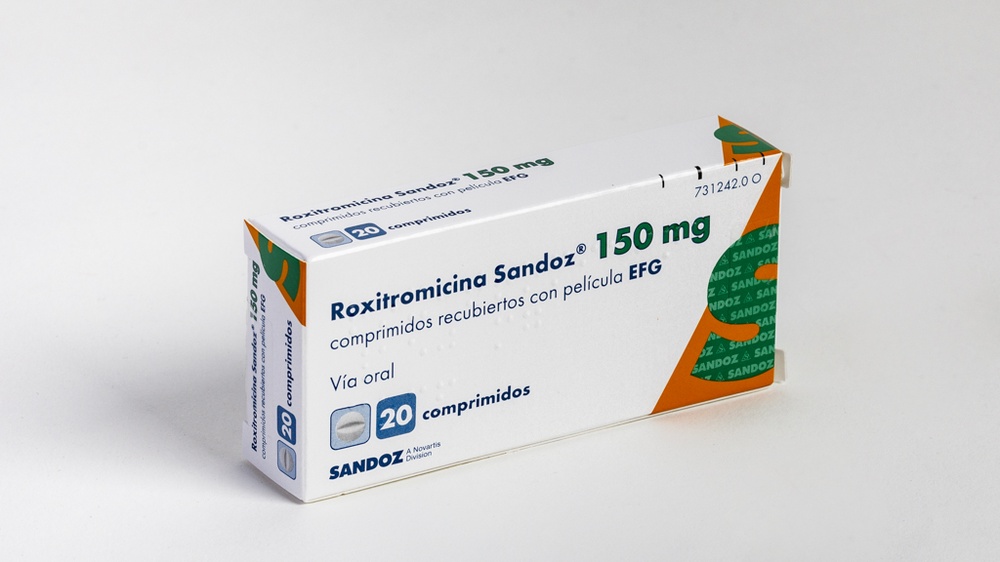
ROXITROMICINA 150 mg Film-Coated Tablets

Prescription review online
A doctor will review your case and decide whether a prescription is medically appropriate.

Talk to a doctor about this medicine
Discuss your symptoms and possible next steps in a quick online consultation.



How to use ROXITROMYCIN SANDOZ 150 mg FILM-COATED TABLETS
Contents of the leaflet
- Introduction
- What Roxithromycin Sandoz is and what it is used for
- What you need to know before taking Roxithromycin Sandoz
- How to take Roxithromycin Sandoz
- Possible side effects
- Storage of Roxithromycin Sandoz
- Package contents and additional information
Introduction
Package Leaflet: Information for the User
Roxithromycin Sandoz 150 mg film-coated tablets EFG
Roxithromycin Sandoz 300 mg film-coated tablets EFG
Read the entire package leaflet carefully before starting to take this medication, as it contains important information for you.
- Keep this package leaflet, as you may need to read it again.
- If you have any questions, consult your doctor or pharmacist.
- This medication has been prescribed to you and should not be given to others, even if they have the same symptoms as you, as it may harm them.
- If you experience side effects, consult your doctor or pharmacist, even if they are not listed in this package leaflet. See section 4.
Contents of the package leaflet:
- What Roxithromycin Sandoz is and what it is used for
- What you need to know before taking Roxithromycin Sandoz
- How to take Roxithromycin Sandoz
- Possible side effects
- Storage of Roxithromycin Sandoz
Package contents and additional information
1. What Roxithromycin Sandoz is and what it is used for
Roxithromycin Sandoz contains 150 and 300 mg of roxithromycin as the active ingredient.
Roxithromycin belongs to a group of antibiotics called macrolide antibiotics.
Antibiotics are used to treat bacterial infections and are not effective against viral infections such as the flu or the common cold. It is essential to follow the dosage, administration, and treatment duration instructions provided by your doctor. Do not store or reuse this medication. If you have any leftover antibiotic after completing the treatment, return it to the pharmacy for proper disposal. Do not throw away medications down the drain or in the trash. |
It is used to treat the following infections:
- upper and lower respiratory tract infections, such as otitis (ear inflammation), sinusitis (inflammation of the nasal mucosa), pharyngitis (inflammation of the pharynx, throat), tonsillitis (inflammation of the tonsils), bronchitis (inflammation of the bronchi), and pneumonia (infection in the lungs),
- skin and soft tissue infections (tissues that are not bones, such as muscles, fat, nerves, tendons, blood, and vessels),
- urinary tract infections.

Not sure if this medicine is right for you?
Discuss your symptoms and treatment with a doctor online.
2. What you need to know before taking Roxithromycin Sandoz
Do not take Roxithromycin Sandoz if:
- you are allergic to roxithromycin or any of the other ingredients of this medication (listed in section 6),
- you are allergic to any other macrolide antibiotic,
- you are being treated with certain medications called ergot alkaloids derived from ergot of rye,
- you have severe liver disease,
- you are taking medications with a narrow therapeutic window and that are substrates of CYP3A4 (e.g., astemizole, cisapride, pimozide, and terfenadine).
Warnings and precautions
Consult your doctor or pharmacist before starting to take roxithromycin.
- Before starting treatment with roxithromycin, your doctor should check that you are not being treated with ergot alkaloids derived from ergot of rye.
- Inform your doctor if you have any liver disease, as it may be necessary to perform periodic tests and even reduce your dose. In cases of severe liver failure, the use of roxithromycin is not recommended.
- If you experience diarrhea during treatment with this medication or after completing the treatment, inform your doctor.
- If you have any heart disease or are receiving medications for cardiac arrhythmias, inform your doctor.
- Caution should be exercised if you are being treated with other medications that may prolong the QT interval (see section "Using Roxithromycin Sandoz with other medications").
- If you have myasthenia gravis (a chronic muscular disease characterized by fatigue and weakness), your condition may worsen.
- If you experience a severe and widespread skin rash with blistering or peeling of the skin, as well as flu-like symptoms and fever (Stevens-Johnson syndrome), general discomfort, fever, chills, and muscle pain (toxic epidermal necrolysis) or a red and scaly rash with bumps under the skin and blisters (acute generalized exanthematous pustulosis), consult a doctor as soon as possible, as these skin effects can be life-threatening.
- If you are a patient with rare hereditary problems of galactose intolerance, Lapp lactase deficiency, or glucose-galactose malabsorption, you should not take this medication.
Kidney disease: No dose adjustment is necessary in cases of renal insufficiency.
Elderly population: No dose adjustment is necessary.
Pediatric population: The doctor may decide to reduce the dose. Roxithromycin should not be used in children under 4 years of age.
Other medications and Roxithromycin Sandoz
Inform your doctor or pharmacist if you are using, have recently used, or may need to use any other medication.
Roxithromycin may interact with other medications. Inform your doctor or pharmacist if you are taking any of the following medications:
These medications should not be taken with Roxithromycin Sandoz:
- Ergot alkaloids derived from ergot of rye, used to treat migraines and uterine bleeding.
- Terfenadine or astemizole (for allergies), cisapride (for gastrointestinal disorders), and pimozide (for psychiatric disorders). Treatment with roxithromycin and these medications may cause cardiac rhythm disturbances.
It is essential to inform your doctor if you are taking:
- medications that may prolong the QT interval and other heart medications for the treatment of cardiac arrhythmias (e.g., quinidine, procainamide, disopyramide, dofetilide, amiodarone), citalopram, some antidepressants, methadone, some antipsychotics (e.g., phenothiazines), fluoroquinolones (e.g., moxifloxacin), some antifungal medications (e.g., fluconazole, pentamidine), and some antiviral medications (e.g., telaprevir),
- digoxin and other cardiac glycosides,
- midazolam, used to treat sleep disorders,
- anticoagulants (vitamin K antagonists), such as warfarin (medications that make blood less thick),
- theophylline,
- bromocriptine,
- cyclosporine,
- rifabutin,
- oral contraceptives containing estrogen and progestogen,
- HMG-CoA reductase inhibitors (statins). There is a possibility of increased muscle side effects when these medications are taken with roxithromycin.
Taking Roxithromycin Sandoz with food and drinks
It is recommended to take the medication before meals.
Pregnancy and breastfeeding
If you are pregnant or breastfeeding, think you may be pregnant, or plan to become pregnant, consult your doctor or pharmacist before using this medication.
If you are pregnant or think you may be pregnant, your doctor may decide not to prescribe this medication, although there may be cases where they decide to prescribe it anyway.
Roxithromycin passes into breast milk in small amounts; therefore, treatment should be discontinued or breastfeeding should be suspended, as necessary.
Driving and using machines
Do not drive or perform tasks that require special attention while being treated with roxithromycin, as you may experience dizziness, visual disturbances, and blurred vision, which can affect your ability to drive and operate machinery.
Roxithromycin contains lactose and sodium
If your doctor has told you that you have an intolerance to certain sugars, consult with them before taking this medication.
This medication contains less than 23 mg of sodium (1 mmol) per film-coated tablet; it is essentially "sodium-free".
3. How to take Roxithromycin Sandoz
Follow your doctor's instructions for taking this medication exactly. If you have any doubts, consult your doctor or pharmacist again.
The recommended dose is 300 mg per day, divided into 150 mg every 12 hours, or one 300 mg tablet once a day.
If gastrointestinal discomfort occurs, your doctor may consider administering the medication as one 150 mg tablet twice a day.
Roxithromycin should be taken orally, preferably before meals. The tablets should be swallowed with a sufficient amount of water. The score line is only for breaking the tablet if you find it difficult to swallow whole.
If you take more Roxithromycin Sandoz than you should
If you have taken more roxithromycin than you should, consult your doctor, pharmacist, or call the Toxicology Information Service at 91 562 04 20, indicating the medication and the amount used.
If you forget to take Roxithromycin Sandoz
Do not take a double dose to make up for forgotten doses.
If you interrupt treatment with Roxithromycin Sandoz
Take the medication until the treatment is completed. Do not interrupt it, even if you feel better. The medication may not have finished eliminating all the germs, and there is a risk of getting sick again.
If you have any other questions about using this medication, ask your doctor or pharmacist.

Started taking the medicine and have questions?
Discuss your symptoms and treatment with a doctor online.
4. Possible side effects
Like all medications, this medication can cause side effects, although not everyone will experience them.
Adverse reactions are listed in decreasing order of severity within each frequency category according to the system organ classification:
Very common: may affect more than 1 in 10 patients
Common: may affect up to 1 in 10 patients
Uncommon: may affect up to 1 in 100 patients
Rare: may affect up to 1 in 1,000 patients
Very rare: may affect up to 1 in 10,000 patients
Frequency not known (cannot be estimated from available data)
Infections and infestations:
Frequency not known: superinfection (with prolonged use). As with other broad-spectrum antibiotics, the development of Clostridium difficile-associated colitis (pseudomembranous colitis) has been reported in patients treated with macrolides.
Blood and lymphatic system disorders:
Uncommon: Eosinophilia.
Frequency not known: Agranulocytosis, neutropenia, and thrombocytopenia.
Immune system disorders:
Frequency not known: Anaphylactic shock.
Psychiatric disorders:
Frequency not known: Hallucinations, confusional state (confusion).
Nervous system disorders:
Common: Dizziness, headaches.
Frequency not known: Paresthesia. As with other macrolides, taste disturbances (dysgeusia), ageusia, and/or olfactory disturbances (parosmia), anosmia have been observed.
Eye disorders:
Frequency not known: Visual disturbance. Vision problems (blurred vision).
Ear and labyrinth disorders:
Frequency not known: Temporary hearing loss, hypoacusis (hearing loss), vertigo, and tinnitus.
Respiratory, thoracic, and mediastinal disorders:
Frequency not known: Bronchospasm.
Gastrointestinal disorders:
Common: Nausea, vomiting, dyspepsia (epigastric pain, relatively more frequent with the use of 300 mg tablets), diarrhea.
Frequency not known: Hemorrhagic diarrhea and pancreatitis.
Hepatobiliary disorders:
Frequency not known: Cholestatic or acute hepatocellular hepatitis.
Skin and subcutaneous tissue disorders:
Common: Skin rash.
Uncommon: Erythema multiforme, urticaria.
Frequency not known: Angioedema, purpura, Stevens-Johnson syndrome, and toxic epidermal necrolysis.
Severe skin reactions:
Contact a doctor as soon as possible if you experience a severe skin reaction: a red and scaly rash with bumps under the skin and blisters (acute generalized exanthematous pustulosis). The frequency of this adverse effect is considered unknown (cannot be estimated from available data).
Investigations:
Frequency not known: Increased liver enzymes ASAT, ALAT, and/or alkaline phosphatase.
Cardiac disorders:
Frequency not known: Prolongation of the QT interval, ventricular tachycardia, and Torsades de Pointes disease.
Reporting of side effects
If you experience any side effects, consult your doctor or pharmacist, even if they are not listed in this package leaflet. You can also report them directly through the Spanish Pharmacovigilance System for Human Use Medications: https://www.notificaram.es. By reporting side effects, you can contribute to providing more information on the safety of this medication.
5. Storage of Roxithromycin Sandoz
No special storage conditions are required.
Keep this medication out of sight and reach of children.
Do not use this medication after the expiration date shown on the packaging and blister after "EXP". The expiration date is the last day of the month indicated.
Medications should not be thrown away down the drain or in the trash. Deposit the packaging and unused medications at the SIGRE collection point in the pharmacy. If you have any doubts, ask your pharmacist how to dispose of the packaging and unused medications. This will help protect the environment.
6. Package contents and additional information
Composition of Roxithromycin Sandoz
- The active ingredient is roxithromycin.
Roxithromycin Sandoz 150 mg:
Each film-coated tablet contains 150 mg of roxithromycin.
Roxithromycin Sandoz 300 mg:
Each film-coated tablet contains 300 mg of roxithromycin.
- The other ingredients are:
Core of the tablet: microcrystalline cellulose (E 460), povidone K30, sodium croscarmellose, colloidal silicon dioxide, poloxamer 188, magnesium stearate (E 572).
Tablet coating: white coating premix based on HPMC (lactose monohydrate, titanium dioxide (E 171), hypromellose, macrogol).
Appearance of the product and package contents
The film-coated tablets are packaged in PVC/Al blisters.
Roxithromycin Sandoz 150 mg:
They are white, round, biconvex film-coated tablets, scored on one side and marked with "R150" on the other.
The score line is only for breaking the tablet if you find it difficult to swallow whole.
Each PVC/Al package contains 12 and 20 tablets.
Roxithromycin Sandoz 300 mg:
They are white, round, biconvex film-coated tablets, scored on one side and marked with "R300" on the other.
The score line is only for breaking the tablet if you find it difficult to swallow whole.
Each PVC/Al package contains 7 and 10 tablets.
Not all package sizes may be marketed.
Marketing authorization holder and manufacturer
Marketing authorization holder:
Sandoz Farmacéutica, S.A.
Centro Empresarial Parque Norte
Edificio Roble
C/ Serrano Galvache, 56
28033 Madrid
Spain
Manufacturer:
S.C. Sandoz, S.R.L.
Str. Livezeni nr. 7A,
RO-540472 Targu-Mures
Romania
or
Salutas Pharma GMBH
Otto Von Guericke Alle, 1
39179 Barleben
Germany
Date of the last revision of this package leaflet: September 2021.
Detailed and updated information on this medication is available on the website of the Spanish Agency for Medicines and Health Products (AEMPS) http://www.aemps.gob.es/.
- Country of registration
- Dosage formTABLET, 150 mg
- ATC codeJ01FA06
- Average pharmacy price9.83 EUR
- Active substance
- Prescription requiredYes
- Manufacturer
- CompositionCROSCARMELOSA SODICA (10,50 mg mg), LACTOSA (3,6 mg mg)
- This information is for reference only and does not constitute medical advice. Always consult a doctor before taking any medication. Oladoctor is not responsible for medical decisions based on this content.
- Alternatives to ROXITROMYCIN SANDOZ 150 mg FILM-COATED TABLETSDosage form: TABLET, 300 mgActive substance: roxithromycinManufacturer: Sandoz Farmaceutica S.A.Prescription requiredDosage form: ORAL SOLUTION/SUSPENSION, 200 mg azithromycin / 5 mlActive substance: azithromycinManufacturer: Arafarma Group S.A.Prescription requiredDosage form: TABLET, 500 mgActive substance: azithromycinManufacturer: Arafarma Group S.A.Prescription required
Online doctors for ROXITROMYCIN SANDOZ 150 mg FILM-COATED TABLETS
Discuss questions about ROXITROMYCIN SANDOZ 150 mg FILM-COATED TABLETS, including use, safety considerations and prescription review, subject to medical assessment and local regulations.









Get ROXITROMYCIN SANDOZ 150 mg FILM-COATED TABLETS Prescription Online
Fill in a 2-min form
Tell us your symptoms, history, and what medicine you're requesting.
Pick a doctor or let us assign
Choose a specialist or we'll match you with the next available doctor.
Doctor reviews your case
Usually within 30 minutes. They may ask follow-up questions via chat.
Collect from any pharmacy
Electronic prescription sent to your email — valid across Spain.
Frequently Asked Questions
ROXITROMYCIN SANDOZ 150 mg FILM-COATED TABLETS requires a prescription in Spain. You can check with a doctor online whether this medicine may be appropriate for your situation.
The active ingredient in ROXITROMYCIN SANDOZ 150 mg FILM-COATED TABLETS is roxithromycin. This information helps identify medicines with the same composition but different brand names.
The average pharmacy price for ROXITROMYCIN SANDOZ 150 mg FILM-COATED TABLETS is around 9.83 EUR. Prices may vary depending on the manufacturer and dosage form.
ROXITROMYCIN SANDOZ 150 mg FILM-COATED TABLETS is manufactured by Sandoz Farmaceutica S.A.. Pharmacy brands and packaging may differ depending on the distributor.
Doctors such as Family doctors, Psychiatrists, Dermatologists, Cardiologists, Endocrinologists, Gastroenterologists, Pulmonologists, Nephrologists, Rheumatologists, Hematologists, Infectious disease physicians, Allergists, Geriatricians, Paediatricians, Oncologists may assess whether ROXITROMYCIN SANDOZ 150 mg FILM-COATED TABLETS is appropriate, depending on your situation and local regulations. You can book an online consultation to discuss your symptoms and possible next steps.
Spain has a well-developed healthcare infrastructure across major cities such as Madrid, Barcelona, Valencia, and Seville. Pharmacies are widely available and operate under strict regulations, ensuring access to prescribed medications.
You can buy ROXITROMYCIN SANDOZ 150 mg FILM-COATED TABLETS in Madrid, Barcelona, Seville, or Valencia at any local pharmacy with a valid prescription.
To obtain a prescription, you can use Oladoctor:
Other medicines with the same active substance (roxithromycin) include ROXITROMYCIN SANDOZ 300 mg FILM-COATED TABLETS, ARATRO 200 mg/5 ml POWDER FOR ORAL SUSPENSION IN A BOTTLE, ARATRO 500 mg FILM-COATED TABLETS. These may have different brand names or formulations but contain the same therapeutic ingredient. Always consult a doctor before switching or starting a new medicine.
