



ROPSINE 2 mg /Ml Solution For Infusion

Prescription review online
A doctor will review your case and decide whether a prescription is medically appropriate.

Talk to a doctor about this medicine
Discuss your symptoms and possible next steps in a quick online consultation.



How to use ROPSINE 2 mg/ml SOLUTION FOR INFUSION
Contents of the leaflet
- Introduction
- What is Ropsine and what is it used for
- What you need to know before you use Ropsine
- How to use Ropsine
- Possible side effects
- Storage of Ropsine
- Container Content and Additional Information
Introduction
Package Leaflet: Information for the User
Ropsine2 mg/ml solution for infusion EFG
Ropivacaine, hydrochloride
Read all of this leaflet carefully before you start using this medicine.
- Keep this leaflet, you may need to read it again.
- If you have any further questions, ask your doctor or pharmacist.
- This medicine has been prescribed for you only. Do not pass it on to others. It may harm them, even if their symptoms are the same as yours.
- If you experience any side effects, talk to your doctor or pharmacist. This includes any possible side effects not listed in this leaflet. See section 4.
Contents of the package leaflet:
- What is Ropsine and what is it used for
- What you need to know before you use Ropsine
- How to use Ropsine
- Possible side effects
- Storage of Ropsine
- Contents of the pack and further information
1. What is Ropsine and what is it used for
Ropsine contains the active substance ropivacaine hydrochloride, which belongs to a class of medicines called local anesthetics.
Ropsine 2 mg/ml solution for infusion is used in adults and children of all ages for the treatment of acute pain. It numbs (anesthetizes) a part of the body, for example, after surgery.

Not sure if this medicine is right for you?
Discuss your symptoms and treatment with a doctor online.
2. What you need to know before you use Ropsine
Do not useRopsine
- if you are allergic(hypersensitive) to ropivacaine hydrochloride, or any other amide-type anesthetic, or any of the other ingredients of Ropsine (listed in section 6),
- if you have a reduced blood volume(hypovolemia). This will be measured by healthcare personnel,
- to inject it into a blood vesselto numb a specific area of your body,
- to inject it into the neck of the uterusto relieve pain during childbirth.
Warnings and precautions
Talk to your doctor or pharmacist before you start using Ropsine
- In newborn babies, as they are more susceptible to Ropsine.
- In children under 12 years, as the use of Ropsine injections to numb a part of the body has not been established.
Special care should be taken to avoid any injectionof Ropsine directly into a blood vesselto prevent any immediate toxic effect. The injection should not be given in an inflamed area.
Tell your doctor:
- if you have a poor general conditiondue to age or other factors,
- if you have heart problems(partial or complete heart block),
- if you have an advanced liver problem,
- if you have severe kidney problems.
Tell your doctor if you have any of these problems, as your doctor will need to adjust your dose of Ropsine.
Tell your doctor:
- if you have acute porphyria(problems with the production of red blood cell pigments, sometimes resulting in neurological symptoms).
Tell your doctor if you or a family member has porphyria, as your doctor may need to use another anesthetic.
Using Ropsine with other medicines
Tell your doctor or pharmacist if you are using, have recently used, or might use any other medicines.
Caution should be taken if you are receiving:
- Other local anesthetics(e.g., lidocaine) or structurally related agents to amide-type local anesthetics, such as certain medicines used to treat irregular heartbeats (arrhythmia), such as mexiletine or amiodarone,
- General anestheticsor opioids, such as morphine or codeine,
- Medicines used to treat depression(e.g., fluvoxamine),
- Certain antibiotics(e.g., enoxacin).
Pregnancy and breastfeeding
If you are pregnant or breastfeeding, think you may be pregnant, or are planning to have a baby, ask your doctor or pharmacist for advice before using this medicine. It is not known if ropivacaine hydrochloride affects pregnancy or if it passes into breast milk.
Driving and using machines
Ropsine may cause drowsiness and affect your reaction speed. Do not drive or use tools or machines after taking Ropsine, until the next day.
Ask your doctor or pharmacist if you have any questions.
Important information about some of the ingredients of Ropsine
This medicine contains 3.39 mg of sodium (a major component of table/cooking salt) in each ml. This is equivalent to 0.2% of the maximum recommended daily sodium intake for an adult.
3. How to use Ropsine
Method of administration
Ropsine will be administered to you by your doctor. It will be given to you by injection.
Dose
The recommended dose will depend on what it is being used for and also on your health, age, and weight.
The smallest dose that can produce a numbing effect (anesthesia) of the required area should be used.
The usual dose
- for adultsand adolescents over 12 yearsis between 2 mg and 200 mgof ropivacaine hydrochloride.
- in infantsand children(from 0 to 12 years, inclusive) is between 1-2 mg per kilogramof body weight.
Duration of treatment
The administration of ropivacaine hydrochloride usually lasts between 0.5 and 6 hoursbut may last up to 72 hoursin case of pain reliefduring or after surgery.
If you are given too much Ropsine
The first symptoms of being given too much ropivacaine hydrochloride are usually problems related to:
- ear and sight,
- numbness around the mouth,
- dizziness or fainting,
- tingling,
- speech disorder characterized by poor articulation (dysarthria),
- muscle stiffness, muscle spasms, seizures (convulsions),
- low blood pressure,
- slow or irregular heartbeat.
These symptoms may precede a heart attack, respiratory arrest, or severe seizures.
If you experience any of these symptoms or think you may have been given too much Ropsine, tell your doctor or healthcare personnel immediately.
In case of acute toxicity, the appropriate corrective measures will be taken immediately by healthcare personnel.
If you have any further questions on the use of this product, ask your doctor or pharmacist.

Started taking the medicine and have questions?
Discuss your symptoms and treatment with a doctor online.
4. Possible side effects
Like all medicines, Ropsine can cause side effects, although not everybody gets them.
Important side effects to look out for:
Sudden, potentially life-threatening allergic reactions (e.g., anaphylaxis, including anaphylactic shock) are rare and affect 1 to 10 people in 10,000. Possible symptoms include:
- sudden onset of rash, itching, or hives (urticaria);
- swelling of the face, lips, tongue, or other parts of the body;
- shortness of breath, wheezing, or difficulty breathing;
- and a feeling of loss of consciousness.
If you think you are having an allergic reaction to Ropsine, tell your doctor or healthcare personnel immediately.
Other possible side effects:
Very common(may affect more than 1 in 10 people)
- Low blood pressure (hypotension). This may make you feel dizzy or faint.
- Feeling sick (nausea).
Common(may affect up to 1 in 10 people)
- Headache, tingling (paresthesia), feeling dizzy.
- Slow or fast heartbeat (bradycardia, tachycardia).
- High blood pressure (hypertension).
- Feeling sick (vomiting).
- Difficulty urinating (urinary retention).
- Back pain, high temperature, muscle stiffness.
Uncommon(may affect up to 1 in 100 people)
- Anxiety.
- Some symptoms may occur if the injection was given by mistake into a blood vessel or if you were given too much Ropsine (see also section 3 "If you are given too much Ropsine" above). These include seizures (convulsions), feeling dizzy or faint, numbness of the lips and around the mouth, numbness of the tongue, hearing problems, vision problems (vision), speech problems (dysarthria), muscle stiffness, and tremor, decreased sense of touch (hypoesthesia).
- Fainting (syncope).
- Difficulty breathing (dyspnea).
- Low body temperature.
Rare(may affect up to 1 in 1,000 people)
- Heart attack, irregular heartbeat (arrhythmias).
Side effects that may be seen with other local anesthetics that could also be caused by Ropsine include:
- Numbness due to irritation of the nerves by the needle or the injection. This usually does not last long.
- Nerve damage. Rarely, it can cause permanent problems.
- If too much Ropsine is given into the spinal fluid, it can numb the whole body (anesthetized).
Additional side effects in children
In children, the side effects are the same as in adults, except for low blood pressure, which is less common in children (affects less than 1 in 10 children), and feeling sick, which is more common in children (affects more than 1 in 10 children).
If you think any of the side effects you are experiencing are serious or if you notice any side effects not listed in this leaflet, tell your doctor or pharmacist.
Reporting of side effects
If you experience any side effects, talk to your doctor or pharmacist. This includes any possible side effects not listed in this leaflet. You can also report side effects directly to the Spanish Pharmacovigilance System for Human Use Medicines: https://www.notificaram.es. By reporting side effects, you can help provide more information on the safety of this medicine.
5. Storage of Ropsine
Keep this medicine out of the sight and reach of children.
Do not use Ropsine after the expiry date stated on the bag. The expiry date is the last day of the month stated.
Do not freeze.
Do not use Ropsine if you notice any precipitation in the solution for injection.
Normally, your doctor or the hospital will store Ropsine and are responsible for the quality of the product if it is not used immediately after opening. They are also responsible for disposing of any unused Ropsine correctly.
Medicines should not be disposed of via wastewater or household waste. Ask your pharmacist how to dispose of medicines no longer required. This will help protect the environment.
6. Container Content and Additional Information
Composition ofRopsine
- The active ingredient is ropivacaine hydrochloride 2 mg/ml.
Each 100 ml polypropylene bag contains 200 mg of ropivacaine (as hydrochloride).
Each 200 ml polypropylene bag contains 400 mg of ropivacaine (as hydrochloride).
Each 250 ml polypropylene bag contains 500 mg of ropivacaine (as hydrochloride).
Each 500 ml polypropylene bag contains 1000 mg of ropivacaine (as hydrochloride).
- The other components are sodium chloride, sodium hydroxide (for pH adjustment), and water for injectable preparations.
Product Appearance and Container Content
Ropsine solution for infusion is a clear, colorless, sterile, isotonic, and isobaric aqueous solution for infusion.
Ropsine 2 mg/ml solution for infusion is available in 100 ml, 200 ml, 250 ml, and 500 ml polypropylene bags.
Container size:
5 bags
10 bags
20 bags
Not all container sizes may be marketed.
Marketing Authorization Holder and Manufacturer
Marketing Authorization Holder:
Sintetica GmbH
Albersloher Weg 11
48155 Münster
Germany
Manufacturer:
Sintetica GmbH
Albersloher Weg 11
48155 Münster
Germany
Only for UK (NI):
Salutas Pharma GmbH
Otto-von-Guericke-Allee 1
39179 Barleben
Germany
Date of Last Revision of this Leaflet: January 2024.
Detailed and updated information on this medicinal product is available on the website of the Spanish Agency for Medicines and Health Products (AEMPS) http://www.aemps.gob.es/.
-----------------------------------------------------------------------------------------------------------------------
This information is intended only for doctors or healthcare professionals:
Handling
Ropsine should be used by, or under the supervision of, experienced physicians in regional anesthesia (see section 3).
Validity Period
Validity period before opening
3 years
Validity period after opening
From a microbiological point of view, the product should be used immediately. If not used immediately, the storage conditions during use and before use are the responsibility of the user and should not normally exceed 24 hours at 2-8°C.
Ropsine medications are preservative-free products intended for single use. Discard any unused solution.
The medication should be visually inspected before use. The solution should only be used if the solution is clear, practically free of particles, and if the container is intact.
The intact container should not be re-introduced into the autoclave.
Posology
Adults and adolescents over 12 years of age
The table below is a guide to the most commonly used doses in different types of blocks. The smallest dose required to produce an effective block should be used. Clinical experience and knowledge of the patient's clinical condition are important factors in deciding the dose.
Indication | Concentration mg/ml | Volume ml | Dose mg | Onset of action minutes | Duration hours |
Lumbar epidural administration | |||||
Bolus | 2.0 | 10-20 | 20-40 | 10-15 | 0.5-1.5 |
Intermittent injections (top-up) (e.g., labor pain treatment) | 2.0 | 10-15 (minimum interval 30 minutes) | 20-30 | - | - |
Continuous infusion, e.g., labor pain | 2.0 | 6-10 ml/h | 12-20 mg/h | - | - |
Post-operative pain treatment | 2.0 | 6-14 ml/h | 12-28 mg/h | - | - |
Thoracic epidural administration | |||||
Continuous infusion (post-operative pain treatment) | 2.0 | 6-14 ml/h | 12-28 mg/h | - | - |
Peripheral block | |||||
(e.g., minor nerve block and infiltration) | 2.0 | 1-100 | 2.0-200 | 1-5 | 2-6 |
Peripheral nerve block (Femoral or interscalene block) | |||||
Continuous infusion or intermittent injections (e.g., post-operative pain treatment) | 2.0 | 5-10 ml/h | 10-20 mg/h | - | - |
The doses shown in the table are those considered necessary to produce an adequate block and should be considered as recommendations for use in adults. There are individual variations in the onset and duration of action. The figures in the "Dose" column reflect the average dose range expected. Suitable literature should be consulted for factors affecting specific block techniques and individual patient requirements. |
Method of Administration
Perineural and epidural administration by injection.
Before and during administration, careful aspiration is recommended to prevent intravascular administration. When a higher dose is to be injected, a test dose of 3-5 ml of lidocaine 2% (lignocaine) with adrenaline (epinephrine) 1:200,000 is advised. Accidental intravascular injection can be recognized by a temporary increase in heart rate, and accidental intrathecal injection by signs of spinal block.
Aspiration will be performed before and during the administration of the main dose, which will be injected slowly or in increasing doses, at a rate of 25-50 mg/minute, while constantly monitoring the patient's vital functions and maintaining verbal contact with them. If toxic symptoms appear, the administration of the drug should be interrupted immediately.
In epidural block for surgery, single doses of up to 250 mg of ropivacaine hydrochloride have been well tolerated.
In brachial plexus block in a limited number of patients, a single dose of 300 mg has been well tolerated.
When prolonged blocks are required, either through continuous infusion or repeated bolus administration, the risks of reaching a toxic plasma concentration or inducing local neural injury should be considered. Accumulated doses of up to 675 mg of ropivacaine hydrochloride for surgery and post-operative analgesia administered over 24 hours were well tolerated in adults, as well as continuous post-operative epidural infusions at rates of up to 28 mg/hour for 72 hours. In a limited number of patients, doses of up to 800 mg/day have been administered with relatively few adverse reactions.
For post-operative pain treatment, the following technique is recommended: Unless treatment with Ropivacaine is started before the intervention, an epidural block is induced with it at a concentration of 7.5 mg/ml using an epidural catheter. Analgesia is maintained with a perfusion of Ropsine 2 mg/ml. Infusion rates of 6-14 ml (12-28 mg) per hour provide adequate analgesia with only slight and non-progressive motor block in most cases with moderate to severe post-operative pain. The maximum duration of epidural block is 3 days. However, close monitoring of the analgesic effect should be performed to remove the catheter as soon as the pain allows. With this technique, a significant reduction in the need to use opioids has been observed.
In clinical studies, an epidural infusion of 2 mg/ml of ropivacaine hydrochloride alone or mixed with 1-4 μg/ml of fentanyl has been administered for post-operative pain treatment for up to 72 hours. This combination of ropivacaine hydrochloride and fentanyl provided better pain relief but caused opioid-related side effects; this combination has only been investigated for ropivacaine hydrochloride 2 mg/ml.
When prolonged peripheral nerve blocks are applied, either through continuous infusion or repeated injections, the risks of reaching a toxic plasma concentration or inducing local neural injury should be considered. In clinical studies, a femoral nerve block was established with 300 mg of ropivacaine hydrochloride 7.5 mg/ml and an interscalene block with 225 mg of ropivacaine hydrochloride 7.5 mg/ml, respectively, before surgery; then analgesia was maintained with ropivacaine hydrochloride 2 mg/ml. Infusion rates or intermittent injections of 10-20 mg per hour for 48 hours provided adequate analgesia and were well tolerated.
Pediatric patients from0 to 12 years of age inclusive
Indication | Concentration mg/ml | Volume ml/kg | Dose mg/kg |
Single caudal epidural block | 2.0 | 1 | 2 |
Blocks below T12, in children with a body weight of up to 25 kg | |||
Continuous epidural infusionIn children with a body weight of up to 25 kg | |||
0 to 6 months | |||
Bolus dose | 2.0 | 0.5-1 | 1-2 |
Infusion for up to 72 hours | 2.0 | 0.1 ml/kg/h | 0.2 mg/kg/h |
6 to 12 months | |||
Bolus dose | 2.0 | 0.5-1 | 1-2 |
Infusion for up to 72 hours | 2.0 | 0.2 ml/kg/h | 0.4 mg/kg/h |
1 to12 years | |||
Bolus dose | 2.0 | 1 | 2 |
Infusion for up to 72 hours | 2.0 | 0.2 ml/kg/h | 0.4 mg/kg/h |
The doses included in the table should be considered as guidelines for use in pediatrics. There are individual variations. In children with a high body weight, a gradual reduction of the dose is often necessary, which should be based on the ideal body weight. The volume for the single caudal epidural block and the volume for epidural bolus doses should not exceed 25 ml in any patient. Suitable literature should be consulted regarding the factors affecting specific block techniques and individual patient requirements. |
- It is recommended to use doses at the lower end of the dose range for thoracic epidural blocks, while for lumbar or caudal epidural blocks, it is recommended to administer doses at the upper end of the range.
- Recommended for lumbar epidural block. It is appropriate to reduce the bolus dose for thoracic epidural analgesia.
Infants from 1 year and children up to 12 years:
The proposed doses of ropivacaine hydrochloride for peripheral block in infants and children provide guidelines for use in children without severe diseases. More conservative doses and close monitoring are recommended for children with severe diseases.
Single injections for peripheral nerve block (e.g., ilioinguinal nerve block, brachial plexus block) should not exceed 2.5-3.0 mg/kg.
Continuous infusion for peripheral nerve block is recommended at 0.2-0.6 mg/kg/h (0.1-0.3 ml/kg/h) for up to 72 hours.
The use of ropivacaine hydrochloride in premature infants has not been documented.
Method of Administration
Epidural administration by injection.
Careful aspiration is recommended before and during injection to prevent intravascular injection. The patient's vital functions should be closely monitored during injection. If toxic symptoms occur, the injection should be interrupted immediately.
A single epidural caudal injection of 2 mg/ml of ropivacaine hydrochloride produces adequate post-surgical analgesia below T12 in most patients when a dose of 2 mg/kg in a volume of 1 ml/kg is used. The volume of the epidural caudal injection can be adjusted to obtain a different distribution of the sensory block, as recommended in the literature. Doses of up to 3 mg/kg of a ropivacaine hydrochloride concentration of 3 mg/ml have been studied in children over 4 years; however, this concentration is associated with a higher incidence of motor block.
It is recommended to fractionate the calculated dose of local anesthetic, regardless of the route of administration.
If infusion of ropivacaine hydrochloride is recommended, Ropsine injectable solution can be used.
Incompatibilities
Compatibilities with other solutions have not been investigated, so this medicinal product should not be mixed with other medicinal products.
Precipitation can occur in alkaline solutions since ropivacaine hydrochloride shows poor solubility at pH > 6.0.
Ropivacaine solution for infusion in polypropylene infusion bags is chemically and physically compatible with the following drugs:
Ropsine concentration:1-2 mg/ml | |
Additive | Concentration* |
Fentanyl citrate | 1.0 – 10.0 µg/ml |
Sufentanil citrate | 0.4 – 4.0 µg/ml |
Morphine sulfate | 20.0 – 100.0 µg/ml |
Clonidine hydrochloride | 5.0 – 50.0 µg/ml |
- The concentration ranges established in the table are broader than those used in clinical practice. Epidural infusions of Ropsine/fentanyl citrate, Ropsine/morphine sulfate, and Ropsine/clonidine hydrochloride have not been evaluated in clinical studies.
The mixtures are chemically and physically stable for a period of 30 days at temperatures of 20°C to 30°C. From a microbiological point of view, the mixtures should be used immediately; if not, the storage times and conditions before use are the responsibility of the personnel handling them and should not normally exceed 24 hours at 2°C to 8°C.
Elimination
The elimination of unused medicinal products and all materials that have come into contact with them should be carried out in accordance with local regulations.
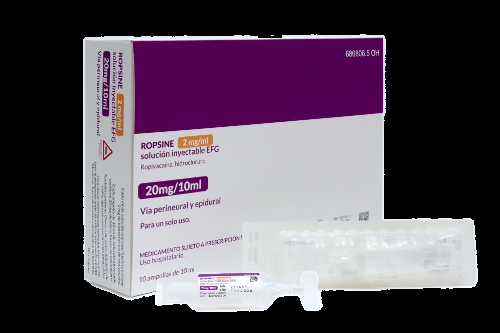
- Country of registration
- Dosage formINJECTABLE PERFUSION, 2 mg/ml
- ATC codeN01BB09
- Active substance
- Prescription requiredYes
- Manufacturer
- CompositionCLORURO DE SODIO (8.62 mg mg), HIDROXIDO DE SODIO (E 524) (C.S PH 4.0-6.0 mg mg)
- This information is for reference only and does not constitute medical advice. Always consult a doctor before taking any medication. Oladoctor is not responsible for medical decisions based on this content.
- Alternatives to ROPSINE 2 mg/ml SOLUTION FOR INFUSIONDosage form: INJECTABLE, 100 mgActive substance: ropivacaineManufacturer: Altan Pharmaceuticals SaPrescription requiredDosage form: INJECTABLE PERFUSION, 2 mg/mlActive substance: ropivacaineManufacturer: Altan Pharmaceuticals SaPrescription requiredDosage form: INJECTABLE, 75 mgActive substance: ropivacaineManufacturer: Altan Pharmaceuticals SaPrescription required
Online doctors for ROPSINE 2 mg/ml SOLUTION FOR INFUSION
Discuss questions about ROPSINE 2 mg/ml SOLUTION FOR INFUSION, including use, safety considerations and prescription review, subject to medical assessment and local regulations.









Get ROPSINE 2 mg/ml SOLUTION FOR INFUSION Prescription Online
Fill in a 2-min form
Tell us your symptoms, history, and what medicine you're requesting.
Pick a doctor or let us assign
Choose a specialist or we'll match you with the next available doctor.
Doctor reviews your case
Usually within 30 minutes. They may ask follow-up questions via chat.
Collect from any pharmacy
Electronic prescription sent to your email — valid across Spain.
Frequently Asked Questions
ROPSINE 2 mg/ml SOLUTION FOR INFUSION requires a prescription in Spain. You can check with a doctor online whether this medicine may be appropriate for your situation.
The active ingredient in ROPSINE 2 mg/ml SOLUTION FOR INFUSION is ropivacaine. This information helps identify medicines with the same composition but different brand names.
ROPSINE 2 mg/ml SOLUTION FOR INFUSION is manufactured by Laphysan S.A.U.. Pharmacy brands and packaging may differ depending on the distributor.
Doctors such as Family doctors, Psychiatrists, Dermatologists, Cardiologists, Endocrinologists, Gastroenterologists, Pulmonologists, Nephrologists, Rheumatologists, Hematologists, Infectious disease physicians, Allergists, Geriatricians, Paediatricians, Oncologists may assess whether ROPSINE 2 mg/ml SOLUTION FOR INFUSION is appropriate, depending on your situation and local regulations. You can book an online consultation to discuss your symptoms and possible next steps.
Spain has a well-developed healthcare infrastructure across major cities such as Madrid, Barcelona, Valencia, and Seville. Pharmacies are widely available and operate under strict regulations, ensuring access to prescribed medications.
You can buy ROPSINE 2 mg/ml SOLUTION FOR INFUSION in Madrid, Barcelona, Seville, or Valencia at any local pharmacy with a valid prescription.
To obtain a prescription, you can use Oladoctor:
Other medicines with the same active substance (ropivacaine) include ROPIVACAINE ALTAN 10 mg/ml INJECTABLE SOLUTION, ROPIVACAINE ALTAN 2 mg/ml SOLUTION FOR INFUSION, ROPIVACAINE ALTAN 7.5 mg/ml INJECTABLE SOLUTION. These may have different brand names or formulations but contain the same therapeutic ingredient. Always consult a doctor before switching or starting a new medicine.
