



ROCURONIO 10 mg /Ml Injectable Solution And Perfusion Solution

Prescription review online
A doctor will review your case and decide whether a prescription is medically appropriate.

Talk to a doctor about this medicine
Discuss your symptoms and possible next steps in a quick online consultation.



How to use ROCURONIUM KABI 10 mg/ml INJECTABLE SOLUTION AND PERFUSION SOLUTION
Contents of the leaflet
- Introduction
- What is Rocuronio Kabi and what is it used for
- What you need to know before you use Rocuronio Kabi
- How to use Rocuronio Kabi
- Possible side effects
- Conservation of Rocuronio Kabi
- Contents of the pack and further information
Introduction
PACKAGE LEAFLET: INFORMATION FOR THE USER
Rocuronio Kabi 10 mg/ml solution for injection and infusion EFG
Rocuronium bromide
Read all of this leaflet carefully before you start using this medicine because it contains important information for you.
- Keep this leaflet, you may need to read it again.
- If you have any further questions, ask your doctor, pharmacist or nurse.
- If you get any side effects, talk to your doctor, pharmacist or nurse. This includes any possible side effects not listed in this leaflet. See section 4.
Contents of the pack and other information:
- What is Rocuronio Kabi and what is it used for
- What you need to know before you use Rocuronio Kabi
- How to use Rocuronio Kabi
- Possible side effects
5 Conservation of Rocuronio Kabi
- Contents of the pack and further information
1. What is Rocuronio Kabi and what is it used for
Rocuronio Kabi belongs to a group of medicines called muscle relaxants.
Normally, nerves send messages to muscles through impulses. Rocuronio Kabi works by blocking these impulses so that the muscles relax.
When you are having an operation, your muscles must be completely relaxed. This makes it easier for the surgeon to perform the operation.
Rocuronio Kabi can also be used if you are under anesthesia to facilitate the insertion of a tube into your trachea for artificial ventilation (mechanical respiratory assistance).
Rocuronio Kabi is indicated in adults and in neonates (0-27 days), infants and young children (28 days - 23 months), children (2-11 years) and adolescents (12-17 years).
Rocuronio Kabi can also be used in adults only as an adjunct in the intensive care unit (ICU) (e.g. to facilitate the insertion of a tube into the trachea) for short-term use.

Not sure if this medicine is right for you?
Discuss your symptoms and treatment with a doctor online.
2. What you need to know before you use Rocuronio Kabi
Do not use Rocuronio Kabi
- If you are allergic to rocuronium bromide, bromide ion or any of the other components of this medicine (listed in section 6).
Components of this medicine (listed in section 6).
Warnings and precautions
Tell your doctor, pharmacist or nurse before starting treatment with Rocuronio Kabi if any of the following conditions apply to you or have applied in the past:
- If you are allergic to other muscle relaxants
- If you have kidney, liver or gallbladder disease
- If you have heart disease or a disease that affects blood circulation
- If you have edema (e.g. in the ankle area)
- If you have a disease that affects the nerves and muscles (neuromuscular diseases, e.g. polio (poliomyelitis), myasthenia gravis, Eaton-Lambert syndrome)
Diseases that affect the nerves and muscles (neuromuscular diseases, e.g. polio (poliomyelitis), myasthenia gravis, Eaton-Lambert syndrome)
- If you have ever developed a body temperature that is too low during anesthesia (hypothermia)
- If you have a history of malignant hyperthermia (sudden fever with rapid heart rate, rapid breathing and stiffness, pain and/or weakness in the muscles)
- If you have a fever
- If you have low calcium levels in your blood (hypocalcemia), (caused for example by massive transfusions)
- If you have low potassium levels in your blood (hypokalemia), (caused for example by severe vomiting, diarrhea and diuretic therapy)
- If you have high magnesium levels in your blood (hypermagnesemia)
- If you have low protein levels in your blood (hypoproteinemia)
- If you are dehydrated
- If you have an increase in acid levels in your blood (acidosis)
- If you have an increase in carbon dioxide levels in your blood (hypercapnia)
- If you are suffering from excessive weight loss (cachexia)
- If you are obese or elderly
- If you have burns
Using Rocuronio Kabi with other medicines
Tell your doctor or pharmacist if you are using or have recently used other medicines, such as:
- Antibiotics
- Antidepressants: medicines used to treat depression (e.g. lithium salts, MAO inhibitors)
- Medicines used to treat heart diseases or high blood pressure (e.g. quinidine, calcium channel blockers, adrenergic blockers (e.g. beta blockers)
- Diuretics (medicines that increase urine production)
- Certain laxatives such as magnesium salts
- Quinine (used to treat pain and infections)
- Medicines used to treat epilepsy (e.g. phenytoin, carbamazepine)
- Corticosteroids
- Medicines used to treat myasthenia gravis (neostigmine, pyridostigmine)
- Azathioprine (used for the prevention of transplant rejection and the treatment of autoimmune diseases)
Autoimmune diseases)
- Medicines used to treat or prevent viral infections (protease inhibitors: gabexate, ulinastatin)
To be considered:
You may be given other medicines during the procedure that may affect the effects of rocuronium. These include certain anesthetics (e.g. local anesthetics, inhalation anesthetics) and other muscle relaxants. Your doctor will take this into account when deciding the correct dose of rocuronium for you.
Pregnancy and breastfeeding
If you are pregnant or breastfeeding, think you may be pregnant or are planning to have a baby, ask your doctor, pharmacist or nurse for advice before using this medicine.
There are no clinical data on the use of Rocuronio Kabi during pregnancy and breastfeeding.
Rocuronio Kabi should be administered to pregnant or breastfeeding women only when the doctor decides that the benefits outweigh the risks. Rocuronio Kabi can be used during cesarean section.
Breastfeeding should be discontinued 6 hours after the use of this medicine.
Driving and using machines
Rocuronio Kabi has a major influence on the ability to drive and use machines.
Therefore, it is not recommended to drive a car or use potentially dangerous machines during the first 24 hours.
Your doctor should advise you on when to start driving or using machines again. After treatment, you should always be accompanied home by a responsible adult.
Rocuronio Kabi contains sodium
This medicine contains 3.3 mg of sodium (main component of table salt) per ml. This is equivalent to 0.17% of the maximum recommended daily intake of sodium for an adult.
3. How to use Rocuronio Kabi
Your anesthetist will administer Rocuronio Kabi to you. It will be given to you intravenously as a single injection or as a continuous infusion (over a long period of time) into a vein.
The usual dose is 0.6 mg per kg of body weight and its effect lasts 30-40 minutes. During surgery, the effect of Rocuronio Kabi is continuously monitored.
If necessary, you may be given additional doses. Your anesthetist will adjust the dose according to your needs. It depends on many factors, such as the interaction between medicines (their cross-activity), taking into account the estimated duration of the surgery as well as your age and clinical condition. For pediatric patients and elderly people, the use of Rocuronio Kabi as an adjunct in the intensive care unit is not recommended.
Use in children and adolescents
For neonates (0-27 days), infants and young children (28 days - 23 months), children (2-11 years) and adolescents (12-17 years), the recommended doses are similar to those for adults, except for the speed of continuous infusion in children (2-11 years), which may be higher than in adults. The anesthetist will adapt the infusion rate accordingly.
Experience with rocuronium bromide in a special anesthesia technique called rapid sequence induction is limited in pediatric patients. Therefore, the use of rocuronium bromide for this purpose is not recommended in pediatric patients.
If you receive more Rocuronio Kabi than you should
Your anesthetist will carefully monitor you under medication with Rocuronio Kabi, so it is unlikely that you will be given too much Rocuronio Kabi. If this happens, your anesthetist will ensure that anesthesia and artificial ventilation are continued until you can breathe on your own again.
Other questions
If you have any other questions about the use of this medicine, ask your doctor or pharmacist.
For information intended for healthcare professionals, see the corresponding section later.

Started taking the medicine and have questions?
Discuss your symptoms and treatment with a doctor online.
4. Possible side effects
Like all medicines, Rocuronio Kabi can cause side effects, although not everybody gets them.
Hypersensitivity reactions (allergic reactions) are very rare but can be life-threatening. A hypersensitivity reaction can include skin rash, itching, difficulty breathing or swallowing in the face, lips, throat or tongue.
Please inform your doctor or nurse immediately if one of these reactions occurs.
Uncommon(may affect up to 1 in 100 people)/ Rare(may affect up to 1 in 1,000 people):
- Pain at the injection site
- The medicine is too effective, not effective enough or is ineffective.
- The medicine works for longer than expected (prolongation of neuromuscular blockade)
- The medicine prolongs anesthesia (delays recovery from anesthesia)
- Decrease in blood pressure (hypotension)
- Increased heart rate (tachycardia)
Very rare(may affect up to 1 in 10,000 people):
- Increased histamine levels in the blood (mediator of allergic reactions)
- Difficulty breathing (bronchospasm)
- Rash, itching
- Flushing
- Facial swelling (facial edema)
- Severe and widespread skin rash (exanthema, erythematous rash)
- Muscle weakness (myopathy)
- Swelling (angioedema)
- Hives
- Loss of movement (flaccid paralysis)
- Circulatory failure (circulatory collapse and shock)
- Difficulty breathing (respiratory failure, apnea)
Unknown
- Respiratory failure
- Stopping breathing (apnea)
- Severe allergic coronary artery spasm (Kounis syndrome) that can cause chest pain (angina) or a heart attack (myocardial infarction)
- Dilated pupils (mydriasis) or fixed pupils that do not change size with light or other stimuli
Pediatric patients:
In clinical studies with pediatric patients treated with rocuronium bromide, the adverse effect of increased heart rate occurred in 1 in 10 people.
Reporting of side effects
If you experience any side effects, talk to your doctor, pharmacist or nurse. This includes any possible side effects not listed in this leaflet. You can also report side effects directly to the Spanish Medicines Agency's website: https://www.notificaram.es. By reporting side effects, you can help provide more information on the safety of this medicine.
5. Conservation of Rocuronio Kabi
Keep this medicine out of the sight and reach of children.
Do not use this medicine after the expiry date which is stated on the carton after EXP.
The expiry date is the last day of the month indicated.
Unopened vial: This medicine does not require any special storage conditions.
The medicine should be used immediately after opening the vial.
Do not use this medicine if you notice that the solution is not transparent or free of particles.
Do not throw away any medicines via wastewater or household waste. Ask your pharmacist how to throw away medicines you no longer use. These measures will help protect the environment.
6. Contents of the pack and further information
Composition of Rocuronio Kabi
The active substance is rocuronium bromide
Each ml contains 10 mg of rocuronium bromide.
Each 5 ml vial contains 50 mg of rocuronium bromide.
Each 10 ml vial contains 100 mg of rocuronium bromide.
The other ingredients are sodium acetate, sodium chloride, sodium hydroxide, hydrochloric acid and water for injections.
Appearance of the product and pack contents
Rocuronio Kabi is a clear, colorless or pale yellow-brown solution for injection or infusion.
Formats:
Rocuronio Kabi is available in packs of 5 or 10 vials with 5 ml or 10 ml of solution.
Not all pack sizes may be marketed.
Marketing authorization holder and manufacturer
Marketing authorization holder:
Fresenius Kabi España S.A.U.
Marina 16-18
08005 Barcelona
Spain
Manufacturer:
Fresenius Kabi Austria GmbH
Hafnerstraße 36
8055 Graz
Austria
This medicine is authorized in the Member States of the European Economic Areaand the United Kingdom (Northern Ireland) under the following names:
Austria | Rocuroniumbromid Kabi 10 mg/ml Injektionslösung / Infusionslösung |
Belgium | Rocuronium bromide Fresenius Kabi 10 mg/ml oplossing voor injectie/infusie / solution injectable/solution pour perfusion / Injektionslösung/Infusionslösung |
Bulgaria | ?????????? ???? 10 mg/ml ???????????/?????????? ??????? |
Croatia | Rokuronijev bromid Fresenius Kabi 10 mg/ml otopina za injekciju/infuziju |
Czech Republic | Rocuronium Fresenius Kabi |
Estonia | Rocuronium bromide Fresenius Kabi |
Germany | Rocuroniumbromid Kabi 10 mg/ml Injektionslösung / Infusionslösung |
Denmark | Rocuronium Fresenius Kabi |
Finland | Rocuronium Fresenius Kabi 10 mg/ml injektio-/infuusioneste, liuos |
France | ROCURONIUM KABI 10 mg/mL, solution injectable/pour perfusion |
Hungary | Rocuronium Fresenius Kabi 10 mg/ml oldatos injekció vagy infúzió |
Ireland | Rocuronium 10 mg/ml solution for injection / infusion |
Italy | Rocuronio Kabi 10 mg/ml Soluzione iniettabile o per infusione |
Malta | Rocuronium Kabi 10 mg/ml solution for injection/infusion |
Netherlands | Rocuroniumbromide Fresenius Kabi 10 mg/ml oplossing voor injectie/infusie |
Norway | Rokuroniumbromid Fresenius Kabi |
Poland | Rocuronium Kabi |
Portugal | Brometo de Rocurónio Kabi |
Romania | Rocuronium Kabi 10 mg/ml, solutie injectabila/perfuzabila |
Slovakia | Rocuronium Fresenius Kabi 10 mg/ml |
Slovenia | Rokuronijev bromid Kabi 10 mg/ml raztopina za injiciranje/infundiranje |
Spain | Rocuronio Kabi 10 mg/ml solución inyectable y para perfusión EFG |
Sweden | Rocuronium Fresenius Kabi injektions-/infusionsvätska, lösning |
United Kingdom (Northern Ireland) | Rocuronium 10 mg/ml solution for injection / infusion |
Date of last revision of this leaflet: January 2024
Detailed and up-to-date information on this medicine is available on the website of the Spanish Agency for Medicines and Health Products (AEMPS) http://www.aemps.gob.es
-----------------------------------------------------------------------------------------------------------------
This information is intended only for healthcare professionals:
For single use only.
Unused solutions should be discarded.
The medicine should be used immediately after opening the vial.
After dilution: The physical and chemical stability of the diluted product has been demonstrated for 72 hours at a temperature of up to 30°C.
From a microbiological point of view, the product should be used immediately. If not used immediately, the storage times and conditions prior to use are the responsibility of the user and should not exceed 24 hours at 2-8°C, unless the dilution has been carried out under validated aseptic conditions.
Rocuronio Kabi has been shown to be compatible with: sodium chloride 9 mg/ml (0.9%), glucose 50 mg/ml (5%), glucose 5 mg/ml (5%) in sodium chloride 9 mg/ml (0.9%), Ringer's lactate solution and sterile water for injections.
If Rocuronio Kabi is administered through the same infusion line as other medicines, it is important to flush the infusion line properly (e.g. with sodium chloride 9 mg/ml (0.9%)) between the administration of rocuronium bromide and other medicines for which incompatibility with rocuronium bromide has been demonstrated or for which compatibility with rocuronium bromide has not been demonstrated.
The medicine should not be mixed with other medicines except those mentioned above.
Physical incompatibility has been documented for Rocuronio Kabi when added to solutions containing the following active substances: amphotericin, amoxicillin, azathioprine, cefazolin, cloxacillin, dexamethasone, diazepam, enoximone, erythromycin, famotidine, furosemide, sodium hydrocortisone succinate, insulin, lipid emulsion, methohexital, methylprednisolone, sodium prednisolone succinate, thiopental, trimethoprim and vancomycin.
- Country of registration
- Dosage formINJECTABLE, 10 mg/ml
- ATC codeM03AC09
- Active substance
- Prescription requiredYes
- Manufacturer
- CompositionCLORURO DE SODIO (8 mg mg), HIDROXIDO DE SODIO (E 524) (PARA PH 2,9-3,1 mg mg)
- This information is for reference only and does not constitute medical advice. Always consult a doctor before taking any medication. Oladoctor is not responsible for medical decisions based on this content.
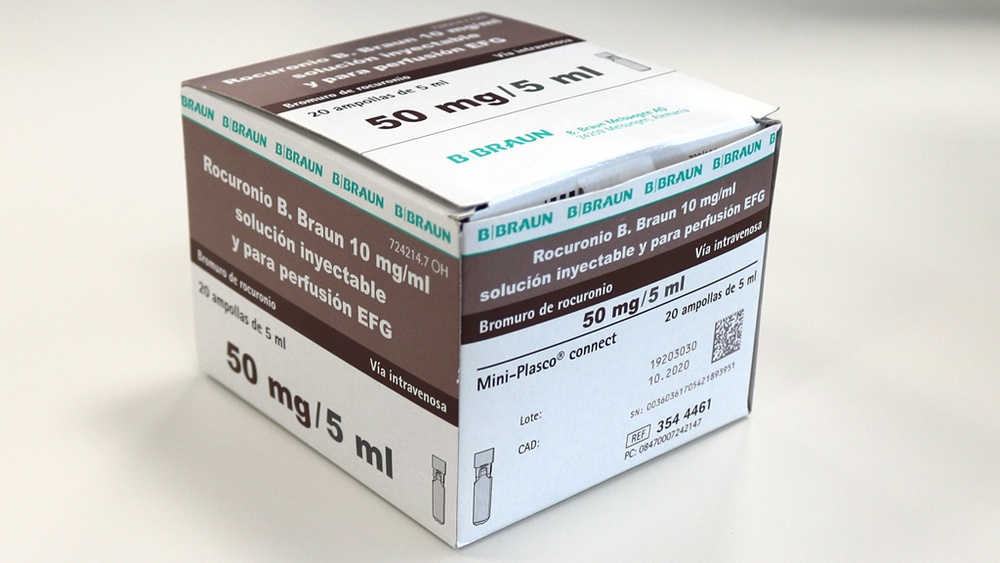
- Alternatives to ROCURONIUM KABI 10 mg/ml INJECTABLE SOLUTION AND PERFUSION SOLUTIONDosage form: INJECTABLE, 10 mg rocuronium bromide/ mlActive substance: rocuronium bromideManufacturer: Schering Plough S.A.Prescription requiredDosage form: INJECTABLE, 10 mg/mlActive substance: rocuronium bromideManufacturer: Laboratoire AguettantPrescription requiredDosage form: INJECTABLE, 10 mg/mlActive substance: rocuronium bromideManufacturer: B. Braun Melsungen AgPrescription required
Online doctors for ROCURONIUM KABI 10 mg/ml INJECTABLE SOLUTION AND PERFUSION SOLUTION
Discuss questions about ROCURONIUM KABI 10 mg/ml INJECTABLE SOLUTION AND PERFUSION SOLUTION, including use, safety considerations and prescription review, subject to medical assessment and local regulations.









Get ROCURONIUM KABI 10 mg/ml INJECTABLE SOLUTION AND PERFUSION SOLUTION Prescription Online
Fill in a 2-min form
Tell us your symptoms, history, and what medicine you're requesting.
Pick a doctor or let us assign
Choose a specialist or we'll match you with the next available doctor.
Doctor reviews your case
Usually within 30 minutes. They may ask follow-up questions via chat.
Collect from any pharmacy
Electronic prescription sent to your email — valid across Spain.
Frequently Asked Questions
ROCURONIUM KABI 10 mg/ml INJECTABLE SOLUTION AND PERFUSION SOLUTION requires a prescription in Spain. You can check with a doctor online whether this medicine may be appropriate for your situation.
The active ingredient in ROCURONIUM KABI 10 mg/ml INJECTABLE SOLUTION AND PERFUSION SOLUTION is rocuronium bromide. This information helps identify medicines with the same composition but different brand names.
ROCURONIUM KABI 10 mg/ml INJECTABLE SOLUTION AND PERFUSION SOLUTION is manufactured by Fresenius Kabi España, S.A.U.. Pharmacy brands and packaging may differ depending on the distributor.
Doctors such as Family doctors, Psychiatrists, Dermatologists, Cardiologists, Endocrinologists, Gastroenterologists, Pulmonologists, Nephrologists, Rheumatologists, Hematologists, Infectious disease physicians, Allergists, Geriatricians, Paediatricians, Oncologists may assess whether ROCURONIUM KABI 10 mg/ml INJECTABLE SOLUTION AND PERFUSION SOLUTION is appropriate, depending on your situation and local regulations. You can book an online consultation to discuss your symptoms and possible next steps.
Spain has a well-developed healthcare infrastructure across major cities such as Madrid, Barcelona, Valencia, and Seville. Pharmacies are widely available and operate under strict regulations, ensuring access to prescribed medications.
You can buy ROCURONIUM KABI 10 mg/ml INJECTABLE SOLUTION AND PERFUSION SOLUTION in Madrid, Barcelona, Seville, or Valencia at any local pharmacy with a valid prescription.
To obtain a prescription, you can use Oladoctor:
Other medicines with the same active substance (rocuronium bromide) include ESMERON 10 mg/ml INJECTABLE SOLUTION AND PERFUSION SOLUTION, ROCURONIUM AGUETTANT 10 mg/mL Injectable Solution in Pre-filled Syringe, ROCURONIUM B. BRAUN 10 mg/ml INJECTABLE SOLUTION AND PERFUSION SOLUTION. These may have different brand names or formulations but contain the same therapeutic ingredient. Always consult a doctor before switching or starting a new medicine.
