



RISEDRONATO 35 mg Film-Coated Tablets

Prescription review online
A doctor will review your case and decide whether a prescription is medically appropriate.

Talk to a doctor about this medicine
Discuss your symptoms and possible next steps in a quick online consultation.



How to use RISEDRONATE WEEKLY VIATRIS 35 mg FILM-COATED TABLETS
Contents of the leaflet
- Introduction
- What Risedronate Sodium Viatris is and what it is used for
- What you need to know before you take Risedronate Sodium Viatris
- How to take Risedronate Sodium Viatris
- Possible side effects
- Storage of Risedronate Sodium Viatris
- Contents of the pack and other information
Introduction
Package Leaflet: Information for the User
Risedronate Sodium Viatris 35 mg Film-Coated Tablets EFG
Risedronate Sodium
Read all of this leaflet carefully before you start taking this medicine because it contains important information for you.
- Keep this leaflet, you may need to read it again.
- If you have any further questions, ask your doctor or pharmacist.
- This medicine has been prescribed for you only. Do not pass it on to others. It may harm them, even if their signs of illness are the same as yours.
- If you get any side effects, talk to your doctor or pharmacist. This includes any possible side effects not listed in this leaflet.
Contents of the pack
- What Risedronate Sodium Viatris is and what it is used for
- What you need to know before you take Risedronate Sodium Viatris
- How to take Risedronate Sodium Viatris
- Possible side effects
- Storage of Risedronate Sodium Viatris
- Contents of the pack and other information
1. What Risedronate Sodium Viatris is and what it is used for
What isRisedronate Sodium Viatris
Risedronate Sodium Viatris belongs to a group of non-hormonal medicines called bisphosphonates, which are used for the treatment of bone diseases. It acts directly on bones, strengthening them, and thus reduces the likelihood of fractures.
Bone is a living tissue. Old bone tissue in the skeleton is constantly being renewed and replaced by new bone tissue.
Postmenopausal osteoporosis occurs in women after menopause when bone starts to weaken, becomes more fragile, and fractures are more likely to occur after a fall or a twist.
Osteoporosis can also affect men due to various causes, including aging and/or low levels of the male hormone, testosterone.
The most likely bone fractures are those of the vertebrae, hip, and wrist, although they can occur in any bone in the body. Fractures associated with osteoporosis can also cause back pain, loss of height, and a curved back. Some patients with osteoporosis may not have symptoms and may not even know they have it.
What Risedronate Sodium Viatris is used for
This medicine is used for the treatment of osteoporosis:
- In women after menopause, even if osteoporosis is severe. It reduces the risk of vertebral and hip fractures.
In men.

Not sure if this medicine is right for you?
Discuss your symptoms and treatment with a doctor online.
2. What you need to know before you take Risedronate Sodium Viatris
Do not takeRisedronate Sodium Viatris:
- If you are allergicto risedronate sodium or any of the other ingredients of this medicine (listed in section 6).
- If your doctor has told you that you have a disease called hypocalcemia(you have low levels of calcium in your blood).
- If you think you may be pregnant, are pregnantor are planning to become pregnant.
- If you are breast-feeding.
- If you have severe kidney disease.
- If you are under 18 years old.
Warnings and precautions
Consult your doctor or pharmacist before starting to take Risedronate Sodium Viatris:
- If you cannot stay upright (sitting or standing) for at least 30 minutes.
- If you have bone problems or mineral metabolism problems (e.g., vitamin D deficiency, parathyroid hormone disorders, both of which produce low calcium levels in the blood).
- If you have had problems with your esophagus (the tube that connects your mouth to your stomach) in the past. For example, you may have had pain or difficulty swallowing food, or you may have mentioned that you have Barrett's esophagus (a condition associated with changes in the cells that line the lower esophagus).
- If your doctor has told you that you are intolerant to certain sugars (such as lactose).
- If you have had or have pain, inflammation, or "numbness" of the jaw, jaw pain, or tooth loss.
- If you are undergoing dental treatment or are going to have dental surgery, inform your dentist that you are being treated with Risedronate Sodium Viatris.
Your doctor will advise you on what to do if you are taking Risedronate Sodium Viatris and have any of the problems mentioned above.
Children and adolescents
The use of risedronate sodium is not recommended in children and adolescents (under 18 years old) due to the lack of sufficient safety and efficacy data.
Other medicines and Risedronate Sodium Viatris
Tell your doctor or pharmacist if you are taking, have recently taken, or might take any other medicines.
Medicines that contain any of the following substances reduce the effect of Risedronate Sodium Viatris when taken at the same time:
- Calcium.
- Magnesium.
- Aluminum (e.g., some medicines for indigestion).
- Iron.
Take these medicines at least 30 minutes after taking Risedronate Sodium Viatris.
Risedronate Sodium Viatris with food and drinks
It is very important that you do NOT take Risedronate Sodium Viatris with food or drinks (other than tap water). In particular, do not take this medicine at the same time as dairy products (such as milk) as they contain calcium (see section 2, "Other medicines and Risedronate Sodium Viatris").
Take food and drinks (except tap water) at least 30 minutes after taking Risedronate Sodium Viatris.
Pregnancy and breast-feeding
DO NOT take Risedronate Sodium Viatris if you may be pregnant, are pregnant, or are planning to become pregnant (see section 2, "Do not take Risedronate Sodium Viatris"). The potential risk associated with the use of risedronate sodium (the active substance of Risedronate Sodium Viatris) in pregnant women is unknown.
DO NOT take Risedronate Sodium Viatris if you are breast-feeding (see section 2, "Do not take Risedronate Sodium Viatris").
Driving and using machines
It is not known if Risedronate Sodium Viatris affects the ability to drive or use machines.
Risedronate Sodium Viatris contains lactose
This medicine contains lactose. If your doctor has told you that you have an intolerance to certain sugars, consult with them before taking this medicine (see section 2, "Warnings and precautions").
3. How to take Risedronate Sodium Viatris
Posology
Follow the instructions for administration of Risedronate Sodium Viatris exactly as indicated by your doctor. Consult your doctor or pharmacist if you have any doubts.
The recommended dose is ONE tablet of Risedronate Sodium Viatris (35 mg of risedronate sodium) once a week.
Choose the day of the week that best suits your schedule. Each week, take the Risedronate Sodium Viatris tablet on the chosen day.
To facilitate taking the tablet on the same day each week, there are boxes on the packaging. Mark the day of the week you have chosen to take the Risedronate Sodium Viatris tablet. Also, write down the dates on which you will take the tablet.
When to take your Risedronate Sodium Viatris tablet:
Take the risedronate tablet at least 30 minutes before the first food, drink of the day (except in the case that this drink is tap water) or other medicine of the day.
How to take your Risedronate Sodium Viatris tablet:
- Take the tablet while standing or sitting uprightto avoid stomach upset.
- Swallow the tabletwith at least one glass(120 ml) of tap water.
- Swallow the tablet whole(do not suck or chew the tablet).
- Do not lie down for at least 30 minutesafter taking the tablet.
Your doctor will tell you if you should take calcium and vitamin D supplements if you are not getting enough in your diet.
If you take more Risedronate Sodium Viatris than you should
If you or someone else has taken more tablets of Risedronate Sodium Viatris than prescribed, drink a full glass of milkand go to the doctor.
In case of overdose or accidental ingestion, consult your doctor or pharmacist immediately or call the Toxicology Information Service, telephone 91 562 04 20, indicating the medicine and the amount taken.
If you forget to take Risedronate Sodium Viatris
If you have forgotten to take the tablet on the chosen day, take it on the day you remember.
Then take one tablet once a week, on the day you normally take the tablet.
DO NOT take a double dose to make up for forgotten doses.
If you stop taking Risedronate Sodium Viatris
If you stop taking the treatment, you may start to lose bone mass. Please talk to your doctor before stopping treatment.
If you have any other questions about the use of this medicine, ask your doctor or pharmacist.

Started taking the medicine and have questions?
Discuss your symptoms and treatment with a doctor online.
4. Possible side effects
Like all medicines, Risedronate Sodium Viatris can cause side effects, although not everybody gets them.
Stop treatment with Risedronate Sodium Viatris and inform your doctor immediatelyif you experience any of the following:
- Symptoms of a severe allergic reaction such as:
- Swelling of the face, tongue, or throat.
- Difficulty swallowing.
- Hives and difficulty breathing.
- Severe skin reactions that can include blisters on the skin.
Tell your doctor immediatelyif you experience any of the following side effects:
- Inflammation of the eyes, usually with pain, redness, and sensitivity to light.
- Jaw bone necrosis (osteonecrosis) associated with delayed healing and infection, often after a tooth extraction (see section 2, "Warnings and precautions").
- Symptoms in the esophagus such as pain and difficulty swallowing, chest pain, and heartburn or worsening of heartburn.
However, in clinical studies, the side effects that were observed were generally mild and did not cause the patient to stop treatment.
Common side effects(may affect up to 1 in 10 people):
Indigestion, nausea, stomach pain, upset stomach or discomfort, constipation, feeling full, abdominal distension, diarrhea.
Pain in the bones, muscles, or joints.
Headache.
Uncommon side effects(may affect up to 1 in 100 people):
Inflammation or ulceration of the esophagus (the tube that connects the mouth to the stomach) causing difficulty and pain when swallowing (see also section 2, "Warnings and precautions"), inflammation of the stomach and duodenum (intestine where the stomach empties).
Inflammation of the colored part of the eye (iris) (red eyes with possible changes in vision).
Rare side effects(may affect up to 1 in 1,000 people):
Inflammation of the tongue (swollen, red, possibly painful), narrowing of the esophagus (the tube that connects the mouth to the stomach).
Abnormal liver tests have been reported, which can only be diagnosed with a blood test.
Very rare side effects(may affect up to 1 in 10,000 people):
Talk to your doctor if you have ear pain, ear discharge, and/or an ear infection. These could be signs of damage to the bones of the ear.
During post-marketing experience, the following side effects have been reported (frequency not known):
Allergic reactions such as hives (hives), skin rash, swelling of the face, lips, tongue, and/or throat, difficulty swallowing or breathing. Severe skin reactions, including blisters under the skin, inflammation of small blood vessels, characterized by palpable red spots on the skin (leukocytoclastic vasculitis), a serious disease called Stevens-Johnson syndrome (SJS), with blisters on the skin, mouth, eyes, and other mucous membranes of the body (genital); a serious disease called Toxic Epidermal Necrolysis (TEN), which causes a red rash on many parts of the body and/or loss of the outer layer of the skin.
Hair loss. Allergic reactions (hypersensitivity). Serious liver disorders, especially if being treated with other medicines known to cause liver problems. Inflammation of the eye that causes pain and redness.
Rarely, at the start of treatment, a slight decrease in phosphate and calcium levels in the blood has been observed in some patients. These changes are usually small and do not cause symptoms.
Atypical fractures of the thigh bone (femur) can occur rarely, especially in patients on long-term treatment for osteoporosis. Inform your doctor if you notice pain, weakness, or discomfort in the thigh, hip, or groin, as these may be early symptoms of a possible fracture of the femur.
If you experience any side effect, talk to your doctor or pharmacist. This includes any possible side effects not listed in this leaflet.
Reporting of side effects:
If you experience any side effects, talk to your doctor, pharmacist, or nurse. This includes any possible side effects not listed in this leaflet. You can also report side effects directly through the Spanish Medicines Monitoring System for Human Use: https://www.notificaram.es. By reporting side effects, you can help provide more information on the safety of this medicine.
5. Storage of Risedronate Sodium Viatris
Keep out of the reach and sight of children.
This medicine does not require any special storage conditions.
Do not use this medicine after the expiry date which is stated on the blister and packaging after EXP. The expiry date is the last day of the month indicated.
Medicines should not be disposed of via wastewater or household waste. Place the packaging and any unused medicine in the SIGRE collection point at your pharmacy. If you have any doubts, ask your pharmacist how to dispose of the packaging and any unused medicine. This will help protect the environment.
6. Contents of the pack and other information
Composition ofRisedronate Sodium Viatris
- The active substance is risedronate sodium. Each tablet contains 35 mg of risedronate sodium (equivalent to 32.5 mg of risedronic acid).
- The other ingredients (excipients) are:
Core of the tablet: pregelatinized corn starch, microcrystalline cellulose, crospovidone, magnesium stearate.
Coating of the tablet: hypromellose, lactose monohydrate, titanium dioxide (E171), macrogol 4000.
Appearance of the product and packaging
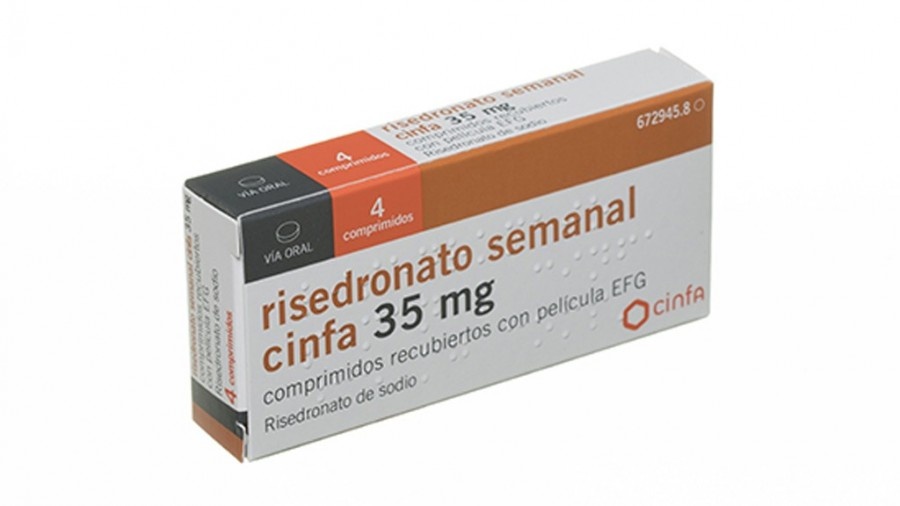
Risedronate Sodium Viatris are film-coated tablets, biconvex, round, white, with a diameter of 11.2 mm, 5.0 mm thick, and with "35" engraved on one side.
This medicine is presented in blisters that contain 4, 12 film-coated tablets and in a calendar blister of 4 film-coated tablets.
Not all pack sizes may be marketed.
Marketing authorization holder:
Viatris Limited
Damastown Industrial Park
Mulhuddart, Dublin 15
Dublin
Ireland
Manufacturer:
McDermott Laboratories Ltd. t/a Gerard Laboratories
35/36 Baldoyle Industrial Estate,
Grange Road, Dublin 13
Ireland
Or
Pharmathen International S.A.
Sapes Industrial Park
Block 5, 69300 Rodopi,
Greece
Or
Pharmathen, S.A.
6, Dervenakion str.
153 51 Pallini, Attiki,
Greece
Or
Mylan Hungary Kft.
Mylan Utca 1
Komárom, 2900
Hungary
You can request more information about this medicine by contacting the local representative of the marketing authorization holder:
Viatris Pharmaceuticals, S.L.U.
C/ General Aranaz, 86
28027 - Madrid
Spain
This medicine is authorized in the Member States of the European Economic Area under the following names:
Denmark Vionate Mylan film-coated tablets 35 mg
Spain Risedronate Sodium Viatris 35 mg film-coated tablets EFG
Italy Risedronate Mylan 35mg film-coated tablets
Portugal Vicendrolin
United Kingdom Risedronate Sodium 35mg film-coated tablets
Date of last revision of this leaflet:February 2016
Detailed and updated information on this medicine is available on the website of the Spanish Agency for Medicines and Health Products (AEMPS) http://www.aemps.gob.es/
- Country of registration
- Dosage formTABLET, 35 mg
- ATC codeM05BA07
- Average pharmacy price19.84 EUR
- Active substance
- Prescription requiredYes
- Manufacturer
- CompositionLACTOSA MONOHIDRATO (2,00 mg mg), ALCOHOL ETILICO (ETANOL) (10,00 mg mg)
- This information is for reference only and does not constitute medical advice. Always consult a doctor before taking any medication. Oladoctor is not responsible for medical decisions based on this content.
- Alternatives to RISEDRONATE WEEKLY VIATRIS 35 mg FILM-COATED TABLETSDosage form: TABLET, 75 mgActive substance: risedronic acidManufacturer: Theramex Ireland LimitedPrescription requiredDosage form: TABLET, 35 mgActive substance: risedronic acidManufacturer: Theramex Ireland LimitedPrescription requiredDosage form: TABLET, 30 mgActive substance: risedronic acidManufacturer: Theramex Ireland LimitedPrescription required
Online doctors for RISEDRONATE WEEKLY VIATRIS 35 mg FILM-COATED TABLETS
Discuss questions about RISEDRONATE WEEKLY VIATRIS 35 mg FILM-COATED TABLETS, including use, safety considerations and prescription review, subject to medical assessment and local regulations.


Get RISEDRONATE WEEKLY VIATRIS 35 mg FILM-COATED TABLETS Prescription Online
Fill in a 2-min form
Tell us your symptoms, history, and what medicine you're requesting.
Pick a doctor or let us assign
Choose a specialist or we'll match you with the next available doctor.
Doctor reviews your case
Usually within 30 minutes. They may ask follow-up questions via chat.
Collect from any pharmacy
Electronic prescription sent to your email — valid across Spain.
Frequently Asked Questions
RISEDRONATE WEEKLY VIATRIS 35 mg FILM-COATED TABLETS requires a prescription in Spain. You can check with a doctor online whether this medicine may be appropriate for your situation.
The active ingredient in RISEDRONATE WEEKLY VIATRIS 35 mg FILM-COATED TABLETS is risedronic acid. This information helps identify medicines with the same composition but different brand names.
The average pharmacy price for RISEDRONATE WEEKLY VIATRIS 35 mg FILM-COATED TABLETS is around 19.84 EUR. Prices may vary depending on the manufacturer and dosage form.
RISEDRONATE WEEKLY VIATRIS 35 mg FILM-COATED TABLETS is manufactured by Viatris Limited. Pharmacy brands and packaging may differ depending on the distributor.
Doctors such as Family doctors, Psychiatrists, Dermatologists, Cardiologists, Endocrinologists, Gastroenterologists, Pulmonologists, Nephrologists, Rheumatologists, Hematologists, Infectious disease physicians, Allergists, Geriatricians, Paediatricians, Oncologists may assess whether RISEDRONATE WEEKLY VIATRIS 35 mg FILM-COATED TABLETS is appropriate, depending on your situation and local regulations. You can book an online consultation to discuss your symptoms and possible next steps.
Spain has a well-developed healthcare infrastructure across major cities such as Madrid, Barcelona, Valencia, and Seville. Pharmacies are widely available and operate under strict regulations, ensuring access to prescribed medications.
You can buy RISEDRONATE WEEKLY VIATRIS 35 mg FILM-COATED TABLETS in Madrid, Barcelona, Seville, or Valencia at any local pharmacy with a valid prescription.
To obtain a prescription, you can use Oladoctor:
Other medicines with the same active substance (risedronic acid) include ACREL 75 mg FILM-COATED TABLETS, ACREL SEMANAL 35 mg FILM-COATED TABLETS, ACTONEL 30 mg FILM-COATED TABLETS. These may have different brand names or formulations but contain the same therapeutic ingredient. Always consult a doctor before switching or starting a new medicine.
