



REPAGLINIDA 2 mg Tablets

Prescription review online
A doctor will review your case and decide whether a prescription is medically appropriate.

Talk to a doctor about this medicine
Discuss your symptoms and possible next steps in a quick online consultation.



How to use REPAGLINIDA COMBIX 2 mg TABLETS
Contents of the leaflet
- Introduction
- What is Repaglinida Combix and what is it used for
- What you need to know before you take Repaglinida Combix
- How to take Repaglinida Combix
- Possible side effects
- Storing Repaglinida Combix
- Contents of the pack and other information
Introduction
Package Leaflet: Information for the User
Repaglinida Combix 2 mg Tablets EFG
Read all of this leaflet carefully before you start taking this medicine because it contains important information for you.
- Keep this leaflet, you may need to read it again.
- If you have any further questions, ask your doctor or pharmacist.
- This medicine has been prescribed for you only. Do not pass it on to others. It may harm them, even if their signs of illness are the same as yours.
- If you get any side effects, talk to your doctor or pharmacist. This includes any possible side effects not listed in this leaflet. See section 4.
Contents of the pack:
- What is Repaglinida Combix and what is it used for
- What you need to know before you take Repaglinida Combix
- How to take Repaglinida Combix
- Possible side effects
- Storing Repaglinida Combix
- Contents of the pack and other information
1. What is Repaglinida Combix and what is it used for
Repaglinida Combix is an oral antidiabetic medicine that contains repaglinide, which helps your pancreas produce more insulin and lower your blood sugar (glucose) levels.
Type 2 diabetesis a disease in which your pancreas does not produce enough insulin to control your blood sugar levels or in which your body does not respond normally to the insulin it produces.
Repaglinida Combix is used to control type 2 diabetes in adults, as a complement to diet and exercise: treatment should be initiated if diet, physical exercise, and weight reduction alone have not been sufficient to control (or reduce) your blood sugar levels. Repaglinida Combix can also be administered with metformin, another diabetes medicine.
It has been shown that Repaglinida Combix reduces blood sugar levels, which helps prevent diabetes complications.

Not sure if this medicine is right for you?
Discuss your symptoms and treatment with a doctor online.
2. What you need to know before you take Repaglinida Combix
Do not take Repaglinida Combix
- if you are allergicto repaglinide or any of the other ingredients of this medicine (listed in section 6)
- if you have type 1 diabetes
- if your body's acid levels have increased (diabetic ketoacidosis)
- if you have a severe liver disease
- if you are taking gemfibrozil(a medicine that lowers blood fat levels)
Warnings and precautions
Consult your doctor or pharmacist before taking Repaglinida Combix:
- if you have liver problems. Repaglinida Combix is not recommended in patients with moderate liver disease. Repaglinida Combix should not be taken if you have severe liver disease (see Do not take Repaglinida Combix)
- if you have kidney problems. Repaglinida Combix should be taken with caution
- if you are going to have a major surgeryor have recently had a serious illnessor infection. In these circumstances, you may not achieve diabetic control
- if you are under 18 yearsor over 75 years. Repaglinida Combix is not recommended. It has not been studied in these age groups
Consult your doctor ifany of the above applies to you. Repaglinida Combix may not be suitable for you. Your doctor will advise you.
Children and adolescents
Do not take this medicine if you are under 18 years old.
If you have low blood sugar (hypoglycaemia)
You may experience hypoglycaemia if your blood sugar levels are too low. This can happen if:
- you take too much Repaglinida Combix
- you do more physical exercise than usual
- you take other medicines or have liver or kidney problems (see other sections of section 2, What you need to know before you take Repaglinida Combix)
Warning signs of hypoglycaemiacan appear suddenly and can be: cold sweat, cool pale skin, headache, palpitations, nausea, excessive hunger, temporary visual disturbances, fatigue, unusual weakness and tiredness, nervousness or tremor, anxiety, confusion, and difficulty concentrating.
If your blood sugar levels are low or you feel you are going to have a hypoglycaemic attack: take glucose tablets or a sugary product or drink, and then rest.
When the symptoms of hypoglycaemia disappear or when your blood sugar levels stabilise, continue treatment with Repaglinida Combix.
Inform others that you are diabetic and that if you lose consciousnessdue to hypoglycaemia, they should lay you on your side and seek immediate medical assistance. They should not give you anything to eat or drink, as you may choke:
- if severe hypoglycaemiais not treated, it can cause brain damage (temporary or permanent) and even death.
- if you experience hypoglycaemiathat makes you lose consciousness or if you have repeated hypoglycaemic attacks, inform your doctor. You may need to adjust the dose or administration schedule of Repaglinida Combix, your diet, or exercise.
If your blood sugar levels are too high
Your blood sugar levels may be too high (hyperglycaemia). This can happen:
- if you take too little Repaglinida Combix
- if you have an infection or fever
- if you eat more than usual
- if you do less exercise than usual
Warning signs of high blood sugar levelsappear gradually. These include: excessive urination, thirst, dry skin, and a dry mouth feeling. Inform your doctor. You may need to adjust the dose of Repaglinida Combix, your diet, or exercise.
Taking Repaglinida Combix with other medicines
Inform your doctor or pharmacist if you are taking, have recently taken, or might take any other medicines.
If your doctor prescribes it, you can take Repaglinida Combix with metformin, another diabetes medicine.
If you are taking gemfibrozil (used to lower blood fat levels), do not take Repaglinida Combix.
Your body's response to Repaglinida Combix may change if you take other medicines, especially:
- Monoamine oxidase inhibitors (MAOIs) (for depression treatment)
- Beta-blockers (for high blood pressure or heart disease treatment)
- Angiotensin-converting enzyme (ACE) inhibitors (for heart disease treatment)
- Salicylates (e.g., aspirin)
- Octreotide (for cancer treatment)
- Non-steroidal anti-inflammatory drugs (NSAIDs) (a type of pain reliever)
- Steroids (anabolic steroids and corticosteroids - for anaemia or to treat inflammation)
- Oral contraceptives (to prevent pregnancy)
- Thiazides (diuretics)
- Danazol (for breast cysts and endometriosis treatment)
- Thyroid medicines (for low thyroid hormone levels treatment)
- Sympathomimetics (for asthma treatment)
- Clarithromycin, trimethoprim, rifampicin (antibiotic medicines)
- Itraconazole, ketoconazole (medicines for fungal infections)
- Gemfibrozil (to treat high blood fat levels)
- Ciclosporin (to suppress the immune system)
- Deferasirox (to reduce chronic iron overload)
- Phenytoin, carbamazepine, phenobarbital (used to treat epilepsy)
- St John's Wort (herbal medicine)
- Clopidogrel (to prevent blood clots formation)
Taking Repaglinida Combix with alcohol
Alcohol may alter Repaglinida Combix's ability to lower your blood sugar levels.
Be aware of the symptoms of hypoglycaemia.
Pregnancy and breastfeeding
If you are pregnant or breastfeeding, think you may be pregnant, or plan to become pregnant, consult your doctor before using this medicine.
Do not take Repaglinida Combix if you are pregnant or planning to become pregnant.
Do not take Repaglinida Combix if you are breastfeeding.
Driving and using machines
Your ability to drive or use machines may be affected if your blood sugar levels are low or high. Be aware that you may put yourself or others at risk. Consult your doctor about the possibility of driving a car if:
- you have frequent hypoglycaemic attacks
3. How to take Repaglinida Combix
Follow exactly the administration instructions of this medicine given by your doctor.
In case of doubt, consult your doctor again.
Your doctor will determine your dose.
- Normally, the initial doseis 0.5 mg taken just before each main meal. The tablets should be taken with a glass of water just before or within 30 minutes before each main meal.
- The dose may be adjusted by your doctor up to 4 mg, which should be taken just before or within 30 minutes before each main meal. The maximum recommended dose is 16 mg per day.
Do not take more Repaglinida Combix than your doctor has recommended.
If you take more Repaglinida Combix than you should
If you take too many tablets, your blood sugar levels may become too low and cause hypoglycaemia. Please read what hypoglycaemia is and how to treat it in the section If you have low blood sugar.
In case of overdose or accidental ingestion, consult your doctor or pharmacist immediately or call the Toxicological Information Service, phone: 91 562 04 20, indicating the medicine and the amount taken.
If you forget to take Repaglinida Combix
If you forget to take a dose, take the next dose when it is due. Do not take a double dose to make up for forgotten doses.
If you stop taking Repaglinida Combix
Be aware that the desired effect will not be achieved if you stop taking Repaglinida Combix. Your diabetes may worsen. If any change in your treatment is necessary, consult your doctor first.
If you have any doubts about the use of this medicine, ask your doctor or pharmacist.

Started taking the medicine and have questions?
Discuss your symptoms and treatment with a doctor online.
4. Possible side effects
Like all medicines, this medicine can cause side effects, although not everybody gets them.
Hypoglycaemia
The most common side effect is hypoglycaemia, which can affect up to 1 in 10 people (see If you have low blood sugarin section 2). Hypoglycaemic reactions are usually mild or moderate but can occasionally lead to loss of consciousness or hypoglycaemic coma. If this happens, seek immediate medical assistance.
Allergic reactions
Cases of allergy are very rare (may affect up to 1 in 10,000 people). Symptoms such as swelling, difficulty breathing, palpitations, dizziness symptoms, and sweating may be signs of an anaphylactic reaction. Contact your doctor immediately.
Other side effects
Common(may affect up to 1 in 10 people):
- Stomach pain
- Diarrhoea
Rare(may affect up to 1 in 1,000 people):
- Acute coronary syndrome (but may not be due to the medicine)
Very rare(may affect up to 1 in 10,000 people):
- Vomiting
- Constipation
- Visual disturbances
- Severe liver problems, abnormal liver function such as increased liver enzymes in the blood
Frequency not known(frequency cannot be estimated from the available data):
- Hypersensitivity (such as rash, itching, redness, or swelling)
- Nausea
If you experience side effects, consult your doctor or pharmacist, even if they are not listed in this leaflet.
Reporting side effects
If you experience any side effects, consult your doctor or pharmacist, even if they are not listed in this leaflet. You can also report them directly through the Spanish Medicines Surveillance System for Human Use: https://www.notificaram.es. By reporting side effects, you can help provide more information on the safety of this medicine.
5. Storing Repaglinida Combix
Keep this medicine out of the sight and reach of children.
No special storage conditions are required.
Do not use this medicine after the expiry date stated on the carton and blister after EXP. The expiry date is the last day of the month indicated.
Medicines should not be disposed of via wastewater or household waste. Return the containers and any unused medicines to the pharmacy. If you have any doubts, ask your pharmacist how to dispose of the containers and any unused medicines. This will help protect the environment.
6. Contents of the pack and other information
Repaglinida Combix composition
- The active substance is repaglinide. Each tablet contains 2 mg of repaglinide.
- The other ingredients are: microcrystalline cellulose (E460i), calcium hydrogen phosphate, corn starch without gluten, potassium polacrilin, povidone K30, glycerol 99.5% (E422), magnesium stearate (E470b), poloxamer 188, meglumine, and red iron oxide (E172).
Appearance of the product and pack contents
The tablets are peach-coloured, round, biconvex, approximately 6 mm in diameter, and have a score line on one side.
The tablets can be divided into equal doses.
Repaglinida Combix is available in packs of 30, 90, 120, and 270 tablets in blisters and in packs of 90 and 270 tablets in bottles.
Not all pack sizes may be marketed.
Marketing authorisation holder
Laboratorios Combix, S.L.U.
C/ Badajoz 2, Edificio 2
28223 Pozuelo de Alarcón, Madrid
Spain
Manufacturer
PharmaPath S.A.
28is Oktovriou 1,
Agia Varvara, 123 51,
Greece
This medicine is authorised in the Member States of the European Economic Area under the following names:
Spain Repaglinida Combix 2 mg tablets EFG
This leaflet was approved in February 2016
Detailed and updated information on this medicine is available on the website of the Spanish Agency for Medicines and Health Products (AEMPS) http://www.aemps.gob.es//
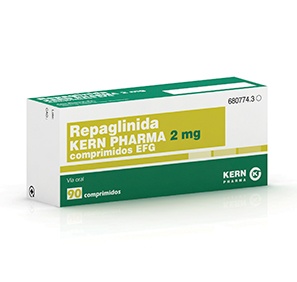
- Country of registration
- Dosage formTABLET, 2 mg
- ATC codeA10BX02
- Average pharmacy price11.18 EUR
- Active substance
- Prescription requiredYes
- Manufacturer
- CompositionGLICEROL (E 422) (0,6365 mg mg), POLIACRILIN POTASICO (3,8 mg mg)
- This information is for reference only and does not constitute medical advice. Always consult a doctor before taking any medication. Oladoctor is not responsible for medical decisions based on this content.
- Alternatives to REPAGLINIDA COMBIX 2 mg TABLETSDosage form: TABLET, 0.5 mgActive substance: repaglinideManufacturer: Krka D.D. Novo MestoPrescription requiredDosage form: TABLET, 1 mgActive substance: repaglinideManufacturer: Krka D.D. Novo MestoPrescription requiredDosage form: TABLET, 2 mgActive substance: repaglinideManufacturer: Krka D.D. Novo MestoPrescription required
Online doctors for REPAGLINIDA COMBIX 2 mg TABLETS
Discuss questions about REPAGLINIDA COMBIX 2 mg TABLETS, including use, safety considerations and prescription review, subject to medical assessment and local regulations.

Get REPAGLINIDA COMBIX 2 mg TABLETS Prescription Online
Fill in a 2-min form
Tell us your symptoms, history, and what medicine you're requesting.
Pick a doctor or let us assign
Choose a specialist or we'll match you with the next available doctor.
Doctor reviews your case
Usually within 30 minutes. They may ask follow-up questions via chat.
Collect from any pharmacy
Electronic prescription sent to your email — valid across Spain.
Frequently Asked Questions
REPAGLINIDA COMBIX 2 mg TABLETS requires a prescription in Spain. You can check with a doctor online whether this medicine may be appropriate for your situation.
The active ingredient in REPAGLINIDA COMBIX 2 mg TABLETS is repaglinide. This information helps identify medicines with the same composition but different brand names.
The average pharmacy price for REPAGLINIDA COMBIX 2 mg TABLETS is around 11.18 EUR. Prices may vary depending on the manufacturer and dosage form.
REPAGLINIDA COMBIX 2 mg TABLETS is manufactured by Laboratorios Combix S.L.U.. Pharmacy brands and packaging may differ depending on the distributor.
Doctors such as Family doctors, Psychiatrists, Dermatologists, Cardiologists, Endocrinologists, Gastroenterologists, Pulmonologists, Nephrologists, Rheumatologists, Hematologists, Infectious disease physicians, Allergists, Geriatricians, Paediatricians, Oncologists may assess whether REPAGLINIDA COMBIX 2 mg TABLETS is appropriate, depending on your situation and local regulations. You can book an online consultation to discuss your symptoms and possible next steps.
Spain has a well-developed healthcare infrastructure across major cities such as Madrid, Barcelona, Valencia, and Seville. Pharmacies are widely available and operate under strict regulations, ensuring access to prescribed medications.
You can buy REPAGLINIDA COMBIX 2 mg TABLETS in Madrid, Barcelona, Seville, or Valencia at any local pharmacy with a valid prescription.
To obtain a prescription, you can use Oladoctor:
Other medicines with the same active substance (repaglinide) include Enyglid 0.5 mg tablets, Enyglid 1 mg tablets, Enyglid 2 mg tablets. These may have different brand names or formulations but contain the same therapeutic ingredient. Always consult a doctor before switching or starting a new medicine.
