






How to use REGIOCIT Solution for Hemofiltration
Translated with AI
This page provides general information and does not replace a doctor’s consultation. Always consult a doctor before taking any medication. Seek urgent medical care if symptoms are severe.
Show originalContents of the leaflet
Introduction
Package Leaflet: Information for the User
Regiocit Solution for Hemofiltration
Citrate, Sodium, and Chloride
Read all of this leaflet carefully before you start using this medicine because it contains important information for you.
- Keep this leaflet, you may need to read it again.
- If you have any further questions, ask your doctor, pharmacist, or nurse.
- If you get any side effects, talk to your doctor, pharmacist, or nurse. This includes any possible side effects not listed in this leaflet. See section 4.
Contents of the Package Leaflet
- What is Regiocit and what is it used for
- What you need to know before you use Regiocit
- How to use Regiocit
- Possible side effects
- Storage of Regiocit
- Contents of the pack and other information
1. What is Regiocit and what is it used for
This medicine is a solution for hemofiltration and prevents blood coagulation during continuous renal replacement therapy (CRRT), which is a form of dialysis treatment. This medicine is used in critically ill patients, especially when the usual medicine used to prevent blood coagulation (heparin) is not suitable. Citrate provides an anticoagulant effect by binding to calcium in the blood.

2. What you need to know before you use Regiocit
Do not use this medicine if:
Allergy to the active substances or to any of the other components (listed in section 6) Severe liver failure
Severe reduction of blood flow in the muscles
Warnings and precautions
Consult your doctor, pharmacist, or nurse before you start using Regiocit.
This medicine is not designed for direct intravenous infusion. It must be used exclusively with a machine capable of performing continuous renal replacement therapy (CRRT), which is a specific type of dialysis for critically ill patients with renal failure. The CRRT machine must be suitable for citrate anticoagulation.
Regiocit should be warmed to 37°C to improve patient comfort. Warming of the solution before use must be done using dry heat only. Solutions must not be warmed in water or in a microwave. Regiocit must be visually inspected for particles or color changes before administration. Do not administer unless the solution is clear, no particles are observed, and the seal is intact.
If the packaging or bag of the solution is damaged, the solution may be contaminated and must not be used. In addition to this medicine, the treatment includes other fluids that are infused. The composition or rate of administration of these other fluids may need to be adjusted to be compatible with this medicine. Your doctor will closely monitor your hemodynamic status, fluid balance, glucose level, and electrolyte and acid-base balance before and during treatment. Sodium, magnesium, potassium, phosphate, and calcium levels will be closely monitored.
If necessary, adjustments will be made to the therapy.
Regiocit does not contain calcium. The use of Regiocit may cause low calcium levels in the blood (hypocalcemia).
Regiocit does not contain magnesium. The use of Regiocit may cause low magnesium levels in the blood (hypomagnesemia). Magnesium levels in the blood will be closely monitored, and magnesium infusion may be necessary.
Regiocit does not contain glucose. Administration of Regiocit may cause low glucose levels in the blood (hypoglycemia). Glucose levels in the blood must be regularly monitored.
Regiocit does not contain potassium. The potassium concentration in serum must be monitored before and during treatment.
Your doctor will pay special attention to the rate of citrate infusion. A high amount of citrate reduces calcium levels in the blood and increases blood pH, which can result in neurological and cardiac complications. A high blood pH level can be corrected by adjusting dialysis parameters and by infusing a 0.9% sodium chloride solution post-filter or by changing the composition of the CRRT solution. Low calcium levels in the blood can be treated with calcium infusion. Special attention is required from your doctor if you have hepatic shock or liver failure. Citrate metabolism may be markedly reduced due to citrate accumulation accompanied by low blood pH. Your doctor will decide whether to adjust treatment. If the total/ionized calcium ratio increases above 2.3, citrate buffering should be reduced or stopped.
If Regiocit is administered to patients with liver failure, it is important to frequently monitor pH, electrolytes, total/ionized calcium ratio, and systemic ionized calcium to avoid acid-base and hydroelectrolytic imbalances. Do not use if you have severe liver failure.
In case of abnormally high fluid volumes in the body (hypervolemia), the prescribed net ultrafiltration rate for the CRRT device may be increased and/or the rate of administration of other solutions distinct from the replacement fluid and/or dialysis may be reduced.
In case of abnormally low fluid volumes in the body (hypovolemia), the prescribed net ultrafiltration rate for the CRRT device must be decreased and/or the rate of administration of other solutions distinct from the replacement fluid and/or dialysis may be increased.
Regiocit is hyposmolar/hypotonic relative to the replacement fluids commonly used in CRRT and must be used with caution in patients with traumatic brain injury, cerebral edema, or elevated intracranial pressure.
Instructions for use must be strictly followed. Incorrect use of access ports or any other restriction that affects fluid flow could result in incorrect patient weight loss and trigger machine alarms. Continuing treatment without resolving the cause of the alarm may result in patient injury or death.
Using Regiocit with other medicines
Tell your doctor, pharmacist, or nurse if you are taking, or have recently taken, other medicines, including those obtained without a prescription. This is because the concentration of other medicines may be reduced during dialysis treatment. Your doctor will decide whether to modify the dose of the medicines you are taking.
In particular, inform your doctor if you are using any medical product that contains any of the following components:
- Vitamin D or other medicines that contain calcium, and medicines that contain calcium chloride or calcium gluconate, as they may increase the risk of high calcium levels in the blood (hypercalcemia) that may reduce the anticoagulant effect.
- Sodium bicarbonate, as it may increase the bicarbonate level in the blood.
Pregnancy, breastfeeding, and fertility
Fertility:
No effect on fertility is anticipated, as sodium, chloride, and citrate are normal components of the body.
Pregnancy and breastfeeding:
There are no documented clinical data on the use of this medicine during pregnancy and breastfeeding.
This medicine should only be administered to pregnant and breastfeeding women if clearly necessary.
Driving and using machines
It is unknown whether this medicine affects your ability to drive or use machines.
3. How to use Regiocit
For intravenous use. This medicine will be used in hospitals and will be administered exclusively by medical professionals. The volume used, and therefore the dose of this medicine, will depend on the patient's condition. The doctor will determine the dose volume.
The recommended flow rates for this medicine in adults and adolescents are:
- Continuous veno-venous hemofiltration
- 1-2.5 l/h with a blood flow rate between 100 and 200 ml/min.
- Continuous veno-venous hemodiafiltration
- 1-2 l/h with a blood flow rate between 100 and 200 ml/min.
Use in elderly patients:
The recommended flow rates are the same as those indicated for adults and adolescents.
Use in children:
In the case of neonates and young children (aged 0-23 months), Regiocit should have a limit of 3 mmol of citrate per liter of blood flow in continuous veno-venous hemofiltration or hemodiafiltration. In the case of children (aged 2-11 years), the dose should be adapted according to the patient's weight and blood flow.
Liver failure or hepatic shock:
In these conditions, the initial dose of citrate should be reduced.
Instructions for use
Regiocit will be administered in a hospital setting, and the doctor will know how to use the product.
For instructions for use, see the end of this leaflet.

4. Possible side effects
Like all medicines, this medicine can cause side effects, although not everybody gets them. Your doctor or nurse will regularly check your blood to detect possible side effects. The use of this solution may cause the following side effects:
Common: may affect up to 1 in 10 people
- Acid-base imbalance in the blood
- Electrolyte imbalances in the blood (e.g., decreased levels of calcium, sodium, magnesium, potassium, and/or phosphate in the blood, or increased calcium levels in the blood)
Unknown: frequency cannot be estimated from the available data
- Fluid imbalance in the blood (dehydration, fluid retention in the body)
- Decrease in blood pressure*
- Nausea*, vomiting*
- Cramps*
- Side effects related to dialysis treatment rather than this medicine.
Reporting of side effects
If you experience any side effects, talk to your doctor, pharmacist, or nurse, even if it is possible side effects not listed in this leaflet.
You can also report side effects directly through the Spanish Pharmacovigilance System for Human Use Medicines: www.notificaRAM.es. By reporting side effects, you can help provide more information on the safety of this medicine.
5. Storage of Regiocit
Keep this medicine out of the sight and reach of children.
No special storage conditions are required.
Do not freeze.
Do not use this medicine after the expiry date stated on the label and carton. The expiry date is the last day of the month stated.
Do not use this medicine if you notice damage to the product or particles in the solution.
The solution can be disposed of with wastewater without harming the environment.
6. Container Content and Additional Information
Composition of this Medication
Composition:
Sodium chloride 5.03 g/l
Sodium citrate 5.29 g/l
The active ingredients are:
Sodium, Na+ 140 mmol/l
Chloride, Cl- 86 mmol/l
Citrate, C6H5O73- 18 mmol/l
Theoretical osmolality: 244 mOsm/l
pH ≈ 7.4
The other components are:
Diluted hydrochloric acid (for pH adjustment) E507
Water for injectable preparations
Appearance of the Product and Container Content
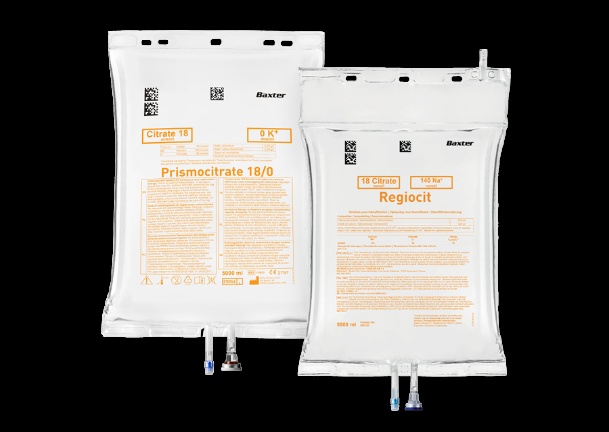
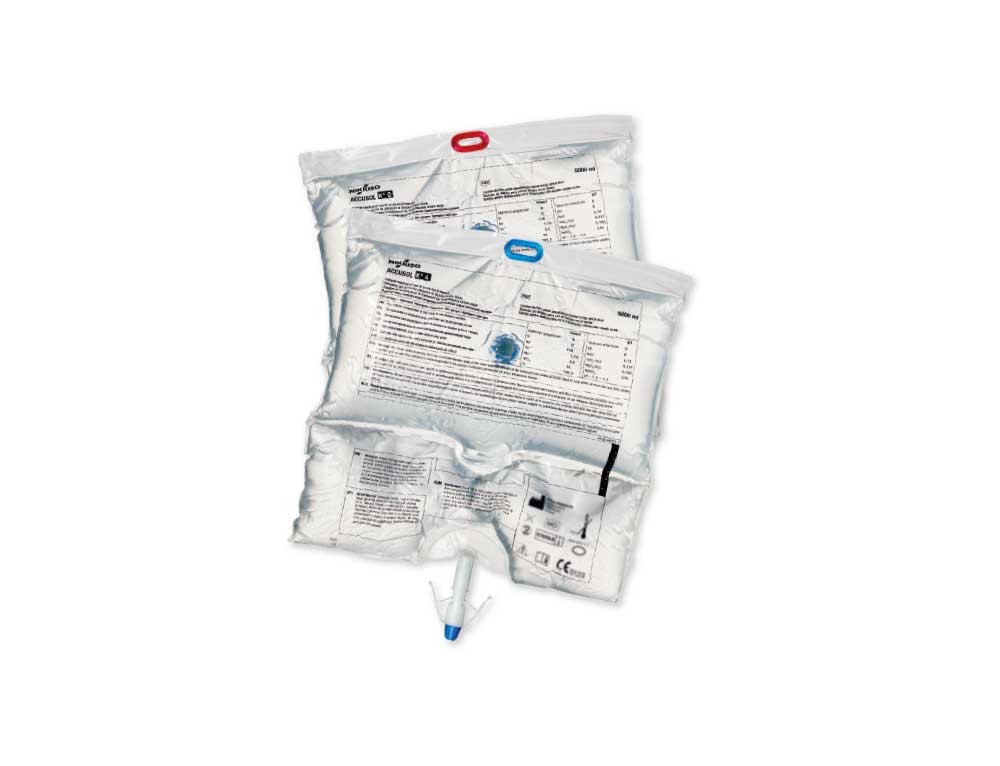
This medication is a clear and colorless solution for hemofiltration packaged in a single-compartment bag made of a multi-layer film containing elastomers and polyolefins. The solution is sterile and free of bacterial endotoxins. Each bag contains 5000 ml of solution and the bag is wrapped in a transparent film. Each box contains two bags and a leaflet.
Marketing Authorization Holder
Vantive Belgium SRL
Boulevard d´Angleterre 2
1420 Braine-l´Alleud
Belgium
Manufacturers
BIEFFE MEDITAL S.P.A.
Via Stelvio, 94
23035 Sondalo (SO)
Italy
Or
Vantive Manufacturing Limited
Moneen Road,
Castlebar
County Mayo
F23 XR63
Ireland
You can request more information about this medication by contacting the local representative of the marketing authorization holder
Vantive Health, S.L.
Polígono Industrial Sector 14. Pouet de Camilo, 2
46394 Valencia Spain
This medication is authorized in the Member States of the European Economic Area and in the United Kingdom (Northern Ireland) under the following names:
Germany, Austria, Belgium, Croatia, Cyprus, Czech Republic, Denmark, Slovakia, Slovenia, Spain, Estonia, Finland, France, Greece, Netherlands, Hungary, Iceland, Ireland, Italy, Latvia, Lithuania, Luxembourg, Malta, Norway, Poland, Portugal, Romania, Sweden, United Kingdom (Northern Ireland): Regiocit
Bulgaria: Regiocit (Региоцид)
Date of the last revision of this leaflet: September 2019
This information is intended only for healthcare professionals:
Dosage
The administration rate of Regiocit depends on the target citrate dose and the prescribed blood flow (BF). The prescription of Regiocit must take into account the effluent flow and other therapeutic fluids, the patient's fluid extraction requirements, additional fluid inputs and outputs, and the desired acid-base and hydroelectrolytic balance. The prescription of Regiocit and its administration schedule (dose, perfusion rate, and accumulated volume) should only be determined by a physician with experience in intensive medicine and CRRT.
The pre-filter perfusion rate of Regiocit must be prescribed and adapted in relation to blood flow to achieve a target blood citrate concentration of 3 to 4 mmol/l of blood.
The prescription of Regiocit must take into account the effluent flow and other therapeutic fluids, the patient's fluid extraction requirements, additional fluid inputs and outputs, and the desired acid-base and hydroelectrolytic balance.
The anticoagulation circuit flow rate should be adjusted to achieve a post-filter ionized calcium concentration in the range of 0.25 to 0.35 mmol/l. The patient's systemic ionized calcium concentration should be maintained within the normal physiological range by adjusting the supplementary calcium intake.
Citrate also acts as a buffer source (by conversion to bicarbonate); the Regiocit perfusion rate should be considered in relation to the administration rate of buffer from other sources (e.g., dialysis fluid or replacement fluid). Regiocit should be used with a dialysis or replacement solution with an adequate bicarbonate concentration.
A separate calcium perfusion is always required. Adjust or stop the calcium perfusion according to the physician's prescription when anticoagulation is stopped.
Control of post-filter ionized calcium (Cai) blood levels, systemic Cai, and total blood calcium, along with other clinical and analytical parameters, is essential to indicate the adequate dose of Regiocit according to the desired anticoagulation levels (see section 4.4).
Plasma levels of sodium, magnesium, potassium, and phosphate should be regularly monitored, and supplementation should be administered if necessary.
Flow rates for Regiocit in adults and adolescents:
- Continuous veno-venous hemofiltration
- 1-2.5 l/h with a blood flow between 100 and 200 ml/min.
- Continuous veno-venous hemodiafiltration
- 1-2 l/h with a blood flow between 100 and 200 ml/min.
Pediatric population:
In the case of neonates and young children (aged 0 to 23 months), Regiocit should have a limit of 3 mmol of citrate per liter of blood flow in continuous veno-venous hemofiltration or hemodiafiltration. In the case of children (aged 2 to 11 years), the dose should be adapted according to the patient's weight and blood flow.
Special populations:
In the elderly population, there is no specific dose modification compared to adults.
Hepatic insufficiency or hepatic shock:
In patients with mild or moderate hepatic insufficiency (e.g., Child-Pugh ≤12), it may be necessary to reduce the dose. In case of hepatic insufficiency (including e.g., hepatic cirrhosis), the initial citrate dose should be reduced, as metabolism may be inadequate. Frequent monitoring of citrate accumulation is recommended. Regiocit should not be administered to patients with severely reduced hepatic function or shock with hypoperfusion (e.g., conditions such as septic shock and lactic acidosis) due to reduced citrate metabolism.
Overdose
Administration of too high volumes of replacement solution can cause an overdose, which can result in a potentially life-threatening situation for the patient. This may result in pulmonary edema and congestive heart failure related to fluid overload and hypocalcemia, and metabolic alkalosis due to citrate overload in relation to blood flow. This disorder should be corrected immediately by stopping or reducing the amount of replacement solution and by administering intravenous calcium. The administration of a supplementary calcium intake with caution may reverse the effects of the overdose. The risk can be minimized with close monitoring during treatment.
In patients with impaired citrate metabolism (hepatic insufficiency or hepatic shock), overdose may present as citrate accumulation, metabolic acidosis, total systemic hypercalcemia, and ionized hypocalcemia, along with an increased total calcium/ionized calcium ratio.
Administration of Regiocit should therefore be reduced or stopped.
To correct metabolic acidosis, sodium bicarbonate should be substituted. Continuous renal replacement therapy can be continued without anticoagulation, or other means of anticoagulation should be considered.
Preparation and Handling
The solution can be discarded with wastewater without harming the environment.
The following instructions should be followed:
Aseptic technique should be used throughout the handling and administration process to the patient. Remove the wrapping that covers the bag immediately before use. Use only if the wrapping is not damaged, the seal is intact, and the solution is transparent. Squeeze the bag firmly to ensure there are no leaks. If a leak is observed, discard the solution immediately, as its sterility cannot be guaranteed. The solution should be used immediately after opening to avoid microbiological contamination.
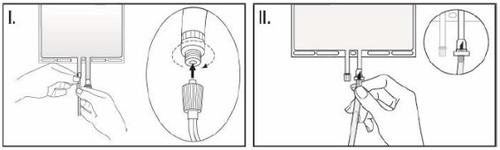
- If the luer connector is used, remove the cap by twisting and pulling. Connect the male luer lock connector of the pre-blood pump line to the female luer receptor of the bag by a pressure and twisting movement. Ensure the connection is properly placed and tightened. Now the connector is open. Check that the liquid circulates freely. (See Figure I below).
When the pre-blood pump line is disconnected from the luer connector, the connector will close, and the solution will stop flowing. The luer is a needleless port that can be disinfected with an alcohol-impregnated swab.
II. If the injection connector (or spike connector) is used, remove the cap by lifting it. The injection port is a port that can be disinfected with a swab. Then, insert the spike through the rubber wall. Check that the liquid circulates freely. (See Figure II below).
Before adding a substance or medication, verify that it is soluble and stable in Regiocit, and that the product's pH range is suitable. Additives that are known to be incompatible should not be added.
The instructions for use of the medication to be added and other relevant scientific publications should be consulted.
After addition, do not use in case of color change and/or precipitates, insoluble complexes, or crystals.
Mix the solution completely after adding additives. Introduction and mixing of additives should always be performed before connecting the solution bag to the extracorporeal circuit.
The solution is for single use. The unused portion should be discarded.
-

- Country of registration
- Dosage formHEMOFILTRATION, 18/140 mmol/l
- Prescription requiredYes
- Manufacturer
- This information is for reference only and does not constitute medical advice. Always consult a doctor before taking any medication. Oladoctor is not responsible for medical decisions based on this content.
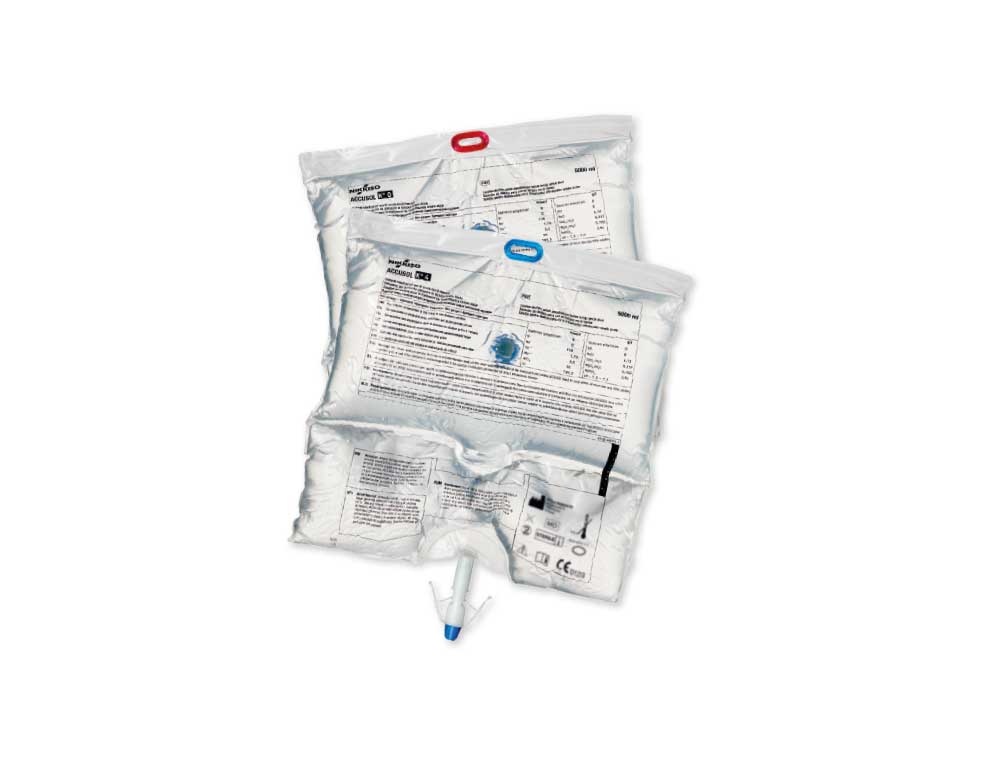
- Alternatives to REGIOCIT Solution for HemofiltrationDosage form: HEMOFILTRATION, 2 mmol potassium/lActive substance: HemofiltratesManufacturer: Nikkiso BelgiumPrescription requiredDosage form: HEMOFILTRATION, 4 mmol potassium/lActive substance: HemofiltratesManufacturer: Nikkiso BelgiumPrescription requiredDosage form: HEMOFILTRATION, -Active substance: HemofiltratesManufacturer: Nikkiso BelgiumPrescription required
Online doctors for REGIOCIT Solution for Hemofiltration
Discuss questions about REGIOCIT Solution for Hemofiltration, including use, safety considerations and prescription review, subject to medical assessment and local regulations.









Get REGIOCIT Solution for Hemofiltration Prescription Online
Fill in a 2-min form
Tell us your symptoms, history, and what medicine you're requesting.
Pick a doctor or let us assign
Choose a specialist or we'll match you with the next available doctor.
Doctor reviews your case
Usually within 30 minutes. They may ask follow-up questions via chat.
Collect from any pharmacy
Electronic prescription sent to your email — valid across Spain.
Frequently Asked Questions
REGIOCIT Solution for Hemofiltration requires a prescription in Spain. You can check with a doctor online whether this medicine may be appropriate for your situation.
REGIOCIT Solution for Hemofiltration is manufactured by Vantive Belgium. Pharmacy brands and packaging may differ depending on the distributor.
Doctors such as Family doctors, Psychiatrists, Dermatologists, Cardiologists, Endocrinologists, Gastroenterologists, Pulmonologists, Nephrologists, Rheumatologists, Hematologists, Infectious disease physicians, Allergists, Geriatricians, Paediatricians, Oncologists may assess whether REGIOCIT Solution for Hemofiltration is appropriate, depending on your situation and local regulations. You can book an online consultation to discuss your symptoms and possible next steps.
Spain has a well-developed healthcare infrastructure across major cities such as Madrid, Barcelona, Valencia, and Seville. Pharmacies are widely available and operate under strict regulations, ensuring access to prescribed medications.
You can buy REGIOCIT Solution for Hemofiltration in Madrid, Barcelona, Seville, or Valencia at any local pharmacy with a valid prescription.
To obtain a prescription, you can use Oladoctor:
Other medicines with the same active substance () include ACCUSOL 35 POTASSIUM 2 mmol/L SOLUTION FOR HEMOFILTRATION, HEMODIALYSIS AND HEMODIAFILTRATION, ACCUSOL 35 POTASSIUM 4 mmol/L SOLUTION FOR HEMOFILTRATION, HEMODIALYSIS AND HEMODIAFILTRATION, ACCUSOL 35 SOLUTION FOR HEMOFILTRATION, HEMODIALYSIS AND HEMODIAFILTRATION. These may have different brand names or formulations but contain the same therapeutic ingredient. Always consult a doctor before switching or starting a new medicine.
