






How to use QUTENZA 179 mg CUTANEOUS PATCH
Translated with AI
This page provides general information and does not replace a doctor’s consultation. Always consult a doctor before taking any medication. Seek urgent medical care if symptoms are severe.
Show originalContents of the leaflet
Introduction
Package Leaflet: Information for the User
Qutenza 179mg transdermal patch
capsaicin
Read all of this leaflet carefully before you start using this medicine because it contains important information for you.
- Keep this leaflet, you may need to read it again.
- If you have any further questions, ask your doctor.
- This medicine has been prescribed for you only. Do not pass it on to others. It may harm them, even if their signs of illness are the same as yours.
- If you get any side effects, talk to your doctor. This includes any possible side effects not listed in this leaflet. See section 4.
Contents of the pack and other information:
- What is Qutenza and what is it used for
- What you need to know before you use Qutenza
- How to use Qutenza
- Possible side effects
- Storing Qutenza
- Contents of the pack and other information
1. What is Qutenza and what is it used for
Qutenza contains capsaicin and belongs to a group of medicines called anesthetics.
Qutenza is indicated for the treatment of peripheral neuropathic pain in adults either alone or in combination with other pain medicines.
Qutenza is used to relieve pain in people who have neuropathic pain due to damage to the nerves in the skin. The nerves in the skin can be damaged as a result of various diseases, such as shingles, HIV infection, diabetes, certain medicines, and other disorders. You may notice pain relief between week 1 and 3 after treatment.

2. What you need to know before you use Qutenza
Do not use Qutenza
- if you are allergic to capsaicin (also found in chili peppers) or any of the other ingredients of this medicine (listed in section 6).
Warnings and precautions
Talk to your doctor before you start using Qutenza.
Do not use Qutenza on any part of the head or face.
Do not use Qutenza on damaged skin or open wounds.
Do not touch Qutenza or other materials that have come into contact with the treated areas because it may cause burning and itching. Do not touch your eyes, mouth, or other sensitive areas as it may cause irritation and pain. If this happens, rinse or flush with cold water. Inhaling or breathing in close to the Qutenza patches may cause coughing, throat irritation, or sneezing.
It is common for the skin to burn or become red and irritated during treatment with Qutenza and for a short time after. Due to pain, your blood pressure may rise, so your doctor will take your blood pressure several times during treatment. If you are in a lot of pain, your doctor may apply local cold or give you a pain medicine. If you experience very intense pain, talk to your doctor to have the patch removed.
Generally, mild, temporary changes in the ability to tell if an object is hot or sharp have been seen after the use of capsaicin.
If you have unstable or uncontrolled high blood pressure or have had heart problems, your doctor will weigh the risk of you having heart-related side effects or changes in blood pressure due to the possible stress caused by the procedure before treating you with Qutenza.
Children and adolescents
Qutenza is not recommended for the treatment of patients under 18 years of age.
Other medicines and Qutenza
Tell your doctor if you are taking, have recently taken, or might take any other medicines. Qutenza works locally on the skin and is not expected to affect other medicines.
Pregnancy and breastfeeding
Qutenza should be used with caution if you are pregnant. Before starting treatment with Qutenza, breastfeeding should be stopped. If you are pregnant or breastfeeding, think you may be pregnant, or are planning to have a baby, ask your doctor for advice before using this medicine.
Driving and using machines
No studies on the effects of Qutenza on the ability to drive and use machines have been performed. When using Qutenza, only very small amounts of the active substance are found in the blood and for a short time. Consequently, it is unlikely that Qutenza will have a direct effect on your ability to concentrate or react.
The Qutenza cleaning gel contains butylhydroxyanisole
The Qutenza cleaning gel may cause local skin reactions (such as contact dermatitis) or eye and mucous membrane irritation because it contains butylhydroxyanisole.
3. How to use Qutenza
Only your doctor or nurse under their supervision can apply Qutenza.
No more than 4 patches can be used at the same time.
Qutenza is applied to the skin.
Your doctor or nurse will mark the most painful areas of your skin with a pen or marker.
Before applying the Qutenza patches to your skin, the treatment area(s) should be washed with water and soap and dried well. Hair from the areas to be treated will be cut.
Before placing the Qutenza patch on your skin, your doctor or nurse may apply a local anesthetic gel or cream or give you an oral pain medicine to reduce the possible burning sensation. The gel or cream should be removed before applying Qutenza and the skin should be washed and dried completely.
Your doctor or nurse may wear gloves and sometimes a mask and protective glasses when handling the Qutenza patches. Do not inhale or breathe in close to the Qutenza patches because they may cause coughing or sneezing.
Qutenza can be cut into smaller pieces to fit the treatment area. Your doctor or nurse will remove the patches after 30 minutes if you are being treated for neuropathic pain in the feet or 60 minutes if the treatment is applied to other parts of the body.
It may take between 1 and 3 weeks before you notice pain relief with Qutenza. If after this time you are still in a lot of pain, talk to your doctor.
If necessary, treatment with Qutenza can be repeated at intervals of 90 days. If you experience insufficient pain relief or the pain comes back before, talk to your doctor.
You may receive pain medicines for pain caused by Qutenza treatment.
It is common for the skin to burn or become red and irritated during treatment with Qutenza.
If the treatment is applied to the feet, you may wear disposable socks over the Qutenza patches.
Your doctor or nurse may place a bandage over the Qutenza patch to keep it in place against your skin.
Do not try to remove the patch yourself. Your doctor or nurse will remove it.
After Qutenza treatment, your doctor or nurse will clean the treated area with the cleaning gel contained in a tube included in the pack. The cleaning gel will be left on the skin for 1 minute and then removed to eliminate any remaining medicine from the skin after treatment. Once the cleaning gel is removed, the area will be gently washed with water and soap.
Do not touch the patch with your hands.
Do not touch your eyes, mouth, or other sensitive areas.If you accidentally touch the Qutenza patch or the treated skin before the cleaning gel is applied, you may feel burning or itching. Call your doctor immediately.
Do not take the Qutenza patches out of the clinic.
Do not use the Qutenza patches at home.
If you use Qutenza for longer than you should
Overdose is unlikely to occur. However, if Qutenza is applied for longer than it should, you may experience severe reactions at the application site such as pain, redness, and itching.
If you have any further questions on the use of this product, ask your doctor or pharmacist.

4. Possible side effects
Like all medicines, this medicine can cause side effects, although not everybody gets them.
If any of the following happen, talk to your doctor immediately:
- If you feel that your heart is beating very fast, very slow, or beating irregularly.
- Uncommon: may affect up to 1 in 100 people
- Severe redness at the patch application site, blistering/exudation of the skin, skin that becomes very painful to the touch, swollen, wet, or shiny. In a small number of cases, these may be signs of a burn that requires urgent medical attention.
- Frequency not known: frequency cannot be estimated from the available data
Talk to your doctorif the following side effects occur or get worse:
Very common: may affect more than 1 in 10 people
- Redness or pain at the patch application site for more than a day.
Common: may affect up to 1 in 10 people
- Itching, hives, blisters, swelling, dryness at the patch application site.
- Burning sensation, high blood pressure, coughing, nausea, itching, pain in the limbs, muscle spasms, swelling of the limbs.
Uncommon: may affect up to 1 in 100 people
- Hives, tingling, inflammation, increased or decreased skin sensitivity, skin reaction, irritation, bruising at the patch application site.
- Decreased sense of taste, decreased sensitivity in the limbs, eye irritation, throat irritation, shingles.
Frequency not known: frequency cannot be estimated from the available data
- Accidental exposure (including eye pain, eye irritation, throat, and cough).
If you get any side effects, talk to your doctor. This includes any possible side effects not listed in this leaflet. You can also report side effects directly via the national reporting system listed in Appendix V. By reporting side effects, you can help provide more information on the safety of this medicine.
5. Storing Qutenza
Keep this medicine out of the sight and reach of children.
Do not use this medicine after the expiry date which is stated on the carton after EXP. The expiry date refers to the last day of that month.
Qutenza transdermal patch: Store flat in the original pouch and carton. Store below 25°C.
Cleaning gel: Store below 25°C.
After opening the pouch, Qutenza should be applied within 2 hours.
Disposal of used and unused Qutenza patches.
If you touch these components, you may feel itching in your fingers. Your doctor or nurse will put them in a polyethylene bag and dispose of them safely. The Qutenza patches and treatment-related materials should be disposed of properly.
6. Contents of the pack and other information
What Qutenza contains
The active substance is capsaicin. Each patch of 280 cm2 contains a total of 179 mg of capsaicin or 640 micrograms of capsaicin per cm2 of patch (8% w/w).
The other ingredients of the Qutenza patch are:
Matrix:
silicone adhesives
diethylene glycol monoethyl ether
silicone oil
ethylcellulose N50 (E462)
Backing layer:
polyethylene terephthalate (PET) foil, with the inner side siliconized
printing ink containing pigment White 6
Removable protective liner(protective liner)
polyester film with a fluoropolymer coating
The Qutenza patch is supplied with a tube of cleaning gel that does not contain any active substances.
The cleaning gel contains:
macrogol 300
carbomer
purified water
sodium hydroxide (E524)
disodium edetate
butylhydroxyanisole (E320)
What Qutenza looks like and contents of the pack
Qutenza is a transdermal patch that is applied to the skin.
Each patch measures 14 cm x 20 cm (280 cm2) and consists of an adhesive surface that contains the active substance and a backing layer. The adhesive surface is covered by a transparent, unprinted, and diagonally cut protective liner that is removed before applying the patch. The outer surface of the backing layer is printed with «capsaicin 8%».
Each carton of Qutenza contains 1 or 2 pouches and 1 tube of cleaning gel (50 g). Not all pack sizes may be marketed.
Marketing Authorisation Holder and Manufacturer
Grünenthal GmbH
Zieglerstraße 6
52078 Aachen
Germany
Date of last revision of this leaflet:
Other sources of information
Detailed information on this medicine is available on the European Medicines Agency web site: http://www.ema.europa.eu, and on the Spanish Agency for Medicines and Health Products (AEMPS) web site http://www.aemps.gob.es/.
This information is intended only for healthcare professionals.
The package leaflet is included with the Summary of Product Characteristics (SPC) or the full prescribing information.
-

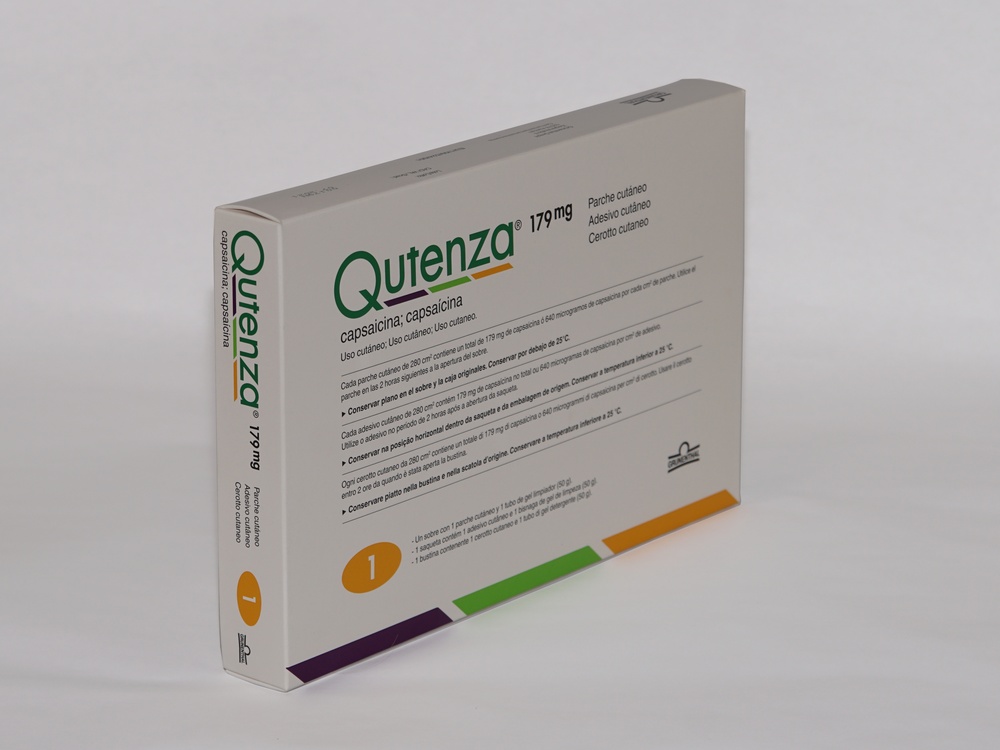
- Country of registration
- Dosage formDRESSING, 179 mg
- ATC codeN01BX04
- Average pharmacy price266.84 EUR
- Active substance
- Prescription requiredYes
- Manufacturer
- This information is for reference only and does not constitute medical advice. Always consult a doctor before taking any medication. Oladoctor is not responsible for medical decisions based on this content.
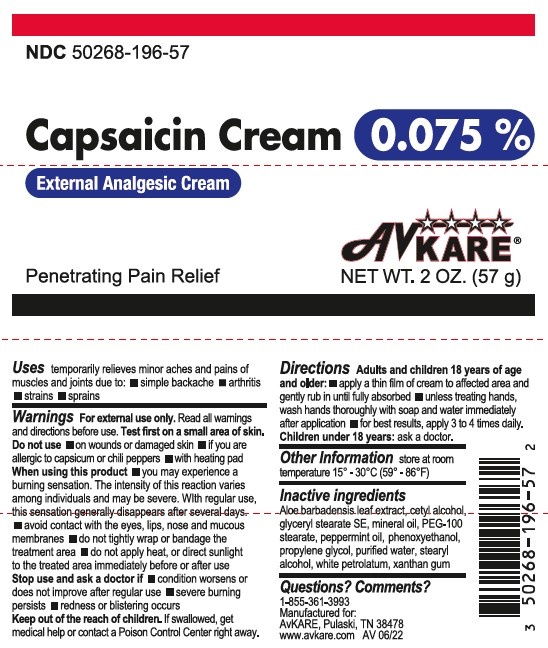
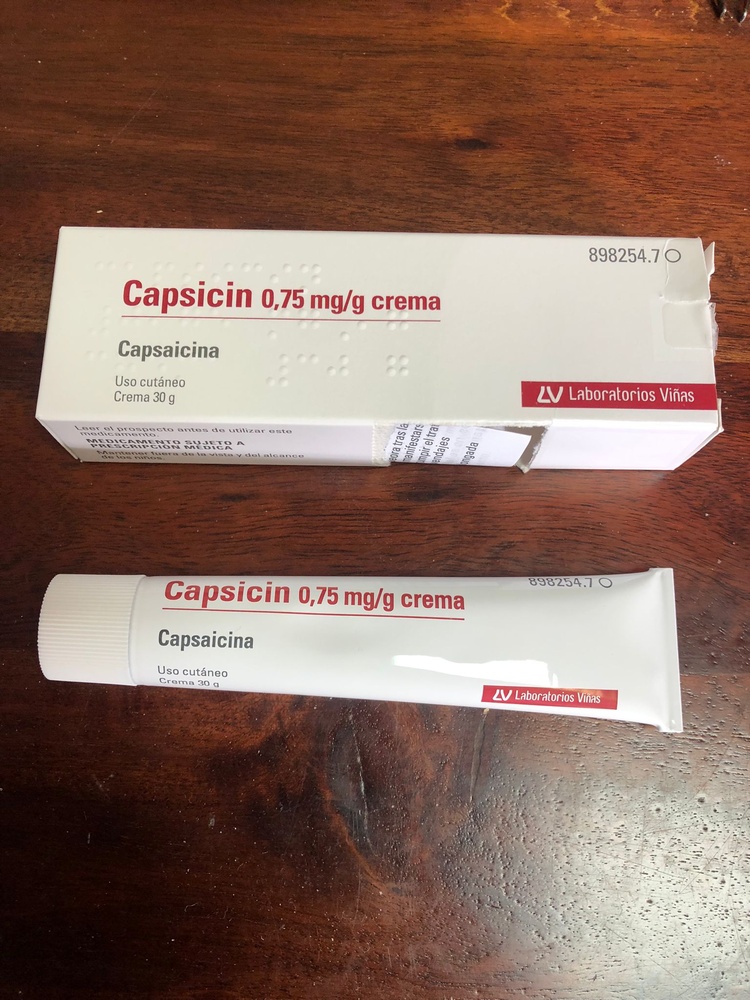
- Alternatives to QUTENZA 179 mg CUTANEOUS PATCHDosage form: CREAM, 0.075% Capsaicin (30 and 50 g cream)Active substance: capsaicinManufacturer: Alfasigma Espana S.L.Prescription requiredDosage form: CREAM, 0.075 g capsaicinActive substance: capsaicinManufacturer: Laboratorios Vinas S.A.Prescription requiredDosage form: CREAM, 75 mg Capsaicin / 100 g CreamActive substance: capsaicinManufacturer: Arafarma Group S.A.Prescription required
Online doctors for QUTENZA 179 mg CUTANEOUS PATCH
Discuss questions about QUTENZA 179 mg CUTANEOUS PATCH, including use, safety considerations and prescription review, subject to medical assessment and local regulations.








Get QUTENZA 179 mg CUTANEOUS PATCH Prescription Online
Fill in a 2-min form
Tell us your symptoms, history, and what medicine you're requesting.
Pick a doctor or let us assign
Choose a specialist or we'll match you with the next available doctor.
Doctor reviews your case
Usually within 30 minutes. They may ask follow-up questions via chat.
Collect from any pharmacy
Electronic prescription sent to your email — valid across Spain.
Frequently Asked Questions
QUTENZA 179 mg CUTANEOUS PATCH requires a prescription in Spain. You can check with a doctor online whether this medicine may be appropriate for your situation.
The active ingredient in QUTENZA 179 mg CUTANEOUS PATCH is capsaicin. This information helps identify medicines with the same composition but different brand names.
The average pharmacy price for QUTENZA 179 mg CUTANEOUS PATCH is around 266.84 EUR. Prices may vary depending on the manufacturer and dosage form.
QUTENZA 179 mg CUTANEOUS PATCH is manufactured by Grünenthal Gmbh. Pharmacy brands and packaging may differ depending on the distributor.
Doctors such as Family doctors, Psychiatrists, Dermatologists, Cardiologists, Endocrinologists, Gastroenterologists, Pulmonologists, Nephrologists, Rheumatologists, Hematologists, Infectious disease physicians, Allergists, Geriatricians, Paediatricians, Oncologists may assess whether QUTENZA 179 mg CUTANEOUS PATCH is appropriate, depending on your situation and local regulations. You can book an online consultation to discuss your symptoms and possible next steps.
Spain has a well-developed healthcare infrastructure across major cities such as Madrid, Barcelona, Valencia, and Seville. Pharmacies are widely available and operate under strict regulations, ensuring access to prescribed medications.
You can buy QUTENZA 179 mg CUTANEOUS PATCH in Madrid, Barcelona, Seville, or Valencia at any local pharmacy with a valid prescription.
To obtain a prescription, you can use Oladoctor:
Other medicines with the same active substance (capsaicin) include ALACAPSIN 0.075% CREAM, CAPSICIN 0.75 mg/g CREAM, DOLBAN 0.75 mg/g cream. These may have different brand names or formulations but contain the same therapeutic ingredient. Always consult a doctor before switching or starting a new medicine.
