


PROCAINE SERRA 20 mg/ml INJECTABLE SOLUTION
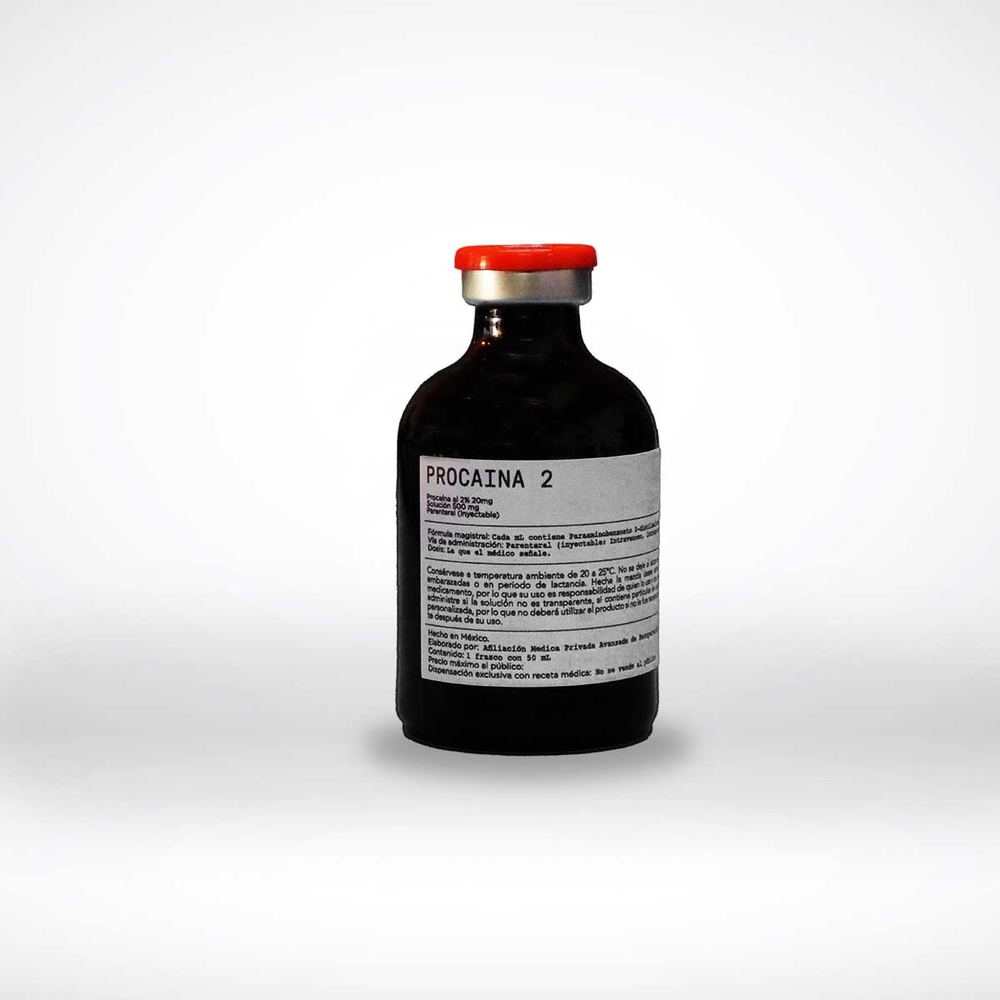



How to use PROCAINE SERRA 20 mg/ml INJECTABLE SOLUTION
Translated with AI
This page provides general information and does not replace a doctor’s consultation. Always consult a doctor before taking any medication. Seek urgent medical care if symptoms are severe.
Show originalContents of the leaflet
Introduction
Patient Information: Summary of Product Characteristics
PROCAINE SERRA 20 mg/ml injectable solution
Procaine hydrochloride

Read the entire summary of product characteristics carefully before starting to use the medicine, as it contains important information for you.
- Keep this summary, as you may need to read it again.
- If you have any questions, consult your doctor or pharmacist.
- If you experience side effects, consult your doctor or pharmacist, even if they are not listed in this summary. See section 4.
Contents of thesummary of product characteristics
- What Procaína Serra is and what it is used for
- What you need to know before you are given Procaína Serra
- How Procaína Serra is administered
- Possible side effects
- Storage of Procaína Serra
- Package contents and additional information

1. What Procaína Serra is and what it is used for
Procaine is a medicine that belongs to the group of local anesthetics of the ester type and is indicated for local anesthesia by infiltration (pain associated with wounds, minor surgery, burns, abrasions) and peripheral nerve block anesthesia (consisting of injecting the anesthetic over the nerves to anesthetize a larger area).
2. What you need to know before you are given Procaína Serra
Do not useProcaína Serra
If you are allergic to the active substance or to any of the other components of this medicine (listed in section 6).
If you are allergic to p-aminobenzoic acid (PABA), parabens, or ester-type local anesthetics (tetracaine, etc.) due to the risk of cross-allergy.
In case of doubt, consult your doctor.
Warnings and precautions
Consult your doctor or pharmacist before you are given Procaína Serra:
- if your liver does not function properly, as your doctor will need to adjust the dose.
- if your kidneys do not function properly, as it may increase the risk of toxicity.
- in epilepsy: it may cause tremors and/or convulsions.
- in heart failure, as it may produce intense myocardial depression (decrease in heart muscle activity) as well as prolonged arrhythmias (disorder of the normal heart rhythm).
Local anesthetics may contribute to the development of malignant hyperthermia (a syndrome consisting of a rapid increase in body temperature and muscle rigidity that can even trigger death) in case supplemental general anesthesia is required.
There is a risk of severe shock, decreased heart rate, or cardiac block if, due to the application site or the use of high doses, high blood levels are reached.
It is not advisable to apply this medicine to inflamed or infected areas, as it may alter the effect of the anesthetic.
Children
This medicine is not indicated for use in children, as it presents a higher probability of systemic toxicity (generalized toxicity of the circulatory blood system) and there is not enough information about the relationship between age and the effects of Procaine.
Elderly patients
This medicine should be administered with caution in elderly patients, as it presents a higher probability of systemic toxicity and the possibility of accumulation with repeated doses. It is recommended to use reduced doses based on their physical condition.
Other medicines and Procaína Serra
Tell your doctor or pharmacist if you are using, have recently used, or may need to use any other medicine.
Some medicines, when administered at the same time as Procaína Serra, may affect the mechanism of action of procaine:
- Sulfonamides (a group of antibiotic medicines).
- Anticholinesterases and, especially, ecotiopate in ophthalmology (medicines used to treat glaucoma or to produce pupil contraction).
- Muscle relaxants.
- Hypercalcemia (increased calcium concentration in the blood) decreases the action of local anesthetics.
- Acetazolamide (a diuretic medicine): concurrent administration increases the plasma half-life of procaine, which may increase its effect and toxicity.
Using Procaína Serra with food, drinks, and alcohol
No interactions with food or drinks are known.
Pregnancy, breastfeeding, and fertility
Pregnancy
If you are pregnant or breastfeeding, think you may be pregnant, or plan to become pregnant, consult your doctor or pharmacist before using this medicine. Your doctor must weigh the benefits against the risks of this type of medication.
Local anesthetics quickly cross the placenta. The safety of use in pregnant women, except during labor, has not been established. As a precaution, it is preferable to avoid the use of Procaína Serra during pregnancy.
Breastfeeding
Consult your doctor or pharmacist before using a medicine.
It is unknown whether procaine or its metabolites are excreted in breast milk and whether this could affect the child; however, no problems have been described in humans. The risk in newborns/children cannot be excluded.
Driving and using machines
Procaína Serra may temporarily alter locomotor function and coordination, depending on the anesthetized area. Therefore, tasks that require special attention should not be performed until your doctor indicates.
3. How Procaína Serra is administered
In case of doubt, consult your doctor or pharmacist.
This medicine is administered by your doctor as an injection under the skin or into a muscle.
The recommended dose is as follows:
Adults
The dose will be determined by the doctor based on the needs of each patient. The maximum daily dose is 1 gram.
Elderly patients and other cases that may require lower doses
In elderly patients and patients with acute or debilitating illnesses, and in those with heart or liver disease, lower doses should be used. Lower doses are also required when injections are repeated and for nerve blocks in highly vascularized areas.
Use in children
It is not indicated in children.
If you think the effect of Procaína Serra is too strong or too weak, tell your doctor or pharmacist.
If you have been given too much Procaína Serra
At usual doses, procaine intoxication is very rare. In case of accidental local overdose, numbness or decreased sense of touch inside and around the mouth may be an early symptom of systemic toxicity. Other signs and symptoms that may appear are excitement, agitation, dizziness, ringing in the ears, blurred vision, tremors, and convulsions, depression with somnolence, difficulty breathing, and coma, myocardial depression, hypotension, bradycardia, arrhythmia, and cardiac arrest.
Absorption of the anesthetic can be reduced by applying a tourniquet. Respiratory problems may require assisted breathing. Convulsions should be controlled with short-acting barbiturates, such as thiopental sodium. The decrease in blood pressure can be treated with noradrenaline. Allergic hypersensitivity reactions, such as those mentioned above, are very unlikely; if they occur, they should be treated like all allergic reactions: with adrenaline and antihistamines.
If you have any other questions about the use of this medicine, ask your doctor or pharmacist.
4. Possible side effects
Like all medicines, this medicine can cause side effects, although not everybody gets them.
The side effects of procaine are, in general, infrequent but moderately important. In most cases, side effects are related to the dose and may result from the administration of a high dose, rapid absorption, or intravascular injection, or may result from an allergic reaction, idiosyncrasy, or decreased tolerance by the patient.
Common side effects: may affect up to 1 in 10 people
- Excitement, agitation, dizziness, ringing in the ears, blurred vision, tremors, and convulsions, numbness or decreased sense of touch inside and around the mouth.
- Nausea and vomiting.
Uncommon side effects: may affect up to 1 in 1,000 people
- Urticaria due to allergic reaction.
- Anaphylactoid reaction (generalized allergic reaction).
Side effects of unknown frequency: cannot be estimated from available data
- Depression with somnolence and coma
- Respiratory depression (slow or insufficient breathing).
- Methemoglobinemia (defect in the iron of hemoglobin that makes it unable to transport oxygen effectively to tissues).
- Myocardial depression, hypotension, bradycardia, arrhythmia, and cardiac arrest.
If you notice side effects not mentioned in this summary or if you suffer from any of the side effects described in a severe form, tell your doctor or pharmacist.
Reporting side effects
If you experience any type of side effect, consult your doctor or pharmacist, even if it is a possible side effect not listed in this summary. You can also report them directly through the Spanish Pharmacovigilance System for Human Use Medicines: https://www.notificaram.es. By reporting side effects, you can contribute to providing more information on the safety of this medicine.
5. Storage of Procaína Serra
Keep this medicine out of the sight and reach of children.
Store in the original packaging. No special storage conditions are required.
Use immediately once the package is opened and discard any remaining solutions.
Do not use this medicine after the expiration date stated on the package, after EXP. The expiration date is the last day of the month indicated.
Medicines should not be disposed of via wastewater or household waste. If in doubt, ask your pharmacist how to dispose of the package and any unused medicines. This will help protect the environment.
6. Package contents and additional information
Composition of Procaína Serra 20 mg/ml injectable solution:
The active substance is procaine hydrochloride.
Each milliliter of solution contains 20 milligrams of procaine hydrochloride.
The other components (excipients) are hydrochloric acid (for pH adjustment) and water for injectable preparations.
Appearance of the product and package contents
Clear and colorless injectable solution.
Procaína Serra 20 mg/ml is presented in 5 ml or 10 ml ampoules.
Other presentations
Procaína Serra 10 mg/ml injectable solution
Marketing authorization holder and manufacturer
Laboratorios Serra Pamies, S.A.
Ctra. Castellvell, 24
43206 REUS (Tarragona)
Date of last revision of this summary: October 2021
Detailed information about this medicine is available on the website of the Spanish Agency for Medicines and Health Products (AEMPS) (http://www.aemps.gob.es/)
-------------------------------------------------------------------------------------------------------------------
This information is intended only for healthcare professionals:
Dosage and administration
To reduce the risk of accidental intravascular administration, the procaine solution should be injected slowly, with frequent aspirations, before each injection and during the injection.
Adults
Local anesthesia by infiltration: in general, the dosage will depend on the anesthetic action required, the extent of the area to be anesthetized, etc. The maximum dose in 24 hours, in infiltration anesthesia, is 1 gram in adults. Usually, the doses are, in infiltration anesthesia and in dental practice, 1 or 2 ml of Procaína Serra 20 mg/ml injectable solution.
Peripheral nerve block anesthesia: the dosage will depend on the anesthetic action required, which plexuses, nerves, or fibers are to be blocked, the patient's physical condition, etc.
The usual dose in peripheral nerve block anesthesia is 500 mg of procaine, in a 20 mg/ml concentration solution (equivalent to injecting 25 ml of 20 mg/ml solution). The maximum dose, in 24 hours, in peripheral nerve block anesthesia is 1 gram.
Elderly patients and other diseases
In elderly patients and patients with acute or debilitating illnesses, and in those with heart or liver disease, lower doses should be used. Lower doses are also required when injections are repeated and for nerve blocks in highly vascularized areas, to avoid high plasma concentrations.
Pediatric patients
Use is not indicated in the pediatric population. No data are available.
Contraindications
It should not be administered to patients with sensitivity to procaine, PABA, parabens (sulfonamides, preservatives of the hydroxybenzoate type), or ester-type local anesthetics (tetracaine, etc.) due to the risk of cross-allergy.
Interactions
After absorption of procaine, it is rapidly hydrolyzed by plasma cholinesterase to p-aminobenzoic acid and diethylaminoethanol. Due to the formation of p-aminobenzoic acid, procaine is incompatible (antagonist) with sulfonamides and vice versa.
The use of anticholinesterases and, especially, ecotiopate in ophthalmology, results in a lower capacity for hydrolysis of procaine, making their association hazardous.
By displacing muscle relaxants from their binding sites with plasma proteins and, in some cases, by metabolic competition, local anesthetics, in general, potentiate the action of muscle relaxants.
Increased Ca2+ concentration decreases the action of local anesthetics.
Concurrent administration of procaine with acetazolamide (a diuretic) increases the plasma half-life of procaine, which may increase its effect and toxicity.
The incorporation of a vasoconstrictor in the same formulation or applied separately increases the duration of action of the local anesthetic.
- Country of registration
- Dosage formINJECTABLE, 100 mg
- ATC codeN01BA02
- Average pharmacy price1.19 EUR
- Active substance
- Prescription requiredYes
- Manufacturer
- This information is for reference only and does not constitute medical advice. Always consult a doctor before taking any medication. Oladoctor is not responsible for medical decisions based on this content.
- Alternatives to PROCAINE SERRA 20 mg/ml INJECTABLE SOLUTIONDosage form: INJECTABLE, 50 mgActive substance: procaineManufacturer: Laboratorios Serra Pamies S.A.Prescription requiredDosage form: INJECTABLE, 10 mg/mLActive substance: chloroprocaineManufacturer: B Braun Medical S.A.Prescription requiredDosage form: INJECTABLE, 20 mg/mlActive substance: chloroprocaineManufacturer: B Braun Medical S.A.Prescription required

Online doctors for PROCAINE SERRA 20 mg/ml INJECTABLE SOLUTION
Discuss questions about PROCAINE SERRA 20 mg/ml INJECTABLE SOLUTION, including use, safety considerations and prescription review, subject to medical assessment and local regulations.








.jpg)


Frequently Asked Questions
