



ZOLAFREN-SWIFT 15 mg Tablets

Prescription review online
A doctor will review your case and decide whether a prescription is medically appropriate.

Talk to a doctor about this medicine
Discuss your symptoms and possible next steps in a quick online consultation.



How to use Zolafren-svift
Contents of the leaflet
- Package Leaflet: Information for the Patient
- Zolafren-swift, 5 mg, Orally Disintegrating Tablets
- Zolafren-swift, 10 mg, Orally Disintegrating Tablets
- Zolafren-swift, 15 mg, Orally Disintegrating Tablets
- Zolafren-swift, 20 mg, Orally Disintegrating Tablets
- What is Zolafren-swift and what is it used for
- Important information before taking Zolafren-swift
- How to take Zolafren-swift
- Possible side effects
- How to store Zolafren-swift
- Contents of the pack and other information
Package Leaflet: Information for the Patient
Zolafren-swift, 5 mg, Orally Disintegrating Tablets

Not sure if this medicine is right for you?
Discuss your symptoms and treatment with a doctor online.
Zolafren-swift, 10 mg, Orally Disintegrating Tablets
Zolafren-swift, 15 mg, Orally Disintegrating Tablets

Started taking the medicine and have questions?
Discuss your symptoms and treatment with a doctor online.
Zolafren-swift, 20 mg, Orally Disintegrating Tablets
Olanzapine
Read the Leaflet Carefully Before Taking the Medication, as it Contains Important Information for the Patient.
- Keep this leaflet, you may need to read it again.
- If you have any further questions, ask your doctor or pharmacist.
- This medication has been prescribed for you only. Do not pass it on to others. It may harm them, even if their symptoms are the same as yours.
- If you experience any side effects, including those not listed in this leaflet, please inform your doctor or pharmacist. See section 4.
Table of Contents of the Leaflet
- 1. What is Zolafren-swift and what is it used for
- 2. Important information before taking Zolafren-swift
- 3. How to take Zolafren-swift
- 4. Possible side effects
- 5. How to store Zolafren-swift
- 6. Contents of the pack and other information
1. What is Zolafren-swift and what is it used for
Zolafren-swift contains the active substance olanzapine. Zolafren-swift belongs to a group of medicines called antipsychotics and is used to treat:
- Schizophrenia - a disease characterized by the patient hearing, seeing, or feeling things that do not exist in reality, having beliefs that are contrary to reality, being overly suspicious, and withdrawing from contact with others. The patient may experience depression, anxiety, or tension;
- Moderate to severe manic episodes - disease states whose symptoms include excitement or euphoria.
It has been shown that Zolafren-swift prevents the recurrence of these symptoms in patients with bipolar affective disorder who have responded well to olanzapine treatment for a manic episode.
2. Important information before taking Zolafren-swift
When not to take Zolafren-swift
If you are allergic to olanzapine or any of the other ingredients of this medicine (listed in section 6). An allergic reaction may manifest as a rash, itching, swelling of the face, lip swelling, or difficulty breathing. If such symptoms occur, inform your doctor;
if you have eye disorders such as certain types of glaucoma (increased eye pressure).
Warnings and precautions
Before taking Zolafren-swift, discuss it with your doctor or pharmacist.
Zolafren-swift is not recommended for use in elderly patients with dementia, as it may cause very serious side effects.
Medicines of this type may cause the occurrence of abnormal movements, especially in the face or tongue. If such a symptom occurs after taking Zolafren-swift, inform your doctor.
Very rarely, these types of medications cause a syndrome of symptoms including fever, rapid breathing, sweating, muscle stiffness, and drowsiness or sleepiness. If such symptoms occur, contact your doctor immediately.
Patient taking Zolafren-swift have been observed to have weight gain. The patient's weight should be checked regularly. If necessary, consider consulting a dietitian or seeking help in establishing a diet.
Patient taking Zolafren-swift have been observed to have high blood sugar and high lipid levels (triglycerides and cholesterol). Before taking Zolafren-swift and during its use, the doctor should perform blood tests to determine blood sugar levels and certain lipid levels.
Tell your doctor if you or a family member have had blood clots, as similar medications have been associated with the formation of blood clots.
If you have any of the following diseases, inform your doctor immediately:
- stroke or "mini" stroke (transient stroke symptoms);
- Parkinson's disease;
- prostate disorders;
- intestinal obstruction (paralytic ileus);
- liver or kidney disease;
- blood diseases;
- heart disease;
- diabetes;
- seizures;
- if you know that you may have lost salt due to prolonged, severe diarrhea and vomiting (nausea and vomiting) or the use of diuretics (urinary medications).
If you have dementia and have had a stroke or "mini" stroke, you (or your caregiver) should inform your doctor.
As a precaution, in people over 65 years of age, the doctor may monitor blood pressure.
Children and adolescents
Zolafren-swift is not intended for use in patients under 18 years of age.
Zolafren-swift and other medications
People taking Zolafren-swift may only take other medications with the consent of their doctor.
Taking Zolafren-swift in combination with antidepressant, sedative, or sleep-inducing medications may cause drowsiness.
Tell your doctor about all medications you are currently taking or have recently taken, as well as any medications you plan to take.
In particular, inform your doctor about taking:
- medications used to treat Parkinson's disease;
- carbamazepine (an antiepileptic and mood stabilizer), fluvoxamine (an antidepressant), or ciprofloxacin (an antibiotic) - a dose adjustment of Zolafren-swift may be necessary.
Zolafren-swift with alcohol
Do not drink alcohol after taking Zolafren-swift, as this medication in combination with alcohol may cause drowsiness.
Pregnancy and breastfeeding
If you are pregnant or breastfeeding, think you may be pregnant, or plan to have a child, consult your doctor or pharmacist before taking this medication. Women who are breastfeeding should not take Zolafren-swift, as small amounts of it may pass into breast milk.
In newborns whose mothers took Zolafren-swift in the last trimester (last 3 months of pregnancy), the following symptoms may occur: trembling, muscle stiffness, and/or weakness, drowsiness, excitement, difficulty breathing, and difficulty feeding. If such symptoms are observed in the child, contact your doctor.
Driving and operating machinery
Zolafren-swift may cause drowsiness. If drowsiness occurs, do not drive vehicles or operate any machines and devices. Inform your doctor.
Aspartame
Zolafren-swift, 5 mg contains 2.40 mg of aspartame in each orally disintegrating tablet.
Zolafren-swift, 10 mg contains 4.80 mg of aspartame in each orally disintegrating tablet.
Zolafren-swift, 15 mg contains 7.20 mg of aspartame in each orally disintegrating tablet.
Zolafren-swift, 20 mg contains 9.60 mg of aspartame in each orally disintegrating tablet.
Aspartame is a source of phenylalanine. It may be harmful to patients with phenylketonuria. This is a rare genetic disorder in which phenylalanine accumulates in the body due to its improper excretion.
Sodium
The medication contains less than 1 mmol (23 mg) of sodium per tablet, which means the medication is considered "sodium-free".
Benzyl alcohol - an ingredient of the flavor and aroma enhancer (orange flavor)
Zolafren-swift, 5 mg contains 0.03 mg of benzyl alcohol in each orally disintegrating tablet.
Zolafren-swift, 10 mg contains 0.06 mg of benzyl alcohol in each orally disintegrating tablet.
Zolafren-swift, 15 mg contains 0.1 mg of benzyl alcohol in each orally disintegrating tablet.
Zolafren-swift, 20 mg contains 0.1 mg of benzyl alcohol in each orally disintegrating tablet.
Benzyl alcohol may cause allergic reactions.
Pregnant or breastfeeding women should consult their doctor before taking the medication, as a large amount of benzyl alcohol may accumulate in their body and cause side effects (so-called metabolic acidosis).
Patients with liver or kidney disease should consult their doctor before taking the medication, as a large amount of benzyl alcohol may accumulate in their body and cause side effects (so-called metabolic acidosis).
3. How to take Zolafren-swift
Always take this medication exactly as your doctor has told you. If you are not sure, ask your doctor or pharmacist.
Your doctor will decide what dose of Zolafren-swift you should take and for how long. The daily dose of Zolafren-swift is 5 mg to 20 mg. If the symptoms of the disease recur, inform your doctor. However, do not stop taking Zolafren-swift unless your doctor tells you to.
Take Zolafren-swift once a day, as directed by your doctor. Try to take the medication at the same time every day. It does not matter whether you take the tablets with or without food. Zolafren-swift orally disintegrating tablets should be taken orally.
Do not touch Zolafren-swift tablets with wet hands, as they may disintegrate.
The tablet can also be placed in a full glass of water, orange juice, apple juice, milk, or coffee, and then stirred. Some beverages may change color and become cloudy when the tablet is added and stirred. The resulting liquid should be drunk immediately.
Taking a higher dose of Zolafren-swift than recommended
In patients who have taken a higher dose of Zolafren-swift than recommended, the following symptoms have occurred: rapid heartbeat, excitement or aggressive behavior, difficulty speaking, involuntary movements (especially of the face and tongue), and decreased consciousness. Other symptoms include:
severe confusion (disorientation), seizures (epilepsy), coma, simultaneous occurrence of fever, rapid breathing, sweating, muscle stiffness, and drowsiness or excessive sleepiness, decreased breathing rate, choking, high or low blood pressure, heart rhythm disturbances. Contact your doctor immediately or go to the hospital if any of these symptoms occur. Show your doctor the package with the tablets.
Missing a dose of Zolafren-swift
Take the tablet as soon as you remember. Do not take a double dose to make up for the missed dose.
Stopping treatment with Zolafren-swift
Do not stop taking the tablets as soon as you feel better. It is important to take the medication for as long as your doctor recommends.
If you suddenly stop taking Zolafren-swift, you may experience the following symptoms: sweating, insomnia, trembling, anxiety, nausea, or vomiting. Your doctor may recommend gradually reducing the dose of Zolafren-swift before stopping treatment.
If you have any further questions about taking this medication, ask your doctor or pharmacist.
4. Possible side effects
Like all medications, Zolafren-swift can cause side effects, although not everybody gets them.
Inform your doctor immediately if you experience:
- abnormal movements, especially in the face or tongue (a common side effect that may affect up to 1 in 10 patients);
- blood clots in the veins (an uncommon side effect that may affect up to 1 in 100 patients), especially in the legs (symptoms include swelling, pain, redness of the leg), which can move through the bloodstream to the lungs, causing chest pain and difficulty breathing. If you notice any of these symptoms, seek medical attention immediately.
- simultaneous occurrence of fever, rapid breathing, sweating, muscle stiffness, and drowsiness or excessive sleepiness (the frequency of this side effect cannot be estimated from the available data).
- hypersensitivity (e.g., swelling in the mouth and throat, itching, rash) (an uncommon side effect that may affect up to 1 in 100 patients).
- severe allergic reactions, such as drug reaction with eosinophilia and systemic symptoms (DRESS). Initially, DRESS symptoms include flu-like symptoms with a rash on the face, and then a widespread rash, high body temperature, enlarged lymph nodes, elevated liver enzyme activity, and an increased number of one type of white blood cell (eosinophilia) (the frequency of this side effect cannot be estimated from the available data).
Very common side effects (which may affect more than 1 in 10 patients) include weight gain, drowsiness, and increased prolactin levels in the blood. In the early stages of treatment, dizziness or fainting (with a decrease in heart rate) may occur, especially when standing up from a lying or sitting position. These symptoms usually go away on their own, but if they persist, inform your doctor.
Common side effects (which may affect up to 1 in 10 patients) include changes in the number of certain blood cells, lipid levels in the blood, and transient increases in liver enzyme activity (especially at the beginning of treatment), increased blood sugar and urine levels, increased uric acid and creatine phosphokinase activity in the blood, increased alkaline phosphatase activity, high gamma-glutamyltransferase activity, increased appetite, dizziness, anxiety, trembling, movement disorders (dyskinesias), constipation, dry mouth, weakness, extreme fatigue, water retention in the body causing swelling of the hands, feet, or ankles, fever, joint pain, and sexual disorders, such as decreased libido in men and women or erectile dysfunction in men.
Uncommon side effects (which may affect up to 1 in 100 patients) include diabetes or worsening of its course, occasionally with ketoacidosis (presence of ketone bodies in the blood and urine) or coma, seizures, usually in patients who have had seizures (epilepsy) before, muscle stiffness or spasms (including eye movements), restless legs syndrome, speech disorders, stuttering, slow heart rate, irregular heartbeat (changes in the electrocardiogram), sensitivity to sunlight, nosebleeds, abdominal bloating, excessive salivation (sialorrhea), memory loss or lack of memory, urinary incontinence, difficulty urinating, feeling of urgency to urinate, hair loss, absence or decrease of menstrual bleeding, changes in the breasts in men and women, such as milk secretion outside of breastfeeding or unusual breast enlargement, increased total bilirubin levels.
Rare side effects (which may affect up to 1 in 1,000 patients):
thrombocytopenia, decreased body temperature, malignant neuroleptic syndrome (NMS), withdrawal symptoms, heart rhythm disturbances, sudden death from an unknown cause, pancreatitis causing severe abdominal pain, fever, and nausea, liver disease characterized by a change in skin and white eye color to yellow, muscle disease characterized by unexplained muscle pain and weakness, prolonged and/or painful erections.
The frequency of the following side effect cannot be estimated from the available data: withdrawal syndrome in newborns.
In elderly patients with dementia treated with olanzapine, the following side effects may occur:
stroke, pneumonia, urinary incontinence, falls, extreme fatigue, visual hallucinations, elevated body temperature, redness of the skin, and difficulty walking. Several fatal cases have been reported in this patient group.
In patients with Parkinson's disease, taking Zolafren-swift may worsen the symptoms of this disease.
Reporting side effects
If you experience any side effects, including those not listed in this leaflet, please inform your doctor, pharmacist, or nurse. Side effects can be reported directly to the Department of Drug Safety Monitoring of the Office for Registration of Medicinal Products, Medical Devices, and Biocidal Products
Jerozolimskie Avenue 181C
02-222 Warsaw
Phone: +48 22 49 21 301
Fax: +48 22 49 21 309
Website: https://smz.ezdrowie.gov.pl
Side effects can also be reported to the marketing authorization holder.
By reporting side effects, you can help provide more information on the safety of this medication.
5. How to store Zolafren-swift
Keep the medication out of sight and reach of children.
Do not use this medication after the expiration date stated on the packaging .
Store in the original packaging to protect from moisture.
Medications should not be disposed of via wastewater or household waste. Ask your pharmacist how to dispose of medications that are no longer needed. This will help protect the environment.
6. Contents of the pack and other information
What Zolafren-swift contains
- The active substance is olanzapine. Each Zolafren-swift orally disintegrating tablet contains 5 mg, 10 mg, 15 mg, or 20 mg of the active substance. Detailed information about the active substance content can be found on the packaging of Zolafren-swift.
- Other ingredients of the medication are: mannitol, aspartame, crospovidone, orange flavor and aroma enhancer (contains, among others, benzyl alcohol), colloidal anhydrous silica, sodium stearyl fumarate.
What Zolafren-swift looks like and what the pack contains
Zolafren-swift, 5 mg: orally disintegrating tablets are yellow, round, flat, with the inscription "5" on one side.
The packaging contains 28, 84, or 112 orally disintegrating tablets.
Zolafren-swift, 10 mg, orally disintegrating tablets are yellow, round, flat, with the inscription "10" on one side.
The packaging contains 28, 84, or 112 orally disintegrating tablets.
Zolafren-swift, 15 mg, orally disintegrating tablets are yellow, round, flat, with the inscription "15" on one side.
The packaging contains 28, 84, or 112 orally disintegrating tablets.
Zolafren-swift, 20 mg, orally disintegrating tablets are yellow, round, flat, with the inscription "20" on one side.
The packaging contains 28, 84, or 112 orally disintegrating tablets.
Marketing authorization holder
Adamed Pharma S.A.
Pieńków, ul. M. Adamkiewicza 6A
05-152 Czosnów
Phone: +48 22 732 77 00
Manufacturer
Adamed Pharma S.A.
Pieńków, ul. M. Adamkiewicza 6A
05-152 Czosnów
Date of last revision of the leaflet:
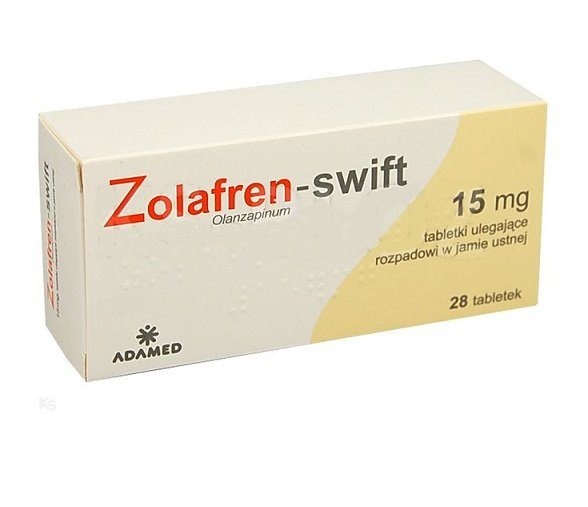
- Country of registration
- Dosage formTablets, 15 mg
- ATC codeN05AH03
- Active substance
- Prescription requiredYes
- Manufacturer
- ImporterAdamed Pharma S.A.
- This information is for reference only and does not constitute medical advice. Always consult a doctor before taking any medication. Oladoctor is not responsible for medical decisions based on this content.
- Alternatives to Zolafren-sviftDosage form: Tablets, 5 mgActive substance: olanzapineManufacturer: Orion CorporationPrescription requiredDosage form: Tablets, 10 mgActive substance: olanzapineManufacturer: Orion CorporationPrescription requiredDosage form: Tablets, 15 mgActive substance: olanzapineManufacturer: Orion CorporationPrescription required
Online doctors for Zolafren-svift
Discuss questions about Zolafren-svift, including use, safety considerations and prescription review, subject to medical assessment and local regulations.







Get Zolafren-svift Prescription Online
Fill in a 2-min form
Tell us your symptoms, history, and what medicine you're requesting.
Pick a doctor or let us assign
Choose a specialist or we'll match you with the next available doctor.
Doctor reviews your case
Usually within 30 minutes. They may ask follow-up questions via chat.
Collect from any pharmacy
Electronic prescription sent to your email — valid across Spain.
Frequently Asked Questions
Zolafren-svift requires a prescription in Poland. You can check with a doctor online whether this medicine may be appropriate for your situation.
The active ingredient in Zolafren-svift is olanzapine. This information helps identify medicines with the same composition but different brand names.
Zolafren-svift is manufactured by Adamed Pharma S.A.. Pharmacy brands and packaging may differ depending on the distributor.
Doctors such as Family doctors, Psychiatrists, Dermatologists, Cardiologists, Endocrinologists, Gastroenterologists, Pulmonologists, Nephrologists, Rheumatologists, Hematologists, Infectious disease physicians, Allergists, Geriatricians, Paediatricians, Oncologists may assess whether Zolafren-svift is appropriate, depending on your situation and local regulations. You can book an online consultation to discuss your symptoms and possible next steps.
Spain has a well-developed healthcare infrastructure across major cities such as Madrid, Barcelona, Valencia, and Seville. Pharmacies are widely available and operate under strict regulations, ensuring access to prescribed medications.
You can buy Zolafren-svift in Madrid, Barcelona, Seville, or Valencia at any local pharmacy with a valid prescription.
To obtain a prescription, you can use Oladoctor:
Other medicines with the same active substance (olanzapine) include Anzorin, Anzorin, Anzorin. These may have different brand names or formulations but contain the same therapeutic ingredient. Always consult a doctor before switching or starting a new medicine.
