



SUFENTANIL 5 mcg/ml Solution

Prescription review online
A doctor will review your case and decide whether a prescription is medically appropriate.

Talk to a doctor about this medicine
Discuss your symptoms and possible next steps in a quick online consultation.



How to use Sufentanil Kalceks
Contents of the leaflet
- Leaflet accompanying the packaging: information for the user
- Sufentanil Kalceks, 5 micrograms/mL, solution for injection/infusion
- Sufentanil Kalceks, 50 micrograms/mL, solution for injection/infusion
- What is Sufentanil Kalceks and what is it used for
- Important information before using Sufentanil Kalceks
- How to use Sufentanil Kalceks
- Possible side effects
- How to store Sufentanil Kalceks
- Contents of the packaging and other information
- What Sufentanil Kalceks contains
- What Sufentanil Kalceks looks like and contents of the pack
- Marketing authorization holder and manufacturer
- This medicine is authorized in the Member States of the European Economic Area under the following names:
- Date of last revision of the leaflet: 04/2023
- Incompatibilities
- Special precautions for disposal and preparation of the medicinal product for administration
Leaflet accompanying the packaging: information for the user
Sufentanil Kalceks, 5 micrograms/mL, solution for injection/infusion

Not sure if this medicine is right for you?
Discuss your symptoms and treatment with a doctor online.
Sufentanil Kalceks, 50 micrograms/mL, solution for injection/infusion
Sufentanil
Read the leaflet carefully before using the medicine, as it contains important information for the patient.
- Keep this leaflet, you may need to read it again.
- In case of any doubts, consult a doctor or nurse.
- If the patient experiences any side effects, including any side effects not listed in this leaflet, they should inform their doctor or nurse. See section 4.
Table of contents of the leaflet
- 1. What is Sufentanil Kalceks and what is it used for
- 2. Important information before using Sufentanil Kalceks
- 3. How to use Sufentanil Kalceks
- 4. Possible side effects
- 5. How to store Sufentanil Kalceks
- 6. Contents of the packaging and other information
1. What is Sufentanil Kalceks and what is it used for
Sufentanil Kalceks contains the active substance sufentanil. It belongs to a group of medicines called "opioid anesthetics". Sufentanil is used as a pain reliever during or after surgery or to reduce pain during childbirth. Sufentanil is used as an anesthetic during surgical procedures in ventilated patients.
Adults
Intravenously (into a vein):
- to prevent pain during the introduction and maintenance of general anesthesia in combination with other anesthetics;
- as an anesthetic for the introduction and maintenance of general anesthesia during major surgical procedures.
Epidurally (into the spine):
- to prevent pain after surgical procedures and after cesarean section;
- to treat pain during childbirth.
Children
Sufentanil administered intravenouslyis indicated as a pain reliever for use during the introduction and/or maintenance of general anesthesia in children over 1 month old. Sufentanil administered epidurallyis indicated for the treatment of postoperative pain after general surgery, thoracic surgery, or orthopedic procedures in children over 1 year old.

Started taking the medicine and have questions?
Discuss your symptoms and treatment with a doctor online.
2. Important information before using Sufentanil Kalceks
When not to use Sufentanil Kalceks
- if the patient is allergic to sufentanil or any of the other ingredients of this medicine (listed in section 6);
- if the patient has any disease that causes breathing difficulties (e.g. asthma or chronic bronchitis);
- if the patient has a liver enzyme disease called "acute hepatic porphyria";
- if the patient is taking any medicines used to treat depression, known as monoamine oxidase inhibitors (MAOIs). MAOI treatment should be stopped 2 weeks before surgery (see "Sufentanil Kalceks and other medicines");
- if the patient is taking or has recently taken other strong pain relievers (e.g. nalbuphine, buprenorphine, pentazocine) (see "Sufentanil Kalceks and other medicines").
- Intravenously
- if the patient is in labor or before the umbilical cord is clamped during a cesarean section.
- Epidurally
- if the patient has severe bleeding or shock;
- if the patient has a severe infection;
- if the patient has impaired wound healing;
- if the patient has an infection at the injection site;
- if the patient has changes in blood cell count or is being treated with anticoagulant medicines.
Warnings and precautions
Sufentanil Kalceks should only be administered by trained anesthesiologists in hospitals or other facilities equipped with ventilatory support and postoperative monitoring equipment. Before starting treatment with Sufentanil Kalceks, the patient should discuss it with their doctor or nurse if:
- the patient has abnormally slow intestinal movement;
- the patient has gallbladder or pancreas disease;
- the patient or any of their relatives have ever abused alcohol, prescription drugs, or narcotics ("addiction");
- the patient smokes;
- the patient has ever had mood problems (depression, anxiety, or personality disorder) or has been treated by a psychiatrist for other mental illnesses.
This medicine contains sufentanil, which is an opioid. Repeated use of opioid pain relievers can lead to the medicine becoming less effective (the patient becomes accustomed to it). This can also lead to dependence and abuse of the medicine, which can result in life-threatening overdose. If the patient is concerned about the possibility of becoming dependent on Sufentanil Kalceks, it is essential to consult a doctor. During treatment with Sufentanil Kalceks, the patient should consult a doctor if:
- the patient experiences pain or increased sensitivity to pain (hyperalgesia) that does not respond to a higher dose of the prescribed medicine.
During treatment with this medicine, as with all strong pain relievers of this type, breathing rate may decrease. This can last until the recovery period or occur again during this time. Therefore, the patient's condition will be closely monitored after surgery. Sufentanil Kalceks may cause sleep-related breathing disorders, such as sleep apnea (pauses in breathing during sleep) and sleep-related hypoxemia (low oxygen levels in the blood). Symptoms of these disorders may include pauses in breathing during sleep, nighttime awakenings due to shortness of breath, difficulty staying asleep, or excessive daytime sleepiness. If these symptoms are observed, the patient should contact their doctor. The doctor may consider reducing the dose. This medicine will not be used in patients with myasthenia (a chronic muscle disease), as it may cause muscle stiffness after intravenous administration. Involuntary muscle spasms may occur. This medicine should be used with caution:
- in patients with lung, liver, kidney, or thyroid disease;
- in patients with increased intracranial pressure or head or brain injuries;
- in patients with decreased blood volume (administration of this medicine may cause low blood pressure and slow heart rate);
- in elderly and debilitated patients (the dose may need to be reduced). Close medical supervision may be necessary.
Newborns/infants
Newborns, like other opioids, are sensitive to respiratory depression after sufentanil administration. Limited data are available on sufentanil in infants after intravenous administration. Therefore, the doctor will carefully assess the benefits and risks before using this medicine in newborns and infants. Due to the risk of overdose or underdose, it is not recommended to use sufentanil intravenously in the neonatal period. Sufentanil should not be used epidurally in children under 1 year of age.
Sufentanil Kalceks and other medicines
The patient should tell their doctor or nurse about all medicines they are currently taking or have recently taken, as well as any medicines they plan to take. It is especially important if the patient is taking or has recently taken any of the following medicines:
- strong pain relievers, such as opioids (e.g. nalbuphine, buprenorphine, pentazocine) (see "When not to use Sufentanil Kalceks");
- medicines used to treat depression, known as monoamine oxidase inhibitors (MAOIs). These medicines should not be taken within 2 weeks before Sufentanil Kalceks administration or at the same time as Sufentanil Kalceks (see "When not to use Sufentanil Kalceks").
- medicines used to treat depression, known as selective serotonin reuptake inhibitors (SSRIs) and serotonin-norepinephrine reuptake inhibitors (SNRIs). It is not recommended to take these medicines at the same time as Sufentanil Kalceks.
- sedatives and anxiolytics, such as barbiturates, sedatives, or benzodiazepines (e.g. diazepam, midazolam);
- muscle relaxants (e.g. vecuronium, suxamethonium);
- medicines used for general anesthesia (e.g. thiopental, etomidate, nitrous oxide);
- medicines used to treat mental disorders (antipsychotics);
- antibiotics used to treat bacterial infections (erythromycin);
- medicines used to treat fungal infections (e.g. ketoconazole, itraconazole);
- medicines used to treat viral infections (e.g. ritonavir used to treat HIV/AIDS).
Concomitant use of opioids and medicines used to treat epilepsy, nerve pain, or anxiety (gabapentin and pregabalin) increases the risk of opioid overdose and respiratory depression, which can be life-threatening. Concomitant use of Sufentanil Kalceks and sedatives, such as benzodiazepines or related medicines, increases the risk of drowsiness, breathing difficulties (respiratory depression), coma, and can be life-threatening. Therefore, their concomitant use should only be considered when other treatment options are not possible. If the doctor prescribes Sufentanil Kalceks with sedatives, the dose and duration of concomitant treatment should be determined by the doctor. The patient should inform their doctor about all sedatives they are taking and strictly follow the doctor's instructions for dosing. It may be helpful to inform friends or relatives to be aware of the signs and symptoms mentioned above. If such symptoms occur, the patient should contact their doctor.
Sufentanil Kalceks with alcohol
Alcohol may enhance some of the side effects of sufentanil. Therefore, the patient should not consume alcohol before and after using this medicine.
Pregnancy and breastfeeding
If the patient is pregnant or breastfeeding, thinks they may be pregnant, or plans to have a child, they should consult their doctor or nurse before using this medicine. Sufentanil Kalceks should not be administered intravenously during labor, as it crosses the placenta and may affect the baby's breathing. Sufentanil Kalceks may be administered epidurally during labor. Sufentanil passes into breast milk. Caution should be exercised when sufentanil is administered to a breastfeeding woman. Breastfeeding can be initiated 24 hours after the last use of sufentanil.
Driving and using machines
This medicine can have a major impact on the ability to drive and use machines. The patient should not drive or operate machinery until a suitable time has passed after receiving this medicine. The patient should leave the hospital with a companion and avoid consuming alcohol.
Sufentanil Kalceks contains sodium
The medicine contains 3.54 mg of sodium (the main component of common salt) per mL of solution. This corresponds to 0.18% of the maximum recommended daily intake of sodium in the diet for adults.
3. How to use Sufentanil Kalceks
Sufentanil Kalceks will be injected by a trained doctor into a vein (intravenously) or into the space surrounding the spinal cord (epidurally). During treatment with Sufentanil Kalceks, specially trained healthcare professionals will closely monitor the patient, and emergency equipment will be available if needed.
Dosage
The attending doctor will decide what dose and for how long the patient (or child) will receive this medicine. The dose depends on the patient's age, weight, physical condition, type of surgical procedure, and depth of anesthesia.
- The dose should be carefully adjusted in patients with hypothyroidism, impaired lung function, obesity, and alcoholism. After surgery, it is recommended to extend monitoring of these patients.
- Patients with liver or kidney dysfunction will require smaller doses.
- Elderly and debilitated patients will require smaller doses.
Use in children over 1 month and adolescents
Intravenous administration
Sufentanil is slowly injected into a vein by an anesthesiologist. The dosage depends on the dose of other anesthetics, the type and duration of the procedure, and will be determined by the anesthesiologist.
Use in children over 1 year and adolescents
Epidural administration
Sufentanil is slowly injected into the epidural space (part of the spine) by an anesthesiologist experienced in pediatric anesthesia techniques. The dosage depends on the concomitant use of local anesthetics and the required duration of analgesia. Children will be monitored for signs of abnormally slow and shallow breathing (respiratory depression) for at least 2 hours after epidural administration of sufentanil.
Administration of a higher dose of Sufentanil Kalceks than recommended
Since this medicine will usually be administered by a doctor in carefully controlled conditions, it is unlikely that an overdose will occur. However, if the patient accidentally receives too much sufentanil, breathing difficulties (weak or slow breathing or even temporary cessation of breathing) may occur. In such a case, the doctor or nurse should be informed immediately. If the patient has any further doubts about the use of this medicine, they should consult their doctor or pharmacist.
4. Possible side effects
Like all medicines, Sufentanil Kalceks can cause side effects, although not everybody gets them. The most common side effects are excessive sedation, itching, nausea, and vomiting. The patient should immediatelyinform their doctor or nurse if they experience the following side effects (frequency cannot be estimated from the available data):
- breathing difficulties
- severe allergic reactions, which can cause skin rash, face, lip, tongue, or throat swelling, breathing difficulties, loss of consciousness, and anaphylactic shock
Very common(may affect more than 1 in 10 people)
- excessive sedation
- itching
Common(may affect up to 1 in 10 people)
- dizziness, headache
- rapid heartbeat
- high or low blood pressure, paleness
- nausea, vomiting
- skin discoloration
- muscle twitching
- urinary retention or difficulty urinating
- fever
- in newborns: involuntary muscle twitching, blue-tinged skin due to low oxygen levels in the blood
Uncommon(may affect up to 1 in 100 people)
- runny nose or stuffy nose (rhinitis)
- hypersensitivity
- apathy, nervousness
- muscle twitching (intraoperative muscle movements), lack of voluntary muscle coordination, persistent muscle spasms causing twisting and repetitive movements, hyperactive reflexes, abnormal muscle tone increase, drowsiness
- vision disturbances
- heart rhythm disturbances (atrioventricular block), blue-tinged skin due to low oxygen levels in the blood, slow heart rate, irregular heartbeat, abnormal electrocardiogram, lack of heartbeat
- bronchospasm, too shallow or too slow breathing, hoarseness, cough, hiccups, breathing difficulties
- allergic skin reaction, abnormal sweating, rash, dry skin
- back pain, muscle stiffness, including chest wall stiffness that may cause breathing difficulties
- chills, elevated or decreased body temperature, reaction at the injection site, pain at the injection site, pain
- in newborns: involuntary muscle movements, decreased body movements, rash, decreased muscle tone
Frequency not known(frequency cannot be estimated from the available data)
- involuntary muscle spasms, overwhelming feeling of well-being (euphoria), feeling of "spinning" (dizziness), coma, seizures
- pupillary constriction
- cardiac arrest (the doctor has medicines to reverse this effect)
- shock
- respiratory arrest, pulmonary edema, laryngospasm
- skin redness
- muscle spasms
Side effects in children and adolescents
It is expected that the frequency, type, and severity of side effects in children are the same as in adults.
Reporting side effects
If the patient experiences any side effects, including any side effects not listed in the leaflet, they should inform their doctor or nurse. Side effects can be reported directly to the Department of Adverse Reaction Monitoring of Medicinal Products, Medical Devices, and Biocidal Products: Al. Jerozolimskie 181C, 02-222 Warsaw, Tel.: +48 22 49 21 301, Fax: +48 22 49 21 309, Website: https://smz.ezdrowie.gov.pl. Side effects can also be reported to the marketing authorization holder. By reporting side effects, more information can be gathered on the safety of the medicine.
5. How to store Sufentanil Kalceks
The medicine should be stored out of sight and reach of children. Do not use this medicine after the expiry date stated on the ampoule label after "EXP" and the carton after "Expiry date (EXP)". The expiry date refers to the last day of the month stated. There are no special precautions for storage. Shelf-life after opening the ampoule The medicine should be used immediately. Shelf-life after dilution Chemical and physical stability has been demonstrated for 72 hours at 20-25°C and 2-8°C. From a microbiological point of view, the diluted solution should be used immediately. If the solution is not used immediately, the responsibility for the storage time and conditions before use lies with the user, and it is usually not more than 24 hours at 2-8°C, unless dilution has taken place in controlled and validated aseptic conditions. Medicines should not be disposed of via wastewater or household waste. The patient should ask their pharmacist how to dispose of medicines that are no longer needed. This will help protect the environment.
6. Contents of the packaging and other information
What Sufentanil Kalceks contains
- The active substance is sufentanil (as sufentanil citrate).
Sufentanil Kalceks 5 micrograms/mL
Each mL of solution contains 5 micrograms of sufentanil as sufentanil citrate.
Each 2 mL of solution contains 10 micrograms of sufentanil as sufentanil citrate.
Each 10 mL of solution contains 50 micrograms of sufentanil as sufentanil citrate.
Sufentanil Kalceks 50 micrograms/mL
Each mL of solution contains 50 micrograms of sufentanil as sufentanil citrate.
Each 5 mL of solution contains 250 micrograms of sufentanil as sufentanil citrate.
Each 10 mL of solution contains 500 micrograms of sufentanil as sufentanil citrate.
Each 20 mL of solution contains 1000 micrograms of sufentanil as sufentanil citrate.
The other ingredients are: sodium chloride, citric acid monohydrate (for pH adjustment), water for injections
- The other ingredients are: sodium chloride, citric acid monohydrate (for pH adjustment), water for injections
What Sufentanil Kalceks looks like and contents of the pack
Clear, colorless solution, free from visible particles.
Ampoules of clear glass type I with a capacity of 2 mL, 5 mL, 10 mL, or 20 mL with one break point. The ampoules are packed in a protective sleeve. The sleeves are packed in cardboard boxes. Pack sizes: Sufentanil Kalceks 5 micrograms/mL5 or 10 ampoules of 2 mL, 5 or 10 ampoules of 10 mL Sufentanil Kalceks 50 micrograms/mL5 or 10 ampoules of 5 mL, 5 or 10 ampoules of 10 mL, 5 or 10 ampoules of 20 mL Not all pack sizes may be marketed.
Marketing authorization holder and manufacturer
AS KALCEKS Krustpils iela 71E, LV-1057 Rīga, Latvia Tel.: +371 67083320 E-mail: [email protected]
This medicine is authorized in the Member States of the European Economic Area under the following names:
Denmark, Czech Republic, Italy, Poland, Slovakia Sufentanil Kalceks Austria Sufentanil Kalceks 5 Mikrogramm/ml, 50 Mikrogramm/ml Injektions-/Infusionslösung Belgium Sufentanil Kalceks 5 microgrammes/ml, 50 microgrammes/ml, solution injectable/pour perfusion Sufentanil Kalceks 5 microgram/ml, 50 microgram/ml oplossing voor injectie/infusie Sufentanil Kalceks 5 Mikrogramm/ml, 50 Mikrogramm/ml Injektions-/Infusionslösung France SUFENTANIL KALCEKS 5 microgrammes/ml, solution injectable/pour perfusion SUFENTANIL KALCEKS 50 microgrammes/ml, solution injectable/pour perfusion Germany Sufentanil Kalceks 5 Mikrogramm/ml Injektions-/Infusionslösung Sufentanil Kalceks 50 Mikrogramm/ml Injektions-/Infusionslösung Latvia Sufentanil Kalceks 5 mikrogrami/ml, 50 mikrogrami/ml šķīdums injekcijām/infūzijām Netherlands Sufentanil Kalceks 5 microgram/ml, 50 microgram/ml oplossing voor injectie/infusie
Date of last revision of the leaflet: 04/2023
------------------------------------------------------------------------------------------------------------------------
Information intended for healthcare professionals only:
Incompatibilities
This medicinal product must not be mixed with other medicinal products, except for those mentioned below.
Special precautions for disposal and preparation of the medicinal product for administration
Sufentanil should only be administered by anesthesiologists or doctors familiar with its use and effects or under their supervision. Epidural administration must be performed by a doctor experienced in epidural administration techniques. Before administration, the correct position of the needle or catheter should be checked. For single use only. All unused solution should be discarded. This medicinal product should be inspected before use. It should not be used if signs of deterioration are visible (e.g. solid particles or discoloration). It can be diluted with:
- 9 mg/mL (0.9%) sodium chloride solution for injection
- 50 mg/mL (5%) glucose solution for injection
- Ringer's solution
- Ringer's solution with lactate
For epidural administration, the medicinal product can be mixed with 9 mg/mL (0.9%) sodium chloride solution and/or bupivacaine solution. Instructions for opening the ampoule
- 1) Turn the ampoule with the colored break point upwards. If there is solution in the upper part of the ampoule, gently tap with a finger to move all the solution to the lower part of the ampoule.
- 2) Use both hands to open the ampoule; holding the lower part of the ampoule in one hand, break the upper part of the ampoule in the direction of the colored break point (see picture below).
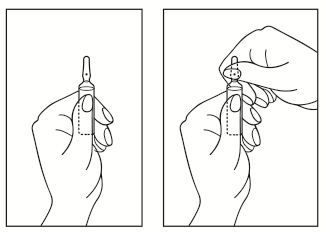
Any unused medicinal product or waste material should be disposed of in accordance with local requirements.
- Country of registration
- Dosage formSolution, 5 mcg/ml
- ATC codeN01AH03
- Active substance
- Prescription requiredNo
- Manufacturer
- ImporterAS Kalceks
- This information is for reference only and does not constitute medical advice. Always consult a doctor before taking any medication. Oladoctor is not responsible for medical decisions based on this content.
- Alternatives to Sufentanil KalceksDosage form: Solution, 5 mcg/ml (50 mcg/10 ml)Active substance: sufentanilPrescription not requiredDosage form: Solution, 50 mcg/ml, (250 mcg/5 ml, 1 mg/20 ml)Active substance: sufentanilPrescription not requiredDosage form: Solution, 5 mcg/mlActive substance: sufentanilManufacturer: hameln rds a.s. HBM Pharma s.r.o. Siegfried Hameln GmbHPrescription not required
Online doctors for Sufentanil Kalceks
Discuss questions about Sufentanil Kalceks, including use, safety considerations and prescription review, subject to medical assessment and local regulations.









Get Sufentanil Kalceks Prescription Online
Fill in a 2-min form
Tell us your symptoms, history, and what medicine you're requesting.
Pick a doctor or let us assign
Choose a specialist or we'll match you with the next available doctor.
Doctor reviews your case
Usually within 30 minutes. They may ask follow-up questions via chat.
Collect from any pharmacy
Electronic prescription sent to your email — valid across Spain.
Frequently Asked Questions
Sufentanil Kalceks does not require a prescription in Poland. You can check with a doctor online whether this medicine may be appropriate for your situation.
The active ingredient in Sufentanil Kalceks is sufentanil. This information helps identify medicines with the same composition but different brand names.
Sufentanil Kalceks is manufactured by AS Kalceks. Pharmacy brands and packaging may differ depending on the distributor.
Doctors such as Family doctors, Psychiatrists, Dermatologists, Cardiologists, Endocrinologists, Gastroenterologists, Pulmonologists, Nephrologists, Rheumatologists, Hematologists, Infectious disease physicians, Allergists, Geriatricians, Paediatricians, Oncologists may assess whether Sufentanil Kalceks is appropriate, depending on your situation and local regulations. You can book an online consultation to discuss your symptoms and possible next steps.
Spain has a well-developed healthcare infrastructure across major cities such as Madrid, Barcelona, Valencia, and Seville. Pharmacies are widely available and operate under strict regulations, ensuring access to prescribed medications.
You can buy Sufentanil Kalceks in Madrid, Barcelona, Seville, or Valencia at any local pharmacy with a valid prescription.
To obtain a prescription, you can use Oladoctor:
Other medicines with the same active substance (sufentanil) include Sufentanil Hiesi, Sufentanil Hiesi, Sufentanil hameln. These may have different brand names or formulations but contain the same therapeutic ingredient. Always consult a doctor before switching or starting a new medicine.
