



SINTROM 4 mg Tablets

Prescription review online
A doctor will review your case and decide whether a prescription is medically appropriate.

Talk to a doctor about this medicine
Discuss your symptoms and possible next steps in a quick online consultation.



How to use Sintrom
Contents of the leaflet
- Leaflet attached to the packaging: patient information
- Warning! The leaflet should be kept. Information on the immediate packaging in a foreign language.
- Sintrom
- 4 mg, tablets
- What is Sintrom and what is it used for
- Important information before taking Sintrom
- When not to take Sintrom:
- Warnings and precautions
- Children and adolescents
- Elderly patients (over 65 years old)
- Other medicines and Sintrom
- It is not recommended to take Sintrom with the following medicines:
- Caution should be exercised when taking Sintrom in combination with other medicines, particularly:
- Other medicines that may increase the effect of Sintrom, such as:
- Medicines that may decrease the effect of Sintrom, such as:
- Effect of Sintrom on other medicines:
- Sintrom with food, drink, and alcohol
- Pregnancy and breastfeeding
- Driving and using machines
- Sintrom contains lactose monohydrate
- How to take Sintrom
- Possible side effects
- How to store Sintrom
- Contents of the packaging and other information
Leaflet attached to the packaging: patient information
Warning! The leaflet should be kept. Information on the immediate packaging in a foreign language.

Not sure if this medicine is right for you?
Discuss your symptoms and treatment with a doctor online.
Sintrom
4 mg, tablets
Acenocoumarol
You should carefully read the contents of the leaflet before using the medicine, as it contains important information for the patient.
- You should keep this leaflet, so that you can read it again if necessary.
- In case of any doubts, you should consult a doctor or pharmacist.
- This medicine has been prescribed specifically for one person. It should not be given to others. The medicine may harm another person, even if the symptoms of their illness are the same.
- If the patient experiences any side effects, including any side effects not listed in this leaflet, they should tell their doctor, pharmacist, or nurse. See section 4.
Table of contents of the leaflet
- 1. What is Sintrom and what is it used for
- 2. Important information before taking Sintrom
- 3. How to take Sintrom
- 4. Possible side effects
- 5. How to store Sintrom
- 6. Contents of the packaging and other information

Started taking the medicine and have questions?
Discuss your symptoms and treatment with a doctor online.
1. What is Sintrom and what is it used for
What is Sintrom
Sintrom contains the active substance acenocoumarol.
Acenocoumarol belongs to a group of anticoagulant substances that reduce the blood's ability to clot and thus prevent the formation of blood clots in blood vessels.
What is Sintrom used for
Sintrom is indicated for the treatment and prevention of thromboembolic diseases.
How Sintrom works
Sintrom works by inhibiting the formation of blood clots. It does not dissolve blood clots that have already formed, but it can prevent clots from growing and causing more serious problems.
Control tests during Sintrom treatment
During treatment with Sintrom, the doctor will order regular blood tests and adjust the dose of the medicine accordingly.
You should consult your doctor if you have any questions about the action of Sintrom or the reasons why it was prescribed.
2. Important information before taking Sintrom
Sintrom should only be taken after consulting a doctor. Sintrom is not suitable for every patient.
You should strictly follow the doctor's instructions, which may differ from the information contained in this leaflet.
When not to take Sintrom:
- If the patient is allergic (hypersensitive) to acenocoumarol and similar coumarin derivatives or any of the other ingredients of this medicine (listed in section 6 of the leaflet). In such a case, you should consult your doctor before taking Sintrom. If you are unsure which medicines to avoid, you should ask your doctor or pharmacist.
- If the patient is unable to cooperate (e.g., unsupervised elderly patients, alcoholics, and patients with mental disorders).
- If the patient has congenital or acquired bleeding disorders (hemophilia).
- Shortly after eye surgery, central nervous system surgery, dental procedures, and after surgical procedures involving the lungs, prostate, uterus, which are associated with significant blood loss or shortly before surgery when significant blood loss is expected.
- If the patient has gastric or duodenal ulcer disease, gastrointestinal bleeding, genitourinary tract bleeding, brain or lung bleeding.
- If the patient has acute infection or inflammatory conditions of the heart, pericardial effusion.
- If the patient has uncontrolled high blood pressure.
- If the patient has severe liver or kidney disease.
- If the patient is pregnant or if there is a suspicion that the patient may be pregnant.
If any of the above situations occur, you should consult your doctor before taking Sintrom.
You should consult your doctor for advice if you have an allergy.
Warnings and precautions
Before starting Sintrom, you should discuss the following with your doctor:
- If the patient has liver function disorders.
- If the patient has kidney or thyroid function disorders, cancer, inflammatory conditions, or conditions related to impaired absorption of nutrients from the gastrointestinal tract. These conditions may cause abnormal levels of the active substance in the blood.
- If the patient has severe heart failure.
- If the patient has a deficiency of protein C or protein S (a type of protein that affects blood clotting).
- If the patient is scheduled for diagnostic or therapeutic procedures, such as minor surgery, tooth extraction, lumbar puncture, angiography.
- If the patient is taking medicines administered by intramuscular injection. During Sintrom treatment or similar medicines, you should avoid intramuscular injections, as they may cause hematoma formation,
- If the patient has an increased risk of bleeding, for example, in patients who have had variable blood test results for the international normalized ratio (INR), have had or currently have stomach or duodenal ulcers, have high blood pressure, have cerebrovascular disease (cerebrovascular disease), anemia, recent injury or trauma, if the patient is taking or has recently taken any of the medicines listed below or has been taking Sintrom for a long time,
- In patients taking anticoagulant medicines called vitamin K antagonists, including Sintrom, rare cases of calciphylaxis have been reported, a condition in which calcium accumulates in the skin's blood vessels. This causes painful nodules or ulcers that can lead to serious infection, often fatal. This usually occurs only when the person has severe kidney disease or abnormal calcium, albumin, phosphorus, or certain protein levels in the blood. If this condition is diagnosed, the doctor will start appropriate treatment and may discontinue Sintrom treatment.
You should immediately tell your doctor if any of the above situations occur.
Children and adolescents
Data on the use of Sintrom in children and adolescents are limited, and therefore, more frequent control tests are necessary.
Elderly patients (over 65 years old)
Patient over 65 years old may be more sensitive to acenocoumarol, and therefore, more frequent control tests are necessary, and if necessary, the dose of the medicine should be reduced.
Other medicines and Sintrom
You should tell your doctor about all medicines you are currently taking or have recently taken, as well as any medicines you plan to take.
Sintrom may affect the action of other medicines, and vice versa.
It is not recommended to take Sintrom with the following medicines:
- heparin (an anticoagulant medicine),
- antibiotics (e.g., clindamycin),
- salicylic acid and its derivatives, such as acetylsalicylic acid, aminosalicylic acid, diflunisal (a pain reliever),
- clopidogrel, prasugrel, ticagrelor, ticlopidine, phenylbutazone, and other pyrazolone derivatives, nonsteroidal anti-inflammatory drugs (including celecoxib),
- pyrazolone (sulfinpyrazone), other nonsteroidal anti-inflammatory drugs (medicines that affect platelets, involved in the blood clotting process).
Caution should be exercised when taking Sintrom in combination with other medicines, particularly:
- glucosamine (for osteoarthritis) - may enhance the effect of Sintrom,
- certain types of medicines used to prevent blood clotting (e.g., warfarin, dicumarol, phenprocoumon, acenocoumarol, and flindione). The action of these medicines may be stronger when taken with glucosamine. Patients treated with such combinations of medicines should be closely monitored when starting or stopping glucosamine treatment.
It is recommended that Sintrom not be taken with any of the above medicines. If it is necessary to take any of these medicines while taking Sintrom, the doctor will monitor the blood clotting parameters more frequently.
Other medicines that may increase the effect of Sintrom, such as:
- allopurinol (a medicine used to treat gout),
- androgens, anabolic steroids,
- antiarrhythmic agents (e.g., amiodarone, quinidine) (medicines that prevent irregular heart rhythm),
- antibiotics (e.g., erythromycin, tetracyclines, neomycin, chloramphenicol, amoxicillin, some cephalosporins, and some fluoroquinolones) (medicines used to treat infections),
- selected antidepressants (serotonin reuptake inhibitors, SSRI: e.g., citalopram, fluoxetine, sertraline),
- cimetidine (a medicine used to treat stomach ulcers and gastroesophageal reflux disease),
- clofibrate and its derivatives (a medicine used to reduce cholesterol levels),
- corticosteroids, such as methylprednisolone, prednisone (anti-inflammatory medicines),
- disulfiram (a medicine used to treat alcoholism),
- ethacrynic acid (a medicine used to increase urine production),
- glucagon (a medicine used to maintain normal blood glucose levels),
- imidazole derivatives (e.g., metronidazole, and even miconazole used topically) (a medicine used to treat infections),
- paracetamol (a pain reliever and antipyretic),
- sulfonamides, including co-trimoxazole (sulfamethoxazole and trimethoprim) (medicines used to treat infections),
- sulfonylurea derivatives (tolbutamide, chlorpropamide) (medicines used to treat diabetes),
- thyroid hormones (including dextrothyroxine) (a medicine used to treat hypothyroidism),
- medicines that reduce the activity of the liver enzyme CYP2C9 (e.g., valproic acid) - you should ask your doctor or pharmacist if any of the medicines you are taking have this effect.
- statins (e.g., fluvastatin, atorvastatin, simvastatin) (medicines used to reduce cholesterol levels),
- tamoxifen (a medicine used to treat breast cancer),
- tramadol (a pain reliever),
- proton pump inhibitors (e.g., omeprazole),
- plasminogen activators (e.g., urokinase, streptokinase, and alteplase), thrombin inhibitors (e.g., argatroban) (medicines used to dissolve blood clots during angina pectoris),
- prokinetic agents (e.g., cisapride) (medicines used to treat gastrointestinal disorders),
- antacids (e.g., magnesium hydroxide),
- viloxazine (an antidepressant),
- vitamin E.
Medicines that may decrease the effect of Sintrom, such as:
- certain anticancer medicines (aminoglutethimide, azathioprine, 6-mercaptopurine) (medicines used to treat cancer),
- certain antiviral medicines (ritonavir, nelfinavir) (medicines used in HIV therapy),
- barbiturates, carbamazepine (antiepileptic medicines),
- cholestyramine (a medicine used to reduce cholesterol levels),
- griseofulvin (a medicine used to treat fungal infections),
- oral contraceptives,
- rifampicin (a medicine used to treat infections),
- Hypericum perforatum (St. John's Wort) preparations (a herbal medicine used to treat depression),
- foods rich in vitamin K,
Effect of Sintrom on other medicines:
- Sintrom may increase the risk of toxicity when taken with hydantoin derivatives, such as phenytoin (a medicine used to treat epilepsy).
- Sintrom may enhance the blood glucose-lowering effect of sulfonylurea derivatives (e.g., glibenclamide, glimepiride).
Sintrom with food, drink, and alcohol
You should limit the consumption of large amounts of alcohol and foods rich in vitamin K, such as leafy green vegetables, spinach, cabbage, kale, peas, soybean oil, walnuts, broccoli, turnips, alfalfa, avocados, etc. Alcohol may alter the effect of Sintrom.
In case of doubts, you should consult your doctor.
Pregnancy and breastfeeding
If you are pregnant or breastfeeding, think you may be pregnant, or plan to have a child, you should consult your doctor or pharmacist before taking this medicine.
Use during pregnancy is contraindicated.Sintrom, like other anticoagulant medicines, may cause serious harm to the fetus.
It is recommended that women of childbearing age have a pregnancy test before taking Sintrom to rule out pregnancy. You should use effective contraception while taking Sintrom.
The potential risks and benefits of the treatment should be discussed with the patient by the doctor.
If you are breastfeeding, you should consult your doctor. Both the mother and the child require special medical supervision, and the child should prophylactically receive vitamin K.
Driving and using machines
Sintrom does not affect the ability to drive and use machines. In case of an accident, you should inform your doctor or hospital staff that you are taking Sintrom.
Considering the possibility of injury, e.g., in an accident, it is recommended to carry a card with information about anticoagulant treatment.
Sintrom contains lactose monohydrate
Sintrom contains lactose (milk sugar). If you have been diagnosed with intolerance to some sugars, you should consult your doctor before taking the medicine.
3. How to take Sintrom
This medicine should always be taken according to the doctor's instructions. In case of doubts, you should consult your doctor.
The dosage of the medicine is determined by the doctor. Regular blood clotting tests allow the doctor to adjust the dose of Sintrom, which should be taken daily. You should follow the doctor's instructions and not exceed the recommended doses.
Recommended dose
The doctor will inform you exactly how many Sintrom tablets to take. Depending on how you respond to the treatment, the doctor may recommend increasing or decreasing the dose.
The sensitivity of individual patients to the medicine may vary and may change during treatment or when the diet changes, especially when foods rich in vitamin K (spinach, cabbage) are included. You should strictly follow the doctor's instructions, which will be based on laboratory tests, depending on the patient's needs, to determine the appropriate dose of the medicine.
You should not suddenly stop taking this medicine or change its dose on your own initiative.
Dosage: Adults
The usual initial dose is 2 mg/day to 4 mg/day.
The maintenance dose is usually between 1 mg/day and 8 mg/day.
Elderly patients, patients with liver disease, or severe heart failure (which slows down blood flow in the liver and may damage it), or malnourished patients may require a lower dose at the beginning and during maintenance treatment with Sintrom.
Use in children and adolescents
The doctor will decide on the use of Sintrom in children and adolescents.
During each visit to the doctor or dentist, you should inform them about taking this medicine.
How and when to take Sintrom
You should regularly take the tablets, every day at the same time (e.g., in the evening with a meal, with a glass of water). The tablets should be swallowed whole.
The tablet can be divided into equal doses.
The doctor should assess whether the patient is able to divide the Sintrom tablet, 4 mg, into four equal parts.
How long to take Sintrom
The doctor will inform you exactly how long to take Sintrom.
Taking more than the recommended dose of Sintrom
If you have accidentally taken more than the recommended amount of Sintrom tablets, you should immediately inform your doctor.
Overdose of Sintrom may lead to bleeding. If bleeding occurs, you should stop taking Sintrom and start treatment for bleeding.
Missing a dose of Sintrom
If the medicine is not taken at the usual time, you should take the missed dose as soon as possible. If it is almost time for the next dose, you should not take the missed dose, but only the next dose at the usual time.
You should not take a double dose to make up for the missed dose. During the next visit to the doctor, you should inform them about all cases of missed doses.
Stopping Sintrom treatment
In case of any further doubts about taking this medicine, you should consult your doctor.
4. Possible side effects
Like all medicines, Sintrom can cause side effects, although not everybody gets them.
Some side effects may be serious:
Frequent (less than 1 case in 10 people): bleeding (symptoms may include: unexplained nosebleeds or bleeding from the gums when brushing teeth; unexplained bruising; unusual or heavy menstrual bleeding; blood in the urine; bloody or black, tarry stools; coughing up blood or bloody vomit; sudden, severe, or persistent headache. If any of these bleeding symptoms occur, it may mean that you have taken more medicine than you needed.
Rare (less than 1 case in 1,000 people): allergic reactions in the form of a rash or itching.
Very rare (less than 1 case in 10,000 people): bleeding into the skin with blistering or without blistering, usually located on the cheeks, buttocks, abdomen, chest, and sometimes on the toes; bleeding or hematoma under the skin (a sign of possible vasculitis).
If any of the above side effects occur, you should immediately inform your doctor.
Other side effects:
Rare (less than 1 case in 1,000 people): hair loss, decreased appetite, vomiting, nausea. If any of these symptoms occur, you should inform your doctor.
Frequency not known (frequency cannot be estimated from the available data): painful skin rash. Sintrom may cause severe skin disorders, including calciphylaxis, which may initially manifest as a painful skin rash but may lead to other serious complications. This side effect occurs more frequently in patients with chronic kidney disease.
Lower than normal red blood cell count or decreased hemoglobin levels (anemia).
If you experience any side effects not listed in this leaflet, you should tell your doctor.
Reporting side effects
If you experience any side effects, including any side effects not listed in this leaflet, you should tell your doctor, pharmacist, or nurse. Side effects can be reported directly to the Department of Adverse Reaction Monitoring of Medicinal Products, Medical Devices, and Biocidal Products, Al. Jerozolimskie 181C, 02-222 Warsaw, tel.: +48 22 49 21 301, fax: +48 22 49 21 309, website: https://smz.ezdrowie.gov.pl
By reporting side effects, you can help gather more information on the safety of the medicine.
5. How to store Sintrom
There are no special instructions for storage.
The medicine should be stored out of sight and reach of children.
Do not use this medicine after the expiry date stated on the packaging. The expiry date refers to the last day of the month.
Medicines should not be disposed of via wastewater or household waste. You should ask your pharmacist how to dispose of medicines that are no longer needed. This will help protect the environment.
6. Contents of the packaging and other information
What Sintrom contains
- The active substance of Sintrom is acenocoumarol. Each tablet contains 4 mg of acenocoumarol.
- The other ingredients are: lactose monohydrate, magnesium stearate, cornstarch, cornstarch paste, anhydrous colloidal silica.
What Sintrom looks like and what the packaging contains
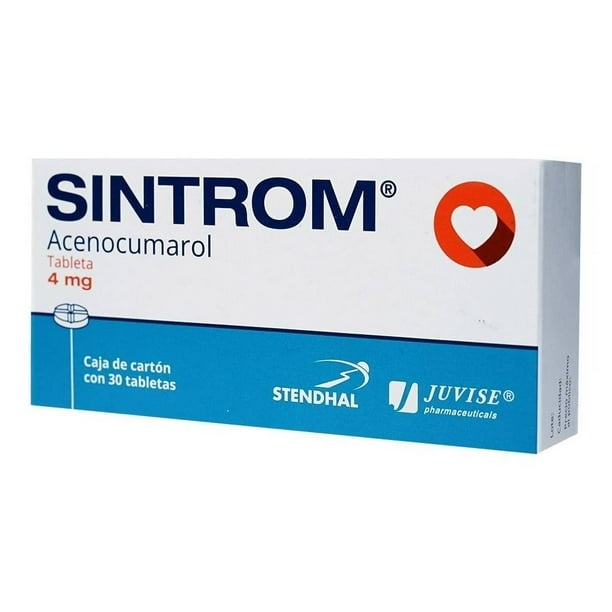
Sintrom is a white, round, flat tablet with rounded edges. On one side, it is marked with "CG", and on the other side, it has a cross-shaped dividing line, allowing it to be divided into four equal parts, with the letter "A" marked on each of the four parts.
Sintrom is available in packaging containing 20 tablets.
For more detailed information, you should consult the marketing authorization holder or parallel importer.
Marketing authorization holder in Romania, the country of export:
Merus Labs Luxco II S.à.R.L.
26-28, rue Edward Steichen
L-2540 Luxembourg
Luxembourg
Manufacturer:
FAMAR A.V.E
Anthousa Avenue 7
Anthousa Attiki, 15349
Greece
Norgine B.V.
Antonio Vivaldistraat 150
1083 HP Amsterdam
Netherlands
Rovi Pharma Industrial Services, S.A.
Frosst Ibérica, S.A.
Via Complutense, 140, Alcalá de Henares, Madrid, 28805, Spain
Parallel importer:
Delfarma Sp. z o.o.
ul. Św. Teresy od Dzieciątka Jezus 111
91-222 Łódź
Repackaged by:
Delfarma Sp. z o.o.
ul. Św. Teresy od Dzieciątka Jezus 111
91-222 Łódź
Romanian marketing authorization number: 2606/2010/01
Parallel import authorization number: 800/12 Date of leaflet approval: 24.11.2022
[Information about the trademark]
- Country of registration
- Dosage formTablets, 4 mg
- ATC codeB01AA07
- Active substance
- Prescription requiredYes
- Marketing authorisation holder (MAH)Merus Labs Luxco II S.a.R.L.
- This information is for reference only and does not constitute medical advice. Always consult a doctor before taking any medication. Oladoctor is not responsible for medical decisions based on this content.
- Alternatives to SintromDosage form: Tablets, 4 mgActive substance: acenocoumarolPrescription requiredDosage form: Tablets, 1 mgActive substance: acenocoumarolPrescription requiredDosage form: Tablets, 4 mgActive substance: acenocoumarolPrescription required
Online doctors for Sintrom
Discuss questions about Sintrom, including use, safety considerations and prescription review, subject to medical assessment and local regulations.









Get Sintrom Prescription Online
Fill in a 2-min form
Tell us your symptoms, history, and what medicine you're requesting.
Pick a doctor or let us assign
Choose a specialist or we'll match you with the next available doctor.
Doctor reviews your case
Usually within 30 minutes. They may ask follow-up questions via chat.
Collect from any pharmacy
Electronic prescription sent to your email — valid across Spain.
Frequently Asked Questions
Sintrom requires a prescription in Poland. You can check with a doctor online whether this medicine may be appropriate for your situation.
The active ingredient in Sintrom is acenocoumarol. This information helps identify medicines with the same composition but different brand names.
Sintrom is manufactured by Merus Labs Luxco II S.a.R.L.. Pharmacy brands and packaging may differ depending on the distributor.
Doctors such as Family doctors, Psychiatrists, Dermatologists, Cardiologists, Endocrinologists, Gastroenterologists, Pulmonologists, Nephrologists, Rheumatologists, Hematologists, Infectious disease physicians, Allergists, Geriatricians, Paediatricians, Oncologists may assess whether Sintrom is appropriate, depending on your situation and local regulations. You can book an online consultation to discuss your symptoms and possible next steps.
Spain has a well-developed healthcare infrastructure across major cities such as Madrid, Barcelona, Valencia, and Seville. Pharmacies are widely available and operate under strict regulations, ensuring access to prescribed medications.
You can buy Sintrom in Madrid, Barcelona, Seville, or Valencia at any local pharmacy with a valid prescription.
To obtain a prescription, you can use Oladoctor:
Other medicines with the same active substance (acenocoumarol) include Acenocumarol Vzf, Acenocumarol Vzf, Sintrom. These may have different brand names or formulations but contain the same therapeutic ingredient. Always consult a doctor before switching or starting a new medicine.
