



PRAGIOLA 25 mg Capsules

Prescription review online
A doctor will review your case and decide whether a prescription is medically appropriate.

Talk to a doctor about this medicine
Discuss your symptoms and possible next steps in a quick online consultation.



How to use Pragiola
Contents of the leaflet
- Leaflet accompanying the packaging: patient information
- Pragiola, 25 mg, hard capsules
- Pragiola, 50 mg, hard capsules
- Pragiola, 75 mg, hard capsules
- Pragiola, 100 mg, hard capsules
- Pragiola, 150 mg, hard capsules
- Pragiola, 200 mg, hard capsules
- Pragiola, 225 mg, hard capsules
- Pragiola, 300 mg, hard capsules
- What is Pragiola and what is it used for
- Important information before taking Pragiola
- When not to take Pragiola
- Warnings and precautions
- Before taking this medicine, the patient should inform their doctor about any history of heart disease.
- Children and adolescents
- Pragiola and other medicines
- Taking Pragiola with food, drink, and alcohol
- Pregnancy, breastfeeding, and fertility
- Driving and using machines
- How to take Pragiola
- Possible side effects
- In case of swelling of the face or tongue, or if a skin rash with blisters or peeling of the skin occurs, the patient should seek medical attention immediately.
- Very common side effects (may affect more than 1 in 10 people)
- Common side effects (may affect up to 1 in 10 people)
- Uncommon side effects (may affect up to 1 in 100 people)
- Rare side effects (may affect up to 1 in 1,000 people)
- Frequency not known: frequency cannot be estimated from the available data
- Reporting side effects
- How to store Pragiola
- Contents of the packaging and other information
Leaflet accompanying the packaging: patient information
Pragiola, 25 mg, hard capsules

Not sure if this medicine is right for you?
Discuss your symptoms and treatment with a doctor online.
Pragiola, 50 mg, hard capsules
Pragiola, 75 mg, hard capsules

Started taking the medicine and have questions?
Discuss your symptoms and treatment with a doctor online.
Pragiola, 100 mg, hard capsules
Pragiola, 150 mg, hard capsules
Pragiola, 200 mg, hard capsules
Pragiola, 225 mg, hard capsules
Pragiola, 300 mg, hard capsules
Pregabalin
You should carefully read the contents of the leaflet before taking the medicine, as it contains important information for the patient.
- You should keep this leaflet, so you can read it again if you need to.
- If you have any doubts, you should consult a doctor or pharmacist.
- This medicine has been prescribed specifically for you. Do not pass it on to others. The medicine may harm another person, even if their symptoms are the same.
- If the patient experiences any side effects, including any side effects not listed in this leaflet, they should tell their doctor or pharmacist. See section 4.
Table of contents of the leaflet
- 1. What is Pragiola and what is it used for
- 2. Important information before taking Pragiola
- 3. How to take Pragiola
- 4. Possible side effects
- 5. How to store Pragiola
- 6. Contents of the packaging and other information
1. What is Pragiola and what is it used for
Pragiola belongs to a group of medicines used to treat epilepsy, neuropathic pain, and generalized anxiety disorders in adults.
Neuropathic pain of peripheral and central origin
Pragiola is used to treat long-term pain caused by nerve damage. Many different diseases, such as diabetes or shingles, can cause peripheral neuropathic pain. The pain can be described as a feeling of heat, burning, pulsating, shooting, stabbing, as sharp pain, cramps, aching, tingling, or numbness. Peripheral and central neuropathic pain can also be associated with mood changes, sleep disturbances, fatigue, which can affect the patient's physical and social functioning and overall quality of life.
Epilepsy
Pragiola is used to treat certain types of epilepsy (partial seizures, which may or may not be secondarily generalized). The doctor may prescribe Pragiola if the current treatment does not fully control the course of the disease. Pragiola should always be used as an add-on therapy to the currently used treatment. Pragiola should not be used as monotherapy, but always in combination with other antiepileptic drugs.
Generalized anxiety disorders
Pragiola is used to treat generalized anxiety disorders (Generalized Anxiety Disorder - GAD). The symptoms of GAD include prolonged, excessive anxiety and worry that are difficult to control. GAD can also cause restlessness, nervousness, or a feeling of being on edge, easy fatigability, difficulty concentrating, or a feeling of "emptiness in the head", irritability, increased muscle tension, or sleep disturbances. The symptoms are different from the stress and tension of everyday life.
2. Important information before taking Pragiola
When not to take Pragiola
Warnings and precautions
Before starting to take Pragiola, the patient should discuss it with their doctor or pharmacist.
- Some patients taking pregabalin have experienced symptoms indicating an allergic reaction. These symptoms included swelling of the face, lips, tongue, and throat, as well as a widespread skin rash. If any of these symptoms occur, the patient should contact their doctor immediately.
- Pregabalin has been associated with severe skin reactions, including Stevens-Johnson syndrome and toxic epidermal necrolysis. If the patient experiences any of the serious skin reactions listed in section 4, they should stop taking pregabalin and seek medical attention immediately.
- Taking pregabalin has been associated with dizziness and somnolence: this may lead to more frequent accidental injuries (falls) in elderly people. Therefore, caution should be exercised until the effects of the medicine are known.
- Taking Pragiola may cause blurred vision, loss of vision, or other vision disturbances, most of which are transient. If any changes in vision occur, the patient should inform their doctor immediately.
- In patients with diabetes who gain weight during pregabalin treatment, it may be necessary to adjust their antidiabetic treatment.
- Some side effects, such as somnolence, may occur more frequently because patients with spinal cord injury may be taking other medicines, e.g., painkillers or muscle relaxants, which have similar side effects to pregabalin, and the intensity of these effects may be greater when such medicines are taken concomitantly.
- There have been reports of heart failure in some patients taking pregabalin; these were mainly elderly patients with cardiovascular disorders.
Before taking this medicine, the patient should inform their doctor about any history of heart disease.
- There have been reports of renal failure in some patients taking pregabalin. If the patient notices a decrease in urine output while taking Pragiola, they should inform their doctor, as stopping the medicine may cause the symptom to resolve.
- Some patients taking antiepileptic drugs, such as pregabalin, have had thoughts of self-harm or suicide or have shown suicidal behavior. If the patient has ever had such thoughts or behavior, they should contact their doctor immediately.
- If Pragiola is taken with other medicines that can cause constipation (such as some painkillers), gastrointestinal problems (e.g., constipation, obstruction, or paralysis of the intestines) may occur. The patient should inform their doctor if they experience constipation, especially if they are prone to it.
- Before starting to take this medicine, the patient should inform their doctor if they have ever abused or been dependent on alcohol, prescription drugs, or any illegal psychoactive substances; this may indicate an increased risk of dependence on pregabalin.
- There have been reports of seizures during pregabalin treatment or shortly after discontinuation. If seizures occur, the patient should contact their doctor immediately.
- There have been reports of brain function impairment (encephalopathy) in some patients with other diseases who took pregabalin. The patient should inform their doctor about all serious diseases they have had, including liver or kidney disease.
- There have been reports of breathing difficulties. If the patient has nervous system disorders, respiratory disorders, kidney function disorders, or is over 65 years old, the doctor may recommend a different dosing schedule. If the patient experiences breathing difficulties or shallow breathing, they should contact their doctor.
Dependence
Some people may become dependent on Pragiola (need to continue taking the medicine). After stopping Pragiola, withdrawal symptoms may occur (see section 3 "How to take Pragiola" and "Stopping Pragiola"). If the patient is concerned that they may become dependent on Pragiola, they should discuss this with their doctor.
If the patient notices any of the following symptoms while taking Pragiola, it may indicate dependence:
- Need to take the medicine for a longer period than prescribed by the doctor
- Feeling the need to take a higher dose than prescribed
- Taking the medicine for reasons other than those for which it was prescribed
- Repeatedly attempting to stop or control the use of the medicine without success
- Feeling unwell after stopping the medicine and feeling better after taking it again If the patient notices any of these symptoms, they should discuss them with their doctor to determine the best course of treatment, including when to stop taking the medicine and how to do so safely.
Children and adolescents
The safety and efficacy of Pragiola in children and adolescents (under 18 years of age) have not been established, so pregabalin should not be used in this age group.
Pragiola and other medicines
The patient should tell their doctor or pharmacist about all medicines they are currently taking or have recently taken, as well as any medicines they plan to take.
Pragiola and some medicines may interact with each other (interactions). When taken with other medicines with a sedating effect (e.g., opioids), Pragiola may enhance these effects and cause respiratory failure, coma, and death. The degree of dizziness, somnolence, and decreased concentration may increase if Pragiola is taken with medicines containing:
- oxycodone (a painkiller),
- lorazepam (a medicine used for anxiety),
- alcohol.
Pragiola can be taken with oral contraceptives.
Taking Pragiola with food, drink, and alcohol
Pragiola can be taken with or without food.
The patient should not drink alcohol while taking Pragiola.
Pregnancy, breastfeeding, and fertility
Pragiola should not be taken during pregnancy or breastfeeding, unless the doctor decides otherwise. Taking pregabalin during the first three months of pregnancy may cause birth defects in the unborn child that require treatment. A study in Scandinavian countries analyzing data from women who took pregabalin during the first three months of pregnancy found birth defects in 6 out of every 100 babies born, whereas in women who were not treated with pregabalin, birth defects occurred in 4 out of every 100 babies born. The reported birth defects included facial defects (cleft lip and palate), eye defects, nervous system defects (including brain defects), kidney defects, and genital defects.
Women of childbearing age should use effective contraception. If the patient is pregnant or breastfeeding, thinks they may be pregnant, or plans to have a child, they should consult their doctor or pharmacist before taking this medicine.
Driving and using machines
Pragiola may cause dizziness, somnolence, and decreased concentration. The patient should not drive a car, operate complex machines, or perform potentially hazardous activities until they have determined the effects of the medicine on their ability to perform these activities.
3. How to take Pragiola
This medicine should always be taken exactly as prescribed by the doctor or pharmacist. If the patient has any doubts, they should consult their doctor or pharmacist. The patient should not take more of the medicine than prescribed.
The doctor will determine the dose of the medicine that is most suitable for the patient.
Pragiola is intended for oral use only.
Neuropathic pain of peripheral and central origin, epilepsy, or generalized anxiety disorders:
- The patient should take the number of capsules prescribed by their doctor.
- The dose determined for the patient will be between 150 mg and 600 mg per day.
- The doctor will inform the patient whether to take Pragiola twice or three times a day. If taken twice a day, Pragiola should be taken in the morning and evening at the same time every day. If taken three times a day, Pragiola should be taken in the morning, at noon, and in the evening at the same time every day.
If the patient feels that Pragiola is working too strongly or too weakly, they should inform their doctor or pharmacist.
Elderly patients (over 65 years old) should take Pragiola according to the presented schedule, unless they have kidney problems. In patients with impaired renal function, the doctor may decide on a different dosing schedule and/or change the dose of the medicine.
The capsules should be swallowed whole with water.
Pragiola should be taken for as long as the doctor prescribes, and the treatment can only be stopped on the doctor's advice.
Taking a higher dose of Pragiola than prescribed
The patient should inform their doctor or go to the nearest hospital emergency department immediately. The patient should take the Pragiola packaging with them. After taking a higher dose of Pragiola than prescribed, the patient may feel somnolence, confusion, excitement, or restlessness. There have also been reports of seizures and loss of consciousness (coma).
Missing a dose of Pragiola
It is important to take Pragiola regularly at the same times every day. If a dose is missed, the patient should take it as soon as possible, unless it is almost time for the next dose. In this case, the patient should continue the treatment according to the prescribed schedule. The patient should not take a double dose to make up for the missed dose.
Stopping Pragiola
The patient should not stop taking Pragiola suddenly. If the patient wants to stop taking Pragiola, they should first discuss it with their doctor. The doctor will inform them how to do it. If the treatment needs to be stopped, it should be done gradually over at least one week.
The patient should be aware that after stopping short-term or long-term treatment with Pragiola, certain side effects may occur, known as withdrawal symptoms. These symptoms include sleep disturbances, headache, nausea, anxiety, diarrhea, flu-like symptoms, seizures, nervousness, depression, thoughts of self-harm or suicide, pain, excessive sweating, and dizziness. These symptoms may be more frequent or severe if the patient has taken Pragiola for a longer period. If withdrawal symptoms occur, the patient should contact their doctor.
If the patient has any further doubts about taking this medicine, they should consult their doctor or pharmacist.
4. Possible side effects
Like all medicines, Pragiola can cause side effects, although not everybody gets them.
In case of swelling of the face or tongue, or if a skin rash with blisters or peeling of the skin occurs, the patient should seek medical attention immediately.
Very common side effects (may affect more than 1 in 10 people)
- Dizziness, somnolence, headache
Common side effects (may affect up to 1 in 10 people)
- Increased appetite
- Euphoric mood, confusion, disorientation, decreased sexual interest, irritability
- Difficulty concentrating, clumsiness, memory impairment, memory loss, tremors, speech disturbances, tingling, numbness, sedation, lethargy, insomnia, fatigue, feeling of strangeness
- Blurred vision, double vision
- Dizziness, balance disturbances, falls
- Dry mouth, constipation, vomiting, bloating, diarrhea, nausea, feeling of abdominal distension
- Difficulty achieving erection
- Body swelling, including limb swelling
- Feeling of intoxication, ataxia
- Weight gain
- Muscle spasms, joint pain, back pain, limb pain
- Sore throat
Uncommon side effects (may affect up to 1 in 100 people)
- Loss of appetite (anorexia), weight loss, low blood sugar, high blood sugar Changes in self-perception, restlessness, depression, excitement, mood swings, difficulty finding the right words, hallucinations, unusual dreams, panic attacks, apathy, aggression, elevated mood, mental disorders, difficulty thinking, increased sexual interest, sexual problems, including inability to achieve orgasm, delayed ejaculation
- Changes in vision, abnormal eye movements, vision disturbances, including tunnel vision, flashes of light, nystagmus, decreased reflexes, increased activity, dizziness when standing up, skin hypersensitivity, loss of taste, feeling of burning, tremor when moving, impaired consciousness, loss of consciousness, syncope, increased sensitivity to noise, malaise
- Dry eyes, eye swelling, eye pain, decreased eye movements, lacrimation, eye irritation
- Heart rhythm disturbances, increased heart rate, low blood pressure, high blood pressure, changes in heart rhythm, heart failure
- Sudden flushing of the face, sudden hot flashes
- Breathing difficulties, feeling of dryness in the nose, feeling of a blocked nose
- Increased salivation, heartburn, feeling of numbness around the mouth
- Sweating, rash, chills, fever
- Muscle twitching, joint swelling, muscle stiffness, pain, including muscle pain, neck pain
- Chest pain
- Difficulty urinating or painful urination, urinary incontinence
- Weakness, thirst, chest tightness
- Changes in blood test results and liver function (increased creatine phosphokinase activity, alanine aminotransferase, and aspartate aminotransferase, decreased platelet count, neutropenia, increased creatinine levels in the blood, decreased potassium levels in the blood)
- Hypersensitivity, facial swelling, itching, hives, rhinitis, nosebleeds, cough, snoring
- Painful menstruation
- Cold hands and feet
Rare side effects (may affect up to 1 in 1,000 people)
- Changed sense of smell, feeling of rocking, changed sense of depth, bright vision, loss of vision
- Dilated pupils, strabismus
- Cold sweats, throat tightness, tongue swelling
- Pancreatitis
- Difficulty swallowing
- Slow or limited movements
- Difficulty writing
- Ascites
- Fluid in the lungs
- Seizures
- Changes in ECG (electrocardiogram) corresponding to heart rhythm disturbances
- Muscle damage
- Spontaneous milk production, breast enlargement, gynecomastia (breast enlargement in men)
- Amenorrhea (absence of menstruation)
- Kidney failure, decreased urine output, urinary retention
- Decreased white blood cell count
- Inappropriate behavior, suicidal behavior, suicidal thoughts
- Allergic reactions, which may include difficulty breathing, eye inflammation (keratitis), and a severe skin reaction characterized by red, flat, plate-like, or circular patches on the torso, often with blisters in the center, peeling of the skin, ulcers in the mouth, throat, nose, genitals, and eyes. The occurrence of such severe skin rashes may be preceded by fever and flu-like symptoms (Stevens-Johnson syndrome, toxic epidermal necrolysis)
- Jaundice (yellowing of the skin and eyes)
- Parkinsonism, i.e., symptoms similar to Parkinson's disease, such as tremors, slowed movement (reduced ability to move), and stiffness (muscle stiffness)
Very rare side effects (may affect up to 1 in 10,000 people)
- Liver failure
- Hepatitis
Frequency not known: frequency cannot be estimated from the available data
- Dependence on Pragiola ("drug dependence") The patient should be aware that after stopping short-term or long-term treatment with Pragiola, certain side effects may occur, known as withdrawal symptoms (see "Stopping Pragiola").
Some side effects, such as somnolence, may occur more frequently because patients with spinal cord injury may be taking other medicines, e.g., painkillers or muscle relaxants, which have similar side effects to Pragiola, and the intensity of these effects may be greater when such medicines are taken concomitantly.
After the medicine was placed on the market, the following side effects were reported: breathing difficulties, shallow breathing.
Reporting side effects
If side effects occur, including any side effects not listed in this leaflet, the patient should tell their doctor or pharmacist. Side effects can be reported directly to the Department of Drug Safety, Office for Registration of Medicinal Products, Medical Devices, and Biocidal Products
Al. Jerozolimskie 181C, 02-222 Warsaw
Phone: +48 22 49 21 301
Fax: +48 22 49 21 309
Website: https://smz.ezdrowie.gov.pl
Side effects can also be reported to the marketing authorization holder.
Reporting side effects will help to gather more information on the safety of the medicine.
5. How to store Pragiola
The medicine should be stored out of sight and reach of children.
The medicine should not be taken after the expiration date stated on the packaging after the abbreviation "EXP". The expiration date refers to the last day of the specified month.
The batch number is stated on the packaging after the abbreviation "Lot".
The medicine should not be stored at temperatures above 30°C.
Medicines should not be disposed of via wastewater or household waste. The patient should ask their pharmacist how to dispose of medicines that are no longer needed. This will help protect the environment.
6. Contents of the packaging and other information
What Pragiola contains
- The active substance of Pragiola is pregabalin. Each hard capsule contains 25 mg, 50 mg, 75 mg, 100 mg, 150 mg, 200 mg, 225 mg, or 300 mg of pregabalin.
- The other ingredients are: capsule:cornstarch, capsule shell:titanium dioxide (E 171), gelatin, black ink [shellac, iron oxide black (E 172), propylene glycol] 25 mg, 50 mg, 75 mg, capsule shell:titanium dioxide (E 171), gelatin, iron oxide yellow (E 172), black ink [shellac, iron oxide black (E 172), propylene glycol] 100 mg, capsule shell:titanium dioxide (E 171), gelatin, iron oxide red (E 172), white ink [shellac, propylene glycol, potassium hydroxide, titanium dioxide (E 171)] 150 mg, capsule shell:titanium dioxide (E 171), gelatin, iron oxide red (E 172), iron oxide yellow (E 172), black ink [shellac, iron oxide black (E 172), propylene glycol] 200 mg, 225 mg, capsule shell:titanium dioxide (E 171), gelatin, iron oxide red (E 172), iron oxide yellow (E 172), iron oxide black (E 172), black ink [shellac, iron oxide black (E 172), propylene glycol] 300 mg, capsule shell:titanium dioxide (E 171), gelatin, iron oxide red (E 172), iron oxide yellow (E 172), iron oxide black (E 172), white ink [shellac, propylene glycol, potassium hydroxide, titanium dioxide (E 171)]
What Pragiola looks like and contents of the pack
25 mg, hard capsules: white capsule with black inscription P25 on the capsule cap; the capsule contains white to off-white powder; capsule length: 13.8-14.8 mm
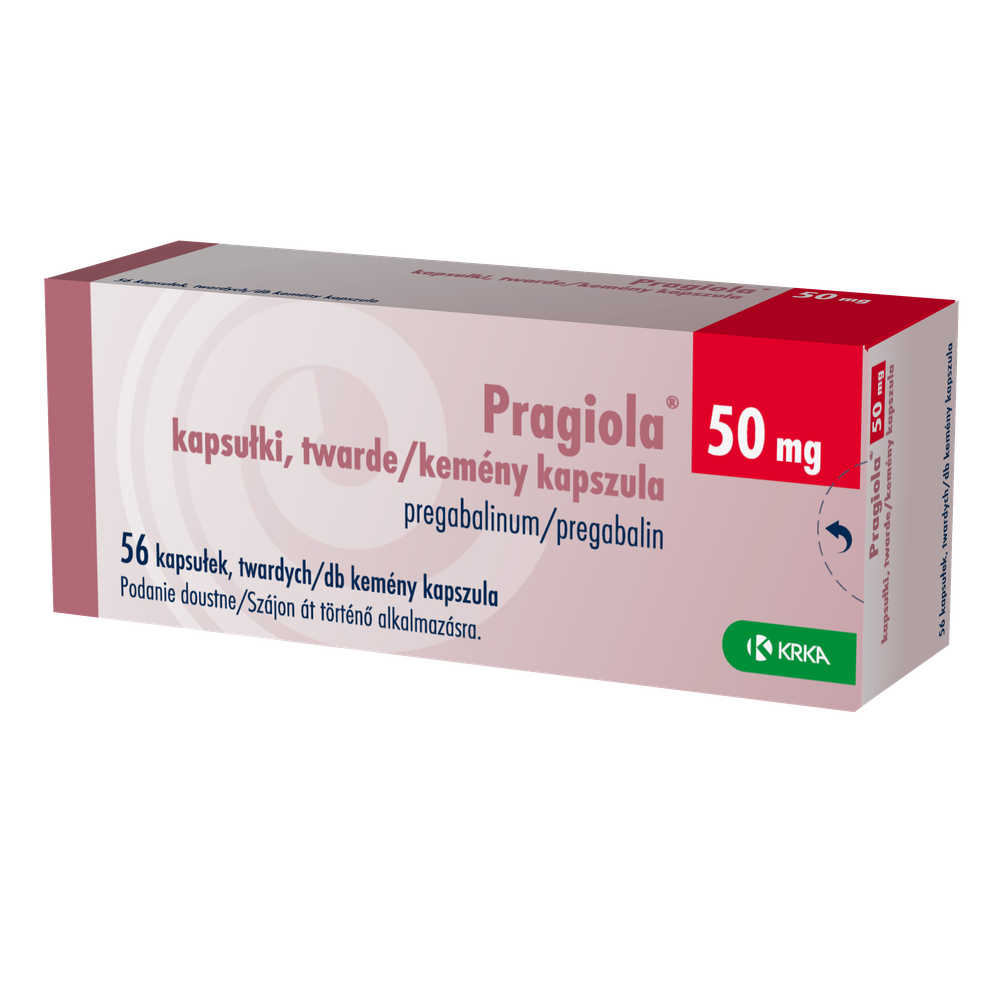
50 mg, hard capsules: capsule body is white, cap is light yellow; the cap has a black inscription P50; the capsule contains white to off-white powder; capsule length: 15.3-16.2 mm
75 mg, hard capsules: orange-yellow capsule with black inscription P75 on the capsule cap; the capsule contains white to off-white powder; capsule length: 13.8-14.8 mm
100 mg, hard capsules: reddish-brown capsule with white inscription P100 on the capsule cap; the capsule contains white to off-white powder; capsule length: 15.3-16.2 mm
150 mg, hard capsules: capsule body is white, cap is yellow-brown; the cap has a black inscription P150; the capsule contains white to off-white powder; capsule length: 17.2-18.3 mm
200 mg, hard capsules: brown capsule with black inscription P200 on the capsule cap; the capsule contains white to off-white powder; capsule length: 18.7-19.8 mm
225 mg, hard capsules: capsule body is white, cap is brown; the cap has a black inscription P225; the capsule contains white to off-white powder; capsule length: 18.7-19.8 mm
300 mg, hard capsules: capsule body is white, cap is dark brown; the cap has a white inscription P300; the capsule contains white to off-white powder; capsule length: 20.0-22.1 mm
Packaging:
Pragiola, 25 mg, 50 mg, 100 mg, 200 mg, 225 mg, 300 mg, hard capsules
14, 28, 30, 56, 60, 84, 90, or 100 hard capsules in a cardboard box.
Pragiola, 75 mg, 150 mg, hard capsules
14, 28, 30, 56, 60, 84, 90, 98, or 100 hard capsules in a cardboard box.
Not all pack sizes may be marketed.
Marketing authorization holder
KRKA, d.d., Novo mesto, Šmarješka cesta 6, 8501 Novo mesto, Slovenia
Manufacturer/Importer
KRKA, d.d., Novo mesto, Šmarješka cesta 6, 8501 Novo mesto, Slovenia
TAD Pharma GmbH, Heinz-Lohmann-Straße 5, 27472 Cuxhaven, Germany
To obtain more detailed information on the names of medicines in other EU member states, the patient should contact the representative of the marketing authorization holder:
KRKA-POLSKA Sp. z o.o.
ul. Równoległa 5
02-235 Warsaw
Phone: 22 57 37 500
Date of last revision of the leaflet:04.07.2025
- Country of registration
- Dosage formCapsules, 25 mg
- ATC codeN02BF02
- Active substance
- Prescription requiredYes
- ImporterKrka, d.d., Novo mesto TAD Pharma GmbH
- This information is for reference only and does not constitute medical advice. Always consult a doctor before taking any medication. Oladoctor is not responsible for medical decisions based on this content.
- Alternatives to PragiolaDosage form: Capsules, 25 mgActive substance: pregabalinPrescription requiredDosage form: Capsules, 50 mgActive substance: pregabalinPrescription requiredDosage form: Capsules, 75 mgActive substance: pregabalinPrescription required
Online doctors for Pragiola
Discuss questions about Pragiola, including use, safety considerations and prescription review, subject to medical assessment and local regulations.









Get Pragiola Prescription Online
Fill in a 2-min form
Tell us your symptoms, history, and what medicine you're requesting.
Pick a doctor or let us assign
Choose a specialist or we'll match you with the next available doctor.
Doctor reviews your case
Usually within 30 minutes. They may ask follow-up questions via chat.
Collect from any pharmacy
Electronic prescription sent to your email — valid across Spain.
Frequently Asked Questions
Pragiola requires a prescription in Poland. You can check with a doctor online whether this medicine may be appropriate for your situation.
The active ingredient in Pragiola is pregabalin. This information helps identify medicines with the same composition but different brand names.
Pragiola is manufactured by Krka, d.d., Novo mesto TAD Pharma GmbH. Pharmacy brands and packaging may differ depending on the distributor.
Doctors such as Family doctors, Psychiatrists, Dermatologists, Cardiologists, Endocrinologists, Gastroenterologists, Pulmonologists, Nephrologists, Rheumatologists, Hematologists, Infectious disease physicians, Allergists, Geriatricians, Paediatricians, Oncologists may assess whether Pragiola is appropriate, depending on your situation and local regulations. You can book an online consultation to discuss your symptoms and possible next steps.
Spain has a well-developed healthcare infrastructure across major cities such as Madrid, Barcelona, Valencia, and Seville. Pharmacies are widely available and operate under strict regulations, ensuring access to prescribed medications.
You can buy Pragiola in Madrid, Barcelona, Seville, or Valencia at any local pharmacy with a valid prescription.
To obtain a prescription, you can use Oladoctor:
Other medicines with the same active substance (pregabalin) include Bulgaplin, Bulgaplin, Bulgaplin. These may have different brand names or formulations but contain the same therapeutic ingredient. Always consult a doctor before switching or starting a new medicine.
