



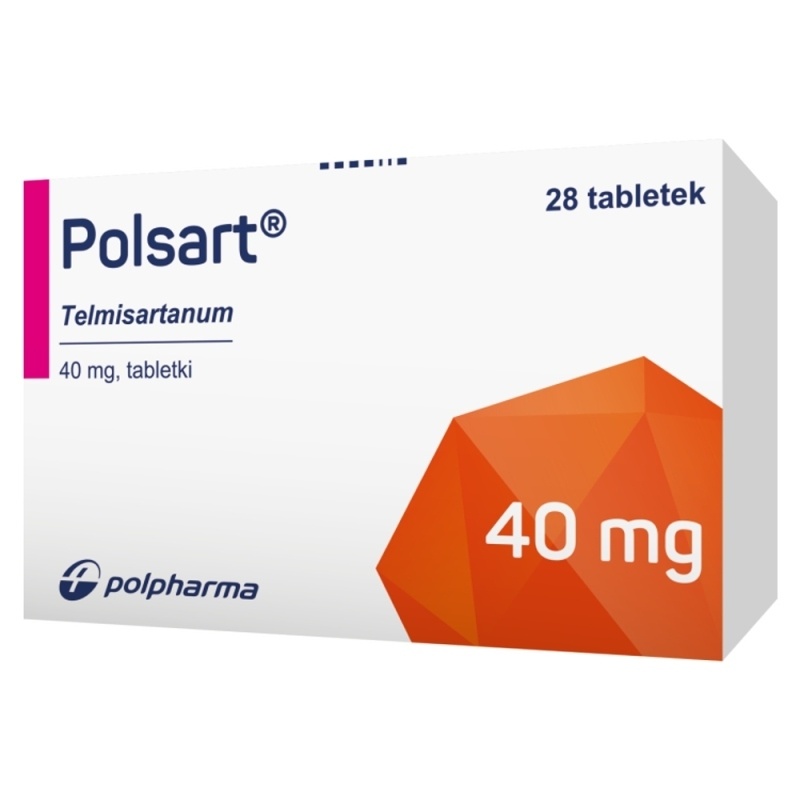
POLSART 40 mg Tablets

Prescription review online
A doctor will review your case and decide whether a prescription is medically appropriate.

Talk to a doctor about this medicine
Discuss your symptoms and possible next steps in a quick online consultation.



How to use Polsart
Contents of the leaflet
- Leaflet attached to the packaging: patient information
- Polsart, 40 mg, tablets
- Polsart, 80 mg, tablets
- What is Polsart and what is it used for
- How to take Polsart
- Possible side effects
- Contents of the pack and other information
Leaflet attached to the packaging: patient information
Polsart, 40 mg, tablets

Not sure if this medicine is right for you?
Discuss your symptoms and treatment with a doctor online.
Polsart, 80 mg, tablets
Telmisartan
Read the leaflet carefully before taking the medicine, as it contains important information for the patient.
- Keep this leaflet, so you can read it again if you need to.
- If you have any doubts, consult your doctor or pharmacist.
- This medicine has been prescribed specifically for you. Do not pass it on to others. The medicine may harm another person, even if their symptoms are the same.
- If the patient experiences any side effects, including any side effects not listed in this leaflet, they should tell their doctor or pharmacist. See section 4.
Table of contents of the leaflet
- 1. What is Polsart and what is it used for
- 2. Important information before taking Polsart
- 3. How to take Polsart
- 4. Possible side effects
- 5. How to store Polsart
- 6. Contents of the pack and other information
1. What is Polsart and what is it used for
Polsart belongs to a group of medicines called angiotensin II receptor antagonists.
Angiotensin II is a substance produced by the body that causes blood vessels to constrict, leading to an increase in blood pressure. Polsart blocks the action of angiotensin II, causing blood vessels to relax and blood pressure to decrease.
Polsart is used to treat essential hypertension (high blood pressure).
The term "essential" means that high blood pressure is not caused by another disease.
Untreated high blood pressure can cause damage to blood vessels in various organs, which can lead to heart attack, heart failure, or kidney disease, stroke, or vision loss. Most often, before the above complications occur, no symptoms of high blood pressure are observed. Therefore, it is essential to regularly measure blood pressure to check if it is within the normal range.
Polsart is also used to reduce the frequency of cardiovascular events (such as heart attack or stroke) in patients at risk, i.e., those with reduced blood flow to the heart or legs, those who have had a stroke, or those with diabetes. The doctor will inform the patient if they are at risk of these disorders.
2.
Important information before taking Polsart
When not to take Polsart
after the third month of pregnancy. (It is also recommended to avoid taking Polsart in early pregnancy - see the "Pregnancy" section);
If any of the above situations apply to the patient, they should inform their doctor or pharmacist before taking Polsart.
Warnings and precautions
Before starting to take Polsart, the patient should discuss the following conditions or diseases with their doctor:
- kidney disease or kidney transplant,
- renal artery stenosis (narrowing of the blood vessels supplying one or both kidneys),
- liver disease,
- heart disease,
- high aldosterone levels (water and salt retention in the body, accompanied by mineral balance disorders in the blood),
- low blood pressure (hypotension), which is more likely if the patient is dehydrated (excessive water loss from the body) or has a low salt level due to the use of diuretics, a low-salt diet, diarrhea, or vomiting,
- high potassium levels in the blood,
- diabetes.
Before starting to take Polsart, the patient should discuss the following with their doctor:
- angiotensin-converting enzyme (ACE) inhibitors (e.g., enalapril, lisinopril, ramipril), especially if the patient has kidney function disorders associated with diabetes.
- aliskiren. The doctor may monitor kidney function, blood pressure, and electrolyte levels (e.g., potassium) in the blood at regular intervals. See also the information under the heading "When not to take Polsart" and "Warnings and precautions".
The patient should inform their doctor if they suspect or plan to become pregnant. It is not recommended to take Polsart in early pregnancy. Do not take this medicine after the third month of pregnancy, as it may seriously harm the baby (see the "Pregnancy" section).
In the event of planned surgery or anesthesia, the patient should inform their doctor about taking Polsart.
Polsart may be less effective in lowering blood pressure in black patients.
If the patient experiences stomach pain, nausea, vomiting, or diarrhea after taking Polsart, they should discuss this with their doctor. The doctor will decide on further treatment. The patient should not stop taking Polsart on their own.
Children and adolescents
Polsart is not recommended for use in children and adolescents under 18 years of age.
Polsart and other medicines
The patient should tell their doctor or pharmacist about all medicines they are taking or have recently taken, as well as any medicines they plan to take.
The doctor may decide to change the dose of these medicines or take other precautions.
In some cases, it may be necessary to stop taking one of the medicines. This applies especially to the concurrent use of the following medicines with Polsart:
- lithium preparations used to treat certain types of depression,
- medicines that may increase potassium levels in the blood, such as potassium-sparing diuretics, ACE inhibitors, angiotensin II receptor antagonists, non-steroidal anti-inflammatory drugs (e.g., acetylsalicylic acid or ibuprofen), heparin, immunosuppressive agents (e.g., cyclosporine or tacrolimus), and the chemotherapeutic agent trimethoprim,
- diuretics, especially when taken in high doses with Polsart, as they may lead to significant water loss and low blood pressure (hypotension),
- digoxin.
The effect of Polsart may be reduced when taken with non-steroidal anti-inflammatory drugs (NSAIDs) or corticosteroids.
Polsart may enhance the blood pressure-lowering effect of other medicines used to treat high blood pressure or medicines that may cause a decrease in blood pressure (e.g., baclofen, amifostine). Additionally, low blood pressure may be further decreased by: alcohol, barbiturates, narcotics, or antidepressants. The symptom is dizziness when standing up. If necessary, the patient should consult their doctor about adjusting the dose of another medicine they are taking while taking Polsart.
Pregnancy and breastfeeding
Pregnancy
The patient should inform their doctor if they suspect or plan to become pregnant. The doctor will usually advise stopping Polsart before planned pregnancy or immediately after pregnancy is confirmed and will prescribe another medicine instead of Polsart. It is not recommended to take Polsart in early pregnancy and it should not be taken after the third month of pregnancy, as it may seriously harm the baby.
Breastfeeding
The patient should tell their doctor if they are breastfeeding or plan to breastfeed. Polsart is not recommended during breastfeeding. The doctor may choose another treatment during breastfeeding, especially in the period of breastfeeding newborns and premature babies.
Driving and using machines
Some patients taking Polsart may experience dizziness or fatigue. In such cases, they should not drive or operate machines.
Polsart contains sodium
The medicine contains less than 1 mmol (23 mg) of sodium per tablet, which means the medicine is considered "sodium-free".

Started taking the medicine and have questions?
Discuss your symptoms and treatment with a doctor online.
3. How to take Polsart
This medicine should always be taken as directed by the doctor. If the patient has any doubts, they should consult their doctor or pharmacist.
The recommended dose of Polsart is usually 1 tablet once a day. The patient should try to take the tablet at the same time every day.
Polsart can be taken with or without food. The tablets should be swallowed with water or another non-alcoholic liquid. It is essential to take Polsart every day, unless the doctor advises otherwise. If the patient feels that the effect of Polsart is too strong or too weak, they should consult their doctor or pharmacist.
In the treatment of high blood pressure, the recommended dose of Polsart for most patients is 1 tablet of 40 mg once a day, to control blood pressure for more than 24 hours. The doctor may also recommend a lower dose of 20 mg or a higher dose of 80 mg. Alternatively, Polsart may be given in combination with diuretics, such as hydrochlorothiazide, which enhances the blood pressure-lowering effect of Polsart.
To reduce the frequency of cardiovascular events, the recommended dose of Polsart is usually 1 tablet of 80 mg once a day. At the beginning of treatment with a dose of 80 mg of Polsart, blood pressure should be frequently monitored.
In the case of liver function disorders, the recommended dose of the medicine should not exceed 40 mg once a day.
Overdose of Polsart
If too many tablets are taken by mistake, the patient should immediately contact their doctor or pharmacist or the nearest hospital emergency department.
Missed dose of Polsart
If a dose is missed, the patient should take it as soon as they remember, and then continue taking the medicine as scheduled. If the tablet is not taken within a day, the patient should take the usual recommended dose the next day. Do nottake a double dose to make up for a missed dose.
If the patient has any further doubts about taking this medicine, they should consult their doctor or pharmacist.
4. Possible side effects
Like all medicines, Polsart can cause side effects, although not everybody gets them.
Some side effects may be serious and require immediate medical attention:
If the patient experiences any of the following side effects, they should immediately contact their doctor:
- sepsis* (often referred to as blood poisoning, a severe infection with an inflammatory reaction throughout the body)
- sudden swelling of the skin and mucous membranes (angioedema). These side effects are rare (occurring in less than 1 in 1,000 patients) but are extremely severe, and the patient should stop taking the medicine and immediately contact their doctor. If these symptoms are not treated, they may be fatal.
Possible side effects of Polsart:
Common(occurring in less than 1 in 10 patients):
low blood pressure (hypotension) in patients being treated to reduce the frequency of cardiovascular events.
Uncommon(occurring in less than 1 in 100 patients):
urinary tract infections, upper respiratory tract infections (e.g., sore throat, sinusitis, common cold), decreased red blood cell count (anemia), high potassium levels in the blood, insomnia, depression, fainting, peripheral vertigo (dizziness), slow heart rate (bradycardia), low blood pressure (hypotension) in patients being treated for high blood pressure, orthostatic hypotension (dizziness when standing up), shortness of breath, cough, stomach pain, diarrhea, abdominal discomfort, bloating, vomiting, itching, excessive sweating, rash, back pain, muscle spasms, muscle pain, renal function disorders, including acute renal failure, chest pain, feeling of weakness, and increased creatinine levels in the blood.
Rare(occurring in less than 1 in 1,000 patients):
sepsis* (often referred to as blood poisoning, a severe infection with an inflammatory reaction throughout the body, which can lead to death), increased eosinophil count, low platelet count (thrombocytopenia), severe allergic reaction (anaphylactic reaction), allergic reactions (e.g., rash, itching, difficulty breathing, wheezing, swelling of the face or low blood pressure), low blood sugar levels (in patients with diabetes), feeling of restlessness, drowsiness, vision disturbances, rapid heart rate (tachycardia), dry mouth, gastritis, liver function disorders (more common in patients of Japanese origin), sudden swelling of the skin and mucous membranes, which can also lead to death (angioedema), skin eruptions (skin disease), skin redness, hives, severe rash, joint pain, limb pain, tendon pain, flu-like symptoms, decreased hemoglobin levels (protein in the blood), increased uric acid levels, increased liver enzyme activity or creatine phosphokinase in the blood.
Very rare(occurring in less than 1 in 10,000 patients):
progressive scarring of the lung tissue (interstitial lung disease)**
Frequency not known(frequency cannot be estimated from the available data):
angioedema of the intestine - after the use of similar products, angioedema occurred in the intestine with symptoms such as stomach pain, nausea, vomiting, and diarrhea.
* The effect may be coincidental or related to an unknown mechanism.
** Cases of interstitial lung disease have been reported in association with the use of telmisartan. However, a causal relationship has not been established.
Reporting side effects
If the patient experiences any side effects, including any side effects not listed in this leaflet, they should tell their doctor or pharmacist. Side effects can be reported directly to the Department of Drug Safety Monitoring of the Office for Registration of Medicinal Products, Medical Devices, and Biocidal Products
Al. Jerozolimskie 181C
02-222 Warsaw
Phone: +48 22 49 21 301
Fax: +48 22 49 21 309
Website: https://smz.ezdrowie.gov.pl
Side effects can also be reported to the marketing authorization holder.
Reporting side effects will help to gather more information on the safety of the medicine.
5.
How to store Polsart
The medicine should be stored out of sight and reach of children.
Do not use this medicine after the expiry date stated on the carton, blister, or tablet container. The expiry date refers to the last day of the month.
The inscription on the packaging after the abbreviation EXP means the expiry date, and after the abbreviation Lot/LOT means the batch number.
Blisters with aluminum/aluminum foil in a cardboard box.
Store in the original packaging to protect from light.
Tablet container: Store the container tightly closed to protect from light.
Medicines should not be disposed of via wastewater or household waste. The patient should ask their pharmacist how to dispose of medicines that are no longer needed. This will help protect the environment.
6. Contents of the pack and other information
What Polsart contains
- The active substance of Polsart is telmisartan. Each tablet contains 40 mg or 80 mg of telmisartan.
- The other ingredients are: magnesium stearate, croscarmellose sodium, mannitol (E421), povidone (K-29/32), potassium hydroxide.
What Polsart looks like and contents of the pack
Polsart 40 mg: white, oval, biconvex tablets with a score line and the logo "T" on one side.
The tablet can be divided into two halves.
Polsart 80 mg are white, oval, biconvex tablets with the logo "T1" on one side.
Polsart is packaged in aluminum/aluminum blisters.
The pack contains: 28, 30, 56 tablets.
Not all pack sizes may be marketed.
Marketing authorization holder
Zakłady Farmaceutyczne POLPHARMA S.A.
ul. Pelplińska 19, 83-200 Starogard Gdański
phone: +48 22 364 61 01
Manufacturer
Actavis Ltd.
BLB016 Bulebel Industrial Estate
Zejtun ZTN 3000
Malta
Zakłady Farmaceutyczne POLPHARMA S.A.
ul. Pelplińska 19, 83-200 Starogard Gdański
Poland
Date of last revision of the leaflet:March 2025
- Country of registration
- Dosage formTablets, 40 mg
- ATC codeC09CA07
- Active substance
- Prescription requiredYes
- Manufacturer
- ImporterActavis Ltd.
- This information is for reference only and does not constitute medical advice. Always consult a doctor before taking any medication. Oladoctor is not responsible for medical decisions based on this content.
- Alternatives to PolsartDosage form: Tablets, 40 mgActive substance: telmisartanManufacturer: Actavis ehf.Prescription requiredDosage form: Tablets, 80 mgActive substance: telmisartanPrescription requiredDosage form: Tablets, 80 mgActive substance: telmisartanManufacturer: Actavis Ltd.Prescription required
Online doctors for Polsart
Discuss questions about Polsart, including use, safety considerations and prescription review, subject to medical assessment and local regulations.
Get Polsart Prescription Online
Fill in a 2-min form
Tell us your symptoms, history, and what medicine you're requesting.
Pick a doctor or let us assign
Choose a specialist or we'll match you with the next available doctor.
Doctor reviews your case
Usually within 30 minutes. They may ask follow-up questions via chat.
Collect from any pharmacy
Electronic prescription sent to your email — valid across Spain.
Frequently Asked Questions
Polsart requires a prescription in Poland. You can check with a doctor online whether this medicine may be appropriate for your situation.
The active ingredient in Polsart is telmisartan. This information helps identify medicines with the same composition but different brand names.
Polsart is manufactured by Actavis Ltd.. Pharmacy brands and packaging may differ depending on the distributor.
Doctors such as Family doctors, Psychiatrists, Dermatologists, Cardiologists, Endocrinologists, Gastroenterologists, Pulmonologists, Nephrologists, Rheumatologists, Hematologists, Infectious disease physicians, Allergists, Geriatricians, Paediatricians, Oncologists may assess whether Polsart is appropriate, depending on your situation and local regulations. You can book an online consultation to discuss your symptoms and possible next steps.
Spain has a well-developed healthcare infrastructure across major cities such as Madrid, Barcelona, Valencia, and Seville. Pharmacies are widely available and operate under strict regulations, ensuring access to prescribed medications.
You can buy Polsart in Madrid, Barcelona, Seville, or Valencia at any local pharmacy with a valid prescription.
To obtain a prescription, you can use Oladoctor:
Other medicines with the same active substance (telmisartan) include Actelsar, Actelsar, Polsart. These may have different brand names or formulations but contain the same therapeutic ingredient. Always consult a doctor before switching or starting a new medicine.
