





How to use Oftidor
Leaflet attached to the packaging: patient information
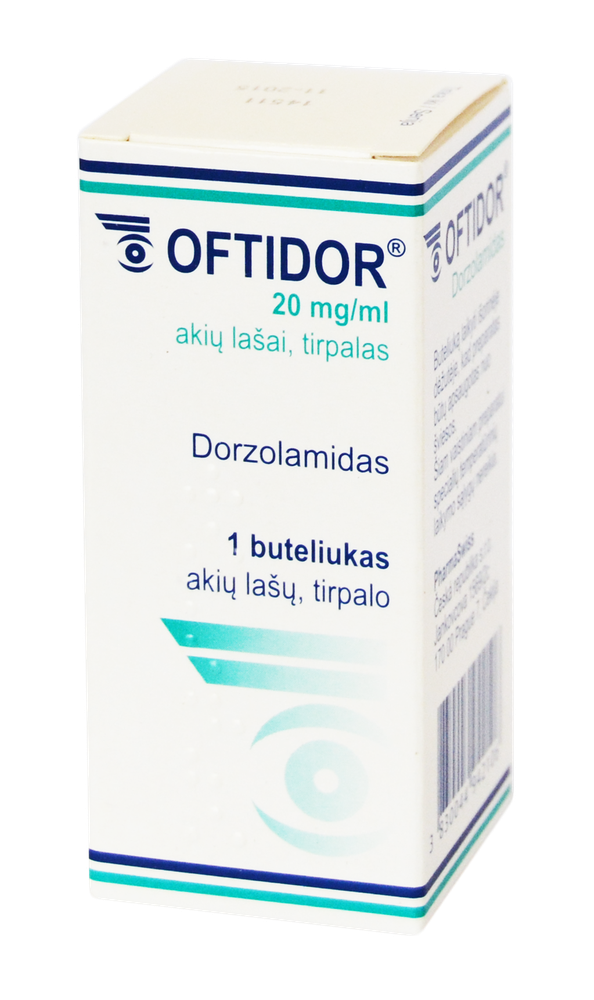
Oftidor, 20 mg/ml, eye drops, solution
Dorzolamid
Read the leaflet carefully before using the medicine, as it contains important information for the patient.
- Keep this leaflet, you may need to read it again.
- In case of any doubts, consult a doctor or pharmacist.
- This medicine has been prescribed specifically for one person. Do not pass it on to others. The medicine may harm another person, even if the symptoms of their illness are the same.
- If the patient experiences any side effects, including any side effects not listed in this leaflet, they should tell their doctor or pharmacist. See section 4.
Table of contents of the leaflet:
- 1. What is Oftidor and what is it used for
- 2. Important information before using Oftidor
- 3. How to use Oftidor
- 4. Possible side effects
- 5. How to store Oftidor
- 6. Contents of the packaging and other information
1. What is Oftidor and what is it used for
Oftidor contains dorzolamide, which belongs to a group of medicines called carbonic anhydrase inhibitors.
This medicine is prescribed to reduce increased pressure in the eyeball and to treat glaucoma. This medicine may be used alone or with other medicines that reduce pressure in the eyeball (so-called beta-adrenolytics).
2. Important information before using Oftidor
When not to use Oftidor
- if the patient is allergic to dorzolamide or any of the other ingredients of this medicine (listed in section 6)
- if the patient has severe kidney disease or has had kidney stones in the past
- if the patient has hyperchloremic acidosis (a type of acid-base imbalance).
Warnings and precautions
Before starting to use Oftidor, discuss it with your doctor or pharmacist
- if the patient has or has had any liver problems
- if the patient has acute glaucoma with a closed angle of filtration (which occurs when the pressure inside the eye increases very quickly to too high values)
- if the patient has had an allergy to any medicines in the past
- if the patient has had kidney stones in the past
- if the patient is taking other carbonic anhydrase inhibitors orally (see "Oftidor and other medicines")
- if the patient has a long-standing corneal disease and (or) has had an artificial lens implanted (intraocular surgery)
- if the patient has had or is planned to have eye surgery
- if the patient wears contact lenses (see "Important information about some ingredients of Oftidor").
In case of eye irritation or new symptoms, such as eye redness or eyelid swelling, consult a doctor immediately.
If the patient suspects that an allergic reaction has occurred after using Oftidor (e.g. skin rash or itching, eye inflammation) they should stop using Oftidorand consult a doctor immediately.
Children and adolescents
The use of dorzolamide in a dose of 20 mg/ml in the form of eye drops has been studied in infants and children under 6 years of age, in whom increased intraocular pressure or glaucoma has been diagnosed. For further information, consult a doctor.
Elderly patients
No significant differences in the efficacy and safety of dorzolamide in a dose of 20 mg/ml in the form of eye drops have been observed in elderly patients compared to younger patients.
Patients with renal or hepatic impairment
The patient should inform their doctor if they have or have had kidney or liver disease.
Oftidor and other medicines
Tell your doctor or pharmacist about all medicines the patient is taking, has recently taken, or might take, including eye drops, over-the-counter medicines, especially other carbonic anhydrase inhibitors, such as acetazolamide or other sulfonamides (medicines used, among other things, to treat infections).
Pregnancy and breastfeedingIf the patient is pregnant or breastfeeding, thinks they may be pregnant or are planning to have a baby, they should consult their doctor or pharmacist before using this medicine.
Pregnancy
Oftidor should not be used during pregnancy.
Breastfeeding
It is not known whether dorzolamide passes into breast milk. If the use of Oftidor is necessary, breastfeeding is not recommended during this time. If the patient is breastfeeding or plans to breastfeed, they should inform their doctor. A decision should be made to either stop breastfeeding or stop/discontinue dorzolamide, taking into account the benefit of breastfeeding for the baby and the benefit of therapy for the woman.
Driving and using machines
No studies have been conducted on the effect on the ability to drive and use machines.
Some side effects associated with the use of this medicine, such as dizziness or blurred vision, may affect the ability to drive and use machines.
If the patient experiences dizziness or blurred vision - especially soon after using Oftidor - they should not:
- drive any vehicles
- operate any machines
- perform any hazardous activities
- perform any activities that require a high level of attention.
Important information about some ingredients of Oftidor
Oftidor contains benzalkonium chloride.
Oftidor contains 0.075 mg of benzalkonium chloride per ml, which corresponds to 0.375 mg/5 ml of eye drop solution.
Benzalkonium chloride may be absorbed by soft contact lenses and may change the color of contact lenses. Before using this medicine, remove contact lenses and put them back 15 minutes later.
Benzalkonium chloride may also cause eye irritation, especially if you have dry eyes or corneal disorders (the transparent layer at the front of the eye). If you experience any abnormal sensation, stinging, or eye pain after using this medicine, consult a doctor.
3. How to use Oftidor
This medicine should always be used as directed by your doctor. In case of doubts, consult a doctor or pharmacist. The doctor determines the correct dose and duration of treatment.
Unless the doctor has recommended otherwise, the usual recommended dose is:
- If this medicine is the only one used, the dose is one drop into the affected eye (eyes) in the morning, afternoon, and evening.
- If the doctor has recommended using this medicine together with a beta-adrenergic blocker in the form of eye drops to reduce pressure in the eyeball, the dose is one drop of Oftidor into the affected eye (eyes) in the morning and evening.
- If the patient has previously used another medicine to reduce pressure in the eye, and the doctor is now changing it to Oftidor, the previous medicine should be used for one more day. Then, its use should be stopped and Oftidor should be started from the next day.
If the patient is using other eye drops in addition to this medicine, they should maintain an interval of at least 10 minutes between individual drops.
Do not touch the tip of the dropper to the eye or its surroundings. It may become contaminated with bacteria, which can cause eye infections, leading to serious eye damage or even vision loss.
To avoid potential contamination of the medicine, wash your hands before using it and protect the dropper tip from contact with any surface. If the patient thinks that their medicine may have become contaminated, or if they have an eye infection, they should contact their doctor immediately to discuss the possibility of continuing to use the medicine from the same bottle.
Never change the recommended dose of the medicine without consulting a doctor.
Instructions for use:
- 1. Wash your hands and take a comfortable sitting or standing position.
- 2. Remove the protective cap from the bottle.
- 3. Tilt your head back and look up.
- 4. With your index finger, gently pull the lower eyelid of the affected eye down to create a pocket between the eyelid and the eyeball.
- 5. Hold the bottle upside down over the eye.
- 6. Bring the tip of the bottle close to the eye without touching it. Be careful not to touch the tip of the bottle to the eye, fingers, or other surfaces.
- 7. Gently squeeze the bottle until one drop of medicine falls into the eye. Be careful not to squeeze the bottle too hard, so that more than one drop of medicine does not fall into the affected eye.
- 8. If a drop does not fall into the eye, instill another drop.
- 9. Remove your index finger and release the lower eyelid, gently closing your eyes.
- 10. Close your eye and press the inner corner of your eye with your finger for about two minutes. This helps prevent the medicine from entering the entire body.
- 11. If the doctor has recommended it, repeat the above steps for the second eye.
- 12. Carefully close the bottle after each use.
Having someone else help with instillation or using a mirror can make it easier to administer the medicine.
Using a higher dose of Oftidor than recommended
The patient should immediately inform their doctor if they or someone else has accidentally swallowed these eye drops or if they have used them more frequently than recommended by the doctor.
Missing a dose of Oftidor
It is important to use the medicine as directed by the doctor. If a dose is missed, the patient should instill the medicine as soon as possible. However, if it is almost time for the next dose, they should skip the missed dose and return to their normal dosing schedule.
Do not use a double dose to make up for a missed dose.
Stopping the use of Oftidor
The patient should not stop taking or discontinue Oftidor without consulting their doctor first. They may not achieve the therapeutic effect if they do not use Oftidor regularly or frequently forget to use it.
Increased pressure in the eyeball can damage the optic nerve and cause vision loss. It can lead to blindness. Usually, the patient will not notice any symptoms of increased pressure in the eyeball. This condition can only be diagnosed by an eye examination by a doctor. If the patient has increased pressure in the eyeball, regular eye examinations and measurements of intraocular pressure are necessary.
In case of any further doubts about the use of the medicine, consult a doctor or pharmacist.
4. Possible side effects
Like all medicines, this medicine can cause side effects, although not everybody gets them.
If the patient experiences an allergic reaction and (or) severe skin changes, including any of the following symptoms, they should stop using Oftidor and consult a doctor immediately:
- swelling of the face, hands, and feet, eyes, lips, and (or) tongue, which may cause difficulty breathing or swallowing (angioedema)
- rash, hives, and (or) itching
- shortness of breath, sudden narrowing of the airways (bronchospasm)
- redness of the skin with blisters or peeling. Serious skin changes may also occur, including blisters and bleeding in the area of the lips, eyes, mouth, nose, and genitals. This may be "Stevens-Johnson syndrome" or "toxic epidermal necrolysis".
These are symptoms of rare (affecting up to 1 in 1000 people) but potentially serious side effects that may require immediate medical attention (see also section 2. "Important information before using Oftidor", subsection "Warnings and precautions").
Other possible side effects
The following side effects have been reported during clinical trials or after the medicine was marketed:
Very common (may affect more than 1 in 10 people):
- feeling of burning and stinging in the eyes
Common (may affect up to 1 in 10 people):
- superficial punctate keratitis (a disease of the surface layer of the eye, characterized by inflammation and vision disorders)
- eye discharge with itching (conjunctivitis)
- irritation and (or) inflammation of the eyelid
- tearing or itching of the eye (eyes)
- blurred vision
- headache
- nausea, bitter taste in the mouth
- weakness, fatigue
Uncommon (may affect up to 1 in 100 people):
- uveitis
Rare (may affect up to 1 in 1000 people):
- eye irritation, including redness and pain
- crusts on the edges of the eyelids
- temporary myopia (reversible after discontinuation of the medicine)
- swelling of the surface layer of the eye (corneal edema)
- low pressure in the eye (intraocular hypotension)
- fluid accumulation under the retina (after certain eye surgeries, such as filtration surgeries)
- dizziness, feeling of numbness and (or) tingling
- nasal bleeding
- formation of kidney stones in the urinary system
- irritation of the throat, dryness in the mouth
- contact dermatitis (skin inflammation caused by contact with a substance).
Frequency not known (frequency cannot be estimated from the available data):
- Shortness of breath (feeling of lack of air/difficulty breathing),
- Feeling of a foreign body in the eye (feeling that something is on the surface of the eye),
- Strong heartbeat, which may be fast or irregular (palpitations),
- Increased heart rate,
- Increased blood pressure.
Reporting side effects
If side effects occur, including any side effects not listed in this leaflet, the patient should tell their doctor, pharmacist, or nurse. Side effects can be reported directly to the Department of Adverse Reaction Monitoring of Medicinal Products of the Office for Registration of Medicinal Products, Medical Devices, and Biocidal Products:
Jerozolimskie Avenue 181C
02-222 Warsaw
Phone: +48 22 49 21 301
Fax: +48 22 49 21 309
Website: https://smz.ezdrowie.gov.pl
Side effects can also be reported to the marketing authorization holder.
Reporting side effects can help gather more information on the safety of the medicine.
5. How to store Oftidor
Store in a place inaccessible and invisible to children.
Do not use this medicine after the expiry date stated on the carton and bottle after "EXP". The expiry date refers to the last day of the specified month. The abbreviation "Lot" means batch number.
After opening the bottle, the shelf life of Oftidor is a maximum of 1 month. After this time, the unused solution should be discarded.
Store in the outer packaging to protect from light.
There are no special recommendations for the storage temperature of the medicinal product.
Medicines should not be disposed of via wastewater or household waste. Ask your pharmacist how to dispose of medicines that are no longer needed. This will help protect the environment.
6. Contents of the packaging and other information
What Oftidor contains
- The active substance of the medicine is dorzolamide (in the form of dorzolamide hydrochloride). 1 ml of eye drop solution contains 20 mg of dorzolamide, in the form of 22.26 mg of dorzolamide hydrochloride.
- Other ingredients of the medicine are: benzalkonium chloride, hydroxyethylcellulose, mannitol (E421), citric acid monohydrate, sodium hydroxide (E524), purified water.
What Oftidor looks like and what the pack contains
Oftidor is a clear, colorless solution in a clear bottle with a dropper and a cap.
Oftidor is available in the following pack sizes:
1 bottle with a dropper containing 5 ml of eye drops.
Marketing authorization holder and manufacturer
Marketing authorization holder
BAUSCH + LOMB IRELAND LIMITED
3013 Lake Drive
Citywest Business Campus
Dublin 24, D24PPT3
Ireland
[email protected]
Manufacturer
S.C. ROMPHARM COMPANY S.R.L.
Eroilor Street, no. 1A
Otopeni, 075100, Ilfov.
Romania
This medicinal product is authorized in the Member States of the European Economic Area under the following names:
Czech Republic
OFTIDOR 2 % Oční kapky, roztok
Lithuania
OFTIDOR 20 mg/ml Akių lašai, tirpalas
Latvia
Oftidor 20 mg/ml acu pilieni, šķīdums
Poland
OFTIDOR
Date of last revision of the leaflet:05/2023
- Country of registration
- Active substance
- Prescription requiredYes
- Manufacturer
- ImporterS.C. Rompharm Company S.R.L.
- This information is for reference only and does not constitute medical advice. Always consult a licensed doctor before taking any medication. Oladoctor is not responsible for medical decisions based on this content.
- Alternatives to OftidorDosage form: Drops, 20 mg/mlActive substance: dorzolamideManufacturer: Bruschettini S.r.I.Prescription requiredDosage form: Drops, 20 mg/mlActive substance: dorzolamidePrescription requiredDosage form: Drops, 20 mg/mlActive substance: dorzolamideManufacturer: Rafarm S.A.Prescription required
Alternatives to Oftidor in other countries
The best alternatives with the same active ingredient and therapeutic effect.
Alternative to Oftidor in Іспанія
Alternative to Oftidor in Україна
Online doctors for Oftidor
Discuss dosage, side effects, interactions, contraindications, and prescription renewal for Oftidor – subject to medical assessment and local rules.

Get updates and exclusive offers
Be the first to know about new services, marketplace updates, and subscriber-only promos.

