



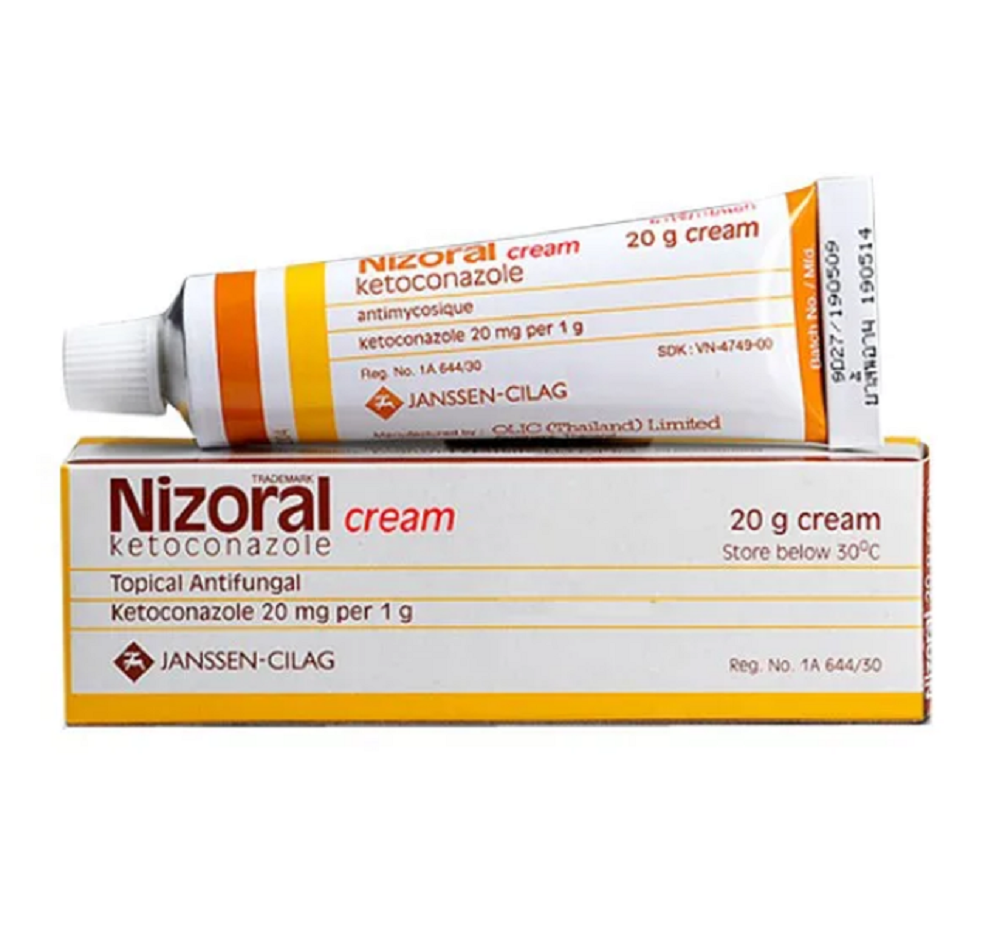
NIZORAL 20 mg /G Cream

Prescription review online
A doctor will review your case and decide whether a prescription is medically appropriate.

Talk to a doctor about this medicine
Discuss your symptoms and possible next steps in a quick online consultation.



How to use Nizoral
Contents of the leaflet
- Package Leaflet: Information for the User
- Nizoral, 20 mg/g, Cream
- What is Nizoral cream and what is it used for
- Important Information Before Using Nizoral Cream
- How to Use Nizoral Cream
- Possible Side Effects
- How to Store Nizoral Cream
- Contents of the Pack and Other Information
Package Leaflet: Information for the User
Nizoral, 20 mg/g, Cream
Ketoconazole
Read the package leaflet carefully before using the medicine, as it contains
important information for the patient.
This medicine should always be used exactly as described in the package leaflet or as directed by your doctor or pharmacist.
- You should keep this leaflet, so you can read it again later.
- If you need advice or more information, you should speak to a pharmacist.
- If you experience any side effects, including any not listed in this leaflet, you should tell your doctor or pharmacist. See section 4.
- If you do not feel better or if you feel worse, you should contact your doctor.
Table of Contents of the Leaflet
- 1. What is Nizoral cream and what is it used for
- 2. Important information before using Nizoral cream
- 3. How to use Nizoral cream
- 4. Possible side effects
- 5. How to store Nizoral cream
- 6. Contents of the pack and other information

Not sure if this medicine is right for you?
Discuss your symptoms and treatment with a doctor online.
1. What is Nizoral cream and what is it used for
Nizoral cream contains the active substance ketoconazole, which has a strong antifungal effect.
Ketoconazole works against dermatophytes of the genus: Trichophyton, Epidermophyton,
Microsporumand yeast of the genus Candidaand Malassezia(Pityrosporum).
Indications for Use
Local treatment of skin fungal infections of the trunk, groin, hands, and feet caused by the following dermatophytes: Trichophyton rubrum, Trichophyton mentagrophytes, Microsporum canis,
Epidermophyton floccosum, as well as skin yeast infections and pityriasis versicolor.
Nizoral cream is also recommended for the treatment of seborrheic dermatitis associated with the presence of the yeast Malassezia ovale(Pityrosporum ovale).
2. Important Information Before Using Nizoral Cream
When Not to Use Nizoral Cream
- if you are allergic to ketoconazole or any of the other ingredients of this medicine (listed in section 6).
Warnings and Precautions
Before using Nizoral cream, you should discuss it with your doctor or pharmacist.
You should avoid contact of the medicine with your eyes.
In the case of previous local treatment of seborrheic dermatitis with corticosteroids, before using Nizoral cream, you should gradually - over 2 weeks - stop the corticosteroid treatment, as sudden discontinuation of corticosteroids may lead to worsening of symptoms.
Nizoral Cream and Other Medicines
No data available.
You should tell your doctor or pharmacist about all medicines you are taking or have recently taken, as well as any medicines you plan to use.
Pregnancy and Breastfeeding
If you are pregnant or breastfeeding, think you may be pregnant, or plan to become pregnant, you should consult your doctor or pharmacist before using this medicine.
During pregnancy and breastfeeding, Nizoral cream can only be used if your doctor recommends it, as there are no data on the safety of using the medicine during pregnancy and breastfeeding.
Driving and Operating Machines
No studies have been conducted on the effect of the medicine on the ability to drive vehicles or operate machines.
Nizoral Cream Contains Propylene Glycol, Cetyl Alcohol, and Stearyl Alcohol
The medicine contains 200 mg of propylene glycol in each 1 g of cream. Propylene glycol may cause skin irritation.
Due to the presence of excipients - cetyl alcohol and stearyl alcohol - the medicine may cause local skin reactions (e.g., contact dermatitis).

Started taking the medicine and have questions?
Discuss your symptoms and treatment with a doctor online.
3. How to Use Nizoral Cream
This medicine should always be used exactly as described in the package leaflet or as directed by your doctor or pharmacist. If you are unsure, you should speak to your doctor or pharmacist.
Nizoral cream is intended for use on the skin in adults.
Yeast infection of the skin, fungal infection of the trunk, groin, fungal infection of the hands and feet, pityriasis versicolor:
You should apply Nizoral cream to the affected areas of the skin and the surrounding skin once a day.
Average treatment duration:
- pityriasis versicolor: 2 to 3 weeks,
- yeast infection of the skin: 2 to 3 weeks,
- groin fungal infection: 2 to 4 weeks,
- trunk fungal infection: 3 to 4 weeks,
- foot fungal infection: 4 to 6 weeks.
Seborrheic dermatitis:
In skin infections with brown-red spots or white and yellow scales (seborrheic dermatitis), Nizoral cream should be applied once or twice a day. The symptoms of the infection usually disappear after 2-4 weeks.
Improvement is usually visible after 4 weeks of treatment. If there is no improvement, you should contact your doctor.
The medicine should be used for a few more days after the complete disappearance of the infection symptoms.
Even after complete healing, to prevent relapse of the disease, you should use Nizoral cream once a week or once every 2 weeks.
During treatment, to prevent re-infection, you should follow basic hygiene rules.
Using More Than the Recommended Dose of Nizoral Cream
Significant overdose of the medicine may cause redness, burning of the skin, and swelling.
If such symptoms occur, you should contact your doctor.
In case of accidental ingestion of Nizoral cream, you should contact your doctor to receive appropriate treatment.
Missing a Dose of Nizoral Cream
If you miss a dose, you should use it as soon as possible. You should not use a double dose to make up for the missed dose.
4. Possible Side Effects
Like all medicines, this medicine can cause side effects, although not everybody gets them.
The following side effects may occur:
- often (in more than 1 in 100 and less than 1 in 10 patients): redness and itching at the application site; burning sensation of the skin,
- not very often (in more than 1 in 1,000 and less than 1 in 100 patients): at the application site, bleeding, discomfort, dryness, inflammation, irritation, paresthesia (unpleasant sensation of tingling, numbness, or changes in skin temperature, i.e., sensation of strong heat or cold), reactions at the application site. Not very often, hypersensitivity, blistering, contact dermatitis, rash, scaling, and stickiness of the skin may occur. After the introduction of Nizoral cream to the market, very rarely (in less than 1 in 10,000 patients) urticaria occurred.
Reporting Side Effects
If you experience any side effects, including any not listed in this leaflet, you should tell your doctor or pharmacist, or nurse. Side effects can be reported directly to the Department of Monitoring of Adverse Reactions to Medicinal Products of the Office for Registration of Medicinal Products, Medical Devices, and Biocidal Products:
Al. Jerozolimskie 181C, 02-222 Warsaw, tel.: 22 49-21-301, fax: 22 49-21-309, e-mail:
https://smz.ezdrowie.gov.pl
Side effects can also be reported to the marketing authorization holder.
By reporting side effects, you can help provide more information on the safety of this medicine.
5. How to Store Nizoral Cream
The medicine should be stored out of sight and reach of children.
No special precautions for storage are necessary.
The tube should be closed.
Do not use this medicine after the expiry date stated on the packaging.
The expiry date refers to the last day of the specified month.
Medicines should not be disposed of via wastewater or household waste containers. You should ask your pharmacist how to dispose of medicines that are no longer needed. This will help protect the environment.
6. Contents of the Pack and Other Information
What Nizoral Cream Contains
- The active substance of the medicine is ketoconazole. 1 g of cream contains 20 mg of ketoconazole.
- The other ingredients are: propylene glycol, stearyl alcohol, cetyl alcohol, sorbitan stearate, polysorbate 60, isopropyl myristate, sodium metabisulfite (E 221), polysorbate 80, purified water.
What Nizoral Cream Looks Like and Contents of the Pack
The medicine is a cream.
The pack contains a tube with 15 g or 30 g of cream, in a cardboard box.
Marketing Authorization Holder and Manufacturer
Marketing Authorization Holder:
STADA Arzneimittel AG
Stadastrasse 2-18
61118 Bad Vilbel
Germany
To obtain more detailed information about this medicine, you should contact the representative of the marketing authorization holder:
Stada Pharm Sp. z o.o.
ul. Krakowiaków 44
02-255 Warsaw
Tel. +48 22 737 79 20
Manufacturer/Importer:
Janssen Pharmaceutica N.V.
Turnhoutseweg 30
B-2340 Beerse
Belgium
STADA Arzneimittel AG
Stadastrasse 2-18
61118 Bad Vilbel
Germany
Date of Last Revision of the Leaflet:
- Country of registration
- Dosage formCream, 20 mg/g
- ATC codeD01AC08
- Active substance
- Prescription requiredNo
- ImporterJanssen Pharmaceutica N.V. STADA Arzneimittel AG
- This information is for reference only and does not constitute medical advice. Always consult a doctor before taking any medication. Oladoctor is not responsible for medical decisions based on this content.
- Alternatives to NizoralDosage form: Shampoo, 20 mg/gActive substance: ketoconazolePrescription not requiredDosage form: Shampoo, 20 mg/gActive substance: ketoconazolePrescription not requiredDosage form: Cream, 20 mg/gActive substance: ketoconazolePrescription not required
Online doctors for Nizoral
Discuss questions about Nizoral, including use, safety considerations and prescription review, subject to medical assessment and local regulations.



Get Nizoral Prescription Online
Fill in a 2-min form
Tell us your symptoms, history, and what medicine you're requesting.
Pick a doctor or let us assign
Choose a specialist or we'll match you with the next available doctor.
Doctor reviews your case
Usually within 30 minutes. They may ask follow-up questions via chat.
Collect from any pharmacy
Electronic prescription sent to your email — valid across Spain.
Frequently Asked Questions
Nizoral does not require a prescription in Poland. You can check with a doctor online whether this medicine may be appropriate for your situation.
The active ingredient in Nizoral is ketoconazole. This information helps identify medicines with the same composition but different brand names.
Nizoral is manufactured by Janssen Pharmaceutica N.V. STADA Arzneimittel AG. Pharmacy brands and packaging may differ depending on the distributor.
Doctors such as Family doctors, Psychiatrists, Dermatologists, Cardiologists, Endocrinologists, Gastroenterologists, Pulmonologists, Nephrologists, Rheumatologists, Hematologists, Infectious disease physicians, Allergists, Geriatricians, Paediatricians, Oncologists may assess whether Nizoral is appropriate, depending on your situation and local regulations. You can book an online consultation to discuss your symptoms and possible next steps.
Spain has a well-developed healthcare infrastructure across major cities such as Madrid, Barcelona, Valencia, and Seville. Pharmacies are widely available and operate under strict regulations, ensuring access to prescribed medications.
You can buy Nizoral in Madrid, Barcelona, Seville, or Valencia at any local pharmacy with a valid prescription.
To obtain a prescription, you can use Oladoctor:
Other medicines with the same active substance (ketoconazole) include Nizax Activ, Nizoral, Nizoral. These may have different brand names or formulations but contain the same therapeutic ingredient. Always consult a doctor before switching or starting a new medicine.
