



INHIBACE 2.5 mg Tablets

Prescription review online
A doctor will review your case and decide whether a prescription is medically appropriate.

Talk to a doctor about this medicine
Discuss your symptoms and possible next steps in a quick online consultation.



How to use Inhibace
Contents of the leaflet
- PATIENT INFORMATION LEAFLET
- LEAFLET INCLUDED IN THE PACKAGING: PATIENT INFORMATION
- Inhibace, 1 mg, coated tablets
- Inhibace, 2.5 mg, coated tablets
- Inhibace, 5 mg, coated tablets
- What is Inhibace and what is it used for
- Important information before taking Inhibace
- How to take Inhibace
- Possible side effects
- How to store Inhibace
- Contents of the pack and other information
PATIENT INFORMATION LEAFLET
LEAFLET INCLUDED IN THE PACKAGING: PATIENT INFORMATION

Not sure if this medicine is right for you?
Discuss your symptoms and treatment with a doctor online.
Inhibace, 1 mg, coated tablets
Inhibace, 2.5 mg, coated tablets

Started taking the medicine and have questions?
Discuss your symptoms and treatment with a doctor online.
Inhibace, 5 mg, coated tablets
Cylazapril
Read the leaflet carefully before taking the medicine, as it contains important information for the patient.
- Keep this leaflet, so you can read it again if you need to.
- If you have any doubts, consult your doctor or pharmacist.
- This medicine has been prescribed specifically for you and should not be given to others, as it may harm them, even if their symptoms are the same.
- If you experience any side effects, including those not listed in this leaflet, tell your doctor or pharmacist. See section 4.
Table of contents of the leaflet:
- 1. What is Inhibace and what is it used for
- 2. Important information before taking Inhibace
- 3. How to take Inhibace
- 4. Possible side effects
- 5. How to store Inhibace
- 6. Contents of the pack and other information
1. What is Inhibace and what is it used for
Inhibace contains the active substance cylazapril.
Inhibace is used to treat:
- high blood pressure (hypertension);
- chronic (long-term) heart failure.
Cylazapril belongs to a group of medicines called ACE inhibitors (angiotensin-converting enzyme inhibitors). The action of this medicine is to relax and dilate blood vessels. This helps to lower blood pressure. It also makes it easier for the heart to pump blood in patients with chronic heart failure.
Your doctor may prescribe other medicines to be taken at the same time as Inhibace.
2. Important information before taking Inhibace
When not to take Inhibace:
if you are taking any of the following medicines used to treat high blood pressure:
- angiotensin II receptor antagonist (also known as sartans - e.g., valsartan, telmisartan, irbesartan), especially if you have diabetic kidney disease;
- aliskiren. Your doctor may monitor your kidney function, blood pressure, and electrolyte levels (e.g., potassium) at regular intervals. See also the information under the heading "When not to take Inhibace";
If any of the above situations apply to you, do not take Inhibace. If you have any doubts, consult your doctor or pharmacist before taking Inhibace.
Warnings and precautions
Before taking Inhibace, consult your doctor or pharmacist if:
- you have heart disease. Inhibace should not be taken by patients with certain heart diseases;
- you have had a stroke or problems with blood flow to the brain;
- you are taking any of the following medicines used to treat high blood pressure:
- angiotensin II receptor antagonist (also known as sartans - e.g., valsartan, telmisartan, irbesartan), especially if you have diabetic kidney disease;
- aliskiren. Your doctor may monitor your kidney function, blood pressure, and electrolyte levels (e.g., potassium) at regular intervals. See also the information under the heading "When not to take Inhibace";
If any of the above situations apply to you, or if you have any doubts, consult your doctor or pharmacist before taking Inhibace.
Children and adolescents
Inhibace is not recommended for use in children.
Inhibace and other medicines
Tell your doctor or pharmacist about all the medicines you have taken recently, including those obtained without a prescription and herbal medicines. This is because Inhibace may affect the action of other medicines, and some medicines may affect the action of Inhibace.
Your doctor may need to change the dose and/or take other precautions: If you are taking an angiotensin II receptor antagonist (ARB) or aliskiren (see also the information in sections "When not to take Inhibace" and "Warnings and precautions").
Inhibace with food and drink
Tell your doctor or pharmacist if you are taking dietary supplements containing potassium.
Pregnancy
Before taking Inhibace, consult your doctor if you are pregnant or planning to become pregnant. Tell your doctor if you are pregnant or planning to become pregnant. Your doctor will usually advise you to stop taking Inhibace before planned pregnancy or as soon as possible after confirmation of pregnancy, and will advise you to take a different medicine instead of Inhibace. Inhibace should not be taken during the first trimester of pregnancy and should not be taken after the third month of pregnancy, as it may seriously harm the baby.
Breast-feeding
Before taking Inhibace, consult your doctor if you are breast-feeding or planning to breast-feed. Tell your doctor if you are breast-feeding or planning to breast-feed. Inhibace is not recommended during breast-feeding, especially in newborns or premature babies. Your doctor may advise you to take a different medicine.
Driving and using machines
While taking Inhibace, dizziness may occur. This is more likely to happen at the start of treatment. If you feel dizzy, do not drive, use tools, or operate machinery.
Inhibace contains lactose
Inhibace contains lactose, a type of sugar. If your doctor has told you that you have an intolerance to some sugars, consult your doctor before taking Inhibace.
Inhibace contains sodium
This medicine contains less than 1 mmol sodium (23 mg) per tablet, which is essentially "sodium-free".
3. How to take Inhibace
Always take Inhibace exactly as your doctor has told you. If you are not sure, consult your doctor or pharmacist.
High blood pressure (hypertension)
- The usual starting dose for adults is 1 mg per day.
- Your doctor will increase the dose until your blood pressure is under control - the usual maintenance dose is between 2.5 mg and 5 mg per day.
- Your doctor may prescribe a lower dose if you have kidney problems or are elderly.
- If you are taking diuretics, your doctor may ask you to stop taking them about 3 days before starting Inhibace. The usual starting dose of Inhibace is then 0.5 mg per day. Your doctor will then increase the dose until your blood pressure is under control.
Chronic heart failure
- The usual starting dose is 0.5 mg per day.
- Your doctor will then increase the dose - the usual maintenance dose is between 1 mg and 2.5 mg per day.
- Your doctor may prescribe a lower dose if you have kidney problems or are elderly.
- Patient with liver cirrhosis without ascites, your doctor will not prescribe a dose higher than 0.5 mg per day and will closely monitor your blood pressure.
Taking the medicine
- Swallow the tablet with water.
- The time of taking the tablet does not matter. However, you should take the tablet at the same time every day.
- Inhibace can be taken before or after a meal.
- The tablet can be divided into equal doses.
Taking a higher dose of Inhibace than recommended
If you take more Inhibace than you should, or if someone else takes your medicine, contact your doctor or go to the nearest hospital immediately. Take the medicine pack with you. The following symptoms may occur: dizziness or feeling of "emptiness" in the head, shallow breathing, cold and sweaty skin, inability to move or speak, and slow heart rate.
Missing a dose of Inhibace
- If you miss a dose, skip the missed dose. Then take the next dose at the usual time.
- Do not take a double dose (two doses at once) to make up for the missed dose.
If you have any doubts about taking Inhibace, consult your doctor or pharmacist.
4. Possible side effects
Like all medicines, Inhibace can cause side effects, although not everybody gets them.
Some side effects can be serious and may need immediate medical attention:
If you experience a severe reaction called angioedema or an allergic reaction, stop taking Inhibace and go to your doctor immediately. Symptoms include swelling of the face, lips, tongue, or throat, which may cause difficulty breathing or swallowing.
If you experience any of the following blood disorders, contact your doctor immediately:
- low red blood cell count (anemia). Symptoms include feeling tired, pale skin, fast or irregular heartbeat, and shortness of breath.
- low white blood cell count (neutropenia, agranulocytosis). Symptoms include increased number of infections, e.g., in the mouth, gums, throat, and lungs.
- low platelet count (thrombocytopenia). Symptoms include easy bruising and bleeding from the nose.
Other possible side effects:
Common(affecting less than 1 in 10 people)
- dizziness
- cough
- nausea
- fatigue
- headache
Uncommon(affecting less than 1 in 100 people)
- low blood pressure. This may cause weakness, dizziness, blurred vision, and fainting. Excessive lowering of blood pressure in some patients may increase the risk of heart attack or stroke.
- fast heart rate
- weakness
- chest pain
- breathing difficulties, including shortness of breath and tightness in the chest.
- runny or stuffy nose and sneezing (rhinitis)
- dryness or swelling of the mouth
- loss of appetite
- change in taste
- diarrhea and vomiting
- rash (which may be severe)
- muscle cramps or pain, or joint pain
- impotence
- increased sweating
- sudden flushing (especially of the face)
- sleep disturbances
Rare(affecting less than 1 in 1,000 people)
- low red, white, or platelet blood cell count (anemia, neutropenia, agranulocytosis, and thrombocytopenia)
- severe allergic reaction (anaphylactic reaction)
- brain damage due to low blood flow, transient ischemic attack, ischemic stroke (may occur if blood pressure is too low)
- heart attack (may occur if blood pressure is too low)
- abnormal heart rhythms
- interstitial lung disease
- systemic lupus erythematosus-like reactions
- tingling or numbness of hands or feet
- wheezing
- feeling of pressure or pulsating pain behind the nose, cheeks, and eyes (sinusitis)
- tongue pain
- pancreatitis. Symptoms include severe abdominal pain radiating to the back.
- changes in kidney or liver function (shown in blood and urine tests)
- liver disorders, such as inflammation or damage to the liver
- severe skin reactions, including blistering or peeling of the skin
- increased sensitivity to sunlight
- hair loss (which may be temporary)
- loosening or separation of the nail from the nail bed
- breast enlargement in men
Reporting side effects
If you experience any side effects, including those not listed in this leaflet, tell your doctor or pharmacist. Side effects can be reported directly to the Department of Drug Safety, Office for Registration of Medicinal Products, Medical Devices, and Biocidal Products, Al. Jerozolimskie 181C, PL-02 222 Warsaw, tel.: +48 22 49 21 301, fax: +48 22 49 21 309, website: https://smz.ezdrowie.gov.pl.
Side effects can also be reported to the marketing authorization holder.
5. How to store Inhibace
Keep out of the sight and reach of children.
1 mg: Do not store above 25°C.
2.5 mg: Do not store above 25°C.
5 mg: No special storage precautions.
Do not use Inhibace after the expiry date stated on the packaging and blister after EXP.
Medicines should not be disposed of via wastewater or household waste. Ask your pharmacist how to dispose of medicines no longer required. This will help protect the environment.
6. Contents of the pack and other information
What Inhibace contains
- The active substance of Inhibace is cylazapril.
- Each coated tablet contains: Inhibace 1 mg:1.044 mg cylazapril, equivalent to 1 mg anhydrous cylazapril Inhibace 2.5 mg:2.61 mg cylazapril, equivalent to 2.5 mg anhydrous cylazapril Inhibace 5 mg:5.22 mg cylazapril, equivalent to 5 mg anhydrous cylazapril
- The other ingredients are:
Inhibace 1 mg:lactose monohydrate, maize starch, hypromellose 3 cP, talc, sodium stearylfumarate, hypromellose 6 cP, titanium dioxide (E 171), yellow iron oxide (E 172).
Inhibace 2.5 mg:lactose monohydrate, maize starch, hypromellose 3 cP, talc, sodium stearylfumarate, hypromellose 6 cP, titanium dioxide (E 171), yellow iron oxide (E 172), and red iron oxide (E 172).
Inhibace 5 mg:lactose monohydrate, maize starch, hypromellose 3 cP, talc, sodium stearylfumarate, hypromellose 6 cP, titanium dioxide (E 171), red iron oxide (E 172).
(See section 2: Inhibace contains lactose monohydrate)
What Inhibace looks like and contents of the pack
Coated tablet:
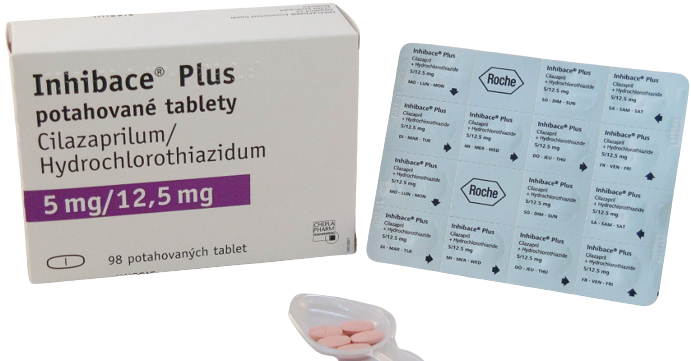
Light yellow, oval, biconvex coated tablets with a score line on one side and engraved with "CIL 1" on the other side.
Dark red, oval, biconvex coated tablets with a score line on one side and engraved with "CIL 2.5" on the other side.
Brown-red, oval, biconvex coated tablets with a score line on one side and engraved with "CIL 5" on the other side.
Marketing authorization holder
CHEPLAPHARM Arzneimittel GmbH
Ziegelhof 24
17489 Greifswald
Germany
Manufacturer
CHEPLAPHARM Arzneimittel GmbH
Ziegelhof 23-24
17489 Greifswald
Germany
This medicinal product is authorized in the Member States of the European Economic Area under the following names:
Austria, Belgium, Czech Republic, Hungary, Poland: Inhibace
Germany: Dynorm
Greece: Vascace
Italy: Inibace
Date of last revision of the leaflet:11/2020
- Country of registration
- Dosage formTablets, 2.5 mg
- ATC codeC09AA08
- Active substance
- Prescription requiredYes
- Manufacturer
- ImporterCheplapharm Arzneimittel GmbH
- This information is for reference only and does not constitute medical advice. Always consult a doctor before taking any medication. Oladoctor is not responsible for medical decisions based on this content.
- Alternatives to InhibaceDosage form: Tablets, 1 mgActive substance: cilazaprilManufacturer: Krka, d.d., Novo mestoPrescription requiredDosage form: Tablets, 2.5 mgActive substance: cilazaprilManufacturer: Krka, d.d., Novo mestoPrescription requiredDosage form: Tablets, 5 mgActive substance: cilazaprilManufacturer: Krka, d.d., Novo mestoPrescription required
Online doctors for Inhibace
Discuss questions about Inhibace, including use, safety considerations and prescription review, subject to medical assessment and local regulations.
Get Inhibace Prescription Online
Fill in a 2-min form
Tell us your symptoms, history, and what medicine you're requesting.
Pick a doctor or let us assign
Choose a specialist or we'll match you with the next available doctor.
Doctor reviews your case
Usually within 30 minutes. They may ask follow-up questions via chat.
Collect from any pharmacy
Electronic prescription sent to your email — valid across Spain.
Frequently Asked Questions
Inhibace requires a prescription in Poland. You can check with a doctor online whether this medicine may be appropriate for your situation.
The active ingredient in Inhibace is cilazapril. This information helps identify medicines with the same composition but different brand names.
Inhibace is manufactured by Cheplapharm Arzneimittel GmbH. Pharmacy brands and packaging may differ depending on the distributor.
Doctors such as Family doctors, Psychiatrists, Dermatologists, Cardiologists, Endocrinologists, Gastroenterologists, Pulmonologists, Nephrologists, Rheumatologists, Hematologists, Infectious disease physicians, Allergists, Geriatricians, Paediatricians, Oncologists may assess whether Inhibace is appropriate, depending on your situation and local regulations. You can book an online consultation to discuss your symptoms and possible next steps.
Spain has a well-developed healthcare infrastructure across major cities such as Madrid, Barcelona, Valencia, and Seville. Pharmacies are widely available and operate under strict regulations, ensuring access to prescribed medications.
You can buy Inhibace in Madrid, Barcelona, Seville, or Valencia at any local pharmacy with a valid prescription.
To obtain a prescription, you can use Oladoctor:
Other medicines with the same active substance (cilazapril) include Cazaprol, Cazaprol, Cazaprol. These may have different brand names or formulations but contain the same therapeutic ingredient. Always consult a doctor before switching or starting a new medicine.
