



GENTAMICIN 1 mg /Ml Solution

Prescription review online
A doctor will review your case and decide whether a prescription is medically appropriate.

Talk to a doctor about this medicine
Discuss your symptoms and possible next steps in a quick online consultation.



How to use Gentamicin B.braun
Contents of the leaflet
- Leaflet attached to the packaging: information for the user
- Gentamicin B. BRAUN, 1 mg/ml, solution for infusion
- Gentamicin B. BRAUN, 3 mg/ml, solution for infusion
- What is Gentamicin B. Braun and what is it used for
- Important information before using Gentamicin B. Braun
- How to use Gentamicin B. Braun
- Possible side effects
- Infections and infestations
- Blood and lymphatic system disorders
- Immune system disorders
- Metabolic and nutritional disorders
- Psychiatric disorders
- Nervous system disorders
- Eye disorders
- Ear and labyrinth disorders
- Cardiac disorders
- Gastrointestinal disorders
- Hepatobiliary disorders
- Skin and subcutaneous tissue disorders
- Musculoskeletal and connective tissue disorders
- Renal and urinary disorders
- General disorders and administration site conditions
- If you experience any side effects, including any side effects not listed in this leaflet
- How to store Gentamicin B. Braun
- Contents of the packaging and other information
Leaflet attached to the packaging: information for the user
Gentamicin B. BRAUN, 1 mg/ml, solution for infusion

Not sure if this medicine is right for you?
Discuss your symptoms and treatment with a doctor online.
Gentamicin B. BRAUN, 3 mg/ml, solution for infusion
Gentamicin
You should carefully read the contents of the leaflet before taking the medicine, as it contains important information for the patient.
- You should keep this leaflet, so that you can read it again if you need to.
- If you have any doubts, you should consult a doctor.
- If the patient experiences any side effects, including any side effects not listed in this leaflet, they should tell their doctor or nurse. See section 4.
Table of contents of the leaflet
- 1. What is Gentamicin B. Braun and what is it used for
- 2. Important information before using Gentamicin B. Braun
- 3. How to use Gentamicin B. Braun
- 4. Possible side effects
- 5. How to store Gentamicin B. Braun
- 6. Contents of the packaging and other information
1. What is Gentamicin B. Braun and what is it used for
Gentamicin B. Braun belongs to a group of antibiotics called aminoglycosides. They are used to treat severe infections caused by bacteria that can be killed by the active substance gentamicin.
In the treatment of the following infections, except for complicated urinary tract infections, Gentamicin B. Braun is used only in combination with other antibiotics.
Gentamicin B. Braun may be used in patients to treat the following diseases:
- complicated and recurrent kidney, urinary tract, and bladder infections;
- lung and respiratory tract infections occurring during hospital treatment;
- infections in the abdominal cavity, including peritonitis;
- skin and soft tissue infections, also in severe burns;
- sepsis (infection affecting the entire body), bacteria in the blood;
- endocarditis (inflammation of the lining of the heart's inner surfaces);
- post-operative infections.

Started taking the medicine and have questions?
Discuss your symptoms and treatment with a doctor online.
2. Important information before using Gentamicin B. Braun
When not to use this medicine
- If the patient is allergic to gentamicin, other similar substances, or any of the other ingredients of this medicine (listed in section 6).
- If the patient has myasthenia gravis.
Warnings and precautions
Before starting to take this medicine, you should tell your doctor if:
- the patient is pregnant or breastfeeding;
- the patient has kidney function disorders or inner ear deafness;
- if the patient or their mother has a history of a disease related to a mitochondrial mutation (genetic disease) or hearing loss caused by the use of antibiotic drugs, it is recommended to inform the doctor or pharmacist before taking an aminoglycoside; some mitochondrial mutations may increase the risk of hearing loss after taking this medicine. Before administering Gentamicin B. Braun, the doctor may recommend genetic testing.
Then, the patient will receive gentamicin only if the doctor considers it necessary for the treatment of the disease. The doctor will pay special attention to the proper selection of the gentamicin dose for the patient.
The doctor will exercise special caution if the patient has any disease affecting nerve and muscle function, such as Parkinson's disease, or if the patient is taking muscle relaxants at the same time, as gentamicin may have a inhibitory effect on nerve and muscle function.
If the patient experiences severe diarrhea, they should tell their doctor or pharmacist.
The infection may not respond to gentamicin administration if it did not respond to other aminoglycosides; the patient may experience an allergic reaction to gentamicin if they have previously been allergic to other aminoglycosides.
Experience with the administration of gentamicin once a day is limited in elderly patients.
To reduce the risk of ear or kidney damage, the doctor will:
- monitor hearing, balance, and kidney function before starting, during, and after treatment;
- dosage strictly taking into account kidney function;
- in patients with kidney function disorders - taking into account the dose of the antibiotic administered locally in the overall dosage;
- monitoring the concentration of gentamicin in serum during treatment, if necessary in a given case;
- additional checks on the balance and hearing organs in patients with previously existing inner ear damage (hearing or balance disorders) or during long-term treatment;
- whenever possible, administering gentamicin for no longer than 10-14 days (usually 7-10 days);
- re-administering gentamicin or another antibiotic derivative no earlier than 7-14 days after the end of treatment;
- avoiding the simultaneous use of other substances that may damage the auditory nerve or kidneys; if this is unavoidable, it is necessary to carefully monitor kidney function;
- ensuring adequate fluid intake to maintain proper urine production.
Gentamicin B. Braun and other medicines
You should tell your doctor about all medicines you are currently taking or have recently taken, as well as any medicines you plan to take.
Caution should be exercised when using the following medicinal products.
Muscle relaxants and ether
The inhibition of nerve conduction by aminoglycosides is enhanced by ether and muscle relaxants. Therefore, patients receiving these substances will be monitored with special care.
Methoxyflurane anesthesia
Before starting methoxyflurane anesthesia (anesthetic gas), you should inform the anesthesiologist that you are taking aminoglycosides, so that, if possible, the use of this agent can be avoided, due to the increased risk of kidney damage.
Other medicines that may damage hearing or kidneys
The patient will be monitored with special care if they are taking gentamicin before starting, during, or after the use of medicinal products containing the following substances:
- amphotericin B (in fungal infections),
- colistin (for intestinal disinfection),
- cyclosporine (to suppress immune system reactions),
- cisplatin (anticancer drug),
- vancomycin, streptomycin, viomycin, carbenicillin, other aminoglycosides, cephalosporins (antibiotics). If the patient is taking diuretic drugs, such as ethacrynic acid or furosemide, they will also be closely monitored.
Pregnancy and breastfeeding
Pregnancy
If you are pregnant or breastfeeding, think you may be pregnant, or plan to have a child, you should consult your doctor before taking this medicine. This medicine should not be used during pregnancy, unless it is absolutely necessary.
Breastfeeding
If you are breastfeeding, you should tell your doctor. The doctor will carefully consider whether to stop breastfeeding or administering gentamicin.
Driving and using machines
Caution is recommended when driving vehicles and operating machines, due to the possibility of side effects such as dizziness or balance disorders.
Gentamicin B. Braun contains sodium
[Gentamicin B. Braun 1 mg/ml]
The medicine contains 283 mg of sodium (the main component of table salt) in each bottle.
This corresponds to 14.2% of the maximum recommended daily sodium intake in the diet for adults.
[Gentamicin B. Braun 3 mg/ml]
The medicine contains 283/425 mg of sodium (the main component of table salt) in each 80/120 ml bottle.
This corresponds to 14.2%/21.3% of the maximum recommended daily sodium intake in the diet for adults.
3. How to use Gentamicin B. Braun
Dosage in patients with normal kidney function
Adults and adolescents
The recommended daily dose in adolescents and adults with normal kidney function is 3 to 6 mg/kg body weight, administered in one dose (recommended) or in two divided doses.
Usually, treatment does not last longer than 7-10 days, only the treatment of acute and complicated infections may last longer than 10 days.
Gentamicin levels in the patient's blood will be monitored - blood samples will be taken just before the administration of the next dose and immediately after the end of the infusion, mainly to monitor kidney function. The dose size will be carefully selected to avoid kidney damage.
Children
The daily dose in newborns is 4-7 mg/kg body weight. Newborns are given the required dose in a single daily dose.
The daily dose in infants after the first month of life is 4.5-7.5 mg/kg body weight in a single dose (recommended) or two divided doses.
The recommended daily dose in older children with normal kidney function is 3 to 6 mg/kg body weight per day, administered in one dose (recommended) or in two divided doses.
Dosage in patients with kidney function disorders
If the patient has kidney function disorders, controls will be carried out to properly select the therapeutic concentration in the blood, which is achieved either by reducing the dose or increasing the intervals between doses. The attending physician knows how to select the appropriate dosage regimen.
Dosage in dialyzed patients
In this case, the doctor will carefully adjust the dose size based on the gentamicin concentration in the blood.
Elderly patients- due to impaired kidney function, it may be necessary to administer maintenance doses smaller than those in younger adults.
Obese patients- the initial dose is selected based on the ideal body weight plus 40% of the excess weight.
Patients with impaired liver function- there is no need to modify the dose.
Administration of a higher dose of Gentamicin B. Braun than recommended
If accumulation of the medicine occurs (e.g., due to improper kidney function), additional kidney or auditory nerve damage may occur.
Procedure in case of overdose
First of all, the administration of the medicine should be stopped. There is no specific antidote (antidote). Gentamicin can be removed from the blood through hemodialysis. If a neuromuscular block occurs, calcium chloride can be administered and, if necessary, assisted breathing can be used.
Method of administration
Gentamicin B. Braun is administered by intravenous infusion (intravenous infusion). The infusion solution contained in the polyethylene bottle is administered over a period of 30-60 minutes.
The Gentamicin B. Braun infusion solution is not intended for intramuscular administration or slow intravenous injection (intramuscular or intravenous injections).
If you have any further questions about the use of this medicine, you should ask your doctor or nurse.
4. Possible side effects
Like all medicines, this medicine can cause side effects, although not everybody gets them.
Under certain conditions, gentamicin shows toxic effects on hearing and kidneys. Kidney function disorders are often observed in patients treated with gentamicin and usually disappear after the medicine is discontinued. In most cases, it is related to the administration of too high a dose or prolonged treatment, previously existing kidney function disorders, or the simultaneous use of other substances toxic to the kidneys. Additional risk factors for toxic effects on the kidneys are: old age, low blood pressure, reduced blood volume, shock, or liver disease. Risk factors for toxic effects on the auditory nerve are: liver disease, hearing disorders, bacteria in the blood, fever.
- severe acute hypersensitivity reactions (allergy);
- acute kidney failure.
Symptoms of acute hypersensitivity may include: skin rash, itching, and difficulty breathing.
Symptoms of acute kidney failure are: reduced or stopped urine excretion (oliguria, anuria), excessive urine excretion at night, and generalized edema (fluid retention in the body).
Infections and infestations
Unknown (frequency cannot be determined from available data)
Infections caused by other bacteria, resistant to gentamicin. Diarrhea with or without blood and/or abdominal cramps.
Blood and lymphatic system disorders
Uncommon (may affect up to 1 in 100 patients)
Abnormal blood composition
Rare (may affect up to 1 in 1,000 patients)
Too few of various types of blood cells, increased number of eosinophils (a specific type of white blood cell)
Immune system disorders
Unknown (frequency cannot be determined from available data)
Allergic reactions (including severe ones, such as anaphylaxis), which can include:
- itching, lumpy rash, or urticaria (hives)
- swelling of hands, feet, ankles, face, lips, or throat, which can cause difficulty swallowing or breathing
- fainting, dizziness, feeling of dizziness (low blood pressure)
Metabolic and nutritional disorders
Rare (may affect up to 1 in 1,000 patients)
Low levels of potassium, calcium, and magnesium in the blood (related to the use of high doses for a long time), loss of appetite, weight loss
Very rare (may affect less than 1 in 10,000 patients)
Low levels of phosphates in the blood (related to the use of high doses for a long time)
Psychiatric disorders
Very rare (may affect less than 1 in 10,000 patients)
Confusion, hallucinations, depression
Nervous system disorders
Rare (may affect up to 1 in 1,000 patients)
Damage to peripheral nerves, disorders or loss of sensation
Very rare (may affect less than 1 in 10,000 patients)
Organic brain diseases, seizures, neuromuscular block, dizziness, balance disorders, headache
Eye disorders
Very rare (may affect less than 1 in 10,000 patients)
Visual disturbances
Ear and labyrinth disorders
Very rare (may affect less than 1 in 10,000 patients)
Auditory nerve damage, hearing loss, Meniere's disease, ringing or buzzing in the ears, dizziness of peripheral origin
Unknown (frequency cannot be determined from available data)
Irreversible hearing loss, hearing loss
Cardiac disorders
Very rare (may affect less than 1 in 10,000 patients)
Low blood pressure, high blood pressure
Gastrointestinal disorders
Rare (may affect up to 1 in 1,000 patients)
Nausea, vomiting, increased saliva production, oral inflammation
Hepatobiliary disorders
Rare (may affect up to 1 in 1,000 patients)
Transient increased activity of liver enzymes and bilirubin levels in the blood
Skin and subcutaneous tissue disorders
Uncommon (may affect up to 1 in 100 patients)
Allergic skin rash, itching
Rare (may affect up to 1 in 1,000 patients)
Redness of the skin
Very rare (may affect less than 1 in 10,000 patients)
Hair loss, severe allergic reaction of the skin and mucous membranes with blistering and skin redness (erythema multiforme)
Unknown (frequency cannot be determined from available data)
Severe allergic reaction of the skin and mucous membranes with blistering and skin redness, which can affect other organs and be life-threatening (Stevens-Johnson syndrome, toxic epidermal necrolysis)
Musculoskeletal and connective tissue disorders
Rare (may affect up to 1 in 1,000 patients)
Muscle pain
Very rare (may affect less than 1 in 10,000 patients)
Muscle tremors (making it difficult to maintain a standing position or coordinate movements)
Renal and urinary disorders
Common (may affect up to 1 in 10 patients)
Kidney function disorders (usually disappear after the end of treatment)
Rare (may affect up to 1 in 1,000 patients)
Increased urea levels in the blood (transient)
Very rare (may affect less than 1 in 10,000 patients)
Acute kidney failure, high levels of phosphates and amino acids in the urine (a sign of so-called acquired Fanconi syndrome associated with long-term administration of high doses of the medicine)
General disorders and administration site conditions
Rare (may affect up to 1 in 1,000 patients)
Increased body temperature
Very rare (may affect less than 1 in 10,000 patients)
Pain at the injection site
If you experience any side effects, including any side effects not listed in this leaflet
you shouldtell your doctor, pharmacist, or nurse. Side effects can be reported directly to the Department of Adverse Reaction Monitoring of Medicinal Products, Medical Devices, and Biocidal Products
Al. Jerozolimskie 181C
02-222 Warsaw
Phone: +48 22 49 21 301
Fax: +48 22 49 21 309
Website: https://smz.ezdrowie.gov.pl
Side effects can also be reported to the marketing authorization holder.
By reporting side effects, you can help gather more information on the safety of this medicine.
5. How to store Gentamicin B. Braun
The medicine should be stored in a place that is out of sight and reach of children.
Do not use this medicine after the expiry date stated on the bottle and carton after: "Expiry date". The expiry date refers to the last day of the given month.
Without special recommendations for storage conditions of the medicine.
The solution should be used immediately after the first opening.
The medicinal product is intended for single use only. Use only if the solution is clear, colorless, and does not contain solid particles.
Dispose of any unused medicine.
6. Contents of the packaging and other information
What Gentamicin B. Braun contains
- The active substance of the medicine is gentamicin
Solution for infusion 1 mg/ml
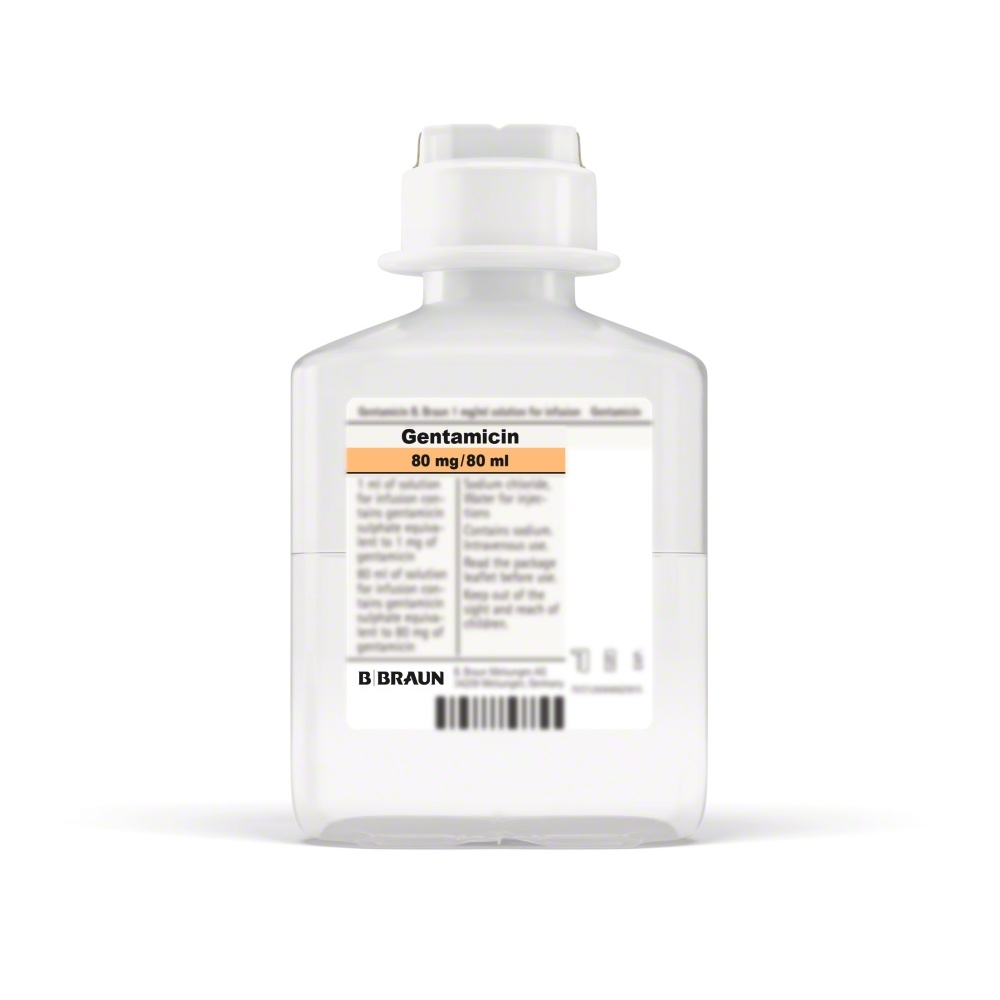
1 ml of Gentamicin B. Braun solution for infusion contains 1 mg of gentamicin in the form of gentamicin sulfate.
1 bottle of 80 ml contains 80 mg of gentamicin
- Other ingredients of the medicine are: sodium chloride, water for injections.
Solution for infusion 3 mg/ml
1 ml of Gentamicin B. Braun solution for infusion contains 3 mg of gentamicin in the form of gentamicin sulfate.
1 bottle of 80 ml contains 240 mg of gentamicin.
1 bottle of 120 ml contains 360 mg of gentamicin
- Other ingredients of the medicine are: disodium edetate, sodium chloride, water for injections.
What Gentamicin B. Braun solution for infusion looks like and what the pack contains
Gentamicin B. Braun is a solution for infusion; this means that it is administered in a drip through a thin tube or cannula inserted into a vein.
The solution is clear and colorless.
Gentamicin B. Braun, 1 mg/ml, solution for infusion is in polyethylene bottles (Ecoflac plus) with a capacity of 80 ml.
The medicine is supplied in packs containing 10 or 20 bottles.
Gentamicin B. Braun, 3 mg/ml, solution for infusion is in polyethylene bottles (Ecoflac plus) with a capacity of 80 and 120 ml.
Both capacities are supplied in packs containing 10 or 20 bottles.
Marketing authorization holder and manufacturer
Marketing authorization holder
- B. Braun Melsungen AG Carl-Braun-Straße 1 Mailing address: 34212 Melsungen, Germany 34209 Melsungen, Germany
Phone: +49/5661/71-0
Fax: +49/5661/71-4567
Manufacturer
- B. Braun Medical S. A. Carretera de Terrassa 121 08191 Rubí (Barcelona), Spain
To obtain more detailed information, you should contact the representative of the marketing authorization holder:
Aesculap Chifa Sp. z o.o.
ul. Tysiąclecia 14
64-300 Nowy Tomyśl
Phone: (61) 44 20 100
This medicine is authorized for marketing in the Member States of the European Economic Area and in the United Kingdom (Northern Ireland) under the following names:
Austria
Gentamicin B. Braun 1 mg/ml Infusionslösung
Gentamicin B. Braun 3 mg/ml Infusionslösung
Belgium
Gentamycine B. Braun 1 mg/ml Solution pour perfusion/Infusionslösung/Oplossing voor infusie YES Pharmaceutical Development Services
Gentamycine B. Braun 3 mg/ml Solution pour perfusion/Infusionslösung/Oplossing voor infusie
Czech Republic
Gentamicin B. Braun
Denmark
Gentamicin B. Braun
Iceland
Gentamicin B. Braun 1 mg/ml innrennslislyf, lausn
Gentamicin B. Braun 3 mg/ml innrennslislyf, lausn
Italy
Gentamicina B. Braun 1 mg/ml soluzione per infusione
Gentamicina B. Braun 3 mg/ml soluzione per infusione
Luxembourg
Gentamicin B. Braun 1 mg/ml Infusionslösung
Gentamicin B. Braun 3 mg/ml Infusionslösung
Norway
Gentamicin B. Braun 1 mg/ml infusjonsvæske, oppløsning
Gentamicin B. Braun 3 mg/ml infusjonsvæske, oppløsning
Poland
Gentamicin B. Braun
Gentamicin B. Braun
Portugal
Gentamicina B. Braun 1 mg/ml Solução para perfusão
Gentamicina B. Braun 3 mg/ml Solução para perfusão
Slovenia
Gentamicin B. Braun 1 mg/ml raztopina za infundiranje
Gentamicin B. Braun 3 mg/ml raztopina za infundiranje
Slovakia
Gentamicin B. Braun 1 mg/ml infúzny roztok
Gentamicin B. Braun 3 mg/ml infúzny roztok
United Kingdom (Northern Ireland)
Gentamicin 1 mg/ml solution for infusion
Gentamicin 3 mg/ml solution for infusion
Date of last revision of the leaflet: 05/2024
_______________________________________________________________________________________
Other sources of information
Detailed information about this medicine is available on the website of the Office for Registration of Medicinal Products, Medical Devices, and Biocidal Products (urpl.gov.pl)
Information intended only for healthcare professionals
The Gentamicin B. Braun solution for infusion is ready to use and should not be diluted before administration.
Under no circumstances should aminoglycosides be mixed in a solution for infusion with beta-lactam antibiotics (e.g., penicillins, cephalosporins), erythromycin, or lipofundin (a special emulsion for parenteral nutrition), as physical-chemical inactivation may occur. This also applies to the combination of gentamicin with diazepam, furosemide, flecainide acetate, or sodium heparin.
Active substances or solutions for dissolution or dilution that should not be administered simultaneously:
gentamicin is incompatible with amphotericin B, cefalotin sodium, nitrofurantoin sodium, and tetracyclines.
Adding gentamicin to solutions containing bicarbonate may lead to the release of carbon dioxide.
From a microbiological point of view, the product should be used immediately. If the medicine is not used immediately, the user is responsible for the storage time after opening and the conditions before use, usually no longer than 24 hours at a temperature of 2 to 8°C.
The solution should be administered using a sterile infusion set, using aseptic technique.
The infusion set should be filled with the solution to prevent air from entering the system.
For single use only.
Unused solution residue should be discarded.
Before administration, you should check if the solution does not contain particles or discoloration. The solution can only be used if it is clear and does not contain any particles.
- Country of registration
- Dosage formSolution, 1 mg/ml
- ATC codeJ01GB03
- Active substance
- Prescription requiredYes
- Manufacturer
- ImporterB. Braun Medical SA
- This information is for reference only and does not constitute medical advice. Always consult a doctor before taking any medication. Oladoctor is not responsible for medical decisions based on this content.
- Alternatives to Gentamicin B.braunDosage form: Sponge, 2 mg/cm2Active substance: gentamicinPrescription requiredDosage form: Solution, 3 mg/mlActive substance: gentamicinManufacturer: B. Braun Medical S.A.Prescription requiredDosage form: Solution, 40 mg/mlActive substance: gentamicinPrescription required
Online doctors for Gentamicin B.braun
Discuss questions about Gentamicin B.braun, including use, safety considerations and prescription review, subject to medical assessment and local regulations.









Get Gentamicin B.braun Prescription Online
Fill in a 2-min form
Tell us your symptoms, history, and what medicine you're requesting.
Pick a doctor or let us assign
Choose a specialist or we'll match you with the next available doctor.
Doctor reviews your case
Usually within 30 minutes. They may ask follow-up questions via chat.
Collect from any pharmacy
Electronic prescription sent to your email — valid across Spain.
Frequently Asked Questions
Gentamicin B.braun requires a prescription in Poland. You can check with a doctor online whether this medicine may be appropriate for your situation.
The active ingredient in Gentamicin B.braun is gentamicin. This information helps identify medicines with the same composition but different brand names.
Gentamicin B.braun is manufactured by B. Braun Medical S.A.. Pharmacy brands and packaging may differ depending on the distributor.
Doctors such as Family doctors, Psychiatrists, Dermatologists, Cardiologists, Endocrinologists, Gastroenterologists, Pulmonologists, Nephrologists, Rheumatologists, Hematologists, Infectious disease physicians, Allergists, Geriatricians, Paediatricians, Oncologists may assess whether Gentamicin B.braun is appropriate, depending on your situation and local regulations. You can book an online consultation to discuss your symptoms and possible next steps.
Spain has a well-developed healthcare infrastructure across major cities such as Madrid, Barcelona, Valencia, and Seville. Pharmacies are widely available and operate under strict regulations, ensuring access to prescribed medications.
You can buy Gentamicin B.braun in Madrid, Barcelona, Seville, or Valencia at any local pharmacy with a valid prescription.
To obtain a prescription, you can use Oladoctor:
Other medicines with the same active substance (gentamicin) include Garamicin, Gentamicin B.braun, Gentamicin Bialmed. These may have different brand names or formulations but contain the same therapeutic ingredient. Always consult a doctor before switching or starting a new medicine.
