



DARUNAVIR 75 mg Tablets

Prescription review online
A doctor will review your case and decide whether a prescription is medically appropriate.

Talk to a doctor about this medicine
Discuss your symptoms and possible next steps in a quick online consultation.



How to use Darunavir Accord
Contents of the leaflet
- Leaflet accompanying the packaging: information for the user
- Darunavir Accord, 75 mg, film-coated tablets
- Darunavir Accord, 150 mg, film-coated tablets
- Darunavir Accord, 300 mg, film-coated tablets
- Darunavir Accord, 600 mg, film-coated tablets
- What is Darunavir Accord and what is it used for
- Important information before taking Darunavir Accord
- When not to take Darunavir Accord
- Do not take Darunavir Accord with the following medicines
- Warnings and precautions
- When to inform your doctor about your health status BEFORE and DURING treatment
- Elderly
- Children
- Darunavir Accord and other medicines
- Darunavir Accord with food and drink
- Pregnancy and breastfeeding
- Driving and using machines
- Darunavir Accord, 75 mg, film-coated tablets contain lactose
- Darunavir Accord, 75 mg, film-coated tablets contain propylene glycol
- Darunavir Accord, 150 mg, film-coated tablets contain lactose
- Darunavir Accord, 150 mg, film-coated tablets contain propylene glycol
- Darunavir Accord, 300 mg, film-coated tablets contain lactose
- Darunavir Accord, 300 mg, film-coated tablets contain propylene glycol
- Darunavir Accord, 600 mg, film-coated tablets contain lactose
- Darunavir Accord, 600 mg, film-coated tablets contain propylene glycol
- How to take Darunavir Accord
- Dosing in children aged 3 years and older, weighing at least 15 kg, who have not previously taken antiretroviral medicines (determined by the doctor)
- Dosing in children aged 3 years and older, weighing at least 15 kg, who have previously taken antiretroviral medicines (determined by the doctor)
- Instructions for taking Darunavir Accord in children:
- Dosing in adults who have not previously taken antiretroviral medicines (determined by the doctor)
- Dosing in adults who have previously taken antiretroviral medicines (determined by the doctor)
- Opening the child-resistant cap
- Taking a higher dose of Darunavir Accord than recommended
- Missing a dose of Darunavir Accord
- Vomiting after taking Darunavir Accord and ritonavir
- Do not stop taking Darunavir Accord without consulting your doctor
- Possible side effects
- How to store Darunavir Accord
- Contents of the pack and other information
- What does Darunavir Accord contain?
- What does Darunavir Accord look like and what does the pack contain?
- Marketing authorization holder
- Manufacturer/Importer
- This medicinal product is authorized in the Member States of the European
- Economic Area under the following names:
- Date of the last update of the leaflet: March 2025
Leaflet accompanying the packaging: information for the user
Darunavir Accord, 75 mg, film-coated tablets

Not sure if this medicine is right for you?
Discuss your symptoms and treatment with a doctor online.
Darunavir Accord, 150 mg, film-coated tablets
Darunavir Accord, 300 mg, film-coated tablets

Started taking the medicine and have questions?
Discuss your symptoms and treatment with a doctor online.
Darunavir Accord, 600 mg, film-coated tablets
Darunavir
Read the leaflet carefully before taking the medicine, as it contains important information for the patient.
- Keep this leaflet, so you can read it again if you need to.
- If you have any doubts, consult your doctor, pharmacist, or nurse.
- This medicine has been prescribed specifically for you. Do not pass it on to others. The medicine may harm another person, even if their symptoms are the same.
- If the patient experiences any side effects, including any side effects not listed in this leaflet, they should tell their doctor, pharmacist, or nurse. See section 4.
Table of contents of the leaflet
- 1. What is Darunavir Accord and what is it used for
- 2. Important information before taking Darunavir Accord
- 3. How to take Darunavir Accord
- 4. Possible side effects
- 5. How to store Darunavir Accord
- 6. Contents of the pack and other information
1. What is Darunavir Accord and what is it used for
What is Darunavir Accord?
Darunavir Accord contains the active substance darunavir. Darunavir Accord is an antiretroviral medicine used to treat HIV infection. The medicine belongs to a group of protease inhibitors. The action of Darunavir Accord is to reduce the amount of HIV virus in the body. This helps the immune system and reduces the risk of developing HIV-related disease.
What is it used for?
Darunavir Accord is used to treat adults and children aged 3 years and older and weighing at least 15 kg with HIV infection who have already been treated with other antiretroviral medicines. Darunavir Accord should be taken in combination with a small dose of ritonavir and other HIV medicines. The best combination of medicines for the patient is determined by the doctor.
2. Important information before taking Darunavir Accord
When not to take Darunavir Accord
Tell your doctor about all medicines you are taking, including those taken orally, inhaled, injected, or applied to the skin.
Do not take Darunavir Accord with the following medicines
If you are taking any of the following medicines, consult your doctor about changing your treatment.
| Medicine name | Medicine use |
| Awanafil | treatment of erectile dysfunction |
| Astemizole or terfenadine | treatment of allergic symptoms |
| Triazolam and oral midazolam | sedative and/or anxiolytic effects |
| Cisapride | treatment of certain stomach disorders |
| Colchicine (in renal and/or hepatic impairment) | treatment of gout or familial Mediterranean fever |
| Lurasidone, pimozide, quetiapine, or sertindole | treatment of mental disorders |
| Ergot alkaloids such as ergotamine, dihydroergotamine, ergometrine, and methylergonovine | treatment of migraine headaches |
| Amiodarone, bepridil, dronedarone, ivabradine, quinidine, ranolazine | treatment of certain heart conditions, such as arrhythmias |
| Lovastatin, simvastatin, and lomitapide | treatment aimed at lowering blood cholesterol levels |
| Rifampicin | treatment of certain types of infections, such as tuberculosis |
| Combination lopinavir/ritonavir | anti-HIV medicine belonging to the same group as Darunavir Accord |
| Elbasvir/grazoprevir | treatment of hepatitis C virus infection |
| Alfuzosin | treatment of enlarged prostate |
| Sildenafil | treatment of high blood pressure in pulmonary circulation |
| Ticagrelor | prevention of platelet aggregation in patients after a previous heart attack |
| Naloxegol | treatment of opioid-induced constipation |
| Dapoxetine | treatment of premature ejaculation |
| Domperidone | treatment of nausea and vomiting |
During therapy with Darunavir Accord, products containing St. John's Wort (Hypericum perforatum) must not be used.
Warnings and precautions
Before starting Darunavir Accord, discuss it with your doctor, pharmacist, or nurse. Darunavir Accord will not cure HIV infection. People taking Darunavir Accord are still at risk of developing infections or other diseases related to the presence of HIV, so they should maintain regular contact with their doctor. In patients taking Darunavir Accord, a skin rash may occur. Rarely, it can be severe or life-threatening. If a rash occurs, consult a doctor. Rash (usually mild or moderate) may occur more frequently in patients taking Darunavir Accord and raltegravir than in patients taking either medicine separately.
When to inform your doctor about your health status BEFORE and DURING treatment
After reading the following points, the patient should inform their doctor if any of them apply to them.
- Tell your doctor if you have had liver disease in the past, including hepatitis B or C virus infection. The doctor will assess how severe the disease was before deciding whether it is possible to take Darunavir Accord.
- Tell your doctor if you have diabetes. Darunavir Accord may increase blood sugar levels.
- Inform your doctor immediately if you notice signs of infection (e.g., swollen lymph nodes, fever). In some patients with advanced HIV infection and a history of opportunistic infections, subjective and objective symptoms of inflammation related to previous infections may appear immediately after starting antiretroviral therapy. It is believed that the appearance of such symptoms is related to the strengthening of the body's immune response, which allows the body to fight existing asymptomatic infections.
- In addition to opportunistic infections, autoimmune diseases (diseases that occur when the immune system attacks healthy tissues) may also occur after starting antiretroviral therapy. Autoimmune diseases can occur several months after starting treatment. If symptoms of infection or other symptoms such as muscle weakness, weakness starting from the hands and feet and progressing towards the torso, heart palpitations, tremors, or hyperactivity occur, consult a doctor as soon as possible to initiate necessary treatment.
- Tell your doctor if you have hemophilia. Darunavir Accord may increase the risk of bleeding.
- Tell your doctor if you are allergic to sulfonamides (used, for example, to treat certain infections).
- Tell your doctor if you have musculoskeletal disorders. In some patients taking combined antiretroviral therapy, a bone disease called osteonecrosis (bone death due to insufficient blood supply to the bone tissue) may develop. Risk factors for the development of the disease include: long duration of combined antiretroviral therapy, corticosteroid use, alcohol consumption, severe immunosuppression, increased body mass index, and others. Symptoms of osteonecrosis include: joint pain and stiffness (especially in the hips, knees, or shoulders) and difficulty moving. Inform your doctor if you experience any of these symptoms.
Elderly
Darunavir Accord has been used in only a small number of patients aged 65 or older. If you belong to this age group, you should consult your doctor to discuss the possibility of taking this medicine.
Children
Darunavir Accord should not be used in children under 3 years of age or weighing less than 15 kg.
Darunavir Accord and other medicines
Tell your doctor or pharmacist about all medicines you are currently taking or have recently taken. Some medicines must not be taken with Darunavir Accord. A list of these medicines is provided in the section "Do not take Darunavir Accord with the following medicines". In most cases, Darunavir Accord can be combined with HIV medicines from another group [e.g., NRTI (nucleoside reverse transcriptase inhibitors), NNRTI (non-nucleoside reverse transcriptase inhibitors), CCR5 antagonists, and fusion inhibitors]. However, studies have not been conducted on the simultaneous use of Darunavir Accord and ritonavir with all protease inhibitors (PI), and it should not be used in combination with other protease inhibitors. In some cases, it may be necessary to change the dosage of other medicines. Therefore, in each case, inform your doctor about the use of other HIV medicines and strictly follow the doctor's recommendations regarding the simultaneous use of other medicines. The effectiveness of Darunavir Accord may be reduced when taken with one of the following products. Inform your doctor if you are taking:
- Phenobarbital, phenytoin(antiepileptic drugs);
- Dexamethasone(corticosteroid);
- Efavirenz(HIV-1 infection);
- Rifapentine, rifabutin(antituberculosis drugs);
- Saquinavir(HIV-1 infection).
Taking Darunavir Accord may affect the effectiveness of other medicines, and your doctor may order additional blood tests. Inform your doctor if you are taking:
- Amlodipine, diltiazem, disopyramide, carvedilol, felodipine, flecainide, lidocaine, metoprolol, mexiletine, nifedipine, nicardipine, propafenone, timolol, verapamil(heart medicines), due to the possibility of increased therapeutic effect and side effects of these medicines;
- Apixaban, edoxaban, rivaroxaban, warfarin, clopidogrel(anticoagulant medicine), due to the possibility of increased therapeutic effect and side effects of these medicines;
- hormonal contraceptives and hormone replacement therapy containing estrogens; Darunavir Accord may reduce their effectiveness; to avoid pregnancy, it is recommended to use other, non-hormonal methods of birth control;
- Ethinyl estradiol with drospirenone. Darunavir Accord may increase the risk of hyperkalemia associated with drospirenone;
- Atorvastatin, pravastatin, rosuvastatin(cholesterol-lowering medicines). There is an increased risk of muscle damage. The doctor will assess which cholesterol-lowering medicine is suitable for the patient in this situation;
- Clarithromycin(antibiotic);
- Cyclosporine, everolimus, tacrolimus, sirolimus(immunosuppressive medicines), due to the possibility of increased therapeutic effect and side effects of these medicines;
- Corticosteroids, including betamethasone, budesonide, fluticasone, mometasone, prednisone, triamcinolone. These medicines are used to treat allergies, asthma, inflammatory bowel diseases, skin, eye, joint, and muscle inflammation, and other inflammatory conditions. They are usually taken orally, inhaled, injected, or applied to the skin. If there are no alternative medicines, their use is possible only after the doctor's assessment and under the doctor's close monitoring for corticosteroid side effects.
- Buprenorphine/naloxone(medicines used to treat opioid dependence);
- Salmeterol(medicine used to treat asthma);
- Artemether/lumefantrine(combined medicine used to treat malaria);
- Dasatinib, everolimus, irinotecan, nilotinib, vinblastine, vincristine(medicines used to treat cancer);
- Sildenafil, tadalafil, vardenafil(medicines used to treat erectile dysfunction or pulmonary arterial hypertension);
- Glecaprevir/pibrentasvir(used to treat hepatitis C virus infection);
- Fentanyl, oxycodone, tramadol(pain relievers);
- Fesoterodine, solifenacin(used to treat urological disorders).
Combining other medicines with Darunavir Accord may affect their therapeutic effect and side effects. Therefore, your doctor may order additional blood tests, and the dosage of other medicines may need to be changed. Inform your doctor if you are taking:
- Dabigatran etexilate, edoxaban, warfarin (medicines that affect blood clotting);
- Alfentanil(injected, potent, and short-acting pain reliever used in surgical procedures);
- Digoxin(medicine used to treat certain heart conditions);
- Clarithromycin(antibiotic);
- Itraconazole, isavuconazole, fluconazole, posaconazole, clotrimazole(antifungal medicines). Voriconazolecan only be taken after consulting a doctor;
- Rifabutin(antibacterial medicine);
- Sildenafil, vardenafil, tadalafil(medicines used to treat erectile dysfunction or pulmonary arterial hypertension);
- Amitriptyline, desipramine, imipramine, nortriptyline, paroxetine, sertraline, trazodone(antidepressant and anxiolytic medicines);
- Maraviroc(medicine used to treat HIV infection);
- Methadone(medicine used to treat opioid dependence);
- Carbamazepine, clonazepam(medicine used to prevent seizures or treat certain types of nerve pain);
- Colchicine(used to treat gout or familial Mediterranean fever);
- Bosentan(medicine used to treat pulmonary arterial hypertension);
- Buspirone, chlorazepate, diazepam, estazolam, flurazepam, midazolam(injected), zolpidem(sedative medicines);
- Perphenazine, risperidone, thioridazine(antipsychotic medicines).
This is not a complete list of medicines. Inform your doctor about allmedicines you are taking.
Darunavir Accord with food and drink
See section 3 "How to take Darunavir Accord".
Pregnancy and breastfeeding
Inform your doctor immediately if you are pregnant or plan to become pregnant. Pregnant women should not take Darunavir Accord with ritonavir without special recommendation from their doctor. Pregnant women should not take Darunavir Accord with cobicistat. Due to the potential risk of side effects in breastfed children, women should not breastfeed while taking Darunavir Accord. It is not recommended for HIV-infected women to breastfeed, as HIV can be transmitted to the child through breast milk. If you are breastfeeding or considering breastfeeding, consult your doctor as soon as possible.
Driving and using machines
Do not drive or operate machinery if taking Darunavir Accord causes dizziness.
Darunavir Accord, 75 mg, film-coated tablets contain lactose
This medicine contains lactose. If you have been diagnosed with intolerance to some sugars, consult your doctor before taking the medicine.
Darunavir Accord, 75 mg, film-coated tablets contain propylene glycol
This medicine contains 10.42 mg of propylene glycol in each film-coated tablet. If the child is less than 4 weeks old, consult your doctor or pharmacist before giving this medicine, especially if the child is taking other medicines containing propylene glycol or alcohol.
Darunavir Accord, 150 mg, film-coated tablets contain lactose
This medicine contains lactose. If you have been diagnosed with intolerance to some sugars, consult your doctor before taking the medicine.
Darunavir Accord, 150 mg, film-coated tablets contain propylene glycol
This medicine contains 20.84 mg of propylene glycol in each film-coated tablet. If the child is less than 4 weeks old, consult your doctor or pharmacist before giving this medicine, especially if the child is taking other medicines containing propylene glycol or alcohol.
Darunavir Accord, 300 mg, film-coated tablets contain lactose
This medicine contains lactose. If you have been diagnosed with intolerance to some sugars, consult your doctor before taking the medicine.
Darunavir Accord, 300 mg, film-coated tablets contain propylene glycol
This medicine contains 41.66 mg of propylene glycol in each film-coated tablet. If the child is less than 4 weeks old, consult your doctor or pharmacist before giving this medicine, especially if the child is taking other medicines containing propylene glycol or alcohol. Darunavir Accord, 300 mg, film-coated tablets contain orange yellow S (E110), which may cause allergic reactions.
Darunavir Accord, 600 mg, film-coated tablets contain lactose
This medicine contains lactose. If you have been diagnosed with intolerance to some sugars, consult your doctor before taking the medicine.
Darunavir Accord, 600 mg, film-coated tablets contain propylene glycol
This medicine contains 83.33 mg of propylene glycol in each film-coated tablet. If the child is less than 4 weeks old, consult your doctor or pharmacist before giving this medicine, especially if the child is taking other medicines containing propylene glycol or alcohol. Darunavir Accord, 600 mg, film-coated tablets contain orange yellow S (E110), which may cause allergic reactions.
3. How to take Darunavir Accord
Take this medicine always as described in the patient information leaflet or as directed by your doctor, pharmacist, or nurse. If you have any doubts, consult your doctor, pharmacist, or nurse. If you notice significant improvement, do not stop taking Darunavir Accord with ritonavir without consulting your doctor. Do not change the dose, form of the medicine, or stop treatment without consulting your doctor.
Dosing in children aged 3 years and older, weighing at least 15 kg, who have not previously taken antiretroviral medicines (determined by the doctor)
The doctor will determine the appropriate dose to be taken once daily based on the child's weight (see the table below). This dose should not exceed the recommended dose for adults, which is 800 mg of Darunavir Accord and 100 mg of ritonavir once daily. The doctor will inform you about the amount of darunavir and ritonavir (in capsules, tablets, or solution) the child should take.
Dosing in children aged 3 years and older, weighing at least 15 kg, who have previously taken antiretroviral medicines (determined by the doctor)
The doctor will determine the appropriate dose based on the child's weight (see the table below). The doctor will assess whether once-daily or twice-daily dosing is suitable for the child. The dose should not exceed the recommended dose for adults, which is 600 mg of darunavir and 100 mg of ritonavir twice daily, or 800 mg of Darunavir Accord and 100 mg of ritonavir once daily. The doctor will inform you about the amount of darunavir and ritonavir (in capsules, tablets, or solution) the child should take.
| Weight | Single dose of darunavir | Single dose of ritonavir |
| 15-30 kg | 600 mg | 100 mg |
| 30-40 kg | 675 mg | 100 mg |
| >40 kg | 800 mg | 100 mg |
Dosing twice daily Dosing once daily
Instructions for taking Darunavir Accord in children:
- The child must take Darunavir Accord in combination with ritonavir. Darunavir Accord does not work properly without ritonavir.
- The child must take the appropriate dose of Darunavir Accord and ritonavir twice daily or once daily. If Darunavir Accord is taken twice daily, the child should take one dose in the morning and the second dose in the evening. The doctor will determine the appropriate dosing schedule for the child.
- The child must take Darunavir Accord with food. Darunavir Accord does not work properly when taken without food. The type of food is not important.
- The child should swallow the tablets with water or milk.
Dosing in adults who have not previously taken antiretroviral medicines (determined by the doctor)
The patient requires a different dose of Darunavir Accord, which cannot be administered using these tablets. Other strengths of Darunavir Accord are available.
Dosing in adults who have previously taken antiretroviral medicines (determined by the doctor)
The dose is:
- 600 mg of Darunavir Accord and 100 mg of ritonavir taken together twice daily. OR
- 800 mg of Darunavir Accord (2 tablets of 400 mg or 1 tablet of 800 mg) and 100 mg of ritonavir taken together once daily. To use the 800 mg once-daily regimen, only 400 mg or 800 mg tablets of Darunavir Accord should be used.
Discuss with your doctor which dose is suitable for you. Recommendations for adults
- Always take Darunavir Accord with ritonavir. Darunavir Accord does not work properly without ritonavir.
- Take 600 mg of darunavir in the morning with 100 mg of ritonavir.
- Take 600 mg of darunavir in the evening with 100 mg of ritonavir.
| Weight | Single dose is |
| 15-30 kg | 375 mg of darunavir + 50 mg of ritonavir twice daily |
| 30-40 kg | 450 mg of darunavir + 60 mg of ritonavir twice daily |
| >40 kg* | 600 mg of darunavir + 100 mg of ritonavir twice daily |
| Weight | Single dose of darunavir | Single dose of ritonavir |
| 15-30 kg | 600 mg | 100 mg |
| 30-40 kg | 675 mg | 100 mg |
| >40 kg | 800 mg | 100 mg |
- Take Darunavir Accord with food. Darunavir Accord does not work properly when taken without food. The type of food is not important.
- Swallow the tablets with water or milk.
- Darunavir Accord 75 mg and 150 mg tablets are intended for use in children, but in some cases, they may also be used in adults.
Opening the child-resistant cap
The plastic bottle is equipped with a child-resistant cap. To open it, follow these steps:
- Press the plastic cap while turning it counterclockwise.
- Remove the opened cap.
Taking a higher dose of Darunavir Accord than recommended
Consult your doctor, pharmacist, or nurse immediately.
Missing a dose of Darunavir Accord
If a dose is missed within 6 hours, take the missed tablets as soon as possible. Each dose should be taken with ritonavir and food. If a dose is missed after 6 hours, skip the missed dose and take the next dose at the usual time. Do not take a double dose to make up for the missed dose.
Vomiting after taking Darunavir Accord and ritonavir
If vomiting occurs within 4 hoursof taking the medicine, take another dose of darunavir and ritonavir as soon as possible with food. If vomiting occurs more than 4 hoursafter taking the medicine, do not take another dose of Darunavir Accord and ritonavir until the next scheduled dose. If in doubtabout what to do in case of a missed dose or vomiting, consult your doctor.
Do not stop taking Darunavir Accord without consulting your doctor
Antiretroviral medicines may cause improved well-being, but even if improvement occurs, do not stop taking the medicine without consulting your doctor. If you have any further doubts about taking this medicine, consult your doctor, pharmacist, or nurse.
4. Possible side effects
During HIV treatment, weight gain and increased blood lipid and glucose levels may occur. This is partly related to improved health and lifestyle, and in the case of blood lipid levels, sometimes to the use of antiretroviral medicines themselves. Your doctor will order tests to monitor these changes. Like all medicines, Darunavir Accord can cause side effects, although not everybody gets them.
If you experience any of the following side effects, tell your doctor.
Liver problems have been reported, which in rare cases were severe. Your doctor will order blood tests before starting Darunavir Accord. If you have chronic hepatitis B or C virus infection, your doctor should order blood tests more frequently, as there is an increased risk of liver problems. Discuss with your doctor the symptoms of liver dysfunction, which may include: yellowing of the skin or eyes, dark urine (tea-colored), pale stools, nausea, vomiting, loss of appetite, or pain or discomfort in the area below the ribs on the right side. Skin rash (occurring more frequently when taking raltegravir), itching. The rash is usually mild to moderate. The rash can also be a symptom of a rare but severe condition. If this symptom occurs, discuss it with your doctor. The doctor will recommend appropriate treatment for the symptoms or decide to stop taking Darunavir Accord. Other serious side effects have included: diabetes (often) and pancreatitis (not very often). Very common side effects(may affect more than 1 in 10 people):
- Diarrhea.
Common side effects(may affect up to 1 in 10 people):
- Vomiting, nausea, abdominal pain or bloating, indigestion, bloating;
- Headache, fatigue, dizziness, drowsiness, numbness, tingling, or pain in the hands or feet, weakness, difficulty sleeping.
Uncommon side effects(may affect up to 1 in 100 people):
- Chest pain, changes in ECG, rapid heart rate;
- Disorders or decreased skin sensation, numbness, tingling, difficulty concentrating, memory loss, balance disorders;
- Breathing difficulties, cough, nosebleeds, throat irritation;
- Stomach or mouth inflammation, heartburn, gagging, dry mouth, unpleasant abdominal sensations, constipation, belching;
- Kidney failure, kidney stones, difficulty urinating, frequent or excessive urination, sometimes at night;
- Hives, severe skin and tissue swelling (most often around the lips or eyes), rash, excessive sweating, night sweats, hair loss, acne, flaky skin;
- Muscle pain, muscle cramps, or decreased muscle strength, joint pain with or without inflammation;
- Thyroid function disorders, which can be detected by blood tests. The doctor will provide more information about this. For example, an abnormality may be an increased number of a certain type of white blood cell;
- Kidney stone formation due to darunavir crystals.
Side effects typical of HIV medicines in the same group as Darunavir Accord include:
- Muscle pain, pain, or weakness. In rare cases, these disorders have been severe.
Reporting side effects
If you experience any side effects, including any side effects not listed in this leaflet, tell your doctor or pharmacist. Side effects can be reported directly to the Department of Adverse Reaction Monitoring of Medicinal Products, Medical Devices, and Biocidal Products: Al. Jerozolimskie 181C, 02-222 Warsaw, tel.: +48 22 49 21 301, fax: +48 22 49 21 309, website: https://smz.ezdrowie.gov.pl. Side effects can also be reported to the marketing authorization holder. By reporting side effects, you can help provide more information on the safety of this medicine.
5. How to store Darunavir Accord
Keep this medicine out of the sight and reach of children. Do not use this medicine after the expiry date stated on the carton and on the bottle after "EXP". The expiry date refers to the last day of the month stated. There are no special storage instructions for Darunavir Accord. Medicines should not be disposed of via wastewater or household waste. Ask your pharmacist how to dispose of medicines no longer required. This will help protect the environment.
6. Contents of the pack and other information
What does Darunavir Accord contain?
- The active substance is darunavir. Each film-coated tablet of Darunavir Accord, 75 mg, contains 75 mg of darunavir (in the form of darunavir with propylene glycol).
Each film-coated tablet of Darunavir Accord, 150 mg, contains 150 mg of darunavir (in the form of darunavir with propylene glycol). Each film-coated tablet of Darunavir Accord, 300 mg, contains 300 mg of darunavir (in the form of darunavir with propylene glycol). Each film-coated tablet of Darunavir Accord, 600 mg, contains 600 mg of darunavir (in the form of darunavir with propylene glycol).
- Other ingredients are:
Darunavir Accord, 75 mg, film-coated tablets Lactose monohydrate, microcrystalline cellulose, povidone K30, crospovidone, colloidal silicon dioxide, magnesium stearate. Coating (white): polyvinyl alcohol (E1203), titanium dioxide (E171), macrogol 3350 (E1521), talc (E553b). Darunavir Accord, 150 mg, film-coated tablets Lactose monohydrate, microcrystalline cellulose, povidone K30, crospovidone, colloidal silicon dioxide, magnesium stearate. Coating (white): polyvinyl alcohol (E1203), titanium dioxide (E171), macrogol 3350 (E1521), talc (E553b). Darunavir Accord, 300 mg, film-coated tablets Lactose monohydrate, microcrystalline cellulose, povidone K30, crospovidone, colloidal silicon dioxide, magnesium stearate. Coating (orange-1): polyvinyl alcohol (E1203), macrogol 3350 (E1521), titanium dioxide (E171), talc (E553b), orange yellow S, aluminum lake (E110). Darunavir Accord, 600 mg, film-coated tablets Lactose monohydrate, microcrystalline cellulose, povidone K30, crospovidone, colloidal silicon dioxide, magnesium stearate. Coating (orange-1): polyvinyl alcohol (E1203), macrogol 3350 (E1521), titanium dioxide (E171), talc (E553b), orange yellow S, aluminum lake (E110).
What does Darunavir Accord look like and what does the pack contain?
Darunavir Accord, 75 mg, film-coated tablets White, capsule-shaped tablets with the imprint "75" on one side, measuring: length 9.4 ± 0.2 mm, width 4.5 ± 0.2 mm, and thickness 3.4 ± 0.3 mm. Darunavir Accord, 150 mg, film-coated tablets White, oval tablets with the imprint "150" on one side, measuring: length 13.8 ± 0.2 mm, width 7.0 ± 0.2 mm, and thickness 3.6 ± 0.3 mm. Darunavir Accord, 300 mg, film-coated tablets Orange, oval tablets with the imprint "300" on one side, measuring: length 16.1 ± 0.2 mm, width 8.1 ± 0.2 mm, and thickness 5.2 ± 0.3 mm. Darunavir Accord, 600 mg, film-coated tablets Orange, oval tablets with the imprint "600" on one side, measuring: length 20.2 ± 0.2 mm, width 10.2 ± 0.2 mm, and thickness 6.8 ± 0.4 mm. A cardboard box containing a white, non-transparent bottle made of high-density polyethylene (HDPE) with a polypropylene child-resistant cap and a seal, and a patient information leaflet. Pack sizes: Darunavir Accord, 75 mg, film-coated tablets Pack containing 480 film-coated tablets (One bottle containing 480 film-coated tablets). Darunavir Accord, 150 mg, film-coated tablets Pack containing 240 film-coated tablets (One bottle containing 240 film-coated tablets). Darunavir Accord, 300 mg, film-coated tablets Pack containing 120 film-coated tablets (One bottle containing 120 film-coated tablets). Pack containing 30 film-coated tablets (One bottle containing 30 film-coated tablets). Darunavir Accord, 600 mg, film-coated tablets Pack containing 60 film-coated tablets (One bottle containing 60 film-coated tablets). Pack containing 180 film-coated tablets (Three bottles containing 60 film-coated tablets each).
Marketing authorization holder
Accord Healthcare Polska Sp. z o.o. ul. Taśmowa 7 02-677 Warsaw Tel: +48 22 577 28 00
Manufacturer/Importer
Pharmadox Healthcare Ltd. KW20A Kordin Industrial Park Paola, PLA3000 Malta Pharmathen International S.A. 6, Dervenakion street Pallini, Attiki, 153 51 Greece Pharmathen International S.A. Industrial Park Sapes Rodopi Prefecture, Block No 5 Rodopi, 69300 Greece Laboratori Fundació Dau C/ C, 12-14 Pol. Ind. Zona Franca, Barcelona, 08040 Spain
This medicinal product is authorized in the Member States of the European
Economic Area under the following names:
| Country Name | Medicine Name |
| Cyprus | Darunavir Accord 600 mg film coated tablet |
| Denmark | Darunavir Accord 75 mg film coated tablet |
| Darunavir Accord 150 mg film coated tablet | |
| Darunavir Accord 300 mg film coated tablet | |
| Darunavir Accord 600 mg film coated tablet | |
| Spain | Darunavir Accord 600 mg film-coated tablets |
| Germany | Darunavir Accord 300 mg film tablets |
| Darunavir Accord 600 mg film tablets | |
| Poland | Darunavir Accord |
| Romania | Darunavir Accord 75 mg film-coated tablets |
| Darunavir Accord 150 mg film-coated tablets | |
| Darunavir Accord 300 mg film-coated tablets | |
| Darunavir Accord 600 mg film-coated tablets |
Date of the last update of the leaflet: March 2025
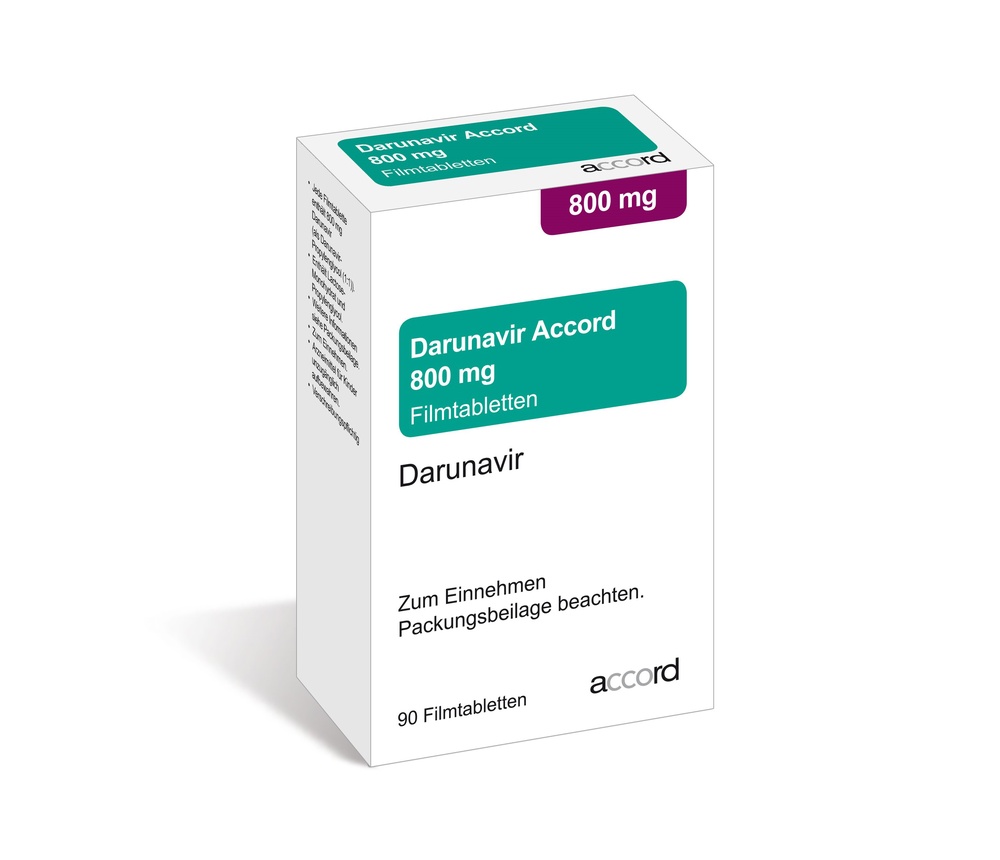
- Country of registration
- Dosage formTablets, 75 mg
- ATC codeJ05AE10
- Active substance
- Prescription requiredYes
- ImporterLaboratori Fundacio Dau Pharmadox Healthcare Ltd. Pharmaten International S.A. Pharmaten S.A.
- This information is for reference only and does not constitute medical advice. Always consult a doctor before taking any medication. Oladoctor is not responsible for medical decisions based on this content.
- Alternatives to Darunavir Accord
Online doctors for Darunavir Accord
Discuss questions about Darunavir Accord, including use, safety considerations and prescription review, subject to medical assessment and local regulations.









Get Darunavir Accord Prescription Online
Fill in a 2-min form
Tell us your symptoms, history, and what medicine you're requesting.
Pick a doctor or let us assign
Choose a specialist or we'll match you with the next available doctor.
Doctor reviews your case
Usually within 30 minutes. They may ask follow-up questions via chat.
Collect from any pharmacy
Electronic prescription sent to your email — valid across Spain.
Frequently Asked Questions
Darunavir Accord requires a prescription in Poland. You can check with a doctor online whether this medicine may be appropriate for your situation.
The active ingredient in Darunavir Accord is darunavir. This information helps identify medicines with the same composition but different brand names.
Darunavir Accord is manufactured by Laboratori Fundacio Dau Pharmadox Healthcare Ltd. Pharmaten International S.A. Pharmaten S.A.. Pharmacy brands and packaging may differ depending on the distributor.
Doctors such as Family doctors, Psychiatrists, Dermatologists, Cardiologists, Endocrinologists, Gastroenterologists, Pulmonologists, Nephrologists, Rheumatologists, Hematologists, Infectious disease physicians, Allergists, Geriatricians, Paediatricians, Oncologists may assess whether Darunavir Accord is appropriate, depending on your situation and local regulations. You can book an online consultation to discuss your symptoms and possible next steps.
Spain has a well-developed healthcare infrastructure across major cities such as Madrid, Barcelona, Valencia, and Seville. Pharmacies are widely available and operate under strict regulations, ensuring access to prescribed medications.
You can buy Darunavir Accord in Madrid, Barcelona, Seville, or Valencia at any local pharmacy with a valid prescription.
To obtain a prescription, you can use Oladoctor:
Other medicines with the same active substance (darunavir) include Darunavir Accord, Darunavir Accord, Darunavir Accord. These may have different brand names or formulations but contain the same therapeutic ingredient. Always consult a doctor before switching or starting a new medicine.
