



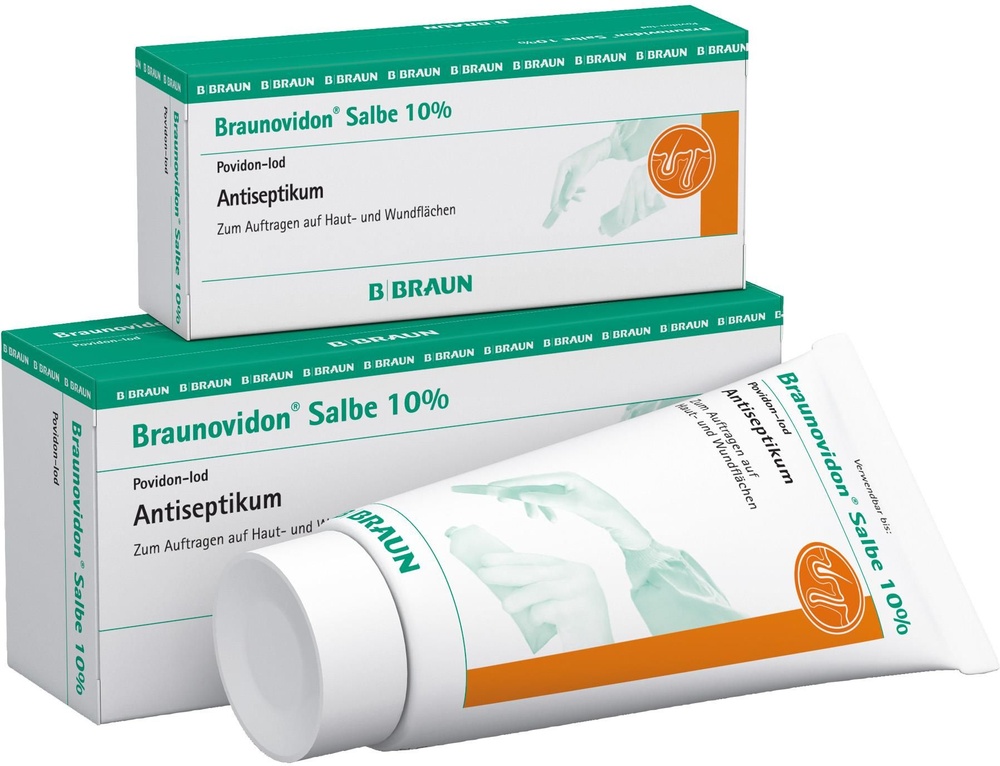
BRAUNOVIDON 100 mg /G Ointment

Prescription review online
A doctor will review your case and decide whether a prescription is medically appropriate.

Talk to a doctor about this medicine
Discuss your symptoms and possible next steps in a quick online consultation.



How to use Braunovidon
Contents of the leaflet
- Leaflet attached to the packaging: patient information
- Braunovidon, 100 mg/g, ointment
- What is Braunovidon and what is it used for
- Important information before using Braunovidon
- How to use Braunovidon
- Possible side effects
- How to store Braunovidon
- Contents of the packaging and other information
Leaflet attached to the packaging: patient information
Braunovidon, 100 mg/g, ointment
(Povidone-iodine)
You should read the contents of the leaflet before using the medicine, as it contains important information for the patient.
- This medicine should always be used exactly as described in the patient leaflet or as directed by a doctor, pharmacist, or nurse.
- You should keep this leaflet, so you can read it again if you need to.
- If you need advice or additional information, you should ask your pharmacist.
- If you experience any side effects, including any possible side effects not listed in the leaflet, you should tell your doctor, pharmacist, or nurse. See section 4. If there is no improvement or you feel worse, you should contact your doctor.
Table of contents of the leaflet:
- 1. What is Braunovidon and what is it used for
- 2. Important information before using Braunovidon
- 3. How to use Braunovidon
- 4. Possible side effects
- 5. How to store Braunovidon
- 6. Contents of the packaging and other information

Not sure if this medicine is right for you?
Discuss your symptoms and treatment with a doctor online.
1. What is Braunovidon and what is it used for
Pharmaceutical form
Braunovidon is an ointment for application to the skin. The medicine contains the active substance povidone-iodine.
The medicine is used as a disinfectant for repeated use over a specified period.
Braunovidon is indicated in cases of skin burns by flame or hot liquid, infected ulcers, bedsores, infected superficial skin defects that do not show a tendency to heal with an inflammatory reaction or deeper ulcers, purulent skin changes (pyoderma), skin diseases of bacterial or fungal origin, and secondary infections with the same agent previously cured.
2. Important information before using Braunovidon
When not to use Braunovidon:
- if you are allergic to povidone-iodine or any of the other ingredients of this medicine (listed in section 6),
- in thyroid disease,
- in the case of herpetic skin inflammation (a rare skin disease characterized by burning, itching, and other symptoms, mainly on the skin of the hands, feet, arms, and buttocks),
- when planning or recently completed radioisotope iodine therapy (until the end of therapy).
- in newborns and infants up to 6 months of age.
Warnings and precautions:
Before starting treatment, you should discuss it with your doctor or pharmacist.
- Due to the risk of mercury iodide burns, povidone-iodine should not be used simultaneously or after the use of mercury-containing products.
- Regular use of Braunovidon is not recommended during lithotherapy.
- The oxidizing effect of povidone-iodine may cause false-positive results in some laboratory diagnostic tests (e.g., hemoglobin or glucose determination in stool or urine using o-toluidine or guaiac resin).
- Povidone-iodine may interfere with thyroid function tests (scintigraphy, iodine binding protein determination, diagnosis using radioisotope iodine), which in turn may prevent treatment with radioisotope iodine. A new scintigram can be performed no earlier than 1-2 weeks after the end of treatment with Braunovidon.
- Stains on clothing can be removed with soap and water. Difficult-to-remove stains can be removed with a solution of liquid ammonia or thiocyanate.
Children
Do not use in newborns, especially premature infants, and in infants up to 6 months of age.
Braunovidon and other medicines
You should tell your doctor or pharmacist about all medicines you are currently taking or have recently taken, as well as any medicines you plan to take.
Povidone-iodine reacts with proteins and some organic compounds, e.g., blood or pus components, which may reduce its effectiveness.
Concomitant use of povidone-iodine and enzymes for wound dressing causes oxidation of the enzyme components, making them ineffective.
Braunovidon should not be used simultaneously or shortly after the use of wound care products or disinfectants containing mercury, as iodine and mercury can react to form corrosive chemicals.
Braunovidon should not be used with reducing agents, alkaloid salts, tannic acid, salicylic acid, silver salts, bismuth salts, taurolidine, and hydrogen peroxide.
In patients undergoing lithotherapy, concomitant use of Braunovidon is not recommended. Absorbed iodine may exacerbate hypothyroidism, which in turn may be caused by lithotherapy.
Pregnancy, breastfeeding, fertility
If you are pregnant or breastfeeding, think you may be pregnant, or plan to have a child, you should consult your doctor or pharmacist before using this medicine.
During pregnancy, Braunovidon may be used up to the ninth week, if there are significant indications determined by the doctor.
Use of Braunovidon after the ninth week of pregnancy and during breastfeeding is contraindicated, as iodine, including povidone-iodine, passes through the placental barrier and into breast milk.
Driving and using machines:
Braunovidon does not affect the ability to drive and use machines.

Started taking the medicine and have questions?
Discuss your symptoms and treatment with a doctor online.
3. How to use Braunovidon
This medicine should always be used exactly as described in the patient leaflet or as directed by a doctor, pharmacist, or nurse. If you are unsure, you should consult your doctor, pharmacist, or nurse.
The ointment is applied several times a day to the skin surface requiring treatment.
In the initial phase of treatment, to maintain optimal bactericidal action, the ointment should be applied every 4-6 hours to the infected or secreting wound.
The duration of use of Braunovidon ointment depends on the patient's clinical condition.
The ointment may remain on the skin for a long time. The dressing should be changed when the brown color of the ointment fades.
For the ointment to work effectively, the entire wound surface must be carefully covered.
If you feel that the effect of the medicine is too strong or too weak, you should consult your doctor.
Children
Do not use in newborns, especially premature infants, and in infants up to 6 months of age.
Warning:
The brown color of the ointment is a characteristic feature. It indicates the presence of available iodine and its effectiveness. Fading of the color is a signal to apply a new layer of ointment.
It is essential that the ointment covers the entire infected skin surface, as Braunovidon works antiseptically only locally.
Using a larger dose of Braunovidon than recommended
If you use a larger dose of the medicine than recommended, you should immediately consult your doctor.
There are no data on overdosing when using the medicine according to the indications and method of use.
If large doses of the medicine are used on large skin surfaces, wounds, or burns, symptoms of iodine poisoning may occur.
If you accidentally ingest Braunovidon
If you ingest the medicine, you should immediately consult your doctor.
Symptoms
In case of accidental ingestion of the medicine, you should rinse your stomach with a starch solution or 5% sodium thiosulfate solution and, if necessary, correct water and electrolyte balance disturbances.
Emergency treatment, antidotes
After absorbing too much of the Braunovidon medicine during wound treatment, the toxic iodine level in the blood can be effectively reduced by hemodialysis or peritoneal dialysis. Further treatment depends on the underlying disease and symptoms of overdosing, e.g., metabolic acidosis, kidney dysfunction, and should be carried out in accordance with general principles. Due to the fact that iodine exacerbates hyperthyroidism, the results of treatment with thyrostatics may be delayed.
4. Possible side effects
Like all medicines, Braunovidon can cause side effects, although not everybody gets them.
Important side effects or symptoms to watch for and preventive measures to be taken if they occur
Frequency not known(cannot be estimated from the available data):
skin reactions in case of hypersensitivity (allergy), e.g., late contact allergy in the form of itching, redness, blisters, etc.
Very rare(may occur in less than 1 in 10,000 patients):
severe hypersensitivity reactions (anaphylactic reactions) affecting other organs (e.g., skin, respiratory system, cardiovascular system).
If you experience any of these side effects, you should stop using Braunovidon and immediately consult your doctor.
Other side effects
Frequency not known(cannot be estimated from the available data):
- unfavorable effect on wound healing and transient pains, burning sensation, and heat in case of prolonged use;
- thyroid function disorders due to use on a large body surface area or repeated use, especially on damaged skin surfaces - in such cases, routine monitoring of thyroid function is necessary;
- cases of osmolality disorders, electrolyte disturbances, kidney failure, and severe metabolic acidosis due to the absorption of large amounts of povidone-iodine into the body.
If you experience any side effects, including any possible side effects not listed in this leaflet, you should consult your doctor or pharmacist. This includes any side effects not mentioned in this leaflet.
Reporting side effects
If you experience any side effects, including any possible side effects not listed in the leaflet, you should tell your doctor or pharmacist. Side effects can be reported directly to the Department of Monitoring of Adverse Reactions to Medicinal Products of the Office for Registration of Medicinal Products, Medical Devices, and Biocidal Products:
Al. Jerozolimskie 181C
02-222 Warsaw
Phone: +48 22 49 21 301
Fax: +48 22 49 21 309
Website: https://smz.ezdrowie.gov.pl (https://smz.ezdrowie.gov.pl/) By reporting side effects, you can help gather more information on the safety of the medicine.
5. How to store Braunovidon
The medicine should be stored in a place inaccessible and invisible to children.
Store at a temperature below 25°C.
Do not use the medicine after the expiry date stated on the packaging.
The expiry date refers to the last day of the specified month.
Medicines should not be disposed of via wastewater or household waste containers. You should ask your pharmacist how to dispose of medicines that are no longer needed. This will help protect the environment.
6. Contents of the packaging and other information
What Braunovidon contains
- Active substances: povidone-iodine with 10% available iodine content. 100 g of ointment contains 10 g of povidone-iodine.
- Excipients: macrogol 400, macrogol 4000, purified water, sodium bicarbonate.
What Braunovidon looks like and what the packaging contains
The medicine is a brown-colored ointment.
- for a packaging size of 20 g: an aluminum tube internally coated with HDPE, with an HDPE nozzle and an HDPE cap, in a cardboard box.
- for a packaging size of 100 g: an aluminum tube internally coated with HDPE, with an HDPE nozzle and a polypropylene cap, in a cardboard box.
Not all pack sizes may be marketed.
Marketing authorization holder and importer
- B. Braun Melsungen AG Carl-Braun-Strasse 1 34212 Melsungen Germany
To obtain more detailed information, you should contact the representative of the marketing authorization holder:
Aesculap Chifa Sp. z o.o.
ul. Tysiąclecia 14
64-300 Nowy Tomyśl
phone: +48 61 44 20 100
fax: +48 61 44 23 936
Date of the last update of the leaflet:
- Country of registration
- Dosage formOintment, 100 mg/g
- ATC codeD08AG02
- Active substance
- Prescription requiredNo
- Manufacturer
- ImporterB. Braun Melsungen AG
- This information is for reference only and does not constitute medical advice. Always consult a doctor before taking any medication. Oladoctor is not responsible for medical decisions based on this content.
- Alternatives to BraunovidonDosage form: Ointment, 100 mg/gActive substance: povidone-iodineManufacturer: Egis Pharmaceuticals PLCPrescription not requiredDosage form: Solution, 100 mg/mlActive substance: povidone-iodineManufacturer: Egis Pharmaceuticals PLCPrescription not requiredDosage form: Solution, 100 mg/mlActive substance: povidone-iodinePrescription not required
Online doctors for Braunovidon
Discuss questions about Braunovidon, including use, safety considerations and prescription review, subject to medical assessment and local regulations.









Get Braunovidon Prescription Online
Fill in a 2-min form
Tell us your symptoms, history, and what medicine you're requesting.
Pick a doctor or let us assign
Choose a specialist or we'll match you with the next available doctor.
Doctor reviews your case
Usually within 30 minutes. They may ask follow-up questions via chat.
Collect from any pharmacy
Electronic prescription sent to your email — valid across Spain.
Frequently Asked Questions
Braunovidon does not require a prescription in Poland. You can check with a doctor online whether this medicine may be appropriate for your situation.
The active ingredient in Braunovidon is povidone-iodine. This information helps identify medicines with the same composition but different brand names.
Braunovidon is manufactured by B. Braun Melsungen AG. Pharmacy brands and packaging may differ depending on the distributor.
Doctors such as Family doctors, Psychiatrists, Dermatologists, Cardiologists, Endocrinologists, Gastroenterologists, Pulmonologists, Nephrologists, Rheumatologists, Hematologists, Infectious disease physicians, Allergists, Geriatricians, Paediatricians, Oncologists may assess whether Braunovidon is appropriate, depending on your situation and local regulations. You can book an online consultation to discuss your symptoms and possible next steps.
Spain has a well-developed healthcare infrastructure across major cities such as Madrid, Barcelona, Valencia, and Seville. Pharmacies are widely available and operate under strict regulations, ensuring access to prescribed medications.
You can buy Braunovidon in Madrid, Barcelona, Seville, or Valencia at any local pharmacy with a valid prescription.
To obtain a prescription, you can use Oladoctor:
Other medicines with the same active substance (povidone-iodine) include Betadine, Betadine, Betadine. These may have different brand names or formulations but contain the same therapeutic ingredient. Always consult a doctor before switching or starting a new medicine.
