



BACTRIM 800 mg/160 mg Tablets

Prescription review online
A doctor will review your case and decide whether a prescription is medically appropriate.

Talk to a doctor about this medicine
Discuss your symptoms and possible next steps in a quick online consultation.



How to use Bactrim Forte
Contents of the leaflet
- CHARACTERISTICS OF THE MEDICINAL PRODUCT
- NAME OF THE MEDICINAL PRODUCT
- QUALITATIVE AND QUANTITATIVE COMPOSITION
- PHARMACEUTICAL FORM
- CLINICAL PARTICULARS
- 1 Therapeutic Indications
- 2 Posology and Method of Administration
- 3 Contraindications
- 4 Special Warnings and Precautions for Use
- 5 Interaction with Other Medicinal Products and Other Forms of Interaction
- 6 Fertility, Pregnancy, and Lactation
- 7 Effects on Ability to Drive and Use Machines
- 8 Undesirable Effects
- 9 Overdose
- PHARMACOLOGICAL PROPERTIES
- 1 Pharmacodynamic properties
- 2 Pharmacokinetic properties
- PHARMACEUTICAL PARTICULARS
- 1 List of excipients
- 2 Incompatibilities
- 3 Shelf life
- 4 Special precautions for storage
- 5 Nature and contents of container
- 6 Special precautions for disposal and preparation of the medicinal product for administration
- MARKETING AUTHORIZATION HOLDER
- MARKETING AUTHORIZATION NUMBER
- DATE OF FIRST MARKETING AUTHORIZATION AND DATE OF LAST RENEWAL
- DATE OF REVISION OF THE SUMMARY OF PRODUCT CHARACTERISTICS
CHARACTERISTICS OF THE MEDICINAL PRODUCT
1. NAME OF THE MEDICINAL PRODUCT
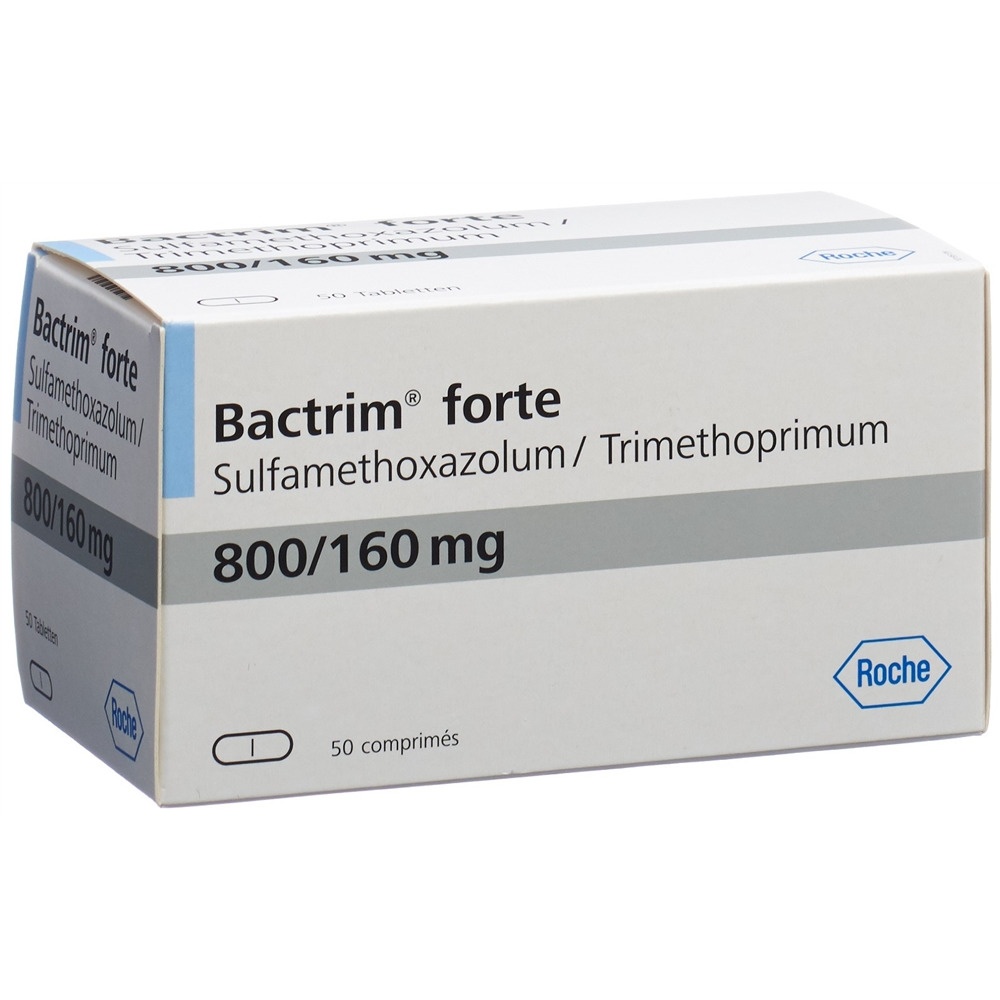
Bactrim Forte, 800 mg + 160 mg, tablets

Not sure if this medicine is right for you?
Discuss your symptoms and treatment with a doctor online.
2. QUALITATIVE AND QUANTITATIVE COMPOSITION
Sulfamethoxazole + Trimethoprim
Bactrim Forte, 800 mg + 160 mg, tablets:
1 tablet contains: 800 mg of sulfamethoxazole and 160 mg of trimethoprim
The combination of sulfamethoxazole and trimethoprim in a mass ratio of 5:1 is known as co-trimoxazole.
A full list of excipients, see section 6.1.
3. PHARMACEUTICAL FORM
Tablet
White or almost white, elongated, biconvex tablet with dimensions of about 19x9 mm with the inscription
“BACTRIM 800+160” on one side and a dividing line on the other side.
The tablet can be divided into equal doses.

Started taking the medicine and have questions?
Discuss your symptoms and treatment with a doctor online.
4. CLINICAL PARTICULARS
4.1 Therapeutic Indications
Bactrim Forte can be used after considering the benefit-risk ratio, reviewing epidemiological data and bacterial resistance.
Therapeutic indications are limited to infections caused by microorganisms susceptible to co-trimoxazole (see section 5).
When deciding to treat with Bactrim Forte, official guidelines for the proper use of antibacterial agents should be considered.
Bactrim Forte should be used for the treatment or prevention of infections, only in cases where it has been confirmed or there is a reasonable suspicion that they are caused by bacteria or other microorganisms susceptible to co-trimoxazole. In the absence of such data, in the process of empirical selection of appropriate antibiotic therapy, local epidemiological conditions and antimicrobial susceptibility of microorganisms should be taken into account.
Bactrim Forte is indicated for the treatment of adults and adolescents over 12 years of age.
Therapeutic Indications:
- respiratory tract infection - in case of exacerbation of chronic bronchitis
- otitis media;
- gastrointestinal tract infection, including typhoid and traveler's diarrhea;
- treatment and prophylaxis (primary and secondary) of pneumonia caused by Pneumocystis jiroveciiin adults and adolescents, particularly in individuals with severe immune system disorders;
spcpl-pl-bacforte-080-jul25-clean.docx
1
- urinary tract infection and soft chancre.
4.2 Posology and Method of Administration
Note: If it is necessary to administer half a tablet of Bactrim Forte or a smaller dose to achieve the recommended dose, especially in children, Bactrim, 400 mg + 80 mg, tablets or Bactrim, (200 mg + 40 mg)/5 mL, syrup can be used.
Dosage
Adults and adolescents over 12 years of age with normal renal function
1 tablet of Bactrim Forte administered every 12 hours.
In case of severe infections, the dose can be increased to 1.5 tablets of Bactrim Forte administered every 12 hours.
The minimum dose in case of long-term treatment (over 14 days) is ½ tablet of Bactrim Forte administered every 12 hours.
In case of acute infections, Bactrim Forte should be administered for at least 5 days or until the patient has been symptom-free for at least 2 days. If there is no clinical improvement after 7-day treatment, the patient's condition should be re-evaluated.
Pneumocystis jirovecii pneumonia
For treatment, a dose not exceeding 100 mg/kg/day of sulfamethoxazole and 20 mg/kg/day of trimethoprim should be used, in divided doses administered every 6 hours, for 14 days.
Table 1. Maximum doses of Bactrim Forte depending on the patient's body weight with Pneumocystis jirovecii pneumonia.
* To achieve the appropriate maximum dose, Bactrim, 400 mg + 80 mg, tablets or Bactrim, (200 mg + 40 mg)/5 mL, syrup can be used.
For prophylaxis of Pneumocystis jirovecii pneumonia, the recommended dose for adolescents and adults is 1 tablet of Bactrim Forte once a day. Results of a study conducted in HIV-infected patients also indicate the effectiveness of using ½ tablet of Bactrim Forte once a day.
For use in children (under 12 years of age), Bactrim in tablet or syrup form is intended. Detailed dosing - see Characteristics of the Medicinal Product Bactrim, 400 mg + 80 mg, tablets or Bactrim, (200 mg + 40 mg)/5 mL, syrup.
Single-dose treatment in uncomplicated, acute urinary tract infections
| Body weight [kg] | Dose administered every 6 hours [tablets] |
| 16 |
|
| 24 |
|
| 32 | 1 |
| 40 |
|
| 48 | 1 and ½ |
| 64 | 2 |
| 80 | 2 and ½ |
2 to 3 tablets of Bactrim Forte used once, taken as soon as possible in the evening after dinner or before bedtime.
Treatment of soft chancre
1 tablet of Bactrim Forte administered twice a day. If after 7 days there are no visible signs of improvement, it is recommended to consider administering the drug for another 7 days. However, it should be noted that the lack of response to treatment may indicate that the disease is caused by resistant strains.
Dosage in patients with renal impairment
Recommended dosing regimen in patients with renal impairment:
Creatinine clearance > 30 mL/min: standard dosing.
Creatinine clearance 15 – 30 mL/min: half of the standard dose.
Creatinine clearance <15 ml min: bactrim forte is contraindicated (see section 4.3).
Dosage in patients undergoing dialysis
Patients undergoing hemodialysis should initially receive a normal loading dose of TMP-SMZ, and then an additional half dose after each hemodialysis.
Peritoneal dialysis results in minimal elimination of TMP and SMZ. It is not recommended to use TMP-SMZ in patients undergoing peritoneal dialysis.
Dosage in elderly patients
In elderly patients with normal renal function, the same doses as for adults should be used.
Method of administration
Oral administration. It is best to take the product after a meal with an adequate amount of fluids.
4.3 Contraindications
Bactrim Forte is absolutely contraindicated:
- in patients with hypersensitivity to the active substances or to any of the excipients listed in section 6.1;
- in patients with significant liver tissue damage;
- in patients with severe renal impairment with creatinine clearance <15 ml min (see section 4.2);< li>
- in combination with dofetilide (see section 4.5);
- in children under 6 weeks of age.
4.4 Special Warnings and Precautions for Use
In case of skin rash or other severe adverse reactions, the use of the drug should be discontinued immediately.
Particular caution should be exercised when using Bactrim Forte in patients with a history of severe allergies or bronchial asthma.
There is an increased risk of adverse reactions of high severity:
- in elderly patients,
- in case of concomitant diseases, such as renal and/or liver disorders,
- in case of concomitant use of other drugs (the risk may depend on the dose and duration of treatment).
spcpl-pl-bacforte-080-jul25-clean.docx
3
Severe Adverse Reactions
Rarely, fatal cases have been reported in association with adverse reactions such as blood disorders, severe skin reactions (SCAR) - such as severe bullous erythema (Stevens-Johnson syndrome), toxic epidermal necrolysis (Lyell's syndrome), drug rash with eosinophilia and systemic symptoms (DRESS), acute generalized exanthematous pustulosis (AGEP), and fulminant hepatic necrosis.
- Severe skin reactions, Stevens-Johnson syndrome, and toxic epidermal necrolysis have been reported during the use of Bactrim Forte.
- Patients should be informed about the signs and symptoms and closely monitored for skin reactions. The greatest risk of Stevens-Johnson syndrome or toxic epidermal necrolysis occurs within the first few weeks of treatment.
- If signs or symptoms of Stevens-Johnson syndrome or toxic epidermal necrolysis occur (e.g., progressive skin rash often with blisters or mucosal lesions), treatment with Bactrim Forte should be discontinued.
- The best results in case of Stevens-Johnson syndrome and toxic epidermal necrolysis are achieved with early diagnosis and immediate discontinuation of the suspected product. Early discontinuation of the product is associated with a better prognosis.
- If a patient has developed Stevens-Johnson syndrome or toxic epidermal necrolysis while using Bactrim Forte, Bactrim Forte should not be used again in this patient.
In order to minimize the risk of adverse reactions, treatment with Bactrim Forte should be as short as possible, especially in elderly patients.
Hypersensitivity Reactions and Allergic Reactions
Pulmonary infiltrates observed in association with eosinophilic or allergic pneumonitis may manifest as cough and shortness of breath. If these symptoms occur or worsen, the patient should be re-evaluated and discontinuation of Bactrim Forte should be considered.
Respiratory Toxicity
During treatment with co-trimoxazole, very rare cases of severe respiratory toxicity have occurred, sometimes transforming into acute respiratory distress syndrome (ARDS). The first symptoms of ARDS may be such pulmonary symptoms as cough, fever, and shortness of breath, with concomitant radiological signs indicating pulmonary infiltrates and impaired lung function. In such circumstances, treatment with co-trimoxazole should be discontinued and appropriate therapy should be applied.
Renal Effects
Sulfonamides, including Bactrim Forte, may cause increased diuresis, especially in patients with cardiac edema.
It is recommended to closely monitor serum potassium levels and renal function in patients taking high doses of Bactrim Forte, used in patients with Pneumocystis jirovecii pneumonia, or in patients taking standard doses of Bactrim Forte, who have disorders of potassium metabolism or renal impairment or who are taking drugs that cause hyperkalemia (see section 4.5).
Special Patient Populations
In case of renal impairment, the dose should be adjusted accordingly (see section 4.2). Patients with severe renal impairment (i.e., creatinine clearance 15-30 mL/min) taking TMP-SMZ should be closely monitored for signs and symptoms of toxicity, such as nausea, vomiting, and hyperkalemia.
Long-term Treatment
Regular blood tests should be performed in patients undergoing prolonged treatment with Bactrim Forte. In case of a significant decrease in any blood element, administration of Bactrim Forte should be discontinued.
Except in exceptional cases, it is not recommended to use Bactrim Forte in patients with severe hematological disorders.
Cases of pancytopenia have been reported in patients taking co-trimoxazole (see sections 4.3 and
- 4.5).
Hematological adverse reactions associated with folic acid deficiency may occur in elderly patients, in patients with pre-existing folic acid deficiency, or in patients with renal impairment. These symptoms disappear after administration of folinic acid.
Hemophagocytic Lymphohistiocytosis
Very rare cases of hemophagocytic lymphohistiocytosis (HLH) have been reported in patients treated with co-trimoxazole. This is a life-threatening disorder of abnormal immune activation, characterized by clinical signs and symptoms such as severe systemic inflammation (e.g., fever, hepatosplenomegaly, hypertriglyceridemia, hypofibrinogenemia, high serum ferritin levels, cytopenia, and hemophagocytosis). Patients with early signs of abnormal immune activation should be diagnosed promptly. If HLH is diagnosed, treatment with co-trimoxazole should be discontinued.
During long-term treatment with Bactrim Forte (especially in patients with renal impairment), regular urine tests and renal function tests should be performed. During treatment, adequate fluid intake and diuresis should be ensured to prevent crystalluria.
Due to the possibility of hemolysis, Bactrim Forte should not be used in patients with G6PD deficiency, except in cases of absolute necessity. In such cases, only minimal doses of the drug should be administered.
As with other sulfonamide-containing drugs, caution is recommended when treating patients with porphyria and thyroid disorders.
Patients belonging to the "slow acetylators" group may have a greater tendency to individual hypersensitivity to sulfonamides (idiosyncrasy).
Bactrim Forte contains sodium
The medicinal product contains less than 1 mmol (23 mg) of sodium per tablet, which means the medicinal product is considered "sodium-free".
4.5 Interaction with Other Medicinal Products and Other Forms of Interaction
Pharmacokinetic Interactions
Drugs transported by OCT2
Trimethoprim is an inhibitor of the organic cation transporter 2 (OCT2) and a weak inhibitor of CYP2C8. Sulfamethoxazole is a weak inhibitor of CYP2C9.
Systemic exposure to drugs transported by OCT2 may increase when co-administered with TMP-SMZ. Examples include dofetilide, amantadine, memantine, and lamivudine.
Dofetilide
TMP-SMZ should not be co-administered with dofetilide (see section 4.3).
Trimethoprim has been shown to inhibit the renal excretion of dofetilide. Co-administration of trimethoprim (160 mg) with sulfamethoxazole (800 mg) twice daily with dofetilide (500 μg) twice daily for 4 days resulted in a 103% increase in the area under the curve (AUC) of dofetilide and a 93% increase in the maximum concentration (Cmax) of dofetilide. Dofetilide can cause severe ventricular arrhythmias associated with QT interval prolongation, including torsades de pointes, which are directly related to the dofetilide concentration in the blood.
Amantadine and Memantine
Patients taking amantadine or memantine may be at increased risk of adverse neurological events, such as delirium and myoclonus.
Drugs metabolized mainly by CYP2C8
Systemic exposure to drugs metabolized mainly by CYP2C8 may increase when co-administered with TMP-SMZ. Examples include paclitaxel, amiodarone, dapsone, repaglinide, rosiglitazone, and pioglitazone.
Paclitaxel and amiodarone have a narrow therapeutic index. Therefore, it is not recommended to co-administer them with TMP-SMZ.
Dapsone
Both dapsone and TMP-SMZ can cause methemoglobinemia, which may result in pharmacokinetic and pharmacodynamic interactions. Patients taking dapsone and TMP-SMZ should be monitored for methemoglobinemia. If possible, alternative therapies should be considered.
Repaglinide, Rosiglitazone, Pioglitazone
Patients taking repaglinide, rosiglitazone, or pioglitazone should be regularly monitored for hypoglycemia.
Drugs metabolized mainly by CYP2C9
Systemic exposure to drugs metabolized mainly by CYP2C9 may increase when co-administered with TMP-SMZ. Examples include coumarins (warfarin, acenocoumarol, phenprocoumon), phenytoin, and sulfonylurea derivatives (glibenclamide, gliclazide, glipizide, chlorpropamide, and tolbutamide).
Coumarins
Patients taking coumarins should be monitored for coagulation.
Phenytoin
A 39% increase in the half-life and a 27% decrease in the clearance of phenytoin were observed after administration of TMP-SMZ in standard doses. Patients taking phenytoin should be monitored for signs of phenytoin toxicity.
Sulfonylurea Derivatives
Patients taking sulfonylurea derivatives (including glibenclamide, gliclazide, glipizide, chlorpropamide, and tolbutamide) should be regularly monitored for hypoglycemia.
spcpl-pl-bacforte-080-jul25-clean.docx
6
Digoxin
An increase in digoxin levels may occur during concomitant use of TMP-SMZ, especially in elderly patients. Digoxin levels in the blood should be monitored.
Pharmacodynamic Interactions and Interactions with an Undefined Mechanism
The frequency and severity of myelotoxic and nephrotoxic adverse reactions may increase if TMP-SMZ is co-administered with other drugs with proven myelosuppressive or nephrotoxic effects, such as nucleoside analogs, tacrolimus, azathioprine, or mercaptopurine. Patients taking TMP-SMZ concomitantly with these drugs should be monitored for signs of myelo- and/or nephrotoxicity.
Clozapine
Concomitant use with clozapine, a drug that may cause agranulocytosis, should be avoided.
Diuretics
An increased incidence of thrombocytopenia has been observed in elderly patients taking certain diuretics, especially thiazides. Patients taking diuretics should be regularly monitored for platelet count.
Methotrexate
Sulfonamides, including sulfamethoxazole, may compete with protein binding and renal transport of methotrexate, thereby increasing the fraction of free methotrexate and its overall effect on the body.
Cases of pancytopenia have been reported in patients taking trimethoprim and methotrexate concomitantly (see section 4.4). Trimethoprim has a low affinity for human dihydrofolate reductase, but may increase the toxicity of methotrexate, especially if there are risk factors such as advanced age, hypoalbuminemia, impaired renal function, decreased bone marrow reserve, and high doses of methotrexate. Patients at risk should be treated with folic acid or folinic acid to counteract the adverse effect of methotrexate on hematopoiesis.
Pyrimethamine
Isolated cases of megaloblastic anemia have been reported in patients taking pyrimethamine for malaria prophylaxis in doses exceeding 25 mg per week and taking TMP-SMZ concomitantly.
Potassium-sparing drugs (angiotensin-converting enzyme inhibitors, angiotensin receptor blockers)
Due to the potassium-sparing effect of TMP-SMZ, caution should be exercised when TMP-SMZ is co-administered with other drugs that increase potassium levels in the blood, such as angiotensin-converting enzyme inhibitors, angiotensin receptor blockers, potassium-sparing diuretics, and prednisolone.
Cyclosporine
A transient deterioration in renal function has been observed in patients treated with TMP-SMZ and cyclosporine after kidney transplantation.
Hypoglycemic agents
spcpl-pl-bacforte-080-jul25-clean.docx
7
Rarely, severe hypoglycemia may occur. The patient should be warned and advised to monitor blood glucose levels more frequently. It may be necessary to adjust the dose of oral hypoglycemic agents during and after treatment with Bactrim Forte.
Effect on Diagnostic Tests
TMP-SMZ, especially trimethoprim, may interfere with the measurement of methotrexate levels in the blood using a competitive binding technique with bacterial dihydrofolate reductase as the binding protein. However, no interference occurs when methotrexate levels are measured by radioimmunoassay.
The presence of TMP and SMZ may alter the results of creatinine measurements in serum using the Jaffe reaction with picric acid. This may result in an overestimation of serum creatinine levels by about 10%.
4.6 Fertility, Pregnancy, and Lactation
Pregnancy
There is no conclusive evidence of the risk of fetal malformations in women treated with co-trimoxazole in early pregnancy. The results of two large observational studies indicate an increased risk of spontaneous abortion (2 to 3.5 times) in women who used trimethoprim in monotherapy or in combination with sulfamethoxazole in the first trimester of pregnancy compared to women who did not use antibiotics or used penicillins. Animal studies have shown that very high doses of co-trimoxazole cause fetal malformations typical of folic acid antagonists.
Since both trimethoprim and sulfamethoxazole cross the placental barrier and may affect folic acid metabolism, the use of Bactrim Forte in pregnancy can be considered only when the expected benefits of treatment outweigh the potential risk to the fetus.
In such cases, pregnant women or women planning to become pregnant during treatment with Bactrim Forte should be advised to take folic acid in a dose of 5 mg per day. Whenever possible, the use of Bactrim Forte should be avoided in the last trimester of pregnancy due to the risk of kernicterus in the newborn (see section 5.2).
Breastfeeding
Both trimethoprim and sulfamethoxazole pass into human milk.
Although the amount of the drug ingested by the child of a mother treated with co-trimoxazole is small, the risk to the child (kernicterus, hypersensitivity) should be weighed against the expected therapeutic benefits for the mother (see section 5.2).
Fertility
There are no available data on the effect on fertility.
4.7 Effects on Ability to Drive and Use Machines
There are no data available.
4.8 Undesirable Effects
In recommended doses, Bactrim Forte is generally well tolerated. The most common adverse reactions are skin rashes and gastrointestinal disorders.
The following criteria have been used to determine the frequency of adverse reactions:
| System Organ Class and Frequency | Very Common (≥1/10) | Common (≥1/100 and <1> | Uncommon (≥1/1000 and <1> | Rare (≥1/10,000 and <1> | Very Rare (<1> | Not Known (cannot be estimated from available data) |
| Blood and Lymphatic System Disorders | leukopenia, granulocytopenia, thrombocytopenia, anemia (megaloblastic, hemolytic/autoimmune, aplastic) | methemoglobinemia, agranulocytosis, pancytopenia | ||||
| Cardiac Disorders | allergic myocarditis | |||||
| Congenital, Familial and Genetic Disorders and Pregnancy, Puerperium and Perinatal Conditions | spontaneous abortion | |||||
| Ear and Labyrinth Disorders | tinnitus, vertigo | |||||
| Eye Disorders | conjunctivitis, uveitis | retinal vasculitis | ||||
| Gastrointestinal Disorders | nausea, vomiting | diarrhea, pseudomembranous colitis | stomatitis, oral mucositis | acute pancreatitis | ||
| General Disorders and Administration Site Conditions | phlebitis, thrombophlebitis | |||||
| Hepatobiliary Disorders | elevated liver enzymes | elevated bilirubin, hepatitis | cholestasis | hepatic necrosis | vanishing bile duct syndrome | |
| Immune System Disorders | hypersensitivity reactions/ allergic reactions (fever, angioedema, anaphylactoid reactions, serum sickness-like reaction) |
spcpl-pl-bacforte-080-jul25-clean.docx
9
| System Organ Class and Frequency | Very Common (≥1/10) | Common (≥1/100 and <1> | Uncommon (≥1/1000 and <1> | Rare (≥1/10,000 and <1> | Very Rare (<1> | Not Known (cannot be estimated from available data) |
| Infections and Infestations | fungal infections, e.g. candidiasis | |||||
| Investigations | hyperkalemia, hyponatremia | |||||
| Metabolism and Nutrition Disorders | hypoglycemia | |||||
| Musculoskeletal and Connective Tissue Disorders | rhabdomyolysis | arthralgia, myalgia | ||||
| Nervous System Disorders | seizures | neuropathy (including peripheral neuropathy and paresthesia) | ataxia, aseptic meningitis, pseudomeningitis syndrome | cerebral vasculitis | ||
| Psychiatric Disorders | hallucinations | |||||
| Renal and Urinary Disorders | elevated urea, elevated creatinine | renal impairment | crystalluria | interstitial nephritis, increased diuresis | urolithiasis (kidney stones) | |
| Respiratory, Thoracic and Mediastinal Disorders | pulmonary infiltrates | pulmonary vasculitis |
spcpl-pl-bacforte-080-jul25-clean.docx
10
| System Organ Class and Frequency | Very Common (≥1/10) | Common (≥1/100 and <1> | Uncommon (≥1/1000 and <1> | Rare (≥1/10,000 and <1> | Very Rare (<1> | Not Known (cannot be estimated from available data) |
| Skin and Subcutaneous Tissue Disorders | drug rash, exfoliative dermatitis, pruritus, rash, maculopapular rash, erythematous rash, erythema | urticaria | erythema multiforme, Stevens-Johnson syndrome, toxic epidermal necrolysis, drug rash with eosinophilia and systemic symptoms, acute generalized exanthematous pustulosis | acute febrile neutrophilic dermatosis (Sweet's syndrome) | ||
| Vascular Disorders | purpura, Henoch-Schönlein purpura | shock, vasculitis, necrotizing vasculitis, Wegener's granulomatosis |
4.9 Overdose
Symptoms
Among the symptoms of acuteoverdose, nausea, vomiting, diarrhea, headache,
dizziness, mental and visual disturbances may occur; in severe cases, crystalluria, hematuria, and anuria may occur.
In the case of chronicoverdose, bone marrow suppression may occur, manifested by thrombocytopenia or leukopenia, as well as other blood count abnormalities resulting from folic acid deficiency.
Treatment
Depending on the symptoms, measures should be taken to prevent further absorption of the drug,
increase renal excretion by using forced diuresis (alkalization of urine increases the excretion of sulfamethoxazole),
use hemodialysis (note! peritoneal dialysis is not effective),
monitor blood count and electrolyte levels. In case of jaundice or significant blood count abnormalities, appropriate treatment should be used. It may be indicated to administer 3-6 mg of calcium folinate intramuscularly for 5-7 days to counteract the effect of trimethoprim on hematopoiesis.
5. PHARMACOLOGICAL PROPERTIES
5.1 Pharmacodynamic properties
Therapeutic category: systemic anti-infective drugs with bactericidal properties, sulfonamides with trimethoprim,
ATC code: J 01 EE 01
Mechanism of action
Bactrim Forte contains co-trimoxazole: two active substances - sulfamethoxazole and trimethoprim -
acting synergistically by sequentially blocking two bacterial enzymes that catalyze the consecutive stages of folic acid biosynthesis in microorganisms.
Usually, this results in a bactericidal effect in vitroat concentrations at which individual substances
act only bacteriostatically. Additionally, co-trimoxazole often acts effectively against bacteria
resistant to one of the two substances that make it up.
Co-trimoxazole has been shown to have antibacterial activity in vitroagainst a wide range of Gram-positive and
Gram-negative pathogenic strains, although their susceptibility may depend on the geographical region.
Sensitive microorganisms (MIC <80 mg l)*< p>
- cocci: Moraxella catarrhalis
- Gram-negative rods: Haemophilus influenzae(β-lactamase-positive, β-lactamase-negative), Haemophilus parainfluenzae, Escherichia coli, Citrobacter freundii, other Citrobacterspp., Klebsiella pneumoniae, Klebsiella oxytoca, other Klebsiellaspp., Enterobacter cloacae, Enterobacter aerogenes, Hafnia alvei, Serratia marcescens, Serratia liquefaciens, other Serratiaspp., Proteus mirabilis,Proteus vulgaris, Morganella morganii, Shigellaspp., Yersiniaenterocolitica,other Yersiniaspp., Vibrio cholerae
- various Gram-negative rods: Edwardsiella tarda, Alcaligenes faecalis, Pseudomonas cepacia,Burkholderia (Pseudomonas) pseudomallei
Based on clinical experience, the following microorganisms are considered sensitive: Brucella,
Listeria monocytogenes, Nocardia asteroides, Pneumocystis jirovecii, Cyclospora cayetanensis.
Partially sensitive microorganisms (MIC = 80-160 mg/l)*
- cocci: Staphylococcus aureus(methicillin-sensitive and methicillin-resistant), Staphylococcusspp .(coagulase-negative), Streptococcus pneumoniae(penicillin-sensitive, penicillin-resistant)
- Gram-negative rods: Haemophilus ducreyi, Providencia rettgeri,other Providenciaspp., Salmonella typhi, Salmonella enteritidis, Stenotrophomonas maltophilia(formerly Xanthomonasmaltophilia)
- various Gram-negative rods: Acinetobacter lwoffi, Acinetobacter anitratus(mainly A. baumannii), Aeromonas hydrophila
Resistant microorganisms (MIC >160 mg/l)*
- Mycoplasmaspp., Mycobacterium tuberculosis, Treponema pallium
* sulfamethoxazole equivalent
If empirical treatment with co-trimoxazole is initiated, it should be determined whether the bacterial strains are
principally sensitive to the drug in the given area.
To rule out resistance, especially in the case of infections that may be caused by partially sensitive pathogens, the isolated microorganisms should be tested for sensitivity.
Sensitivity to co-trimoxazole can be determined using standardized methods, such as the diffusion-disc method and the dilution method, recommended by the European Committee on Antimicrobial Susceptibility Testing (EUCAST). The EUCAST-recommended sensitivity criteria are shown in the table below.
Table 2.
EUCAST-recommended sensitivity criteria (European Committee on Antimicrobial Susceptibility Testing)
Diffusion-disc method ,
Zone of inhibition diameter (mm)
Dilution method ,
MIC (μg/mL)
TMP
Enterobacteriaceae
Sensitive
≥ 16
≤ 2
Resistant
<13
> 4
Acinetobacterspp.
Sensitive
≥ 16
≤ 2
Resistant
<13
> 4
Stenotrophomonas maltophilia
Sensitive
≥ 16
≤ 4
Resistant
<16
> 4
spcpl-pl-bacforte-080-jul25-clean.docx
14
Dilution method ,
MIC (μg/mL)
Diffusion-disc method ,
Zone of inhibition diameter (mm)
TMP
Staphylococcusspp.
Sensitive
≥ 17
≤ 2
Resistant
<14
> 4
Enterococcusspp.
Sensitive
≥ 50
≤ 0.03
Resistant
<21
> 1
Streptococcus pneumoniae
Sensitive
≥ 18
≤ 1
Resistant
<15
> 2
Streptococcusgroup A, B, C, and G
Sensitive
≥ 18
≤ 1
Resistant
<15
> 2
Sensitive
≥ 23
≤ 0.5
Resistant
<20
> 1
Listeria monocytogenes
Sensitive
≥ 29
≤ 0.06
Resistant
<29
> 0.06
Pasteurella multocida
Sensitive
≥ 23
≤ 0.25
Resistant
<23
> 0.25
Moraxella catarrhalis
Sensitive
≥ 18
≤ 0.5
Resistant
<15
> 1
Disk: 1.25 μg trimethoprim and 23.75 μg sulfamethoxazole
trimethoprim and sulfamethoxazole in a ratio of 1 to 19
The breakpoint values are based on data from therapy using high doses, ≥ 240 mg trimethoprim and 1.2 g
sulfamethoxazole administered together twice a day
The effectiveness of TMP and TMP-SMZ against enterococci is uncertain, so the "wild" (wild-type) strain is
classified as moderately sensitive (MS).
There are no EUCAST breakpoint values for the following species with defined values according to the Clinical and Laboratory Standards Institute
- CLSI) (disk [mm]; dilution [µg / mL]) given in parentheses: Haemophilus influenzaeand Haemophilus parainfluenzae
- Burkholderia cepacia(S, ≥16; MS, 11-15; R, ≤10; and S, ≤2/≤38; MS, not available; R, ≥4/≥76)
- Other non-Enterobacteriaceaespecies, i.e., Pseudomonasspp. and other non-fermenting, Gram-negative rods, excluding Pseudomonasaeruginosa, Acinetobacterspp., Burkholderia cepacia, and Stenotrophomonas maltophila(disk, not available; and S, ≤2/≤38; MS, not available; R, ≥4/≥76)
- Neisseria meningitidis(S, ≥30; MS, 26-29; R, ≤25; and S, ≤0.12/≤2.4; MS, 0.25/4.75; R, ≥0.5/≥9.5)
5.2 Pharmacokinetic properties
Absorption
After oral administration, sulfamethoxazole and trimethoprim are rapidly and completely (90%) absorbed
in the upper gastrointestinal tract, and the maximum concentration is reached 2-4 hours after
administration of the dose.
After oral administration of a single dose of 800 mg sulfamethoxazole and 160 mg trimethoprim, the maximum
concentration in serum reaches a value of 40 to 80 µg/mL for sulfamethoxazole and 1.5 to 3 µg/mL for trimethoprim within 1-4 hours. After repeated administration of the above doses at 12-hour intervals, the minimum serum concentration at steady state, reached after 2-3 days, is
spcpl-pl-bacforte-080-jul25-clean.docx
15
respectively 1.3 to 2.8 µg/mL for trimethoprim and 32 to 63 µg/mL for sulfamethoxazole.
Bioavailability
The absorption of TMP (trimethoprim) and SMZ (sulfamethoxazole) is complete, which reflects the
absolute bioavailability after oral administration, reaching 100% for both drugs.
Distribution
The volume of distribution is approximately 1.6 L/kg for TMP and approximately 0.2 L/kg for SMZ, while the binding to plasma proteins is 37% for TMP and 62% for SMZ.
It has been shown that trimethoprim penetrates more easily than sulfamethoxazole into uninflamed prostate tissue,
seminal fluid, vaginal discharge, saliva, normal and inflamed lung tissue, and bile. In the case of cerebrospinal fluid and aqueous humor, the penetration is similar for both substances.
A significant amount of trimethoprim and a smaller amount of sulfamethoxazole penetrate from the bloodstream into the interstitial fluid and other extracellular fluids in the body. The concentration of sulfamethoxazole and trimethoprim is higher than the minimum inhibitory concentration for most sensitive microorganisms.
In humans, trimethoprim and sulfamethoxazole are detected in fetal tissues (placenta, liver, lungs), in umbilical cord blood, and in amniotic fluid, indicating that both drugs cross the placenta. In general, the concentration of trimethoprim in the fetus is similar, and sulfamethoxazole is lower than in the mother (see section 4.6).
Both components of co-trimoxazole are excreted into breast milk. The concentrations in breast milk are similar for trimethoprim and lower for sulfamethoxazole compared to the concentration in blood serum (see section 4.6).
Metabolism
About 30% of the TMP dose is metabolized. Based on the results of an in vitrostudy using human liver microsomes, the involvement of CYP3A4, CYP1A2, and CYP2C9 in the oxidative metabolism of TMP cannot be excluded. The main metabolites of trimethoprim are 1- and 3-oxides and 3- and 4-hydroxides. Some of these metabolites are microbiologically active.
About 80% of the SMZ dose is metabolized in the liver, mainly to the N-acetyl derivative (≈ 40% of the dose)
and to a lesser extent by conjugation with glucuronic acid. SMZ also undergoes oxidative metabolism. The first stage of the oxidative pathway, which leads to the formation of a hydroxylamine derivative, is catalyzed by CYP2C9.
Elimination
The half-lives of both substances are similar (averaging 10 hours for trimethoprim and averaging 11 hours for sulfamethoxazole).
The half-lives do not change significantly in elderly patients.
Both substances, as well as their metabolites, are almost completely excreted by the kidneys as a result of
glomerular filtration and tubular secretion, resulting in the concentration of both active substances in urine being much higher than in blood. About two-thirds of the TMP dose and one-fifth of the SMZ dose are excreted in the urine unchanged. The total clearance of TMP in serum is 1.9 mL/min/kg.
The total clearance of SMZ in serum is 0.32 mL/min/kg. A small amount of each substance is excreted in the feces.
spcpl-pl-bacforte-080-jul25-clean.docx
16
In patients with severe renal impairment (creatinine clearance 15-30 mL/min), the half-life of trimethoprim and sulfamethoxazole in the elimination phase is prolonged, and therefore, dose adjustment is necessary.
Pharmacokinetics in special populations
Elderly
Due to the importance of renal clearance in the elimination of TMP and considering that creatinine clearance decreases physiologically with age, a decrease in renal clearance and total clearance of TMP can be expected with age. Age has a lesser effect on the pharmacokinetics of SMZ, as renal clearance of SMZ accounts for only 20% of total SMZ clearance.
Children
The results of various clinical pharmacokinetic studies in the pediatric population with normal renal function confirmed that the pharmacokinetics of both components of the Bactrim Forte product, TMP and SMZ, in this population are age-dependent. Although the elimination of TMP-SMZ is limited in newborns, within the first two months of life, then there is an increase in the elimination of both TMP and SMZ, an increase in total clearance, and a shortening of the elimination half-life. The differences are most significant in infants (aged >1.7 months to 24 months) and decrease with age, compared to young children (aged 1 year to 3.6 years), children (aged 7.5 years and <10 years), and adults (see section 4.2).
The pharmacokinetics of both components of the Bactrim Forte product, TMP and SMZ, in the pediatric population with normal renal function are age-dependent. The elimination of TMP-SMZ is reduced in newborns within the first two months of life, and then increases with an increase in total clearance and a shortening of the elimination half-life of both TMP and SMZ. The differences are greatest among infants (aged >1.7 months to 24 months) and decrease with age, compared to young children (aged 1 year to 3.6 years), children (aged 7.5 years and <10 years), and adults (see section 4.2).
Renal impairment
In patients with severe renal impairment (creatinine clearance 15-30 mL/min), the half-life of both components is prolonged, which requires dose adjustment. Intermittent or continuous ambulatory peritoneal dialysis does not significantly affect the elimination of TMP-SMZ (trimethoprim-sulfamethoxazole). TMP and SMZ are removed to a significant extent during hemodialysis and hemofiltration. It is recommended to increase the dose of TMP-SMZ by 50% after each hemodialysis session. In children with renal impairment (CLcr <30 ml min), the clearance of tmp is reduced, and half-life elimination prolonged. dosing tmp-smz in pediatric patients with renal impairment should depend on function (see section 4.2).
Hepatic impairment
The pharmacokinetics of TMP and SMZ in patients with moderate or severe hepatic impairment do not differ significantly from those observed in healthy individuals.
Patients with cystic fibrosis
In patients with cystic fibrosis, the renal clearance of TMP and the metabolic clearance of SMZ are increased.
As a result, the total clearance in serum is increased, and the elimination half-life is shortened for both drugs.
6. PHARMACEUTICAL PARTICULARS
6.1 List of excipients
spcpl-pl-bacforte-080-jul25-clean.docx
17
Povidone K 30
Sodium carboxymethylcellulose
Magnesium stearate
Sodium lauryl sulfate
6.2 Incompatibilities
Not applicable.
6.3 Shelf life
5 years.
6.4 Special precautions for storage
No special storage precautions for the medicinal product.
6.5 Nature and contents of container
10 pieces – 1 blister pack of 10 tablets.
Blister pack of aluminum/PVC foil in a cardboard box.
6.6 Special precautions for disposal and preparation of the medicinal product for administration
administration
No special requirements. Any unused medicinal product or waste material should be disposed of in accordance with local regulations.
7. MARKETING AUTHORIZATION HOLDER
RESPONSIBLE FOR BATCH RELEASE
EUMEDICA Pharmaceuticals GmbH
Basler Straße 126
DE-79540 Lörrach
Germany
e-mail: [email protected]
8. MARKETING AUTHORIZATION NUMBER
Marketing Authorization Number: R/3127
9. DATE OF FIRST MARKETING AUTHORIZATION AND DATE OF LAST RENEWAL
OF MARKETING AUTHORIZATION
Date of first marketing authorization: 22.08.1994
Date of last renewal of marketing authorization: 21.02.2014
spcpl-pl-bacforte-080-jul25-clean.docx
18
10. DATE OF REVISION OF THE SUMMARY OF PRODUCT CHARACTERISTICS
07/2025
spcpl-pl-bacforte-080-jul25-clean.docx
19
- Country of registration
- Dosage formTablets, 800 mg + 160 mg
- ATC codeJ01EE01
- Active substance
- Prescription requiredYes
- ImporterEumedica Pharmaceuticals GmbH
- This information is for reference only and does not constitute medical advice. Always consult a doctor before taking any medication. Oladoctor is not responsible for medical decisions based on this content.
- Alternatives to Bactrim ForteDosage form: Tablets, 800 mg + 160 mgActive substance: sulfamethoxazole and trimethoprimPrescription requiredDosage form: Tablets, 800 mg + 160 mgActive substance: sulfamethoxazole and trimethoprimPrescription requiredDosage form: Tablets, 800 mg + 160 mgActive substance: sulfamethoxazole and trimethoprimPrescription required
Online doctors for Bactrim Forte
Discuss questions about Bactrim Forte, including use, safety considerations and prescription review, subject to medical assessment and local regulations.









Get Bactrim Forte Prescription Online
Fill in a 2-min form
Tell us your symptoms, history, and what medicine you're requesting.
Pick a doctor or let us assign
Choose a specialist or we'll match you with the next available doctor.
Doctor reviews your case
Usually within 30 minutes. They may ask follow-up questions via chat.
Collect from any pharmacy
Electronic prescription sent to your email — valid across Spain.
Frequently Asked Questions
Bactrim Forte requires a prescription in Poland. You can check with a doctor online whether this medicine may be appropriate for your situation.
The active ingredient in Bactrim Forte is sulfamethoxazole and trimethoprim. This information helps identify medicines with the same composition but different brand names.
Bactrim Forte is manufactured by Eumedica Pharmaceuticals GmbH. Pharmacy brands and packaging may differ depending on the distributor.
Doctors such as Family doctors, Psychiatrists, Dermatologists, Cardiologists, Endocrinologists, Gastroenterologists, Pulmonologists, Nephrologists, Rheumatologists, Hematologists, Infectious disease physicians, Allergists, Geriatricians, Paediatricians, Oncologists may assess whether Bactrim Forte is appropriate, depending on your situation and local regulations. You can book an online consultation to discuss your symptoms and possible next steps.
Spain has a well-developed healthcare infrastructure across major cities such as Madrid, Barcelona, Valencia, and Seville. Pharmacies are widely available and operate under strict regulations, ensuring access to prescribed medications.
You can buy Bactrim Forte in Madrid, Barcelona, Seville, or Valencia at any local pharmacy with a valid prescription.
To obtain a prescription, you can use Oladoctor:
Other medicines with the same active substance (sulfamethoxazole and trimethoprim) include Bactrim Forte, Bactrim Forte, Bactrim Forte. These may have different brand names or formulations but contain the same therapeutic ingredient. Always consult a doctor before switching or starting a new medicine.
