



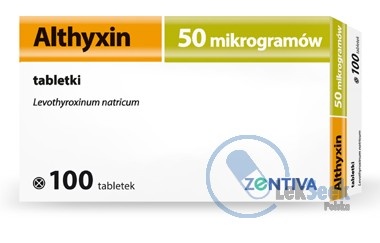
ALTHYXIN 75 mcg Tablets

Prescription review online
A doctor will review your case and decide whether a prescription is medically appropriate.

Talk to a doctor about this medicine
Discuss your symptoms and possible next steps in a quick online consultation.



How to use Althixin
Contents of the leaflet
- Leaflet accompanying the packaging: information for the user
- What is Althyxin and what is it used for
- Important information before taking Althyxin
- How to take Althyxin
- Possible side effects
- How to store Althyxin
- Contents of the packaging and other information
- What Althyxin contains
- What Althyxin looks like and contents of the pack
- Marketing authorization holder
- Manufacturer
- This medicinal product has been authorized in the Member States of the European Economic Area under the following names:
- For more information about this medication, you should contact the representative of the marketing authorization holder in Poland:
Leaflet accompanying the packaging: information for the user
Althyxin, 25 micrograms, tablets
Althyxin, 50 micrograms, tablets
Althyxin, 75 micrograms, tablets
Althyxin, 100 micrograms, tablets
Althyxin, 125 micrograms, tablets
Althyxin, 150 micrograms, tablets
Althyxin, 175 micrograms, tablets
Althyxin, 200 micrograms, tablets
Levothyroxine sodium
You should carefully read the contents of the leaflet before taking the medicine, as it contains important information for the patient.
- You should keep this leaflet, so that you can read it again if you need to.
- If you have any doubts, you should consult a doctor or pharmacist.
- This medicine has been prescribed specifically for you. Do not pass it on to others. The medicine may harm another person, even if their symptoms are the same as yours.
- If the patient experiences any side effects, including any side effects not listed in this leaflet, they should tell their doctor or pharmacist. See section 4.
Table of contents of the leaflet
- 1. What is Althyxin and what is it used for
- 2. Important information before taking Althyxin
- 3. How to take Althyxin
- 4. Possible side effects
- 5. How to store Althyxin
- 6. Contents of the packaging and other information
1. What is Althyxin and what is it used for
The active substance of Althyxin is levothyroxine, a synthetic thyroid hormone used to treat thyroid function disorders and diseases. It has the same effect as the thyroid hormone that occurs naturally in the body.
Althyxin is used:
- to treat mild goiter in patients with normal thyroid function,
- to prevent goiter recurrence after surgery,
- to supplement the lack of natural thyroid hormones when the thyroid gland does not produce enough hormones,
- to inhibit tumor growth in patients with thyroid cancer. Althyxin is also used to balance thyroid hormone levels when thyroid hormone overproduction is treated with antithyroid drugs. Althyxin 100 micrograms, 150 micrograms, and 200 micrograms may also be used in tests assessing thyroid function.

Not sure if this medicine is right for you?
Discuss your symptoms and treatment with a doctor online.
2. Important information before taking Althyxin
When not to take Althyxin:
- if the patient is allergic (hypersensitive) to the active substance or any of the other ingredients of Althyxin (listed in section 6),
- if the patient has untreated pituitary gland dysfunction or if thyroid hormones are overproduced (hyperthyroidism),
- in case of adrenal insufficiency (adrenal cortex insufficiency) and if the patient does not have adequate replacement therapy,
has untreated adrenal insufficiency (adrenal cortex insufficiency) and does not have adequate replacement therapy,
- in case of acute heart disease (myocardial infarction or myocarditis).
During pregnancy, do not take Althyxin at the same time as antithyroid drugs (antithyroid drugs) (see "Pregnancy and breastfeeding").
Warnings and precautions
Before starting Althyxin, you should discuss it with your doctor or pharmacist if you have any of the following heart diseases:
- insufficient blood flow in the coronary arteries (angina pectoris),
- heart failure,
- rapid and irregular heart rate,
- high blood pressure (hypertension),
- fatty deposits in the arteries (arteriosclerosis).
It is necessary to treat these disorders before starting Althyxin or performing a thyroid function test. During Althyxin treatment, it is necessary to regularly monitor thyroid hormone levels. If you have any doubts about whether you have any of the above diseases or if they are not treated, you should consult a doctor.
If you have adrenal insufficiency (adrenal cortex insufficiency) before taking Althyxin, you should consult a doctor. The doctor will perform the necessary tests to determine if you have adrenal, pituitary, or thyroid dysfunction with uncontrolled thyroid hormone overproduction (autonomous thyroid function), as in such cases, appropriate treatment or a thyroid function test is necessary before starting Althyxin.
You should discuss it with your doctor:
- if you are in menopause or postmenopause; the doctor may then recommend regular thyroid function monitoring due to the risk of osteoporosis;
- if you are changing your levothyroxine medication to another levothyroxine medication. The effect of these medications may differ slightly, so more frequent monitoring and dose adjustment may be necessary;
- before starting orlistat (a medication used to treat obesity) and if you stop taking it or change your orlistat treatment, as in these cases, more frequent monitoring and dose adjustment may be necessary;
- in case of symptoms of psychotic disorders, as more frequent monitoring and dose adjustment may be necessary;
- if you are to undergo laboratory tests to check your thyroid hormone levels, you should inform your doctor or laboratory staff if you are taking biotin (also known as vitamin H, vitamin B7, or vitamin B8). Biotin may affect laboratory test results (see "Warnings and precautions").
Regular monitoring of thyroid hormone levels and dose adjustment of Althyxin may be necessary.
Thyroid function disorders may occur if it is necessary to change to another levothyroxine medication. If you have any questions about changing your medication, you should consult a doctor. Close monitoring (clinical and biological) is necessary during the transition period. You should inform your doctor if you experience any side effects, as this may indicate that the dose needs to be increased or decreased.
You should inform your doctor if you are taking amiodarone (a medication used to treat irregular heart rhythm), as it may affect thyroid function.
You should tell your doctor that you are taking Althyxin if you need to undergo an X-ray or other diagnostic test with a contrast agent containing iodine, as this test involves an injection that affects thyroid function.
You should inform your doctor or pharmacist if you are taking or have recently taken any other medications, including those available without a prescription.
Thyroid hormones are not suitable for weight loss. Taking thyroid hormones will not lead to weight loss if your thyroid hormone levels are normal. Increasing the dose without a doctor's recommendation can lead to serious and life-threatening side effects, especially when taken with other weight-loss medications.Althyxin and other medications
You should tell your doctor or pharmacist about all medications you are currently taking or have recently taken, as Althyxin may affect the action of the following medications:
- Antidiabetic medications (medications that lower blood sugar levels): Althyxin may reduce the effect of blood sugar-lowering medications, which may require additional blood sugar testing, especially at the start of Althyxin treatment. During Althyxin treatment, it may be necessary to adjust the dose of antidiabetic medications.
During Althyxin treatment, it may be necessary to adjust the dose of antidiabetic medications.
- Coumarin derivatives (medications used to prevent blood clots): Althyxin may increase the effect of these medications, which may increase the risk of bleeding, especially in elderly patients. For this reason, periodic monitoring of blood clotting parameters may be necessary before starting treatment and during Althyxin treatment. During Althyxin treatment, it may be necessary to adjust the dose of coumarin derivatives.
You should follow the recommendations for time intervals between taking this medication and taking any of the following medications.
- Bile acid-binding medications and cholesterol-lowering medications (e.g., cholestyramine or colestipol): Althyxin should be taken 4 to 5 hours before taking these medications, as they may inhibit the absorption of Althyxin from the intestines.
- Antacids (used to relieve heartburn), sucralfate (used to treat stomach or duodenal ulcers), other medications containing aluminum, iron, or calcium: Althyxin should be taken at least 2 hours before taking these medications, as they may otherwise reduce the effect of Althyxin.
You should discuss it with your doctor or pharmacist if you are taking or have recently taken any of the following medications, as they may reduce the effect of Althyxin:
- Propylthiouracil (an antithyroid medication),
- Corticosteroids (anti-allergic and anti-inflammatory medications),
- Beta-adrenergic blockers (medications that lower blood pressure, also used to treat heart diseases),
- Sertraline (an antidepressant medication),
- Chloroquine or proguanil (medications used to prevent or treat malaria),
- Medications that stimulate certain liver enzymes, such as barbiturates (sedatives, sleep aids), carbamazepine (an antiepileptic medication, also used to treat certain types of pain and depressive disorders), or medications containing St. John's Wort (some herbal medications),
- Medications containing estrogens, used in hormone replacement therapy during menopause and postmenopause or to prevent pregnancy,
- Sevelamer (a phosphate-binding medication used in patients with chronic kidney failure),
- Tyrosine kinase inhibitors (anticancer and anti-inflammatory medications),
- Orlistat (a medication used to treat obesity),
- Proton pump inhibitors (such as omeprazole, esomeprazole, pantoprazole, rabeprazole, and lansoprazole) used to reduce stomach acid production, which may reduce the absorption of levothyroxine from the intestine and make it less effective. If you are taking levothyroxine while being treated with proton pump inhibitors, your doctor should monitor your thyroid function and adjust the dose of Althyxin if necessary.
You should discuss it with your doctor or pharmacist if you are taking or have recently taken any of the following medications, as they may enhance the effect of Althyxin:
- Salicylates (pain-relieving and antipyretic medications),
- Dicumarol (a medication that reduces blood clotting),
- Furosemide in high doses of 250 mg or more (a diuretic medication),
- Clofibrate (a medication that lowers blood lipid levels).
You should discuss it with your doctor or pharmacist if you are taking or have recently taken any of the following medications, as they may affect the action of Althyxin:
- Protease inhibitors (ritonavir, indinavir, lopinavir) used to treat HIV and chronic hepatitis C, phenytoin (an antiepileptic medication).
If you are taking biotin, you must inform your doctor or laboratory staff if you are to undergo thyroid hormone laboratory tests. Biotin may affect laboratory test results (see "Warnings and precautions").
Regular monitoring of thyroid hormone levels and dose adjustment of Althyxin may be necessary.
Thyroid function disorders may occur if it is necessary to change to another levothyroxine medication. If you have any questions about changing your medication, you should consult a doctor. Close monitoring (clinical and biological) is necessary during the transition period. You should inform your doctor if you experience any side effects, as this may indicate that the dose needs to be increased or decreased.
You should inform your doctor if you are taking amiodarone (a medication used to treat irregular heart rhythm), as it may affect thyroid function.
You should tell your doctor that you are taking Althyxin if you need to undergo an X-ray or other diagnostic test with a contrast agent containing iodine, as this test involves an injection that affects thyroid function.
You should inform your doctor or pharmacist if you are taking or have recently taken any other medications, including those available without a prescription.
Thyroid hormones are not suitable for weight loss. Taking thyroid hormones will not lead to weight loss if your thyroid hormone levels are normal. Increasing the dose without a doctor's recommendation can lead to serious and life-threatening side effects, especially when taken with other weight-loss medications.Using Althyxin with food and drink
You should inform your doctor if your diet includes soy products, especially if you change the proportion of these products in your diet. Soy products may reduce the absorption of Althyxin from the intestine, which may require a change in the dosage of Althyxin.
Pregnancy and breastfeeding
If you are pregnant, you should continue taking Althyxin, but you should discuss it with your doctor, as it may be necessary to adjust the dose.
If you are taking Althyxin at the same time as antithyroid medications used to treat hyperthyroidism, your doctor will recommend stopping Althyxin at the beginning of pregnancy.
If you are breastfeeding, you can continue taking Althyxin as directed by your doctor. The amount of medication that is excreted into breast milk is so small that it does not affect the baby.Driving and using machines
No studies have been conducted to assess the impact on the ability to drive and use machines. It is not expected that Althyxin will have an impact on the ability to drive and use machines, as the levothyroxine contained in this medication is identical to the thyroid hormone that occurs naturally in the body.
Althyxin contains lactose
If you have been diagnosed with intolerance to some sugars, you should discuss it with your doctor before taking this medication.
Althyxin contains sodium
This medication contains less than 1 mmol of sodium (23 mg) per tablet, which means that the medication is considered "sodium-free".
3. How to take Althyxin
This medication should always be taken as directed by your doctor. If you have any doubts, you should consult a doctor or pharmacist.
Your doctor will determine the individual dose for you based on the tests and laboratory results. Treatment usually starts with a small dose, which is increased every 2-4 weeks until the full dose is reached, adjusted individually for you. In the first few weeks, you will be prescribed laboratory tests that will allow your doctor to adjust the appropriate dose.
If a child is born with hypothyroidism, the doctor may recommend starting treatment with a higher dose, as it is important to quickly supplement the lack of thyroid hormones. The recommended initial dose is 10-15 micrograms per kilogram of body weight for the first 3 months. Then, the doctor will adjust the dose individually.
Typical dose ranges are presented in the table below. Lower doses may be sufficient for:- elderly patients,
- patients with heart disease,
- patients with severe or prolonged hypothyroidism,
- patients with low body weight or giant goiter.
Using Althyxin Recommended daily dose of Althyxin - to treat goiter in patients with normal thyroid function
- 75-200 micrograms
- to prevent goiter recurrence after surgery
- 75-200 micrograms
- to supplement natural thyroid hormones when their production by the thyroid gland is insufficient
- initial dose
- maintenance dose
adults children - 25-50 micrograms*
- 100-200 micrograms
12.5-50 micrograms* - 100-150 micrograms per m2 body surface area
- to inhibit tumor growth in patients with thyroid cancer
- 150-300 micrograms
- to balance thyroid hormone levels when thyroid hormone overproduction is treated with antithyroid medications
50-100 micrograms - in tests assessing thyroid function
100 micrograms: 200 micrograms (2 tablets) 2 weeks before the test
150 micrograms: 4 weeks before the test 75 micrograms (½ tablet) for 2 weeks, then 150 micrograms (1 tablet) until the test
200 micrograms: 200 micrograms (1 tablet) 2 weeks before the test* Althyxin tablets 125 micrograms, 150 micrograms, 175 micrograms, or 200 micrograms are not suitable for the lower dose range, but your doctor may prescribe a lower dose of Althyxin in tablets.
Method of administration
Althyxin is intended for oral administration.
The entire daily dose of Althyxin should be taken in the morning, on an empty stomach (at least half an hour before breakfast), with a small amount of liquid, such as half a glass of water.
Infants should be given the entire daily dose of Althyxin at once, at least half an hour before the first meal of the day. For this purpose, the tablet should be crushed and mixed with a small amount of water immediately before administration. The resulting suspension should be given with an additional small amount of liquid. A new suspension of Althyxin should be prepared each time before administration.
Duration of treatment
The duration of treatment may vary depending on the reason you are taking Althyxin. Your doctor will discuss with you individually how long you should take this medication. Most patients need to take Althyxin for life.Taking a higher dose of Althyxin than recommended
If you take a higher dose than recommended, you may experience symptoms such as rapid heartbeat, restlessness, excitement, or involuntary movements. In patients with neurological disorders such as epilepsy, single seizures have been observed. Patients at risk of psychotic disorders may experience symptoms of acute psychosis. In such cases, you should contact your doctor.
Missing a dose of Althyxin
Do not take a double dose of the medication to make up for a missed dose. The next day, take the usual dose of the medication.
If you have any doubts about taking this medication, you should consult a doctor or pharmacist.

Started taking the medicine and have questions?
Discuss your symptoms and treatment with a doctor online.
4. Possible side effects
Like all medications, Althyxin can cause side effects, although not everyone will experience them.
If you take a higher dose of Althyxin than recommended or if you have poor tolerance to the recommended dose (e.g., if the dose is increased too quickly), you may experience the following side effects: rapid or irregular heartbeat, chest pain, headache, weakness or muscle cramps, hot flashes (feeling of heat and facial flushing), fever, vomiting, menstrual disorders, pseudotumor cerebri (increased intracranial pressure with eye swelling), tremors, restlessness, sleep disturbances, sweating, weight loss, diarrhea.
If you experience any of these symptoms, you should contact your doctor. Your doctor may decide to stop treatment for a few days or reduce the dose until the symptoms disappear.
Allergic reactions to the other ingredients of Althyxin (see section 6) are possible. The frequency of occurrence is unknown. Symptoms of an allergic reaction may include facial and throat swelling (angioedema), rash, and hives. In this case, you should immediately consult a doctor.
Reporting side effects
If you experience any side effects, including any side effects not listed in this leaflet, you should tell your doctor or pharmacist. Side effects can be reported directly to the Department of Drug Safety Monitoring of the Office for Registration of Medicinal Products, Medical Devices, and Biocidal Products:
Jerozolimskie Avenue 181C, 02-222 Warsaw, phone: +48 22 49 21 301, fax: +48 22 49 21 309,
website: https://smz.ezdrowie.gov.pl
By reporting side effects, you can help gather more information on the safety of the medication.
Side effects can also be reported to the marketing authorization holder.
5. How to store Althyxin
The medication should be stored out of sight and reach of children.
Do not use this medication after the expiration date stated on the blister pack and carton. The expiration date refers to the last day of the specified month.
Do not store above 25°C.
Medications should not be disposed of in wastewater or household waste.
You should ask your pharmacist how to dispose of medications that are no longer needed. This will help protect the environment.
6. Contents of the packaging and other information
What Althyxin contains
- The active substance of Althyxin is levothyroxine sodium.
- Each tablet contains 25, 50, 75, 100, 125, 150, 175, or 200 micrograms of levothyroxine sodium.
- The other ingredients are lactose monohydrate, cornstarch, gelatin, sodium croscarmellose, and magnesium stearate.
What Althyxin looks like and contents of the pack
Althyxin, 25 micrograms, are round, white tablets with the number "25" embossed on one side and a score line in the shape of a "+" on the other side.
Althyxin, 50 micrograms, are round, white tablets with the number "50" embossed on one side and a score line in the shape of a "+" on the other side.
Althyxin, 75 micrograms, are round, white tablets with the number "75" embossed on one side and a score line in the shape of a "+" on the other side.
Althyxin, 100 micrograms, are round, white tablets with the number "100" embossed on one side and a score line in the shape of a "+" on the other side.
Althyxin, 125 micrograms, are round, white tablets with the number "125" embossed on one side and a score line in the shape of a "+" on the other side.
Althyxin, 150 micrograms, are round, white tablets with the number "150" embossed on one side and a score line in the shape of a "+" on the other side.
Althyxin, 175 micrograms, are round, white tablets with the number "175" embossed on one side and a score line in the shape of a "+" on the other side.
Althyxin, 200 micrograms, are round, white tablets with the number "200" embossed on one side and a score line in the shape of a "+" on the other side.
The tablets are packaged in PVC/PE/PVDC/Aluminum blisters of 30, 50, 84, 90, or 100 tablets, in a cardboard box.
Not all pack sizes may be marketed.
Marketing authorization holder
Zentiva k.s.
U Kabelovny 130
Dolní Měcholupy
102 37 Prague 10
Czech Republic
Manufacturer
Interpharma Services Ltd.
43A Cherni Vrach Blvd. 1407- Sofia
Bulgaria
This medicinal product has been authorized in the Member States of the European Economic Area under the following names:
Czech Republic, Poland: Althyxin
Netherlands:
Levothyroxine Abdi
For more information about this medication, you should contact the representative of the marketing authorization holder in Poland:
Zentiva Polska Sp. z o.o.
Bonifraterska Street 17
00-203 Warsaw
phone: +48 22 375 92 00
Date of last revision of the leaflet:December 2023
- Country of registration
- Dosage formTablets, 75 mcg
- ATC codeH03AA01
- Active substance
- Prescription requiredYes
- ImporterInterpharma Services Ltd.
- This information is for reference only and does not constitute medical advice. Always consult a doctor before taking any medication. Oladoctor is not responsible for medical decisions based on this content.
- Alternatives to AlthixinDosage form: Tablets, 25 mcgActive substance: levothyroxine sodiumPrescription requiredDosage form: Tablets, 50 mcgActive substance: levothyroxine sodiumPrescription requiredDosage form: Tablets, 100 mcgActive substance: levothyroxine sodiumPrescription required
Online doctors for Althixin
Discuss questions about Althixin, including use, safety considerations and prescription review, subject to medical assessment and local regulations.


Get Althixin Prescription Online
Fill in a 2-min form
Tell us your symptoms, history, and what medicine you're requesting.
Pick a doctor or let us assign
Choose a specialist or we'll match you with the next available doctor.
Doctor reviews your case
Usually within 30 minutes. They may ask follow-up questions via chat.
Collect from any pharmacy
Electronic prescription sent to your email — valid across Spain.
Frequently Asked Questions
Althixin requires a prescription in Poland. You can check with a doctor online whether this medicine may be appropriate for your situation.
The active ingredient in Althixin is levothyroxine sodium. This information helps identify medicines with the same composition but different brand names.
Althixin is manufactured by Interpharma Services Ltd.. Pharmacy brands and packaging may differ depending on the distributor.
Doctors such as Family doctors, Psychiatrists, Dermatologists, Cardiologists, Endocrinologists, Gastroenterologists, Pulmonologists, Nephrologists, Rheumatologists, Hematologists, Infectious disease physicians, Allergists, Geriatricians, Paediatricians, Oncologists may assess whether Althixin is appropriate, depending on your situation and local regulations. You can book an online consultation to discuss your symptoms and possible next steps.
Spain has a well-developed healthcare infrastructure across major cities such as Madrid, Barcelona, Valencia, and Seville. Pharmacies are widely available and operate under strict regulations, ensuring access to prescribed medications.
You can buy Althixin in Madrid, Barcelona, Seville, or Valencia at any local pharmacy with a valid prescription.
To obtain a prescription, you can use Oladoctor:
Other medicines with the same active substance (levothyroxine sodium) include Althixin, Althixin, Althixin. These may have different brand names or formulations but contain the same therapeutic ingredient. Always consult a doctor before switching or starting a new medicine.
