


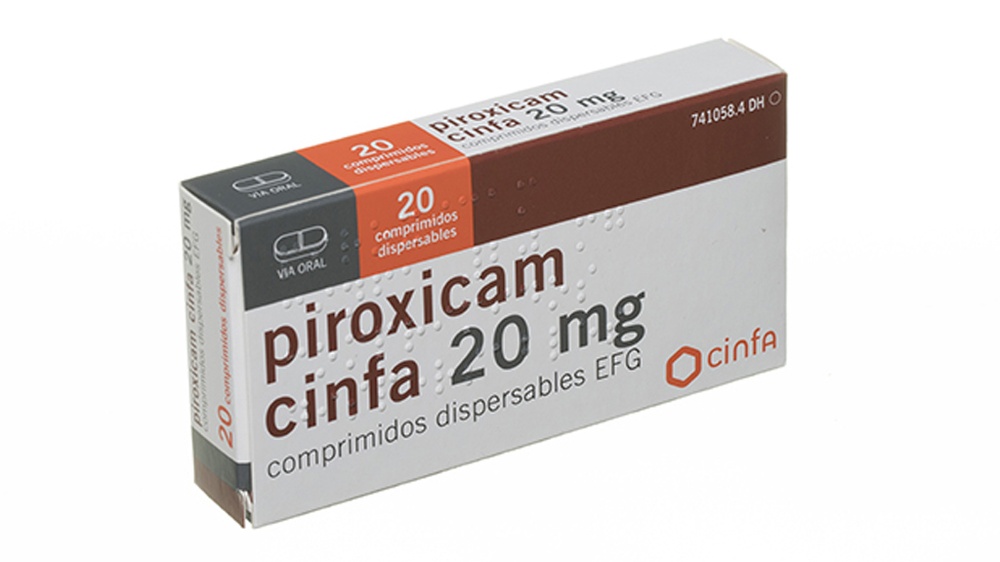
Piroxicam Cinfa 20 mg dispersible comprimidos

Prescription review online
A doctor will review your case and decide whether a prescription is medically appropriate.

Talk to a doctor about this medicine
Discuss your symptoms and possible next steps in a quick online consultation.



How to use PIROXICAM CINFA 20 mg DISPERSIBLE TABLETS
Contents of the leaflet
- Introduction
- What is piroxicam cinfa and what is it used for
- What you need to know before you take piroxicam cinfa
- How to take piroxicam cinfa
- Possible Adverse Effects
- Conservation of Piroxicam Cinfa
- Package Contents and Additional Information
Introduction
Package Leaflet: Information for the User
piroxicam cinfa 20 mg dispersible tablets EFG
Read all of this leaflet carefully before you start taking this medicine because it contains important information for you.
- Keep this leaflet, you may need to read it again.
- If you have any further questions, ask your doctor, pharmacist, or nurse.
- This medicine has been prescribed for you only. Do not pass it on to others. It may harm them, even if their signs of illness are the same as yours.
- If you get any side effects, talk to your doctor, pharmacist, or nurse. This includes any possible side effects not listed in this leaflet. See section 4.
Contents of the pack
- What is piroxicam cinfa and what is it used for
- What you need to know before you take piroxicam cinfa
- How to take piroxicam cinfa
- Possible side effects
- Storage of piroxicam cinfa
- Contents of the pack and other information
1. What is piroxicam cinfa and what is it used for
Piroxicam is an anti-inflammatory medicine that belongs to a group of medicines called non-steroidal anti-inflammatory drugs (NSAIDs).
Piroxicam is used to relieve some symptoms caused by osteoarthritis (degenerative disease of the joints), rheumatoid arthritis, and ankylosing spondylitis (rheumatism of the spine), such as joint inflammation, stiffness, and pain. It does not cure arthritis, but it helps to relieve some symptoms only while you continue treatment.
Your doctor will assess the benefits of this medicine against the risk of developing adverse reactions before prescribing piroxicam to you. Due to treatment with piroxicam, your doctor may require periodic checks and will inform you of the frequency of these checks.
Your doctor will prescribe piroxicam to you only when treatment with other non-steroidal anti-inflammatory drugs (NSAIDs) has not relieved your symptoms.

Not sure if this medicine is right for you?
Discuss your symptoms and treatment with a doctor online.
2. What you need to know before you take piroxicam cinfa
Do not take piroxicam cinfa
- If you are allergic to piroxicam or any of the other ingredients of this medicine (listed in section 6).
- If you have had an ulcer, bleeding, or perforation of the stomach or intestine.
- If you have an ulcer, bleeding, or perforation of the stomach or intestine.
- If you have or have had a history of gastrointestinal disorders (inflammation of the stomach or intestine) that predispose to hemorrhagic disorders such as ulcerative colitis, Crohn's disease, gastrointestinal cancers, diverticulitis (inflammation or infection of the pouches/diverticula in the colon).
- If you are taking other NSAIDs, including selective COX-2 inhibitors and acetylsalicylic acid, a substance that many medicines used to relieve pain and lower fever contain.
- If you are taking anticoagulants, such as warfarin, coumarins, or new oral anticoagulants, including apixaban, dabigatran, and rivaroxaban, to prevent blood clots.
- If you have had a previous severe allergic reaction to piroxicam or other NSAIDs and other medicines, especially severe skin reactions (regardless of severity) such as exfoliative dermatitis (intense redness of the skin, with scaling in layers or flakes), vesiculobullous reactions (Stevens-Johnson syndrome with reddish blisters, erosion, and skin with crusts or bleeding) and toxic epidermal necrolysis (a disease that causes scaling and blisters on the superficial layers of the skin), or if you have presented other symptoms of allergy such as asthma attacks, severe nasal congestion, or other allergic reactions such as skin itching, rash, swelling of the face, lips, or tongue that cause difficulty breathing or wheezing in the chest.
- If you develop a skin rash or symptoms on the skin, stop taking piroxicam immediately, seek urgent medical advice, and inform your doctor that you are taking this medicine.
- If you have severe liver or kidney disease.
- If you have severe heart failure.
- If you have coagulation disorders.
- If you are in your third trimester of pregnancy.
If you present any of these situations, do not take piroxicam. Consult your doctor immediately.
Warnings and precautions
Consult your doctor or pharmacist before starting to take piroxicam.
Gastrointestinal risks
Like the rest of non-steroidal anti-inflammatory drugs, piroxicam can cause serious reactions in the stomach and intestine, such as pain, bleeding, ulcers, and perforation. Administration of doses higher than 20 mg per day carries an increased risk of presenting gastrointestinal adverse effects. Adverse effects can be minimized if the minimum effective doses are used for the shortest possible time.
You should interrupt treatment with piroxicam and consult your doctor if you have stomach pain or any sign of bleeding in the stomach or intestine, such as black or bloody stools or vomiting blood.
If you present any new abdominal sign or symptom or any gastrointestinal complication during treatment, interrupt it and consult your doctor immediately.
Skin risks
Severe skin reactions that can be life-threatening (Stevens-Johnson syndrome and toxic epidermal necrolysis) have been described with the use of piroxicam. Initially, they appear as red spots or circular patches, often with a central blister.
Other additional signs that may appear are sores in the mouth, throat, nose, genitals, and conjunctivitis (swollen and red eyes).
These life-threatening skin reactions are often accompanied by flu-like symptoms. The rash can progress to the formation of generalized blisters or skin scaling.
The period of highest risk of severe skin reactions is during the first few weeks of treatment.
If you have developed Stevens-Johnson syndrome or toxic epidermal necrolysis with the use of piroxicam, you should not use piroxicam again at any time.
If you develop a rash or these skin symptoms, stop taking piroxicam, go immediately to a doctor, and inform them that you are taking this medicine.
Cardiovascular and cerebrovascular risks
Medicines like piroxicam may be associated with a moderate increase in the risk of suffering heart attacks ("myocardial infarctions") or strokes. This risk is more likely to occur when high doses and prolonged treatments are used. Do not exceed the recommended dose or treatment duration.
If you have heart problems, a history of strokes, or think you may be at risk for these conditions (for example, you have high blood pressure, suffer from diabetes, have high cholesterol, or are a smoker), you should consult your doctor or pharmacist about this treatment.
Similarly, these types of medicines can cause fluid retention, especially in patients with heart failure and/or high blood pressure (hypertension).
Other risks
If you are over 70 years old, your doctor may reduce the duration of treatment and perform more frequent checks while you are taking piroxicam.
If you are taking other medicines such as corticosteroids or certain antidepressants called selective serotonin reuptake inhibitors (SSRIs), or acetylsalicylic acid to prevent blood clots, your doctor may prescribe a medicine to protect your stomach or intestine along with piroxicam.
Do not take this medicine if you are over 80 years old.
If you have or have had any medical problem or any type of allergy, or if you are not sure if you can take piroxicam, consult your doctor before taking this medicine.
Make sure your doctor is informed about all the medicines you are taking, including those purchased without a prescription.
You should also use piroxicam with caution, always following your doctor's instructions, in the following circumstances:
- You have moderate or mild liver or kidney disease.
- You have severe dehydration.
- You have an infection, as it could mask fever and make you mistakenly believe that you are better or that the infection is not serious.
- You experience eye discomfort during treatment with piroxicam; you should consult an ophthalmologist.
- You have asthma.
- You are taking anticoagulants.
Other medicines and piroxicam cinfa
Tell your doctor or pharmacist if you are taking, have recently taken, or might take any other medicines.
Certain medicines can interact with each other. Your doctor may limit the use of piroxicam and/or other medicines or may need to change you to another medicine. It is especially important to inform your doctor if you are taking any of the following medicines:
- Aspirin or other non-steroidal anti-inflammatory drugs to relieve pain.
- Corticosteroids, which are medicines used in the treatment of numerous diseases such as allergies, hormonal disorders, and inflammatory diseases.
- Anticoagulants such as warfarin, coumarins, or new oral anticoagulants (apixaban, dabigatran, and rivaroxaban) to prevent blood clots.
- Medicines for depression called selective serotonin reuptake inhibitors (SSRIs).
- Medicines to prevent platelet aggregation such as acetylsalicylic acid.
- Lithium (a medicine used in bipolar depression).
- Methotrexate (a medicine used in rheumatoid arthritis and in the treatment of some cancers).
- Ticlopidine (an antiplatelet medicine).
- Quinolones (antibiotic medicines).
- Certain diuretics (medicines used to treat fluid retention in high blood pressure).
- Sulfonylureas (oral antidiabetic medicines).
- Cyclosporin, tacrolimus (medicines used in transplanted patients).
- Antihypertensives (medicines used in the treatment of high blood pressure).
- Thrombolytics (medicines used for stroke or heart attack).
- Digoxin: combined treatment with digoxin and piroxicam does not affect the plasma levels of either of these drugs.
If you present any of these situations, consult your doctor immediately.
Taking piroxicam cinfa with food, drinks, and alcohol
If you take piroxicam with food, it may take a little longer to take effect; therefore, it is recommended to take it between meals.
You should not drink alcoholic beverages during treatment with this medicine, as this can increase the risk of adverse effects.
Pregnancy and breastfeeding
If you are pregnant or breastfeeding, think you may be pregnant, or are planning to have a baby, ask your doctor or pharmacist for advice before taking this medicine.
Do not take piroxicam if you are in the last 3 months of pregnancy, as it may harm the fetus or cause problems during delivery. It can cause kidney and heart problems in your fetus. It can affect your tendency and that of your baby to bleed and delay or prolong delivery more than expected. Since the administration of piroxicam-type medicines has been associated with an increased risk of congenital anomalies/abortions, loss of amniotic fluid, it is not recommended to administer it during the first and second trimester of pregnancy unless it is strictly necessary and as your doctor indicates. In these cases,
For women of childbearing age, it should be taken into account that piroxicam-type medicines have been associated with a decrease in fertility.
Tell your doctor if you are breastfeeding or are going to start doing so. The use of piroxicam is not recommended in breastfeeding mothers, as clinical safety has not been established.
Driving and using machines
If you notice any dizziness, vertigo, vision changes, or drowsiness while taking piroxicam, do not drive or operate hazardous machinery until these symptoms disappear or until you have checked how you tolerate the medicine.
piroxicam cinfa contains sodium.This medicine contains less than 1 mmol of sodium (23 mg) per tablet; this is, essentially "sodium-free".
3. How to take piroxicam cinfa
Follow exactly the administration instructions of this medicine indicated by your doctor or pharmacist. In case of doubt, consult your doctor or pharmacist again.
Piroxicam cinfa dispersible tablets can be taken whole with a little liquid or can be dispersed in a glass of water before taking.
Your doctor will perform periodic checks to ensure that you are taking the appropriate dose of piroxicam. Your doctor will adjust the treatment to the lowest dose that best controls the symptoms. Under no circumstances should you modify the dose without consulting your doctor first.
Your doctor may prescribe piroxicam along with another medicine to protect your stomach and intestine from potential adverse reactions.
Do not increase the dose:
If you think the medicine is not effective, consult your doctor.
Adults and elderly patients:
The maximum daily dose is 20 mg of piroxicam as a single daily dose.
If you are over 70 years old, your doctor may prescribe a lower daily dose and reduce the duration of treatment.
Use in children:
Its use is not recommended in children.
If you take more piroxicam cinfa than you should
Contact your doctor or pharmacist immediately or the emergency department of your hospital.
In case of overdose or accidental ingestion, consult your doctor or pharmacist immediately or call the Toxicology Information Service, phone 91 562 04 20, indicating the medicine and the amount taken.
If you forget to take piroxicam cinfa
Take it as soon as you remember. If it is almost time for your next dose, do not take the missed dose. Wait for the next scheduled dose. Do not take a double dose to make up for forgotten doses.
If you have any other questions about the use of this medicine, ask your doctor or pharmacist.

Started taking the medicine and have questions?
Discuss your symptoms and treatment with a doctor online.
4. Possible Adverse Effects
Like all medicines, this medicine can cause adverse effects, although not all people suffer from them. Piroxicam is generally well tolerated.
The adverse effects of piroxicam vary in intensity from one individual to another, being generally mild and transient.
Below is a list of adverse effects. It is important that you inform your doctor if you notice any discomfort.
Frequent Adverse Effects:may affect up to 1 in 10 patients
- Decrease in the number of red blood cells, white blood cells, and platelets in blood, elevation of the number of certain white blood cells (eosinophilia)
- Loss of appetite, high blood sugar levels
- Dizziness, headache, drowsiness, vertigo
- Ringing in the ears
- Abdominal discomfort or pain, constipation, diarrhea, discomfort in the upper abdominal area, flatulence, nausea, vomiting, indigestion
- Itching of the skin, rash
- Swelling of the ankles (edema)
- Reversible increase in blood nitrogen levels (BUN) or increase in liver enzymes (transaminases) that may affect some medical tests, weight gain
Uncommon Adverse Effects:may affect up to 1 in 100 patients
- Palpitations
- Gingivitis
- Reversible increase in creatinine levels that may affect some medical tests
- Stevens-Johnson syndrome, toxic epidermal necrolysis, nail separation, allergic skin reactions to light, urticaria, skin reactions with blister or vesicle formation
- Low blood sugar levels
- Blurred vision
Very Rare Adverse Effects:may affect up to 1 in 10,000 patients
- Stevens-Johnson syndrome, toxic epidermal necrolysis, nail separation, allergic skin reactions to light, urticaria, skin reactions with blister or vesicle formation
Adverse Effects of Unknown Frequency:cannot be estimated from the available data
- Decrease in the number of red blood cells in the blood due to a failure in their formation process or premature destruction of these
- Severe allergic reaction that affects the whole body (anaphylaxis), rash accompanied by fever, inflammation of the lymph nodes, and joint pain (serum sickness)
- Fluid retention
- Depression, sleep disturbances, hallucinations, insomnia, confusion, mood changes, nervousness
- Inflammation of the membranes that cover the brain and spinal cord caused by a virus, numbness or tingling sensation in the limbs
- Irritation or inflammation of the eyes
- Hearing impairment
- Inflammation of blood vessels, high blood pressure
- Spasms in the bronchi that prevent air from passing to the lungs, difficulty breathing, nasal bleeding
- Reaction to suppositories with pain, burning, itching in the anal-rectal area or urgent need to defecate, accompanied by colic pain and in rare cases with rectal bleeding, inflammation of the stomach mucosa, gastrointestinal bleeding that may include vomiting with blood or black stools due to bleeding, pancreatitis, wounds or perforations in the intestinal wall
- Mortal liver inflammation, yellowish color of the skin and mucous membranes
- Hair loss, severe skin reactions that can be fatal (exfoliative dermatitis, erythema multiforme, non-thrombocytopenic purpura)
- Kidney disorders such as nephrotic syndrome and interstitial glomerulonephritis (which often manifest with kidney inflammation and protein elimination in the urine), and renal failure
- Decreased female fertility
- Alterations in analytical tests, weight loss
- Fixed drug eruption (may appear as rounded or oval plaques with redness and swelling of the skin), blisters (urticaria), itching
Reporting of Adverse Effects
If you experience any type of adverse effect, consult your doctor or pharmacist, even if it is a possible adverse effect that is not listed in this prospectus. You can also report them directly through the Spanish Pharmacovigilance System for Human Use Medicines: https://www.notificaram.es. By reporting adverse effects, you can contribute to providing more information on the safety of this medicine.
5. Conservation of Piroxicam Cinfa
Keep this medicine out of sight and reach of children.
Do not use this medicine after the expiration date that appears on the packaging after CAD. The expiration date is the last day of the month indicated.
This medicine does not require special storage conditions.
Medicines should not be thrown away through the sewers or in the trash. Deposit the packaging and medicines that you no longer need in the SIGRE Point of the pharmacy. In case of doubt, ask your pharmacist how to dispose of the packaging and medicines that you no longer need. This way, you will help protect the environment.
6. Package Contents and Additional Information
Composition of Piroxicam Cinfa
- The active ingredient is piroxicam. Each tablet contains 20 mg of piroxicam.
- The other components are: microcrystalline cellulose (E-460), calcium hydrogen phosphate dihydrate, corn starch, sodium carboxymethyl starch (type A) (from potato), sodium stearyl fumarate, magnesium stearate (E-470b), and talc (E-553b).
Appearance of the Product and Package Contents
Piroxicam Cinfa is presented in the form of dispersible, oblong, biconvex tablets, white-yellowish in color, with a notch on one of the faces and marked with "P20C" on the other. It is presented in PVC-PVDC/Aluminum blisters. Each package contains 20 tablets.
Marketing Authorization Holder and Manufacturer
Laboratorios Cinfa, S.A.
Carretera Olaz-Chipi, 10. Polígono Industrial Areta
31620 Huarte (Navarra) - Spain
Date of the Last Revision of this Prospectus:May 2023
Detailed information about this medicine is available on the website of the Spanish Agency for Medicines and Health Products (AEMPS) http://www.aemps.gob.es/.
You can access detailed and updated information about this medicine by scanning the QR code included in the prospectus and packaging with your mobile phone (smartphone). You can also access this information at the following internet address: https://cima.aemps.es/cima/dochtml/p/62418/P_62418.html
QR code to: https://cima.aemps.es/cima/dochtml/p/62418/P_62418.html.
- Country of registration
- Dosage formTABLET, 20 mg
- ATC codeM01AC01
- Active substance
- Prescription requiredYes
- Manufacturer
- CompositionFUMARATO DE ESTEARILO Y SODIO (0,5 mg mg), CARBOXIMETILALMIDON SODICO (30 mg mg)
- This information is for reference only and does not constitute medical advice. Always consult a doctor before taking any medication. Oladoctor is not responsible for medical decisions based on this content.
- Alternatives to PIROXICAM CINFA 20 mg DISPERSIBLE TABLETSDosage form: ORALLY DISINTEGRATING TABLET/LIOTAB, 20 mg piroxicamActive substance: piroxicamManufacturer: Pfizer S.L.Prescription requiredDosage form: Hard capsule, 20 mgActive substance: piroxicamManufacturer: Pfizer S.L.Prescription requiredDosage form: TABLET, 8 mgActive substance: lornoxicamManufacturer: Meiji Pharma Spain S.A.Prescription required
Online doctors for PIROXICAM CINFA 20 mg DISPERSIBLE TABLETS
Discuss questions about PIROXICAM CINFA 20 mg DISPERSIBLE TABLETS, including use, safety considerations and prescription review, subject to medical assessment and local regulations.









Frequently Asked Questions
PIROXICAM CINFA 20 mg DISPERSIBLE TABLETS requires a prescription in Spain. You can check with a doctor online whether this medicine may be appropriate for your situation.
The active ingredient in PIROXICAM CINFA 20 mg DISPERSIBLE TABLETS is piroxicam. This information helps identify medicines with the same composition but different brand names.
PIROXICAM CINFA 20 mg DISPERSIBLE TABLETS is manufactured by Laboratorios Cinfa S.A.. Pharmacy brands and packaging may differ depending on the distributor.
Doctors such as Family doctors, Psychiatrists, Dermatologists, Cardiologists, Endocrinologists, Gastroenterologists, Pulmonologists, Nephrologists, Rheumatologists, Hematologists, Infectious disease physicians, Allergists, Geriatricians, Paediatricians, Oncologists may assess whether PIROXICAM CINFA 20 mg DISPERSIBLE TABLETS is appropriate, depending on your situation and local regulations. You can book an online consultation to discuss your symptoms and possible next steps.
The prescription is issued by a doctor after assessing your health. In Spain, PIROXICAM CINFA 20 mg DISPERSIBLE TABLETS is then dispensed in pharmacies with that prescription. An online consultation does not guarantee that a prescription will be issued: the decision always rests with the doctor.
To request a review, you can use Oladoctor:
Other medicines with the same active substance (piroxicam) include FELDENE FLAS 20 mg ORAL LYOPHILIZED, Feldene 20 mg capsulas duras, LORNOXICAM RAPID MEIJI 8 mg FILM-COATED TABLETS. These may have different brand names or formulations but contain the same therapeutic ingredient. Always consult a doctor before switching or starting a new medicine.
