


PARICALCITOL SUN 5 micrograms/ml injectable solution
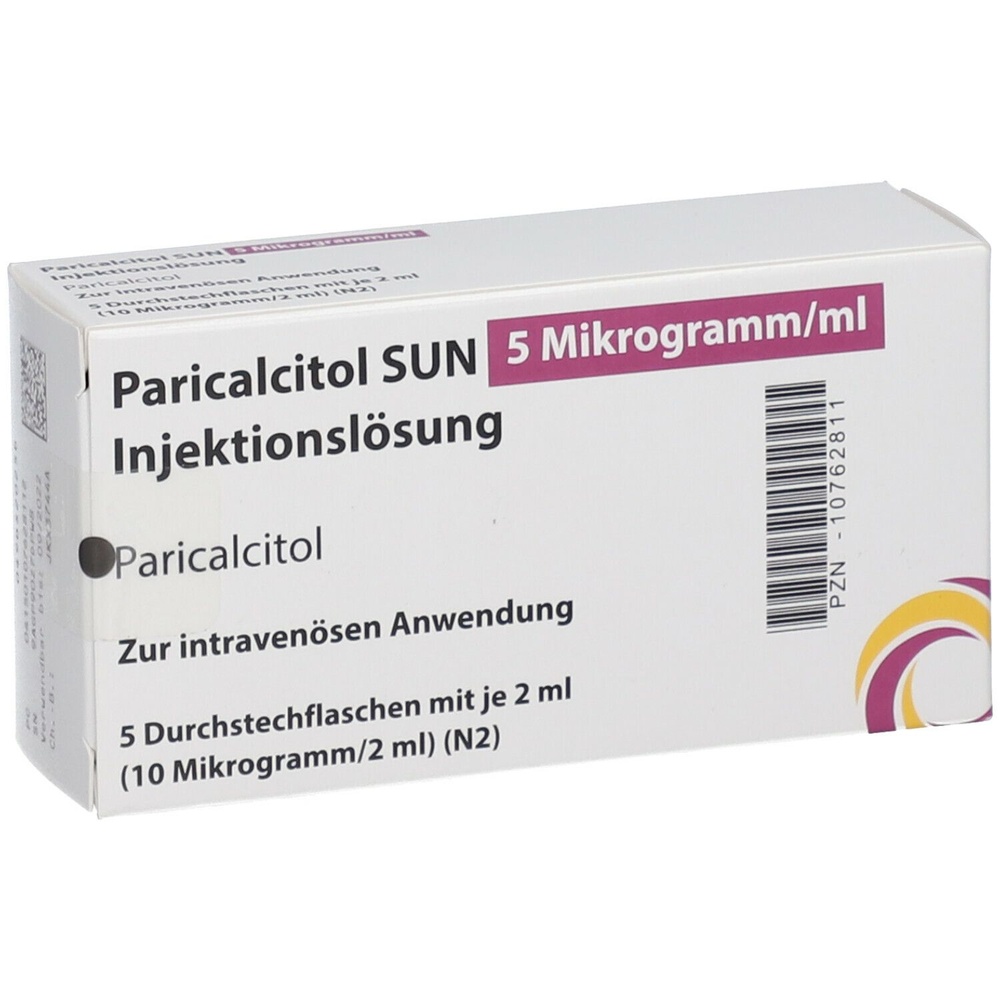



How to use PARICALCITOL SUN 5 micrograms/ml injectable solution
Translated with AI
This page provides general information and does not replace a doctor’s consultation. Always consult a doctor before taking any medication. Seek urgent medical care if symptoms are severe.
Show originalContents of the leaflet
Introduction
Package Leaflet:information for the user
Paricalcitol SUN 2micrograms/ml solution for injection EFG
Paricalcitol SUN 5micrograms/ml solution for injection EFG
Read all of this leaflet carefully before you start using this medicine because it contains important information for you.
- Keep this leaflet, you may need to read it again.
- If you have any further questions, ask your doctor or nurse.
- If you get any side effects, talk to your doctor, pharmacist or nurse. This includes any possible side effects not listed in this leaflet. See section 4.
Contents of the pack
- What is Paricalcitol SUN and what is it used for
- What you need to know before you are given Paricalcitol SUN
- How to use Paricalcitol SUN
- Possible side effects
- Storage of Paricalcitol SUN
- Contents of the pack and other information
1. What is Paricalcitol SUN and what is it used for
Paricalcitol SUN contains the active substance paricalcitol, which is a synthetic form of active vitamin D.
Active vitamin D is required for the normal functioning of many tissues in the body, including the parathyroid gland and bones. In people with normal kidney function, this active form of vitamin D is produced naturally by the kidneys, but in kidney failure, the production of active vitamin D is significantly reduced. Paricalcitol SUN, therefore, provides a source of active vitamin D when the body cannot produce enough, and helps to prevent the consequences of low levels of active vitamin D in patients with chronic kidney disease, i.e., high levels of parathyroid hormone that can cause bone problems. Paricalcitol SUN is used in adult patients with kidney disease stage 5.

2. What you need to know before you are given Paricalcitol SUN
Do not useParicalcitol SUN
- if you are allergic to paricalcitol or any of the other ingredients of this medicine (listed in section 6).
- if you have very high levels of calcium or vitamin D in your blood. Your doctor will monitor your blood levels and will be able to tell you if these conditions apply to you.
Warnings and precautions
Talk to your doctor, pharmacist or nurse before you are given Paricalcitol SUN:
- Before starting treatment, it is important that you limit the amount of phosphorus you ingest in your diet. Some examples of phosphorus-rich foods are tea, soft drinks, beer, cheese, milk, cream, fish, chicken or beef liver, beans, peas, cereals, nuts and whole grains.
- To control phosphorus levels, it may be necessary to use phosphate-binding medications, which prevent the absorption of phosphorus from the diet.
- If you are taking phosphate-binding agents containing calcium, your doctor may need to adjust your dose.
- Your doctor will need to perform blood tests to monitor your treatment.
Children and adolescents
Paricalcitol SUN is not recommended for use in adolescents and children under 18 years of age.
Using Paricalcitol SUN with other medicines
Tell your doctor, pharmacist or nurse if you are using, have recently used or might use any other medicines.
Some medicines may affect the action of Paricalcitol SUN or increase the risk of side effects. It is especially important that you inform your doctor if you are taking any of the following medicines:
- to treat fungal infections such as thrush (e.g., ketoconazole)
- to treat heart or high blood pressure (e.g., digoxin and diuretics)
- that contain a source of phosphate (e.g., medications to reduce calcium levels in the blood)
- that contain calcium or vitamin D, including supplements and multivitamins that can be purchased without a prescription.
- that contain magnesium or aluminum (e.g., some types of medications for indigestion called antacids) and phosphate binders.
- To treat high cholesterol levels (e.g., cholestyramine).
Using Paricalcitol SUN with food and drinks
Paricalcitol SUN can be administered with or without food.
Pregnancy and breastfeeding
If you are pregnant or breastfeeding, think you may be pregnant or are planning to have a baby, ask your doctor, pharmacist or nurse for advice before using this medicine.
The safety of this medicine in pregnant women is not known, therefore its use is not recommended during pregnancy or if you are planning to become pregnant.
It is not known whether paricalcitol passes into human breast milk. Inform your doctor before breastfeeding while using Paricalcitol SUN.
Driving and using machines
Paricalcitol SUN may make you feel dizzy. Do not drive or use machines if you feel dizzy.
Paricalcitol SUN contains ethanol
This medicine contains 20% v/v ethanol (alcohol). Each dose may contain up to 1.3 g of ethanol. This medicine may be harmful for people with alcoholism.
The alcohol content should be taken into account in the case of pregnant or breastfeeding women, children, and high-risk groups, such as patients with liver disease or epilepsy.
3. How to use Paricalcitol SUN
Dosage
Your doctor will use the results of laboratory tests to decide the initial dose suitable for you. Once you have started treatment with Paricalcitol SUN, the dose may be adjusted based on the results of routine laboratory tests. Using the results of laboratory tests, your doctor will be able to determine the suitable dose of Paricalcitol SUN for you.
Paricalcitol SUN will be administered by a doctor or nurse while you are receiving your kidney machine treatment. It will be administered through the tube (line) used to connect you to the machine. You will not need to receive an injection because Paricalcitol SUN can be administered directly into the tube used for treatment. Paricalcitol SUN will be administered with a maximum frequency of every other day and no more than three times a week.
If you are given too much Paricalcitol SUN
Too much Paricalcitol SUN can cause high levels of calcium (in blood and urine) and phosphate in the blood that may require treatment. Additionally, too much Paricalcitol SUN can reduce parathyroid hormone levels.
The symptoms that may appear after receiving an overdose of Paricalcitol SUN are:
- feeling of weakness or drowsiness
- headache
- nausea or feeling sick
- dry mouth, constipation
- muscle and bone pain
- unusual taste in the mouth.
The symptoms that may develop after a long period of receiving too much Paricalcitol SUN are:
- loss of appetite
- drowsiness
- weight loss
- eye irritation
- runny nose
- itching of the skin
- feeling of heat and fever
- loss of sexual appetite
- severe abdominal pain
- kidney stones
- your blood pressure may be affected and you may be aware of your own heartbeat (palpitations).
If you experience any of the above symptoms, go to a doctor immediately.
However, your doctor will monitor your blood levels and if you have high levels of calcium in the blood after administration of Paricalcitol SUN, your doctor will ensure that you receive the appropriate treatment to return the calcium to normal levels. Once your calcium levels return to normal, you may be given Paricalcitol SUN at a lower dose.
Paricalcitol SUN contains 15% v/v propylene glycol as an excipient. Rare cases of toxic effects related to the administration of high doses of propylene glycol have been reported, and these effects are not expected when administered to patients with kidney failure undergoing kidney machine treatment because propylene glycol is eliminated from the blood during dialysis.
In case of overdose or accidental ingestion, go immediately to a medical center or call the Toxicology Information Service, phone 91 562 04 20, indicating the medicine and the amount ingested.

4. Possible side effects
Like all medicines, this medicine can cause side effects, although not everybody gets them.
Important:
Various allergic reactions have been observed with Paricalcitol SUN. Tell your doctor or nurse immediatelyif you notice any of the following side effects
- shortness of breath
- difficulty breathing or swallowing
- wheezing
- rash, itching of the skin or hives
- swelling of the face, lips, mouth, tongue or throat.
These side effects are rare or of unknown frequency.
Tell your doctor or nurse immediately if you have stomach bleeding.This may appear as black stools.
The frequency of this side effect is unknown.
Tell your doctor as soon as possible if you experience any of the following side effects:
Common: may affect up to 1 in 10 people
- headache
- unusual taste in the mouth
- itching of the skin
- low parathyroid hormone levels
- high calcium levels (feeling sick, constipation or confusion); phosphate in the blood (probably does not cause symptoms but may make bones more prone to fractures).
Uncommon (may affect up to 1 in 100 people)
- blood infection; decrease in the number of red blood cells (anemia: feeling of weakness, difficulty breathing, paleness); decrease in the number of white blood cells (greater tendency to contract infections); inflammation of the lymph nodes in the neck, armpits and/or groin; increase in bleeding time (blood does not clot as quickly)
- heart attack; stroke; chest pain; irregular/rapid heartbeat; low blood pressure; high blood pressure.
- coma (deep state of unconsciousness during which a person cannot interact with the environment)
- unusual tiredness, weakness; dizziness; fainting
- pain at the injection site
- pneumonia (lung infection); fluid in the lungs; asthma (wheezing, cough, difficulty breathing)
- sore throat; cold; fever; flu-like symptoms; conjunctivitis (itching/formation of discharge in the eyelids); increased eye pressure; ear pain; nosebleeds
- nervous spasms; confusion, sometimes severe (delirium); agitation (feeling of nervousness, anxiety); nervousness; personality disorders (not feeling like oneself)
- tingling or numbness; decreased touch; sleep problems; night sweats; muscle spasms in arms and legs, even during sleep
- dry mouth; thirst; nausea; difficulty swallowing; vomiting; loss of appetite; weight loss; heartburn; diarrhea and stomach pain; constipation; rectal bleeding
- difficulty having an erection; breast cancer; vaginal infections
- breast pain; back pain; muscle/joint pain; feeling of heaviness caused by generalized or localized swelling in the ankles, feet and legs (edema); abnormal gait
- hair loss; excessive hair growth
- increased liver enzymes; increased parathyroid hormone; increased potassium levels in the blood; decreased calcium levels in the blood.
You may not identify these side effects unless your doctor has previously informed you.
Reporting of side effects
If you experience any side effects, talk to your doctor, pharmacist or nurse, even if it is possible side effects not listed in this leaflet. You can also report side effects directly through the Spanish Pharmacovigilance System for Human Use Medicines: https://www.notificaram.es. By reporting side effects, you can help provide more information on the safety of this medicine.
5. Storage of Paricalcitol SUN
Keep this medicine out of the sight and reach of children.
Store the vials in the outer packaging to protect them from light. This medicine does not require special storage conditions.
Paricalcitol SUN should be used immediately after opening.
Do not use Paricalcitol SUN after the expiry date which is stated on the vial and on the carton after EXP:. The expiry date is the last day of the month stated.
Do not use Paricalcitol SUN if you notice particles or discoloration.
Medicines should not be disposed of via wastewater or household waste. Ask your pharmacist how to dispose of medicines no longer required. This will help protect the environment.
6. Contents of the pack and other information
Composition of Paricalcitol SUN
- The active ingredient is paricalcitol.
Paricalcitol SUN 2 micrograms/ml: 1 ml of solution contains 2 micrograms of paricalcitol.
Paricalcitol SUN 5 micrograms/ml: 1 ml of solution contains 5 micrograms of paricalcitol.
- The other components are ethanol (alcohol), propylene glycol, and water for injectable preparations.
Appearance of Paricalcitol SUN and package contents
Paricalcitol SUN injectable solution EFG is a clear, colorless, aqueous solution, free of visible particles.
Paricalcitol SUN 2 micrograms/ml is packaged in boxes with 5 glass vials of 1 ml of injectable solution.
Paricalcitol SUN 5 micrograms/ml is packaged in boxes with 5 glass vials of 1 ml or 2 ml of injectable solution.
Only certain package sizes may be marketed.
Marketing authorization holder and manufacturer
Sun Pharmaceutical Industries Europe B.V.
Polarisavenue 87
2132 JH Hoofddorp
Netherlands
For further information about this medicinal product, please contact the local representative of the marketing authorization holder
Sun Pharma Laboratories, S.L.
Rambla de Catalunya, 53-55
08007 Barcelona
Spain
Tel: +34 93 342 78 90
This medicinal product is authorized in the Member States of the European Economic Area under the following names:
Germany: Paricalcitol SUN 2 Mikrogramm/ml Injektionslösung
Paricalcitol SUN 5 Mikrogramm/ml Injektionslösung
Italy: Paracalcitolo SUN 2 microgrammi/ml soluzione iniettabile
Paracalcitolo SUN 5 microgrammi/ml soluzione iniettabile
Spain: Paricalcitol SUN 2 micrograms/ml injectable solution EFG
Paricalcitol SUN 5 micrograms/ml injectable solution EFG
Date of last revision of this leaflet: February 2019
Detailed and updated information on this medicinal product is available on the website of the Spanish Agency for Medicines and Health Products (AEMPS) http://www.aemps.gob.es/.
This information is intended only for healthcare professionals:
INFORMATION FOR HEALTHCARE PROFESSIONALS
Consult the Summary of Product Characteristics for further information
How to prepare and administer Paricalcitol SUN
Preparation of the injectable solution
Paricalcitol SUN is for single use. As with other parenteral medicinal products, the diluted solution should be inspected visually for particles and discoloration before administration.
Incompatibilities
Propylene glycol interacts with heparin and neutralizes its effects. Paricalcitol SUN contains propylene glycol as an excipient and should be administered through a different injection port than heparin.
This medicinal product must not be mixed with other medicinal products.
Storage
Parenteral medicinal products should be inspected visually for particles and discoloration before administration. The solution is clear and colorless.
Store in the original packaging. This medicinal product does not require special storage conditions.
Posology and method of administration
Paricalcitol SUN is administered through the hemodialysis access.
Adults
- The initial dose should be calculated based on the baseline levels of parathyroid hormone (PTH):
The initial dose of paricalcitol is based on the following formula:
Initial dose (micrograms) = baseline intact PTH level in pmol/l
8
Or
= baseline intact PTH level in pg/ml
80
and administered intravenously (IV) in bolus, with a maximum frequency of every other day, at any time during dialysis.
The maximum dose administered safely in clinical studies was 40 micrograms.
- Dose adjustment:
The currently accepted levels for the range of PTH in patients with end-stage renal disease undergoing dialysis are not more than 1.5 to 3 times the upper limit of normal non-uremic, 15.9 to 31.8 pmol/l (150-300 pg/ml), for intact PTH. To achieve adequate levels of physiological variables, individualized monitoring and dose adjustment are necessary. If hypercalcemia or an elevated corrected Ca x P product, greater than 5.2 mmol2/l2 (65 mg2/dl2), is observed, the dose should be reduced or interrupted until these parameters normalize. Then, paricalcitol administration should be restarted at a lower dose. A dose reduction may be necessary when PTH levels decrease in response to therapy.
The following table is suggested as a guide for dose adjustment:
Suggested dose guide (Dose adjustments at 2- to 4-week intervals) | |
PTHi level in relation to baseline level | Paricalcitol dose adjustment |
Equal to or greater than | Increase by 2 to 4 micrograms |
Decrease < 30% | |
Decrease ≥ 30%, ≤ 60% Maintain | Maintain |
Decrease > 60% | |
PTHi < 15.9 pmol/l (150 pg/ml) | Decrease by 2 to 4 micrograms |
- Country of registration
- Dosage formINJECTABLE, 5 micrograms/ml
- ATC codeH05BX02
- Active substance
- Prescription requiredYes
- Manufacturer
- This information is for reference only and does not constitute medical advice. Always consult a doctor before taking any medication. Oladoctor is not responsible for medical decisions based on this content.
- Alternatives to PARICALCITOL SUN 5 micrograms/ml injectable solutionDosage form: INJECTABLE, 2 mcg/mlActive substance: paricalcitolManufacturer: Accord Healthcare S.L.U.Prescription requiredDosage form: INJECTABLE, 5 mcg/mlActive substance: paricalcitolManufacturer: Accord Healthcare S.L.U.Prescription requiredDosage form: INJECTABLE, 2 microgramsActive substance: paricalcitolManufacturer: Accord Healthcare S.L.U.Prescription required

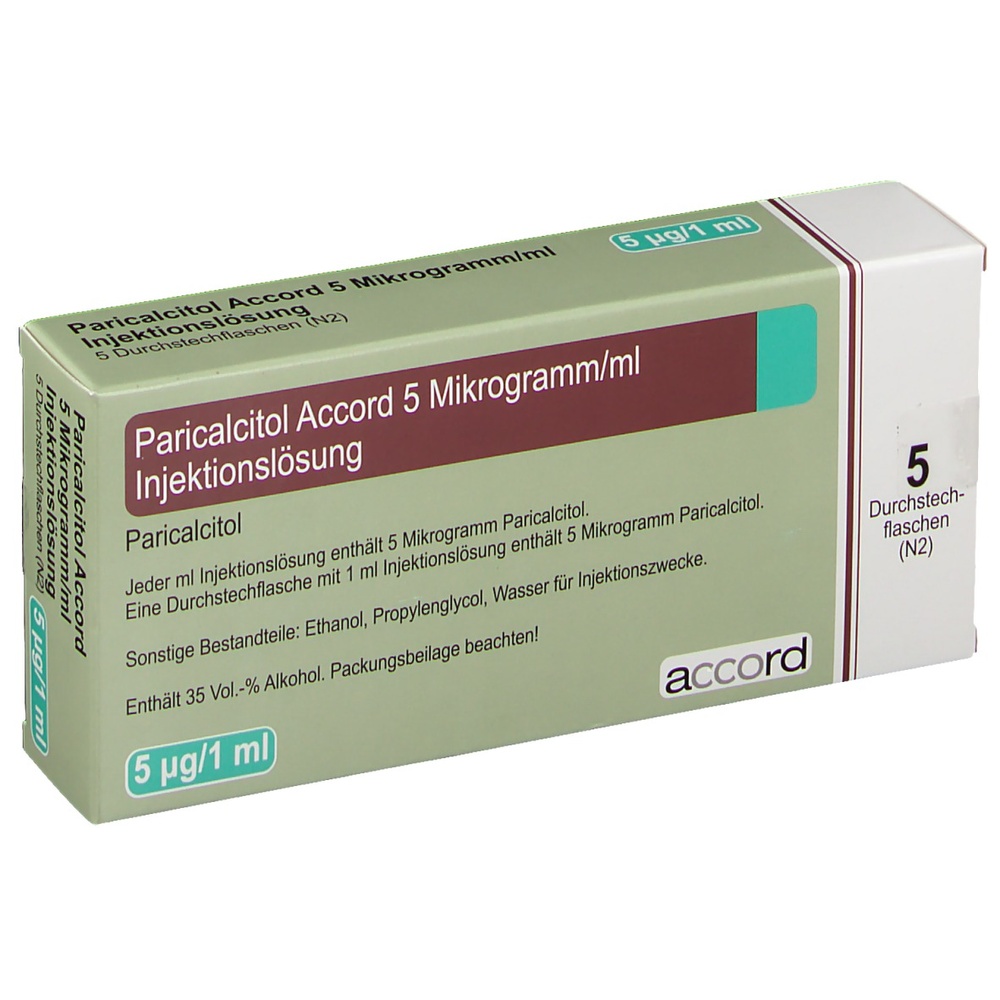
Online doctors for PARICALCITOL SUN 5 micrograms/ml injectable solution
Discuss questions about PARICALCITOL SUN 5 micrograms/ml injectable solution, including use, safety considerations and prescription review, subject to medical assessment and local regulations.






Frequently Asked Questions
