






How to use PARACETAMOL KRKA 1000 mg TABLETS
Translated with AI
This page provides general information and does not replace a doctor’s consultation. Always consult a doctor before taking any medication. Seek urgent medical care if symptoms are severe.
Show originalContents of the leaflet
Introduction
Patient Information Leaflet
Paracetamol Krka 1,000 mg EFG Tablets
Read this leaflet carefully before starting to take this medicine, as it contains important information for you.
- Keep this leaflet, as you may need to read it again.
- If you have any doubts, consult your doctor or pharmacist.
- This medicine has been prescribed to you only, and you should not give it to others, even if they have the same symptoms as you, as it may harm them.
- If you experience side effects, consult your doctor or pharmacist, even if they are not listed in this leaflet. See section 4.
Contents of the Leaflet:
- What is Paracetamol Krka and what is it used for
- What you need to know before taking Paracetamol Krka
- How to take Paracetamol Krka
- Possible side effects
- Storage of Paracetamol Krka
- Package contents and additional information
1. What is Paracetamol Krka and what is it used for
Paracetamol Krka relieves mild to moderate pain and reduces fever.
You can use this medicine for various types of pain, such as headache, menstrual pain, toothache, muscle and joint pain, and during febrile states, for example, in colds.

2. What you need to know before taking Paracetamol Krka
Do not take Paracetamol Krka
- if you are allergic to paracetamol or any of the other ingredients of this medicine (listed in section 6).
Warnings and precautions
Consult your doctor or pharmacist before starting to take Paracetamol Krka.
If you exceed the recommended dose, it can lead to potentially life-threatening poisoning. If there is suspicion of overdose, you should contact your doctor immediately. If you are taking other medicines that also contain paracetamol, there is a risk of overdose.
Caution is required in debilitated and exhausted patients and in alcoholic patients.
Consult your doctor before starting to take paracetamol if:
- you have liver problems.
- you have kidney problems.
- you suffer from malnutrition, for example, due to alcohol abuse, loss of appetite (anorexia), or poor nutrition.
- you may need to take a lower dose if your liver is damaged in any way.
- you have high fever, symptoms of infection (such as sore throat), or if your pain lasts more than 3 days.
- If you have severe diseases, such as severe kidney failure or sepsis (when bacteria and their toxins circulate in the blood, causing damage to organs), or if you suffer from malnutrition, chronic alcoholism, or if you are also taking flucloxacillin (an antibiotic). A serious disease called metabolic acidosis (an anomaly in the blood and fluids) has been reported in patients in these situations when paracetamol is used at regular doses for a prolonged period or when paracetamol is taken with flucloxacillin. The symptoms of metabolic acidosis may include: severe breathing difficulties with deep and rapid breathing, drowsiness, feeling of discomfort (nausea), and vomiting.
If you take several different types of painkillers for a longer period, you may experience kidney damage with a risk of kidney failure. If you take paracetamol for headache for a longer period, your headache may worsen and become more frequent. Contact your doctor if you experience frequent or daily headaches. During blood and urine tests, always mention that you are taking paracetamol. This may affect your test results.
Children and adolescents
Paracetamol Krka is not recommended for children under 9 years of age.
Other medicines and Paracetamol Krka
Tell your doctor or pharmacist if you are taking, have recently taken, or might take any other medicines. This includes any medicine obtained without a prescription, medicines bought abroad, herbal remedies, as well as vitamins and strong minerals.
Consult your doctor if you are taking:
- Medicine to treat epilepsy (such as phenytoin, carbamazepine, and phenobarbital).
- Medicine included in some herbal medicines (St. John's Wort (Hypericum perforatum)).
- Medicine for the treatment of gout (probenecid). A dose change may be necessary.
- Anticoagulant medicine (such as warfarin). You may have bleeding if you take paracetamol regularly and for a long time.
- Medicine to regulate intestinal motility (metoclopramide).
- Medicine to prevent nausea and vomiting (domperidone).
- Medicine to treat tuberculosis (rifampicin).
- Medicine to treat bacterial infections (chloramphenicol).
- Flucloxacillin (antibiotic), due to a serious risk of alteration of blood and fluids (called metabolic acidosis with high anion gap) that should be treated urgently (see section 2).
If you are taking medicines for high cholesterol (cholestyramine), you should take Paracetamol Krka at least 1 hour before or 4-6 hours after this medicine.
Taking Paracetamol Krka with food and drinks
If you are taking this medicine, you should not drink alcohol.
You can take paracetamol with food, but it is not necessary.
You should take the paracetamol tablets with a glass of water.
Pregnancy and breastfeeding
If you are pregnant or breastfeeding, think you may be pregnant, or plan to become pregnant, consult your doctor or pharmacist before using this medicine.
Pregnancy
If necessary, you can take paracetamol during pregnancy. You should take the lowest dose of this medicine that reduces your pain and/or fever and for the shortest possible time. Consult your doctor if the pain and/or fever do not decrease or if you need to take the medicine more frequently.
Breastfeeding
You can breastfeed even if you are taking paracetamol.
Driving and using machines
The influence of paracetamol on the ability to drive and use machines is negligible or non-existent.
Paracetamol Krka contains sodium
This medicine contains less than 1 mmol of sodium (23 mg) per dose unit; it is essentially "sodium-free".
3. How to take Paracetamol Krka
Follow the administration instructions of this medicine exactly as indicated by your doctor or pharmacist. In case of doubt, consult your doctor or pharmacist again. Do not exceed the recommended dose.
Adults and adolescents over 16 years old (≥ 55 kg body weight)
1 tablet of 1,000 mg 3-4 times a day, but no more than 4 tablets (4,000 mg) per day. In some cases, ½ tablet (500 mg) 3-4 times a day should be sufficient. The doses should be spaced at least 4 hours apart.
Children from 9 to 15 years old (30-55 kg body weight)
Age/Body weight | Dose (Paracetamol Krka 1,000 mg) | Maximum daily dose |
9 to 12 years old (30-40 kg) | ½ tablet (500 mg) up to 3 times a day | 1 ½ tablets (1,500 mg) |
12 to 15 years old (40-55 kg) | ½ tablet (500 mg) up to 4 times a day | 2 tablets (2,000 mg) |
The doses should be spaced at least 4 hours apart.
Method of administration
The tablet can be divided into equal doses. Swallow the tablet with liquid.
Children under 9 years old (< 30 kg body weight)
This medicine should not be administered to children under 9 years old.
Patient with kidney failure
Consult your doctor if you have kidney problems. A dose adjustment may be necessary.
Patient with liver failure
- Consult your doctor if you have liver problems, such as liver failure, Gilbert's syndrome (non-hemolytic familial jaundice), or chronic alcohol consumption. A dose adjustment may be necessary, and the daily dose should not exceed 2 g in these situations.
Elderly patients
No dose adjustment is required in elderly patients.
If you take more Paracetamol Krka than you should
You should consult your doctor or pharmacist immediately.
A higher dose of paracetamol than recommended is dangerous and can cause long-term damage. It can destroy the liver and, in some cases, also the kidneys, pancreas, and bone marrow. You may not have immediate symptoms (they usually appear only after a few days). Even if you do not feel any symptoms, there may be a risk of severe liver damage. It is essential to seek medical advice as soon as possible in case of suspected overdose, even if you feel well.
In case of overdose or accidental ingestion, consult your doctor or pharmacist immediately or call the Toxicology Information Service, phone: 91 562 04 20, indicating the medicine and the amount ingested.
If you forget to take Paracetamol Krka
Do not take a double dose to make up for forgotten doses.
If you stop taking Paracetamol Krka
You can stop taking this medicine safely once you no longer need it.
If you have any further questions about the use of this medicine, ask your doctor or pharmacist.

4. Possible side effects
Like all medicines, this medicine can cause side effects, although not everybody gets them.
Very rare (may affect up to 1 in 10,000 people):
- sudden skin rash, breathing problems, and fainting (from minutes to hours) due to hypersensitivity reactions (anaphylactic reaction, allergic dermatitis);
- angioedema with symptoms such as swelling of the face, lips, throat, or tongue;
- widespread skin peeling and skin rejection (toxic epidermal necrolysis);
- breathing problems (bronchospasm). This is more likely if you have experienced it before when taking other painkillers like ibuprofen and aspirin;
- bleeding in the skin and mucous membranes and bruising due to changes in the blood (thrombocytopenia);
- general malaise, tendency to infections, especially throat infections and fever, due to changes in the blood (leukopenia);
- anemia with jaundice due to rupture of blood cells (hemolytic anemia)
- widespread skin rash, fever, and skin inflammation, especially on the hands and feet, and around the mouth (Stevens-Johnson syndrome).
Other side effects
Rare (may affect up to 1 in 1,000 people):
- increased serum creatinine,
- urticaria,
- increased liver enzymes.
Very rare (may affect up to 1 in 10,000 people):
- Reduced liver function. It can be severe. If you experience yellowing of the eyes (jaundice), contact your doctor.
- In long-term treatments, the risk of kidney damage cannot be excluded.
Frequency not known (cannot be estimated from the available data):
- A serious disease called metabolic acidosis (an anomaly in the blood and fluids), in patients with severe disease using paracetamol (see section 2).
Reporting of side effects:
If you experience any side effects, consult your doctor, pharmacist, or nurse, even if they are not listed in this leaflet. You can also report them directly through the Spanish Pharmacovigilance System for Human Use Medicines: https://www.notificaram.es. By reporting side effects, you can help provide more information on the safety of this medicine.
5. Storage of Paracetamol Krka
Keep this medicine out of the sight and reach of children.
Do not use this medicine after the expiry date stated on the carton, blister, or label on the bottle after EXP. The expiry date is the last day of the month indicated.
This medicine does not require special storage conditions.
Medicines should not be disposed of via wastewater or household waste. Dispose of the packaging and any unused medicine in the pharmacy's SIGRE collection point. Ask your pharmacist how to dispose of the packaging and any unused medicine. This will help protect the environment.
6. Package contents and additional information
Composition of Paracetamol Krka
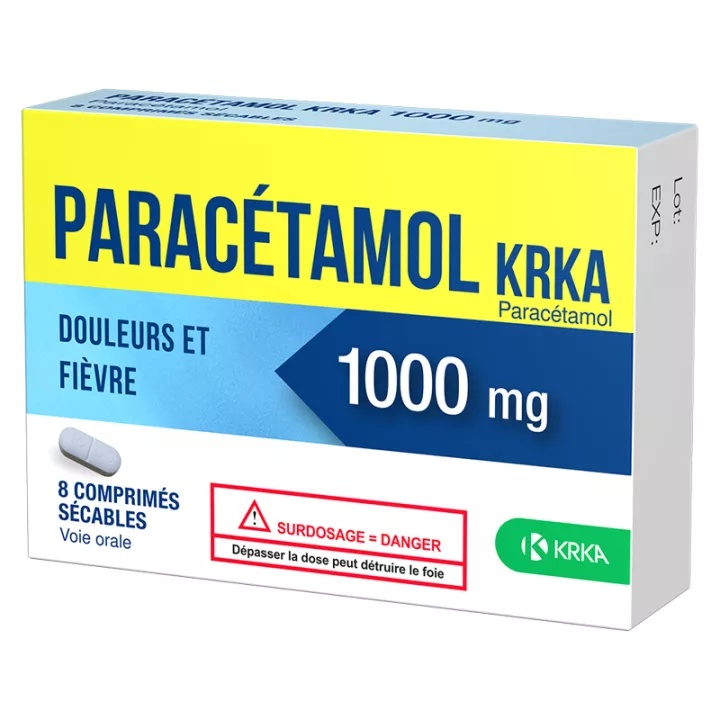
- The active ingredient is paracetamol. Each tablet contains 1,000 mg of paracetamol.
- The other ingredients (excipients) are sodium starch glycolate (type A) (potato), povidone, partially pregelatinized corn starch, and stearic acid. See section 2 "Paracetamol Krka contains sodium".
Appearance and package contents
The tablets are white to off-white, capsule-shaped, scored with a line between "10" and "00" on one side and a line between "PA" and "RA" on the other side (21.4 mm in length x 9.0 mm x 6.9 mm in width).
Paracetamol Krka is available in packs containing 8, 10, 15, 16, 18, 20, 30, 32, 40, 50, 60, 90, 100, and 105 tablets in blisters, and 100 and 105 in HDPE bottles.
Not all pack sizes may be marketed.
Marketing authorization holder and manufacturer
Marketing authorization holder
KRKA, d.d., Novo mesto, Šmarješka cesta 6, 8501 Novo mesto, Slovenia
Manufacturer
KRKA, d.d., Novo mesto, Šmarješka cesta 6, 8501 Novo mesto, Slovenia
You can request more information about this medicine from the local representative of the marketing authorization holder:
KRKA Farmacéutica, S.L.
C/ Anabel Segura, 10, 28108, Alcobendas (Madrid), Spain
This medicine is authorized in the Member States of the European Economic Area under the following names:
Member State | Medicine name |
Denmark | Paracetamol Krka |
Belgium | Paracetamol Krka 1,000 mg tablets |
Spain | Paracetamol Krka 1,000 mg EFG tablets |
Portugal | Paracetamol Krka |
Sweden | Paracetamol Krka 1,000 mg tablets |
Slovenia | Daleron 1,000 mg tablets |
Date of the last revision of this leaflet: April 2025
Detailed information about this medicine is available on the website of the Spanish Agency for Medicines and Health Products (AEMPS) http://www.aemps.gob.es/
-

- Country of registration
- Dosage formTABLET, 1000 mg
- ATC codeN02BE01
- Average pharmacy price2.5 EUR
- Active substance
- Prescription requiredYes
- Manufacturer
- This information is for reference only and does not constitute medical advice. Always consult a doctor before taking any medication. Oladoctor is not responsible for medical decisions based on this content.
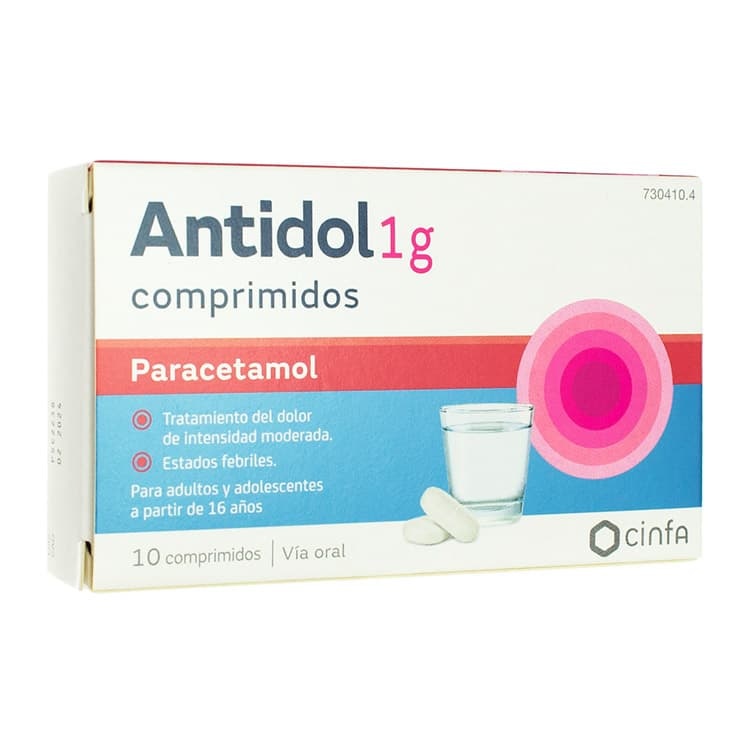
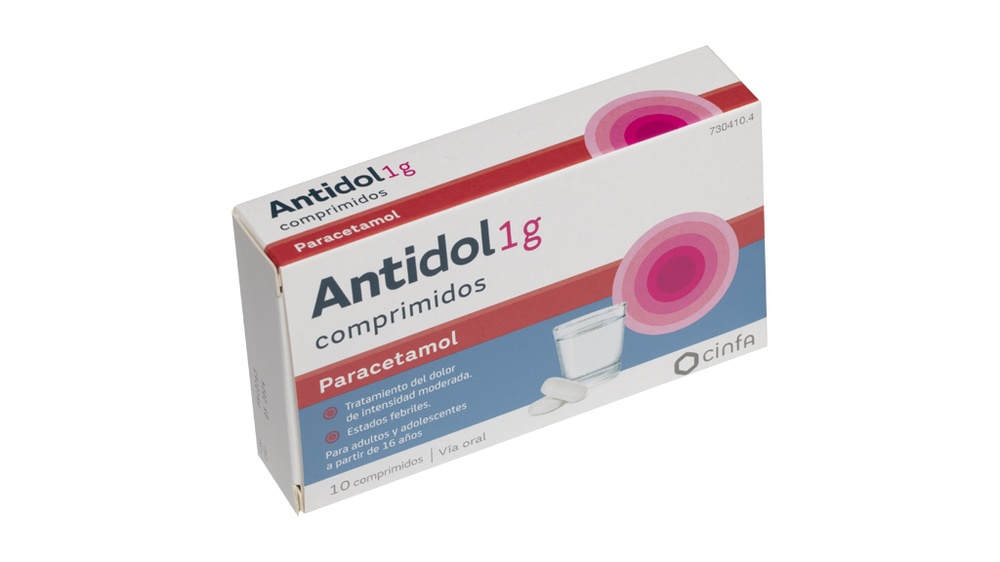
- Alternatives to PARACETAMOL KRKA 1000 mg TABLETSDosage form: TABLET, 1 gActive substance: paracetamolManufacturer: Uxa Farma S.A.Prescription requiredDosage form: TABLET, 1 gActive substance: paracetamolManufacturer: Laboratorios Cinfa S.A.Prescription not requiredDosage form: TABLET, 1 gActive substance: paracetamolManufacturer: Laboratorios Cinfa S.A.Prescription not required
Online doctors for PARACETAMOL KRKA 1000 mg TABLETS
Discuss questions about PARACETAMOL KRKA 1000 mg TABLETS, including use, safety considerations and prescription review, subject to medical assessment and local regulations.








Get PARACETAMOL KRKA 1000 mg TABLETS Prescription Online
Fill in a 2-min form
Tell us your symptoms, history, and what medicine you're requesting.
Pick a doctor or let us assign
Choose a specialist or we'll match you with the next available doctor.
Doctor reviews your case
Usually within 30 minutes. They may ask follow-up questions via chat.
Collect from any pharmacy
Electronic prescription sent to your email — valid across Spain.
Frequently Asked Questions
PARACETAMOL KRKA 1000 mg TABLETS requires a prescription in Spain. You can check with a doctor online whether this medicine may be appropriate for your situation.
The active ingredient in PARACETAMOL KRKA 1000 mg TABLETS is paracetamol. This information helps identify medicines with the same composition but different brand names.
The average pharmacy price for PARACETAMOL KRKA 1000 mg TABLETS is around 2.5 EUR. Prices may vary depending on the manufacturer and dosage form.
PARACETAMOL KRKA 1000 mg TABLETS is manufactured by Krka D.D. Novo Mesto. Pharmacy brands and packaging may differ depending on the distributor.
Doctors such as Family doctors, Psychiatrists, Dermatologists, Cardiologists, Endocrinologists, Gastroenterologists, Pulmonologists, Nephrologists, Rheumatologists, Hematologists, Infectious disease physicians, Allergists, Geriatricians, Paediatricians, Oncologists may assess whether PARACETAMOL KRKA 1000 mg TABLETS is appropriate, depending on your situation and local regulations. You can book an online consultation to discuss your symptoms and possible next steps.
Spain has a well-developed healthcare infrastructure across major cities such as Madrid, Barcelona, Valencia, and Seville. Pharmacies are widely available and operate under strict regulations, ensuring access to prescribed medications.
You can buy PARACETAMOL KRKA 1000 mg TABLETS in Madrid, Barcelona, Seville, or Valencia at any local pharmacy with a valid prescription.
To obtain a prescription, you can use Oladoctor:
Other medicines with the same active substance (paracetamol) include ABEZEN 1 G FILM-COATED TABLETS, ANTIDOL 1 G FILM-COATED TABLETS, ANTIDOL 1 G TABLETS. These may have different brand names or formulations but contain the same therapeutic ingredient. Always consult a doctor before switching or starting a new medicine.
