






How to use PARACETAMOL KABI 10 mg/ml SOLUTION FOR INFUSION
Translated with AI
This page provides general information and does not replace a doctor’s consultation. Always consult a doctor before taking any medication. Seek urgent medical care if symptoms are severe.
Show originalContents of the leaflet
Introduction
PACKAGE LEAFLET: INFORMATION FOR THE USER
Paracetamol Kabi 10 mg/ml, solution for infusion EFG
Read all of this leaflet carefully before you start using this medicine because it contains important information for you:
- Keep this leaflet, you may need to read it again.
- If you have any further questions, ask your doctor, pharmacist or nurse.
- This medicine has been prescribed for you only. Do not pass it on to others. It may harm them, even if their signs of illness are the same as yours.
- If you get any side effects, talk to your doctor, pharmacist or nurse. This includes any possible side effects not listed in this leaflet. See section 4.
Contents of the pack:
- What is Paracetamol Kabi and what is it used for
- What you need to know before you use Paracetamol Kabi
- How to use Paracetamol Kabi
- Possible side effects
- Storage of Paracetamol Kabi
- Contents of the pack and other information
1. What is Paracetamol Kabi and what is it used for
This medicine is a pain reliever (analgesic) and a fever reducer (antipyretic).
It is indicated
- for the short-term treatment of moderate pain, especially after surgery and
- for the short-term treatment of fever.

2. What you need to know before you use Paracetamol Kabi
Do not use Paracetamol Kabi
- If you are allergic to paracetamolor to any of the other ingredients of this medicine (listed in section 6).
- If you have an allergy(hypersensitivity) to propacetamol(another analgesic for infusion and precursor of paracetamol).
- If you have a severe liver disease.
Warnings and precautions
Consult your doctor before using Paracetamol Kabi.
During treatment with Paracetamol Kabi, inform your doctor immediately if:
If you have severe diseases, such as severe renal failure or sepsis (when bacteria and their toxins circulate in the blood, causing damage to organs), or if you suffer from malnutrition, chronic alcoholism or if you are also taking flucloxacillin (an antibiotic). A severe disease called metabolic acidosis (an anomaly in the blood and fluids) has been reported in patients in these situations when paracetamol is used at regular doses for a prolonged period or when paracetamol is taken with flucloxacillin. The symptoms of metabolic acidosis may include: severe breathing difficulties with deep and rapid breathing, drowsiness, feeling of discomfort (nausea) and vomiting.
Be careful with Paracetamol Kabi
- If you have any liver or kidney disease, or chronic alcoholism.
- If you have a hereditary disorder of liver function called Meulengracht Gilbert’s syndrome.
- If you have glucose-6-phosphate dehydrogenase deficiency.
- If you are taking other medicines that contain paracetamol.
- If you are in a state of chronic malnutritionor receive parenteral nutrition.
- If you have dehydration
- Consult your doctor or pharmacist if you are taking flucloxacillin. There is a risk of blood and fluid disorders (metabolic acidosis with high anion gap) that occur when paracetamol is used at the same time as flucloxacillin, especially in certain groups of patients at risk, for example: patients with severe renal failure, sepsis or malnutrition, especially if the maximum daily doses of paracetamol are used. Metabolic acidosis with high anion gap is a serious disease that requires urgent treatment.
Before treatment, inform your doctor if any of the above conditions apply to you.
You should take analgesics in tablets or syrup instead of Paracetamol Kabi as soon as possible.
Other medicines and paracetamol:
During treatment with Paracetamol Kabi, do not take other medicines that contain paracetamol, this should be taken into account to not exceed the recommended daily dose (see the next section). Inform your doctor if you are taking other medicines that contain paracetamol.
If you are being treated with probenecid(a medicine used to treat gout), your doctor should consider a reduction in the necessary dose of paracetamol since probenecid increases paracetamol levels in the blood.
Salicylamide(another pain reliever) may increase paracetamol levels in the blood and therefore may increase the risk of its toxic effects.
Rifampicin, isoniazid(antibiotics), barbiturates(sedatives), tricyclic antidepressantsand medicines for treating epileptic seizures(antiepileptics such as carbamazepine, phenytoin, phenobarbital, primidone) may reduce the analgesic and antipyretic effect of paracetamol and, like alcohol, may increase its toxic effects on the liver.
In case of taking paracetamol at the same time as chloramphenicol(an antibiotic), the action of the latter may be prolonged.
Please inform your doctor or pharmacist if you are taking oral contraceptivesbecause they may reduce the action of paracetamol.
Taking paracetamol with zidovudine(a medicine used to treat HIV) increases the risk of reduction of certain white blood cells (neutropenia). Therefore, it increases the risk of infections.
Please inform your doctor or pharmacist if you are taking oral anticoagulants(substances that reduce blood clotting speed). More analyses may be necessary to evaluate the effect of the anticoagulant.
Inform your doctor or pharmacist if you are taking flucloxacillin(an antibiotic), due to a serious risk of blood and fluid disorder (called metabolic acidosis) that requires urgent treatment (see section 2).
Inform your doctor or pharmacist if you are using or have recently used any other medicine, even those purchased without a prescription.
Pregnancy and breastfeeding
If you are pregnant or breastfeeding, think you may be pregnant or are planning to have a baby, ask your doctor or pharmacist for advice before taking this medicine.
Pregnancy
If necessary, Paracetamol Kabi can be used during pregnancy. You should use the lowest possible dose that reduces pain or fever and use it for the shortest possible time. Contact your doctor if the pain or fever does not decrease or if you need to take the medicine more frequently.
Breastfeeding
Paracetamol Kabi can be used during breastfeeding.
Driving and using machines
No effects on driving and using machines have been described.
3. How to use Paracetamol Kabi
This medicine is administered intravenously.
Paracetamol Kabi will be administered by your doctor. It is administered through a drip (infusion).
The 100 ml vial or bag is restricted to adults, adolescents and children who weigh more than 33 kg (approximately 11 years).
The 10 ml ampoule, 50 ml vial or bag is restricted to full-term newborns, infants and children who weigh less than 33 kg.
Careful supervision is necessary before finishing the infusion, to avoid air entering the vein.
Dosage
Dose according to patient weight (see the posology table below)
Patient weight | Dose per administration | Volume per administration | Maximum volume of Paracetamol Kabi (10 mg/ml) per administration according to the upper weight limits of the group (ml)*** | Maximum daily dose ** |
≤ 10 kg* | 7.5 mg/kg | 0.75 ml/kg | 7.5 ml | 30 mg/kg |
> 10 kg to ≤33 kg | 15 mg/kg | 1.5 ml/kg | 49.5 ml | 60 mg/kg not exceeding 2 g |
> 33 kg to ≤50 kg | 15 mg/kg | 1.5 ml/kg | 75 ml | 60 mg/kg not exceeding 3 g |
> 50 kg with additional risk factors for hepatotoxicity | 1 g | 100 ml | 100 ml | 3 g |
> 50 kg and without additional risk factors for hepatotoxicity | 1 g | 100 ml | 100 ml | 4 g |
*Preterm infants:There is no data on efficacy and safety in preterm infants.
**Maximum daily dose:The maximum daily dose described in the table above is for patients who are not taking other medicines with paracetamol and should be adjusted accordingly taking into account these medicines.
***Patients who weigh less will require smaller volumes.
- The minimum interval between each administration should be at least 4 hours in patients with normal renal function.
- The minimum interval between each administration in patients with severe renal failure should be at least 6 hours.
- The minimum interval between each administration in patients who require hemodialysis should be at least 8 hours.
- The maximum daily dose should not exceed 3 g in adult patients with active chronic liver disease, compensated liver disease, liver failure, chronic alcoholism, chronic malnutrition (low hepatic glutathione reserves), dehydration, Meulengracht Gilbert Syndrome, or who weigh less than 50 kg.
Do not administer more than 4 doses in 24 hours.
Method of administration
RISK OF MEDICATION ERRORS Be careful to avoid dosing errors due to confusion between milligrams (mg) and milliliters (ml), which can cause accidental overdose and death. |
Paracetamol Kabi solution is administered by infusion (through a drip) in your vein for about 15 minutes. An interval of at least 4 hours should be left between each administration.
If you think the action of Paracetamol Kabi is too strong or too weak, tell your doctor.
If you use more Paracetamol Kabi than you should
If you have taken more Paracetamol Kabi than you should, consult your doctor or pharmacist immediately.
The most frequent symptoms in case of overdose appear during the first 24 hours and are: nausea, vomiting, anorexia, pallor and abdominal pain. In case of overdose, immediately inform the medical staff due to the risk of irreversible liver damage.
If you have any other questions about the use of this medicine, ask your doctor or pharmacist.

4. Possible side effects
Like all medicines, Paracetamol Kabi can cause side effects, although not everybody gets them.
Common(may affect up to 1 in 10 people)
- Pain or burning sensation at the injection site.
Uncommon(may affect up to 1 in 100 people)
- Modification of blood tests (abnormally high levels of liver enzymes). If this occurs, consult your doctor because you may need to perform additional blood tests.
- Low blood pressure (hypotension)
- Discomfort
Rare(may affect up to 1 in 1,000 people)
- Decrease in the levels of certain blood cells (platelets, certain white blood cells), causing possible nosebleeds or gum bleeding and increasing the risk of infections. If this occurs, inform your doctor because you may need to perform additional blood tests.
- Allergic reactions from simple skin rash or itching to generalized allergic reaction (anaphylactic shock). Possible symptoms include swelling of the face, lips, tongue or other parts of the body and wheezing or difficulty breathing, temporary narrowing of the airways in the lungs (bronchospasm).
- If you think Paracetamol Kabi is causing an allergic reaction, inform your doctor immediately.
- Very rare cases of severe skin reactions have been reported.
- Very rare cases of blood and fluid disorders (metabolic acidosis with high anion gap) that occur when paracetamol is used at the same time as flucloxacillin, usually in the presence of risk factors (see section 2).
Frequency not known(cannot be estimated from the available data):
- Increased heart rate (tachycardia)
- Redness of the skin, flushing, itching
- A serious disease that can make the blood more acidic (called metabolic acidosis) in patients with severe disease using paracetamol (see section 2).
Effects on laboratory tests
Treatment with Paracetamol Kabi may alter the results of some tests such as the determination of uric acid, as well as blood glucose analysis.
If you notice any side effect, talk to your doctor or pharmacist. This includes any possible side effects not listed in this leaflet.
Reporting of side effects
If you experience any side effects, talk to your doctor, pharmacist or nurse. This includes any possible side effects not listed in this leaflet. You can also report side effects directly through the Spanish Pharmacovigilance System for Human Use Medicines: https://www.notificaram.es. By reporting side effects, you can help provide more information on the safety of this medicine.
5. Storage of Paracetamol Kabi
Keep Paracetamol Kabi out of the sight and reach of children.
Do not use Paracetamol Kabi after the expiry date stated on the packaging after EXP. The expiry date refers to the last day of the month.
Do not refrigerate or freeze.
Before administration, the product must be visually inspected.
Do not use Paracetamol Kabi if you observe the presence of particles or if the solution has discolored beyond a slight yellow.
Your doctor or hospital healthcare staff will normally store Paracetamol Kabi and are therefore responsible for the quality of the product when it has been opened and not used immediately. However, if it is not used immediately, the product can be stored for up to a maximum of 24 hours. After dilution, the solution should not be stored for more than 6 hours (including infusion time). They are also responsible for the correct disposal of Paracetamol Kabi residues.
Medicines should not be disposed of via wastewater or household waste. Ask your pharmacist how to dispose of medicines no longer required. This will help protect the environment.
6. Container Contents and Additional Information
Composition of Paracetamol Kabi
- The active ingredient is paracetamol. Each ml contains 10 mg of paracetamol.
- Each 10 ml ampoule contains 100 mg of paracetamol.
- Each 50 ml vial or bag contains 500 mg of paracetamol.
- Each 100 ml vial or bag contains 1000 mg of paracetamol.
- The other components are cysteine, mannitol (E421), and water for injectable preparations.
Appearance of Paracetamol Kabi and Container Contents
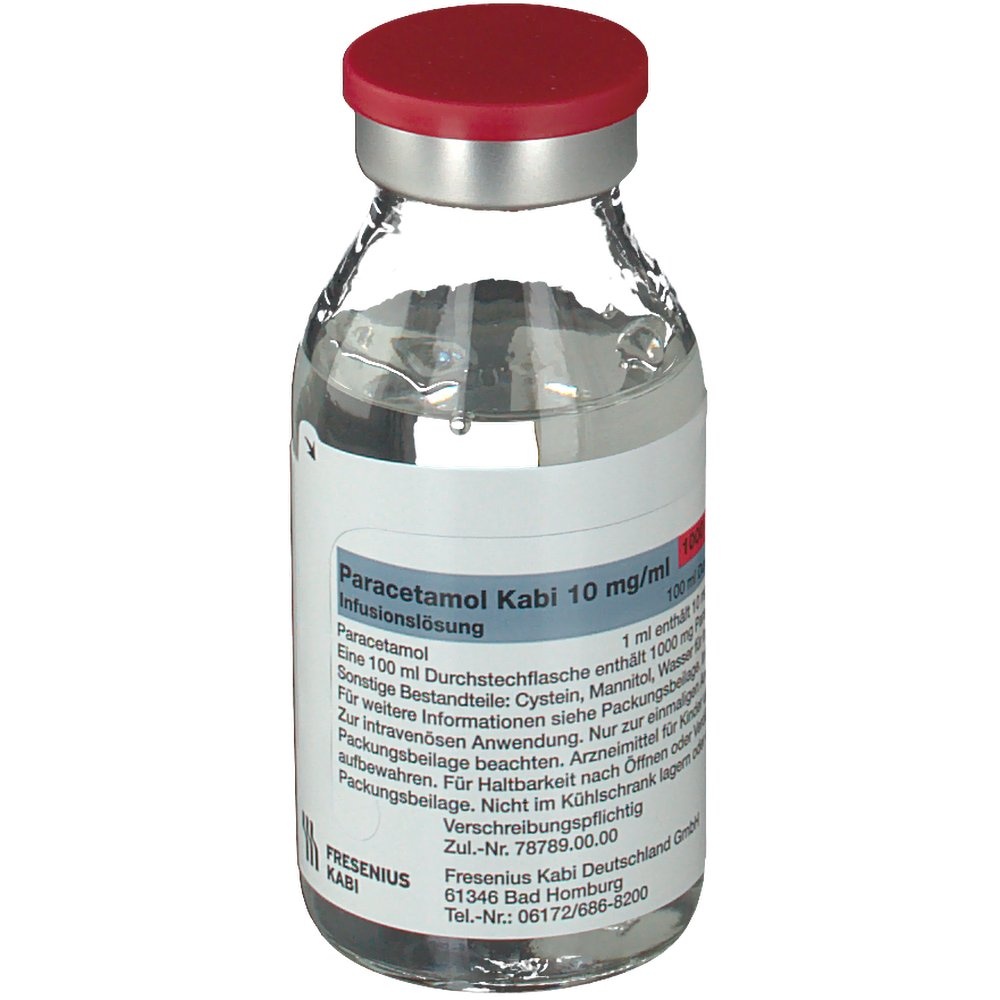
Paracetamol Kabi 10 mg/ml, solution for infusion is a slightly yellowish transparent solution.
Paracetamol Kabi 10 mg/ml, solution for infusion is presented in 10 ml glass ampoules and 50 ml or 100 ml glass vials closed with aluminum/plastic flip-off caps or in 50 and 100 ml bags with plastic closures and covers that allow verification if they have been tampered with.
Containers:
Ampoules:
10 ampoules
Vials:
1 vial
10 vials
12 vials
20 vials
Bags:
20 bags
50 bags
60 bags
Only some container sizes may be marketed.
Marketing Authorization Holder and Manufacturer:
Marketing Authorization Holder:
Fresenius Kabi España, S.A.U.
Marina 16-18
08005 – Barcelona (Spain)
Manufacturer:
Fresenius Kabi Deutschland GmbH
Plant Friedberg
Freseniusstrasse 1
D-61169 Friedberg
Germany
Fresenius Kabi Austria GmbH
Hafnerstrasse, 36 - A-8055
Austria (GRAZ)
Fresenius Kabi France
6, Rue de Rempart
F-27400 Louviers
This medicinal product is authorized in the Member States of the European Economic Area under the following names:
Austria | Paracetamol Kabi 10 mg/ml Infusionslösung |
Belgium | Paracetamol Fresenius Kabi 10 mg/ml oplossing voor infusie |
Bulgaria | ??????????? ???? 10 mg/ml ?????????? ??????? |
Cyprus | Paracetamol/Kabi |
Czech Republic | Paracetamol Kabi |
Denmark | Paracetamol “Fresenius Kabi” |
Estonia | Paracetamol Kabi 10 mg/ml |
Finland | Paracetamol Fresenius Kabi |
Germany | Paracetamol Kabi 10 mg/ml Infusionslösung |
Greece | Paracetamol Kabi |
Hungary | Paracetamol Kabi 10 mg/ml |
Ireland | Paracetamol 10 mg/ml solution for infusion |
Italy | Paracetamolo Kabi 10 mg/ml |
Latvia | Paracetamol Kabi 10 mg/ml škidums infuzijam |
Lithuania | Paracetamol Kabi 10 mg/ml infuzinis tirpalas |
Luxembourg | Paracetamol Kabi 10 mg/ml Infusionslösung |
Norway | Paracetamol “Fresenius Kabi” 10 mg/ml infusjons-væske, oppløsning |
Poland | Paracetamol Kabi |
Portugal | Paracetamol Kabi |
Romania | Paracetamol Kabi 10 mg/ml, solutie perfuzabila |
Slovakia | Paracetamol Kabi 10 mg/ml |
Slovenia | Paracetamol Kabi 10 mg/ml raztopina za infundiranje |
Spain | Paracetamol Kabi 10 mg/ml solución para perfusión |
Sweden | Paracetamol Fresenius Kabi |
The Netherlands | Paracetamol Fresenius Kabi 10 mg/ml oplossing voor infusie |
UK | Paracetamol 10 mg/ml solution for infusion |
This leaflet was last revised inJanuary 2025
--------------------------------------------------------------------------------------------------------------------
The following information is intended for healthcare professionals only:
Handling
This medicinal product is for single use. All unused solution remains must be discarded.
Before administration, the product must be visually inspected for the absence of particles or discoloration.
The 100 ml vial or bag is restricted to adults, adolescents, and children weighing more than 33 kg.
The 10 ml ampoule and the 50 ml vial or bag are restricted to full-term newborns, infants, and children weighing less than 33 kg.
As with all infusion solutions presented in glass vials or bags, careful monitoring is necessary, especially at the end of the infusion, regardless of the infusion route. This monitoring at the end of the infusion is particularly important in the case of central infusions to avoid gas embolias.
Compatibility
Paracetamol Kabi 10 mg/ml solution for infusion can be diluted in a 9 mg/ml (0.9%) sodium chloride solution or in a 50 mg/ml (5%) glucose solution up to one-tenth (one volume of Paracetamol Kabi 10 mg/ml solution for infusion in nine volumes of diluent). In this case, the diluted solution must be used within 6 hours of preparation (including infusion time).
The diluted solution must be visually inspected and not used if opalescence, visible particles, or precipitate are observed.
Elimination
Any unused product or waste material must be disposed of in accordance with local regulations.
-

- Country of registration
- Dosage formINJECTABLE PERFUSION, 10 mg/mL
- ATC codeN02BE01
- Active substance
- Prescription requiredYes
- Manufacturer
- This information is for reference only and does not constitute medical advice. Always consult a doctor before taking any medication. Oladoctor is not responsible for medical decisions based on this content.
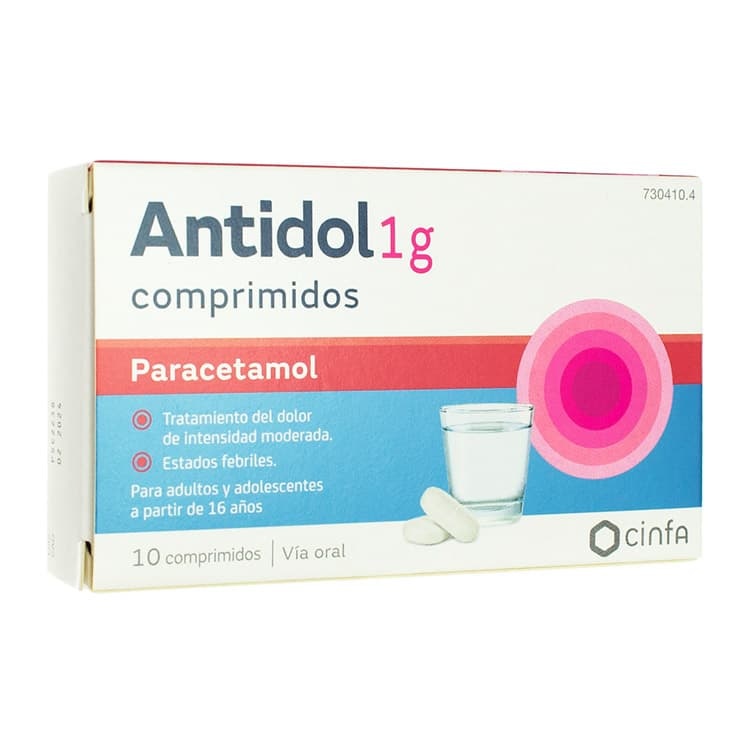
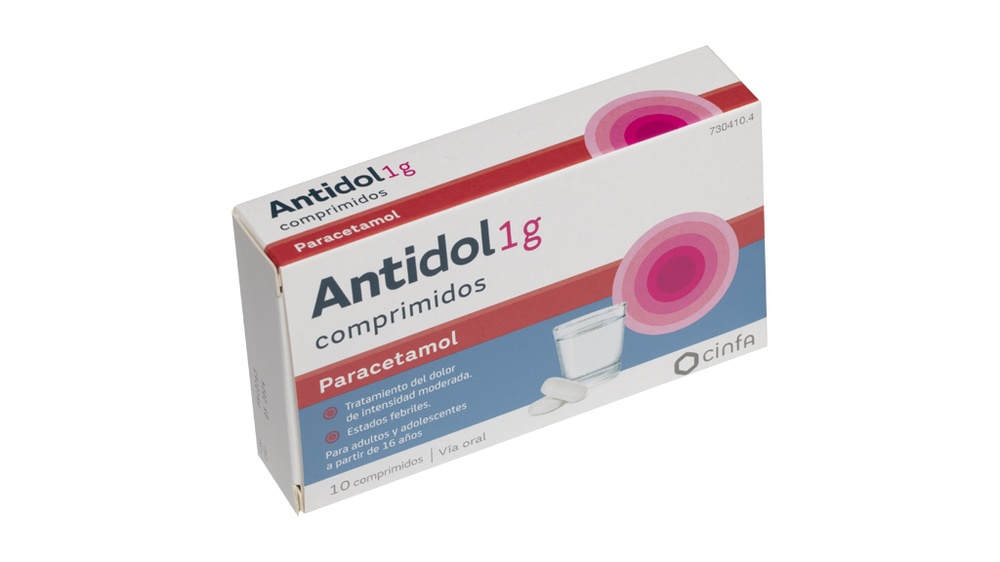
- Alternatives to PARACETAMOL KABI 10 mg/ml SOLUTION FOR INFUSIONDosage form: TABLET, 1 gActive substance: paracetamolManufacturer: Uxa Farma S.A.Prescription requiredDosage form: TABLET, 1 gActive substance: paracetamolManufacturer: Laboratorios Cinfa S.A.Prescription not requiredDosage form: TABLET, 1 gActive substance: paracetamolManufacturer: Laboratorios Cinfa S.A.Prescription not required

Online doctors for PARACETAMOL KABI 10 mg/ml SOLUTION FOR INFUSION
Discuss questions about PARACETAMOL KABI 10 mg/ml SOLUTION FOR INFUSION, including use, safety considerations and prescription review, subject to medical assessment and local regulations.









Get PARACETAMOL KABI 10 mg/ml SOLUTION FOR INFUSION Prescription Online
Fill in a 2-min form
Tell us your symptoms, history, and what medicine you're requesting.
Pick a doctor or let us assign
Choose a specialist or we'll match you with the next available doctor.
Doctor reviews your case
Usually within 30 minutes. They may ask follow-up questions via chat.
Collect from any pharmacy
Electronic prescription sent to your email — valid across Spain.
Frequently Asked Questions
PARACETAMOL KABI 10 mg/ml SOLUTION FOR INFUSION requires a prescription in Spain. You can check with a doctor online whether this medicine may be appropriate for your situation.
The active ingredient in PARACETAMOL KABI 10 mg/ml SOLUTION FOR INFUSION is paracetamol. This information helps identify medicines with the same composition but different brand names.
PARACETAMOL KABI 10 mg/ml SOLUTION FOR INFUSION is manufactured by Fresenius Kabi España, S.A.U.. Pharmacy brands and packaging may differ depending on the distributor.
Doctors such as Family doctors, Psychiatrists, Dermatologists, Cardiologists, Endocrinologists, Gastroenterologists, Pulmonologists, Nephrologists, Rheumatologists, Hematologists, Infectious disease physicians, Allergists, Geriatricians, Paediatricians, Oncologists may assess whether PARACETAMOL KABI 10 mg/ml SOLUTION FOR INFUSION is appropriate, depending on your situation and local regulations. You can book an online consultation to discuss your symptoms and possible next steps.
Spain has a well-developed healthcare infrastructure across major cities such as Madrid, Barcelona, Valencia, and Seville. Pharmacies are widely available and operate under strict regulations, ensuring access to prescribed medications.
You can buy PARACETAMOL KABI 10 mg/ml SOLUTION FOR INFUSION in Madrid, Barcelona, Seville, or Valencia at any local pharmacy with a valid prescription.
To obtain a prescription, you can use Oladoctor:
Other medicines with the same active substance (paracetamol) include ABEZEN 1 G FILM-COATED TABLETS, ANTIDOL 1 G FILM-COATED TABLETS, ANTIDOL 1 G TABLETS. These may have different brand names or formulations but contain the same therapeutic ingredient. Always consult a doctor before switching or starting a new medicine.
