



PANTOPRAZOL 40 mg Gastro-Resistant Tablets

Prescription review online
A doctor will review your case and decide whether a prescription is medically appropriate.

Talk to a doctor about this medicine
Discuss your symptoms and possible next steps in a quick online consultation.



How to use PANTOPRAZOL KRKA 40 mg GASTRO-RESISTANT TABLETS
Contents of the leaflet
- Introduction
- What is Pantoprazol Krka and what is it used for
- What you need to know before taking Pantoprazol Krka
- How to take Pantoprazol Krka
- Possible Adverse Effects
- Storage of Pantoprazol Krka
- Package contents and additional information
Introduction
Package Leaflet: Information for the Patient
Pantoprazol Krka40mggastro-resistant EFG tablets
Read all of this leaflet carefully before you start taking this medicine because it contains important information for you.
- Keep this leaflet, you may need to read it again.
- If you have any further questions, ask your doctor or pharmacist.
- This medicine has been prescribed for you only. Do not pass it on to others. It may harm them, even if their signs of illness are the same as yours.
- If you get any side effects, talk to your doctor or pharmacist. This includes any possible side effects not listed in this leaflet. See section 4.
Contents of the pack
- What is Pantoprazol Krka and what is it used for
- What you need to know before you take Pantoprazol Krka
- How to take Pantoprazol Krka
- Possible side effects
- Storage of Pantoprazol Krka
- Contents of the pack and other information
1. What is Pantoprazol Krka and what is it used for
Pantoprazol Krka contains the active substance pantoprazole. Pantoprazole is a selective inhibitor of the proton pump. Proton pump inhibitors such as pantoprazole reduce the amount of acid in your stomach. It is used for the treatment of diseases related to stomach and intestine acid.
Pantoprazole is used for:
Adults and adolescents aged 12 years and older:
- Reflux oesophagitis. This is an inflammation of your oesophagus (the tube that connects your throat to your stomach) accompanied by regurgitation of acid from the stomach.
Adults
- Infection with a bacterium called Helicobacter pyloriin patients with stomach and/or duodenal ulcers in combination with two antibiotics (eradication treatment). The goal is to get rid of the bacteria and thus reduce the likelihood of ulcers recurring.
- Treatment of duodenal and stomach ulcers.
- Treatment of Zollinger-Ellison syndrome and other conditions in which too much acid is produced in the stomach.

Not sure if this medicine is right for you?
Discuss your symptoms and treatment with a doctor online.
2. What you need to know before taking Pantoprazol Krka
Do not take Pantoprazol Krka:
- if you are allergic to pantoprazole, sorbitol or any of the other ingredients of this medicine (listed in section 6);
- if you are allergic to medicines containing other proton pump inhibitors.
Warnings and precautions
Talk to your doctor, pharmacist or nurse before starting treatment with Pantoprazol Krka
- If you have severe liver disease. Tell your doctor if you have ever had liver problems. Your doctor will monitor your liver enzymes more frequently, especially when taking Pantoprazol Krka for long-term treatment. If levels increase, treatment should be discontinued.
- If you have reduced body stores of vitamin B12 or risk factors for this and receive long-term treatment with pantoprazole. Like all acid-reducing medicines, pantoprazole may reduce the absorption of vitamin B12. Talk to your doctor if you notice any of the following symptoms, as they may indicate a vitamin B12 deficiency:
- Extreme tiredness or lack of energy
- Tingling
- Pain in the tongue or red tongue, mouth ulcers
- Muscle weakness
- Vision problems
- Memory problems, confusion, depression
- Talk to your doctor if you are taking HIV protease inhibitors such as atazanavir (for HIV infection treatment) at the same time as pantoprazole.
- Taking a proton pump inhibitor like pantoprazole, especially for more than a year, may increase the risk of hip, wrist or spine fractures. Tell your doctor if you have osteoporosis (reduced bone density) or if you have been told you are at risk of osteoporosis (for example, if you are taking corticosteroids).
- If you are taking Pantoprazol Krka for more than three months, your magnesium levels in the blood may decrease. Low magnesium levels can cause fatigue, muscle contractions, disorientation, convulsions, dizziness, increased heart rate. If you experience any of these symptoms, see your doctor immediately. Low magnesium levels can also lead to decreased potassium and calcium levels in the blood. Your doctor may decide to perform periodic blood tests to monitor magnesium levels.
- If you have ever had a skin reaction after treatment with a medicine similar to Pantoprazol Krka to reduce stomach acid.
- If you get a skin rash, especially in areas of the skin exposed to the sun, talk to your doctor as soon as possible, as it may be necessary to interrupt treatment with Pantoprazol Krka. Remember to mention any other symptoms you may notice, such as joint pain.
- Severe skin reactions such as Stevens-Johnson syndrome, toxic epidermal necrolysis, drug reaction with eosinophilia and systemic symptoms (DRESS) and erythema multiforme have been reported with pantoprazole treatment. Stop using pantoprazol and seek medical attention immediately if you notice any of the symptoms related to these severe skin reactions described in section 4.
- A specific blood test (Chromogranin A) is planned.
Tell your doctor immediatelyif you notice any of the following symptoms:
- unintentional weight loss
- vomiting, particularly if it is repeated
- blood in the vomit: it may appear as a dark brown powder in your vomit
- if you notice blood in your stools, which may appear black or tarry
- difficulty swallowing, or pain when swallowing
- chest pain
- stomach pain
- pale appearance and feeling of weakness (anaemia)
- severe and/or persistent diarrhoea, as Pantoprazol Krka has been associated with a small increase in infectious diarrhoea.
Your doctor will decide if you need any additional tests to rule out a malignant disease because pantoprazole can alleviate the symptoms of cancer and may delay its diagnosis. If your symptoms persist despite treatment, further tests will be performed.
If you take Pantoprazol Krka for a prolonged period (more than one year), your doctor may monitor you regularly. You should inform your doctor of any new or unexpected symptoms or events each time you visit your doctor.
Children and adolescents
The use of pantoprazole is not recommended in children as it has not been tested in children under 12 years of age.
Other medicines and Pantoprazol Krka
Tell your doctor or pharmacist if you are taking, have recently taken or might take any other medicines, including medicines obtained without a prescription.
Pantoprazol Krkamay interfere with the effectiveness of other medicines, so tell your doctor if you are taking:
- Any medicine such as ketoconazole, itraconazole or posaconazole (medicines used in fungal infections) or erlotinib (used to treat some types of cancer) as Pantoprazol Krka may make other medicines not work properly.
- Warfarin or phenprocoumon, which affect blood coagulation. You may need additional monitoring.
- Medicines used to treat HIV infection, such as atazanavir.
- Methotrexate (used to treat rheumatoid arthritis, psoriasis and cancer), if you are taking methotrexate, your doctor may temporarily stop treatment with Pantoprazol Krka because pantoprazole may increase methotrexate levels in the blood.
- Fluvoxamine (used to treat depression and other psychiatric disorders), if you are taking fluvoxamine, your doctor may reduce your dose.
- Rifampicin (used to treat infections).
- St John's Wort (Hypericum perforatum) (used to treat mild depression).
Talk to your doctor before taking pantoprazol if you need to have a specific urine test (for THC; Tetrahydrocannabinol).
Using Pantoprazol Krka with food and drinks
Take the tablets 1 hour before a meal without chewing or breaking them and swallow them whole with a little water.
Pregnancy and breastfeeding
If you are pregnant or breastfeeding, think you may be pregnant or are planning to have a baby, ask your doctor or pharmacist for advice before taking this medicine.
There is not enough data on the use of pantoprazole in pregnant women. It has been reported that pantoprazole is excreted in human breast milk. You should only use this medicine if your doctor considers that the benefit to you is greater than the potential risk to the fetus or baby.
Ask your doctor or pharmacist for advice before taking any medicine.
Driving and using machines
Pantoprazol Krka has no or negligible influence on the ability to drive or use machines.
You should not drive or use machines if you experience side effects such as dizziness or blurred vision
Pantoprazol Krka contains sorbitol and sodium
This medicine contains 36 mg of sorbitol in each tablet.
This medicine contains less than 1 mmol of sodium (23 mg) per tablet; this is, essentially “sodium-free”.
3. How to take Pantoprazol Krka
Follow exactly the administration instructions of this medicine given by your doctor or pharmacist. If you are in doubt, consult your doctor or pharmacist again.
Method of administration
Take the tablets whole, without chewing or crushing, with the help of a little water, 1 hour before a meal.
Unless your doctor has told you otherwise, the recommended dose is:
Adults and adolescents from 12 years:
For reflux oesophagitis
The recommended dose is one tablet per day. The dose may be doubled by your doctor. The treatment time for reflux oesophagitis is usually between 4 and 8 weeks. Your doctor will tell you how long to take this medicine.
Adults:
For the treatment of an infection with a bacterium calledHelicobacter pyloriin patients with stomach and/or duodenal ulcers in combination with two antibiotics (eradication treatment).One tablet twice a day plus two antibiotic tablets: amoxicillin, clarithromycin and metronidazole (or tinidazole), each to be taken twice a day with your pantoprazole tablet.
Take the first pantoprazole tablet one hour before breakfast and the second before dinner. Follow your doctor's instructions and make sure to read the leaflets of the antibiotics. The duration of treatment is usually one to two weeks.
For the treatment of stomach and duodenal ulcers:
The recommended dose is one tablet per day. The dose may be doubled by your doctor.
Your doctor will tell you how long to take this medicine. The treatment time for stomach ulcers is usually between 4 and 8 weeks. The treatment time for duodenal ulcers is usually between 2 and 4 weeks.
For long-term treatment of Zollinger-Ellison syndrome and other conditions in which there is an increase in stomach acid secretion:
The initial recommended dose is two tablets per day.
Take the two tablets 1 hour before breakfast. Your doctor may then adjust your dose, depending on the amount of acid secretion you produce. If you are prescribed more than two tablets per day, take the tablets divided into two doses per day.
If you are prescribed more than four tablets per day, you will be told exactly when to stop treatment.
Patients with kidney problems
If you have kidney problems, you should not take pantoprazole for Helicobacter pylorieradication.
Patients with liver problems
If you have severe liver problems, you should not take more than one 20 mg tablet per day (20 mg pantoprazole tablets are available for this purpose).
If you have moderate or severe liver problems, you should not take pantoprazole for Helicobacter pylorieradication.
Use in children and adolescents
Children under 12 years.
The use of these tablets is not recommended in children under 12 years of age.
If you take more Pantoprazol Krka than you should
Tell your doctor or pharmacist. There are no known symptoms of overdose.
In case of overdose or accidental ingestion, consult your doctor or pharmacist immediately or call the Toxicology Information Service, telephone 91 562 04 20, indicating the medicine and the amount ingested.
If you forget to take Pantoprazol Krka
Do not take a double dose to make up for a forgotten dose. Take your next dose as usual.
If you stop taking Pantoprazol Krka
Do not stop taking these tablets without first talking to your doctor or pharmacist.
If you have any further questions on the use of this product, ask your doctor or pharmacist.

Started taking the medicine and have questions?
Discuss your symptoms and treatment with a doctor online.
4. Possible Adverse Effects
Like all medicines, this medicine can cause adverse effects, although not all people suffer from them.
Stop using pantoprazole and seek immediate medical attention if you notice any of the following symptoms:
- red spots, not raised, in a target or circular shape on the trunk, often with central blisters, skin peeling, ulcers in the mouth, throat, nose, genitals, and eyes. These severe skin eruptions can be preceded by fever and flu-like symptoms (Stevens-Johnson syndrome, toxic epidermal necrolysis).
- widespread rash, high body temperature, and swollen lymph nodes (DRESS or drug hypersensitivity syndrome).
If you notice any of the following adverse effects, stop taking the tablets and inform your doctor immediately or contact the emergency service of the nearest hospital:
Severe allergic reactions (rare frequency(may affect up to 1 in 1000 people)):
- swelling of the tongue and/or throat,
- difficulty swallowing,
- hives,
- difficulty breathing,
- swelling of the face of allergic origin (Quincke's edema/angioedema),
- severe dizziness with very rapid heartbeats and profuse sweating.
Severe skin disorders (frequency not known(frequency cannot be estimated from available data)):you may notice one or more of the following:
- blisters on the skin and rapid deterioration of general conditions,
- erosion (including slight bleeding) of eyes, nose, mouth/lips, or genitals, or sensitivity/skin rash, particularly in areas of skin exposed to light/sun.
You may also experience joint pain or flu-like symptoms, fever, swollen glands (e.g., in the armpit), and blood tests may show changes in certain white blood cells or liver enzymes.
Other severe disorders (frequency not known(frequency cannot be estimated from available data)):
- yellowing of the skin or whites of the eyes (severe liver cell damage, jaundice) or fever,
- redness of the skin, and
- enlargement of the kidneys, sometimes with pain when urinating and pain in the lower back (severe kidney inflammation, possibly progressing to kidney failure).
Other adverse effects are:
Frequent(may affect up to 1 in 10 patients)
- Benign polyps in the stomach.
Infrequent(may affect up to 1 in 100 patients)
- Headache,
- dizziness,
- diarrhea,
- nausea;
- vomiting,
- gas and flatulence,
- constipation,
- dry mouth,
- abdominal pain and discomfort,
- erythema; exanthema, rash,
- itching,
- hip, wrist, or spine fracture,
- feeling of weakness, fatigue, or general malaise,
- sleep disturbances.
Rare(may affect up to 1 in 1,000 patients)
- Visual disturbances such as blurred vision,
- hives,
- joint pain,
- muscle pain,
- weight changes,
- high body temperature,
- high fever,
- swelling of the limbs (peripheral edema),
- allergic reactions,
- depression,
- breast enlargement in men,
- alteration or complete loss of taste.
Very Rare(may affect up to 1 in 10,000 patients)
- Disorientation.
Frequency not known(frequency cannot be estimated from available data):
- hallucinations, confusion (especially in patients with a history of these symptoms),
- tingling, pinching, numbness, burning sensation, or numbness,
- inflammation in the large intestine, causing persistent watery diarrhea,
- skin rash, possibly with joint pain.
Adverse effects identified through blood tests:
Infrequent(may affect up to 1 in 100 patients)
- Increased liver enzyme values.
Rare(may affect up to 1 in 1,000 patients)
- Increased bilirubin values,
- increased blood fat levels,
- sharp drop in granular white blood cells in circulation, associated with high fever.
Very Rare(may affect up to 1 in 10,000 patients)
- reduction in the number of platelets in the blood, which can cause more bleeding or bruising than usual,
- reduction in the number of white blood cells that could lead to more frequent infections,
- abnormal reduction in the balance between the number of red and white blood cells, as well as platelets.
Frequency not known(frequency cannot be estimated from available data)
- decrease in sodium, magnesium, calcium, or potassium levels in the blood (see section 2).
Reporting of adverse effects
If you experience any type of adverse effects, consult your doctor or pharmacist, even if they are adverse effects that do not appear in this prospectus. You can also report them directly through the Spanish Pharmacovigilance System for Human Use Medicines: www.notificaram.es. By reporting adverse effects, you can contribute to providing more information on the safety of this medicine.
5. Storage of Pantoprazol Krka
Keep this medicine out of the sight and reach of children.
Do not use this medicine after the expiration date that appears on the packaging after CAD.The expiration date is the last day of the month indicated.
Blister: store in the original packaging to protect it from moisture.
Bottle: keep it perfectly closed to protect it from moisture.
After opening the bottle for the first time, the product must be used within 3 months.
Medicines should not be thrown down the drain or into the trash. Deposit the packaging and medicines you no longer need at the SIGRE point in the pharmacy. In case of doubt, ask your pharmacist how to dispose of the packaging and medicines you no longer need. This way, you will help protect the environment.
6. Package contents and additional information
Pantoprazol Krka composition
- The active ingredient is pantoprazole. Each gastro-resistant tablet contains 40 mg of pantoprazole (in the form of pantoprazole sodium sesquihydrate).
- The other ingredients are:
Tablet core: mannitol, crospovidone (type A, type B), sodium carbonate, sorbitol (E420), calcium stearate.
Coating: hypromellose, povidone (K25), titanium dioxide (E171), yellow iron oxide (E172), propylene glycol, ethyl acrylate-methacrylic acid copolymer, sodium lauryl sulfate, polysorbate 80, macrogol 6000, and talc.
Appearance ofPantoprazol Krkaand package contents
Light brown-yellow, oval, and slightly biconvex tablets.
Package sizes
Blister pack of 7, 10, 14, 15, 28, 30, 56, 60, 84, 100, 100 x 1, 112, or 140 gastro-resistant tablets per box.
Plastic bottles of 250 gastro-resistant tablets.
Only some package sizes may be marketed.
Marketing authorization holder and manufacturer
KRKA, d.d., Novo mesto, Šmarješka cesta 6, 8501 Novo mesto, Slovenia
You can request more information about this medicine by contacting the local representative of the marketing authorization holder:
KRKA Farmacéutica, S.L., C/ Anabel Segura 10, Pta. Baja, Oficina 1, 28108 Alcobendas, Madrid, Spain
This medicine has been authorized in the Member States of the European Economic Area and in the United Kingdom (Northern Ireland) with the following names:
Member State Name | Medicine Name |
Bulgaria | Pantoprazol Krka |
Lithuania | Pantoprazole Krka |
Greece | Pantoprazole TAD |
Cyprus | Pantoprazole TAD |
Malta | Panto TAD |
United Kingdom (Northern Ireland) | Pantoprazole |
France | Pantoprazole Krka |
Italy | Appryo |
Spain | Pantoprazol Krka |
Austria | Pantoprazol Alternova 40 mg gastro-resistant tablets |
Belgium | Pantoprazol Krka 40 mg |
Romania | Pantoprazol Krka |
Date of the last revision of this prospectus:October 2024
Detailed information about this medicine is available on the website of the Spanish Agency for Medicines and Health Products (AEMPS) http://www.aemps.es/
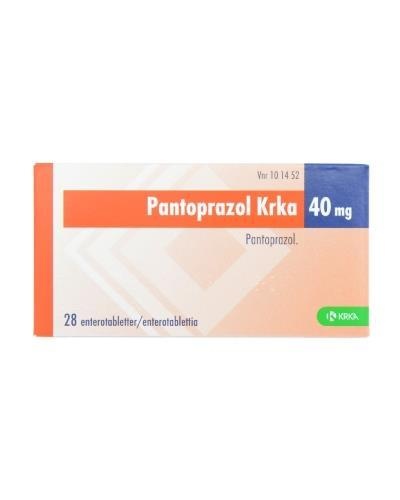
- Country of registration
- Dosage formTABLET, 40 mg
- ATC codeA02BC02
- Average pharmacy price17.48 EUR
- Active substance
- Prescription requiredYes
- Manufacturer
- CompositionMANITOL (E-421) (11.90 mg mg), CARBONATO DE SODIO ANHIDRO (10.00 mg mg), SORBITOL (36.00 mg mg), PROPILENGLICOL (4.00 mg mg)
- This information is for reference only and does not constitute medical advice. Always consult a doctor before taking any medication. Oladoctor is not responsible for medical decisions based on this content.
- Alternatives to PANTOPRAZOL KRKA 40 mg GASTRO-RESISTANT TABLETSDosage form: TABLET, 40 mgActive substance: pantoprazoleManufacturer: Especialidades Farmaceuticas Centrum S.A.Prescription requiredDosage form: TABLET, 20 mg pantoprazoleActive substance: pantoprazoleManufacturer: Takeda GmbhPrescription requiredDosage form: TABLET, 40 mg pantoprazoleActive substance: pantoprazoleManufacturer: Takeda GmbhPrescription required
Online doctors for PANTOPRAZOL KRKA 40 mg GASTRO-RESISTANT TABLETS
Discuss questions about PANTOPRAZOL KRKA 40 mg GASTRO-RESISTANT TABLETS, including use, safety considerations and prescription review, subject to medical assessment and local regulations.









Get PANTOPRAZOL KRKA 40 mg GASTRO-RESISTANT TABLETS Prescription Online
Fill in a 2-min form
Tell us your symptoms, history, and what medicine you're requesting.
Pick a doctor or let us assign
Choose a specialist or we'll match you with the next available doctor.
Doctor reviews your case
Usually within 30 minutes. They may ask follow-up questions via chat.
Collect from any pharmacy
Electronic prescription sent to your email — valid across Spain.
Frequently Asked Questions
PANTOPRAZOL KRKA 40 mg GASTRO-RESISTANT TABLETS requires a prescription in Spain. You can check with a doctor online whether this medicine may be appropriate for your situation.
The active ingredient in PANTOPRAZOL KRKA 40 mg GASTRO-RESISTANT TABLETS is pantoprazole. This information helps identify medicines with the same composition but different brand names.
The average pharmacy price for PANTOPRAZOL KRKA 40 mg GASTRO-RESISTANT TABLETS is around 17.48 EUR. Prices may vary depending on the manufacturer and dosage form.
PANTOPRAZOL KRKA 40 mg GASTRO-RESISTANT TABLETS is manufactured by Krka D.D. Novo Mesto. Pharmacy brands and packaging may differ depending on the distributor.
Doctors such as Family doctors, Psychiatrists, Dermatologists, Cardiologists, Endocrinologists, Gastroenterologists, Pulmonologists, Nephrologists, Rheumatologists, Hematologists, Infectious disease physicians, Allergists, Geriatricians, Paediatricians, Oncologists may assess whether PANTOPRAZOL KRKA 40 mg GASTRO-RESISTANT TABLETS is appropriate, depending on your situation and local regulations. You can book an online consultation to discuss your symptoms and possible next steps.
Spain has a well-developed healthcare infrastructure across major cities such as Madrid, Barcelona, Valencia, and Seville. Pharmacies are widely available and operate under strict regulations, ensuring access to prescribed medications.
You can buy PANTOPRAZOL KRKA 40 mg GASTRO-RESISTANT TABLETS in Madrid, Barcelona, Seville, or Valencia at any local pharmacy with a valid prescription.
To obtain a prescription, you can use Oladoctor:
Other medicines with the same active substance (pantoprazole) include ALAPANZOL 40 mg GASTRO-RESISTANT TABLETS, ANAGASTRA 20 mg GASTRO-RESISTANT TABLETS, ANAGASTRA 40 mg GASTRO-RESISTANT TABLETS. These may have different brand names or formulations but contain the same therapeutic ingredient. Always consult a doctor before switching or starting a new medicine.
