



OZAWADE 18 mg Film-Coated Tablets

Prescription review online
A doctor will review your case and decide whether a prescription is medically appropriate.

Talk to a doctor about this medicine
Discuss your symptoms and possible next steps in a quick online consultation.



How to use OZAWADE 18 mg FILM-COATED TABLETS
Contents of the leaflet
- Introduction
- What is Ozawade and what is it used for
- What you need to know before you take Ozawade
- How to take Ozawade
- Possible side effects
- Storage of Ozawade
- Contents of the pack and other information
Introduction
Package Leaflet: Information for the User
Ozawade 4.5 mg film-coated tablets
Ozawade 18 mg film-coated tablets
pitolisant
Read all of this leaflet carefully before you start taking this medicine because it contains important information for you.
- Keep this leaflet, you may need to read it again.
- If you have any further questions, ask your doctor or pharmacist.
- This medicine has been prescribed for you only. Do not pass it on to others. It may harm them, even if their signs of illness are the same as yours.
- If you get any side effects, talk to your doctor or pharmacist. This includes any possible side effects not listed in this leaflet. See section 4.
Contents of the pack
- What is Ozawade and what is it used for
- What you need to know before you take Ozawade
- How to take Ozawade
- Possible side effects
- Storage of Ozawade
- Contents of the pack and other information
1. What is Ozawade and what is it used for
Ozawade is a medicine that contains the active substance pitolisant.
Ozawade is used in adults with obstructive sleep apnea to treat excessive daytime sleepiness. It is used when sleepiness occurs despite treatment with positive airway pressure (CPAP) or in patients who have not tolerated CPAP treatment.
Obstructive sleep apnea (OSA) is a disease that stops breathing for at least 10 seconds during sleep. This can cause excessive daytime sleepiness and a tendency to fall asleep suddenly in inappropriate situations (sleep attacks).
The active substance, pitolisant, acts on the receptors (targets) of brain cells that are involved in the stimulation of the alertness state. This effect helps to reduce daytime sleepiness and fatigue.

Not sure if this medicine is right for you?
Discuss your symptoms and treatment with a doctor online.
2. What you need to know before you take Ozawade
Do not take Ozawade
- If you are allergic to pitolisant or any of the other ingredients of this medicine (listed in section 6).
- If you have severe liver problems, as pitolisant is usually broken down in the liver and it is possible that high levels of this substance may accumulate in patients with severely impaired liver function.
- If you are breastfeeding.
Warnings and precautions
Consult your doctor before starting to take Ozawade if you are in any of these situations:
- If you have ever had anxiety or depression with suicidal ideas.
- You have liver or kidney problems, as the dose may need to be adjusted.
- If you have a stomach ulcer or take any medicine that may irritate the stomach, such as anti-inflammatory medicines, as digestive reactions may occur with Ozawade.
- If you are severely overweight or underweight, as your weight may increase or decrease while taking Ozawade.
- If you have heart problems. Your doctor should regularly check these aspects during treatment with Ozawade.
- If you have severe epilepsy.
If you are in any of these situations, consult your doctor or pharmacist before taking Ozawade.
Ozawade does not replace the primary treatment of OSA, such as CPAP. You should continue to use this treatment, in addition to Ozawade.
Children and adolescents
Ozawade should not be given to children or adolescents.
Other medicines and Ozawade
Tell your doctor or pharmacist if you are taking, have recently taken or might take any other medicines. Ozawade may affect the way other medicines work and other medicines may affect the way Ozawade works. Your doctor may need to adjust the dose.
Tell your doctor or pharmacist if you are taking any of the following medicines:
- antidepressant medicines such as clomipramine, duloxetine, fluoxetine, imipramine, mirtazapina, paroxetine, and venlafaxine;
- bupropion, used as an antidepressant or to help stop smoking;
- allergy medicines, called antihistamines, such as pheniramine maleate, chlorpheniramine, diphenhydramine, promethazine, mepyramine, and doxylamine;
- rifampicin, an antibiotic used to treat tuberculosis and other infections;
- epilepsy medicines (to prevent seizures), such as carbamazepine, phenobarbital, and phenytoin;
- heart medicines, such as digoxin and quinidine;
- St. John's Wort (Hypericum perforatum), a herbal remedy for depression;
- cinacalcet, used to treat parathyroid gland disorders;
- terbinafine, used to treat fungal infections;
- diabetes medicines, such as metformin and repaglinide;
- cancer medicines, such as docetaxel and irinotecan;
- cisapride, used to treat stomach reflux;
- pimozide, used to treat some mental disorders;
- halofantrine, used to treat malaria;
- efavirenz, an antiviral medicine to treat HIV infection;
- morphine, used to treat acute pain;
- paracetamol, used to treat pain;
- blood-thinning medicines (medicines that prevent blood clots), such as dabigatran and warfarin;
- probenecid, used to treat gout;
- medicines to treat pain, inflammation, and fever, such as acetylsalicylic acid, diclofenac, ibuprofen, meloxicam, and naproxen;
- hormonal contraceptives (contraceptive medicines), see also the section "Pregnancy" below.
Pregnancy and breastfeeding
If you are pregnant or breastfeeding, think you may be pregnant or are planning to have a baby, ask your doctor or pharmacist for advice before taking this medicine.
Pregnancy
Do not take Ozawade during pregnancy unless you and your doctor decide that you need to take it. There is not enough information on the risk of taking Ozawade during pregnancy. If you are a woman, you should use a safe contraceptive method during treatment with Ozawade and for at least 21 days after stopping treatment. Since Ozawade may reduce the effectiveness of hormonal contraceptives (contraceptive medicines), you should use another safe contraceptive method.
Breastfeeding
You should stop breastfeeding when you start taking Ozawade. Ozawade passes into animal milk.
Driving and using machines
You may feel sleepy or your ability to concentrate may be affected. Be careful when performing activities that require attention, such as driving cars and using machines. Talk to your doctor or pharmacist if you are not sure how your disorder may affect your ability to drive.
3. How to take Ozawade
Follow exactly the administration instructions of this medicine given by your doctor or pharmacist. If you are in doubt, consult your doctor or pharmacist again.
Treatment usually starts with a dose of 4.5 mg once a day and is gradually increased over three weeks to reach the most suitable dose. At any time, your doctor may increase or decrease the dose based on the patient's response and tolerance to the medicine. The maximum daily dose is 36 mg.
It may take several days before the effects of the medicine are noticed and the maximum benefit is usually seen after several weeks of treatment.
Do not change the dose of Ozawade on your own. Any change in the dosage should be prescribed and supervised by your doctor.
For a dose of 4.5 mg, take one 4.5 mg tablet.
For a dose of 9 mg, take two 4.5 mg tablets.
For a dose of 18 mg, take one 18 mg tablet.
For a dose of 36 mg, take two 18 mg tablets.
Ozawade should be taken once a day by mouth, in the morning during breakfast.
Ozawade should not be taken in the afternoon, as the patient may have difficulty sleeping.
If you take more Ozawade than you should
If you took too many Ozawade tablets, contact the emergency department of the nearest hospital or consult your doctor or pharmacist immediately. You may experience headache, stomach pain, nausea, or irritability. You may also have difficulty sleeping. Bring this leaflet and the remaining tablets with you.
If you forget to take Ozawade
If you forgot to take the medicine, take the next dose at the usual time, do not take a double dose to make up for forgotten doses.
If you stop taking Ozawade
You should continue to take Ozawade for the time prescribed by your doctor. Do not stop taking Ozawade suddenly on your own.
If you have any other questions on the use of this medicine, ask your doctor or pharmacist.

Started taking the medicine and have questions?
Discuss your symptoms and treatment with a doctor online.
4. Possible side effects
Like all medicines, this medicine can cause side effects, although not everybody gets them.
Common side effects(may affect up to 1 in 10 people):
- Headache
- Difficulty sleeping, sleep problems, feeling anxious
- Feeling of spinning (vertigo)
- Nausea, abdominal discomfort (stomach)
Uncommon side effects(may affect up to 1 in 100 people):
- Upper respiratory tract viral infection (common cold), cold sores
- Changes in bleeding tests, abnormal blood values related to liver function, increased blood pressure, increased blood cholesterol levels
- Intolerance to alcohol, increased appetite, low blood sugar, change in body weight
- Irritability, confusion, fear, panic reaction, altered or increased sexual interest, depression, nervousness
- Loss of balance, sleep rhythm disorder, taste disturbance, sudden and unpredictable phases of mobility and immobility, migraine, sleep paralysis, loss of ability to perform physical activities
- Swollen eyelid, dry eye, presence of flashes of light or floating spots in vision
- Ringing or buzzing in the ear
- Irregular heartbeat, palpitations, rapid heart rate, abnormal heart rate
- Flushing, high blood pressure, sudden increase in blood pressure
- Diarrhea, constipation, dry mouth, gastrointestinal disorders, inflammation of the gastrointestinal tract, change in stool color, bad breath, flatulence, rectal bleeding, increased saliva secretion
- Skin rash, itching on the face, skin redness, cold sweats, excessive sweating, night sweats, abnormal increased sensitivity of the skin to sunlight
- Discomfort in arms and legs, muscle spasms, muscle pain, joint pain, tendon pain
- Frequent urination
- Pain and discomfort, fatigue, feeling of heat, thirst, swelling of legs or hands
Reporting of side effects
If you experience any side effects, talk to your doctor or pharmacist. This includes any possible side effects not listed in this leaflet. You can also report side effects directly via the national reporting system listed in Appendix V. By reporting side effects, you can help provide more information on the safety of this medicine.
5. Storage of Ozawade
Keep this medicine out of the sight and reach of children.
Do not use this medicine after the expiry date which is stated on the carton after EXP. The expiry date is the last day of the month shown.
This medicine does not require any special storage conditions.
Medicines should not be disposed of via wastewater or household waste. Ask your pharmacist how to dispose of medicines no longer required. This will help protect the environment.
6. Contents of the pack and other information
What Ozawade contains
The active substance is pitolisant.
Ozawade 4.5 mg tablets
Each tablet contains pitolisant hydrochloride equivalent to 4.45 mg of pitolisant.
Ozawade 18 mg tablets
Each tablet contains pitolisant hydrochloride equivalent to 17.8 mg of pitolisant.
The other ingredients are microcrystalline cellulose, crospovidone, talc, magnesium stearate, anhydrous colloidal silica, polyvinyl alcohol, titanium dioxide, and macrogol 3350.
Appearance and packaging
Ozawade 4.5 mg is presented in white, round, biconvex film-coated tablets, 3.7 mm in diameter, and marked with "5" on one side.
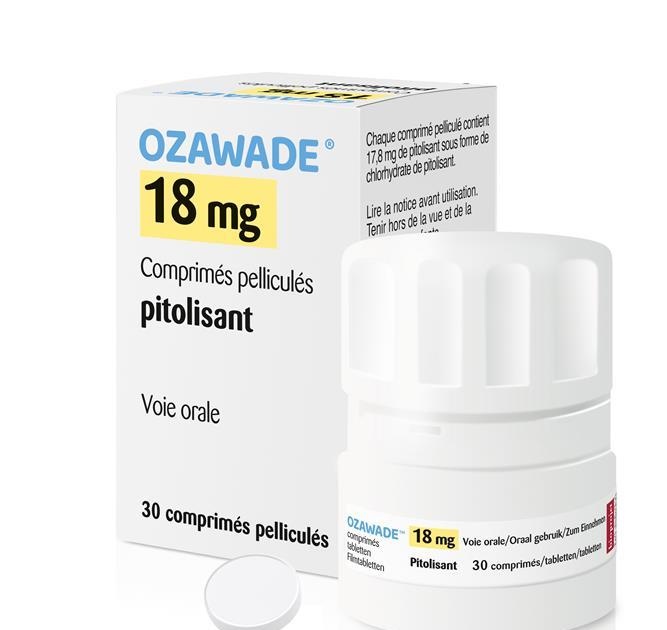
Ozawade 18 mg is presented in white, round, biconvex film-coated tablets, 7.5 mm in diameter, and marked with "20" on one side.
Ozawade is marketed in a bottle of 30 tablets or 90 tablets.
Ozawade 4.5 mg: Available in packs containing 1 bottle of 30 tablets or packs containing 1 bottle of 90 tablets.
Ozawade 18 mg: Available in packs containing 1 bottle of 30 tablets or packs containing 1 bottle of 90 tablets.
Not all pack sizes may be marketed.
Marketing authorisation holder
Bioprojet Pharma
9, rue Rameau
75002 Paris
France
Manufacturer
Ozawade 18 mg
Inpharmasci
ZI N°2 de Prouvy-Rouvignies
1 rue Nungesser
59121 Prouvy
France
Ozawade 4.5 mg
Patheon
40 Boulevard de Champaret
38300 Bourgoin-Jallieu
France
You can request more information about this medicine from the local representative of the marketing authorisation holder:
België/Belgique/Belgien Bioprojet Benelux 0032(0)78050202 | Lietuva Bioprojet Pharma 0033 (0)1 47 03 66 33 |
Bioprojet Pharma 0033 (0)1 47 03 66 33 | Luxembourg/Luxemburg Bioprojet Benelux 0032(0)78050202 |
Ceská republika Bioprojet Pharma 0033 (0)1 47 03 66 33 | Magyarország Bioprojet Pharma 0033 (0)1 47 03 66 33 |
Danmark Zambon Sweden, filial of Zambon Nederland B.V. +46 (0)10 33 50 800 | Malta Bioprojet Pharma 0033 (0)1 47 03 66 33 |
Deutschland Bioprojet Deutschland GmbH 030/3465 5460-0 | Nederland Bioprojet Benelux N.V. 088 34 34 100 |
Eesti Bioprojet Pharma 0033 (0)1 47 03 66 33 | Norge Zambon Sweden, filial of Zambon Nederland B.V. +46 (0)10 33 50 800 |
Ελλáδα Bioprojet Pharma 0033 (0)1 47 03 66 33 | Österreich Bioprojet Pharma 0033 (0)1 47 03 66 33 |
España Bioprojet Pharma 0033 (0)1 47 03 66 33 | Polska Bioprojet Pharma 0033 (0)1 47 03 66 33 |
Francia Bioprojet Pharma 0033 (0)1 47 03 66 33 | Portugal Bioprojet Pharma 0033 (0)1 47 03 66 33 |
Hrvatska Bioprojet Pharma 0033 (0)1 47 03 66 33 | Ireland Bioprojet Pharma 0033 (0)1 47 03 66 33 |
România Bioprojet Pharma 0033 (0)1 47 03 66 33 | Slovenija Bioprojet Pharma 0033 (0)1 47 03 66 33 |
Ísland Bioprojet Pharma 0033 (0)1 47 03 66 33 | Slovenská republika Bioprojet Pharma 0033 (0)1 47 03 66 33 |
Italia Bioprojet Italia srl +39 02 84254830 | Suomi/Finland Bioprojet Pharma 0033 (0)1 47 03 66 33 |
Κúπρος Bioprojet Pharma 0033 (0)1 47 03 66 33 | Sverige Zambon Sweden, filial of Zambon Nederland B.V. +46 (0)10 33 50 800 |
Latvija Bioprojet Pharma 0033 (0)1 47 03 66 33 | United Kingdom (Northern Ireland) Bioprojet Pharma 0033 (0)1 47 03 66 33 |
Date of last revision of this leaflet:
Other sources of information
Detailed information on this medicine is available on the European Medicines Agency website:
http://www.ema.europa.eu.
The leaflet for this medicine can be found on the European Medicines Agency website in all languages of the European Union/European Economic Area.
- Country of registration
- Dosage formTABLET, 18 mg
- ATC codeN07XX11
- Active substance
- Prescription requiredYes
- Manufacturer
- This information is for reference only and does not constitute medical advice. Always consult a doctor before taking any medication. Oladoctor is not responsible for medical decisions based on this content.
- Alternatives to OZAWADE 18 mg FILM-COATED TABLETSDosage form: TABLET, 4.5 mgActive substance: pitolisantManufacturer: Bioprojet PharmaPrescription requiredDosage form: TABLET, 18 mgActive substance: pitolisantManufacturer: Bioprojet PharmaPrescription requiredDosage form: TABLET, 4.5 mgActive substance: pitolisantManufacturer: Bioprojet PharmaPrescription required
Online doctors for OZAWADE 18 mg FILM-COATED TABLETS
Discuss questions about OZAWADE 18 mg FILM-COATED TABLETS, including use, safety considerations and prescription review, subject to medical assessment and local regulations.









Get OZAWADE 18 mg FILM-COATED TABLETS Prescription Online
Fill in a 2-min form
Tell us your symptoms, history, and what medicine you're requesting.
Pick a doctor or let us assign
Choose a specialist or we'll match you with the next available doctor.
Doctor reviews your case
Usually within 30 minutes. They may ask follow-up questions via chat.
Collect from any pharmacy
Electronic prescription sent to your email — valid across Spain.
Frequently Asked Questions
OZAWADE 18 mg FILM-COATED TABLETS requires a prescription in Spain. You can check with a doctor online whether this medicine may be appropriate for your situation.
The active ingredient in OZAWADE 18 mg FILM-COATED TABLETS is pitolisant. This information helps identify medicines with the same composition but different brand names.
OZAWADE 18 mg FILM-COATED TABLETS is manufactured by Bioprojet Pharma. Pharmacy brands and packaging may differ depending on the distributor.
Doctors such as Family doctors, Psychiatrists, Dermatologists, Cardiologists, Endocrinologists, Gastroenterologists, Pulmonologists, Nephrologists, Rheumatologists, Hematologists, Infectious disease physicians, Allergists, Geriatricians, Paediatricians, Oncologists may assess whether OZAWADE 18 mg FILM-COATED TABLETS is appropriate, depending on your situation and local regulations. You can book an online consultation to discuss your symptoms and possible next steps.
Spain has a well-developed healthcare infrastructure across major cities such as Madrid, Barcelona, Valencia, and Seville. Pharmacies are widely available and operate under strict regulations, ensuring access to prescribed medications.
You can buy OZAWADE 18 mg FILM-COATED TABLETS in Madrid, Barcelona, Seville, or Valencia at any local pharmacy with a valid prescription.
To obtain a prescription, you can use Oladoctor:
Other medicines with the same active substance (pitolisant) include OZAWADE 4.5 mg FILM-COATED TABLETS, WAKIX 18 mg FILM-COATED TABLETS, WAKIX 4.5 mg FILM-COATED TABLETS. These may have different brand names or formulations but contain the same therapeutic ingredient. Always consult a doctor before switching or starting a new medicine.
