



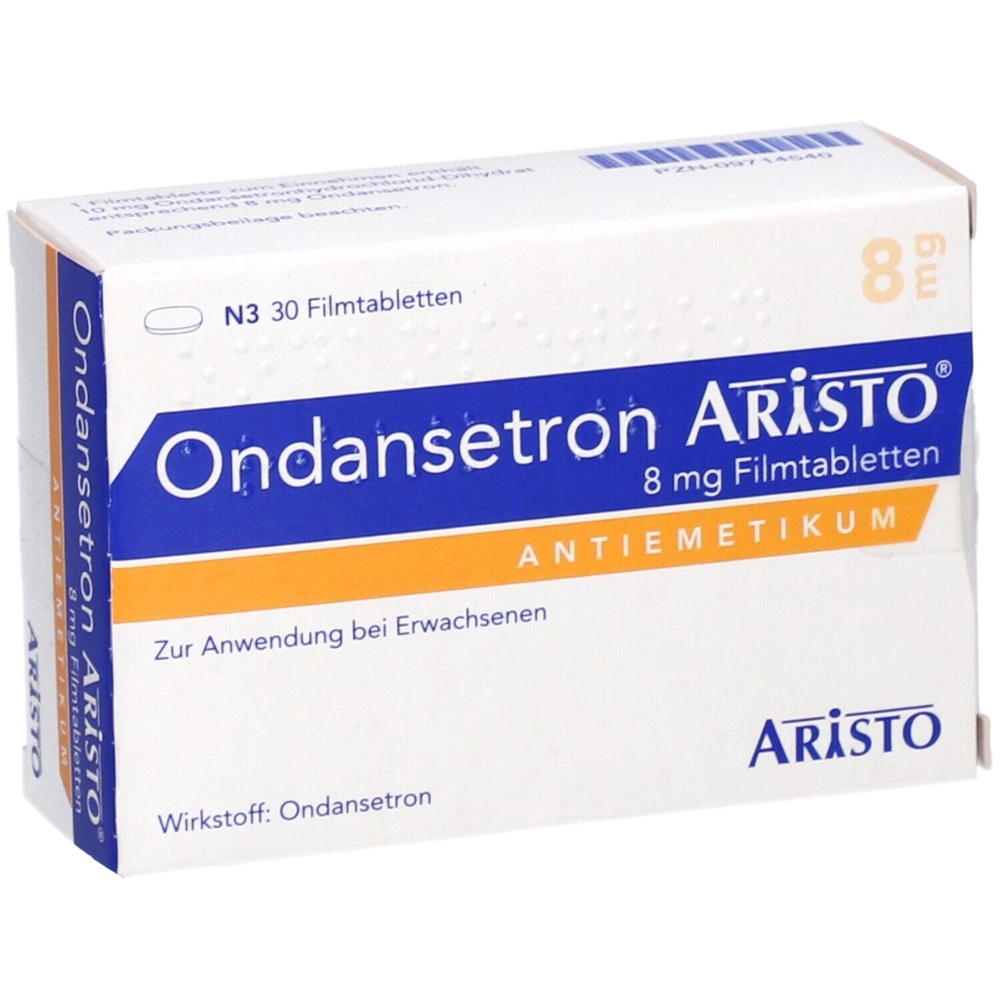
ONDANSETRON 8 mg Film-Coated Tablets

Prescription review online
A doctor will review your case and decide whether a prescription is medically appropriate.

Talk to a doctor about this medicine
Discuss your symptoms and possible next steps in a quick online consultation.



How to use ONDANSETRON ARISTO 8 mg FILM-COATED TABLETS
Contents of the leaflet
- Introduction
- What is Ondansetron Aristo and what is it used for
- What you need to know before you take Ondansetron Aristo
- How to take Ondansetron Aristo
- Possible side effects
- Storage of Ondansetron Aristo
- Contents of the pack and other information
Introduction
Package Leaflet: Information for the Patient
Ondansetron Aristo 8 mg Film-Coated Tablets EFG
Read all of this leaflet carefully before you start taking this medicine because it contains important information for you.
- Keep this leaflet, you may need to read it again.
- If you have any further questions, ask your doctor or pharmacist.
- This medicine has been prescribed for you only. Do not pass it on to others. It may harm them, even if their signs of illness are the same as yours.
- If you get any side effects, talk to your doctor or pharmacist. This includes any possible side effects not listed in this leaflet. See section 4.
Contents of the pack
- What is Ondansetron Aristo and what is it used for
- What you need to know before you take Ondansetron Aristo
- How to take Ondansetron Aristo
- Possible side effects
- Storage of Ondansetron Aristo
- Contents of the pack and other information
1. What is Ondansetron Aristo and what is it used for
Ondansetron Aristo belongs to a group of medicines called serotonin receptor antagonists (5-HT3). These have the ability to block the action of a chemical substance known as serotonin, which can cause nausea and vomiting.
Ondansetron Aristo is used to treat nausea and vomiting caused by cytostatics (cancer treatment medications) and radiotherapy. It is also used to prevent nausea and vomiting after an operation.

Not sure if this medicine is right for you?
Discuss your symptoms and treatment with a doctor online.
2. What you need to know before you take Ondansetron Aristo
Do not take Ondansetron Aristo
- if you are allergic to ondansetron or any of the other ingredients of this medicine (listed in section 6).
- if you are taking apomorphine (a medicine used to treat Parkinson's disease).
Do not giveOndansetron Aristo 8 mg film-coated tablets to children.
Warnings and precautions
Consult your doctor or pharmacist before starting to take Ondansetron Aristo if:
- you are allergic (hypersensitive) to medicines (5-HT3 receptor antagonists) similar to ondansetron,
- you have heart problems, including irregular heartbeat (arrhythmia),
- you are taking certain medicines for treating depression and/or anxiety (selective serotonin reuptake inhibitors [SSRIs] such as fluoxetine, paroxetine, sertraline, fluvoxamine, citalopram, and escitalopram or serotonin and noradrenaline reuptake inhibitors [SNRIs] such as venlafaxine or duloxetine) or if you are taking buprenorphine, a medicine used to treat pain. The use of these medicines with Ondansetron Aristo may cause serotonin syndrome, a potentially life-threatening disease. You may experience symptoms such as involuntary rhythmic contractions of muscles, including the muscles that control eye movements, agitation, hallucinations, coma, excessive sweating, tremors, exaggerated reflexes, increased muscle tension, body temperature above 38 °C. Contact your doctor if you suffer from these symptoms,
- you have digestive disorders,
- you have liver problems, in which case your doctor may reduce your dose of ondansetron,
- you have problems with salt levels in the blood (electrolyte disorders), such as potassium and magnesium.
- you are going to have your tonsils removed
If you think any of the above applies to you, do not take Ondansetron Aristo until you have consulted your doctor.
Other medicines and Ondansetron Aristo
Tell your doctor or pharmacist if you are taking, have recently taken, or might take any other medicines.
Some medicines may alter the effects and/or side effects of Ondansetron Aristo, or Ondansetron Aristo may alter the effects and/or side effects of some medicines. These include:
- apomorphine (a medicine used to treat Parkinson's disease), as a pronounced decrease in blood pressure and loss of consciousness have been reported with the administration of ondansetron with apomorphine
- carbamazepine, phenytoin (medicines used to treat epilepsy)
- rifampicin, an antibiotic for tuberculosis
- medicines that affect the heart, such as certain cancer medicines (anthracyclines and trastuzumab) or medicines that prolong the QT interval (a delay in the transmission of impulses in the heart muscle, visible on the ECG, with the risk of potentially fatal heart rhythm disorders)
- tramadol or buprenorphine, medicines used to treat pain (see section "Warnings and precautions")
- selective serotonin reuptake inhibitors (SSRIs) used to treat depression and/or anxiety, such as fluoxetine, paroxetine, sertraline, fluvoxamine, citalopram, or escitalopram; serotonin and noradrenaline reuptake inhibitors (SNRIs) used to treat depression and/or anxiety, such as venlafaxine or duloxetine (see section "Warnings and precautions").
Pregnancy, breastfeeding, and fertility
Ondansetron Aristo should not be used during the first trimester of pregnancy. This is because Ondansetron Aristo may slightly increase the risk of a baby being born with a cleft lip and/or cleft palate (openings or fissures in the upper lip or palate). If you are already pregnant, think you may be pregnant, or plan to become pregnant, consult your doctor or pharmacist before using Ondansetron Aristo. If you are a woman of childbearing age, you are advised to use an effective method of contraception.
Do not breastfeed your child while taking Ondansetron Aristo.
Driving and using machines
Ondansetron Aristo is unlikely to affect your ability to drive or use machines.
Ondansetron Aristo contains lactose
If your doctor has told you that you have an intolerance to some sugars, consult them before taking this medicine.
3. How to take Ondansetron Aristo
Follow exactly the instructions for administration of this medicine given by your doctor. In case of doubt, consult your doctor or pharmacist again.
The recommended dose is:
To protect you from nausea and vomiting during and after cancer treatment with cytostatic agents (chemotherapy) or radiotherapy:
Adults
On the day of chemotherapy or radiotherapy:
The recommended dose of Ondansetron Aristo is 8 mg of ondansetron one or two hours before treatment, and then 8 mg of ondansetron twelve hours later.
In the following days:
In the following days, you will receive ondansetron in the form of film-coated tablets, orodispersible tablets (which dissolve in the mouth), or as a solution. Always use this medicine exactly as described in this leaflet or as your doctor or nurse has told you.
The recommended dose is 8 mg of ondansetron twice a day every 12 hours for 5 days.
Use in children (6 months or older) and adolescents
On the day of chemotherapy:
For children and adolescents, ondansetron is available as an injectable solution for correct intravenous dosing as a slow injection into a vein for at least 30 seconds before treatment.
In the following days, ondansetron is administered as film-coated tablets, orodispersible tablets, or as a solution:
Your doctor will decide what dose of ondansetron is suitable for your child, depending on the child's size (body surface area) and weight. The maximum dose is 8 mg of ondansetron twice a day every 12 hours for 5 days.
Ondansetron Aristo 8 mg film-coated tablets should not be used in children. For this group of patients, there are other dosage forms available with a lower level of active substance.
For the treatment of nausea and vomiting caused by radiotherapy, there are no data available from controlled clinical studies on the use of ondansetron in children.
Elderly patients
No dose adjustment or change in dosing frequency is required.
Prevention of nausea and vomiting (post-operative nausea and vomiting):
Adults
Unless your doctor indicates otherwise, the recommended dose is 16 mg of Ondansetron Aristo one hour before anesthesia.
Use in children and adolescents
Your doctor may decide to administer an injection instead of tablets.
Elderly patients
Experience with ondansetron in the prevention of nausea and vomiting after an operation in elderly patients is limited.
Patient with hepatic impairment
In patients with moderate to severe hepatic impairment, the total daily dose should not exceed 8 mg.
Method of administration
Oral use.
If you take more Ondansetron Aristo than you should
If you or your child take more Ondansetron Aristo than you should, talk to your doctor or go immediately to the nearest hospital or call the Toxicology Information Service, telephone 91 562 04 20 (indicating the medicine and the amount taken). Bring the medicine with you.
If you forget to take Ondansetron Aristo
Do not take a double dose to make up for forgotten doses. If you forget a dose and have nausea or vomiting, take another dose as soon as possible. Then, continue taking the medicine as instructed.
If you are not sure what to do, consult your doctor or pharmacist.
If you stop taking Ondansetron Aristo
Take Ondansetron Aristo for as long as your doctor recommends. Do not stop treatment unless your doctor tells you to.
If you have any further questions on the use of this medicine, ask your doctor or pharmacist.

Started taking the medicine and have questions?
Discuss your symptoms and treatment with a doctor online.
4. Possible side effects
Like all medicines, this medicine can cause side effects, although not everybody gets them.
Severe allergic reactions
If you get any of the following side effects, stop taking the tablets and tell your doctor immediately:
- rash or itching (urticaria)
- swelling, sometimes in the face or mouth (angioedema), which can cause difficulty breathing
- collapse
Severe skin reactions
If you get any of the following side effects, stop taking the tablets and tell your doctor immediately:
- widespread skin rash with blisters and peeling affecting a large area of the body surface (toxic epidermal necrolysis)
Myocardial ischemia
If you get any of the following side effects, stop taking the tablets and tell your doctor immediately:
- sudden chest pain or
- chest tightness
Other side effects:
Very common:may affect more than 1 in 10 people treated
- headache
Common:may affect up to 1 in 10 people treated
- feeling of flushing, hot flushes with skin reddening
- constipation
Uncommon:may affect up to 1 in 100 people treated
- seizures
- movement disorders or spasms (including extrapyramidal reactions, such as muscle tone disorders, eye muscle disorders [oculogyric crisis], and motor disorders), but it has been shown that these have no long-term clinical consequences
- chest pain (with or without ST segment depression on the ECG)
- irregular or slow heartbeats (heart rhythm disorders, bradycardia)
- low blood pressure (hypotension)
- hypokalemia
- increased liver enzymes (increased liver function tests)
Rare:may affect up to 1 in 1,000 people treated
- allergic reactions
- heart rhythm disorders (prolongation of the QT interval, including torsades de pointes, which can cause sudden loss of consciousness)
- temporary visual disturbances (e.g., blurred vision), mainly with intravenous administration, mainly with rapid intravenous administration
- drowsiness, mainly with rapid intravenous administration
Very rare:may affect up to 1 in 10,000 people treated
- transient blindness, mainly with intravenous administration
Not known:frequency cannot be estimated from the available data
- myocardial ischemia
Side effects in children and adolescents
The side effect profile in children and adolescents was comparable to the side effect profile observed in adults.
Reporting of side effects
If you experience any side effects, talk to your doctor or pharmacist. This includes any possible side effects not listed in this leaflet. You can also report side effects directly via the Spanish Medicines Surveillance System for Human Use: www.notificaRAM.es. By reporting side effects, you can help provide more information on the safety of this medicine.
5. Storage of Ondansetron Aristo
Keep this medicine out of the sight and reach of children.
This medicine does not require any special storage conditions.
Do not use this medicine after the expiry date which is stated on the carton and blister after "EXP". The expiry date is the last day of the month shown.
Medicines should not be disposed of via wastewater or household waste. Ask your pharmacist how to dispose of medicines no longer required. These measures will help protect the environment.
6. Contents of the pack and other information
Composition of Ondansetron Aristo
The active substance is ondansetron hydrochloride dihydrate.
Each film-coated tablet contains 8 mg of ondansetron (as ondansetron hydrochloride dihydrate).
The other ingredients are:
Core of the tablet:
Lactose
Microcrystalline cellulose
Pregelatinized corn starch
Magnesium stearate (Ph. Eur.)
Tablet film coating:
Hypromellose
Triacetin
Titanium dioxide (E 171)
Yellow iron oxide
Appearance and packaging
Film-coated tablets.
Yellow, oval, film-coated tablets, printed with an "E" on one side and "02" on the other.
Ondansetron Aristo 8 mg film-coated tablets are available in packs of 4, 5, 6, 10, 15, 30, 49, 50, and 100 tablets.
Not all pack sizes may be marketed.
Marketing authorisation holder and manufacturer
Aristo Pharma GmbH
Wallenroder Straße 8-10
13435 Berlin
Germany
Local representative
Aristo Pharma Iberia, S.L.
C/Solana, 26
28850 Torrejón de Ardoz, Madrid
Spain
This medicine is authorised in the Member States of the European Economic Area under the following names:
Norway | Ondansetron Aristo 8 mg film-coated tablets |
Spain | Ondansetron Aristo 8 mg film-coated tablets EFG |
Sweden | Ondansetron Aristo 8 mg film-coated tablets |
Date of last revision of this leaflet: June 2022
Detailed and updated information on this medicine is available on the website of the Spanish Agency for Medicines and Health Products (AEMPS) http://www.aemps.gob.es/
- Country of registration
- Dosage formTABLET, 8 mg
- ATC codeA04AA01
- Active substance
- Prescription requiredYes
- Manufacturer
- CompositionLACTOSA ANHIDRA (38.274 mg mg)
- This information is for reference only and does not constitute medical advice. Always consult a doctor before taking any medication. Oladoctor is not responsible for medical decisions based on this content.
- Alternatives to ONDANSETRON ARISTO 8 mg FILM-COATED TABLETSDosage form: INJECTABLE, 2 mg/mLActive substance: ondansetronManufacturer: Accord Healthcare S.L.U.Prescription requiredDosage form: ORALLY DISINTEGRATING TABLET/LIOTAB, 4 mgActive substance: ondansetronManufacturer: Aristo Pharma Iberia S.L.Prescription requiredDosage form: ORALLY DISINTEGRATING TABLET/LIOTAB, 8 mgActive substance: ondansetronManufacturer: Aristo Pharma Iberia S.L.Prescription required
Online doctors for ONDANSETRON ARISTO 8 mg FILM-COATED TABLETS
Discuss questions about ONDANSETRON ARISTO 8 mg FILM-COATED TABLETS, including use, safety considerations and prescription review, subject to medical assessment and local regulations.









Get ONDANSETRON ARISTO 8 mg FILM-COATED TABLETS Prescription Online
Fill in a 2-min form
Tell us your symptoms, history, and what medicine you're requesting.
Pick a doctor or let us assign
Choose a specialist or we'll match you with the next available doctor.
Doctor reviews your case
Usually within 30 minutes. They may ask follow-up questions via chat.
Collect from any pharmacy
Electronic prescription sent to your email — valid across Spain.
Frequently Asked Questions
ONDANSETRON ARISTO 8 mg FILM-COATED TABLETS requires a prescription in Spain. You can check with a doctor online whether this medicine may be appropriate for your situation.
The active ingredient in ONDANSETRON ARISTO 8 mg FILM-COATED TABLETS is ondansetron. This information helps identify medicines with the same composition but different brand names.
ONDANSETRON ARISTO 8 mg FILM-COATED TABLETS is manufactured by Aristo Pharma Gmbh. Pharmacy brands and packaging may differ depending on the distributor.
Doctors such as Family doctors, Psychiatrists, Dermatologists, Cardiologists, Endocrinologists, Gastroenterologists, Pulmonologists, Nephrologists, Rheumatologists, Hematologists, Infectious disease physicians, Allergists, Geriatricians, Paediatricians, Oncologists may assess whether ONDANSETRON ARISTO 8 mg FILM-COATED TABLETS is appropriate, depending on your situation and local regulations. You can book an online consultation to discuss your symptoms and possible next steps.
Spain has a well-developed healthcare infrastructure across major cities such as Madrid, Barcelona, Valencia, and Seville. Pharmacies are widely available and operate under strict regulations, ensuring access to prescribed medications.
You can buy ONDANSETRON ARISTO 8 mg FILM-COATED TABLETS in Madrid, Barcelona, Seville, or Valencia at any local pharmacy with a valid prescription.
To obtain a prescription, you can use Oladoctor:
Other medicines with the same active substance (ondansetron) include ONDANSETRON ACCORD 2 mg/ml INJECTABLE SOLUTION, ONDANSETRON ARISTO 4 mg ORALLY DISINTEGRATING TABLETS, ONDANSETRON ARISTO 8 mg ORALLY DISINTEGRATING TABLETS. These may have different brand names or formulations but contain the same therapeutic ingredient. Always consult a doctor before switching or starting a new medicine.
