






How to use OFLOVIR 200 mg FILM-COATED TABLETS
Translated with AI
This page provides general information and does not replace a doctor’s consultation. Always consult a doctor before taking any medication. Seek urgent medical care if symptoms are severe.
Show originalContents of the leaflet
Introduction
Package Leaflet: Information for the Patient
OFLOVIR 200 mg Film-Coated Tablets
Ofloxacin
Read the entire package leaflet carefully before starting to take this medication, as it contains important information for you.
- Keep this package leaflet, as you may need to read it again.
- If you have any questions, consult your doctor or pharmacist.
- This medication has been prescribed to you only, and you should not give it to others, even if they have the same symptoms as you, as it may harm them.
- If you experience side effects, consult your doctor or pharmacist, even if they are not listed in this package leaflet. See section 4.
Contents of the Package Leaflet
- What is OFLOVIR and what is it used for
- What you need to know before taking OFLOVIR
- How to take OFLOVIR
- Possible side effects
- Storage of OFLOVIR
- Package Contents and Additional Information
1. What is OFLOVIR and what is it used for
Ofloxacin is an antibiotic that belongs to the group of quinolones.
It works by eliminating the bacteria that cause infections.
Antibiotics are used to treat bacterial infections and are not effective against viral infections such as the flu or the common cold.
It is essential to follow the instructions regarding dosage, administration interval, and treatment duration indicated by your doctor.
Do not store or reuse this medication. If you have any leftover antibiotic after completing treatment, return it to the pharmacy for proper disposal. Do not throw away medications down the drain or in the trash.
OFLOVIR is indicated for the treatment of the following bacterial infections:
- Respiratory tract infections, including pneumonia and bronchitis
- Skin and soft tissue infections
- Urinary tract infections
- Prostate infections
- Cervical and urethral infections
- Epididymitis (infection of the epididymis, a structure that is part of the testicle)
- Traveler's diarrhea
- Infection of the female reproductive system (Pelvic Inflammatory Disease)

2. What you need to know before taking OFLOVIR
Do not take OFLOVIR:
- If you are allergic to ofloxacin, other quinolones (the group of antibiotics to which ofloxacin belongs), or any of the other components of this medication (listed in section 6).
If you have a history of epilepsy or tend to have epileptic seizures as a result of brain damage.
- If you have suffered any damage or disease in the tendons after administration of quinolones.
- If the patient is a child or young person in the growth phase.
If you are pregnant or breastfeeding (see sections "Pregnancy and Breastfeeding").
Warnings and Precautions
Before starting to take this medication
Do not take antibacterial medications that contain fluoroquinolones or quinolones, including Oflovir, if you have experienced any severe adverse reaction prior to taking a quinolone or fluoroquinolone. If this is the case, inform your doctor as soon as possible.
Consult your doctor or pharmacist before starting to take Oflovir:
If you have an allergic reaction (signs may include: skin rash, difficulty swallowing or breathing, swelling of lips, face, throat, or tongue), you should consult your doctor immediately.
If you experience severe, prolonged, and/or bloody diarrhea during or after treatment with OFLOVIR, as it may be due to a special type of colitis called pseudomembranous colitis (an intestinal infection that can cause stomach pain, fever, and diarrhea), which can be severe. In this case, you should consult your doctor immediately.
If you have a predisposition to epileptic seizures, caused by brain damage or because you are being treated with anti-inflammatory drugs (such as fenbufen) or theophylline. In these cases, OFLOVIR should only be administered with maximum caution.
If you have a history of psychotic disorders, as they can progress to thoughts of self-harm or suicide, including suicide attempts.
If you have a history of abnormal heart rhythm. This medication should be taken with caution if you were born with or have a family history of prolonged QT interval (seen on an ECG, an electrical recording of your heart), have electrolyte imbalance in the blood (especially low levels of potassium or magnesium in the blood), have a very slow heart rate (called bradycardia), have a weak heart (heart failure), have a history of heart attack (myocardial infarction), are female or elderly, or are taking other medications that can result in abnormal changes on the ECG (see section "Taking other medications").
If you have a family history or personal history of deficiency in the activity of the enzyme glucose-6-phosphate dehydrogenase (congenital or acquired metabolic disorder).
If you have liver dysfunction, use Oflovir only under the supervision of a doctor.
If you have kidney failure, your doctor will need to adjust the dose.
If you are taking medications to thin your blood (such as vitamin K antagonists, e.g., warfarin), your doctor should monitor your coagulation tests (prothrombin time/INR), as they may be increased.
If you are a diabetic patient taking medications to reduce blood sugar or insulin, your doctor should monitor your blood sugar levels.
During treatment with this medication, we recommend avoiding exposure to UV radiation and not excessive exposure to sunlight. If you do, you should protect your skin properly.
If you have myasthenia gravis, your condition may worsen, so OFLOVIR should be used with caution.
If you experience any vision changes or have any eye problems, consult an ophthalmologist immediately.
If you are being treated with OFLOVIR for a prolonged period, your doctor will perform periodic checks on your kidney, liver, and blood function.
If you have been diagnosed with an aneurysm (a bulge in a large blood vessel) or aortic dissection (a tear in the aorta).
If you have a history of aortic dissection or aortic aneurysm.
If you have been diagnosed with heart valve insufficiency (regurgitation of the heart valves).
If you have a family history of aortic aneurysm or aortic dissection, congenital heart valve disease, or other risk factors or predisposing conditions (e.g., Marfan syndrome, Ehlers-Danlos syndrome, Turner syndrome, or Sjögren's syndrome, a chronic inflammatory autoimmune disease), vascular disorders such as Takayasu arteritis, giant cell arteritis, Behçet's disease, hypertension, or atherosclerosis, rheumatoid arthritis (a joint disease), or endocarditis (a heart infection).
If you experience severe and sudden chest, abdominal, or back pain, go to the emergency room immediately.
During treatment with this medication
- In rare cases, joint pain and swelling, tendon inflammation, and tendon rupturemay occur. The risk is higher if you are an elderly person (over 60 years old), have received an organ transplant, have kidney problems, or are being treated with corticosteroids. Inflammation and rupture can occur within the first 48 hours of treatment and even several months after stopping treatment with Oflovir. At the first sign of pain or inflammation of a tendon (e.g., in the ankle, wrist, elbow, shoulder, or knee), stop taking Oflovir, contact your doctor, and rest the affected area. Avoid any unnecessary exercise, as it may increase the risk of tendon rupture.
- In rare cases, you may experience nerve damage symptoms (neuropathy)such as pain, burning, tingling, numbness, and/or weakness, especially in the feet and legs or hands and arms. If this happens, stop taking Oflovir and inform your doctor immediately to prevent the development of a potentially irreversible disorder.
- If you experience sudden and severe abdominal, chest, or back pain, which can be symptoms of aortic dissection or aneurysm, go to the emergency room immediately. The risk may increase if you are being treated with systemic corticosteroids.
- If you start experiencing sudden shortness of breath, especially when lying down, or if you notice swelling in the ankles, feet, or abdomen, or the appearance of heart palpitations (feeling of rapid or irregular heartbeat), inform your doctor immediately.
Severe, long-lasting, and potentially irreversible side effects
Antibacterial medications that contain fluoroquinolones or quinolones, including Oflovir, have been associated with very rare but severe side effects, some of which were long-lasting (persistent for months or years), disabling, or potentially irreversible. These include pain in the tendons, muscles, and joints of the upper and lower limbs, difficulty walking, abnormal sensations such as pins and needles, tingling, numbness, or burning (paresthesia), sensory disorders such as decreased vision, taste, smell, or hearing, depression, decreased memory, intense fatigue, and severe sleep disorders.
Children and Adolescents
Children and adolescents in the growth phase should not take this medication.
Taking OFLOVIR with other medications:
Inform your doctor or pharmacist if you are taking, have recently taken, or may need to take any other medication.
In particular, inform your doctor if you are taking any of the following medications:
Medications that can alter your heart rhythm: anti-arrhythmic medications (e.g., quinidine, hydroquinidine, disopyramide, amiodarone, sotalol, dofetilide, ibutilide), tricyclic antidepressants, some antibiotics (that belong to the group of macrolides), some antipsychotics.
Taking these medications simultaneously with ofloxacin may produce a decrease in the effect of ofloxacin; therefore, it is recommended not to take them during the two hours before and after taking ofloxacin:
- Antacids that contain magnesium or aluminum, sucralfate (used for stomach ulcers).
- Medications that contain iron or zinc.
- Didanosine.
Taking these medications with ofloxacin may produce convulsions.
- Non-steroidal anti-inflammatory drugs used to reduce pain and inflammation (fenbufen) and theophylline, used to treat respiratory problems.
Taking these medications with ofloxacin may increase the possibility of side effects:
- Medications that are eliminated by renal tubular excretion, such as probenecid (used for gout treatment), cimetidine (used for stomach ulcers), furosemide (a diuretic), and methotrexate (used for rheumatism or cancer treatment).
When taken with ofloxacin, the effect of these medications may be increased:
- Anticoagulant medications (coumarin derivatives), glibenclamide (a medication for diabetes treatment).
Urinalysis
Taking Ofloxacin may affect the results of some urinalyses. If you are going to have a urinalysis, it is essential to inform your doctor that you are taking Oflovir.
Before starting to take this medication
Do not take antibacterial medications that contain fluoroquinolones or quinolones, including oflovir, if you have experienced any severe adverse reaction prior to taking a quinolone or fluoroquinolone. If this is the case, inform your doctor as soon as possible.
Pregnancy, Breastfeeding, and Fertility
If you are pregnant or breastfeeding, think you may be pregnant, or plan to become pregnant, consult your doctor or pharmacist before using this medication.
OFLOVIR should not be taken during pregnancy or in women with a risk of becoming pregnant.
Since ofloxacin is excreted in breast milk, breastfeeding should be interrupted during treatment with OFLOVIR.
Driving and Using Machines
Treatment with OFLOVIR may alter your ability to drive or use machinery, as it can cause dizziness, drowsiness, and visual disturbances. The risk increases if you consume alcoholic beverages simultaneously. Therefore, do not drive or use hazardous machinery if you are in one of the situations described above.
OFLOVIR contains lactose.
If your doctor has told you that you have an intolerance to certain sugars, consult with them before taking this medication.
3. How to take OFLOVIR
Follow the administration instructions for this medication exactly as indicated by your doctor or pharmacist. If in doubt, consult your doctor or pharmacist again.
Remember to take your medication.
OFLOVIR tablets should be taken without chewing, accompanied by a sufficient amount of liquid (half a glass or 1 glass). The intake can be done on an empty stomach or with meals.
It is essential that the time intervals between doses are almost identical.
Your doctor will indicate the duration of your treatment with OFLOVIR according to the type and severity of your infection. Do not stop treatment before it is completed, as the infection may not be fully cured, and you may become ill again.
The dose depends on the location and type of infection.
In general, the following dosage is recommended:
- Respiratory infections: 200-400 mg twice a day
- Skin and soft tissue infections: 400 mg twice a day
- Urinary tract infections: 200 mg twice a day
- Prostate infections: 200 mg twice a day
- Cervical and urethral infections: 200 mg twice a day or 400 mg once a day
- Epididymitis: 200 mg twice a day
- Traveler's diarrhea: 200 mg twice a day
- Infection of the female reproductive system: 400 mg twice a day
Do not expose your skin directly to the sun or UV lamps while taking this medication, as your skin will become much more sensitive to the sun and may burn, sting, or even blister. If you do, you should protect your skin properly.
Patient with kidney or liver problems
If you have liver or kidney problems, your doctor may prescribe a lower dose.
Elderly patients
The dose will be adjusted in these patients, taking into account their age and renal and hepatic function.
Use in children and adolescents
Oflovir is not indicated for children or adolescents.
If you take more OFLOVIR than you should
If you have taken more ofloxacin than you should, consult your doctor, pharmacist, or call the Toxicology Information Service, phone: 91 5620420, indicating the medication and the amount taken.
Among the most important symptoms that may occur as a result of an excessively high dose of ofloxacin (among others) are symptoms localized in the central nervous system, such as disorientation, dizziness, confusion, and convulsions, as well as gastrointestinal disorders such as nausea and lesions (erosions, shallow ulcers) of the gastrointestinal mucosa or stomach or duodenal injury when eroded by gastric acids or duodenal juices.
If you forget to take OFLOVIR
In case of forgetting a dose, you should take the tablet as soon as possible, continuing the treatment as prescribed. However, when the next dose is near, it is better not to take the missed tablet and take the next one at the scheduled time.
Do not take a double dose to make up for missed doses.
If you interrupt treatment with OFLOVIR
Take Oflovir until your doctor tells you to stop treatment. Do not interrupt the intake of Oflovir because you feel better. If you do, your infection may worsen again.
If you have any other questions about the use of this medication, ask your doctor or pharmacist.

4. Possible Adverse Effects
Like all medicines, this medicine may cause adverse effects, although not all people suffer from them.
Stop taking OFLOVIR and go to the doctor or hospital if:
- You suffer an allergic reaction. The signs may include: skin rash, swallowing or breathing problems, inflammation of the lips, face, throat or tongue
- You have seizures
-You have bloody diarrhea
Tell your doctor if any of the following adverse effects worsen or last more than a few days:
Uncommon (may affect up to 1 in 100 people)
- Prolonged use of ofloxacin has been associated with the development of a superinfection with fungi or resistant bacteria
- Nausea, vomiting, diarrhea, abdominal pain
- Headache, dizziness, agitation, sleep problems
- Itching or rash
- Eye irritation, vertigo
- Cough, nasopharyngitis
Rare (may affect up to 1 in 1,000 people)
- Allergic reactions ranging from eye itching, throat itching, and runny nose to facial swelling, tongue or throat swelling with difficulty swallowing and/or breathing
- Skin reactions (hives, flushing, excessive sweating, pustular rash)
- Loss of appetite (anorexia)
- Elevated liver enzyme levels
- Kidney damage
- Fast heartbeat or collapse due to low blood pressure
- Confusion, drowsiness, persistent tingling or pain in the feet and/or hands (paresthesia, hyperparesthesia), visual disturbances (blurred vision, double vision, and altered color vision), taste and smell disorders, balance disorders, sleep disorders (nightmares) or psychotic reactions (such as excitement, anxiety, depression, or hallucinations)
- Tendinitis
- Respiratory problems (dyspnea), bronchospasm
- Intestinal inflammation
- Delirium (acute confusional state)
Very Rare (may affect up to 1 in 10,000 people)
- Pseudomembranous colitis (intestinal infection that can cause stomach pain, fever, and diarrhea)
- Yellowing of the skin or whites of the eyes caused by liver or blood problems; hepatitis or severe liver damage
-Seizures, ringing in the ears, hearing loss
- Coordination disorders, sensitivity disorders
- Altered blood cell levels (red cells, white cells, and platelets)
- Blisters, skin ulcers, inflammation of the skin blood vessels (vasculitis), and increased skin sensitivity to light
- Severe allergic reaction that causes difficulty breathing or dizziness
- Joint pain, tendon rupture
- Kidney damage
Frequency Not Known (cannot be estimated from the available data)
- Psychotic disorders and depression with self-harming behavior, including suicidal thoughts or attempts
- Changes in glucose levels in diabetic patients
- Heart problems: irregular heartbeat, alteration of the heart rhythm (called QT interval prolongation, observed in ECG, heart electrical activity)
- Allergic reactions (e.g., Stevens-Johnson syndrome)
- Porphyria attacks in patients with porphyria (disorders of blood-forming enzymes)
- Hepatitis
- Muscle disorders (pain, weakness, tears)
- Lung inflammation
- Kidney inflammation
- Eye inflammation (uveitis)
- Redness of the skin with extensive peeling (exfoliative dermatitis)
- Loss of appetite, yellowing of the eyes and skin, dark urine, itching, or stomach discomfort (abdomen). These may be signs of liver problems that can include fatal liver failure.
The administration of antibiotics containing quinolones and fluoroquinolones has been associated with very rare cases of long-lasting (even months or years) or permanent adverse reactions, such as tendon inflammation, tendon rupture, joint pain, pain in the extremities, difficulty walking, abnormal sensations such as pinching, tingling, tickling, burning, numbness, or pain (neuropathy), fatigue, decreased memory and concentration, effects on mental health (which may include sleep disorders, anxiety, panic attacks, depression, and suicidal ideation), decreased hearing, vision, taste, and smell, in some cases regardless of the presence of pre-existing risk factors.
There have been reports of increased size and weakening or rupture of the aortic wall (aneurysms and dissections), which could lead to rupture and be fatal, and cardiac valve insufficiency in patients who have received fluoroquinolones. See also section 2.
Adverse Effect Reporting:
If you experience any type of adverse effect, consult your doctor, pharmacist, or nurse, even if it is a possible adverse effect that does not appear in this prospectus. You can also report them directly through the Spanish Pharmacovigilance System for Human Use Medicines: https://www.notificaram.es. By reporting adverse effects, you can contribute to providing more information on the safety of this medicine.
5. Storage of OFLOVIR
No special storage conditions are required.
Keep OFLOVIR out of sight and reach of children.
Do not use this medicine after the expiration date that appears on the packaging after CAD. The expiration date is the last day of the month indicated.
Medicines should not be thrown away through drains or into the trash. Deposit the packaging and medicines you no longer need at the SIGRE point of your usual pharmacy. Ask your pharmacist how to dispose of the packaging and medicines you no longer need. This way, you will help protect the environment.
6. Package Contents and Additional Information
Composition of Oflovir
The active ingredient is ofloxacin. Each tablet contains 200 mg of ofloxacin.
The other components (excipients) are:
Core excipients: lactose, cornstarch, sodium carboxymethyl potato starch, anhydrous colloidal silica, magnesium stearate, gelatin.
Coating excipients: diethyl phthalate, hypromellose, Opaspray K-1R-7000 (industrial methylated spirit, titanium dioxide (E-171), hydroxypropylcellulose).
Appearance of the Product and Package Contents
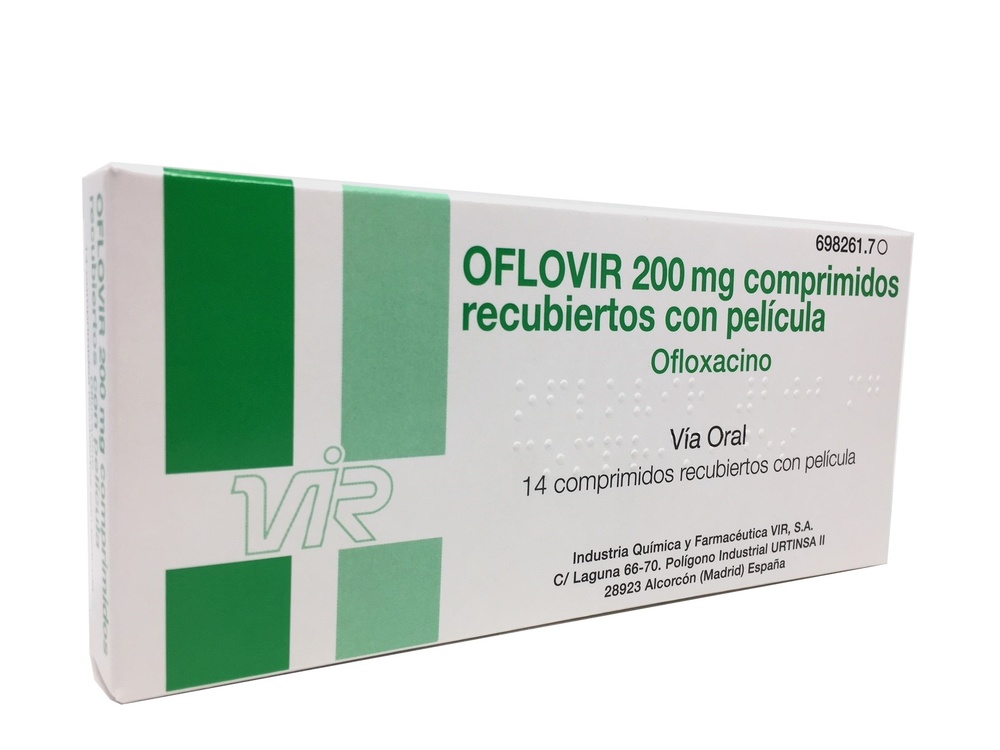
OFLOVIR is presented in the form of coated, oblong, scored tablets, white in color, for oral administration. They are presented in packages with 7 and 14 tablets.
Marketing Authorization Holder and Manufacturer:
INDUSTRIA QUÍMICA Y FARMACÉUTICA VIR, S.A.
C/ Laguna 66-68-70. Polígono Industrial Urtinsa II.
28923 Alcorcón (Madrid)
Spain
Date of the Last Revision of this Prospectus:June 2025
Detailed information about this medicine is available on the website of the Spanish Agency for Medicines and Health Products: http://www.aemps.gob.es/
-

- Country of registration
- Dosage formTABLET, 200 mg
- ATC codeJ01MA01
- Average pharmacy price5.87 EUR
- Active substance
- Prescription requiredYes
- Manufacturer
- This information is for reference only and does not constitute medical advice. Always consult a doctor before taking any medication. Oladoctor is not responsible for medical decisions based on this content.
- Alternatives to OFLOVIR 200 mg FILM-COATED TABLETSDosage form: INJECTABLE INFUSION, 100 ml with 0.2 g ofloxacin solutionActive substance: ofloxacinManufacturer: Altan Pharmaceuticals SaPrescription requiredDosage form: INJECTABLE INFUSION, 400 mg/250 mlActive substance: moxifloxacinManufacturer: Bayer Hispania S.L.Prescription requiredDosage form: TABLET, 500 mgActive substance: levofloxacinManufacturer: Especialidades Farmaceuticas Centrum S.A.Prescription required
Online doctors for OFLOVIR 200 mg FILM-COATED TABLETS
Discuss questions about OFLOVIR 200 mg FILM-COATED TABLETS, including use, safety considerations and prescription review, subject to medical assessment and local regulations.









Get OFLOVIR 200 mg FILM-COATED TABLETS Prescription Online
Fill in a 2-min form
Tell us your symptoms, history, and what medicine you're requesting.
Pick a doctor or let us assign
Choose a specialist or we'll match you with the next available doctor.
Doctor reviews your case
Usually within 30 minutes. They may ask follow-up questions via chat.
Collect from any pharmacy
Electronic prescription sent to your email — valid across Spain.
Frequently Asked Questions
OFLOVIR 200 mg FILM-COATED TABLETS requires a prescription in Spain. You can check with a doctor online whether this medicine may be appropriate for your situation.
The active ingredient in OFLOVIR 200 mg FILM-COATED TABLETS is ofloxacin. This information helps identify medicines with the same composition but different brand names.
The average pharmacy price for OFLOVIR 200 mg FILM-COATED TABLETS is around 5.87 EUR. Prices may vary depending on the manufacturer and dosage form.
OFLOVIR 200 mg FILM-COATED TABLETS is manufactured by Industria Quimica Y Farmaceutica Vir S.A.. Pharmacy brands and packaging may differ depending on the distributor.
Doctors such as Family doctors, Psychiatrists, Dermatologists, Cardiologists, Endocrinologists, Gastroenterologists, Pulmonologists, Nephrologists, Rheumatologists, Hematologists, Infectious disease physicians, Allergists, Geriatricians, Paediatricians, Oncologists may assess whether OFLOVIR 200 mg FILM-COATED TABLETS is appropriate, depending on your situation and local regulations. You can book an online consultation to discuss your symptoms and possible next steps.
Spain has a well-developed healthcare infrastructure across major cities such as Madrid, Barcelona, Valencia, and Seville. Pharmacies are widely available and operate under strict regulations, ensuring access to prescribed medications.
You can buy OFLOVIR 200 mg FILM-COATED TABLETS in Madrid, Barcelona, Seville, or Valencia at any local pharmacy with a valid prescription.
To obtain a prescription, you can use Oladoctor:
Other medicines with the same active substance (ofloxacin) include OFLOXACIN ALTAN 2 mg/ml SOLUTION FOR INFUSION, ACTIRA 400 MG/ 250 ML SOLUTION FOR INFUSION, ASEY 500 mg FILM-COATED TABLETS. These may have different brand names or formulations but contain the same therapeutic ingredient. Always consult a doctor before switching or starting a new medicine.
