







How to use NORMOFUNDINA WITH POTASSIUM INFUSION SOLUTION
Translated with AI
This page provides general information and does not replace a doctor’s consultation. Always consult a doctor before taking any medication. Seek urgent medical care if symptoms are severe.
Show originalContents of the leaflet
Introduction
Package Leaflet:information for the user
Normofundina with Potassium Solution for Infusion
Read the entire package leaflet carefully before starting to use this medication,as it contains important information for you.
- Keep this package leaflet, as you may need to read it again.
- If you have any questions, consult your doctor or pharmacist.
- This medication has been prescribed to you only, and you should not give it to others, even if they have the same symptoms as you, as it may harm them.
- If you experience side effects, consult your doctor or pharmacist, even if they are side effects not listed in this package leaflet. See section 4.
Contents of the package leaflet:
- What Normofundina with Potassium is and what it is used for
- What you need to know before using Normofundina with Potassium
- How to use Normofundina with Potassium
- Possible side effects
- Storage of Normofundina with Potassium
- Package contents and additional information
1. What Normofundina with Potassium is and what it is used for
Normofundina with Potassium is a solution for the administration of fluids and electrolytes (salts). It also contains glucose to ensure minimum carbohydrate needs.
Normofundina with Potassium is used:
- In patients with a deficiency of body fluids (isotonic dehydration).
- In patients with a deficiency of body fluids and high sodium levels (hypertonic dehydration).
- To cover water and fluid needs and, partially, energy needs, when you cannot or should not eat or drink after surgery or injury (postoperative or post-traumatic).
- As a vehicle for concentrated electrolyte solutions that are physically and chemically compatible and medications.
Normofundina with Potassium is a medication that will be administered to you by your doctor or a healthcare professional.

2. What you need to know before using Normofundina with Potassium
Do not use Normofundina with Potassium:
- If you are allergic (hypersensitive) to the active ingredients of Normofundina with Potassium or to any of the other components of this medication (listed in section 6).
- If you have an excess of fluids (hyperhydration).
- If you have a deficiency of fluids and sodium (hypotonic dehydration).
- If your potassium levels in the blood are high (hyperkalemia).
- If you have severe heart muscle weakness (congestive heart failure).
- If you have severe kidney problems with little or no urine production (severe renal failure with oliguria or anuria).
- If your blood sugar levels are high and do not respond to 6 units of insulin per hour.
Warnings and precautions
Consult your doctor or pharmacist before starting to use Normofundina with Potassium.
Be especially careful if you use Normofundina with Potassium in the following cases:
- If your sodium levels in the blood are low (hyponatremia).
- If your kidney function is impaired (renal failure).
- If you suffer from diseases where high potassium levels in the blood are frequent (hyperkalemia), such as if your adrenal gland does not function properly (Addison's disease) or in certain hereditary diseases that affect red blood cells (sickle cell anemia).
- If you are being treated with other medications that increase potassium levels in the blood (see section "Using Normofundina with Potassium with other medications").
- If you need to follow a low-salt diet due to a disease such as heart muscle weakness (heart failure), fluid accumulation in tissues (generalized edema), fluid in the lungs (pulmonary edema), or high blood pressure with convulsions during pregnancy (eclampsia).
- If you need to follow a low-calcium diet due to a disease such as sarcoidosis.
Patients of advanced age should be monitored with special care, as it may be necessary to adjust the recommended dose to avoid kidney and circulatory problems due to hydration.
If you have high blood pressure, the administration of sodium chloride and fluids should be adjusted according to the severity of your disease.
Your doctor will be especially careful when administering Normofundina with Potassium if your acetate levels in the blood are high or if you have any metabolic disorders, such as severe liver failure.
Solutions containing potassium and calcium, such as Normofundina with Potassium, will be administered with caution to patients treated with cardiac glycosides (digitalis preparations) (see section "Using Normofundina with Potassium with other medications").
While you are being administered Normofundina with Potassium, your fluid balance, acid-base balance, and electrolyte and blood sugar levels will be monitored.
If your blood sugar levels rise rapidly during treatment with Normofundina with Potassium, you will be administered insulin.
Adequate vitamin intake (especially vitamin B1) must be ensured.
This solution may alter your electrolyte levels; therefore, the administration schedule will depend on your clinical condition and your ability to metabolize glucose.
Your doctor will be especially careful if you have any disease that increases the release of vasopressin (a hormone that reduces water elimination), such as in cases of infections, heart, liver, kidney disease, or after surgery, as well as when taking certain medications (see section "Using Normofundina with Potassium with other medications").
Normofundina with Potassium will also be administered with caution if you are at special risk of suffering from cerebral edema (fluid accumulation in the brain) due to a decrease in sodium levels (acute hyponatremia), such as in children, women of childbearing age, or patients with meningitis or other complications.
Children
In newborns and premature babies with low birth weight, blood sugar levels should be monitored with special care.
Using Normofundina with Potassium with other medications
Tell your doctor or pharmacist if you are using, have recently used, or may need to use any other medication.
Caution should be exercised when co-administering potassium-based solutions with other medications that increase potassium levels in the blood, such as:
- diuretics that decrease potassium excretion (potassium-sparing diuretics)
- certain medications for high blood pressure (ACE inhibitors)
- certain pain relievers (non-steroidal anti-inflammatory drugs)
- cyclosporine or tacrolimus (medications used to suppress immune system reactions)
- suxamethonium (a muscle relaxant used in anesthesia)
Caution should be exercised when co-administering medications that increase the effect of vasopressin (a hormone that reduces water elimination), such as:
- certain medications that increase the release of vasopressin (e.g., chlorpropamide, clofibrate, carbamazepine, vincristine, selective serotonin reuptake inhibitors, 3,4-methylenedioxymethamphetamine, ifosfamide, antipsychotics, narcotics)
- certain medications that increase the effect of vasopressin (e.g., chlorpropamide, non-steroidal anti-inflammatory drugs, cyclophosphamide)
- certain medications that have the same effect as vasopressin (analogues) (e.g., desmopressin, oxytocin, vasopressin, terlipressin)
Medications that can cause a decrease in sodium levels (diuretics and antiepileptics such as oxcarbazepine) may be problematic.
Co-administration of medications that decrease sodium excretion (e.g., corticosteroids or non-steroidal anti-inflammatory drugs) may cause fluid retention (edema).
The potassium in this solution may decrease the effect of cardiac glycosides (digitalis preparations).
The calcium in the solution may potentiate the harmful effects of cardiac glycosides (digitalis preparations) and cause heart rhythm problems.
Certain diuretics (thiazide diuretics) and vitamin D may cause a decrease in calcium excretion.
Your doctor will also consider interactions with medications that affect glucose metabolism, such as corticosteroids.
Pregnancy and breastfeeding
If you are pregnant or breastfeeding, think you may be pregnant, or plan to become pregnant, consult your doctor or pharmacist before using this medication.
Normofundina with Potassium should be administered with special care in pregnant women during childbirth, especially if administered in combination with oxytocin, due to the risk of hyponatremia (decreased sodium levels).
Your doctor will administer Normofundina with Potassium with caution.
Driving and using machines
Normofundina with Potassium has no influence on the ability to drive and use machines.
3. How to use Normofundina with Potassium
This medication will always be administered to you by a doctor or healthcare professional.
The dose will depend on the type of disease and its severity, as well as your individual needs for carbohydrates, fluids, and electrolytes. Your doctor will decide on the frequency and duration of treatment with Normofundina with Potassium.
Follow exactly the administration instructions for Normofundina with Potassium indicated by your doctor. If in doubt, consult your doctor or pharmacist again.
Intravenous use in the form of infusion, which means that the solution will be administered directly into a vein through a cannula (a thin tube).
If you use more Normofundina with Potassium than you should
Due to an overdose, you may experience an excess of fluids accompanied by an increase in skin tension, venous congestion, fluid accumulation in body tissues (edema), including the lungs (pulmonary edema). Electrolyte imbalances, including high potassium and low sodium levels in the blood, acid-base imbalances, and increased blood sugar levels may occur.
Treatment
The infusion will be stopped immediately, you will be administered diuretics (medications used to increase urine production), and your fluid and electrolyte balance will be monitored. Your doctor will decide whether to take further measures based on the nature and severity of the situation.
If you have any further questions about the use of this product, ask your doctor or pharmacist.
In case of overdose or accidental ingestion, consult your doctor, pharmacist, or call the Toxicology Information Service, phone (91) 562 04 20, indicating the medication and the amount used.

4. Possible side effects
Like all medications, Normofundina with Potassium can cause side effects, although not everyone will experience them.
Frequency not known (cannot be estimated from available data):
- Local alterations at the administration site, including local pain
- Venous irritation, phlebitis (inflammation of the vein wall), and filtration of the solution from the vein to surrounding tissue (extravasation)
- Hospital hyponatremia (decreased sodium levels) and hyponatremic encephalopathy, which can cause brain damage
Reporting side effects
If you experience any side effects, consult your doctor or pharmacist, even if they are side effects not listed in this package leaflet. You can also report them directly through the Spanish Medication Surveillance System for Human Use: www.notificaRAM.es. By reporting side effects, you can help provide more information on the safety of this medication.
5. Storage of Normofundina with Potassium
Keep this medication out of the sight and reach of children.
Do not use this medication after the expiration date stated on the packaging after "EXP". The expiration date is the last day of the month indicated.
Do not use Normofundina with Potassium if the solution is cloudy, contains particles at the bottom of the packaging, or if the packaging or its seal show visible signs of damage.
No special storage conditions are required.
Medications and materials that have come into contact with them should not be disposed of through the sewage system or household waste. Ask your pharmacist how to dispose of packaging and medications that are no longer needed. This will help protect the environment.
6. Container Content and Additional Information
Composition of Normofundina with Potassium:
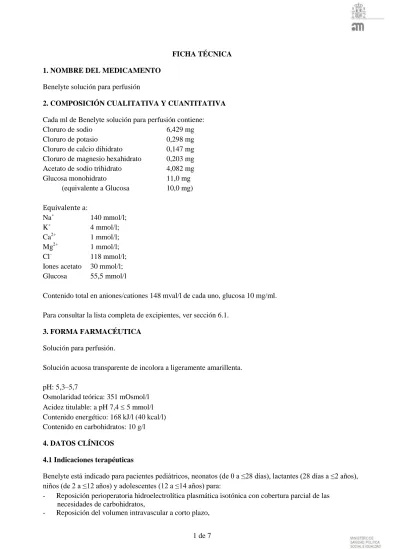
The active ingredients are: | Per 1000 ml | ||
Sodium chloride | 3.63 g | ||
Potassium chloride | 1.34 g | ||
Calcium chloride dihydrate | 0.295 g | ||
Magnesium chloride hexahydrate | 0.61 g | ||
Sodium acetate trihydrate | 5.17 g | ||
Glucose | 50.0 g | ||
equivalent to 55.0 g of glucose monohydrate |
The other components are: water for injectable preparations.
Product Appearance and Container Content
Normofundina with Potassium is a solution for perfusion that will be administered directly into the bloodstream. It is a clear, colorless to pale yellow aqueous solution.
It is packaged in polyethylene bottles (Ecoflac Plus) of 500 ml and 1000 ml in packs of:
1 x 500 ml, 10 x 500 ml
1 x 1000 ml, 10 x 1000 ml
Marketing Authorization Holder and Manufacturer
B|BRAUN
- Braun Medical, S.A.
Ctra. de Terrassa, 121
08191-Rubí (Barcelona)
Spain
Date of Last Revision of this Leaflet: April 2025
Detailed information on this medicinal product is available on the website of the Spanish Agency for Medicines and Health Products (AEMPS) (http://www.aemps.gob.es/).
--------------------------------------------------------------------------------------------------------------------
This information is intended exclusively for healthcare professionals:
Before mixing the solution with other medicines, possible incompatibilities should be considered. Normofundina with Potassium is incompatible with tetracyclines (precipitation), sodium thiopental, and amphotericin B (oxidation).
Medicines containing oxalates, phosphates, and carbonates/bicarbonates may precipitate when mixed with Normofundina with Potassium, and therefore should not be mixed with this solution.
Glucose solutions should not be administered through the same perfusion equipment, either simultaneously or before or after the administration of blood, as there is a possibility of pseudo-agglutination.
Posology
Adults
Maximum Daily Dose
As routine maintenance, the daily dose should not exceed 40 ml per kg of body weight (BW) per day, which is equivalent to 2 g of glucose per kg of BW per day, 4 mmol of sodium per kg of BW per day, and 0.7 mmol of potassium per kg of BW per day.
Hydration balance, serum glucose, serum sodium, and other electrolytes should be monitored before and during administration, especially in patients with increased non-osmotic release of vasopressin (syndrome of inappropriate antidiuretic hormone secretion, SIADH) and in patients receiving concomitant medication with vasopressin agonists due to the risk of hyponatremia.
Monitoring of serum sodium is especially important when administering physiologically hypotonic solutions. Normofundina with Potassium can become extremely hypotonic after administration due to glucose metabolism in the body.
Pediatric Population
As routine maintenance, the following daily doses should not be exceeded:
Age | Dose (ml/kg of BW/day) |
1st day of life | 120 |
2nd day of life | 120 |
3rd day of life | 130 |
4th day of life | 150 |
5th day of life | 160 |
6th day of life | 180 |
1 month of life | 160 |
from 2 months | 150 |
1-2 years | 120 |
3-5 years | 100 |
6-12 years | 80 |
13-18 years | 70 |
Any additional loss (e.g., due to fever, diarrhea, vomiting, etc.) should be compensated based on the composition and volume of the lost fluids.
In cases of dehydration, the maximum daily dose may be exceeded in certain cases. The dose should be calculated based on the severity of dehydration and the patient's clinical condition.
Maximum Infusion Rate
Adults
As routine maintenance, the rate should not exceed 100 ml/hour.
When treating acute hypertonic dehydration, acute hypernatremia should be corrected within 24 hours. In cases of chronic hypernatremia (> 24 hours) or hypernatremia of unknown duration, correction should not exceed 0.5 mmol/l/hour. Normal serum sodium levels should be achieved within 48 hours. A more rapid decrease in serum sodium levels can cause cerebral edema.
Pediatric Population
As routine maintenance, the following infusion rates should not be exceeded:
BW (kg) | ml/hour |
0-10 | 4/kg |
11-20 | 40 + 2/kg for each kg > 10 |
> 20 | 60 + 1/kg for each kg > 20 |
Mild to moderate hypernatremia should be corrected within 48 hours. In cases of severe hypertonic dehydration (serum sodium ≥ 170 mmol/l), rehydration should last 72-96 hours. The initial rate to correct it should not exceed 10-12 mmol/l in 24 hours (0.5 mmol/l/hour). A more rapid decrease in serum sodium levels can cause cerebral edema, seizures, and irreversible brain damage.
All Ages
For the treatment of dehydration, the maximum infusion rate is 5 ml per kg of BW per hour, which is equivalent to 0.25 g of glucose per kg of BW and 0.09 mmol of potassium per kg of BW per hour. The maximum drip rate is 1.7 drops per kg of BW per minute.
- Country of registration
- Dosage formINJECTABLE PERFUSION, 363 mg; 134 mg; 29.5 mg; 61 mg; 517 mg; 5000 mg
- ATC codeB05BB02
- Active substance
- Prescription requiredYes
- Manufacturer
- This information is for reference only and does not constitute medical advice. Always consult a doctor before taking any medication. Oladoctor is not responsible for medical decisions based on this content.
- Alternatives to NORMOFUNDINA WITH POTASSIUM INFUSION SOLUTIONDosage form: INJECTABLE INFUSION, 0.09 g / 0.07 g / 1.6 g / 0.17 g / 12.5 g / 0.19 g / 1.23 gActive substance: electrolytes with carbohydratesManufacturer: Fresenius Kabi España, S.A.U.Prescription requiredDosage form: INJECTABLE PERFUSION, 0.31 g / 21.9 mg / 0.03 g / 0.6 gActive substance: electrolytes with carbohydratesManufacturer: Fresenius Kabi España, S.A.U.Prescription requiredDosage form: INJECTABLE PERFUSION, NAActive substance: electrolytes with carbohydratesManufacturer: Fresenius Kabi España, S.A.U.Prescription required

Online doctors for NORMOFUNDINA WITH POTASSIUM INFUSION SOLUTION
Discuss questions about NORMOFUNDINA WITH POTASSIUM INFUSION SOLUTION, including use, safety considerations and prescription review, subject to medical assessment and local regulations.









Get NORMOFUNDINA WITH POTASSIUM INFUSION SOLUTION Prescription Online
Fill in a 2-min form
Tell us your symptoms, history, and what medicine you're requesting.
Pick a doctor or let us assign
Choose a specialist or we'll match you with the next available doctor.
Doctor reviews your case
Usually within 30 minutes. They may ask follow-up questions via chat.
Collect from any pharmacy
Electronic prescription sent to your email — valid across Spain.
Frequently Asked Questions
NORMOFUNDINA WITH POTASSIUM INFUSION SOLUTION requires a prescription in Spain. You can check with a doctor online whether this medicine may be appropriate for your situation.
The active ingredient in NORMOFUNDINA WITH POTASSIUM INFUSION SOLUTION is electrolytes with carbohydrates. This information helps identify medicines with the same composition but different brand names.
NORMOFUNDINA WITH POTASSIUM INFUSION SOLUTION is manufactured by B Braun Medical S.A.. Pharmacy brands and packaging may differ depending on the distributor.
Doctors such as Family doctors, Psychiatrists, Dermatologists, Cardiologists, Endocrinologists, Gastroenterologists, Pulmonologists, Nephrologists, Rheumatologists, Hematologists, Infectious disease physicians, Allergists, Geriatricians, Paediatricians, Oncologists may assess whether NORMOFUNDINA WITH POTASSIUM INFUSION SOLUTION is appropriate, depending on your situation and local regulations. You can book an online consultation to discuss your symptoms and possible next steps.
Spain has a well-developed healthcare infrastructure across major cities such as Madrid, Barcelona, Valencia, and Seville. Pharmacies are widely available and operate under strict regulations, ensuring access to prescribed medications.
You can buy NORMOFUNDINA WITH POTASSIUM INFUSION SOLUTION in Madrid, Barcelona, Seville, or Valencia at any local pharmacy with a valid prescription.
To obtain a prescription, you can use Oladoctor:
Other medicines with the same active substance (electrolytes with carbohydrates) include APIROSERUM NORMAION RESTAURADOR, APIROSERUM RINGER-LACTATE SOLUTION FOR INFUSION, BENELYTE SOLUTION FOR INFUSION. These may have different brand names or formulations but contain the same therapeutic ingredient. Always consult a doctor before switching or starting a new medicine.
