



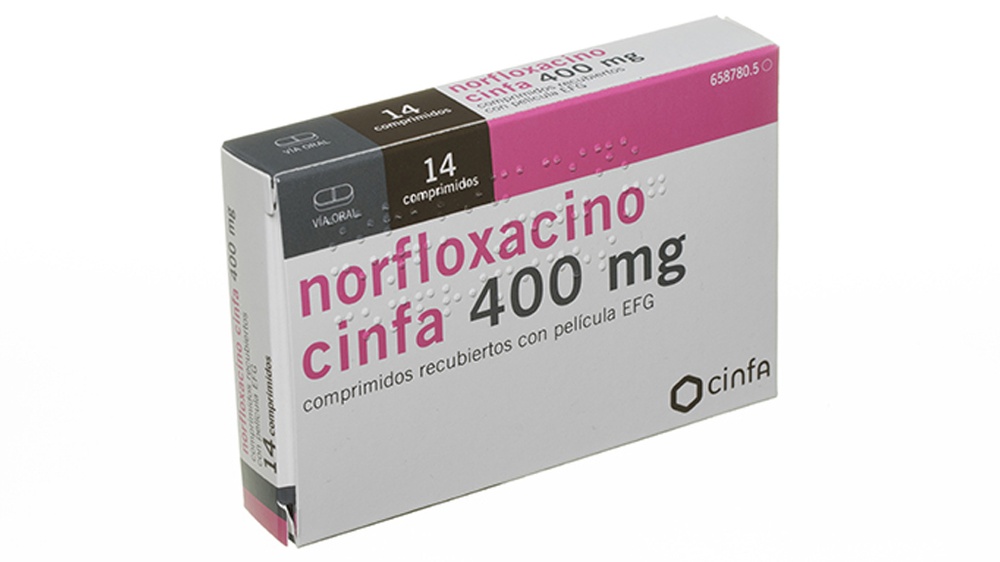
NORFLOXACINO 400 mg Film-Coated Tablets

Prescription review online
A doctor will review your case and decide whether a prescription is medically appropriate.

Talk to a doctor about this medicine
Discuss your symptoms and possible next steps in a quick online consultation.



How to use NORFLOXACIN CINFA 400 mg FILM-COATED TABLETS
Contents of the leaflet
- Introduction
- What is norfloxacino cinfa and what is it used for
- What you need to know before you take norfloxacino cinfa
- How to take norfloxacin cinfa
- Possible side effects
- Conservation of norfloxacin cinfa
- Package contents and additional information
Introduction
Package Leaflet: Information for the User
norfloxacino cinfa 400 mg film-coated tablets EFG
Read all of this leaflet carefully before you start taking this medicine because it contains important information for you.
- Keep this leaflet, you may need to read it again.
- If you have any further questions, ask your doctor or pharmacist.
- This medicine has been prescribed for you only. Do not pass it on to others. It may harm them, even if their signs of illness are the same as yours.
- If you get any side effects, talk to your doctor or pharmacist. This includes any possible side effects not listed in this leaflet. See section 4.
Contents of the pack
- What is norfloxacino cinfa and what is it used for
- What you need to know before you take norfloxacino cinfa
- How to take norfloxacino cinfa
- Possible side effects
- Storage of norfloxacino cinfa
- Contents of the pack and other information
1. What is norfloxacino cinfa and what is it used for
norfloxacino cinfa contains the active substance norfloxacin.
Norfloxacin belongs to a group of antibiotics known as fluoroquinolones. Norfloxacin is a broad-spectrum antibiotic and acts against a wide range of infections.
Antibiotics are used to treat bacterial infections and do not work for viral infections such as the flu or the common cold. It is important that you follow the instructions regarding dose, administration interval, and treatment duration indicated by your doctor. Do not store or reuse this medication. If you have leftover antibiotic after finishing treatment, return it to the pharmacy for proper disposal. Do not throw medicines down the drain or in the trash. |
This medication is indicated for the treatment in adults of acute and chronic, complicated and uncomplicated upper and lower urinary tract infections (except for complications of pyelonephritis: certain inflammatory complications of the kidneys caused by an infection).

Not sure if this medicine is right for you?
Discuss your symptoms and treatment with a doctor online.
2. What you need to know before you take norfloxacino cinfa
Before you start taking this medication
Do not take antibacterial medications that contain fluoroquinolones or quinolones, including norfloxacin, if you have experienced any severe adverse reaction previously when taking a quinolone or a fluoroquinolone. If this is the case, you must inform your doctor as soon as possible.
Do not takenorfloxacino cinfa
- if you are allergic to norfloxacin, to antibiotics of this type called quinolones, or to any of the other components of this medication (listed in section 6).
- if you are hypersensitive (allergic) to any other antibiotic in the group of quinolones (your doctor will know)
- if you have a history of inflammation (tendinitis) and/or tendon rupture, related to treatment with fluoroquinolones
- if you are a child or adolescent under 18 years of age
- if you are pregnant or breastfeeding
- if you are taking tizanidine (see section 2: "Other medications and norfloxacino cinfa")
Warnings and precautions
Consult your doctor or pharmacist before starting to take norfloxacino cinfa.
Inform your doctor of any disease you have or have had, especially if you suffer or have suffered from any of the following circumstances or diseases:
- if you have been diagnosed with an increase in size or a "lump" of a large blood vessel (aortic aneurysm or large peripheral vessel aneurysm).
- if you have suffered a previous episode of aortic dissection (tear in the aortic wall).
- if you have been diagnosed with heart valve insufficiency (regurgitation of the heart valves).
- if you have a family history of aortic dissection or aneurysm, congenital heart valve disease, or other risk factors or predisposing conditions (e.g., connective tissue disorders such as Marfan syndrome, Ehlers-Danlos syndrome, Turner syndrome, or Sjögren's syndrome (an autoimmune inflammatory disease), or vascular disorders such as Takayasu arteritis, giant cell arteritis, Behçet's disease, hypertension, atherosclerosis, rheumatoid arthritis (a joint disease), or endocarditis (a heart infection)).
While taking norfloxacino cinfa:
- If you feel a sudden and severe pain in the abdomen, chest, or back, which can be symptoms of aortic dissection or aneurysm, go immediately to an emergency service. The risk may increase if you are receiving systemic corticosteroid treatment.
- If you start to experience sudden onset of shortness of breath, especially when lying down, or if you notice swelling in the ankles, feet, or abdomen, or the appearance of heart palpitations (feeling of rapid or irregular heartbeat), you must inform your doctor immediately.
Severe, disabling, long-lasting, and potentially irreversible adverse effects
Antibacterial medications that contain fluoroquinolones or quinolones, including norfloxacin, have been associated with very rare but severe adverse effects, some of which were long-lasting (persistent for months or years), disabling, or potentially irreversible. This includes pain in the tendons, muscles, and joints of the upper and lower limbs, difficulty walking, abnormal sensations such as pins and needles, tingling, prickling, numbness, or burning (paresthesia), sensory disorders such as decreased vision, taste, smell, and hearing, depression, decreased memory, intense fatigue, and severe sleep disorders.
If you experience any of these adverse effects after taking norfloxacino cinfa, contact your doctor immediately before continuing treatment. You and your doctor will decide whether to continue or not the treatment, also considering the use of an antibiotic from another class.
Hypersensitivity reactions:Some patients have had severe allergic reactions that have been occasionally fatal when receiving treatment with quinolone antibiotics. The symptoms of an allergic reaction can include swelling of the skin on the face, limbs, tongue, or throat, and difficulty breathing. If you have an allergic reaction:
- stop taking norfloxacino cinfa
- see your doctor immediately for emergency treatment
Liver disease:
During the use of norfloxacino cinfa, there have been cases of liver failure (possible inability of the liver to perform its normal metabolic functions and serious danger to life) (see section 4). If you notice any symptoms, such as loss of appetite, jaundice (yellowing of the skin), dark urine, itching, or stomach pain, stop taking norfloxacino cinfa and consult your doctor immediately.
Tendon inflammation and/or tendon rupture:
Rarely, pain and swelling can appear in the joints and inflammation or rupture of the tendons. The risk is higher if you are an elderly person (over 60 years old), have received an organ transplant, have kidney problems, or are being treated with corticosteroids. Tendon inflammation and rupture can occur within the first 48 hours of treatment and even several months after stopping treatment with norfloxacino cinfa. At the first sign of pain or inflammation of a tendon (e.g., in the ankle, wrist, elbow, shoulder, or knee), stop taking norfloxacino cinfa, contact your doctor, and rest the affected area. Avoid any unnecessary exercise, as this could increase the risk of tendon rupture.
Epilepsy or other central nervous system disorders:
- epilepsy or convulsions (seizures). These can worsen.
- mental disorders, such as hallucinations and/or confusion. These can worsen.
- central nervous system disorders, such as reduced blood flow to the brain or a stroke.
If your symptoms worsen, you must stop treatment and consult your doctor immediately.
Peripheral neuropathy
Rarely, you may experience symptoms of nerve damage (neuropathy) such as pain, burning, tingling, numbness, and/or weakness, especially in the feet and legs or hands and arms. If this happens, stop taking norfloxacino cinfa and inform your doctor immediately to prevent the development of a potentially irreversible disorder.
Pseudomembranous colitis:Pseudomembranous colitis is an infection that causes inflammation of the large intestine. This can lead to the appearance of severe and persistent diarrhea during or after treatment. If you have these symptoms:
- you must stop treatment with norfloxacino cinfa immediately and see your doctor.
- do not take medications that slow down the normal passage of food or inhibit peristalsis. Your doctor will prescribe another medication to treat your symptoms.
Cardiac problems
Caution should be exercised when using this type of medication if you were born with or have a family history of prolonged QT interval (observed on the ECG, a record of the heart's electrical activity), have an electrolyte imbalance in the blood (especially low levels of potassium or magnesium in the blood), have a very slow heart rate (called 'bradycardia'), have a weak heart (heart failure), have a history of heart attack (myocardial infarction), are a woman, or are elderly or are taking other medications that cause abnormal changes in the ECG (see the section "Other medications and norfloxacino cinfa").
G6FD enzyme deficiency (glucose-6-phosphate dehydrogenase):You may develop a disorder of your red blood cells. This can happen if you do not have enough of the enzyme known as G6PD.
Myasthenia gravis (a disease that causes muscle weakness):If you are taking norfloxacino cinfa, myasthenia gravis may appear or symptoms may worsen. This can dangerously weaken your respiratory muscles, leading to respiratory failure. If your symptoms worsen, you must consult your doctor immediately.
Visual impairment:If your vision worsens or if your eyes seem to be affected in any way, consult an eye specialist immediately (see section 4 "Possible side effects").
Photosensitivity:Photosensitivity can occur in patients treated with norfloxacino cinfa or other medications in the group of quinolones. You should avoid prolonged exposure to the sun and intense sunlight. You should also avoid using sunlamps while taking norfloxacino cinfa.
Kidney disease:if you have kidney failure, norfloxacino cinfa may not work correctly.
Cristaluria (crystals in your urine):If you take norfloxacino cinfa for a long time, crystals may appear in your urine. To help avoid these symptoms:
- do not take more than the recommended dose of norfloxacino cinfa
- drink plenty of fluids (e.g., water, never alcohol)
Disglucemia:Quinolone antibiotics may cause an increase in your blood sugar levels above normal levels (hyperglycemia) or a decrease in your blood sugar levels below normal levels (hypoglycemia), which in severe cases can cause loss of consciousness (hypoglycemic coma). This is important for people with diabetes. If you suffer from diabetes, your blood sugar levels should be carefully monitored.
Other medications and norfloxacino cinfa
Tell your doctor or pharmacist if you are taking, have recently taken, or might take any other medications.
DO NOT take norfloxacino cinfa if you are taking tizanidine (for muscle relaxation in multiple sclerosis). The following medications may affect or be affected by norfloxacino cinfa:
- nitrofurantoin (an antibiotic)
- probenecid (used in the treatment of gout)
- theophylline (used to treat asthma and lung disease). The risk of side effects may increase with theophylline treatment.
- caffeine (found in some pain medications). You should not take medications that contain caffeine (e.g., some pain relievers) while you are taking norfloxacino cinfa - consult your doctor.
- cyclosporine (used to prevent organ transplant rejection)
- warfarin (used to thin the blood)
- non-steroidal anti-inflammatory medications (medications used for pain and other diseases)
- fenbufen (non-steroidal anti-inflammatory, used to relieve pain)
You must inform your doctor if you are taking medications that can alter your heart rhythm: medications that belong to the group of antiarrhythmics (e.g., quinidine, hydroquinidine, disopyramide, amiodarone, sotalol, dofetilide, ibutilide), tricyclic antidepressants, some antimicrobials (that belong to the group of macrolides), some antipsychotics.
Oral contraceptives:You should be aware that oral contraceptives decrease their effect when taking norfloxacino cinfa.
Products containing iron, antacids, magnesium, aluminum, or zinc:Products that contain some of these substances (e.g., multivitamins, sucralfate) may reduce the concentration of norfloxacino cinfa in blood and urine.
norfloxacino cinfa tablets should be taken 2 hours before, or at least 4 hours after, ingesting these products.
Products containing calcium:
Products that contain calcium may reduce the concentration of norfloxacino cinfa in blood and urine. For example, oral nutrition solutions and dairy products (milk or liquid dairy products, such as yogurt). norfloxacino cinfa should be taken 1 hour before or at least 2 hours after ingesting these products.
Taking norfloxacino cinfa with food, drinks, and alcohol
norfloxacino cinfa should be taken on an empty stomach, 1 hour before or 2 hours after a meal or ingestion of milk or other dairy products.
You should not drink alcohol while taking norfloxacino cinfa.
Pregnancy and breastfeeding
If you are pregnant or breastfeeding, think you may be pregnant, or are planning to have a baby, ask your doctor or pharmacist for advice before taking this medication.
This medication may harm the fetus. Therefore, you should not take norfloxacino cinfa:
- if you are pregnant
- if you think you may be pregnant
- if you are trying to become pregnant.
If you become pregnant while taking norfloxacino cinfa, you must inform your doctor immediately.
You should use effective contraceptive methods while taking norfloxacino cinfa. If you have any doubts, consult your doctor.
You should not breastfeed if you are taking norfloxacino cinfa.
Driving and using machines
norfloxacino cinfa may affect your ability to react, especially:
- at the start of treatment.
- when increasing the dose
- if you change medication
- if you also drink alcohol
Therefore, you should always be careful when driving or using machines. If you are affected, you should not drive.
norfloxacino cinfa contains hydrogenated castor oil.
This medication may cause stomach upset and diarrhea because it contains hydrogenated castor oil.
norfloxacino cinfa contains lactose.
This medication contains lactose. If your doctor has told you that you have an intolerance to some sugars, consult them before taking this medication.
norfloxacino cinfa contains sodium.
This medication contains less than 23 mg of sodium (1 mmol) per tablet; this is, essentially "sodium-free".
3. How to take norfloxacin cinfa
Follow the administration instructions of this medication exactly as indicated by your doctor or pharmacist. In case of doubt, consult your doctor or pharmacist again.
Your doctor may prescribe two doses a day. If so, it is best to take one dose in the morning and another at night. If you have to take a single dose a day, take it always at the same time of day.
The score line should not be used to break the tablet.
If you are taking antacids, multivitamins, or nutritional solutions, you should take norfloxacin 2 hours before or at least 4 hours after taking these products.
You should swallow the norfloxacin tablets whole, without breaking, crushing, or chewing them. Swallow the tablets with liquid, for example, a glass of water. This should be at least 1 hour before or 2 hours after a meal or taking a dairy product.
The recommended dose is:
Urinary tract infections
One 400 mg tablet twice a day. The duration of treatment depends on the type of infection you have.
Uncomplicated acute cystitis (in women):treatment is usually 3 days.
- Urinary tract infections:treatment is generally 7 to 10 days.
Symptoms may improve quickly. Nevertheless, you should continue taking the medication for the time your doctor recommends.
- Complicated urinary tract infections:treatment is usually 2-3 weeks. Your doctor may increase the duration, depending on the severity and location of the infection.
If you have kidney disease
Your doctor may check your kidney function by measuring creatinine clearance. If you have severe kidney disease (creatinine clearance = 30 ml/min x 1.73m2), your doctor may reduce the dose to 400 mg, once a day.
Elderly patients
If you are elderly and your kidney function is not altered, the doses indicated above are suitable for you.
Use in children and adolescents
Children and adolescents in the growth phase (under 18 years) should not take norfloxacin.
If you take more norfloxacin cinfa than you should
In case of overdose or accidental ingestion, consult your doctor or pharmacist immediately or call the Toxicology Information Service, phone: 91 562 04 20, indicating the medication and the amount ingested. It is recommended to bring the packaging and the prospectus of the medication to the healthcare professional.
You may be advised to take solutions containing calcium. This will prevent your system from absorbing more norfloxacin.
If you forget to take norfloxacin cinfa
Do not worry. Simply take the next dose at the usual time. Do not take a double dose to make up for the forgotten doses.
If you stop treatment with norfloxacin cinfa
Do not stop taking the medication abruptly, even if your symptoms have improved quickly. You should continue taking the medication for the time your doctor recommends, otherwise, the infection may reappear.
If you have any other questions about the use of this medication, ask your doctor or pharmacist.

Started taking the medicine and have questions?
Discuss your symptoms and treatment with a doctor online.
4. Possible side effects
Like all medications, this medication can cause side effects, although not all people suffer from them.
The following side effects have been reported:
Stop taking the medication and consult your doctor immediately if you have:
- symptoms of angioedema (potentially life-threatening reaction), such as:
- swelling of the face, tongue, or throat
- difficulty swallowing
- urticaria and difficulty breathing
- a severe skin reaction
- yellowing of the whites of the eyes or skin, which can be a symptom of liver inflammation (hepatitis) or liver failure.
Other side effects include:
Frequent (may affect up to 1 in 10 people)
- leukopenia (low white blood cell count)
- neutropenia (low white blood cell count, called neutrophils)
- eosinophilia (elevated white blood cell count, called eosinophils)
- elevation of liver enzymes (AST, ALT, alkaline phosphatase). These are blood tests that indicate changes in liver function.
- headache
- dizziness
- nausea
- abdominal pain and spasms
- nausea (discomfort)
- skin rash
Uncommon (may affect up to 1 in 100 people):
- thrombocytopenia (decrease in platelet count in the blood)
- reduction of hematocrit (low red blood cell count)
- cristaluria (crystals that appear in the urine)
- prolonged prothrombin time (when your blood takes longer to clot)
- hemolytic anemia (decrease in red blood cell count in the blood, due to abnormal destruction, which can lead to paleness of the skin, weakness, and difficulty breathing). This is sometimes related to having low levels of the enzyme glucose-6-phosphate dehydrogenase.
- hypersensitivity reactions (allergic), such as:
- anaphylaxis (severe allergic reaction, see section 2. "Warnings and precautions")
- angioedema (severe allergic reaction, which causes swelling of the face, tongue, or throat, which can be life-threatening)
- urticaria (hives)
- interstitial nephritis (kidney inflammation)
- petechiae (small red or purple spots on the body)
- hemorrhagic bullae (bleeding blisters)
- papules with vasculitis (small bumps on the skin with blood vessel inflammation)
- fatigue
- mood changes
- paresthesia (tingling, numbness)
- insomnia (difficulty sleeping)
- sleep disturbances
- depression (feeling sad)
- anxiety
- nervousness
- irritability
- euphoria (feeling of extreme happiness)
- disorientation
- hallucinations (seeing or hearing things that do not exist)
- confusion
- polyneuropathy (when the nervous system does not function correctly in the arms and legs), including Guillain-Barré syndrome (characterized by weakness that affects the limbs, which can cause numbness and paralysis) (see section 2. "Warnings and precautions")
- seizures (attacks)
- psychiatric disorders, disorders, and psychotic reactions (severe mental disorders)
- myasthenia gravis (disease that causes muscle weakness) may appear or worsen (see section 2. "Warnings and precautions")
- vision disorders
- increased tearing (tear production)
- tinnitus (ringing in the ears)
- palpitations (feeling of heartbeats)
- heartburn
- diarrhea
- vomiting
- anorexia (loss of appetite)
- pancreatitis (inflammation of the pancreas)
- hepatitis (inflammation of the liver)
- increase in serum bilirubin (chemical product in the blood)
- severe skin reactions:
- exfoliative dermatitis (inflammation, pityriasis)
- Lyell syndrome (severe skin disease with intense redness, blisters, and peeling of the skin, similar to a burn)
- erythema multiforme (Stevens-Johnson syndrome, a severe disease with blisters on the skin, mouth, eyes, and genitals)
- photosensitivity (increased sensitivity to sunlight)
- pruritus (itching)
- arthritis (inflamed joints)
- myalgia (muscle pain)
- arthralgia (joint pain)
- tendinitis (tendon inflammation)
- tendovaginitis (inflammation of the tendon and tendon sheath)
- increase in urea and creatinine serum (indicators of worsening kidney function)
- vaginal candidiasis (thrush)
Rare (may affect up to 1 in 1,000 people):
- pseudomembranous colitis (inflammation of the intestine that causes fever, abdominal pain, or diarrhea (see section 2. "Warnings and precautions")
- in some cases, Achilles tendon inflammation was observed. This can lead to Achilles tendon rupture (see section 2. "Warnings and precautions").
Very rare (may affect up to 1 in 10,000 people):
- cholestatic hepatitis (inflammation of the liver, where bile does not flow properly)
- liver necrosis (death of liver tissue)
- rhabdomyolysis (muscle disease caused by the rupture of muscle cells that can lead to kidney problems)
Frequency not known (cannot be estimated from the available data):
- reduction of touch sensation (hypoesthesia)
- liver failure, including fatal cases (see section 2. "Warnings and precautions")
- abnormally fast heart rate, irregular heart rate that can be life-threatening, alteration of heart rate (called "prolongation of the QT interval", observed in the ECG, heart electrical activity)
The administration of antibiotics containing quinolones and fluoroquinolones has been associated with very rare cases of long-lasting (even months or years) or permanent adverse reactions, such as tendon inflammation, tendon rupture, joint pain, pain in the limbs, difficulty walking, abnormal sensations such as pinching, tingling, burning, numbness, or pain (neuropathy), fatigue, decreased memory and concentration, effects on mental health (which can include sleep disorders, anxiety, panic attacks, depression, and suicidal thoughts), as well as decreased hearing, vision, taste, and smell, in some cases regardless of the presence of pre-existing risk factors.
There have been reports of increased size and weakening or tearing of the aortic wall (aneurysms and dissections), which could lead to rupture and be fatal, and cardiac valve insufficiency in patients who have received fluoroquinolones. See also section 2.
Reporting of side effects
If you experience any side effect, consult your doctor or pharmacist, even if it is a possible side effect that does not appear in this prospectus. You can also report them directly through the Spanish Pharmacovigilance System for Human Use Medicines: https://www.notificaram.es. By reporting side effects, you can contribute to providing more information on the safety of this medication.
5. Conservation of norfloxacin cinfa
Keep this medication out of sight and reach of children.
Do not use this medication after the expiration date that appears on the packaging after CAD. The expiration date is the last day of the month indicated.
This medication does not require special storage conditions.
Medications should not be thrown away through the sewers or in the trash. Deposit the packaging and medications you no longer need in the SIGRE Point of the pharmacy. In case of doubt, ask your pharmacist how to dispose of the packaging and medications you no longer need. This way, you will help protect the environment.
6. Package contents and additional information
Composition of norfloxacin cinfa
- The active ingredient is norfloxacin. Each coated tablet contains 400 mg of norfloxacin.
- The other components are: lactose monohydrate, hydrogenated ricin oil, sodium carboxymethyl starch (type A) (from potato), microcrystalline cellulose, anhydrous colloidal silica, crospovidone, magnesium stearate, hydroxypropylcellulose (E-463), and Opadry white OY-L28900 (lactose monohydrate, hypromellose, titanium dioxide, and macrogol 4000).
Appearance of the product and package contents
norfloxacino cinfa 400 mg are film-coated tablets, white, oblong, biconvex, scored on one side and with the code "N400" on the other side.
They are presented in aluminum/aluminum blisters. Each package contains 1, 14, or 500 (clinical package) tablets.
Only some package sizes may be marketed.
Marketing authorization holder and manufacturer
Laboratorios Cinfa, S.A.
Carretera Olaz-Chipi, 10. Polígono Industrial Areta
31620 Huarte (Navarra) - Spain
Date of the last revision of this prospectus:May 2025
Detailed information about this medication is available on the website of the Spanish Agency for Medicines and Health Products (AEMPS) http://www.aemps.gob.es
You can access detailed and updated information about this medication by scanning the QR code included in the prospectus and packaging with your mobile phone (smartphone). You can also access this information at the following internet address: https://cima.aemps.es/cima/dochtml/p/68627/P_68627.html
QR code to: https://cima.aemps.es/cima/dochtml/p/68627/P_68627.html
- Country of registration
- Dosage formTABLET, 400 mg norfloxacin
- ATC codeJ01MA06
- Average pharmacy price4.67 EUR
- Active substance
- Prescription requiredYes
- Manufacturer
- CompositionLACTOSA HIDRATADA (93,00 mg mg), CARBOXIMETILALMIDON SODICO (54,40 mg mg), ALCOHOL ETILICO (ETANOL) (0,00 ml mg)
- This information is for reference only and does not constitute medical advice. Always consult a doctor before taking any medication. Oladoctor is not responsible for medical decisions based on this content.
- Alternatives to NORFLOXACIN CINFA 400 mg FILM-COATED TABLETSDosage form: TABLET, 400 mgActive substance: norfloxacinManufacturer: Dari Pharma S.L.Prescription requiredDosage form: TABLET, 400 mg norfloxacinActive substance: norfloxacinManufacturer: Laboratorios Normon S.A.Prescription requiredDosage form: TABLET, 400 mg per coated tabletActive substance: norfloxacinManufacturer: Towa Pharmaceutical S.A.Prescription required
Online doctors for NORFLOXACIN CINFA 400 mg FILM-COATED TABLETS
Discuss questions about NORFLOXACIN CINFA 400 mg FILM-COATED TABLETS, including use, safety considerations and prescription review, subject to medical assessment and local regulations.









Get NORFLOXACIN CINFA 400 mg FILM-COATED TABLETS Prescription Online
Fill in a 2-min form
Tell us your symptoms, history, and what medicine you're requesting.
Pick a doctor or let us assign
Choose a specialist or we'll match you with the next available doctor.
Doctor reviews your case
Usually within 30 minutes. They may ask follow-up questions via chat.
Collect from any pharmacy
Electronic prescription sent to your email — valid across Spain.
Frequently Asked Questions
NORFLOXACIN CINFA 400 mg FILM-COATED TABLETS requires a prescription in Spain. You can check with a doctor online whether this medicine may be appropriate for your situation.
The active ingredient in NORFLOXACIN CINFA 400 mg FILM-COATED TABLETS is norfloxacin. This information helps identify medicines with the same composition but different brand names.
The average pharmacy price for NORFLOXACIN CINFA 400 mg FILM-COATED TABLETS is around 4.67 EUR. Prices may vary depending on the manufacturer and dosage form.
NORFLOXACIN CINFA 400 mg FILM-COATED TABLETS is manufactured by Laboratorios Cinfa S.A.. Pharmacy brands and packaging may differ depending on the distributor.
Doctors such as Family doctors, Psychiatrists, Dermatologists, Cardiologists, Endocrinologists, Gastroenterologists, Pulmonologists, Nephrologists, Rheumatologists, Hematologists, Infectious disease physicians, Allergists, Geriatricians, Paediatricians, Oncologists may assess whether NORFLOXACIN CINFA 400 mg FILM-COATED TABLETS is appropriate, depending on your situation and local regulations. You can book an online consultation to discuss your symptoms and possible next steps.
Spain has a well-developed healthcare infrastructure across major cities such as Madrid, Barcelona, Valencia, and Seville. Pharmacies are widely available and operate under strict regulations, ensuring access to prescribed medications.
You can buy NORFLOXACIN CINFA 400 mg FILM-COATED TABLETS in Madrid, Barcelona, Seville, or Valencia at any local pharmacy with a valid prescription.
To obtain a prescription, you can use Oladoctor:
Other medicines with the same active substance (norfloxacin) include NORFLOXACIN DARI PHARMA 400 mg FILM-COATED TABLETS, NORFLOXACIN NORMON 400 mg FILM-COATED TABLETS, NORFLOXACIN PENSA 400 mg FILM-COATED TABLETS. These may have different brand names or formulations but contain the same therapeutic ingredient. Always consult a doctor before switching or starting a new medicine.
