



NEBIVOLOL 5 mg Tablets

Prescription review online
A doctor will review your case and decide whether a prescription is medically appropriate.

Talk to a doctor about this medicine
Discuss your symptoms and possible next steps in a quick online consultation.



How to use NEBIVOLOL KRKA 5 mg TABLETS
Contents of the leaflet
- Introduction
- What is Nebivolol Krka and what is it used for
- What you need to know before you take Nebivolol Krka
- How to take Nebivolol Krka
- If you forget to take Nebivolol Krka
- If you stop taking Nebivolol Krka
- Possible side effects
- Storage of Nebivolol Krka
- Contents of the pack and other information
Introduction
Package Leaflet: Information for the User
Nebivolol Krka 5 mg Tablets EFG
Read all of this leaflet carefully before you start taking this medicine because it contains important information for you.
- Keep this leaflet, you may need to read it again.
- If you have any further questions, ask your doctor or pharmacist.
- This medicine has been prescribed for you only. Do not pass it on to others. It may harm them, even if their signs of illness are the same as yours.
- If you get any side effects, talk to your doctor or pharmacist. This includes any possible side effects not listed in this leaflet. See section 4.
Contents of the pack
- What is Nebivolol Krka and what is it used for
- What you need to know before you take Nebivolol Krka
- How to take Nebivolol Krka
- Possible side effects
- Storage of Nebivolol Krka
- Contents of the pack and other information
1. What is Nebivolol Krka and what is it used for
This medicine contains nebivolol, a medicine with cardiovascular action, belonging to the group of selective beta-blockers (with selective activity in the cardiovascular system). It prevents an increase in heart rate and controls the heart's pumping force. It also has a vasodilating action, which in turn helps to lower blood pressure.
It is used for the treatment of high blood pressure (hypertension) in adults.
This medicine is also used for the treatment of mild and moderate chronic heart failure in patients aged 70 or over, given in combination with other medicines.

Not sure if this medicine is right for you?
Discuss your symptoms and treatment with a doctor online.
2. What you need to know before you take Nebivolol Krka
Do not take Nebivolol Krka
- If you are allergic to nebivolol or any of the other ingredients of this medicine (listed in section 6).
- If you have any of the following conditions:
- Low blood pressure
- Severe circulation problems in your arms or legs
- Very slow heart rate (less than 60 beats per minute)
- Other severe heart rhythm disorders (e.g. second or third degree atrioventricular block or other cardiac conduction disorders)
- You have recently had a heart attack or your heart failure has worsened, or you are receiving intravenous treatment to help your heart work after suffering a circulatory collapse due to acute heart failure
- Asthma or difficulty breathing (currently or in the past)
- Pheochromocytoma, a tumor located in the upper part of the kidneys (adrenal glands), that is not being treated
- Liver function disorders
- Metabolic disorders (metabolic acidosis), e.g. diabetic ketoacidosis
Warnings and precautions
Consult your doctor or pharmacist before taking Nebivolol Krka
Tell your doctor if you have any of the following problems:
- Abnormally slow heart rate
- A type of chest pain due to a spontaneous spasm of the heart arteries, called Prinzmetal's angina
- Untreated chronic heart failure
- First-degree heart block (mild cardiac conduction disorder affecting heart rhythm)
- Poor circulation in your arms or legs, such as Raynaud's disease or pain when walking similar to a cramp
- Chronic respiratory problems
- Diabetes: this medicine has no effect on blood sugar levels, but it can mask the warning signs of low blood sugar levels (palpitations, rapid heartbeat)
- Overactive thyroid gland: this medicine can mask the signs of this condition
- Allergies: this medicine can increase your reaction to pollen or other substances you are allergic to
- If you have or have had psoriasis (a skin disease characterized by scaly pink patches)
- If you are going to have surgery, always inform your anesthesiologist that you are taking this medicine
- If you have severe kidney problems, consult your doctor before taking this medicine to treat your heart failure
When starting treatment for chronic heart failure, you will need to be regularly monitored by a doctor (see section 3).
This treatment should not be stopped abruptly, unless clearly indicated and evaluated by your doctor (see section 3).
Children and adolescents
This medicine is not recommended for use in children and adolescents due to the lack of data on the use of this medicine in these patients.
Other medicines and Nebivolol Krka
Tell your doctor or pharmacist if you are taking, have recently taken, or might take any other medicines.
It is important to inform your doctor or pharmacist if, in addition to Nebivolol Krka, you are using any of the following medicines:
- Medicines for the heart or to control blood pressure (such as amiodarone, amlodipine, cibenzoline, clonidine, digoxin, diltiazem, disopyramide, felodipine, flecainide, guanfacine, hydroquinidine, lacidipine, lidocaine, methyldopa, mexiletine, moxonidine, nicardipine, nifedipine, nimodipine, nitrendipine, propafenone, quinidine, rilmenidine, verapamil).
- Sedatives and medicines for psychosis (mental illness), such as barbiturates (also used for epilepsy), phenothiazine (also used for vomiting and nausea), and thioridazine.
- Medicines for depression, such as amitriptyline, paroxetine, and fluoxetine.
- Medicines used for anesthesia during an operation.
- Medicines for asthma, decongestants, and some medicines for treating eye disorders such as glaucoma (increased eye pressure) or dilation (enlargement) of the pupil.
- Baclofen (a muscle relaxant).
- Amifostine (a protective medicine used during cancer treatment).
All these medicines, like Nebivolol Krka, can affect blood pressure and/or heart function.
- Medicines to treat excess stomach acid or ulcers (antacids), such as cimetidine: you should take this medicine during meals, and the antacid between meals.
Taking Nebivolol Krka with food and drinks
This medicine can be taken before, during, or after meals, but alternatively, it can be taken independently of meals. The tablet is best taken with some water.
Pregnancy and breastfeeding
If you are pregnant or breastfeeding, think you may be pregnant, or are planning to have a baby, ask your doctor or pharmacist for advice before taking this medicine.
This medicine should not be used during pregnancy unless your doctor considers it necessary.
It is not recommended during breastfeeding.
Driving and using machines
This medicine may cause dizziness or fatigue. If this happens, do not drive or use machines.
Nebivolol Krka contains lactose and sodium
If your doctor has told you that you have an intolerance to some sugars, consult them before taking this medicine.
This medicine contains less than 1 mmol of sodium (23 mg) per tablet; this is, essentially “sodium-free”.
3. How to take Nebivolol Krka
Always take this medicine exactly as your doctor or pharmacist has told you. If you are not sure, check with your doctor or pharmacist.
Treatment of high blood pressure (hypertension)
- The usual dose is 5 mg (1 tablet) per day. It is preferable to take the dose at the same time every day.
- In elderly patients and in patients with kidney problems, it is recommended to start treatment with ½ (half) a tablet per day.
- The therapeutic effect on blood pressure is achieved after 1-2 weeks of treatment. Occasionally, the optimal effect is not achieved until 4 weeks.
Treatment of chronic heart failure
- Your treatment must always be started under medical supervision.
- Your doctor will start your treatment with ¼ (a quarter) of a tablet per day. The dose will be increased after 1-2 weeks to ½ (half) a tablet per day, then to 1 tablet per day, and finally to 2 tablets per day to achieve the optimal dose for you. Your doctor will prescribe the correct dose for you at each time and you must follow their instructions exactly.
- The maximum recommended dose is 2 tablets (10 mg) per day.
- The start of treatment and each dose increase will be done under the close supervision of an experienced doctor for a period of 2 hours.
- Your doctor will reduce your dose if necessary.
- You should not stop treatment abruptly, as this could temporarily worsen your heart failure.
- Patient with severe kidney problems should not take this medicine.
- Take the medicine once a day, preferably at the same time every day.
- Your doctor may decide to combine this medicine with other medicines to treat your condition.
Use in children and adolescents
This medicine is not recommended for children and adolescents.
If you take more Nebivolol Krka than you should
If you accidentally take an overdose of this medicine, tell your doctor or pharmacist immediately.
The most common symptoms and signs of an overdose of Nebivolol Krka are very slow heart rate (bradycardia), low blood pressure with possible fainting (hypotension), breathing difficulties like asthma (bronchospasm), and acute heart failure.
In case of overdose or accidental ingestion, consult your doctor or pharmacist immediately or call the Toxicology Information Service, phone: 91 562 04 20, indicating the medicine and the amount ingested.
You can take activated charcoal (available at your pharmacy) while waiting for the doctor to arrive.

Started taking the medicine and have questions?
Discuss your symptoms and treatment with a doctor online.
If you forget to take Nebivolol Krka
If you forget to take a dose of this medicine, but remember soon after when you should have taken it, take the daily dose as usual. If a lot of time has passed (several hours), so that it is close to the next dose, skip the missed dose and take the next scheduled dose at the usual time. Do not take a double dose to make up for missed doses. However, you should try to avoid repeatedly forgetting to take your medication.
If you stop taking Nebivolol Krka
Do not stop taking this medicine without first consulting your doctor, whether you are taking it for high blood pressure or chronic heart failure.
You should not stop treatment abruptly, as this could temporarily worsen your heart failure. If it is necessary to stop treatment for chronic heart failure, the daily dose should be gradually reduced, starting by halving the dose, at intervals of one week.
If you have any further questions on the use of this medicine, ask your doctor or pharmacist.
4. Possible side effects
Like all medicines, this medicine can cause side effects, although not everybody gets them.
The following side effects have been reported only in isolated cases during treatment with this medicine.
If you experience any of the following symptoms, contact your doctor immediately:
- Allergic reactions, such as generalized skin rashes (hypersensitivity reactions)
- Rapid onset swelling, especially around the lips, eyes, or tongue, with possible sudden difficulty breathing (angioedema).
When Nebivolol Krka is used to treat high blood pressure, the possible side effects are:
Common side effects(may affect up to 1 in 10 people):
- Headache
- Dizziness
- Fatigue
- Unusual itching or tingling sensation
- Diarrhea
- Constipation
- Nausea
- Shortness of breath
- Swelling of hands and feet
Uncommon side effects(may affect up to 1 in 100 people):
- Slow heart rate or other heart disorders
- Low blood pressure
- Pain when walking similar to a cramp
- Abnormal vision
- Impotence
- Feeling of depression
- Difficulty digesting (dyspepsia), stomach or intestinal gas, vomiting
- Skin rash, itching
- Breathing difficulties like asthma, due to sudden contraction of the muscles around the airways (bronchospasm)
- Nightmares
Rare side effects(may affect up to 1 in 10,000 people):
- Fainting
- Worsening of psoriasis (a skin disease characterized by scaly pink patches)
Side effects of unknown frequency(frequency cannot be estimated from the available data):
- Urticaria (a skin rash characterized by pink, raised patches that itch, of allergic or non-allergic origin)
In a clinical study for chronic heart failure, the following side effects were seen:
Very common side effects(may affect more than 1 in 10 people):
- Slow heart rate
- Dizziness
Common side effects(may affect up to 1 in 10 people):
- Worsening of heart failure
- Low blood pressure (like feeling faint when standing up quickly)
- Intolerance to this medicine
- Mild heart conduction disorder affecting heart rhythm (first-degree atrioventricular block)
- Swelling of the lower limbs (increased volume of the ankles)
Reporting of side effects
If you experience any side effects, talk to your doctor or pharmacist. This includes any possible side effects not listed in this leaflet. You can also report side effects directly to the Spanish Medicines and Healthcare Products Agency (AEMPS) through the website: www.notificaram.es. By reporting side effects, you can help provide more information on the safety of this medicine.
5. Storage of Nebivolol Krka
Keep this medicine out of the sight and reach of children.
Do not use this medicine after the expiry date which is stated on the carton after EXP.
The expiry date is the last day of the month stated.
This medicine does not require any special storage conditions.
Medicines should not be disposed of via wastewater or household waste. Ask your pharmacist how to dispose of medicines no longer required. These measures will help protect the environment.
6. Contents of the pack and other information
Composition of Nebivolol Krka
- The active substance is nebivolol. Each tablet contains 5.45 mg of nebivolol hydrochloride, equivalent to 5 mg of nebivolol.
- The other ingredients are: lactose monohydrate, corn starch, croscarmellose sodium, hydroxypropyl methylcellulose, polysorbate 80, microcrystalline cellulose, anhydrous colloidal silica, and magnesium stearate. See section 2 “Nebivolol Krka contains lactose and sodium”.
Appearance and packaging
The tablets are white to off-white, round, biconvex, uncoated, inscribed with “5” on one side and a cross-shaped score line on the other side. Diameter: 9 mm. The tablet can be divided into equal doses.
Nebivolol Krka is available in packs of 14, 28, 30, 56, 90, and 100 tablets, in blisters.
Not all pack sizes may be marketed.
Marketing authorization holder and manufacturer
KRKA, d.d., Novo mesto Šmarješka cesta 6, 8501 Novo mesto, Slovenia
You can obtain further information on this medicine from the local representative of the marketing authorization holder:
KRKA Farmacéutica, S.L., Calle de Anabel Segura 10, 28108 Alcobendas, Madrid, Spain
This medicine is authorized in the Member States of the European Economic Area under the following names:
Member State | Medicine name |
Austria | Nebivolol HCS 5 mg Tablets |
Belgium | Nebivolol Krka 5 mg tablets |
Denmark | Nebivolol Krka |
Slovakia | Nebivolol Krka 5 mg tablets |
Slovenia | Nebivolol Krka 5 mg tablets |
Spain | Nebivolol Krka 5 mg tablets EFG |
Estonia | Nolibeta |
France | Nebivolol Krka 5 mg, scored tablet |
Hungary | Nebivolol Krka 5 mg tablet |
Italy | Nebivololo Krka |
Lithuania | Nebivolol Krka 5 mg tablets |
Latvia | Nebivolol Krka 5 mg tablets |
Poland | Nebivolol Krka |
Portugal | Nebivolol Krka |
Czech Republic | Nolibeta |
Date of last revision of this leaflet: March 2024
Detailed and up-to-date information on this medicine is available on the website of the Spanish Agency for Medicines and Healthcare Products (AEMPS) (http://www.aemps.gob.es/)
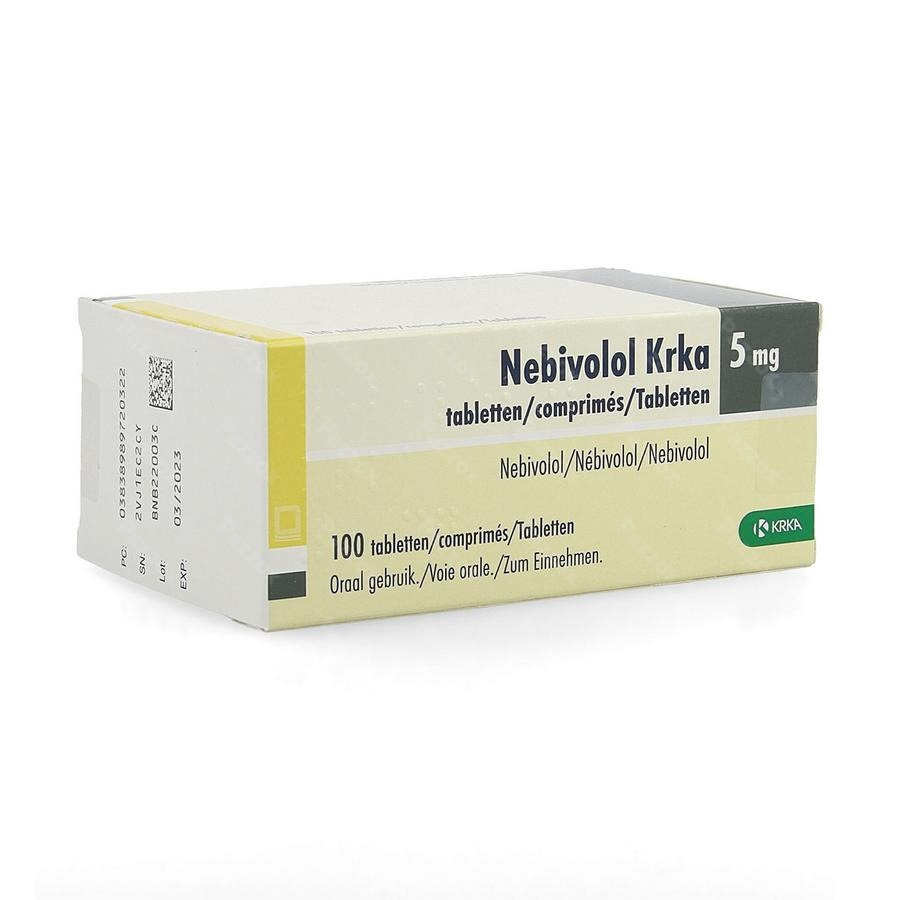
- Country of registration
- Dosage formTABLET, 5 mg
- ATC codeC07AB12
- Average pharmacy price7.87 EUR
- Active substance
- Prescription requiredYes
- Manufacturer
- CompositionLACTOSA MONOHIDRATO (141.840 mg mg), CROSCARMELOSA SODICA (13.800 mg mg)
- This information is for reference only and does not constitute medical advice. Always consult a doctor before taking any medication. Oladoctor is not responsible for medical decisions based on this content.
- Alternatives to NEBIVOLOL KRKA 5 mg TABLETSDosage form: TABLET, 10 mgActive substance: nebivololManufacturer: Glenmark Arzneimittel GmbhPrescription requiredDosage form: TABLET, 2.5 mgActive substance: nebivololManufacturer: Glenmark Arzneimittel GmbhPrescription requiredDosage form: TABLET, 5 mgActive substance: nebivololManufacturer: Glenmark Arzneimittel GmbhPrescription required
Online doctors for NEBIVOLOL KRKA 5 mg TABLETS
Discuss questions about NEBIVOLOL KRKA 5 mg TABLETS, including use, safety considerations and prescription review, subject to medical assessment and local regulations.
Get NEBIVOLOL KRKA 5 mg TABLETS Prescription Online
Fill in a 2-min form
Tell us your symptoms, history, and what medicine you're requesting.
Pick a doctor or let us assign
Choose a specialist or we'll match you with the next available doctor.
Doctor reviews your case
Usually within 30 minutes. They may ask follow-up questions via chat.
Collect from any pharmacy
Electronic prescription sent to your email — valid across Spain.
Frequently Asked Questions
NEBIVOLOL KRKA 5 mg TABLETS requires a prescription in Spain. You can check with a doctor online whether this medicine may be appropriate for your situation.
The active ingredient in NEBIVOLOL KRKA 5 mg TABLETS is nebivolol. This information helps identify medicines with the same composition but different brand names.
The average pharmacy price for NEBIVOLOL KRKA 5 mg TABLETS is around 7.87 EUR. Prices may vary depending on the manufacturer and dosage form.
NEBIVOLOL KRKA 5 mg TABLETS is manufactured by Krka D.D. Novo Mesto. Pharmacy brands and packaging may differ depending on the distributor.
Doctors such as Family doctors, Psychiatrists, Dermatologists, Cardiologists, Endocrinologists, Gastroenterologists, Pulmonologists, Nephrologists, Rheumatologists, Hematologists, Infectious disease physicians, Allergists, Geriatricians, Paediatricians, Oncologists may assess whether NEBIVOLOL KRKA 5 mg TABLETS is appropriate, depending on your situation and local regulations. You can book an online consultation to discuss your symptoms and possible next steps.
Spain has a well-developed healthcare infrastructure across major cities such as Madrid, Barcelona, Valencia, and Seville. Pharmacies are widely available and operate under strict regulations, ensuring access to prescribed medications.
You can buy NEBIVOLOL KRKA 5 mg TABLETS in Madrid, Barcelona, Seville, or Valencia at any local pharmacy with a valid prescription.
To obtain a prescription, you can use Oladoctor:
Other medicines with the same active substance (nebivolol) include INSUCOR 10 mg TABLETS, INSUCOR 2.5 mg TABLETS, INSUCOR 5 mg TABLETS. These may have different brand names or formulations but contain the same therapeutic ingredient. Always consult a doctor before switching or starting a new medicine.
