



NADIXA 1% CREAM

Prescription review online
A doctor will review your case and decide whether a prescription is medically appropriate.

Talk to a doctor about this medicine
Discuss your symptoms and possible next steps in a quick online consultation.



How to use NADIXA 1% CREAM
Contents of the leaflet
- Introduction
- What is Nadixa cream and what is it used for
- What you need to know before using Nadixa 1% cream
- How to use Nadixa
- Possible Side Effects
- Storage of Nadixa Cream
- Package Contents and Additional Information
Introduction
Package Leaflet: Information for the User
Nadixa 1% Cream
Nadifloxacin
Read the entire package leaflet carefully before starting to use this medication, as it contains important information for you.
- Keep this package leaflet, as you may need to read it again.
- If you have any questions, consult your doctor or pharmacist.
- This medication has been prescribed to you only, and you should not give it to others, even if they have the same symptoms as you, as it may harm them.
- If you experience side effects, consult your doctor or pharmacist, even if they are not listed in this package leaflet. See section 4.
Package Leaflet Contents
- What is Nadixa cream and what is it used for
- What you need to know before using Nadixa cream
- How to use Nadixa cream
- Possible side effects
- Storage of Nadixa cream
- Package Contents and Additional Information
1. What is Nadixa cream and what is it used for
Nadixa is an antimicrobial agent belonging to the quinolone group.
Nadixa is used for the treatment of mild or moderate inflammatory forms of acne vulgaris(papulopustular acne, grade I-II).

Not sure if this medicine is right for you?
Discuss your symptoms and treatment with a doctor online.
2. What you need to know before using Nadixa 1% cream
Do not use Nadixa 1% cream
If you are allergic to Nadifloxacin or any of the other components of this medication (listed in section 6).
Warnings and Precautions
Consult your doctor or pharmacist before starting to use Nadixa 1% cream.
Avoid contact between Nadixa and your eyes and other mucous membranes (mouth and nose). If, despite this, the cream comes into contact with your eyes or other mucous membranes, rinse the area with plenty of warm water.
After applying Nadixa cream, wash your hands with warm water and soap to avoid accidentally applying the medication to unwanted areas.
Photosensitivity reactions are known to occur during systemic treatment with other quinolones.While several studies in animals and humans have shown that Nadifloxacin lacks phototoxic and photoallergic potential, the cream base may have a potentiating effect on photosensitivity.Additionally, there is no experience with prolonged exposure to sunlight or artificial UV light when using Nadixa. Therefore, patients being treated with Nadixa should avoid, in principle, exposure to artificial UV radiation (UV lamps, sunbeds, solarium) and avoid sunlight whenever possible.
Discontinue use of Nadixa cream if a hypersensitivity reaction (itching, irritation, papules, vesicles) or severe irritation occurs.
Do not apply Nadixa if you have open wounds in the application area.
Children:
The safety and efficacy of Nadixa have not been sufficiently evaluated in children under 14 years of age. Therefore, the medication should not be used in patients in this age group.
Other medications and Nadixa 1% cream:
Tell your doctor or pharmacist if you are taking, or have recently taken, any other medication, including those purchased without a prescription.
The absorption of Nadifloxacin after applying Nadixa cream to the skin is very low, and therefore, interaction with other medications administered orally is unlikely. There is no evidence to suggest that the efficacy of systemically administered medications may be affected by the topical use of Nadixa cream.
Nadixa may cause increased skin irritation if applied while using other products with a peeling, astringent, and/or irritating effect (alcohols, aromatic agents).
Pregnancy and Breastfeeding:
If you are pregnant or breastfeeding, think you may be pregnant, or plan to become pregnant, consult your doctor or pharmacist before using this medication.
There are no clinical study data available on the effects of Nadifloxacin in pregnant women.
In animal studies, it has been shown that there is no risk of teratogenicity or other negative effects on fetal development.
However, Nadixa should only be used during pregnancy after careful evaluation by the doctor of the expected benefit to the mother versus the potential risks to the child.
It is known that Nadifloxacin is excreted in breast milk, so Nadixa cream should not be used during breastfeeding. Breastfeeding women should not apply Nadixa to the breast under any circumstances.
Driving and Using Machines:
No special precautions are necessary.
Nadixa 1% cream contains stearyl alcohol, cetyl alcohol, and benzalkonium chloride:
This medication may cause local skin reactions (such as contact dermatitis) because it contains stearyl alcohol and cetyl alcohol.
This medication contains 0.4 mg of benzalkonium chloride per 1 g of cream. Benzalkonium chloride may cause skin irritation. Do not apply to mucous membranes. Do not apply this medication to the breast during breastfeeding, as it may pass to the baby.
3. How to use Nadixa
Follow the administration instructions for this medication exactly as indicated by your doctor or pharmacist. If you have any doubts, consult your doctor or pharmacist again.
Nadixa is a cream for topical use only. Place a small amount of cream (the size of a pea) on a cotton swab to avoid infections. Apply a thin layer of the cream to the acne lesions twice a day, once in the morning and once before bedtime. Before applying the cream, clean and dry the area carefully. Avoid getting the cream in your eyes and lips (see also "Warnings and Precautions"). Nadixa cream should not be used under occlusive conditions (under a tight bandage).
The normal treatment duration is 8 weeks.
If you use more Nadixa cream than you should
It may cause redness and skin discomfort.
In case of accidental oral ingestion, a suitable method of gastric lavage should be considered, unless the amount of Nadixa accidentally ingested is small.
If you forget to use Nadixa cream
If you have forgotten to use Nadixa, continue with the application of the cream following the instructions described in this package leaflet or as indicated by your doctor.
If you interrupt treatment with Nadixa cream
To achieve the desired effect, carefully follow the instructions on the duration of treatment indicated in the "How to use Nadixa" section or as indicated by your doctor. Do not interrupt or suspend treatment without consulting your doctor.
If you have any other questions about the use of this medication, ask your doctor or pharmacist.

Started taking the medicine and have questions?
Discuss your symptoms and treatment with a doctor online.
4. Possible Side Effects
Like all medications, Nadixa can have side effects, although not everyone will experience them.
The following is an indication of the frequency with which possible side effects may occur:
Very Common: may affect more than 1 in 10 people
Common: may affect up to 1 in 10 people
Uncommon: may affect up to 1 in 100 people
Rare: may affect up to 1 in 1,000 people
Very Rare: may affect up to 1 in 10,000 people
Unknown: cannot be determined from available data
Common:
- Itching
Uncommon:
- Papules, skin dryness, contact dermatitis, skin irritation, warmth in the skin, redness, rash.
- Burning sensation at the application site.
- Redness
Rare:
- Urticaria
Reporting Side Effects
If you experience any type of side effect, consult your doctor or pharmacist, even if it is a possible side effect not listed in this package leaflet. You can also report them directly through the Spanish Medication Monitoring System: www.notificaRAM.es. By reporting side effects, you can contribute to providing more information on the safety of this medication.
5. Storage of Nadixa Cream
Keep this medication out of sight and reach of children.
Do not use this medication after the expiration date indicated on the box and tube. The expiration date is the last day of the month indicated.
This medication does not require special storage conditions. Do not refrigerate or freeze.
Medications should not be disposed of through wastewater or household waste. Deposit the packaging and unused medications at the pharmacy's SIGRE point. If you have any questions, ask your pharmacist how to dispose of the packaging and medications you no longer need. This will help protect the environment.
6. Package Contents and Additional Information
Nadixa Composition
The active ingredient is Nadifloxacin (1%). Each gram of Nadixa cream contains 10 mg of Nadifloxacin.
The other components are: soft white paraffin, light liquid paraffin, stearyl alcohol, cetyl alcohol, macrogol 5 cetostearyl ether, macrogol 20 cetostearyl ether, sodium hydroxide (E-524), sodium bicarbonate (E-500), sodium carbonate (E-500), glycerol (E-422), disodium edetate, benzalkonium chloride, and purified water.
Product Appearance and Package Contents
White or off-white cream without a characteristic odor.
Tubes containing 10 g, 20 g, 25 g, 30 g, and 50 g.
Tubes containing 5 g (only for samples)
Not all formats may be marketed in all countries.
Marketing Authorization Holder and Manufacturer
FERRER INTERNACIONAL, S.A.
Gran Vía Carlos III, 94
08028- Barcelona (Spain)
This package leaflet was approved in: December 2023
Detailed and updated information on this medication is available on the website of the Spanish Agency for Medicines and Health Products (AEMPS) http://www.aemps.gob.es/.
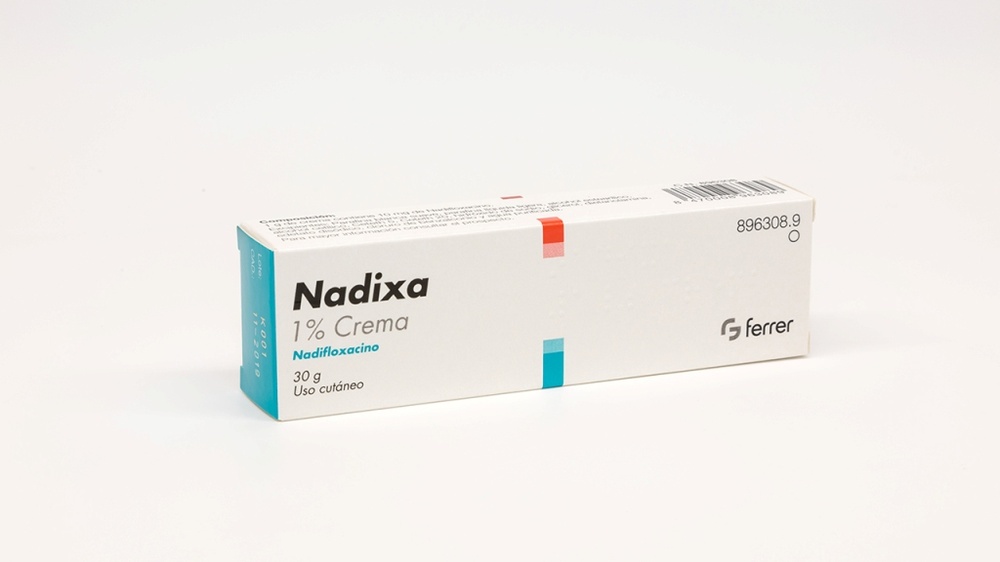
- Country of registration
- Dosage formCREAM, 30g
- ATC codeD10AF05
- Active substance
- Prescription requiredYes
- Manufacturer
- CompositionBENZALCONIO, CLORURO DE (0,04 g mg), GLICEROL (E 422) (10,0 g mg), ESTEARILICO, ALCOHOL (4,0 g mg), EDETATO DE DISODIO (0,10 g mg), HIDROGENOCARBONATO DE SODIO (0,622 g mg), HIDROXIDO DE SODIO (E 524) (0,148 g mg), CARBONATO DE SODIO (0,200 g mg), CETILICO, ALCOHOL (3,0 g mg)
- This information is for reference only and does not constitute medical advice. Always consult a doctor before taking any medication. Oladoctor is not responsible for medical decisions based on this content.
- Alternatives to NADIXA 1% CREAMDosage form: GEL, 1.188 g clindamycin phosphate / gActive substance: clindamycinManufacturer: Chiesi España S.A.U.Prescription requiredDosage form: TOPICAL SOLUTION, 30 mlActive substance: clindamycinManufacturer: Chiesi España S.A.U.Prescription requiredDosage form: EMULSION, 1% clindamycinActive substance: clindamycinManufacturer: Pfizer S.L.Prescription required
Online doctors for NADIXA 1% CREAM
Discuss questions about NADIXA 1% CREAM, including use, safety considerations and prescription review, subject to medical assessment and local regulations.



Get NADIXA 1% CREAM Prescription Online
Fill in a 2-min form
Tell us your symptoms, history, and what medicine you're requesting.
Pick a doctor or let us assign
Choose a specialist or we'll match you with the next available doctor.
Doctor reviews your case
Usually within 30 minutes. They may ask follow-up questions via chat.
Collect from any pharmacy
Electronic prescription sent to your email — valid across Spain.
Frequently Asked Questions
NADIXA 1% CREAM requires a prescription in Spain. You can check with a doctor online whether this medicine may be appropriate for your situation.
The active ingredient in NADIXA 1% CREAM is nadifloxacin. This information helps identify medicines with the same composition but different brand names.
NADIXA 1% CREAM is manufactured by Ferrer Internacional S.A.. Pharmacy brands and packaging may differ depending on the distributor.
Doctors such as Family doctors, Psychiatrists, Dermatologists, Cardiologists, Endocrinologists, Gastroenterologists, Pulmonologists, Nephrologists, Rheumatologists, Hematologists, Infectious disease physicians, Allergists, Geriatricians, Paediatricians, Oncologists may assess whether NADIXA 1% CREAM is appropriate, depending on your situation and local regulations. You can book an online consultation to discuss your symptoms and possible next steps.
Spain has a well-developed healthcare infrastructure across major cities such as Madrid, Barcelona, Valencia, and Seville. Pharmacies are widely available and operate under strict regulations, ensuring access to prescribed medications.
You can buy NADIXA 1% CREAM in Madrid, Barcelona, Seville, or Valencia at any local pharmacy with a valid prescription.
To obtain a prescription, you can use Oladoctor:
Other medicines with the same active substance (nadifloxacin) include CLINWAS 10 mg/g GEL, CLINWAS 10 mg/ml CUTANEOUS SPRAY SOLUTION, DALACIN 10 MG SKIN EMULSION. These may have different brand names or formulations but contain the same therapeutic ingredient. Always consult a doctor before switching or starting a new medicine.
