





How to use MOXON 0.3 mg FILM-COATED TABLETS
Translated with AI
This page provides general information and does not replace a doctor’s consultation. Always consult a doctor before taking any medication. Seek urgent medical care if symptoms are severe.
Show originalContents of the leaflet
Introduction
Package Leaflet: Information for the User
Moxon 0.3 mg Film-Coated Tablets
Moxonidine
Read the entire package leaflet carefully before starting to take this medication because it contains important information for you.
- Keep this package leaflet, as you may need to read it again.
- If you have any questions, consult your doctor or pharmacist.
- This medication has been prescribed to you only, and you should not give it to others, even if they have the same symptoms as you, as it may harm them.
- If you experience side effects, consult your doctor or pharmacist, even if they are not listed in this package leaflet. See section 4.
Contents of the Package Leaflet:
- What Moxon is and what it is used for
- What you need to know before taking Moxon
- How to take Moxon
- Possible side effects
- Storage of Moxon
- Package Contents and Additional Information

1. What Moxon is and what it is used for
Moxon belongs to a group of medications called imidazoline receptor agonists (medications that lower blood pressure).
Moxon is indicated for the treatment of arterial hypertension.
2. What you need to know before taking Moxon
Do not take Moxon
- If you are allergic to the active substance or any of the other components of the medication.
- If your heart beats slowly due to a condition called sick sinus syndrome or second- or third-degree AV block.
- If you have bradycardia.
- If you have heart failure.
Warnings and Precautions
Consult your doctor or pharmacist before starting to take Moxon:
- If you have a heart problem called first-degree AV block
- If you have severe coronary artery disease or unstable angina (chest pain)
- If you have kidney problems. Your doctor may need to adjust the dose.
- If you are taking a beta-blocker (to treat high blood pressure, arrhythmias, and other heart disorders) and need to stop taking both medications, first stop the beta-blocker and then stop Moxon a few days later.
- Do not stop taking Moxon abruptly, but rather gradually over 2 weeks.
- If you are an elderly person, as the initial dose will be lower and you will need to be monitored more closely for side effects.
Children and Adolescents
Moxon is not recommended for use in children and adolescents under 18 years of age due to the lack of data on safety and efficacy.
Using Moxon with Other Medications
Tell your doctor or pharmacist if you are taking, have recently taken, or might take any other medications.
Certain medications may interact with Moxon, and in these cases, it may be necessary to change the dose or stop treatment with one of the medications.
It is especially important to inform your doctor if you are taking one of the following medications:
- other medications that lower blood pressure. Moxon may enhance the effect of these medications
- medications for depression, such as imipramine or amitriptyline. It is not recommended to take them with Moxon.
- sedatives, sleeping pills (hypnotics), benzodiazepines (for anxiety). Moxon may increase the sedative effect of these medications. Moxon is eliminated from the body through the kidneys by a process called tubular excretion. Other medications that are eliminated through the kidneys by tubular excretion may affect how Moxon works.
Taking Moxon with Food, Drinks, and Alcohol
Moxon can be taken with or without food.
You should avoid consuming alcohol. Alcohol increases the sedative effect of Moxon.
Pregnancy and Breastfeeding
If you are pregnant or breastfeeding, think you may be pregnant, or plan to become pregnant, consult your doctor before taking this medication.
Consult your doctor or pharmacist before taking any medication.
Moxon should not be taken during pregnancy unless it is strictly necessary.
Moxon should not be taken during breastfeeding.
Driving and Using Machines
There is no information on whether Moxon affects the ability to drive or use machines. Drowsiness and dizziness have been reported. This should be taken into account when performing these activities.
Moxon Contains LactoseIf your doctor has told you that you have an intolerance to certain sugars, consult with them before taking this medication.

3. How to Take Moxon
Follow the instructions for taking Moxon exactly as indicated by your doctor or pharmacist. If you have any doubts, consult your doctor or pharmacist again.
The usual starting dose of moxonidine is 0.2 mg per day. The daily dose can be increased up to a maximum of 0.6 mg, divided into two doses. The maximum dose that can be administered to a patient in a single dose is 0.4 mg. The doses should be adjusted individually based on the patient's response.
Patient with Renal Impairment
In patients with moderate or severe renal insufficiency, the initial dose is 0.2 mg per day. If necessary and well-tolerated, the dose can be increased to 0.4 mg per day.
In patients undergoing hemodialysis, the initial dose is 0.2 mg per day. If necessary and well-tolerated, the dose can be increased to 0.3 mg per day.
Use in Children and Adolescents
Moxon is not recommended for use in children and adolescents under 18 years of age due to the lack of data on safety and efficacy.
If You Take More Moxon Than You Should
Consult your doctor immediately, go to the nearest hospital, or contact the Toxicology Information Service, phone 91 562 04 20, if you have taken more tablets than your doctor indicated.
If You Forget to Take Moxon
If you forget to take a dose, take it as soon as you remember. However, if there are less than 4 hours left before the next dose, wait until the next dose and take it at the usual time. Do not take a double dose to make up for the missed doses.
If You Stop Taking Moxon
If you have any other questions about the use of this product, ask your doctor, pharmacist, or nurse.
4. Possible Side Effects
Like all medications, this medication can cause side effects, although not everyone will experience them.
Stop taking Moxon and go to the doctor immediately if you notice any of the side effects described below, as you may need urgent treatment:
- swelling of the face, lips, or mouth (angioedema). This is very rare, affecting up to 1 in 100 people who take it.
Other side effects include:
Very common (may affect more than 1 in 10 people):
- dry mouth
Common (may affect up to 1 in 10 people):
- back pain
- headache
- fatigue (asthenia)
- dizziness, vertigo
- skin rash (rash), itching (pruritus)
- difficulty sleeping (insomnia), feeling drowsy (somnolence)
- feeling nauseous (nausea), diarrhea, vomiting, indigestion (dyspepsia)
Uncommon (may affect up to 1 in 100 people):
- neck pain
- feeling nervous
- fainting (syncope)
- inflammation (edema)
- ringing or sounds in the ears (tinnitus)
- slow heart rate (bradycardia)
low blood pressure, including when standing or getting up after sitting or lying down
Reporting Side Effects
If you experience any side effects, consult your doctor, pharmacist, or nurse, even if they are not listed in this package leaflet. You can also report them directly through the Spanish Medication Surveillance System: https://www.notificaram.es. By reporting side effects, you can help provide more information on the safety of this medication.
5. Storage of Moxon
Keep this medication out of the sight and reach of children.
Do not store above 30°C.
Do not use Moxon after the expiration date shown on the packaging after "CAD" or "EXP". The expiration date is the last day of the month indicated.
Medications should not be disposed of through wastewater or household waste. Deposit the packaging and any unused medications at the SIGRE collection point in your pharmacy. Ask your pharmacist how to dispose of the packaging and any unused medications. This will help protect the environment.
6. Package Contents and Additional Information
Moxon Composition
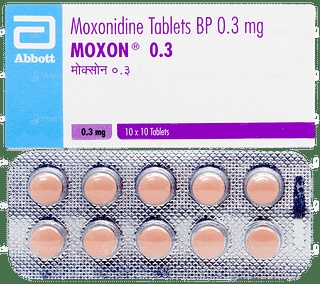
- The active substance is moxonidine. Each tablet contains 0.3 mg of moxonidine.
- The other components are lactose monohydrate, povidone K25, crospovidone, magnesium stearate, hypromellose 2910, ethylcellulose solution 30%, macrogol 6000, talc, red iron oxide (E 172), and titanium dioxide (E 171).
Appearance of the Product and Package Contents
Moxon 0.3 mg is presented in the form of film-coated tablets. Each package contains 30 or 60 tablets.
Marketing Authorization Holder and Manufacturer
Holder:
Viatris Healthcare Limited
Damastown Industrial Park
Mulhuddart, Dublin 15
Dublin
Ireland
Manufacturer:
Mylan Laboratories SAS
Route de Belleville – Lieu dit Maillard
01400 Châtillon sur Chalaronne
France
You can request more information about this medication from the local representative of the marketing authorization holder:
Viatris Pharmaceuticals, S.L.
C/ General Aranaz, 86
28027 Madrid
Spain
Date of the Last Revision of this Package Leaflet: January 2019
Detailed and updated information on this medication is available on the website of the Spanish Agency for Medicines and Health Products (AEMPS) http://www.aemps.gob.es/
-

- Country of registration
- Dosage formTABLET, 0.3 mg
- ATC codeC02AC05
- Average pharmacy price20.08 EUR
- Active substance
- Prescription requiredYes
- Manufacturer
- This information is for reference only and does not constitute medical advice. Always consult a doctor before taking any medication. Oladoctor is not responsible for medical decisions based on this content.
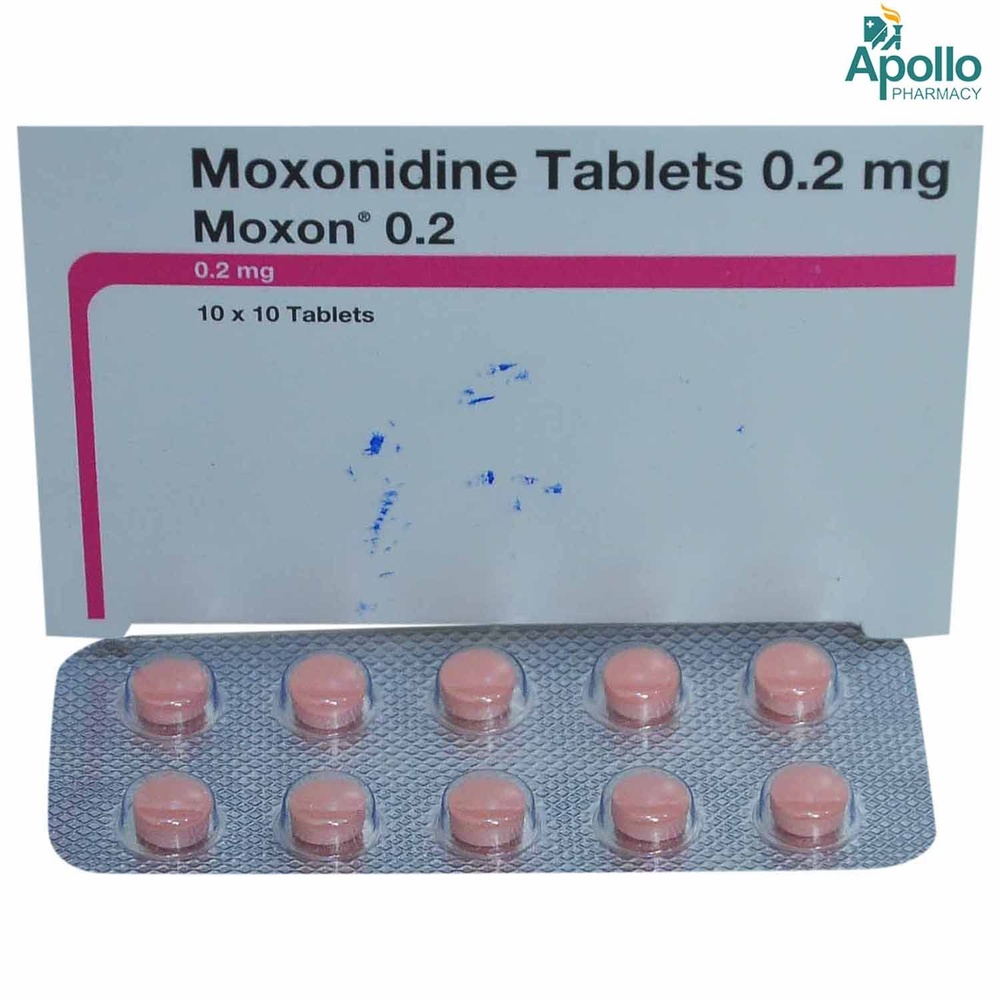
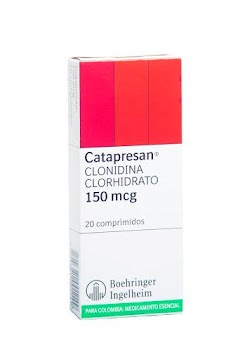
- Alternatives to MOXON 0.3 mg FILM-COATED TABLETSDosage form: TABLET, 0.2 mgActive substance: moxonidineManufacturer: Viatris Healthcare LimitedPrescription requiredDosage form: TABLET, 0.4 mgActive substance: moxonidineManufacturer: Viatris Healthcare LimitedPrescription requiredDosage form: TABLET, 0.150 mg clonidine hydrochlorideActive substance: clonidineManufacturer: Glenwood Gmbh Pharmazeutische ErzeugnissePrescription required
Online doctors for MOXON 0.3 mg FILM-COATED TABLETS
Discuss questions about MOXON 0.3 mg FILM-COATED TABLETS, including use, safety considerations and prescription review, subject to medical assessment and local regulations.



Get MOXON 0.3 mg FILM-COATED TABLETS Prescription Online
Fill in a 2-min form
Tell us your symptoms, history, and what medicine you're requesting.
Pick a doctor or let us assign
Choose a specialist or we'll match you with the next available doctor.
Doctor reviews your case
Usually within 30 minutes. They may ask follow-up questions via chat.
Collect from any pharmacy
Electronic prescription sent to your email — valid across Spain.
Frequently Asked Questions
MOXON 0.3 mg FILM-COATED TABLETS requires a prescription in Spain. You can check with a doctor online whether this medicine may be appropriate for your situation.
The active ingredient in MOXON 0.3 mg FILM-COATED TABLETS is moxonidine. This information helps identify medicines with the same composition but different brand names.
The average pharmacy price for MOXON 0.3 mg FILM-COATED TABLETS is around 20.08 EUR. Prices may vary depending on the manufacturer and dosage form.
MOXON 0.3 mg FILM-COATED TABLETS is manufactured by Viatris Healthcare Limited. Pharmacy brands and packaging may differ depending on the distributor.
Doctors such as Family doctors, Psychiatrists, Dermatologists, Cardiologists, Endocrinologists, Gastroenterologists, Pulmonologists, Nephrologists, Rheumatologists, Hematologists, Infectious disease physicians, Allergists, Geriatricians, Paediatricians, Oncologists may assess whether MOXON 0.3 mg FILM-COATED TABLETS is appropriate, depending on your situation and local regulations. You can book an online consultation to discuss your symptoms and possible next steps.
Spain has a well-developed healthcare infrastructure across major cities such as Madrid, Barcelona, Valencia, and Seville. Pharmacies are widely available and operate under strict regulations, ensuring access to prescribed medications.
You can buy MOXON 0.3 mg FILM-COATED TABLETS in Madrid, Barcelona, Seville, or Valencia at any local pharmacy with a valid prescription.
To obtain a prescription, you can use Oladoctor:
Other medicines with the same active substance (moxonidine) include MOXON 0.2 mg FILM-COATED TABLETS, MOXON 0.4 mg FILM-COATED TABLETS, CATAPRESAN 0.150 mg TABLETS. These may have different brand names or formulations but contain the same therapeutic ingredient. Always consult a doctor before switching or starting a new medicine.
