



MINIMS 100 mg /Ml Eye Drops Solution

Prescription review online
A doctor will review your case and decide whether a prescription is medically appropriate.

Talk to a doctor about this medicine
Discuss your symptoms and possible next steps in a quick online consultation.



How to use MINIMS PHENYLEPHRINE HYDROCHLORIDE 100 mg/mL EYE DROPS SOLUTION
Contents of the leaflet
- Introduction
- What Minims Fenilefrine Hydrochloride Eye Drops are and what they are used for
- What you need to know before you are given Minims Fenilefrine Hydrochloride Eye Drops
- How to Use Minims Fenilefrine Hydrochloride Eye Drops
- Possible Side Effects
- Storage of Minims Fenilefrine Hydrochloride Eye Drops
- Package Contents and Additional Information
Introduction
Package Leaflet: Information for the Patient
Minims®Fenilefrine Hydrochloride 100mg/mlEye Drops Solution
Fenilefrine Hydrochloride
Read the entire package leaflet carefully before starting to use this medication, as it contains important information for you.
Keep this package leaflet, as you may need to read it again. If you have any questions, consult your doctor or pharmacist.
This medication has been prescribed to you only, and you should not give it to others, even if they have the same symptoms as you, as it may harm them.
If you experience side effects, consult your doctor or pharmacist, even if they are not listed in this package leaflet. See section 4.
Contents of the Package Leaflet
- What Minims Fenilefrine Hydrochloride Eye Drops are and what they are used for
- What you need to know before you are given Minims Fenilefrine Hydrochloride Eye Drops
- How to use Minims Fenilefrine Hydrochloride Eye Drops
- Possible side effects
- Storage of Minims Fenilefrine Hydrochloride Eye Drops
- Package Contents and Additional Information
1. What Minims Fenilefrine Hydrochloride Eye Drops are and what they are used for
Minims Fenilefrine Hydrochloride 100 mg/ml contains Fenilefrine Hydrochloride, an active substance used to dilate the pupil of your eye.
This eye drop is used to dilate the pupil (mydriasis) for an eye examination or during eye surgery.

Not sure if this medicine is right for you?
Discuss your symptoms and treatment with a doctor online.
2. What you need to know before you are given Minims Fenilefrine Hydrochloride Eye Drops
Do not use Minims Fenilefrine Hydrochloride Eye Drops:
- if you are allergic to the active substance (fenilefrine) or any of the other ingredients of this medication listed in section 6.
- if you experience increased pressure (angle-closure glaucoma).
- in newborns.
- in children under 12 years of age.
- if you have high blood pressure.
- if you have heart disease, rapid heartbeat (tachycardia), dilations in main blood vessels (aneurysms), diabetes, or thyroid disease.
- If you are receiving treatment with antidepressants (MAOIs, tricyclic antidepressants) or antihypertensive medications (including beta-blockers). See the section "Other medications and Minims Fenilefrine Hydrochloride".
Warnings and Precautions
Talk to your doctor or pharmacist before using Minims Fenilefrine Hydrochloride.
- If you have high blood pressure or vascular disease, atherosclerosis, or if you have a contraindication for the use of medications that increase blood pressure in general, repeated administrations should be avoided.
- Use with caution in elderly patients and in people with pre-existing high blood pressure due to a higher risk of side effects on the heart and blood vessels.
- Minims Fenilefrine Hydrochloride 100 mg/ml should not be used in children under 12 years of age, as children seem more sensitive to the risk of serious side effects.
- The use of Minims Fenilefrine Hydrochloride 100 mg/ml is not recommended in children between 12 and 18 years of age, as there is no adequate clinical experience.
- If you have asthma.
- Before each use, it is necessary for the ophthalmologist to evaluate the depth of the anterior chamber to reduce the risk of angle-closure glaucoma.
- Be careful in case of hyperemia (excessive blood level in the eye), as there may be increased blood absorption.
- The transparency of the cornea may decrease if this medication is instilled when the cornea is damaged or removed.
- Do not wear contact lenses when using this product.
- For single use only. The dose of Minims Fenilefrine Hydrochloride should be discarded immediately after use.
- In the case of concomitant treatment with other eye drops containing active substances, a period of 15 minutes should be maintained between administrations.
Other Medications and Minims Fenilefrine Hydrochloride
Tell your doctor or pharmacist if you are taking, have recently taken, or might take any other medications.
- If you use medications to treat high blood pressure (in particular beta-blockers) because fenilefrine may reverse the blood pressure-lowering effect of these medications and may increase blood pressure.
- Tell your doctor if you are receiving treatment for depression.
- This medication should be used with caution if you are taking antidepressants such as MAOIs or within 10 days after taking these medications. When using tricyclic antidepressants, there is a higher risk of suffering from adverse cardiac and vascular effects. This risk is still present a few days after stopping treatment with these antidepressants.
- There is a higher risk of cardiac arrhythmias with concomitant use of certain anesthetics (halothane) or other heart medications (cardiac glycosides or quinidine).
Pregnancy, Breastfeeding, and Fertility
If you are pregnant or breastfeeding, think you may be pregnant, or plan to become pregnant, consult your doctor or pharmacist before using this medication.
There is limited or no information on the use of fenilefrine in pregnant or breastfeeding women. This medication should not be used during pregnancy or breastfeeding unless absolutely necessary.
No reproductive animal studies have been conducted with topical fenilefrine.
Driving and Using Machines
Due to the effect on vision (pupil dilation), the use may have adverse effects on the ability to drive and use machines. Do not drive vehicles or operate machinery until your vision is normal.
3. How to Use Minims Fenilefrine Hydrochloride Eye Drops
Follow exactly the administration instructions of this medication indicated by your doctor. In case of doubt, consult your doctor or pharmacist again.
The recommended dose is 1, 2, or 3 instillations every few minutes.
Minims Fenilefrine Hydrochloride is designed for single use and should be discarded immediately after use.
Do not touch the eye with the tip of the Minims Fenilefrine Hydrochloride container.
After administration of the eye drop, the following measures should be taken to reduce systemic absorption:
- Keep the eyelids closed for 2 minutes;
- Keep the lacrimal sac closed by pressing it with your finger for 2 minutes.
If You Use More Minims Fenilefrine Hydrochloride Than You Should.
In the case of an ocular overdose, the dilation of the pupil can be easily and quickly eliminated by a miotic.
Accidental oral ingestion may cause side effects such as headache, palpitations, and hypertension.
These effects should be treated symptomatically.
In the case of a fenilefrine overdose, a severe toxic reaction can occur rapidly, but it will be short-lived. Therefore, the treatment is mainly symptomatic. Immediate injection of a rapid-acting alpha-adrenergic blocking agent such as phentolamine (2-5 mg, IV) is recommended.
In case of overdose, consult your doctor, pharmacist, or call the Toxicology Information Service, phone: 91 562 04 20.
If You Forget to Use Minims Fenilefrine Hydrochloride.
Do not take a double dose to make up for a forgotten dose.
If you have any doubts about the use of this medication, consult your doctor or pharmacist.

Started taking the medicine and have questions?
Discuss your symptoms and treatment with a doctor online.
4. Possible Side Effects
Like all medications, this medication can cause side effects, although not everyone will experience them.
The following side effects have been reported:
Ocular Effects
Allergic symptoms such as conjunctivitis and keratitis, with redness, burning, itching, and photophobia may occur. If such symptoms occur, treatment should be discontinued. Pupil constriction (miosis) may occur after stopping treatment.
Systemic Effects
In the case of frequent and prolonged administration, blood absorption is possible, and the following adverse effects may occur: headache, palpitations, hypertension, rapid heartbeat, difficulty breathing (shortness of breath), dizziness. Serious cardiovascular reactions, including coronary artery spasms, cardiac arrhythmias, and infarction, have been reported after the topical use of fenilefrine hydrochloride 100 mg/ml solution. In patients with pre-existing cardiovascular disease, these reactions were sometimes fatal.
Additional Side Effects in Children:Unknown frequency (cannot be estimated from available data) fluid or swelling in the lungs
Reporting Side Effects
If you experience any side effects, consult your doctor or pharmacist, even if they are not listed in this package leaflet. You can also report them directly through the Spanish Medication Surveillance System for Human Use: https://www.notificaram.es. By reporting side effects, you can contribute to providing more information on the safety of this medication.
5. Storage of Minims Fenilefrine Hydrochloride Eye Drops
Keep this medication out of the sight and reach of children.
Store at temperatures below 25°C in the original package to protect it from light.
Do not use this medication after the expiration date stated on the box after "EXP". The expiration date is the last day of the month indicated.
Medications should not be disposed of through wastewater or household waste. Deposit the containers and medications you no longer need at the SIGRE collection point in your pharmacy. If in doubt, ask your pharmacist how to dispose of the containers and medications you no longer need. This will help protect the environment.
6. Package Contents and Additional Information
Composition of Minims Fenilefrine Hydrochloride
- The active substance is fenilefrine hydrochloride: 100 mg/ml.
- The other excipients are: disodium edetate, sodium metabisulfite, and purified water.
Appearance of the Product and Package Contents
MINIMS containers and polypropylene cap, containing 0.5 ml of solution. Each MINIMS is packaged in a polypropylene bag. Boxes of 5 and 20 MINIMS.
Not all package sizes may be marketed.
Marketing Authorization Holder and Manufacturer
Marketing Authorization Holder:
BAUSCH + LOMB IRELAND LIMITED
3013 Lake Drive
Citywest Business Campus
Dublin 24, D24PPT3
Ireland
Manufacturer:
Laboratoire Chauvin
Z.I.Ripotier
07200 Aubenas – France
You can request more information about this medication by contacting the local representative of the marketing authorization holder.
Local Representative in Spain
Bausch & Lomb S.A.
Avda. Valdelaparra, nº 4 28108 Alcobendas
Madrid
Tel: 91 – 657 63 00
Date of the Last Revision of this Package Leaflet:September/2024
Detailed and updated information on this medication is available on the website of the Spanish Agency for Medicines and Health Products (AEMPS) http://www.aemps.gob.es/
- Country of registration
- Dosage formEYEDROP, 100 mg/ml
- ATC codeS01FB01
- Active substance
- Prescription requiredYes
- Manufacturer
- CompositionEDETATO DE DISODIO (0.050 % P/V mg), SODIO, METABISULFITO DE (E 223) (0.100 % P/V mg)
- This information is for reference only and does not constitute medical advice. Always consult a doctor before taking any medication. Oladoctor is not responsible for medical decisions based on this content.
- Alternatives to MINIMS PHENYLEPHRINE HYDROCHLORIDE 100 mg/mL EYE DROPS SOLUTIONDosage form: EYEDROP, 10%Active substance: phenylephrineManufacturer: M4 Pharma S.L.Prescription requiredDosage form: EYEDROP, -Active substance: atropineManufacturer: Alcon Healthcare S.A.Prescription requiredDosage form: EYEDROP, 5 mgActive substance: atropineManufacturer: Alcon Healthcare S.A.Prescription required
Online doctors for MINIMS PHENYLEPHRINE HYDROCHLORIDE 100 mg/mL EYE DROPS SOLUTION
Discuss questions about MINIMS PHENYLEPHRINE HYDROCHLORIDE 100 mg/mL EYE DROPS SOLUTION, including use, safety considerations and prescription review, subject to medical assessment and local regulations.









Get MINIMS PHENYLEPHRINE HYDROCHLORIDE 100 mg/mL EYE DROPS SOLUTION Prescription Online
Fill in a 2-min form
Tell us your symptoms, history, and what medicine you're requesting.
Pick a doctor or let us assign
Choose a specialist or we'll match you with the next available doctor.
Doctor reviews your case
Usually within 30 minutes. They may ask follow-up questions via chat.
Collect from any pharmacy
Electronic prescription sent to your email — valid across Spain.
Frequently Asked Questions
MINIMS PHENYLEPHRINE HYDROCHLORIDE 100 mg/mL EYE DROPS SOLUTION requires a prescription in Spain. You can check with a doctor online whether this medicine may be appropriate for your situation.
The active ingredient in MINIMS PHENYLEPHRINE HYDROCHLORIDE 100 mg/mL EYE DROPS SOLUTION is phenylephrine. This information helps identify medicines with the same composition but different brand names.
MINIMS PHENYLEPHRINE HYDROCHLORIDE 100 mg/mL EYE DROPS SOLUTION is manufactured by Bausch + Lomb Ireland Limited. Pharmacy brands and packaging may differ depending on the distributor.
Doctors such as Family doctors, Psychiatrists, Dermatologists, Cardiologists, Endocrinologists, Gastroenterologists, Pulmonologists, Nephrologists, Rheumatologists, Hematologists, Infectious disease physicians, Allergists, Geriatricians, Paediatricians, Oncologists may assess whether MINIMS PHENYLEPHRINE HYDROCHLORIDE 100 mg/mL EYE DROPS SOLUTION is appropriate, depending on your situation and local regulations. You can book an online consultation to discuss your symptoms and possible next steps.
Spain has a well-developed healthcare infrastructure across major cities such as Madrid, Barcelona, Valencia, and Seville. Pharmacies are widely available and operate under strict regulations, ensuring access to prescribed medications.
You can buy MINIMS PHENYLEPHRINE HYDROCHLORIDE 100 mg/mL EYE DROPS SOLUTION in Madrid, Barcelona, Seville, or Valencia at any local pharmacy with a valid prescription.
To obtain a prescription, you can use Oladoctor:
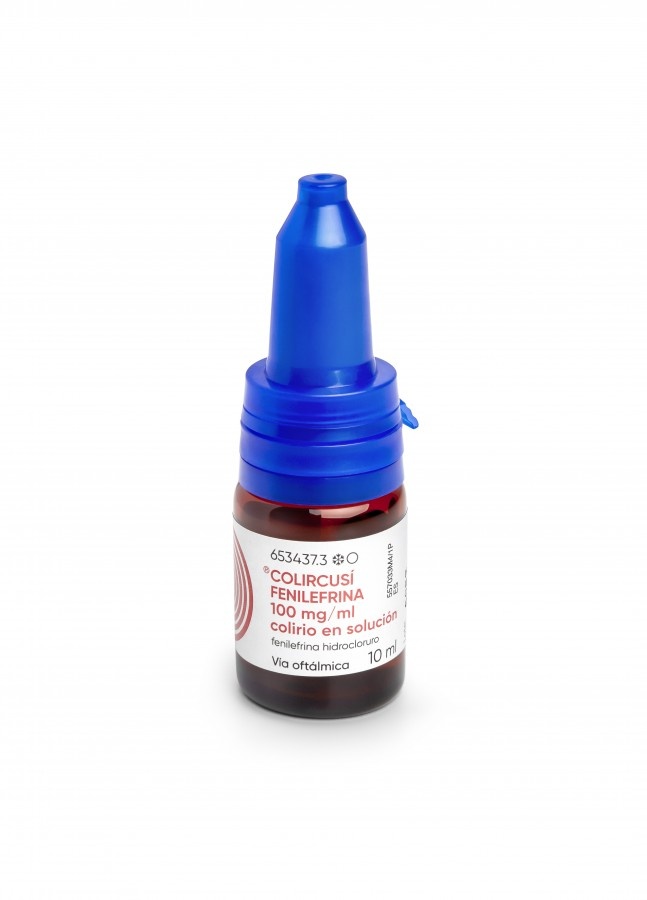
Other medicines with the same active substance (phenylephrine) include COLIRCUSI FENILEFRINA 100 mg/ml eye drops solution, COLIROFTA ATROPINE 10 mg/ml EYE DROPS SOLUTION, COLIROFTA ATROPINE 5 mg/ml EYE DROPS SOLUTION. These may have different brand names or formulations but contain the same therapeutic ingredient. Always consult a doctor before switching or starting a new medicine.
