



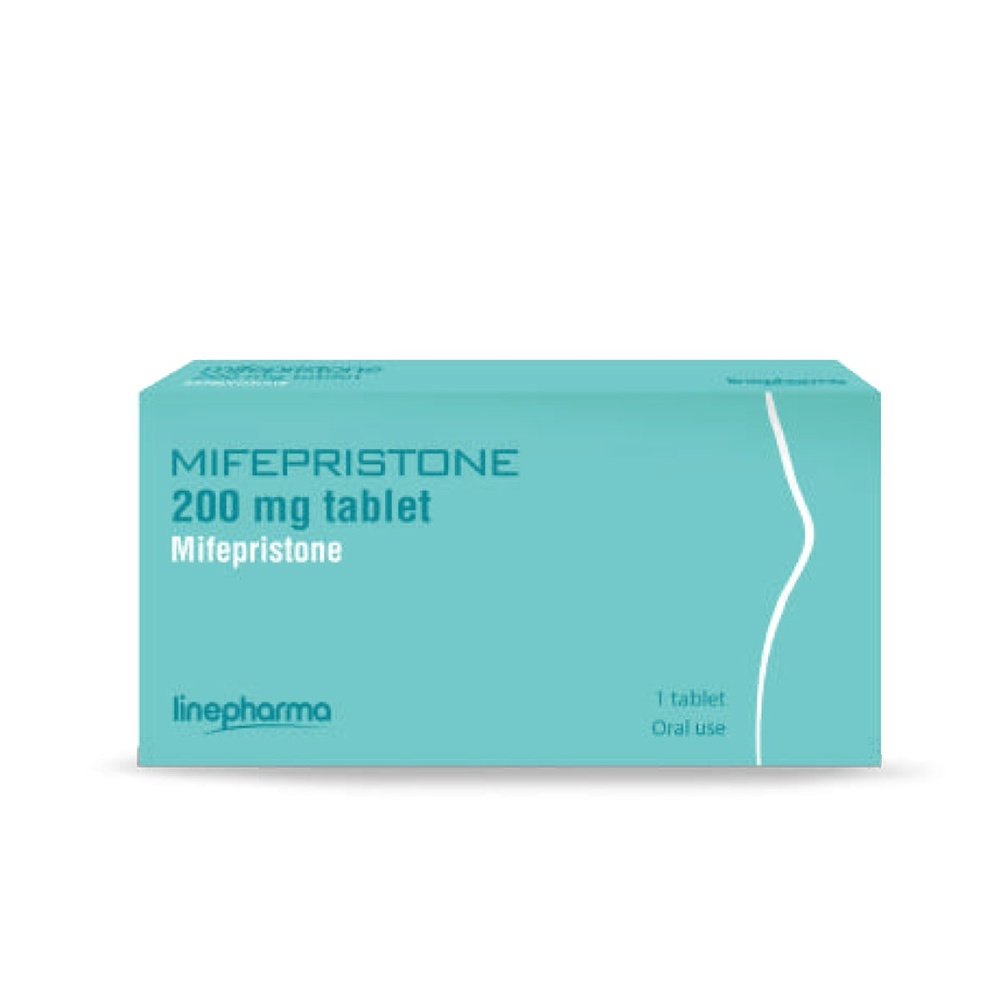
MIFEPRISTONA 200 mg Tablets

Prescription review online
A doctor will review your case and decide whether a prescription is medically appropriate.

Talk to a doctor about this medicine
Discuss your symptoms and possible next steps in a quick online consultation.



How to use MIFEPRISTONE LINEPHARMA 200 mg TABLETS
Contents of the leaflet
- Introduction
- What is Mifepristona Linepharma and what is it used for
- What you need to know before you use Mifepristona Linepharma
- How to use Mifepristona Linepharma
- Possible side effects
- Storage of Mifepristona Linepharma
- Contents of the pack and other information
Introduction
Package Leaflet: Information for the User
Mifepristona Linepharma 200 mg tablets
mifepristone
Read all of this leaflet carefully before you start using this medicine because it contains important information for you.
- Keep this leaflet, you may need to read it again.
- If you have any further questions, ask your doctor or pharmacist.
- This medicine has been prescribed for you only. Do not pass it on to others. It may harm them, even if their signs of illness are the same as yours.
- If you get any side effects, talk to your doctor or pharmacist. This includes any possible side effects not listed in this leaflet. See section 4.
Contents of the pack
- What is Mifepristona Linepharma and what is it used for
- What you need to know before you use Mifepristona Linepharma
- How to use Mifepristona Linepharma
- Possible side effects
- Storage of Mifepristona Linepharma
- Contents of the pack and other information
1. What is Mifepristona Linepharma and what is it used for
Mifepristona Linepharma is an anti-hormone that acts by blocking the effects of progesterone, a hormone necessary for the continuation of pregnancy. Mifepristona Linepharma can therefore cause the interruption of pregnancy.
Mifepristona Linepharma is recommended for medical termination of pregnancy:
- Up to a maximum of 63 days after the first day of your last menstrual period.
- In combination with another treatment called prostaglandin (a substance that increases uterine contractions) taken 36 to 48 hours after taking Mifepristona Linepharma.

Not sure if this medicine is right for you?
Discuss your symptoms and treatment with a doctor online.
2. What you need to know before you use Mifepristona Linepharma
Do not take Mifepristona Linepharma
- If you are allergic (hypersensitive) to mifepristone or any of the other ingredients of this medicine (listed in section 6).
- If you have adrenal insufficiency.
- If you have uncontrolled asthma.
- If you have hereditary porphyria.
- If your pregnancy has not been confirmed by a biological test or ultrasound.
- If the first day of your last menstrual period was more than 63 days ago (9 weeks).
- If your doctor suspects an ectopic pregnancy (the egg is implanted outside the uterus).
- Given the need to prescribe a prostaglandin in association with mifepristone, you should not receive this treatment if you are allergic to prostaglandins.
Warnings and precautions
Severe skin reactions, such as toxic epidermal necrolysis and acute generalized exanthematous pustulosis, have been reported with Mifepristone Linepharma treatment. Seek medical attention immediately if you experience any of the symptoms described in section 4. If you experience a severe skin reaction, you should not use mifepristone again in the future.
Be especially careful with Mifepristona Linepharma
As in some other circumstances the treatment may be unsuitable for you, tell your doctor if:
- You have a heart problem.
- You have risk factors for heart disease, such as high blood pressure or high cholesterol levels in the blood.
- You have asthma.
- You have any disease that may affect your blood coagulation.
- You have liver or kidney disease.
- You have anemia or malnutrition.
- You have an infection.
Your doctor will be able to discuss with you whether you can receive the treatment.
You may have prolonged and/or heavy vaginal bleeding (an average of 12 days or more after taking Mifepristona Linepharma). The occurrence of this bleeding is not related to the success of the treatment.
Other medicines and Mifepristona Linepharma
Tell your doctor if you are taking, have recently taken or might take any other medicines, including those obtained without a prescription.
In particular, tell your doctor if you are taking:
- Corticosteroids (used to treat asthma and other inflammatory conditions).
- Ketoconazole, itraconazole (used to treat fungal infections).
- Erythromycin, rifampicin (antibiotics).
- St. John's Wort (a natural remedy used to treat mild depression).
- Phenytoin, phenobarbital, carbamazepine (used to treat seizures and epilepsy).
- Non-steroidal anti-inflammatory medicines (NSAIDs) such as aspirin or diclofenac.
Taking Mifepristona Linepharma with food and drinks:
- You should not drink grapefruit juice when you are being treated with Mifepristona Linepharma.
This method requires the participation of the woman, who must be informed of the requirements of the method:
- Necessity of combining the treatment with the administration of prostaglandins in a second visit.
- Necessity of a follow-up visit 14 to 21 days after taking Mifepristona Linepharma to check that the abortion is complete.
- Risk of failure of the method, which may require interruption by another method; in very rare cases, surgical intervention may be necessary.
Fertility, pregnancy and breast-feeding
Pregnancy
There is limited information on the risks to the fetus. If the pregnancy continues and you decide to carry it to term, talk to your doctor, who will arrange for close prenatal monitoring and ultrasound scans.
Breast-feeding
Since Mifepristona Linepharma may pass into breast milk and may be ingested by your baby, you should stop breast-feeding once you have taken the treatment.
Fertility
Studies of the use of mifepristone in animals do not indicate direct or indirect harmful effects with respect to fertility.
It is recommended that you avoid becoming pregnant again during your next menstrual period after taking Mifepristona Linepharma.
Consult your doctor or pharmacist before using any medicine.
Driving and using machines
No studies have been published on the effects on the ability to drive vehicles and use machines.
3. How to use Mifepristona Linepharma
Follow the instructions for administration of this medicine exactly as indicated by your doctor. If you are in doubt, consult your doctor again.
Mifepristona Linepharma is for oral use.
Method of administration: you should take 200 mg of mifepristone (1 tablet) followed, 36 to 48 hours later, by the administration of a prostaglandin analogue (1 vaginal tablet containing 1 mg of gemeprost).
If you are taking other medicines, you may need a higher dose of mifepristone. It is important that you inform your doctor if you are taking other medicines. See Section 2 "Other medicines and Mifepristona Linepharma".
You should swallow the Mifepristona Linepharma tablet with a little water in the presence of a doctor or a member of their medical team.
In the event of a pregnancy with an intrauterine device in place, it should be removed.
Expulsion may occur before the administration of the prostaglandin (in approximately 3% of cases). This does not exclude the follow-up visit to check that the abortion is complete.
After administration of Mifepristona Linepharma, you will return home. Uterine bleeding usually starts 1 to 2 days after taking Mifepristona Linepharma.
In rare cases, expulsion may occur before taking the prostaglandin. It is essential that you have a check-up to confirm that the expulsion is complete; for this, you must return to the center.
Two days later, you will be given the prostaglandin. You should rest for 3 hours after receiving the prostaglandin. The embryo may be expelled a few hours after administration of the prostaglandin or during the following days. Bleeding lasts an average of 12 days or more. If you experience heavy or prolonged bleeding, you should consult your doctor immediately, in order to arrange a visit before the scheduled one.
You should return to the center for the follow-up visit within 14 to 21 days after taking Mifepristona Linepharma. If the pregnancy continues or the expulsion is incomplete, you will be offered an alternative method to terminate the pregnancy.
It is recommended that you do not travel far from the center where you were prescribed the medicine until then.
In case of emergency or if you are concerned for any reason, you can contact your center by phone or go there before the scheduled date for your next visit. You will be given the phone number for emergency consultations or any problems.
The use of Mifepristona Linepharma requires measures to prevent sensitization to the Rh factor (if you are Rh negative) in addition to the general measures taken during any termination of pregnancy.
It is possible to become pregnant again immediately after termination of pregnancy.
As some effects of Mifepristona Linepharma may still persist, it is recommended that you avoid becoming pregnant again before your next menstrual period after taking Mifepristona Linepharma.
Use in children
There is no information available on treatments in women under 18 years of age.
If you take more Mifepristona Linepharma than you should
Since you will be under medical supervision during administration of the medicine, it is unlikely that you will take more than you should.
In case of overdose or accidental ingestion, consult your doctor or pharmacist immediately or call the Toxicology Information Service, phone: 91 562 04 20, indicating the medicine and the amount ingested.
If you forget to take Mifepristona Linepharma
If you forget to follow any part of the treatment, it is likely that the method will not be totally effective. Inform your doctor if you forget to take the treatment.
If you have any other questions about the use of this product, consult your doctor.

Started taking the medicine and have questions?
Discuss your symptoms and treatment with a doctor online.
4. Possible side effects
Like all medicines, this medicine can cause side effects, although not everybody gets them.
If you experience any of the following symptoms, go to your doctor or the nearest hospital immediately:
- Heavy vaginal bleeding (frequency: frequent). See also section 2, "Warnings and precautions"
- Infections: cases of fatal toxic shock caused by endometritis due to Clostridium sordelliiinfection. This can cause symptoms such as: fever accompanied by muscle pain, rapid heart rate, dizziness, diarrhea, vomiting, or feeling of weakness. It can also occur without fever or other apparent symptoms of infection (frequency: rare or very rare)
- Severe allergic reactions (angioedema and anaphylaxis) swelling of the face, tongue, or throat, difficulty swallowing, rash (skin eruption), difficulty breathing (frequency: rare or very rare)
- Cardiovascular accidents: heart attack, cardiac arrhythmias (frequency: rare or very rare)
- Sharp drop in blood pressure, caused by loss of a large amount of blood (hemorrhagic shock) (frequency: uncommon).
- Red patches on the trunk. These patches are target-shaped or circular red spots, often with central blisters, skin peeling, and ulcers in the mouth, throat, nose, genitals, and eyes. These severe skin eruptions can be preceded by fever and flu-like symptoms (toxic epidermal necrolysis; frequency: rare or very rare).
- Generalized exfoliative red rash, with bumps under the skin and blisters accompanied by fever. These symptoms usually appear at the start of treatment (acute generalized exanthematous pustulosis; frequency: unknown).
Other side effects that may appear:
The following side effects have been observed:
Very common side effects (may affect more than 1 in 10 people):
- Headaches.
- Vaginal bleeding.
- Effects related to the use of prostaglandins, such as nausea, vomiting, diarrhea, dizziness, abdominal discomfort, abdominal pain, uterine spasms, fatigue, and chills or fever.
- Uterine contractions or spasms in the hours following administration of the prostaglandin.
Common side effects (may affect up to 1 in 10 people):
- Prolonged bleeding after abortion.
- Spotting.
- Severe bleeding.
- Endometritis (inflammation of the uterus).
- Breast tenderness.
- Fainting.
- Cramps.
Uncommon side effects (may affect up to 1 in 100 people):
- Salpingitis (infection of the fallopian tubes).
- Infection.
- Hypotension.
Rare side effects (may affect up to 1 in 1,000 people) and very rare side effects (may affect up to 1 in 10,000 people):
- Ectopic pregnancy.
- Bilateral adnexal mass (enlargement of the fallopian tubes).
- Intrauterine adhesions, uterine rupture, hematosalpinx (bleeding in the fallopian tubes).
- Ovarian cyst rupture.
- Breast abscess.
- Molar pregnancy, trophoblastic tumor, elevated alpha-fetoprotein, elevated carcinoembryonic antigen, amniotic band syndrome, uteroplacental apoplexy.
- Urticarial reaction, periorbital edema.
- Bronchospasm, asthma.
- Abnormal liver function tests.
- Liver failure.
- Gastric hemorrhage.
- Epilepsy.
- Tinnitus (ringing in the ears).
- Mania.
- Superficial thrombophlebitis.
- Thrombotic thrombocytopenic purpura (coagulation disorder).
- Thrombocytopenia.
- Systemic lupus erythematosus induced.
- Renal failure.
- Muscle spasms.
- Ophthalmoplegia.
- Erythema nodosum.
- Vagal symptoms (hot flashes, skin rash/itching).
- General malaise.
In a very small number of women, especially those who have undergone uterine surgery or cesarean section, there is a risk of uterine rupture or perforation during another pregnancy.
Reporting of side effects
If you experience any side effects, talk to your doctor, pharmacist, or nurse, even if they are not listed in this leaflet. You can also report them directly through the Spanish Pharmacovigilance System for Human Use Medicines: https://www.notificaram.es. By reporting side effects, you can help provide more information on the safety of this medicine.
5. Storage of Mifepristona Linepharma
Keep this medicine out of the sight and reach of children.
Store the blister in the original packaging to protect it from light.
Medicines should not be disposed of via wastewater or household waste. Ask your pharmacist how to dispose of the packaging and any unused medicines. This will help protect the environment.
6. Contents of the pack and other information
Composition of Mifepristona Linepharma
- The active substance is mifepristone. Each tablet contains 200 mg of mifepristone.
- The other ingredients are cornstarch, povidone, microcrystalline cellulose, anhydrous colloidal silica, and magnesium stearate.
Appearance of Mifepristona Linepharma and contents of the pack
White or almost white, round tablet, 11 mm in diameter, with MF engraved on one side of the tablet.
PVC-PVDC-aluminum blister pack with 1 tablet and 30 tablets (clinical packaging).
Not all pack sizes may be marketed.
Marketing authorization holder and manufacturer
Marketing authorization holder
LINEPHARMA
216 boulevard Saint-Germain
75007 Paris
FRANCE
Manufacturer
Laboratorios León Farma, S.A.
Polígono Industrial Navatejera
C/ La Vallina, s/n
24193 Villaquilambre, León
SPAIN
or
Delpharm Lille S.A.S.
Parc D’Activités Roubaix Est
22 Rue de Toufflers
Cs 50070
59452 Lys Lez Lannoy Cedex
FRANCE
Local representative
Mifepharma, S.L.
C/ Venezuela, nº 28, planta EN
36203 Vigo – Pontevedra
SPAIN
This medicine is authorized in the Member States of the European Economic Area under the following names:
France: MIFFEE® 200 mg tablet
Spain: Mifepristona Linepharma 200 mg tablets
Iceland: Mifepristone Linepharma 200 mg tablets
Sweden: Mifepristone Linepharma 200 mg tablet
United Kingdom: Mifepristone Linepharma 200 mg tablet
This leaflet was approved inSeptember 2022
Other sources of information
Detailed information on this medicine is available on the website of the Spanish Agency for Medicines and Health Products (AEMPS) http://www.aemps.gob.es/
- Country of registration
- Dosage formTABLET, 200 mg
- ATC codeG03XB01
- Active substance
- Prescription requiredYes
- Manufacturer
- This information is for reference only and does not constitute medical advice. Always consult a doctor before taking any medication. Oladoctor is not responsible for medical decisions based on this content.
- Alternatives to MIFEPRISTONE LINEPHARMA 200 mg TABLETSDosage form: TABLET, 200 mgActive substance: mifepristoneManufacturer: ExelgynPrescription requiredDosage form: TABLET, 600 mgActive substance: mifepristoneManufacturer: ExelgynPrescription requiredDosage form: TABLET, 20 mgActive substance: bazedoxifeneManufacturer: Pfizer Europe Ma EeigPrescription required
Online doctors for MIFEPRISTONE LINEPHARMA 200 mg TABLETS
Discuss questions about MIFEPRISTONE LINEPHARMA 200 mg TABLETS, including use, safety considerations and prescription review, subject to medical assessment and local regulations.

Get MIFEPRISTONE LINEPHARMA 200 mg TABLETS Prescription Online
Fill in a 2-min form
Tell us your symptoms, history, and what medicine you're requesting.
Pick a doctor or let us assign
Choose a specialist or we'll match you with the next available doctor.
Doctor reviews your case
Usually within 30 minutes. They may ask follow-up questions via chat.
Collect from any pharmacy
Electronic prescription sent to your email — valid across Spain.
Frequently Asked Questions
MIFEPRISTONE LINEPHARMA 200 mg TABLETS requires a prescription in Spain. You can check with a doctor online whether this medicine may be appropriate for your situation.
The active ingredient in MIFEPRISTONE LINEPHARMA 200 mg TABLETS is mifepristone. This information helps identify medicines with the same composition but different brand names.
MIFEPRISTONE LINEPHARMA 200 mg TABLETS is manufactured by Linepharma. Pharmacy brands and packaging may differ depending on the distributor.
Doctors such as Family doctors, Psychiatrists, Dermatologists, Cardiologists, Endocrinologists, Gastroenterologists, Pulmonologists, Nephrologists, Rheumatologists, Hematologists, Infectious disease physicians, Allergists, Geriatricians, Paediatricians, Oncologists may assess whether MIFEPRISTONE LINEPHARMA 200 mg TABLETS is appropriate, depending on your situation and local regulations. You can book an online consultation to discuss your symptoms and possible next steps.
Spain has a well-developed healthcare infrastructure across major cities such as Madrid, Barcelona, Valencia, and Seville. Pharmacies are widely available and operate under strict regulations, ensuring access to prescribed medications.
You can buy MIFEPRISTONE LINEPHARMA 200 mg TABLETS in Madrid, Barcelona, Seville, or Valencia at any local pharmacy with a valid prescription.
To obtain a prescription, you can use Oladoctor:
Other medicines with the same active substance (mifepristone) include MIFEGYNE 200 mg TABLETS, MIFEGYNE 600 MG TABLETS, CONBRIZA 20 mg FILM-COATED TABLETS. These may have different brand names or formulations but contain the same therapeutic ingredient. Always consult a doctor before switching or starting a new medicine.
