






How to use METAMIZOLE BASI 500 MG/ML INJECTABLE SOLUTION
Translated with AI
This page provides general information and does not replace a doctor’s consultation. Always consult a doctor before taking any medication. Seek urgent medical care if symptoms are severe.
Show originalContents of the leaflet
Introduction
Package Leaflet: Information for the User
Metamizol Basi 500 mg/ml Solution for Injection EFG
metamizole sodium monohydrate
Metamizol Basi can cause a lower than normal white blood cell count (agranulocytosis), which can lead to serious and potentially life-threatening infections (see section 4). You should stop taking this medicine and contact your doctor immediately if you experience any of the following symptoms: fever, chills, sore throat, painful sores in your nose, mouth, and throat, or in the genital or anal area. If you have ever had agranulocytosis with metamizole or similar medicines, you should never take this medicine again (see section 2). |
Read all of this leaflet carefully before you start using this medicine because it contains important information for you.
- Keep this leaflet, you may need to read it again.
- If you have any further questions, ask your doctor, pharmacist, or nurse.
- This medicine has been prescribed for you only. Do not pass it on to others. It may harm them, even if their signs of illness are the same as yours.
- If you get any side effects, talk to your doctor, pharmacist, or nurse. This includes any possible side effects not listed in this leaflet. See section 4.
Contents of the Package Leaflet
- What is Metamizol Basi and what is it used for
- What you need to know before you use Metamizol Basi
- How to use Metamizol Basi
- Possible side effects
- Storage of Metamizol Basi
- Contents of the pack and other information

1. What is Metamizol Basi and what is it used for
Metamizol Basi is a non-addictive medicine with analgesic (pain-relieving), antipyretic (fever-reducing), and spasmolytic (anti-spasmodic) effects.
Because it can be administered intravenously, a very strong analgesic effect can be achieved for a variety of conditions, and it can influence pain that would otherwise only respond to opioid-containing preparations. Metamizol Basi, even in high doses (unlike opioids), does not cause addiction or respiratory depression. It does not affect intestinal movements during digestion or labor contractions.
The medicine is used to treat severe, sudden, or persistent pain and fever that does not respond to other treatments. The active ingredient of Metamizol Basi is metamizole.
2. What you need to know before you use Metamizol Basi
Do not use Metamizol Basi
- If you are allergic to metamizole or any of the other ingredients of this medicine (listed in section 6) or to other related substances (e.g., phenazone, propyphenazone, phenylbutazone, oxyphenbutazone).
- If you have a bone marrow disorder (e.g., after cancer treatment) or a hematopoietic disorder. If you have ever had asthma or allergic reactions such as hives or angioedema (swelling of the face and mucous membranes of the respiratory or digestive tract) related to the use of analgesics (salicylates, paracetamol, or other analgesics like diclofenac, ibuprofen, indomethacin, naproxen).
- If you have a severe liver disease called porphyria (risk of developing a porphyria attack).
- If you have a congenital deficiency of the enzyme glucose-6-phosphate dehydrogenase (risk of red blood cell breakdown).
- In the last three months of pregnancy.
- If you have low blood pressure or a circulatory disorder.
- If you have previously had a significant decrease in a type of white blood cell called granulocytes, which was caused by metamizole or other similar medicines called pyrazolones or pyrazolidines.
- If you have bone marrow problems or have a disorder that affects the way your blood cells are produced or function.
Warnings and precautions
Consult your doctor or pharmacist before starting to use Metamizol Basi.
Low white blood cell count (agranulocytosis).
Metamizol Basi can cause agranulocytosis, a very low level of a type of white blood cell called granulocytes, which are important for fighting infections (see section 4). You should stop taking metamizole and contact a doctor immediately if you experience the following symptoms, as they may indicate possible agranulocytosis: chills, fever, sore throat, and painful sores on the mucous membranes (especially in the mouth, nose, and throat or in the genital or anal area). Your doctor will perform laboratory tests to check your blood cell count.
If you take metamizole for fever, some symptoms of agranulocytosis may go unnoticed. Similarly, symptoms may be masked if you are taking antibiotics.
Agranulocytosis can occur at any time during the use of Metamizol Basi and even shortly after stopping metamizole.
You may develop agranulocytosis even if you have used metamizole without problems in the past.
Special caution is necessary when using Metamizol Basi:
- If you develop fever, chills, sore throat, or ulcers in the mouth. If you develop any of these symptoms, stop treatment immediately and consult your doctor. These symptoms may be related to neutropenia (lack of a type of white blood cell called neutrophils)
In case of neutropenia (neutrophil count <1,500 cells/mm3), treatment must be stopped immediately. Your doctor will monitor your blood cell count until it returns to normal.
- If you notice signs and symptoms suggesting blood disorders (e.g., general weakness, infection, persistent fever, bruising, bleeding, pallor), consult a doctor immediately. This may be pancytopenia (a reduction in the number of all types of blood cells).
- If you have bronchial asthma or atopy (a type of allergy). With these conditions, there is a higher risk of anaphylactic shock (a potentially life-threatening allergic reaction) after the administration of metamizole, especially when the product is injected.
- If a severe skin reaction occurs, such as worsening of a rash with blistering and damage to the mucous membranes. This may be a symptom of potentially life-threatening skin reactions (Stevens-Johnson syndrome, toxic epidermal necrolysis). Treatment with metamizole should be stopped immediately in this case and never restarted.
- If you have any of the diseases listed below, as you are at a higher risk of developing severe anaphylactoid reactions to metamizole:
- bronchial asthma and concurrent nasal mucosa inflammation,
- long-term/permanent urticaria,
- hypersensitivity to alcohol, i.e., if you react even to small amounts of alcoholic beverages with sneezing, tearful eyes, and significant facial redness,
- hypersensitivity to colorants (e.g., tartrazine) or preservatives (e.g., benzoates).
- If you have low blood pressure, suffer from fluid loss, unstable body fluid volume, or incipient circulatory failure, or have high fever. In these cases, there is a higher risk of severe hypotensive reactions (associated with a drop in blood pressure). The administration of metamizole should be considered with special caution, and if, even in these circumstances, it is necessary to administer metamizole, close medical supervision is required. Preventive measures are necessary to reduce the risk of a severe hypotensive reaction. The administration of metamizole can cause hypotensive reactions even unrelated to the above diseases. These reactions are probably dose-dependent and are more likely to occur after injection.
- If you have severe coronary heart disease or have the blood vessels that supply blood to the brain significantly narrowed. In these cases, it is absolutely necessary to avoid a decrease in blood pressure, so metamizole should only be administered with strict monitoring of circulatory function.
- If you have kidney or liver disease. In this case, you should not receive high doses of metamizole because its excretion is reduced.
Liver problems
Hepatitis has been reported in patients taking metamizole, with symptoms appearing between a few days and a few months after the start of treatment.
Stop using Metamizol Basi and contact your doctor if you have symptoms of liver problems such as nausea (feeling unwell or vomiting), fever, tiredness, loss of appetite, dark-colored urine, light-colored stools, yellowing of the skin or the white part of the eyes, itching, rash, or pain in the upper abdomen. Your doctor will check your liver function.
Do not use Metamizol Basi if you have previously taken a medicine containing metamizole and had liver problems.
Other medicines and Metamizol Basi
Tell your doctor or pharmacist if you are taking, have recently taken, or might take any other medicines.
Metamizole may reduce the effects of certain medicines:
- Bupropion, a medicine used to treat depression or to help stop smoking.
- Efavirenz, a medicine used to treat HIV/AIDS.
- Methadone, a medicine used to treat addiction to illegal drugs (called opioids).
- Valproate, a medicine used to treat epilepsy or bipolar disorder.
- Tacrolimus, a medicine used to prevent organ rejection in patients after a transplant.
- Sertraline, a medicine used to treat depression.
- Ciclosporin, an immunosuppressant.
Your doctor will closely monitor you if you are given metamizole with any of the above medicines.
The addition of metamizole to methotrexate (an immunosuppressive drug) may increase the adverse effects of methotrexate on blood formation (hematotoxicity), especially in elderly patients. The administration of this drug combination should be avoided.
Care should be taken when co-administering this medicine and taking aspirin for the prevention of cardiac events.
Pregnancy, breast-feeding, and fertility
Pregnancy
Available data on the use of metamizole during the first three months of pregnancy are limited but do not suggest harmful effects on the fetus. In selected cases when there are no other treatment options, single doses of metamizole administered during the first and second trimester may be acceptable after consulting your doctor or pharmacist and carefully evaluating the benefits and risks of using metamizole. However, in general, the use of metamizole is not recommended during the first and second trimester.
During the last three months of pregnancy, you should not use Metamizol Basi due to the increased risk of complications for the mother and the baby (bleeding, fetal arterial duct closure (premature closure of an important blood vessel for the fetus, called the ductus arteriosus, which closes naturally after birth).
Breast-feeding
Metamizole metabolites pass into breast milk in significant amounts, and a risk to the breast-fed child cannot be excluded. It is especially necessary to avoid repeated use of metamizole during breast-feeding. In the case of a single administration of metamizole, it is recommended that mothers express and discard breast milk for 48 hours after administration of the dose.
If you are pregnant or breast-feeding, think you may be pregnant, or are planning to have a baby, ask your doctor or pharmacist for advice before using this medicine.
Driving and using machines
When using the recommended doses, the medicine does not affect the ability to drive and use machines. When using doses higher than recommended of Metamizol Basi and when taking it with alcohol, reaction and concentration abilities are affected. In these cases, do not drive vehicles or use machines.
Metamizol Basi contains sodium
This medicine contains 32.7 mg of sodium (a major component of table salt/cooking salt) per 1 ml of solution for injection. This is equivalent to 1.63% of the maximum recommended daily intake of sodium for an adult.

3. How to use Metamizol Basi
Follow exactly the administration instructions of this medicine given by your doctor or pharmacist. In case of doubt, consult your doctor or pharmacist again.
The dosage depends on the intensity of the pain or fever and the individual response to Metamizol Basi.
Metamizol Basi will be administered to you by injection into a vein or into a muscle. The onset of action can be expected 30 minutes after administration, the duration of the effect is usually around 4 hours.
If the effect of a single dose is insufficient or later, when the analgesic effect has decreased, your doctor may administer another dose until the maximum daily dose indicated in the following table is reached.
Adults and adolescents over 15 years
Adults and adolescents of 15 years of age or older (who weigh more than 53 kg) can receive a single dose of 1-2 ml by intravenous or intramuscular route; when necessary, the individual dose can be increased up to 5 ml (equivalent to 2,500 mg of Metamizol Basi). The maximum daily dose is 8 ml; when necessary, the daily dose can be increased up to 10 ml (equivalent to 5,000 mg of Metamizol Basi).
Use in children
The administration guideline for single doses by intravenous or intramuscular route should be used as follows:
Age range in children (body weight) | Single dose | Maximum daily dose |
Babies 3-11 months (approx. 5-8 kg) | 0.1-0.2 ml | 0.4-0.8 ml |
1-3 years (approx. 9-15 kg) | 0.2-0.5 ml | 0.8-2.0 ml |
4-6 years (approx. 16-23 kg) | 0.3-0.8 ml | 1.2-3.2 ml |
7-9 years (approx. 24-30 kg) | 0.4-1.0 ml | 1.6-4.0 ml |
10-12 years (approx. 31-45 kg) | 0.5-1.4 ml | 2.0-5.6 ml |
13-14 years (approx. 46-53 kg) | 0.8-1.8 ml | 3.2-7.2 ml |
Elderly people and patients with poor general health and renal insufficiency
The dose should be reduced in elderly people, in debilitated patients, and in those with impaired renal function, as the elimination of metamizole metabolites may be prolonged.
Patient with renal or hepatic insufficiency
In patients with renal or hepatic impairment, it is recommended to avoid high repeated doses of metamizole, as the rate of elimination decreases in these patients. It is not necessary to reduce the dose for short-term use. There is no experience with long-term use.
In the case of injection, it is essential that you remain lying down after administration under the supervision of a doctor who will carefully monitor your condition.
If you use more Metamizol Basi than you should
Reactions reported after an acute overdose included nausea, vomiting, abdominal pain, worsening of renal function/acute renal failure, nervous system disorders (dizziness, drowsiness, coma, convulsions), decrease in blood pressure, and heart rhythm disturbances. After very high doses, a harmless red discoloration of the urine may occur.
In case of overdose or accidental ingestion, consult your doctor or pharmacist immediately or call the Toxicology Information Service, telephone: 91 562 04 20, indicating the medicine and the amount ingested.
If you forget to use Metamizol Basi
Do not take a double dose to make up for forgotten doses.
If you have any further questions on the use of this medicine, ask your doctor or pharmacist.
4. Possible side effects
Like all medicines, this medicine can cause side effects, although not everybody gets them.
Side effects are classified according to their frequency of occurrence as follows: very common (≥1/10); common (≥1/100 to <1>
Stop using Metamizol Basi and contact your doctor immediately if you experience any of the following symptoms:
Feeling of nausea (feeling unwell or vomiting), fever, tiredness, loss of appetite, dark-colored urine, light-colored stools, yellowing of the skin or the white part of the eyes, itching, rash, or pain in the upper abdomen. These symptoms may be signs of liver damage. See also section 2 "Warnings and precautions".
Blood and lymphatic system disorders
Rarely, blood disorders can occur: decrease in the number of red blood cells due to bone marrow depletion (aplastic anemia), decrease in the number or disappearance of a type of white blood cell (agranulocytosis), and decrease in the number of all blood cell types (pancytopenia), including fatal cases, decrease in the number of white blood cells (leukopenia), and thrombocytopenia (decrease in the number of platelets).
Very rarely: the typical symptoms of thrombocytopenia (decrease in the number of platelets) are an increased tendency to bleed and the appearance of small reddish-brown spots (petechiae) on the skin and mucous membranes, while the signs of agranulocytosis (decrease in the number or disappearance of a certain type of white blood cell) include inflammatory changes in the mucous membranes, especially in the oral cavity, nose, and throat, as well as inflammatory changes in the rectal and genital area, sore throat, and fever (which persists or recurs unexpectedly). These symptoms may be minimal in patients treated with antibiotics. The erythrocyte sedimentation rate increases considerably, while the enlargement of lymph nodes is mild or absent.
Immune System Disorders
Rare: Metamizol may cause allergic reactions (anaphylactic shock, anaphylactic/anaphylactoid reactions) that can be severe or potentially life-threatening or, in some cases, even fatal. These can occur even if metamizol has been taken many times before without complications. Generally, such reactions develop within the first hour after using Metamizol Basi, but can occur immediately or several hours later.
The mildest forms of allergic reactions are characterized by manifestations on the skin or mucous membranes (e.g., itching, burning, redness, urticaria, swelling), difficulty breathing, and - less frequently - digestive problems. However, these symptoms can turn into severe forms with urticaria all over the body, with a severe condition characterized by swelling of the face, tongue, throat, or larynx (angioedema), severe shortness of breath, irregular heartbeat (cardiac arrhythmia), drop in blood pressure (sometimes preceded by an increase in blood pressure), and shock. In patients with bronchial asthma, these reactions take the form of a bronchial attack.
Frequency not known: Kounis syndrome (allergic cardiac disease).
Vascular Disorders
Frequency not known: isolated and transient - only exceptionally critical - drop in blood pressure without other symptoms of hypersensitivity reaction.
Hepatobiliary Disorders
Frequency not known: liver inflammation, yellowing of the skin and the white part of the eyes, increased liver enzymes in the blood.
Disorders of the Skin and Subcutaneous Tissue
Rare: rash.
Frequency not known: a skin reaction characterized by the formation of round, purple to dark red blisters the size of a coin to the size of the palm of the hand; rarely, a rash, and in isolated cases, severe skin reactions with blisters that usually affect the mucous membranes (Stevens-Johnson syndrome or Lyell syndrome).
Renal and Urinary Disorders
Very rare: transient alteration of renal function with reduced urine production (oliguria) or urine retention (anuria) or acute renal failure accompanied by urinary excretion of proteins (proteinuria).
Frequency not known: kidney inflammation (interstitial nephritis).
General Disorders and Administration Site Conditions
Frequency not known: pain at the injection site, vein inflammation.
The medication may affect the results of some laboratory blood tests (e.g., creatinine levels, triglycerides, HDL cholesterol, and uric acid).
Reporting of Adverse Reactions
If you experience any type of adverse reaction, consult your doctor, pharmacist, or nurse, even if it is a possible adverse reaction that is not listed in this prospectus. You can also report them directly through the Spanish Pharmacovigilance System for Human Use Medicines: https://www.notificaram.es. By reporting adverse reactions, you can contribute to providing more information on the safety of this medication.
5. Storage of Metamizol Basi
Keep this medication out of sight and reach of children.
Store below 25°C.
Keep in the original packaging to protect it from light.
Do not use this medication after the expiration date shown on the label after EXP. The expiration date is the last day of the month indicated.
Medications should not be thrown away through drains or into the trash. Ask your pharmacist how to dispose of the packaging and medications you no longer need. This will help protect the environment.
6. Package Contents and Additional Information
Composition of Metamizol Basi
- The active ingredient is metamizol sodium monohydrate. 1 ml of injectable solution contains 500 mg of metamizol sodium monohydrate.
- The other component (excipient) is water for injectable preparations.
Appearance of the Product and Package Contents
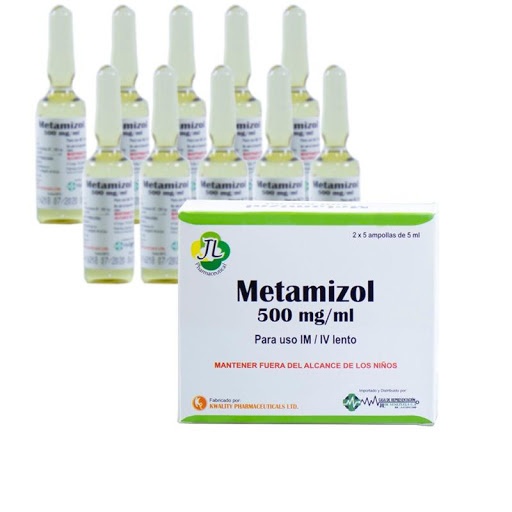
Transparent solution, practically free of particles. Type I glass ampoules of 2 ml with colored rings and a colored dot.
Package sizes: 5 x 2 ml, 50 x 2 ml (clinical package).
Marketing Authorization Holder and Manufacturer
Marketing Authorization Holder
Laboratórios Basi – Indústria Farmacêutica, S.A.
Parque Industrial Manuel Lourenço Ferreira, Lote 15
3450-232 Mortágua - Portugal
Tel.: +351 231 920 250
Fax.: +351 231 921 055
E-mail: [email protected]
Manufacturer
Laboratórios Basi – Indústria Farmacêutica, S.A.
Parque Industrial Manuel Lourenço Ferreira, Lotes 8, 15 e 16
3450-232 Mortágua – Portugal
Local Representative
Laphysan SAU
C/ Anabel Segura nº11,
Edificio B, Planta 0, Puerta 3, Oficina 3,
28108 Alcobendas, Madrid, España
Date of the Last Revision of this Prospectus:November 2024
Other Sources of Information
Detailed and updated information on this medication is available on the website of the Spanish Agency for Medicines and Health Products (AEMPS) http://www.aemps.gob.es/.
This information is intended only for healthcare professionals:
Parenteral administration is associated with a high risk of anaphylactic/anaphylactoid reactions.
If injectable administration is considered in children between 3 and 11 months of age, it should be emphasized that metamizol should only be administered intramuscularly in these children.
It is necessary to ensure that at the first sign of an anaphylactic/anaphylactoid reaction, the injection is stopped and the risk of an isolated hypotensive reaction is minimized. In the case of parenteral administration, it is essential to ensure that the patient remains lying down and under close medical supervision. Additionally, to prevent hypotensive reactions, the intravenous injection should be administered very slowly, i.e., no more than 1 ml (500 mg of metamizol) per minute.
The injectable solution can be diluted in 5% glucose solution, 0.9% NaCl solution, 0.9% NaCl and 5% glucose solution, or lactated Ringer's solution. These solutions should be administered immediately because their stability is limited.
Due to possible incompatibility, the metamizol solution should not be administered with other injectable solutions.
-

- Country of registration
- Dosage formINJECTABLE, 500 mg/ml
- ATC codeN02BB02
- Active substance
- Prescription requiredYes
- Manufacturer
- This information is for reference only and does not constitute medical advice. Always consult a doctor before taking any medication. Oladoctor is not responsible for medical decisions based on this content.
- Alternatives to METAMIZOLE BASI 500 MG/ML INJECTABLE SOLUTIONDosage form: ORAL SOLUTION/SUSPENSION DROPS, 500 mg metamizole sodium/mlActive substance: metamizole sodiumManufacturer: Laboratorios Ern S.A.Prescription requiredDosage form: CAPSULE, 575 mgActive substance: metamizole sodiumManufacturer: Ababor Pharmaceuticals S.L.Prescription requiredDosage form: CAPSULE, 575 mgActive substance: metamizole sodiumManufacturer: Industria Quimica Y Farmaceutica Vir S.A.Prescription required

Online doctors for METAMIZOLE BASI 500 MG/ML INJECTABLE SOLUTION
Discuss questions about METAMIZOLE BASI 500 MG/ML INJECTABLE SOLUTION, including use, safety considerations and prescription review, subject to medical assessment and local regulations.









Get METAMIZOLE BASI 500 MG/ML INJECTABLE SOLUTION Prescription Online
Fill in a 2-min form
Tell us your symptoms, history, and what medicine you're requesting.
Pick a doctor or let us assign
Choose a specialist or we'll match you with the next available doctor.
Doctor reviews your case
Usually within 30 minutes. They may ask follow-up questions via chat.
Collect from any pharmacy
Electronic prescription sent to your email — valid across Spain.
Frequently Asked Questions
METAMIZOLE BASI 500 MG/ML INJECTABLE SOLUTION requires a prescription in Spain. You can check with a doctor online whether this medicine may be appropriate for your situation.
The active ingredient in METAMIZOLE BASI 500 MG/ML INJECTABLE SOLUTION is metamizole sodium. This information helps identify medicines with the same composition but different brand names.
METAMIZOLE BASI 500 MG/ML INJECTABLE SOLUTION is manufactured by Laboratorios Basi Industria Farmaceutica S.A.. Pharmacy brands and packaging may differ depending on the distributor.
Doctors such as Family doctors, Psychiatrists, Dermatologists, Cardiologists, Endocrinologists, Gastroenterologists, Pulmonologists, Nephrologists, Rheumatologists, Hematologists, Infectious disease physicians, Allergists, Geriatricians, Paediatricians, Oncologists may assess whether METAMIZOLE BASI 500 MG/ML INJECTABLE SOLUTION is appropriate, depending on your situation and local regulations. You can book an online consultation to discuss your symptoms and possible next steps.
Spain has a well-developed healthcare infrastructure across major cities such as Madrid, Barcelona, Valencia, and Seville. Pharmacies are widely available and operate under strict regulations, ensuring access to prescribed medications.
You can buy METAMIZOLE BASI 500 MG/ML INJECTABLE SOLUTION in Madrid, Barcelona, Seville, or Valencia at any local pharmacy with a valid prescription.
To obtain a prescription, you can use Oladoctor:
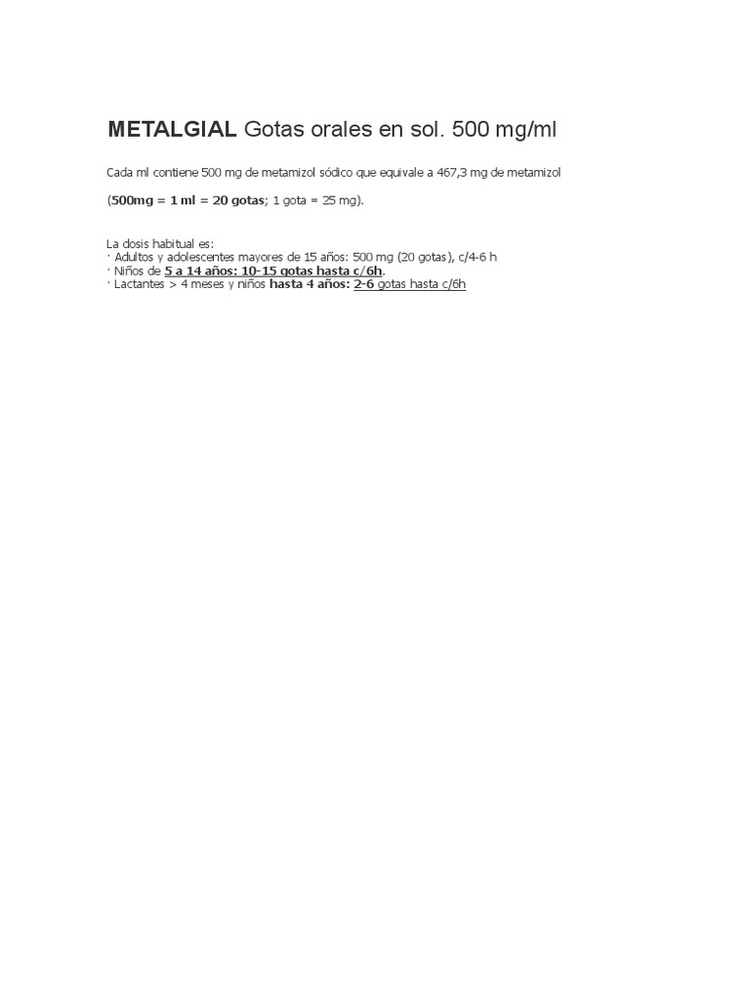
Other medicines with the same active substance (metamizole sodium) include METALGIAL 500 MG/ML ORAL DROPS IN SOLUTION, METAMIZOLE ABABOR 575 mg HARD CAPSULES, METAMIZOL AIKO FARMACEUTICA 575 mg HARD CAPSULES. These may have different brand names or formulations but contain the same therapeutic ingredient. Always consult a doctor before switching or starting a new medicine.
