


MEROPENEM 2 g Injectable




How to use MEROPENEM STERISCIENCE 2 g POWDER FOR INJECTION AND INFUSION SOLUTION
Translated with AI
This page provides general information and does not replace a doctor’s consultation. Always consult a doctor before taking any medication. Seek urgent medical care if symptoms are severe.
Show originalContents of the leaflet
- Introduction
- What is Meropenem Steriscience and what is it used for
- What you need to know before you use Meropenem Steriscience
- How to use Meropenem Steriscience
- Possible side effects
- Storage of Meropenem Steriscience
- Contents of the pack and further information
- Meropenem Steriscience is a white to pale yellow powder for solution for injection and infusion available in vials.
Introduction
Package Leaflet: Information for the User
Meropenem Steriscience 2 g powder for solution for injection and infusion EFG
Read all of this leaflet carefully before you start using this medicine because it contains important information for you.
- Keep this leaflet, you may need to read it again.
- If you have any further questions, ask your doctor, pharmacist or nurse.
- This medicine has been prescribed for you only. Do not pass it on to others. It may harm them, even if their signs of illness are the same as yours.
- If you get any side effects, talk to your doctor, pharmacist or nurse. This includes any possible side effects not listed in this leaflet. See section 4.

Contents of the pack
- What is Meropenem Steriscience and what is it used for
- What you need to know before you use Meropenem Steriscience
- How to use Meropenem Steriscience
- Possible side effects
- Storage of Meropenem Steriscience
- Contents of the pack and further information
1. What is Meropenem Steriscience and what is it used for
Meropenem Steriscience contains the active substance meropenem and belongs to a group of medicines called carbapenem antibiotics. It eliminates the bacteria that cause severe infections.
Antibiotics are used to treat bacterial infections and are not effective against viral infections such as flu or the common cold. It is important that you follow the instructions regarding dose, administration interval, and treatment duration as indicated by your doctor. Do not store or reuse this medicine. If you have any leftover antibiotic after finishing treatment, return it to the pharmacy for proper disposal. Do not throw medicines down the drain or in the trash. |
Meropenem Steriscience is used to treat the following infections in adults and children over 3 months:
- Infection affecting the lungs (pneumonia)
- Lung and bronchial infections in patients with cystic fibrosis
- Complicated urinary tract infections
- Complicated abdominal infections
- Infections that can be contracted during or after childbirth
- Complicated skin and soft tissue infections
- Acute bacterial infection of the brain (meningitis)
Meropenem Steriscience is used to treat patients with febrile neutropenia who are suspected of having a bacterial infection.
Meropenem Steriscience may be used to treat septicemia associated with one of the aforementioned infections.

2. What you need to know before you use Meropenem Steriscience
Do not use Meropenem Steriscience
- if you are allergic to meropenem or any of the other ingredients of this medicine (listed in section 6).
- if you are allergic to other antibiotics, such as penicillin, cephalosporins, or carbapenems, as you may also be allergic to meropenem.
Warnings and precautions
Consult your doctor, pharmacist, or nurse before starting meropenem if:
- you have health problems; for example, liver or kidney disease.
- you have had severe diarrhea after taking other antibiotics.
You may test positive for the Coombs test, which indicates the presence of antibodies that can destroy red blood cells. Your doctor will inform you about this.
You may experience signs and symptoms of severe skin reactions (see section 4). If this happens, consult your doctor or nurse immediately for treatment of symptoms.
If you are not sure if this applies to your case, contact your doctor or nurse before taking meropenem.
Other medicines and Meropenem Steriscience
Tell your doctor, pharmacist, or nurse if you are taking, have recently taken, or might take any other medicines. This is because meropenem may affect how some medicines work and some medicines may affect meropenem.
In particular, tell your doctor, pharmacist, or nurse if you are taking any of the following medicines:
- Probenecid (used to treat gout).
- Valproic acid/sodium valproate/valpromide (used to treat epilepsy). You should not use meropenem as it may decrease the effect of sodium valproate.
- Oral anticoagulants (used to treat or prevent blood clots).
Pregnancy and breastfeeding
If you are pregnant or breastfeeding, think you may be pregnant, or are planning to have a baby, ask your doctor or pharmacist for advice before using this medicine. Meropenem should not be used during pregnancy. Your doctor will decide if you should take meropenem.
It is important to inform your doctor if you are breastfeeding or planning to breastfeed before taking meropenem. This medicine may be excreted in small amounts in breast milk.
Therefore, your doctor will decide whether you should use meropenem during breastfeeding.
Driving and using machines
No clinical studies on the effects on the ability to drive and use machines have been performed.
Meropenem has been associated with headache and tingling or numbness in the skin (paresthesia). Either of these side effects could affect your ability to drive or use machines.
Meropenem may cause involuntary muscle movements, which can cause the body to shake rapidly and uncontrollably (convulsions). This is usually accompanied by loss of consciousness. Do not drive or use machines if you experience this side effect.
Meropenem Steriscience contains sodium
This medicine contains 180.4 mg of sodium (7.843 mmol of sodium/vial) (main component of cooking/table salt) in each vial. This is equivalent to 9% of the maximum recommended daily intake of sodium for an adult.
Consult your doctor or pharmacist if you have been advised to follow a low-salt diet (sodium)..
3. How to use Meropenem Steriscience
Follow exactly the administration instructions for this medicine as indicated by your doctor, pharmacist, or nurse. If in doubt, ask your doctor, pharmacist, or nurse.
Use in adults
- The dose depends on the type of infection, location, and severity. Your doctor will indicate the dose you need.
- The dose for adults is usually 500 mg (milligrams) and 2000 mg (milligrams). You will usually receive a dose every 8 hours. However, you may receive a dose less frequently if you have kidney problems.
Use in children and adolescents
- The dose for children from 3 months to 11 years is decided based on the child's age and body weight. The recommended dose is between 10 mg and 40 mg of meropenem per kilogram (kg) of the child's body weight. You will usually receive a dose every 8 hours. Children who weigh more than 50 kg will receive a dose equivalent to the dose given to an adult.
How to use Meropenem Steriscience
- You will be given meropenem by injection or infusion into a large vein.
- Your doctor or nurse will usually administer meropenem.
- However, some patients, parents, and caregivers receive training to administer meropenem at home. The instructions for this are found in this leaflet (in the section called "Instructions for administering meropenem to yourself or another person at home"). Follow exactly the administration instructions for meropenem as indicated by your doctor. If in doubt, ask your doctor.
- The injection solution should not be mixed with solutions containing other medicines or added to these.
- The injection can last approximately 5 minutes or between 15 and 30 minutes. Your doctor will indicate how meropenem is administered.
- Injections should usually be administered at the same time every day.
If you use more Meropenem Steriscience than you should
If you accidentally use more than the prescribed dose, contact your doctor or go to the nearest hospital immediately.
In case of overdose or accidental ingestion, consult your doctor or pharmacist immediately or call the Toxicology Information Service, phone 91 562 04 20, indicating the medicine and the amount ingested.
If you forget to use Meropenem Steriscience
If you miss an injection, you should administer it as soon as possible. However, if it is time for your next injection, skip the missed injection. Do not use a double dose (two injections at the same time) to make up for missed doses.
If you stop using Meropenem Steriscience
Do not stop using meropenem until your doctor tells you to.
If you have any further questions on the use of this medicine, ask your doctor, pharmacist, or nurse.
4. Possible side effects
Like all medicines, this medicine can cause side effects, although not everybody gets them.
Severe allergic reactions
If you experience any of these signs and symptoms, tell your doctor or nurse immediately. You may need urgent medical treatment. The signs and symptoms can include the sudden appearance of any of the following:
- severe rash, itching, or hives on the skin
- swelling of the face, lips, tongue, or other parts of the body
- shortness of breath, wheezing, or difficulty breathing
- severe skin reactions that include
- severe hypersensitivity reactions, which include fever, skin rash, and changes in blood test results showing liver function (elevated liver enzymes) and increased white blood cell count (eosinophilia) and enlarged lymph nodes. These can be signs of a multi-organ sensitivity disorder known as DRESS syndrome.
- severe scaly red rash, pus-filled bumps on the skin, or blisters, which can be associated with high fever and joint pain
- severe skin reactions that can appear as circular red patches, often with central blisters, on the trunk, skin peeling, or ulcers in the mouth, throat, nose, genitals, and eyes, which can be preceded by fever and flu-like symptoms (Stevens-Johnson syndrome) or a more severe form (toxic epidermal necrolysis).
Damaged red blood cells (frequency not known)
Symptoms include:
- sudden unexpected difficulty breathing
- urine that is red or brown in color
If you notice any of these symptoms, consult a doctor immediately.
Other possible side effects:
Frequent (may affect up to 1 in 10 people)
- abdominal pain (stomach)
- nausea
- vomiting
- diarrhea
- headache
- skin rash, itching, pain, and inflammation
- elevated platelet count in the blood (measured in a blood test)
- changes in blood tests, including those that show liver function
Uncommon (may affect up to 1 in 100 people)
- changes in blood composition, which can include a decrease in platelet count (which can cause bruising more easily), increased white blood cell count, decreased other white blood cells, and increased bilirubin. Your doctor may request periodic blood tests
- changes in blood tests, including kidney function tests
- tingling (numbness)
- fungal infections in the mouth or vagina (thrush)
- intestinal inflammation with diarrhea
- pain at the injection site
- other changes in the blood that can include symptoms such as frequent infections, fever, and sore throat; your doctor may request periodic blood tests
Rare (may affect up to 1 in 1,000 people)
- epileptic seizure (convulsions)
- acute confusion and disorientation (delirium)
Reporting of side effects
It is important to report suspected side effects after authorization of the medicine. This allows for continuous monitoring of the benefit/risk balance of the medicine. Healthcare professionals are asked to report any suspected side effects via the Spanish Medicines and Healthcare Products Agency's (AEMPS) online reporting system: www.notificaRAM.es
5. Storage of Meropenem Steriscience
Keep this medicine out of the sight and reach of children.
Do not use this medicine after the expiry date which is stated on the carton and vial after EXP. The expiry date is the last day of the month indicated.
This medicine does not require any special storage conditions.
After preparation of the solution for use:
Solutions for injection or infusion by intravenous route should be used immediately.
The period between the start of preparation of the solution for use and administration of the injection by intravenous route or by infusion depends on the solvent used. The following table shows the demonstrated chemical and physical stability data:
Diluent | Use period at controlled room temperature between 15 ºC and 25 ºC | Use period at a temperature between 2 ºC and 8 ºC |
Water for injections | Up to 3 hours | Up to 12 hours |
Sodium chloride 9 mg/ml (0.9%) infusion solution | Up to 5 hours | Up to 24 hours |
Glucose 50 mg/ml (5%) infusion solution | Up to 1 hour | - |
From a microbiological point of view, unless the method of opening, reconstitution, or dilution precludes the risk of microbiological contamination, the product should be used immediately. If not used immediately, the storage times and conditions are the responsibility of the user.
Do not freeze the solution for use.
Medicines should not be disposed of via wastewater or household waste. Return the containers and any unused medicines to the pharmacy's SIGRE collection point. If in doubt, ask your pharmacist how to dispose of unused medicines. This will help protect the environment.
6. Contents of the pack and further information
Composition of Meropenem Steriscience
The active substance is meropenem.
Each vial contains 2 g of meropenem (as meropenem trihydrate).
The other ingredient is sodium carbonate.
Appearance of Meropenem Steriscience and contents of the pack
Meropenem Steriscience is a white to pale yellow powder for solution for injection and infusion available in vials.
Package size: 1 vial.
Marketing authorization holder and manufacturer
Steriscience B.V.,
Kingsfordweg 151
1043GR Amsterdam
Netherlands
This medicine is authorized in the Member States of the European Economic Area under the following names:
Member State | Proposed product name |
Germany | Meropenem Steriscience 2 g powder for solution for injection or infusion |
France | Meropenem Steriscience B.V. 2 g powder for solution for injection or infusion |
Italy | Steriscience Meropenem 2 g powder for solution for injection or infusion |
Spain | Meropenem Steriscience 2 g powder for solution for injection and infusion |
Date of last revision of this leaflet: September 2024.
Detailed and updated information on this medicine is available on the website of the Spanish Agency for Medicines and Healthcare Products (AEMPS)
http://www.aemps.gob.es/.
Recommendations/Health Education
Antibiotics are used to treat infections caused by bacteria. They have no effect on infections caused by viruses.
Sometimes, a bacterial infection does not respond to treatment with an antibiotic. One of the most common reasons for this is that the bacteria causing the infection are resistant to the antibiotic being taken. This means that the bacteria survive and even multiply despite the administration of the antibiotic.
Bacteria can become resistant to antibiotics for various reasons. The cautious use of antibiotics reduces the likelihood of bacteria becoming resistant to them.
When your doctor prescribes an antibiotic, it is to treat only your current illness. Paying attention to the following recommendations will help prevent the emergence of resistant bacteria that could stop the antibiotic from working.
- You should not take antibiotics unless they have been specifically prescribed for you, and you should only use them to treat the infection for which they were prescribed.
- You should not use antibiotics that have been prescribed for other patients, even if these patients had a similar infection to yours.
- You should not provide the antibiotics prescribed for you to other patients.
- If you have antibiotics left over after completing the treatment indicated by the doctor, you should take them to a pharmacy for proper disposal.
This information is intended only for healthcare professionals:
To consult all the information on the dosage regimen, warnings, and precautions, instructions for reconstituting the medication before administration, etc., see the technical data sheet.
Instructions for administering meropenem to yourself or administering it to another person at home
Some patients, parents, and caregivers are trained to administer meropenem at home.
Warning: This medication should only be administered to yourself or to another person at home after a doctor or nurse has provided you with the corresponding information.
How to prepare this medication
- The medication must be mixed with another liquid (the diluent). Your doctor will indicate what amount of diluent to use.
- Use the medication immediately after preparing it. Do not freeze it.
- Wash your hands and dry them properly. Prepare a clean work area.
- Remove the meropenem vial from the packaging. Check the vial and the expiration date. Make sure the vial is intact and has not been damaged.
- Remove the colored cap and clean the gray rubber stopper with an alcohol-impregnated swab. Let the rubber stopper dry.
- Insert a new sterile needle into a new sterile syringe, without touching the ends.
- With the syringe, draw up the recommended amount of sterile "water for injectable preparations". The following table shows the amount of liquid you need:
Meropenem Dose | Amount of "water for injectable preparations" needed for dilution |
500 mg (milligrams) | 10 ml (milliliters) |
1 g | 20 ml |
1.5 g | 30 ml |
2 g | 40 ml |
Note:If the prescribed dose of meropenem is more than 1 g, you will need to use more than 1 vial of Meropenem 500 mg or 1 g, or you can use a 2 g vial. Draw up the liquid from the vial with a single syringe.
- Insert the syringe needle into the center of the gray rubber stopper and inject the recommended amount of water for injectables into the meropenem vial or vials.
- Remove the needle from the vial and shake the vial for approximately 5 seconds or until all the powder is dissolved. Clean the gray rubber stopper again with an alcohol-impregnated swab and let it dry.
- Press the syringe plunger all the way down and reinsert the needle into the gray rubber stopper. Hold the syringe and vial, and turn the vial upside down.
- Make sure the needle tip remains in the liquid and pull the plunger. Draw up all the liquid from the vial into the syringe.
- Remove the needle and syringe from the vial and discard the empty vial in the corresponding container.
- Hold the syringe in a vertical position, with the needle pointing upwards. Gently tap the syringe to make all the bubbles in the liquid rise to the top of the syringe.
- Remove the air from the syringe by gently pushing the plunger upwards until all the air is removed.
- If you are using meropenem at home, dispose of the needles and infusion lines you used correctly. If the doctor decides to stop treatment, dispose of the unused medication correctly.
Administration of the Injection
You can administer this medication through a peripheral intravenous catheter or through a central port or line.
Administration of Meropenem through a Peripheral Intravenous Catheter
- Remove the needle from the syringe and dispose of it properly in the sharps container.
- Clean the end of the peripheral intravenous catheter with an alcohol-impregnated swab and let it dry. Open the catheter cap and connect it to the syringe.
- Gently push the syringe plunger to administer the antibiotic continuously for approximately 5 minutes.
- Once you have finished administering the antibiotic and the syringe is empty, remove the syringe and flush the line as the doctor or nurse has instructed you.
- Close the catheter cap and carefully discard the syringe in the sharps container.
Administration of Meropenem through a Central Port or Line
- Remove the cap from the port or line, clean the end of the line with an alcohol-impregnated swab, and let it dry.
- Insert the syringe and gently push the syringe plunger to administer the antibiotic continuously for approximately 5 minutes.
- Once you have finished administering the antibiotic, remove the syringe and flush the line as the doctor or nurse has recommended.
- Put a new cap on the central line and carefully discard the syringe in the sharps container.
The following information is intended only for healthcare professionals. For more information, please consult the complete technical data sheet.
Dosage and Administration
Dosage
The following tables show the general recommendations for treatment.
The dose of meropenem and the duration of treatment should be based on the type of infection being treated, including its severity and clinical response.
For doses less than 2 g, it is recommended to use the 500 mg and 1000 mg formulations.
A dose of up to 2 g three times a day in adults and adolescents and a dose of up to 40 mg/kg three times a day in children are suitable for the treatment of certain types of infections, such as those caused by less sensitive bacterial species (e.g., Enterobacteriaceae, Pseudomonas aeruginosa, Acinetobacter) or severe infections.
Additional considerations should be taken into account when treating patients with renal impairment (see additional information below).
Information on the administration of meropenem in relation to the dose, especially when using doses of 2 g in adults or adolescents or doses of 40 mg/kg in children, should be taken into account (see Administration).
Adults and Adolescents
Infection | Dose administered every 8 hours |
severe pneumonia, including hospital-acquired pneumonia and ventilator-associated pneumonia | 500 mg or 1 g |
bronchopulmonary infections in patients with cystic fibrosis | 2 g |
complicated urinary tract infections | 500 mg or 1 g |
complicated intra-abdominal infections | 500 mg or 1 g |
infections during childbirth and postpartum | 500 mg or 1 g |
acute bacterial meningitis | 2 g |
treatment of patients with febrile neutropenia | 1 g |
Administration
For intravenous use
After reconstitution, meropenem is normally administered by intravenous infusion over approximately 15 to 30 minutes. Alternatively, doses of meropenem up to 1 g can be administered by rapid intravenous injection over approximately 5 minutes. Data on the safety profile supporting the administration of a 2 g dose in adults by rapid intravenous injection are limited.
Renal Impairment
The dose for adults and adolescents should be adjusted when the creatinine clearance is less than 51 ml/min, as indicated below. Data supporting the administration of adjusted doses of a single 2 g dose are limited.
Creatinine clearance (ml/min) | Dose (based on a single dose of 500 mg, 1 g, or 2 g; see table above) | Frequency |
26-50 | a single dose | every 12 hours |
10-25 | half a single dose | every 12 hours |
<10 | half a single dose | every 24 hours |
Meropenem is eliminated by hemodialysis and hemofiltration. The required dose should be administered after the completion of the hemodialysis cycle.
There are no established dosage recommendations for patients undergoing peritoneal dialysis.
Hepatic Impairment
No dose adjustment is required in patients with hepatic impairment (see section 4.4).
Dosage in Elderly Patients
No dose adjustment is required in elderly patients with normal renal function or creatinine clearance values above 50 ml/min.
Pediatric Population
Children under 3 months
The safety and efficacy of meropenem in children under 3 months have not been established, and an optimal dosage regimen has not been established. However, based on limited pharmacokinetic data, 20 mg/kg every 8 hours may be an appropriate dosage regimen (see section 5.2).
Children from 3 months to 11 years with a body weight of up to 50 kg
The recommended dosage regimens are presented in the following table:
Infection | Dose administered every 8 hours |
severe pneumonia, including hospital-acquired pneumonia and ventilator-associated pneumonia | 10 or 20 mg/kg |
bronchopulmonary infections in patients with cystic fibrosis | 40 mg/kg |
complicated urinary tract infections | 10 or 20 mg/kg |
complicated intra-abdominal infections | 10 or 20 mg/kg |
infections during childbirth and postpartum | 10 or 20 mg/kg |
complicated skin and soft tissue infections | 10 or 20 mg/kg |
acute bacterial meningitis | 40 mg/kg |
treatment of patients with febrile neutropenia | 20 mg/kg |
Children over 50 kg body weight
The adult dose should be administered.
There are no available data on pediatric patients with renal impairment.
Administration
For intravenous use
After reconstitution, Meropenem is normally administered by intravenous infusion over approximately 15 to 30 minutes. Alternatively, doses of meropenem up to 20 mg/kg can be administered by rapid intravenous injection over approximately 5 minutes. Limited data are available on the safety profile supporting the administration of a 40 mg/kg dose in children by rapid intravenous injection.
Incompatibilities
This medication should not be mixed with other medications, except those indicated in "Special precautions for disposal and other handling" below.
Special Precautions for Disposal and Other Handling
Preparation of the injectable solution (rapid intravenous injection)
Meropenem should be reconstituted with sterile water for injectable preparations. The solution for rapid intravenous injection is prepared by dissolving the powder in sterile water for injectable preparations to a final concentration of 50 mg/ml.
Preparation of the infusion solution
The powder is reconstituted directly with a 9 mg/ml (0.9%) sodium chloride solution for infusion or a 50 mg/ml (5%) glucose solution. Each vial is for single use. The reconstituted solution should be prepared using aseptic techniques. Before use, shake the solution.
Instructions for preparing the medication
- Wash your hands and dry them properly. Clean the work area.
- Take a 2 g meropenem vial from the packaging. Check the vial and the expiration date. Make sure the vial is intact and has not been damaged.
- Remove the colored cap and clean the gray rubber stopper with an alcohol-impregnated swab. Let the rubber stopper dry.
- Insert a new sterile needle into a new sterile syringe, without touching the ends.
- Draw up 40 ml of sterile "water for injectable preparations" with the syringe.
The powder from a vial is reconstituted with 40 ml of water for injectables.
Note: The required dose is drawn up from the vial with a single syringe.
- Insert the syringe needle into the center of the gray rubber stopper and inject the recommended amount of "water for injectable preparations" into the Meropenem Steriscience 2 g vial.
- Remove the needle from the vial and shake the vial for approximately 5 seconds or until all the powder is dissolved. Clean the gray rubber stopper again with an alcohol-impregnated swab and let it dry.
- Press the syringe plunger all the way down and reinsert the needle into the gray rubber stopper. Hold the syringe and vial, and turn the vial upside down.
- Make sure the needle tip remains in the liquid and pull the plunger. Draw up all the liquid from the vial into the syringe.
- Remove the syringe from the vial and discard the empty vial in the corresponding container.
- Hold the syringe in a vertical position, with the needle pointing upwards. Gently tap the syringe to make all the bubbles in the liquid rise to the top of the syringe.
- Remove the air from the syringe by gently pushing the plunger upwards until all the air is removed.
Note:
The intravenous infusion of meropenem is administered directly with a 9 mg/ml (0.9%) sodium chloride solution for infusion or a 50 mg/ml (5%) glucose solution. Follow the instructions below:
Add 40 ml of infusion solution to a vial, shake the reconstituted solution properly, and then place it in the infusion bag. The final infusion solution contains the following concentrations.
Meropenem | Infusion solution | Concentration of the solution |
2 g | 100 ml infusion solution of 9 mg/ml (0.9%) sodium chloride | 20 mg/ml |
2 g | 100 ml infusion solution of 50 mg/ml (5%) glucose | 20 mg/ml |
2 g | 200 ml infusion solution of 9 mg/ml (0.9%) sodium chloride | 10 mg/ml |
2 g | 200 ml infusion solution of 50 mg/ml (5%) glucose | 10 mg/ml |
Appearance of the reconstituted solution
The reconstituted solution should be transparent or pale yellow, clear, and free of visible particles.
Each vial is for single use.
NOTE:The vial should be brought to room temperature before use.
Standard aseptic techniques should be used during the preparation and administration of the solution.
Before use, shake the solution.
The disposal of unused medication and all materials that have come into contact with it should be carried out in accordance with local regulations.
Administration of the Injection
You can administer this medication through a peripheral intravenous catheter or through a central port or line.
Administration of Meropenem Steriscience through a Peripheral Intravenous Catheter
- Remove the needle from the syringe and dispose of it properly in the sharps container.
- Clean the end of the peripheral intravenous catheter with an alcohol-impregnated wipe and let it dry. Open the catheter cap and connect it to the syringe.
- Gently push the syringe plunger to administer the antibiotic continuously for approximately 5 minutes.
- Once you have finished administering the antibiotic and the syringe is empty, remove the syringe and flush the line as the doctor or nurse has instructed.
- Close the catheter cap and carefully discard the syringe in the sharps container.
Administration of Meropenem Steriscience through a Port or Central Line
- Remove the cap from the port or line, clean the end of the line with an alcohol-impregnated wipe, and let it dry.
- Insert the syringe and gently push the syringe plunger to administer the antibiotic continuously for approximately 5 minutes.
- Once you have finished administering the antibiotic, remove the syringe and flush the line as the doctor or nurse has recommended.
- Place a new cap on the central line and carefully discard the syringe in the sharps container.

- Country of registration
- Dosage formINJECTABLE, 2 g
- ATC codeJ01DH02
- Active substance
- Prescription requiredYes
- Manufacturer
- CompositionCARBONATO DE SODIO (413,798 mg mg)
- This information is for reference only and does not constitute medical advice. Always consult a doctor before taking any medication. Oladoctor is not responsible for medical decisions based on this content.
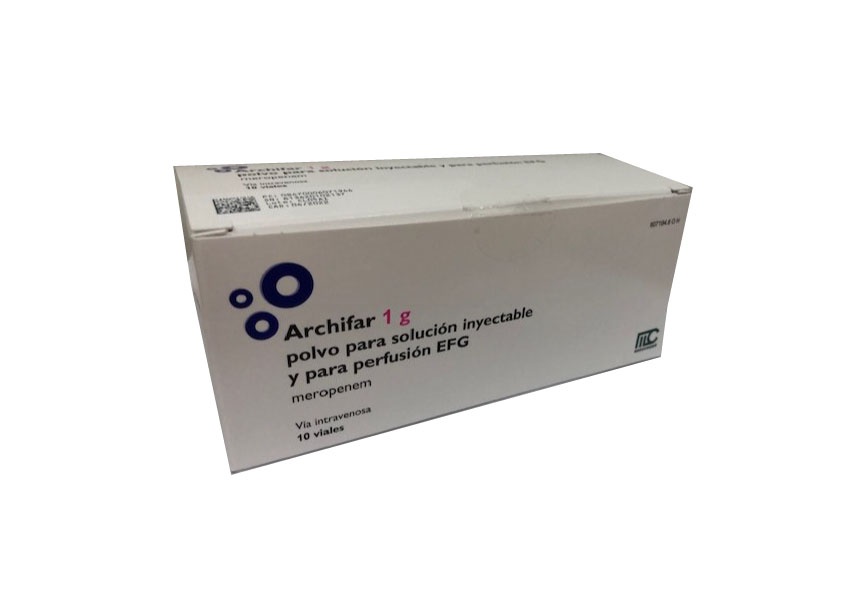
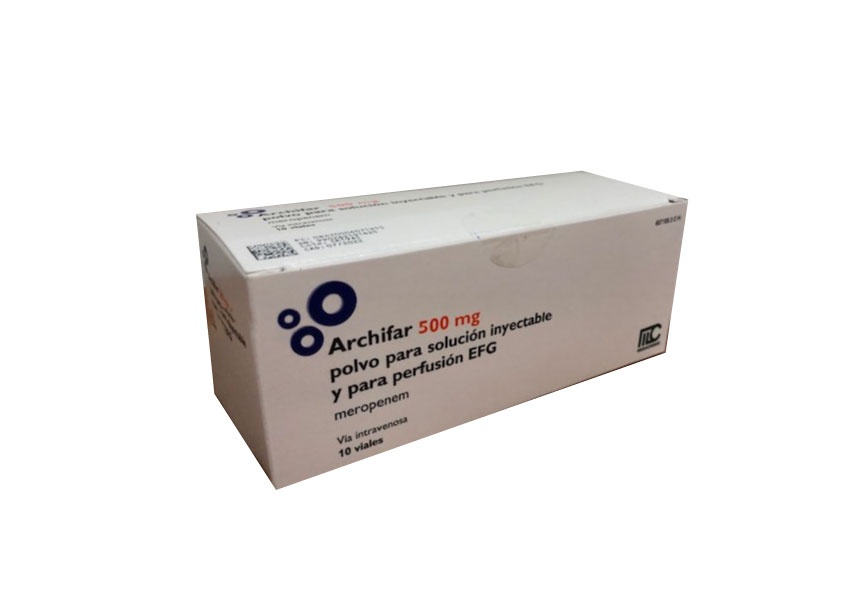
- Alternatives to MEROPENEM STERISCIENCE 2 g POWDER FOR INJECTION AND INFUSION SOLUTIONDosage form: INJECTABLE, 1 gActive substance: meropenemManufacturer: Medochemie Iberia S.A.Prescription requiredDosage form: INJECTABLE, 500 mgActive substance: meropenemManufacturer: Medochemie Iberia S.A.Prescription requiredDosage form: INJECTABLE, 1 gActive substance: meropenemManufacturer: Accord Healthcare S.L.U.Prescription required
Online doctors for MEROPENEM STERISCIENCE 2 g POWDER FOR INJECTION AND INFUSION SOLUTION
Discuss questions about MEROPENEM STERISCIENCE 2 g POWDER FOR INJECTION AND INFUSION SOLUTION, including use, safety considerations and prescription review, subject to medical assessment and local regulations.

 Book a video appointment

 Book a video appointment

 Book a video appointment

Get MEROPENEM STERISCIENCE 2 g POWDER FOR INJECTION AND INFUSION SOLUTION Prescription Online
Fill in a 2-min form
Tell us your symptoms, history, and what medicine you're requesting.
Pick a doctor or let us assign
Choose a specialist or we'll match you with the next available doctor.
Doctor reviews your case
Usually within 30 minutes. They may ask follow-up questions via chat.
Collect from any pharmacy
Electronic prescription sent to your email — valid across Spain.
Frequently Asked Questions
Is a prescription required for MEROPENEM STERISCIENCE 2 g POWDER FOR INJECTION AND INFUSION SOLUTION?
MEROPENEM STERISCIENCE 2 g POWDER FOR INJECTION AND INFUSION SOLUTION requires a prescription in Spain. You can check with a doctor online whether this medicine may be appropriate for your situation.
What is the active substance in MEROPENEM STERISCIENCE 2 g POWDER FOR INJECTION AND INFUSION SOLUTION?
The active ingredient in MEROPENEM STERISCIENCE 2 g POWDER FOR INJECTION AND INFUSION SOLUTION is meropenem. This information helps identify medicines with the same composition but different brand names.
Who manufactures MEROPENEM STERISCIENCE 2 g POWDER FOR INJECTION AND INFUSION SOLUTION?
MEROPENEM STERISCIENCE 2 g POWDER FOR INJECTION AND INFUSION SOLUTION is manufactured by Steriscience B.V.. Pharmacy brands and packaging may differ depending on the distributor.
Which doctors can assess the use of MEROPENEM STERISCIENCE 2 g POWDER FOR INJECTION AND INFUSION SOLUTION online?
Doctors such as Family doctors, Psychiatrists, Dermatologists, Cardiologists, Endocrinologists, Gastroenterologists, Pulmonologists, Nephrologists, Rheumatologists, Hematologists, Infectious disease physicians, Allergists, Geriatricians, Paediatricians, Oncologists may assess whether MEROPENEM STERISCIENCE 2 g POWDER FOR INJECTION AND INFUSION SOLUTION is appropriate, depending on your situation and local regulations. You can book an online consultation to discuss your symptoms and possible next steps.
How to buy MEROPENEM STERISCIENCE 2 g POWDER FOR INJECTION AND INFUSION SOLUTION in Spain?
Spain has a well-developed healthcare infrastructure across major cities such as Madrid, Barcelona, Valencia, and Seville. Pharmacies are widely available and operate under strict regulations, ensuring access to prescribed medications.
You can buy MEROPENEM STERISCIENCE 2 g POWDER FOR INJECTION AND INFUSION SOLUTION in Madrid, Barcelona, Seville, or Valencia at any local pharmacy with a valid prescription.
To obtain a prescription, you can use Oladoctor:
What are the alternatives to MEROPENEM STERISCIENCE 2 g POWDER FOR INJECTION AND INFUSION SOLUTION?
Other medicines with the same active substance (meropenem) include ARCHIFAR 1G POWDER FOR INJECTABLE SOLUTION AND FOR INFUSION, ARCHIFAR 500 mg POWDER FOR INJECTABLE SOLUTION AND FOR INFUSION, MEROPENEM ACCORDPHARMA 1 g POWDER FOR INJECTION AND INFUSION SOLUTION. These may have different brand names or formulations but contain the same therapeutic ingredient. Always consult a doctor before switching or starting a new medicine.
