


MAGNOGENE 53 mg FILM-COATED TABLETS
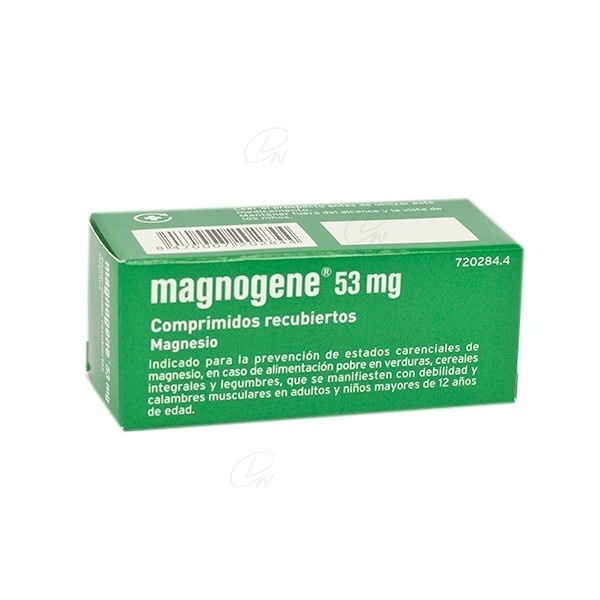



How to use MAGNOGENE 53 mg FILM-COATED TABLETS
Translated with AI
This page provides general information and does not replace a doctor’s consultation. Always consult a doctor before taking any medication. Seek urgent medical care if symptoms are severe.
Show originalContents of the leaflet
Introduction
PACKAGE LEAFLET: INFORMATION FOR THE USER
magnogene 53 mg coated tablets
Magnesium
Read this leaflet carefully because it contains important information for you.
This medicine can be obtained without a prescription. Nevertheless, to obtain the best results, it should be used properly.
- Keep this leaflet, as you may need to read it again.
- If you need advice or more information, consult your pharmacist.
- If symptoms worsen or persist after 15 days, you should consult a doctor.
- If you consider that any of the adverse effects you are suffering from is serious or if you notice any adverse effect not mentioned in this leaflet, inform your doctor or pharmacist.
Contents of the package leaflet:
- What is Magnogene and what is it used for
- Before taking Magnogene
- How to take Magnogene
- Possible side effects
- Storage of Magnogene
- Additional information
1. What is MAGNOGENE and what is it used for
It contains magnesium as an active ingredient. It belongs to the group of medicines called "mineral supplements".
It is used for the prevention of magnesium deficiency states due to diets poor in vegetables, whole grains, and legumes that manifest with weakness and muscle cramps that may occur in adults and children over 12 years of age.

2. BEFORE TAKING MAGNOGENE
Do not take Magnogene if:
- you are allergic (hypersensitive) to magnesium salts or any of the other components of Magnogene.
- you have kidney problems.
- you have or have had heart diseases such as cardiac block or have been diagnosed with ischemic heart disease (angina pectoris, myocardial infarction, ... due to lack of blood flow to the heart).
- you have or have had diabetic coma (loss of consciousness due to excessively high or low blood sugar levels).
- you have been diagnosed with myasthenia gravis (autoimmune neuromuscular disease).
- you suffer from chronic diarrhea or have been diagnosed with ulcerative colitis (inflammatory bowel disease).
- you have undergone an ileostomy (intestinal surgery).
- you have symptoms of appendicitis: abdominal pain (pain around the navel) that increases in intensity and moves to the lower right part of the abdomen as the process evolves. This pain may be accompanied by loss of appetite, nausea, vomiting, and low-grade fever.
Be careful with Magnogene:
- Prolonged use of this medicine can cause hypermagnesemia (high magnesium levels in the blood) characterized by nausea, vomiting, respiratory depression (weak breathing), and central nervous system depression (symptoms can range from numbness to coma), hyperreflexia (exaggeration of reflexes), muscle weakness, and certain cardiovascular effects such as low blood pressure, decreased heart rate, and cardiac arrest.
- Taking this medicine on an empty stomach can cause diarrhea.
- Patients with kidney disease should consult their doctor before taking this medicine.
Use in children:
Do not administer to children under 12 years of age unless advised by a doctor.
Use in people over 65 years of age:
In patients over 65 years of age who suffer from decreased kidney function, the dose and frequency of administration of magnesium salts should be modified by the doctor according to the degree of this decrease in renal function.
Use of other medicines:
Tell your doctor or pharmacist if you are using, or have recently used, other medicines, including those purchased without a prescription.
Interactions may occur with the following medicines:
Antifungal agents (for fungi) such as azoles (itraconazole, fluconazole).
Antibiotics such as tetracyclines (doxycycline, minocycline, oxytetracycline, tetracycline) and quinolones (ciprofloxacin, levofloxacin, norfloxacin, ofloxacin), which may reduce the effectiveness of the antibiotic.
Bisphosphonates (medicines used in the treatment of osteoporosis).
Delavirdine, an antiretroviral agent used in the treatment of HIV/AIDS.
Digitalis, used in the treatment of congestive heart failure. The main digitalis is digoxin.
Sodium polystyrene sulfonate, used in the treatment of hyperkalemia, can cause metabolic alkalosis.
Quinidine, used in the treatment of cardiac rhythm disorders.
Note that these instructions may also apply to medicines that have been taken before or may be taken later, so, in general, at least 2 hours should elapse between the administration of Magnogene and any other oral medication, as it may decrease or increase the absorption of other drugs.
Taking magnesium with food and drinks
Excessive and prolonged consumption of products containing magnesium and calcium can cause high calcium levels in the blood. In these situations, calcium intake and foods rich in calcium, such as dairy products, should be controlled.
Alcohol and glucose increase magnesium excretion.
Pregnancy and breastfeeding:
Consult your doctor or pharmacist before using any medicine.
It is recommended to cover magnesium needs with a diet rich in vegetables, whole grains for the prevention of magnesium deficiency consequences during pregnancy.
Important for women: If you are pregnant or think you may be pregnant, consult your doctor before taking this medicine. The use of medicines during pregnancy can be hazardous to the embryo or fetus and should be monitored by your doctor. |
Breastfeeding:
Consult your doctor or pharmacist before using any medicine.
No problems have been described in breastfed infants whose mothers take Magnogene tablets at the recommended doses.
Driving and using machines:
No effects on the ability to drive or use tools and machines are expected.
Important information about some of the components of Magnogene
This medicine contains lactose. If your doctor has told you that you have an intolerance to certain sugars, consult with them before taking this medicine.
This medicine contains sucrose. If your doctor has told you that you have an intolerance to certain sugars, consult with them before taking this medicine.
3. HOW TO TAKE MAGNOGENE
Follow these instructions exactly unless your doctor has given you different instructions. Consult your doctor or pharmacist if you have any doubts.
This medicine is administered orally.
Do not take on an empty stomach, as it may cause diarrhea.
Each coated tablet should be swallowed whole, with water or another liquid, without breaking or chewing. The recommended average dose for adults and children over 12 years of age is 2 coated tablets, 2 times a day after meals, swallowed with some liquid (212 mg of magnesium per day).
People over 65 years of age, children under 12 years of age, and patients with kidney disease should consult their doctor.
If symptoms worsen or do not improve within 15 days, you should consult a doctor.
If you take more Magnogene than you should:
Consult your doctor or pharmacist immediately.
The symptoms of hypermagnesemia are: hot flashes, slowing of the heart rate, central nervous system depression, muscle weakness, fatigue, drowsiness or hyperexcitability, nausea, hypotension, confusion, respiratory depression, arrhythmias, coma, and cardiac arrest.
Muscle block associated with hypermagnesemia is reversible by administering calcium salts.
If kidney function is normal, fluids should be administered to eliminate magnesium from the body. If kidney function is impaired or hypermagnesemia is severe, dialysis will be necessary.
In case of overdose or accidental ingestion, go immediately to a medical center or call the Toxicology Information Service, tel.: 91-5620420, indicating the medicine and the amount ingested.
If you forget to take Magnogene
Do not take a double dose to make up for forgotten doses. Take your dose as soon as you remember and continue treatment as before.
If you have any doubts about the use of this product, ask your doctor or pharmacist.

4. Possible side effects
Like all medicines, Magnogene can cause side effects, although not everyone will experience them.
During the use of this medicine, the following side effects have been reported, whose frequency has not been established with precision. The most characteristic have been gastrointestinal disorders such as diarrhea and vomiting, and, less frequently, increased magnesium in the blood, which manifests with: drowsiness, double vision, dizziness, muscle weakness, and decreased blood pressure.
If you consider that any of the side effects you are suffering from is serious or if you notice any side effect not mentioned in this leaflet, inform your doctor or pharmacist.
5. Storage of MAGNOGENE
Keep out of the reach and sight of children.
No special storage conditions are required.
Do not use this medicine after the expiration date that appears on the packaging after "EXP:". The expiration date is the last day of the month indicated.
Medicines should not be disposed of via wastewater or household waste. Ask your pharmacist how to dispose of the packaging and any unused medicines. This will help protect the environment.
6. ADDITIONAL INFORMATION
Composition of Magnogene:
Each coated tablet contains 53 mg of magnesium provided by 125.06 mg of magnesium hydroxide; 7.17 mg of magnesium bromide and 0.34 mg of magnesium fluoride.
The other components (excipients) are: sodium chloride, sodium iodide, lactose, cornstarch, povidone, macrogol 4000/10000, talc, magnesium stearate, 30% dispersion of methacrylic acid ethyl acrylate copolymer (1:1), calcium carbonate, sucrose, gum arabic, titanium dioxide (E-171), macrogol 6000.
Appearance of the product and packaging content
Magnogene is a medicine in the form of coated tablets for oral use, presented in a package of 45 tablets.
Marketing authorization holder and manufacturer
Holder
URIACH CONSUMER HEALTHCARE, S.L.
Av. Generalitat 163-167
08174 Sant Cugat del Vallès
(Barcelona – Spain)
Manufacturer
Laboratorio ALCALA FARMA S.L.
Avenida de Madrid, 82
28802 – Alcalá de Henares
(Madrid - Spain)
or
NOUCOR HEALTH, S.A.
Av. Camí Reial, 51-57
08184 Palau-solità i Plegamans
(Barcelona – Spain)
This leaflet was revised in December 2010
- Country of registration
- Dosage formTABLET, 53 mg
- ATC codeA12CC30
- Active substance
- Prescription requiredNo
- Manufacturer
- This information is for reference only and does not constitute medical advice. Always consult a doctor before taking any medication. Oladoctor is not responsible for medical decisions based on this content.
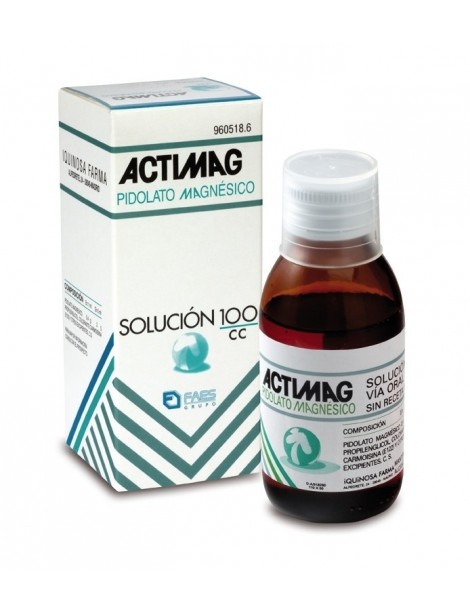
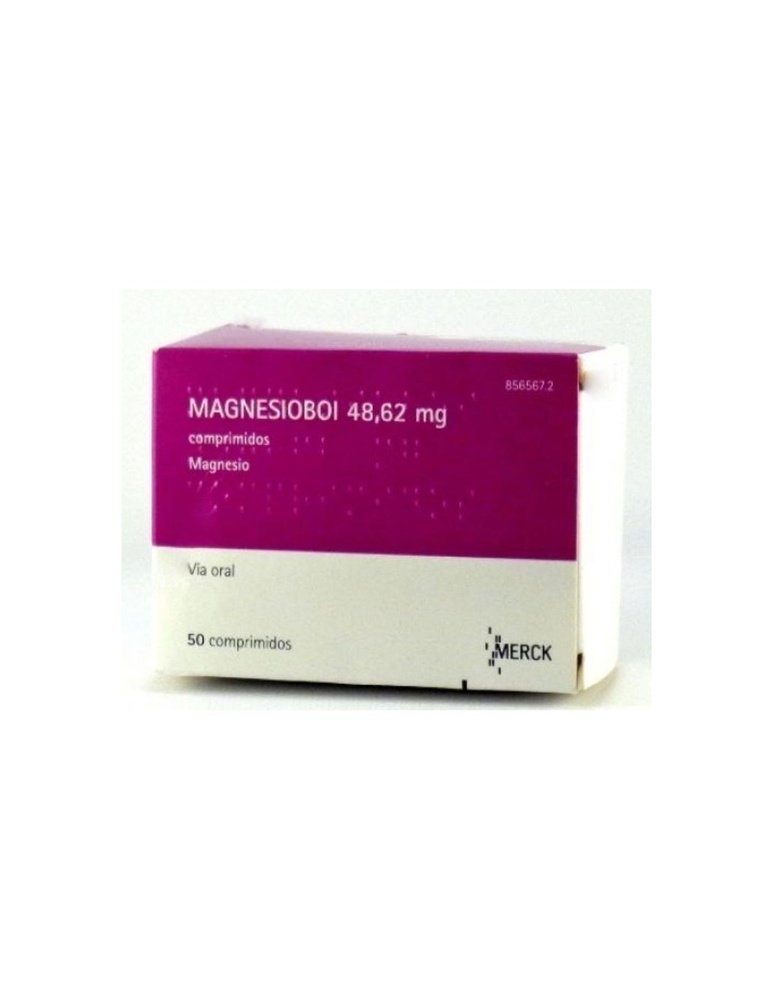
- Alternatives to MAGNOGENE 53 mg FILM-COATED TABLETSDosage form: ORAL SOLUTION/SUSPENSION, 200 mgActive substance: magnesium (different salts in combination)Manufacturer: Nutricion Medica S.L.Prescription requiredDosage form: ORAL SOLUTION/SUSPENSION, 2000 mg magnesium pidolateActive substance: magnesium pidolateManufacturer: Faes Farma S.A.Prescription not requiredDosage form: TABLET, 404.8 mg magnesium lactateActive substance: magnesium lactateManufacturer: Laboratorios Cinfa S.A.Prescription not required
Online doctors for MAGNOGENE 53 mg FILM-COATED TABLETS
Discuss questions about MAGNOGENE 53 mg FILM-COATED TABLETS, including use, safety considerations and prescription review, subject to medical assessment and local regulations.











Frequently Asked Questions
