



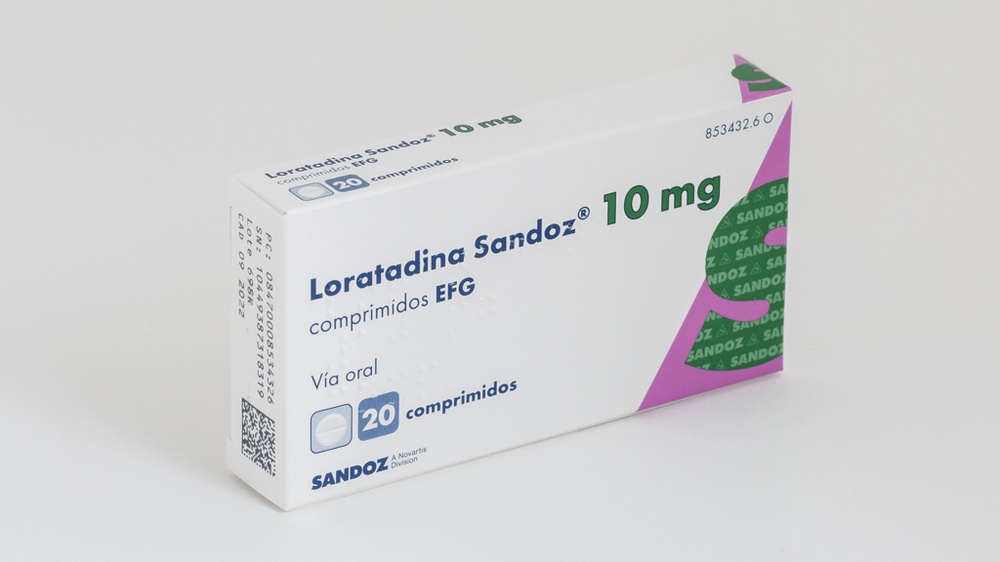
LORATADINA 10 mg Tablets

Prescription review online
A doctor will review your case and decide whether a prescription is medically appropriate.

Talk to a doctor about this medicine
Discuss your symptoms and possible next steps in a quick online consultation.



How to use LORATADINE SANDOZ 10 mg TABLETS
Contents of the leaflet
- Introduction
- What is Loratadine Sandoz and what is it used for
- What you need to know before taking Loratadine Sandoz
- How to take Loratadine Sandoz
- Possible side effects
- Storage of Loratadine Sandoz 10 mg Tablets
- Contents of the pack and further information
Introduction
Package Leaflet: Information for the User
Loratadine Sandoz 10 mg Tablets EFG
Read this package leaflet carefully before you start taking this medicine because it contains important information for you.
Follow the administration instructions of the medicine contained in this package leaflet or as indicated by your doctor, pharmacist, or nurse.
- Keep this package leaflet, you may need to read it again.
- If you have any further questions, ask your doctor or pharmacist.
- This medicine has been prescribed for you only. Do not give it to others, even if they have the same symptoms as you, as it may harm them.
- If you experience side effects, consult your doctor or pharmacist, even if they are not listed in this package leaflet. See section 4.
Contents of the Package Leaflet
- What is Loratadine Sandoz and what is it used for
- What you need to know before taking Loratadine Sandoz
- How to take Loratadine Sandoz
- Possible side effects
5 Storage of Loratadine Sandoz
- Contents of the pack and further information
1. What is Loratadine Sandoz and what is it used for
Loratadine Sandoz contains the active substance loratadine, which belongs to a class of medicines called "antihistamines".
Loratadine helps to reduce your allergy symptoms by blocking the effects of a substance called "histamine", which is produced in the body when you are allergic to something.
Loratadine relieves the symptoms associated with allergic rhinitis (e.g., hay fever) such as sneezing, runny or itchy nose, and itchy or red eyes in adults and children over 6 years old, weighing more than 30 kg.
Loratadine Sandoz can also be used to help relieve the symptoms of urticaria (such as itching, redness, and the number and size of skin wheals).

Not sure if this medicine is right for you?
Discuss your symptoms and treatment with a doctor online.
2. What you need to know before taking Loratadine Sandoz
Do not take Loratadine Sandoz:
- If you are allergic (hypersensitive) to loratadine or any of the other ingredients of this medicine (listed in section 6).
Warnings and precautions
Consult your doctor, pharmacist, or nurse before starting to take loratadine if:
- you have liver disease (see section 3 "How to take Loratadine Sandoz").
- you are going to undergo any type of skin tests for allergies. Do not take loratadine during the 2 days prior to the test, as this medicine may alter the test results.
If any of the above conditions apply to you (or you are unsure), consult your doctor, pharmacist, or nurse before taking loratadine.
Children and adolescents
Do not give loratadine to children under 6 years old or children from 6 to 12 years old who weigh less than 30 kg. There are other formulations more suitable for children from 6 to 12 years old who weigh less than 30 kg.
Taking Loratadine Sandoz with other medicines
Tell your doctor, pharmacist, or nurse if you are taking, have recently taken, or might take any other medicines, including those not prescribed by a doctor.
The side effects of loratadine may increase when used with medicines that alter the performance of certain enzymes found in the liver, or if your liver is not functioning properly. In clinical studies, no increase in loratadine side effects was observed with medicines that altered the performance of these enzymes. However, it is essential that you inform your pharmacist about any other medicine you are taking while taking loratadine.
Taking Loratadine Sandoz with food, drinks, and alcohol
Loratadine Sandoz can be taken with or without food.
It has not been shown that loratadine increases the effects of alcoholic beverages.
Pregnancy and breastfeeding
If you are pregnant or breastfeeding, or think you may be pregnant or plan to become pregnant, consult your doctor or pharmacist before using this medicine.
Pregnancy:
As a precaution, it is not recommended to take loratadine if you are pregnant.
Breastfeeding:
Do not take loratadine if you are breastfeeding, as loratadine is excreted in breast milk.
Driving and using machines
At the recommended dose, loratadine is not expected to cause drowsiness or decreased alertness. However, in very rare cases, some people may experience drowsiness, which may affect their ability to drive or use machines.
Loratadine Sandoz contains lactose
This medicine contains lactose. If your doctor has told you that you have an intolerance to certain sugars, consult with them before taking this medicine.
3. How to take Loratadine Sandoz
Follow the administration instructions of this medicine as indicated by your doctor or pharmacist. If in doubt, consult your doctor or pharmacist again.
The recommended dose is:
Adults and children over 12 years old:
Take 1 tablet once a day with a glass of water, with or without food.
Children from 6 to 12 years old will be dosed by weight:
Body weight over 30 kg:
Take 1 tablet once a day with a glass of water, with or without food.
Body weight of 30 kg or less:
Do not give loratadine 10 mg. There are other presentations more suitable for children from 6 to 12 years old who weigh 30 kg or less.
Loratadine is not recommended for children under 6 years old.
Patient with severe hepatic impairment with a weight over 30 kg:
Take 1 tablet (10 mg) once a day and on alternate days with a glass of water, with or without food.
Method of administration:
The tablets can be taken independently of meals.
If you take more Loratadine Sandoz than you should
No serious problems are expected, however, you may experience headache, palpitations, or feel drowsy.
In case of overdose or accidental ingestion, consult your doctor, pharmacist, or call the Toxicology Information Service, phone: 91 562 04 20, indicating the medicine and the amount taken.
If you forget to take Loratadine Sandoz
Do not take a double dose to make up for forgotten doses.
If you forget to take your dose, take it as soon as possible, or then return to your usual dosing schedule.
If you have any further questions about the use of this medicine, ask your doctor or pharmacist.

Started taking the medicine and have questions?
Discuss your symptoms and treatment with a doctor online.
4. Possible side effects
Like all medicines, this medicine can cause side effects, although not everybody gets them.
The most frequently reported side effects in adults and adolescents over 12 years old are:
- drowsiness
- headache
- increased appetite
- difficulty sleeping
The most frequently reported side effects in children from 6 to 12 years old are:
- headache
- nervousness
- fatigue.
During the marketing of loratadine, the following side effects have also been reported as very rare(may affect up to 1 in 10,000 patients):
- severe allergic reaction (including swelling)
- dizziness
- seizure
- irregular or rapid heartbeats
- nausea (vomiting)
- dry mouth
- stomach discomfort
- liver problems
- hair loss
- skin rash
- fatigue.
Frequency not known:
- weight gain
Reporting of side effects
If you experience any side effects, consult your doctor or pharmacist, even if they are not listed in this package leaflet. You can also report them directly through the Spanish Pharmacovigilance System for Human Use Medicines: https://www.notificaram.es. By reporting side effects, you can help provide more information on the safety of this medicine.
5. Storage of Loratadine Sandoz 10 mg Tablets
Keep this medicine out of the sight and reach of children.
This medicine does not require special storage conditions.
Do not use this medicine after the expiry date stated on the packaging and blister after CAD.
The expiry date is the last day of the month indicated.
Medicines should not be disposed of via wastewater or household waste. Dispose of the packaging and any unused medicine in the SIGRE collection point at your pharmacy. If in doubt, ask your pharmacist how to dispose of the packaging and any unused medicine. This will help protect the environment.
6. Contents of the pack and further information
Composition of Loratadine Sandoz
- The active substance is loratadine. Each tablet contains 10 mg of loratadine.
- The other ingredients (excipients) are: lactose monohydrate, microcrystalline cellulose, maize starch, and magnesium stearate.
Appearance of the product and contents of the pack
Loratadine Sandoz is presented in the form of scored tablets, round, white or almost white
Loratadine Sandoz is available in packs of 20 tablets.
Marketing authorisation holder and manufacturer
Marketing authorisation holder
Sandoz Farmacéutica, S.A.
Centro Empresarial Parque Norte
Edificio Roble
C/ Serrano Galvache, 56
28033 Madrid
Spain
Manufacturer
Laboratorios Farmalider, S.A.
C/ Aragoneses, 2
28108 Alcobendas (Madrid)
Spain
Toll Manufacturing services, S.L.
C/ Aragoneses, 2
28108 Alcobendas (Madrid)
Spain
Date of the last revision of this package leaflet: June 2018
Detailed information on this medicine is available on the website of the Spanish Agency for Medicines and Health Products (AEMPS) http://www.aemps.gob.es/
- Country of registration
- Dosage formTABLET, 10 mg loratadine
- ATC codeR06AX13
- Average pharmacy price3.11 EUR
- Active substance
- Prescription requiredYes
- Manufacturer
- CompositionLACTOSA MONOHIDRATO (75 mg mg)
- This information is for reference only and does not constitute medical advice. Always consult a doctor before taking any medication. Oladoctor is not responsible for medical decisions based on this content.
- Alternatives to LORATADINE SANDOZ 10 mg TABLETSDosage form: TABLET, 10 mgActive substance: loratadineManufacturer: Neuraxpharm Spain S.L.Prescription requiredDosage form: TABLET, 10 mg loratadineActive substance: loratadineManufacturer: Bayer Hispania S.L.Prescription not requiredActive substance: loratadineManufacturer: Almus Farmaceutica S.A.U.Prescription required
Online doctors for LORATADINE SANDOZ 10 mg TABLETS
Discuss questions about LORATADINE SANDOZ 10 mg TABLETS, including use, safety considerations and prescription review, subject to medical assessment and local regulations.









Get LORATADINE SANDOZ 10 mg TABLETS Prescription Online
Fill in a 2-min form
Tell us your symptoms, history, and what medicine you're requesting.
Pick a doctor or let us assign
Choose a specialist or we'll match you with the next available doctor.
Doctor reviews your case
Usually within 30 minutes. They may ask follow-up questions via chat.
Collect from any pharmacy
Electronic prescription sent to your email — valid across Spain.
Frequently Asked Questions
LORATADINE SANDOZ 10 mg TABLETS requires a prescription in Spain. You can check with a doctor online whether this medicine may be appropriate for your situation.
The active ingredient in LORATADINE SANDOZ 10 mg TABLETS is loratadine. This information helps identify medicines with the same composition but different brand names.
The average pharmacy price for LORATADINE SANDOZ 10 mg TABLETS is around 3.11 EUR. Prices may vary depending on the manufacturer and dosage form.
LORATADINE SANDOZ 10 mg TABLETS is manufactured by Sandoz Farmaceutica S.A.. Pharmacy brands and packaging may differ depending on the distributor.
Doctors such as Family doctors, Psychiatrists, Dermatologists, Cardiologists, Endocrinologists, Gastroenterologists, Pulmonologists, Nephrologists, Rheumatologists, Hematologists, Infectious disease physicians, Allergists, Geriatricians, Paediatricians, Oncologists may assess whether LORATADINE SANDOZ 10 mg TABLETS is appropriate, depending on your situation and local regulations. You can book an online consultation to discuss your symptoms and possible next steps.
Spain has a well-developed healthcare infrastructure across major cities such as Madrid, Barcelona, Valencia, and Seville. Pharmacies are widely available and operate under strict regulations, ensuring access to prescribed medications.
You can buy LORATADINE SANDOZ 10 mg TABLETS in Madrid, Barcelona, Seville, or Valencia at any local pharmacy with a valid prescription.
To obtain a prescription, you can use Oladoctor:
Other medicines with the same active substance (loratadine) include CIVERÁN 10 mg FILM-COATED TABLETS, CLARITYNE 10 mg TABLETS, LORATADINE ALMUS 10 mg TABLETS. These may have different brand names or formulations but contain the same therapeutic ingredient. Always consult a doctor before switching or starting a new medicine.
