


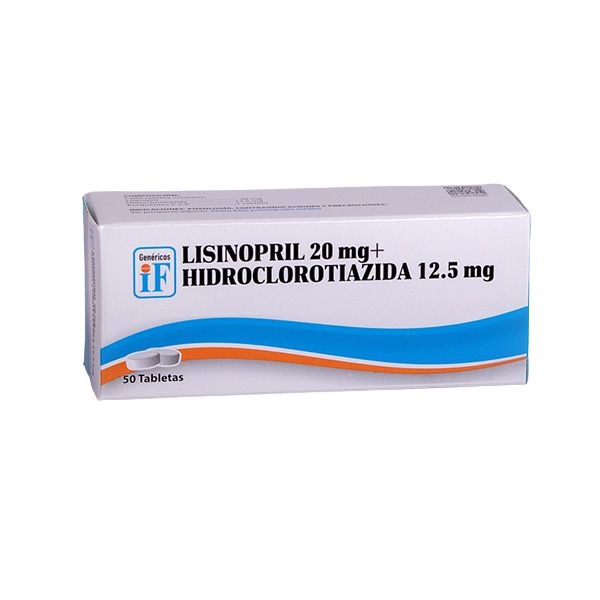
Lisinopril Teva-Ratiopharm 20 mg/12,5 mg comprimidos

Prescription request online
A doctor will review your case and decide whether a prescription is medically appropriate.

Talk to a doctor about this medicine
Discuss your symptoms and possible next steps in a quick online consultation.



How to use LISINOPRIL / HYDROCHLOROTHIAZIDE TEVA-RATIOPHARM 20 / 12.5 mg TABLETS
Contents of the leaflet
- Introduction
- What is Lisinopril/Hydrochlorothiazide Teva-ratiopharm and what is it used for
- What you need to know before you take Lisinopril/Hydrochlorothiazide Teva-ratiopharm
- How to take Lisinopril/Hydrochlorothiazide Teva-ratiopharm
- Possible Adverse Effects
- Conservation of Lisinopril/Hydrochlorothiazide Teva-ratiopharm
- Package Contents and Additional Information
Introduction
PACKAGE LEAFLET: INFORMATION FOR THE USER
Lisinopril / Hydrochlorothiazide Teva-ratiopharm 20/12.5 mg tablets EFG Read all of this leaflet carefully before you start taking this medicine because it contains important information for you.
Contents of the pack and other information:
|
1. What is Lisinopril/Hydrochlorothiazide Teva-ratiopharm and what is it used for
Lisinopril/Hydrochlorothiazide Teva-ratiopharm belongs to a group of medicines called antihypertensives that contain an ACE inhibitor (angiotensin-converting enzyme inhibitor).
Lisinopril/Hydrochlorothiazide Teva-ratiopharm contains two active substances, lisinopril and hydrochlorothiazide, which lower blood pressure by different mechanisms. Lisinopril prevents the formation of hypertensive agents in the body, and hydrochlorothiazide reduces blood pressure by increasing the elimination of water and salts from the body.
Lisinopril/Hydrochlorothiazide Teva-ratiopharm is indicated for the treatment of hypertension when the desired result has not been achieved with monotherapy alone.

Not sure if this medicine is right for you?
Discuss your symptoms and treatment with a doctor online.
2. What you need to know before you take Lisinopril/Hydrochlorothiazide Teva-ratiopharm
Do not take Lisinopril/Hydrochlorothiazide Teva-ratiopharm
- if you are allergic to lisinopril dihydrate, other ACE inhibitors, hydrochlorothiazide, thiazides, sulphonamide derivatives or any of the other ingredients of this medicine (listed in section 6).
- if you have been previously treated with an ACE inhibitor and have experienced hypersensitivity reactions during that time, which manifest, for example, as swelling of the face, lips, tongue and/or throat, accompanied by difficulty swallowing or breathing, or if you have experienced similar reactions for any other reason.
- if you have had angioedema in your family or have had angioedema in any other circumstance.
- if you are pregnant for more than three months (it is better to avoid Lisinopril/Hydrochlorothiazide Teva-ratiopharm in the early stages of pregnancy - see section Pregnancy).
- if you have severe kidney or liver problems.
- if your kidneys produce very little urine or no urine.
- if you have diabetes or kidney failure and are being treated with a blood pressure-lowering medicine that contains aliskiren.
- if you have taken or are currently taking sacubitril/valsartan, a medicine used to treat a type of long-term (chronic) heart failure in adults, the risk of angioedema (rapid swelling under the skin in an area such as the throat) is increased.
Warnings and precautions
Consult your doctor or pharmacist before starting to take Lisinopril/Hydrochlorothiazide Teva-ratiopharm.
- if you have had respiratory or lung problems (such as inflammation or fluid in the lungs) after taking hydrochlorothiazide in the past. If you experience severe shortness of breath or difficulty breathing after taking Lisinopril/Hydrochlorothiazide Teva-ratiopharm, see your doctor immediately.
- if you are using diuretics, your diet contains little or no salt, or if you are currently suffering or suffer during treatment from severe diarrhea or vomiting.
- if you are taking any of the following medicines used to treat high blood pressure.
- an angiotensin II receptor antagonist (ARA) (also known as sartans - e.g. valsartan, telmisartan, irbesartan), especially if you have kidney problems related to diabetes.
- aliskiren.
Your doctor may check your kidney function, blood pressure, and blood electrolyte levels (e.g. potassium) at regular intervals.
- See also the information under the heading "Do not use Lisinopril/Hydrochlorothiazide Teva-ratiopharm".
- if you have coronary artery disease or cerebrovascular disease.
- if you have narrowing of the main artery (aortic stenosis) that comes out of the left side of the heart or narrowing of a heart valve in particular (mitral valve stenosis).
- if you have thickening of the heart muscle.
- if you have low blood pressure. Signs of low blood pressure include a feeling of dizziness or lightheadedness, especially when standing up.
- if you have kidney failure or are receiving dialysis.
- if you have recently had a kidney transplant.
- if you have bilateral narrowing of the renal artery or narrowing of the artery of the only functioning kidney.
- if you have diabetes or vascular collagen disease.
- if you have gout.
- if you have recently had diarrhea or vomiting (nausea).
- if your doctor has advised you to control the amount of salt in your diet.
- if you are taking potassium tablets or salt substitutes that contain potassium.
- if you have liver failure or other liver disease.
- if you are receiving desensitization treatment against insect toxins.
- if you have a persistent dry cough for a long time.
- if you have high cholesterol and are receiving a treatment called "LDL apheresis".
- if you are taking lithium (a medicine for depression) at the same time.
- due to your ethnic origin (particularly in black patients), the effect of lisinopril/hydrochlorothiazide may be reduced. You may also have an allergic reaction (angioedema) more easily.
- if you are taking any of the following medicines, the risk of angioedema may increase.
- racecadotril, a medicine used to treat diarrhea.
- medicines used to prevent organ transplant rejection and for cancer (e.g. temsirolimus, sirolimus, everolimus).
- vildagliptin, a medicine used to treat diabetes.
- medicines that contain a tissue plasminogen activator.
Signs of angioedema include swelling of the face, lips, tongue and/or throat with difficulty swallowing and breathing.
- if you have had skin cancer or if you develop an unexpected skin lesion during treatment. Treatment with hydrochlorothiazide, in particular its long-term use at high doses, may increase the risk of certain types of skin and lip cancer (non-melanoma skin cancer). Protect your skin from sun and UV ray exposure while taking Lisinopril/Hydrochlorothiazide Teva-ratiopharm.
- if you experience a decrease in vision or eye pain, they could be symptoms of fluid accumulation in the vascular layer of the eye (choroidal effusion) or an increase in pressure in the eye and can occur within a few hours to a week after taking Lisinopril/Hydrochlorothiazide Teva-ratiopharm. This can lead to permanent vision loss if not treated. If you have previously been allergic to penicillin or sulphonamide, you may have a higher risk of developing it.
Children and adolescents
Do not give Lisinopril/Hydrochlorothiazide Teva-ratiopharm to children under 18 years of age. There is limited information on the safety and efficacy of Lisinopril/Hydrochlorothiazide in children.
Elderly
In patients over 65 years of age, blood pressure, certain laboratory values, serum electrolytes, creatinine, blood sugar, and hemogram should be monitored, especially at the start of treatment. The dosage should be adjusted with special care in elderly patients.
Kidney
If you have kidney failure, it is important that you are not taking potassium supplements or potassium-sparing diuretics during treatment with lisinopril/hydrochlorothiazide, as this can excessively increase potassium levels in your body.
Surgery
Tell your doctor that you are using Lisinopril/Hydrochlorothiazide Teva-ratiopharm if you need to undergo surgery (including dental surgery) during treatment, because some anesthetics used during surgery can cause excessive blood pressure lowering in combination with Lisinopril/Hydrochlorothiazide Teva-ratiopharm.
Pregnancy
Tell your doctor if you think you are (or might become) pregnant. Lisinopril/Hydrochlorothiazide Teva-ratiopharm is not recommended during the first trimester of pregnancy and should not be taken if you are pregnant for more than 3 months, as it may cause serious harm to your baby if taken during this period (see section Pregnancy).
While taking Lisinopril/Hydrochlorothiazide Teva-ratiopharm.
If you develop any of the following symptoms, you should inform your doctor immediately:
- if you feel dizzy after the first dose. Some people react to Lisinopril/Hydrochlorothiazide Teva-ratiopharm with the first dose or when it is increased, with a feeling of dizziness, weakness, fainting, and vomiting.
- sudden swelling of the lips and face, neck, and possibly also hands and feet, or wheezing or hoarseness. This condition is called angioedema. It can occur at any time during treatment. ACE inhibitors have a higher rate of angioedema in black patients than in white patients.
- high fever, sore throat, or mouth ulcers (these may be symptoms of an infection caused by a low white blood cell count).
- yellowing of the skin and whites of the eyes (jaundice) may be signs of liver disease.
At the start of treatment and/or during the dose adjustment period, it may be necessary to increase the frequency of medical check-ups. Do not miss these visits even if you feel well. Your doctor will determine the frequency of medical examinations.
Taking Lisinopril/Hydrochlorothiazide with other medicines
The concomitant use of other medicines may affect the efficacy and safety of this medicine. On the other hand, Lisinopril/Hydrochlorothiazide Teva-ratiopharm may affect the safety and efficacy of other medicines. Inform your doctor or pharmacist if you are using or have recently used other medicines, including those obtained without a prescription, herbal products, and natural remedies. Remember to tell your doctor that you are taking Lisinopril/Hydrochlorothiazide Teva-ratiopharm if they prescribe another medicine for you during treatment or shortly after.
It is especially important to inform your doctor if you are using:
- potassium supplements (including salt substitutes), potassium-sparing diuretics, and other medicines that may increase the amount of potassium in the blood (e.g. trimethoprim and cotrimoxazole for bacterial infections; cyclosporin, an immunosuppressive medicine used to prevent organ transplant rejection, and heparin, a medicine used to thin the blood to prevent clots).
- other antihypertensive agents.
Your doctor may need to adjust your dose and/or take other precautions:
- If you are taking an angiotensin II receptor antagonist (ARA) or aliskiren (see also the information under the headings "Do not use Lisinopril/Hydrochlorothiazide Teva-ratiopharm" and "Warnings and precautions").
- other diuretics.
- allopurinol (a medicine for gout), procainamide (an anti-arrhythmic medicine), oral cortisone, cytostatic agents (cancer medicines), or medicines that affect the body's immune system (such as cyclosporin).
- lithium (a medicine used in bipolar affective disorder).
- antipsychotic medicines or central nervous system stimulants.
- non-steroidal anti-inflammatory medicines (NSAIDs) including acetylsalicylic acid.
- certain anesthetics.
- vitamin D preparations.
- insulin or oral antidiabetics.
- lovastatin, cholestyramine, or colestipol (to reduce cholesterol).
- digoxin (for heart disease).
- medicines to control heart rate (anti-arrhythmics).
- sotalol (an anti-arrhythmic medicine).
- amphotericin B (an antifungal medicine).
- carbenoxolone (for ulcers).
- certain pituitary gland hormones (ACTH).
- laxatives (medicines that help you go to the bathroom).
- racecadotril (used to treat diarrhea).
- sacubitril/valsartan (used to treat high blood pressure).
- vildagliptin (used to treat diabetes).
- certain medicines used to treat asthma.
- medicines to treat nasal or sinus congestion or other cold medicines (including those that can be bought without a prescription in pharmacies).
- tubocurarine (a muscle relaxant).
- gold.
- diazoxide (used, for example, to treat hypoglycemia).
- amantadine (used to treat Parkinson's disease or to treat severe viral infections).
- barbiturates (a type of sedative also used to treat epilepsy).
- alcohol.
- adrenergic amines such as noradrenaline (substances that increase blood pressure).
- tissue plasminogen activator (a medicine used to dissolve blood clots).
- medicines that are more often used to prevent organ transplant rejection (sirolimus, everolimus, and other medicines belonging to the class of mTOR inhibitors). See section "Warnings and precautions".
Pregnancy and breastfeeding
If you are pregnant or breastfeeding, think you may be pregnant, or are planning to have a baby, ask your doctor or pharmacist for advice before taking this medicine.
Pregnancy
Tell your doctor if you think you are (or might be) pregnant. Your doctor will normally advise you to stop taking lisinopril/hydrochlorothiazide before you become pregnant or as soon as you know you are pregnant and will advise you to take another medicine instead of Lisinopril/Hydrochlorothiazide Teva-ratiopharm. Lisinopril/Hydrochlorothiazide Teva-ratiopharm is not recommended during the first trimester of pregnancy and should not be taken if you are pregnant for more than 3 months, as it may cause serious harm to your baby if taken after the third month of pregnancy.
Breastfeeding
Tell your doctor if you are breastfeeding or about to start breastfeeding. Lisinopril/Hydrochlorothiazide Teva-ratiopharm is not recommended for breastfeeding mothers, and your doctor should choose another treatment if you want to breastfeed, especially if your baby is newborn or premature.
Driving and using machines
When starting treatment, when changing the dose, or in combination with alcohol, Lisinopril/Hydrochlorothiazide Teva-ratiopharm may have mild to moderate effects on your ability to drive or use machines that require special attention. It should be taken into account that when driving vehicles or using machinery, dizziness or fatigue may occur.
Athletes
Athletes are warned that this medicine contains an active substance (hydrochlorothiazide) that may produce a positive result in a doping test.
Lisinopril/Hydrochlorothiazide Teva-ratiopharm contains sodium
This medicine contains less than 1 mmol of sodium (23 mg) per tablet; this is, essentially "sodium-free".
3. How to take Lisinopril/Hydrochlorothiazide Teva-ratiopharm
Follow exactly the administration instructions of this medicine indicated by your doctor or pharmacist. In case of doubt, consult your doctor or pharmacist again.
The recommended dose is one or two tablets per day. Your doctor will decide the dose you should take based on previous treatment with the medicines lisinopril and hydrochlorothiazide separately.
Kidney failure
The dose depends on the degree of kidney failure. Follow your doctor's instructions.
Before diuretic treatment
Diuretic treatment should be suspended 2 to 3 days before starting treatment with Lisinopril/Hydrochlorothiazide Teva-ratiopharm. Follow your doctor's instructions.
Dose change
Do not change the dose or stop taking the medicine without consulting your doctor first.
If you take more Lisinopril/Hydrochlorothiazide Teva-ratiopharm than you should
In case of overdose or accidental ingestion, consult the Toxicology Information Service. Telephone 91 562 04 20.
Consult your doctor or the nearest hospital immediately if you have taken more doses than you should (overdose). An overdose can cause a marked decrease in blood pressure, which can lead to dizziness and mild headache. Symptoms may include shortness of breath, rapid or slow heartbeat, palpitations, anxiety, or cough.
If you forget to take Lisinopril/Hydrochlorothiazide Teva-ratiopharm
Do not take a double dose to make up for forgotten doses.
Resume your usual schedule.
If you stop taking Lisinopril/Hydrochlorothiazide Teva-ratiopharm
Do not stop taking the medicine without consulting your doctor first.
If you have any further questions on the use of this product, ask your doctor or pharmacist.

Started taking the medicine and have questions?
Discuss your symptoms and treatment with a doctor online.
4. Possible Adverse Effects
Like all medicines, this medicine can cause adverse effects, although not all people suffer from them.
Very frequent: may affect more than 1 in 10 people
Frequent: may affect up to 1 in 10 people
Infrequent: may affect up to 1 in 100 people
Rare: may affect up to 1 in 1,000 people
Very rare: may affect up to 1 in 10,000 people
Unknown: the frequency cannot be estimated from the available data
If you notice any of the following adverse effects, stop taking lisinopril/hydrochlorothiazide and contact a doctor immediately:
- severe allergic reactions (infrequent), which may include the following symptoms that can appear suddenly:
- swelling of the face, lips, tongue, or throat. This can cause difficulty swallowing
- severe or sudden swelling of hands, feet, and ankles
- breathing difficulties
- intense skin itching (with blisters)
- severe skin conditions, such as a sudden and unexpected rash or a feeling of burning, redness, or skin peeling (very rare)
- a infection with fever and severe deterioration of your general condition, or fever with signs of a local infection such as sore throat, throat infection, or mouth problems or urinary problems (very rare)
Lisinopril
Frequent
Dizziness, headache, syncope, hypotension associated with symptoms (dizziness, weakness, blurred vision), dry cough, vomiting, diarrhea, renal dysfunction.
Infrequent
Mood changes, paresthesia, vertigo, taste changes, sleep disorders, depressive symptoms, hallucinations, accelerated heart rate, palpitations, myocardial infarction or stroke (in high-risk patients possibly secondary to excessive hypotension), skin color change (pale or blue followed by redness) and/or numbness or tingling in the fingers of the hands and feet (Raynaud's syndrome), rhinitis, nausea, abdominal pain, indigestion, increased liver enzymes and bilirubin, itching with or without rash, skin rash, impotence, fatigue, asthenia, increased blood urea, increased serum creatinine, hyperkalemia.
Rare
Red blood cell deficiency, decreased hemoglobin, syndrome of inadequate antidiuretic hormone secretion (SIADH), mental confusion, altered sense of smell, dry mouth, urticaria, psoriasis, hair loss, kidney function disorders including renal failure, uremia, breast development in men, hyponatremia.
Very rare
Poor bone marrow production, low platelet count (thrombocytopenia), decreased white blood cell count (neutropenia, leucopenia), reduction in the number of white blood cells (agranulocytosis), making infections more likely, lymph node diseases, autoimmune diseases, where the body attacks itself, anemia, hemolytic anemia, bronchospasm, sinusitis, allergic alveolitis/eosinophilic pneumonia, pancreatitis, allergic reaction in the small intestine (intestinal angioedema), liver failure and cholestasis (including jaundice), hepatitis including necrosis, sweating, toxic epidermal necrolysis, Stevens-Johnson syndrome, erythema multiforme, erythroderma, pemphigoid reactions and exfoliative dermatitis, decreased or absent urine excretion, low blood sugar levels (hypoglycemia).
A complex symptom has been reported that may include one or more of the following: fever, vasculitis, myalgia, arthralgia/arthritis, positive antinuclear antibodies (ANA), elevated erythrocyte sedimentation rate, eosinophilia and leukocytosis, rash, photosensitivity and other dermatological manifestations may appear.
Unknown
Severe allergic reaction (anaphylactic/anaphylactoid reaction), flushing.
Hydrochlorothiazide
Very rare
Acute breathing difficulties (signs include severe breathing difficulties, fever, weakness, and confusion).
Unknown
Inflammation of the salivary glands, skin and lip cancer (non-melanoma skin cancer), leukopenia, neutropenia/agranulocytosis, thrombocytopenia, aplastic anemia, hemolytic anemia, bone marrow depression, anorexia, hyperglycemia, glucosuria, hyperuricemia, electrolyte imbalance (including hyponatremia, hypokalemia, hypochloremic alkalosis, and hypomagnesemia), increased cholesterol and triglycerides, gout, restlessness, depression, sleep disorders, loss of appetite, paresthesia, photosensitivity to light, yellow vision, transient blurred vision, decreased vision or eye pain due to high pressure (possible signs of fluid accumulation in the vascular layer of the eye (choroidal effusion) or acute angle-closure glaucoma), vertigo, postural hypotension, necrotizing angiitis (vasculitis, cutaneous vasculitis), respiratory distress (including pneumonitis and pulmonary edema), gastric irritation, diarrhea, constipation, pancreatitis, jaundice (intrahepatic cholestatic jaundice), photosensitivity reactions, rash, cutaneous lupus erythematosus, systemic lupus erythematosus, cutaneous reactions such as lupus erythematosus, reactivation of cutaneous lupus erythematosus, urticaria, anaphylactic reactions, toxic epidermal necrolysis, muscle spasms, muscle weakness, renal dysfunction, interstitial nephritis, fever, weakness.
Stop using this medicine and consult your doctor immediately if symptoms of angioedema appear, such as swelling of the extremities, face, lips, larynx, or mucous membranes, or if it becomes difficult to breathe or swallow during treatment.
Reporting of Adverse Effects
If you experience any type of adverse effects, consult your doctor or pharmacist, even if they are not listed in this prospectus. You can also report them directly through the Spanish Pharmacovigilance System for Human Use Medicines, website: www.notificaRAM.es By reporting adverse effects, you can contribute to providing more information on the safety of this medicine.
5. Conservation of Lisinopril/Hydrochlorothiazide Teva-ratiopharm
Keep out of sight and reach of children.
Do not use this medicine after the expiration date shown on the packaging after CAD. The expiration date is the last day of the month indicated.
This medicine does not require special storage conditions
Medicines should not be thrown away through wastewater or household waste. Deposit the packaging and medicines you no longer need at the SIGRE point in the pharmacy. In case of doubt, ask your pharmacist how to dispose of the packaging and medicines you no longer need. This way, you will help protect the environment.
6. Package Contents and Additional Information
Composition of Lisinopril/Hydrochlorothiazide Teva-ratiopharm 20/12.5 mg
The active ingredients are: Lisinopril (as lisinopril dihydrate) and hydrochlorothiazide.
Each tablet contains 20 mg of lisinopril (as lisinopril dihydrate) and 12.5 mg of hydrochlorothiazide.
The other components are: mannitol, calcium hydrogen phosphate dihydrate, pregelatinized corn starch without gluten, sodium croscarmellose, and magnesium stearate.
Product Appearance and Package Contents
White, round, scored tablets, marked with "LH" on one side.
Lisinopril/Hydrochlorothiazide Teva-ratiopharm 20/12.5 mg is available in PVC/PVDC/Aluminum blister packs and polypropylene bottles with a low-density polyethylene screw cap and desiccant.
Each package contains blister packs of 10, 28, 30, 50, 56, 60, 98, 100, 50 x 1 (perforated unit-dose blister), 100 x 1 (perforated unit-dose blister), and 500 x 1 (perforated unit-dose blister) tablets.
Polypropylene bottles: 100 tablets.
Only some package sizes may be marketed.
Marketing Authorization Holder and Manufacturer
Marketing Authorization Holder
Teva Pharma, S.L.U.
C/ Anabel Segura, 11, Edificio Albatros B, 1ª planta,
Alcobendas, 28108 - Madrid
Manufacturer
Merckle GmbH
Ludwig-Merckle-Strasse 3
89143 Blaubeuren (Germany)
This medicine is authorized in the Member States of the European Economic Area under the following names:
Germany: | Lisinopril comp.-ratiopharm 20 mg/12.5 mg Tablets |
Luxembourg: | Lisinopril-ratiopharm comp. 20/12.5 mg |
Portugal: | Lisinopril and Hydrochlorothiazide ratiopharm 20 mg and 12.5 mg tablets |
Spain: | Lisinopril/Hydrochlorothiazide Teva-ratiopharm 20/12.5 mg EFG tablets |
Date of the last revision of this prospectus: July 2023
Other Sources of Information
Detailed information about this medicine is available on the website of the Spanish Agency for Medicines and Health Products (AEMPS) http://www.aemps.gob.es/
You can access detailed information about this medicine by scanning the QR code included in the packaging with your mobile phone (smartphone). You can also access this information at the following internet address: https://cima.aemps.es/cima/dochtml/p/65829/P_65829.html
QR Code + URL
- Country of registration
- Dosage formTABLET, 20 mg lisinopril/12.5 mg hydrochlorothiazide
- ATC codeC09BA03
- Average pharmacy price7.37 EUR
- Active substance
- Prescription requiredYes
- Manufacturer
- CompositionMANITOL (E-421) (38.30 mg mg), CROSCARMELOSA SODICA (8.40 mg mg)
- This information is for reference only and does not constitute medical advice. Always consult a doctor before taking any medication. Oladoctor is not responsible for medical decisions based on this content.
- Alternatives to LISINOPRIL / HYDROCHLOROTHIAZIDE TEVA-RATIOPHARM 20 / 12.5 mg TABLETSDosage form: TABLET, 20 mg lisinopril / 12.5 mg hydrochlorothiazideActive substance: lisinopril and diureticsManufacturer: Neuraxpharm Spain S.L.Prescription requiredDosage form: TABLET, 20 mg lisinopril/12.5 mg hydrochlorothiazideActive substance: lisinopril and diureticsManufacturer: Teva Pharma S.L.U.Prescription requiredDosage form: TABLET, 20 mg / 12.5 mgActive substance: lisinopril and diureticsManufacturer: Laboratorios Cinfa S.A.Prescription required
Online doctors for LISINOPRIL / HYDROCHLOROTHIAZIDE TEVA-RATIOPHARM 20 / 12.5 mg TABLETS
Discuss questions about LISINOPRIL / HYDROCHLOROTHIAZIDE TEVA-RATIOPHARM 20 / 12.5 mg TABLETS, including use, safety considerations and whether a prescription is appropriate, subject to medical assessment and local regulations.
Frequently Asked Questions
LISINOPRIL / HYDROCHLOROTHIAZIDE TEVA-RATIOPHARM 20 / 12.5 mg TABLETS requires a prescription in Spain. You can check with a doctor online whether this medicine may be appropriate for your situation.
The active ingredient in LISINOPRIL / HYDROCHLOROTHIAZIDE TEVA-RATIOPHARM 20 / 12.5 mg TABLETS is lisinopril and diuretics. This information helps identify medicines with the same composition but different brand names.
The average pharmacy price for LISINOPRIL / HYDROCHLOROTHIAZIDE TEVA-RATIOPHARM 20 / 12.5 mg TABLETS is around 7.37 EUR. Prices may vary depending on the manufacturer and dosage form.
LISINOPRIL / HYDROCHLOROTHIAZIDE TEVA-RATIOPHARM 20 / 12.5 mg TABLETS is manufactured by Teva Pharma S.L.U.. Pharmacy brands and packaging may differ depending on the distributor.
Doctors such as Family doctors, Psychiatrists, Dermatologists, Cardiologists, Endocrinologists, Gastroenterologists, Pulmonologists, Nephrologists, Rheumatologists, Hematologists, Infectious disease physicians, Allergists, Geriatricians, Paediatricians, Oncologists may assess whether LISINOPRIL / HYDROCHLOROTHIAZIDE TEVA-RATIOPHARM 20 / 12.5 mg TABLETS is appropriate, depending on your situation and local regulations. You can book an online consultation to discuss your symptoms and possible next steps.
The prescription is issued by a doctor after assessing your health. In Spain, LISINOPRIL / HYDROCHLOROTHIAZIDE TEVA-RATIOPHARM 20 / 12.5 mg TABLETS is then dispensed in pharmacies with that prescription. An online consultation does not guarantee that a prescription will be issued: the decision always rests with the doctor.
To request an assessment, you can use Oladoctor:
Other medicines with the same active substance (lisinopril and diuretics) include DONEKA PLUS 20/12.5 mg TABLETS, LISINOPRIL-HYDROCHLOROTHIAZIDE TEVA 20 mg/12.5 mg TABLETS, LISINOPRIL/HYDROCHLOROTHIAZIDE CINFA 20 mg/12.5 mg TABLETS. These may have different brand names or formulations but contain the same therapeutic ingredient. Always consult a doctor before switching or starting a new medicine.
