


Lidocaina Braun 10 mg/ml injectable solution

Prescription review online
A doctor will review your case and decide whether a prescription is medically appropriate.

Talk to a doctor about this medicine
Discuss your symptoms and possible next steps in a quick online consultation.



How to use LIDOCAINE B. BRAUN 10 mg/ml injectable solution
Contents of the leaflet
- Introduction
- What is Lidocaine B. Braun and what is it used for
- What you need to know before you use Lidocaine B. Braun
- How to use Lidocaine B. Braun
- Possible side effects
- Storage of Lidocaine B. Braun
- Contents of the pack and other information
- Dosage and administration
- Lidocaine B. Braun should only be used by doctors with experience in regional anesthesia and resuscitation techniques or under their supervision. Resuscitation equipment should be available when local anesthetics are administered. The lowest possible dose that produces the desired effect should be given. The dose must be adjusted individually according to the particularities of each case.
- Dosage
- Form of administration
- Interaction with other medicines and other forms of interaction
- Special Warnings and Precautions for Use
Introduction
Package Leaflet: Information for the Patient
Lidocaine B. Braun 10 mg/ml Solution for Injection
Lidocaine, Hydrochloride
Read all of this leaflet carefully before you start using this medicine because it contains important information for you.
- Keep this leaflet, you may need to read it again.
- If you have any further questions, ask your doctor, pharmacist, or nurse.
- If you get any side effects, talk to your doctor, pharmacist, or nurse. This includes any possible side effects not listed in this leaflet. See section 4.
Contents of the Package Leaflet
- What is Lidocaine B. Braun and what is it used for
- What you need to know before you use Lidocaine B. Braun
- How to use Lidocaine B. Braun
- Possible side effects
- Storage of Lidocaine B. Braun
- Contents of the pack and other information
1. What is Lidocaine B. Braun and what is it used for
This medicine contains lidocaine hydrochloride and belongs to a group of medicines called local anesthetics of the amide type. It is used to block pain by reducing the conduction of nerve impulses near its site of action.
Lidocaine B. Braun is used to provide anesthesia by local injection around nerves or areas where surgical procedures are to be performed.

Not sure if this medicine is right for you?
Discuss your symptoms and treatment with a doctor online.
2. What you need to know before you use Lidocaine B. Braun
Do not useLidocaine B. Braun
- If you are allergic to lidocaine, other local anesthetics of the amide type, or any of the other ingredients of this medicine (listed in section 6).
- For epidural anesthesia in patients with pronounced hypotension (very low blood pressure) or cardiogenic shock (the heart pumps blood inadequately) or hypovolemic shock (severe loss of blood or body fluids).
Warnings and precautions
Consult your doctor, pharmacist, or nurse before starting to use Lidocaine B. Braun:
- if you are an elderly person or are in a weakened general condition
- if you have heart problems such as slow or irregular heartbeat or heart failure.
- if you have any lung or respiratory disorders.
- if you have any liver or kidney disease.
- if you have a history of epileptic seizures.
- if you have inflammation or infection at the injection site.
- if you have porphyria (a rare inherited disease that affects the skin and nervous system).
- if you have blood coagulation problems.
- if you are in the last trimester of pregnancy.
Children
Lidocaine is not recommended for use in newborns. In children under 4 years of age, it should be used with caution since the data on efficacy and safety are limited.
Using Lidocaine B. Braun with other medicines
Tell your doctor or pharmacist if you are using, have recently used, or might use any other medicines.
In particular, tell your doctor if you are taking any of the following medicines:
- other local anesthetics.
- medicines used to treat stomach ulcers (e.g., cimetidine).
- medicines used to treat irregular heartbeat (e.g., amiodarone)
- medicines that inhibit the metabolism of lidocaine (e.g., cimetidine)
Pregnancy, breastfeeding, and fertility
If you are pregnant or breastfeeding, think you may be pregnant, or are planning to have a baby, ask your doctor or pharmacist for advice before using this medicine.
Your doctor will only give you this medicine during pregnancy or breastfeeding if it is necessary.
Driving and using machines
Lidocaine B. Braun may temporarily affect your ability to move, attention, and coordination. Your doctor will tell you if you can drive or use machines.
Lidocaine B. Braun contains sodium
This medicine contains 28 mg of sodium (the main component of cooking/table salt) in each 10 ml ampoule. This is equivalent to 1.4% of the maximum recommended daily intake of sodium for an adult.
3. How to use Lidocaine B. Braun
Lidocaine B. Braun will be given to you by a doctor. It will be given as an injection into a vein, into a muscle, under the skin, around nerves, or into the epidural space near the spinal cord.
Lidocaine B. Braun will normally be given near the part of the body that is to be operated on.
The dose that your doctor gives you will depend on the type of pain relief you need. It will also depend on your height, age, and physical condition, as well as the part of the body where the medicine is injected. You will be given the lowest possible dose to produce the desired effect. The dose of lidocaine should be reduced in special populations and in patients in poor general condition.
Use in children
The dose should be reduced in children. Lidocaine should be used with caution in children under four years of age.
If you use more Lidocaine B. Braun than you should
The doctor treating you is prepared to treat serious side effects related to an overdose of Lidocaine B. Braun.
The first signs that you are using more lidocaine than you should are usually the following:
- convulsions,
- restlessness,
- feeling of tiredness or dizziness,
- nausea,
- numbness or tingling sensation of the lips and around the mouth,
- vision problems.
If you experience any of these signs or if you think you have received more lidocaine than you should, tell your doctor or nurse immediately.
More serious side effects related to an overdose of lidocaine may occur, such as balance and coordination disorders, changes in hearing, euphoria, confusion, speech problems, paleness, sweating, tremors, convulsions, effects on the heart and blood vessels, loss of consciousness, coma, and short-term interruption of breathing (apnea).
If you have any further questions on the use of this product, ask your doctor.
In case of overdose or accidental ingestion, consult your doctor or pharmacist immediately or call the Toxicology Information Service telephone: 91.562 04 20, indicating the medicine and the amount used. Bring this leaflet with you.

Started taking the medicine and have questions?
Discuss your symptoms and treatment with a doctor online.
4. Possible side effects
Like all medicines, this medicine can cause side effects, although not everybody gets them.
Tell your doctor or nurse immediately if you experience a severe allergic reaction (angioedema or anaphylactic shock). The signs may include:
- sudden swelling of the face, lips, tongue, or throat; may cause difficulty swallowing,
- severe or sudden swelling of the hands, feet, and ankles,
- difficulty breathing,
- intense itching of the skin (with hives).
- fever,
- decrease in blood pressure.
These side effects are rare (may affect up to 1 in 1,000 people).
The possible side effects after administration are essentially the same as those produced by other local anesthetics of the amide type.
Very common side effects (may affect more than 1 in 10 patients):
- Nausea and vomiting
Common side effects (may affect between 1 and 10 in 100 patients):
- Transient neurological symptoms (pain in the legs and buttocks).
Uncommon side effects (may affect between 1 and 10 in 1,000 patients):
- Tingling sensation in the legs, loss of control of the sphincters (cauda equina syndrome)
- "Noises" in the ears or sensitivity to noise
- Hearing loss
- Visual disturbances
- Headache
- Feeling of dizziness
- Hypertension (high blood pressure)
- Bradycardia (slow heart rate)
Rare side effects (may affect between 1 and 10 in 10,000 patients):
- Hypersensitivity reactions, such as urticaria, skin rash, angioedema, bronchospasm, difficulty breathing, and, in severe cases, anaphylactic shock
- Trauma
- Chills
- Irritation (reaction in a body area)
- Spinal cord compression
- Cardiac arrest
- Respiratory depression (slow or interrupted breathing)
- Double vision
- Hypotension (low blood pressure)
Side effects with unknown frequency (cannot be estimated from the available data)
- Horner's syndrome (associated with epidural anesthesia or applications in the head and neck region)
Reporting of side effects
If you experience any side effects, talk to your doctor, pharmacist, or nurse, even if it is possible side effects not listed in this leaflet. You can also report side effects directly through the Medicines Monitoring System www.notificaRAM.es. By reporting side effects, you can help provide more information on the safety of this medicine.
5. Storage of Lidocaine B. Braun
Keep this medicine out of the sight and reach of children.
No special storage conditions are required.
Do not use this medicine after the expiry date which is stated on the packaging. The expiry date is the last day of the month stated.
For single use only. The contents of the ampoules should be used immediately after opening.
Once the pack is opened, discard the unused portion of the solution.
The solution should only be used if it is clear and colorless and the packaging is not damaged.
Medicines should not be disposed of via wastewater or household waste. Ask your pharmacist how to dispose of medicines no longer required. This will help protect the environment.
6. Contents of the pack and other information
Composition of Lidocaine B. Braun
The active substance is lidocaine hydrochloride.
One ml of the solution for injection contains 10 mg of lidocaine hydrochloride.
The other ingredients are: sodium chloride, sodium hydroxide (for pH adjustment), and water for injections.
Appearance of the product and pack contents
Lidocaine B. Braun is a clear, colorless solution for injection.
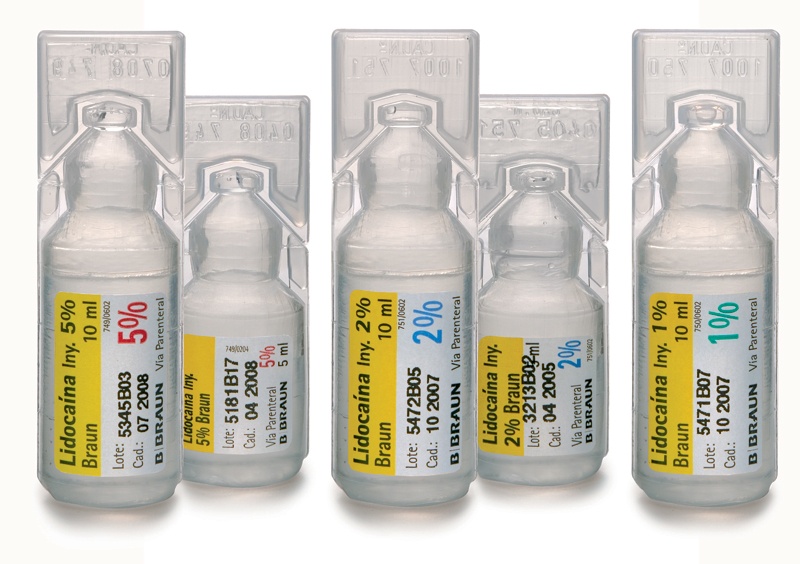
It is available in 10 ml polyethylene (Mini-Plasco) ampoules, in packs of 1, 20, and 100 ampoules.
Not all pack sizes may be marketed.
Marketing authorization holder and manufacturer
Marketing authorization holder
- Braun Medical, S.A.
Ctra. de Terrassa, 121
08191-Rubí (Barcelona)
Spain
Manufacturer
- Braun Medical, S.A.
Ctra. de Terrassa, 121
08191-Rubí (Barcelona)
- Braun Melsungen AG
Carl-Braun-Strasse 1
34212 Melsungen, Germany
Postal address:
34209 Melsungen, Germany
This leaflet was approved in: June 2021
Detailed information on this medicine is available on the website of the Spanish Agency for Medicines and Health Products. http//www.aemps.gob.es/
-------------------------------------------------------------------------------------------
This information is intended only for healthcare professionals:
Dosage and administration
Lidocaine B. Braun should only be used by doctors with experience in regional anesthesia and resuscitation techniques or under their supervision. Resuscitation equipment should be available when local anesthetics are administered. The lowest possible dose that produces the desired effect should be given. The dose must be adjusted individually according to the particularities of each case.
Dosage
Adults
When injected into tissues with high systemic absorption, the single dose of lidocaine hydrochloride should not exceed 400 mg. The following table can serve as a guide for adults with a body weight of approximately 70 kilograms. The dose should be adjusted according to the age, weight, and condition of the patient:
Route of administration or procedure | Recommended doses of lidocaine hydrochloride | ||
Concentration (mg/ml) | Volume (ml) | Total dose (mg) | |
Infiltration anesthesia | |||
Minor procedures | 10 mg/ml | 2-10 ml | 20-100 mg |
Major procedures | 10 mg/ml 20 mg/ml | 10-20 ml 5-10 ml | 100-200 mg 100-200 mg |
Intravenous regional anesthesia: | |||
Arm | 10 mg/ml 20 mg/ml | 10-20 ml 5-10 ml | 100-200 mg 100-200 mg |
Leg | 10 mg/ml 20 mg/ml | 20 ml 10 ml | 200 mg 200 mg |
Nerve blocks | 10 mg/ml 20 mg/ml | 2-20 ml 1-10 ml | 20-200 mg 20-200 mg |
Epidural anesthesia: | |||
Lumbar analgesia | 10 mg/ml 20 mg/ml | 25-40 ml 12.5-20 ml | 250-400 mg 250-400 mg |
Thoracic anesthesia | 10 mg/ml 20 mg/ml | 20-30 ml 10-15 ml | 200-300 mg 200-300 mg |
Surgical analgesia | 10 mg/ml 20 mg/ml | 40 ml 20 ml | 400 mg 400 mg |
Obstetric analgesia | 10 mg/ml 20 mg/ml | 20-30 ml 10-15 ml | 200-300 mg 200-300 mg |
To prolong anesthesia, lidocaine may be combined with a vasoconstrictor, such as adrenaline. The addition of adrenaline to a concentration of 1/100,000 to 1/200,000 has been shown to be effective.
Pediatric population
The doses are calculated individually according to the age and body weight of the patients and the nature of the procedure. The anesthesia technique should be carefully selected, and techniques that are painful should be avoided. The child's behavior should be closely monitored during treatment. The average dose to be administered is in the range of 20 mg to 30 mg of lidocaine hydrochloride per session. The dose in mg of lidocaine hydrochloride that can be administered to children can also be calculated using the expression: child's weight (in kilograms) x 1.33.
The equivalent of 5 mg of lidocaine hydrochloride per kilogram of body weight should not be exceeded.
To prevent systemic toxicity in children, the effective lowest concentration should always be used.
Lidocaine is indicated in adults and children. However, it should be used with special caution in children under four years of age, as there are limited data to support the safety and efficacy of this product in this patient population at this time.
Lidocaine injectable is not recommended for use in newborns (see section 5.2). In this age group, the optimal concentration of lidocaine in serum necessary to avoid toxic effects such as convulsions and cardiac arrhythmias is unknown.
Special populations
In patients with renal or hepatic insufficiency and in elderly patients, the dose should be reduced according to the age and physical condition of the patient (see sections 4.4 and 5.2).
Form of administration
The form of administration of lidocaine varies depending on the anesthesia procedure used (infiltration anesthesia, intravenous regional anesthesia, nerve block, or epidural anesthesia).
Lidocaine B. Braun can be administered intramuscularly, subcutaneously, intradermally, perineurally, epidurally, or intravenously (in local intravenous anesthesia or Bier block).
Interaction with other medicines and other forms of interaction
Drugs that inhibit the metabolism of lidocaine (e.g., cimetidine) may cause potentially toxic plasma concentrations when lidocaine is administered repeatedly in high doses over prolonged periods. Such interactions are of no clinical relevance during short-term treatment with lidocaine at the recommended doses.
Lidocaine should be used with caution in patients who receive other local anesthetics or antiarrhythmic drugs of class Ib, as toxic effects are cumulative.
No specific interaction studies have been conducted with lidocaine and antiarrhythmic drugs of class III (such as amiodarone), but caution is recommended (see section 4.4).
Special Warnings and Precautions for Use
In general, before injecting lidocaine, it should be ensured that all emergency resuscitation equipment and medications for the treatment of toxic reactions are available instantly. In the case of major blocks, an intravenous cannula should be inserted before injecting the local anesthetic. Like all local anesthetic agents, lidocaine can cause acute toxic effects on the cardiovascular system and central nervous system when high blood concentrations occur, especially after extensive intravascular administration.
Caution should be exercised in the treatment of the following categories of patients:
- Elderly and debilitated patients in general.
- Patients with AV block II or III, as the local anesthetic may reduce myocardial conductivity.
- Patients with congestive cardiac failure, bradycardia, or impaired respiratory function.
- Patients with severe hepatic disease or renal insufficiency.
- Patients with epilepsy. These patients should be carefully monitored to detect the appearance of central nervous system symptoms. An increase in the tendency to convulsions should be considered even with doses below the maximum.
- Patients with coagulopathy. Treatment with anticoagulants (e.g., heparin), NSAIDs, or plasma substitutes increases the tendency to bleeding. Accidental injury to blood vessels can cause severe bleeding. If necessary, the bleeding time and activated partial thromboplastin time (APTT), rapid test, and platelet count should be checked.
- Third trimester of pregnancy
- In children under 4 years of age, as safety and efficacy data are limited
- In newborns, special caution should be exercised (see section 5.2)
Patients treated with class III antiarrhythmic drugs (e.g., amiodarone) should be closely monitored, and ECG monitoring should be considered, as the cardiac effects of lidocaine and class III antiarrhythmic drugs can be cumulative (see section 4.5).
There have been post-marketing reports of cases of chondrolysis in patients who received continuous postoperative intra-articular infusion of local anesthetics. In most of the reported cases of chondrolysis, the shoulder joint was involved. Due to the multiple contributing factors and the inconsistency in the scientific literature regarding the mechanism of action, causality has not been established. Continuous intra-articular infusion is not an approved indication for lidocaine (see section 4.8).
Epidural anesthesia can cause serious adverse effects, such as cardiovascular depression, especially in cases of concomitant hypovolemia. Caution should always be exercised in patients with reduced cardiovascular function.
Epidural anesthesia can cause hypotension and bradycardia. This risk can be reduced by administering intravenous crystalloid or colloid solutions. Hypotension should be treated immediately with, for example, ephedrine 5-10 mg intravenously; repeat as necessary.
Paracervical block can occasionally cause fetal bradycardia or tachycardia, and it is necessary to closely monitor fetal heart rate (see section 4.6).
Traumatic nerve injuries and/or local toxic effects on muscles and nerves are mainly caused by the injection of local anesthetics. The extent of these tissue lesions depends on the magnitude of the trauma, the concentration of the local anesthetic, and the duration of exposure of the tissue to the local anesthetic. For this reason, the minimum effective dose should be used.
Special caution should also be exercised when injecting the local anesthetic into inflamed (infected) tissue due to the increased systemic absorption caused by increased blood flow and the decreased effect due to the lower pH of infected tissue.
Once the tourniquet is removed after intravenous regional anesthesia, there is a higher risk of adverse reactions. Therefore, the local anesthetic should be eliminated in several fractions.
During anesthetic procedures in the neck and head region, patients are exposed to a higher risk of toxic effects of the drug on the central nervous system, even at low doses (see section 4.8).
Rarely, retro-ocular injections can reach the cranial subarachnoid space, causing intense/severe reactions, including cardiovascular collapse, apnea, convulsions, and transient blindness.
Retro- and periocular injections of local anesthetics carry a low risk of persistent ocular motor dysfunction. The main causes include trauma and/or local toxic effects on muscles and/or nerves.
Intramuscular lidocaine can increase creatine phosphokinase concentrations, which can interfere with the diagnosis of acute myocardial infarction.
Lidocaine injectable is not recommended for use in newborns (see section 5.2).
It has been shown that lidocaine is porphyrogenic in animals and should not be administered to patients with acute porphyria unless it is absolutely unavoidable. Precautions should be taken in all patients with porphyria.
- Country of registration
- Dosage formINJECTABLE, -
- ATC codeN01BB02
- Active substance
- Prescription requiredYes
- Manufacturer
- CompositionCLORURO DE SODIO (71 mg mg), HIDROXIDO DE SODIO (E 524) (csp PH 5,0– 7,0 mg mg)
- This information is for reference only and does not constitute medical advice. Always consult a doctor before taking any medication. Oladoctor is not responsible for medical decisions based on this content.
- Alternatives to LIDOCAINE B. BRAUN 10 mg/ml injectable solutionDosage form: DRESSING, 700 mgActive substance: lidocaineManufacturer: Grünenthal Pharma S.A.Prescription requiredDosage form: GEL/PASTE/ORAL LIQUID, 20 mg/gActive substance: lidocaineManufacturer: Chemische Fabrik Kreussler & Co GmbhPrescription not requiredDosage form: GEL, 20 mg/mlActive substance: lidocaineManufacturer: Farco-Pharma GmbhPrescription required
Online doctors for LIDOCAINE B. BRAUN 10 mg/ml injectable solution
Discuss questions about LIDOCAINE B. BRAUN 10 mg/ml injectable solution, including use, safety considerations and prescription review, subject to medical assessment and local regulations.









Frequently Asked Questions
LIDOCAINE B. BRAUN 10 mg/ml injectable solution requires a prescription in Spain. You can check with a doctor online whether this medicine may be appropriate for your situation.
The active ingredient in LIDOCAINE B. BRAUN 10 mg/ml injectable solution is lidocaine. This information helps identify medicines with the same composition but different brand names.
LIDOCAINE B. BRAUN 10 mg/ml injectable solution is manufactured by B Braun Medical S.A.. Pharmacy brands and packaging may differ depending on the distributor.
Doctors such as Family doctors, Psychiatrists, Dermatologists, Cardiologists, Endocrinologists, Gastroenterologists, Pulmonologists, Nephrologists, Rheumatologists, Hematologists, Infectious disease physicians, Allergists, Geriatricians, Paediatricians, Oncologists may assess whether LIDOCAINE B. BRAUN 10 mg/ml injectable solution is appropriate, depending on your situation and local regulations. You can book an online consultation to discuss your symptoms and possible next steps.
The prescription is issued by a doctor after assessing your health. In Spain, LIDOCAINE B. BRAUN 10 mg/ml injectable solution is then dispensed in pharmacies with that prescription. An online consultation does not guarantee that a prescription will be issued: the decision always rests with the doctor.
To request a review, you can use Oladoctor:
Other medicines with the same active substance (lidocaine) include ACTILOGIC 700 MG MEDICATED ADHESIVE DRESSING, DYNEXAN 20 mg/g BUCAL GEL, INSTILLIDO 20 mg/ml GEL. These may have different brand names or formulations but contain the same therapeutic ingredient. Always consult a doctor before switching or starting a new medicine.
