






How to use LEVOFLOXACIN PHARMA COMBIX 500 mg FILM-COATED TABLETS
Translated with AI
This page provides general information and does not replace a doctor’s consultation. Always consult a doctor before taking any medication. Seek urgent medical care if symptoms are severe.
Show originalContents of the leaflet
Introduction
Package Leaflet: Information for theuser
Levofloxacino Pharma Combix 500 mg film-coated tablets EFG
Read all of this leaflet carefully before you start taking this medicine because it contains important information for you.
- Keep this leaflet, you may need to read it again.
- If you have any further questions, ask your doctor or pharmacist.
- This medicine has been prescribed for you only. Do not pass it on to others. It may harm them, even if their signs of illness are the same as yours.
- If you get any side effects, talk to your doctor or pharmacist. This includes any possible side effects not listed in this leaflet. See section 4.
Contents of the pack
- What is Levofloxacino Pharma Combix and what is it used for
- What you need to know before you take Levofloxacino Pharma Combix
- How to take Levofloxacino Pharma Combix
- Possible side effects
- Storage of Levofloxacino Pharma Combix
- Contents of the pack and other information
1. What is Levofloxacino Pharma Combix and what is it used for
Levofloxacino Pharma Combix contains the active substance levofloxacin, which belongs to a group of medicines called antibiotics. Levofloxacin is a type of antibiotic known as a quinolone, and it works by killing the bacteria that cause infections in your body.
Antibiotics are used to treat bacterial infections and do not work for viral infections such as the flu or the common cold. It is important that you follow the instructions regarding dose, administration interval, and treatment duration indicated by your doctor. Do not store or reuse this medicine. If you have leftover antibiotic after finishing treatment, return it to the pharmacy for proper disposal. Do not throw medicines down the drain or into the trash. |
Levofloxacin can be used to treat infections in:
- the paranasal sinuses
- the lungs, in people with long-term respiratory problems or pneumonia
- the urinary tract, including the kidneys or bladder
- the prostate, when the infection is persistent
- the skin and under the skin, including muscles. This is sometimes referred to as "soft tissue"
In some special situations, levofloxacin can be used to reduce the possibility of acquiring a lung infection called anthrax or worsening of this disease after being exposed to the bacterium that causes anthrax.

2. What you need to know before you take Levofloxacino Pharma Combix
Do not take this medicine and consult your doctor if:
- You are allergic to levofloxacin, to other antibiotics of the quinolone type such as moxifloxacin, ciprofloxacin, or ofloxacin, or to any of the other components of this medicine (listed in section 6)
- Signs of an allergic reaction include: skin rash, difficulty swallowing or breathing, swelling of lips, face, throat, or tongue
- You have or have had epilepsy
- You have ever had tendon problems, such as tendonitis, that were related to taking quinolone-type medications. The tendon is the tissue that connects your muscle to your skeleton
- You are a child or adolescent in the growth phase
- You are pregnant, might become pregnant, or think you might be pregnant
- You are breastfeeding
Do not take this medicine if any of the above cases apply to you. If in doubt, consult your doctor or pharmacist before taking levofloxacin.
Warnings and precautions
Before starting treatment
You should not take antibacterial medicines that contain fluoroquinolones or quinolones, including Levofloxacino Pharma Combix, if you have experienced a severe adverse reaction in the past when taking a quinolone or fluoroquinolone. If this is the case, you should inform your doctor as soon as possible.
Consult your doctor or pharmacist before taking your medicine if:
- You are 60 years old or older
- You are using corticosteroids, sometimes called steroids (see section "Taking Levofloxacino Pharma Combix with other medicines")
- You have had a seizure (convulsions)
- You have had brain damage due to a stroke or other brain injury
- You have kidney problems
- You have what is known as "glucose-6-phosphate dehydrogenase deficiency", as you may be prone to having serious blood problems when taking this medicine
- You have had mental problems
- You have ever had heart problems: caution should be exercised when using this type of medicine if you were born with, or have a family history of, prolongation of the QT interval (seen on an electrocardiogram (ECG), a graphical representation of the heart's electrical activity), have an imbalance in blood salt levels (especially low potassium or magnesium levels in the blood), have a slow heart rate (bradycardia), have a weak heart (heart failure), have a history of heart attack (myocardial infarction), if you are a woman or an elderly person, or are taking other medicines that may cause abnormal changes in the ECG (see section "Taking Levofloxacino Pharma Combix with other medicines")
- You are diabetic
- You have ever had liver problems
- You have myasthenia gravis
- You have been diagnosed with an aneurysm of a large blood vessel (aortic aneurysm or peripheral large vessel aneurysm)
- You have had a previous episode of aortic dissection (tear in the aortic wall)
- If you have been diagnosed with heart valve insufficiency (regurgitation of the heart valves)
- You have a family history of aortic aneurysm or aortic dissection, congenital heart valve disease, or other risk factors or predisposing disorders (e.g., connective tissue disorders such as Marfan syndrome or Ehlers-Danlos vascular syndrome, Turner syndrome, or Sjögren's syndrome (an autoimmune inflammatory disease), or vascular disorders such as Takayasu arteritis, giant cell arteritis, Behçet's disease, high blood pressure, or atherosclerosis, rheumatoid arthritis (a joint disease), or endocarditis (a heart infection))
- You have developed a severe skin rash or peeling of the skin, blisters, and/or sores in the mouth after taking levofloxacin
Tell your doctor or pharmacist before taking levofloxacin if you are not sure if any of the above cases apply to you.
During treatment with this medicine
- If you experience severe and sudden abdominal or back pain, which can be symptoms of aortic dissection or aneurysm, go to the emergency room immediately. The risk may increase if you are receiving systemic corticosteroid treatment
- If you start experiencing sudden onset of shortness of breath, especially when lying down, or if you notice swelling in the ankles, feet, or abdomen, or the appearance of heart palpitations (feeling of rapid or irregular heartbeat), you should inform your doctor immediately
- If you start experiencing sudden and involuntary jerks, muscle spasms, or muscle contractions, consult a doctor immediately, as these could be signs of myoclonus. Your doctor may need to interrupt treatment with levofloxacin and initiate appropriate treatment
- If you experience fatigue, pale skin, bruising, uncontrolled bleeding, fever, sore throat, and a severe deterioration of your general condition, or a feeling that your resistance to infections may be decreased, consult a doctor immediately, as these could be signs of blood disorders. Your doctor should monitor your blood with blood counts. If the blood counts are abnormal, your doctor may need to interrupt treatment
Rarely, pain and swelling in the joints and inflammation or rupture of the tendons can occur. The risk is higher if you are an elderly person (over 60 years old), have received an organ transplant, have kidney problems, or are being treated with corticosteroids. Tendon inflammation and rupture can occur within the first 48 hours of treatment and even several months after stopping treatment with Levofloxacino Pharma Combix. At the first sign of pain or inflammation of a tendon (e.g., in the ankle, wrist, elbow, shoulder, or knee), stop taking Levofloxacino Pharma Combix, contact your doctor, and rest the affected area. Avoid any unnecessary exercise, as this could increase the risk of tendon rupture
Rarely, you may experience symptoms of nerve damage (neuropathy) such as pain, burning, tingling, numbness, and/or weakness, especially in the feet and legs or hands and arms. If this happens, stop taking Levofloxacino Pharma Combix and inform your doctor immediately to prevent the development of a potentially irreversible disorder
Severe, disabling, long-lasting, and potentially irreversible side effects
Antibacterial medicines that contain fluoroquinolones or quinolones, including Levofloxacino Pharma Combix, have been associated with very rare but serious side effects, some of which were long-lasting (persistent for months or years), disabling, or potentially irreversible. This includes pain in the tendons, muscles, and joints of the upper and lower limbs, difficulty walking, abnormal sensations such as pins and needles, tingling, prickling, numbness, or burning (paresthesia), sensory disorders such as decreased vision, taste, smell, and hearing, depression, decreased memory, intense fatigue, and severe sleep disorders
If you experience any of these side effects after taking Levofloxacino Pharma Combix, contact your doctor immediately before continuing treatment. You and your doctor will decide whether to continue or not, also considering the use of an antibiotic of another class
Taking Levofloxacino Pharma Combix with other medicines
Tell your doctor or pharmacist if you are taking, have recently taken, or might take any other medicines. This is because levofloxacin can affect the way other medicines work. Also, some medicines can affect the way levofloxacin works
In particular, tell your doctor if you are taking any of the following medicines, as this increases the possibility of experiencing side effects when taking them with levofloxacin:
- Corticosteroids, sometimes called steroids, used for inflammation. You may have a higher risk of tendon inflammation and/or rupture
- Warfarin, used to make the blood more fluid. You may have a higher risk of bleeding. Your doctor may need to perform periodic blood tests to check if your blood is clotting correctly
- Theophylline, used for respiratory problems. You may have a higher risk of having a seizure (convulsions) if you take it with levofloxacin
- Non-steroidal anti-inflammatory drugs (NSAIDs), used for pain and inflammation, such as acetylsalicylic acid, ibuprofen, fenbufen, ketoprofen, indomethacin. You may have a higher risk of having a seizure (convulsions) when taking them with levofloxacin
- Cyclosporin, used after organ transplants. You may have a higher risk of experiencing the adverse effects of cyclosporin
- Medicines with a known effect on heartbeats. This includes medicines used for abnormal heart rhythms (antiarrhythmics such as quinidine, hydroquinidine, disopyramide, sotalol, dofetilide, ibutilide, and amiodarone), for depression (tricyclic antidepressants such as amitriptyline and imipramine), for psychiatric disorders (antipsychotics), and for bacterial infections (macrolide antibiotics such as erythromycin, azithromycin, and clarithromycin)
- Probenecid (used for gout) and cimetidine (used for ulcers and heartburn). Special care should be taken when taking these medicines with levofloxacin. If you have kidney problems, your doctor may want to give you a lower dose
Do not take levofloxacin tablets at the same time as the following medicines, as this can affect the way levofloxacin works:
- Iron tablets (for anemia), zinc supplements, antacids that contain aluminum or magnesium (for acidity or heartburn), didanosine, or sucralfate (for stomach ulcers). See section 3 "If you are already taking iron, zinc supplements, antacids, didanosine, or sucralfate" below
Severe skin reactions
Severe skin reactions, including Stevens-Johnson syndrome, toxic epidermal necrolysis (TEN), and drug reaction with eosinophilia and systemic symptoms (DRESS), have been reported with the use of levofloxacin
- SJS/TEN may initially appear on the trunk as reddish grains in a target shape or circular spots, often with blisters in the center. They can also appear as ulcers in the mouth, throat, nose, genitals, and eyes (red and swollen eyes). These severe skin rashes are often preceded by fever and/or flu-like symptoms. The rashes can progress to widespread skin peeling and life-threatening or fatal complications
- DRESS is initially manifested with flu-like symptoms and a rash on the face, followed by a more widespread rash with elevated body temperature, elevated liver enzyme levels observed in blood tests, and an increase in a type of white blood cell (eosinophilia) and enlarged lymph nodes
If you develop a severe rash or any of these skin symptoms, stop taking levofloxacin and contact your doctor or seek medical attention immediately
Determination of opiates in urine
Urine tests may show "false positive" results for the presence of strong painkillers called "opiates" in patients taking levofloxacin. Inform your doctor that you are taking levofloxacin if you have been prescribed a urine test
Tuberculosis test
This medicine may cause a "false negative" result in some laboratory tests used to detect the bacterium that causes tuberculosis
Pregnancy, breastfeeding, and fertility
If you are pregnant, breastfeeding, think you may be pregnant, or plan to become pregnant, consult your doctor or pharmacist before using this medicine
Do not takethis medicine if:
- you are pregnant, might become pregnant, or think you might be pregnant
- you are breastfeeding or plan to breastfeed
Driving and using machines
Some side effects such as dizziness, drowsiness, altered balance (vertigo), or visual disturbances may occur. Some of these side effects can affect your ability to concentrate or slow down your reaction time. If this happens, do not drive or perform any tasks that require a high level of attention
3. How to take Levofloxacino Pharma Combix
Follow the administration instructions of this medication exactly as indicated by your doctor. In case of doubt, consult your doctor or pharmacist again.
How to take this medication
- Take this medication by mouth
- Swallow the tablets whole with a little water
- The tablets can be taken during or between meals.
Protect your skin from sunlight
Do not expose your skin directly to the sun (even when cloudy) while taking this medication and for two days after stopping it, as your skin will become much more sensitive to the sun and may burn, sting, or even blister if you do not take the following precautions:
- Make sure to use high-protection sunscreens
- Always wear a hat and clothing that covers your arms and legs
- Avoid UVA lamps.
If you are already taking iron tablets, zinc supplements, antacids, didanosine, or sucralfate
- Do not take these medications at the same time as levofloxacino. You should take these medications at least two hours before or two hours after taking levofloxacino.
What dose should you take
- Your doctor will decide what amount of levofloxacino you should take.
- The dose will depend on the type of infection you have and where the infection is located in your body.
- The duration of treatment will depend on the severity of your infection.
- If you think the effect of the medication is too weak or strong, do not change the dose yourself, ask your doctor.
Adults and elderly patients
Sinus infection
- one 500 mg levofloxacino tablet, once a day
Lung infection, in people with long-term respiratory problems
- one 500 mg levofloxacino tablet, once a day
Pneumonia
- one 500 mg levofloxacino tablet, once or twice a day
Urinary tract infection, including kidneys or bladder
- half or one 500 mg levofloxacino tablet, per day
Prostate infection
- one 500 mg levofloxacino tablet, once a day
Skin and soft tissue infection, including muscles
- one 500 mg levofloxacino tablet, once or twice a day
Adults and elderly patients with kidney problems
Your doctor may give you a lower dose.
Children and adolescents
This medication should not be given to children or adolescents.
If you take more Levofloxacino Pharma Combix than you should
If you accidentally take more tablets than you should, inform your doctor or get immediate medical help. Take the medication with you so the doctor knows what you have taken.
The effects that may appear are: epileptic seizures (convulsions), confusion, dizziness, decreased consciousness, tremors, heart disorders that can cause irregular heartbeats as well as nausea or stomach burning.
In case of overdose or accidental ingestion, consult your doctor or pharmacist immediately or call the Toxicology Information Service, phone: 91 562 04 20, indicating the medication and the amount ingested.
If you forget to take Levofloxacino Pharma Combix
If you forget to take a dose, take it as soon as possible, unless it is almost time for your next dose.
Do not take a double dose to make up for forgotten doses.
If you interrupt treatment with Levofloxacino Pharma Combix
Do not interrupt your treatment with levofloxacino even if you feel better. It is important that you finish the treatment that your doctor has prescribed. If you stop taking them too soon, the infection may appear again, your condition may worsen, or the bacteria may become resistant to the medication.
If you have any other questions about the use of this medication, ask your doctor or pharmacist.

4. Possible side effects
Like all medications, this medication can cause side effects, although not everyone will experience them. They are usually mild to moderate and tend to disappear in a short time.
Stop treatment with levofloxacino and contact a doctor or go to the hospital immediately if you notice the following side effects:
Very rare(may affect up to 1 in 10,000 people)
- If you have an allergic reaction. The signs may include: skin rash, difficulty swallowing or breathing, swelling of lips, face, throat, or tongue
Stop treatment with levofloxacino and contact a doctor immediately if you notice the following serious side effects, as you may need urgent medical treatment:
Rare(may affect up to 1 in 1,000 people)
- Watery diarrhea that may contain blood, possibly with stomach cramps and fever. These could be signs of a serious intestinal problem
- Pain and inflammation in the tendons or ligaments, which could lead to rupture. The Achilles tendon is the one most frequently affected
- Epileptic seizures (convulsions)
- Widespread rash, high body temperature, elevated liver enzymes, blood abnormalities (eosinophilia), swollen lymph nodes, and other organs involved (drug reaction with eosinophilia and systemic symptoms, also known as DRESS or drug hypersensitivity syndrome). See also section 2.
- Syndrome associated with alterations in water elimination and low sodium levels (SIADH).
Very rare(may affect up to 1 in 10,000 people)
- Burning, tingling, pain, or numbness. These may be signs of what is called "neuropathy"
Frequency not known(cannot be estimated from available data)
- Severe skin rashes, including Stevens-Johnson syndrome and toxic epidermal necrolysis. These can appear on the trunk as reddish spots in a target shape or circular patches, often with blisters in the center, skin peeling, ulcers in the mouth, throat, nose, genitals, and eyes, and may be preceded by fever and flu-like symptoms. See also section 2.
Others:
- Loss of appetite, yellowing of skin and eyes, dark urine, itching, or painful stomach (abdomen). These may be signs of liver problems, which can include liver failure
Consult an eye specialist immediately if your vision deteriorates or you have any other eye problems while taking levofloxacino.
Tell your doctor if any of the following side effects worsen or last more than a few days:
Common(may affect up to 1 in 10 people)
- Sleep problems
- Headache, dizziness
- Nausea, vomiting, and diarrhea
- Increased levels of some liver enzymes in the blood
Uncommon(may affect up to 1 in 100 people)
- Changes in the number of other bacteria or fungi, infection by a fungus called Candida, which may require treatment
- Changes in the number of white blood cells in blood test results (leukopenia, eosinophilia)
- Stress (anxiety), confusion, nervousness, drowsiness, tremors, feeling of dizziness (vertigo)
- Difficulty breathing (dyspnea)
- Changes in taste, loss of appetite, stomach disorders, or indigestion (dyspepsia), stomach pain, feeling of bloating (flatulence), or constipation
- Itching and skin rash, intense itching, or hives (urticaria), excessive sweating (hyperhidrosis)
- Joint or muscle pain
- Abnormal blood test results due to liver (increased bilirubin) or kidney (increased creatinine) problems
- General weakness
Rare(may affect up to 1 in 1,000 people)
- Appearance of bruises and easy bleeding due to a decrease in the number of platelets in the blood (thrombocytopenia)
- Decrease in the number of white blood cells in the blood (neutropenia)
- Exaggerated immune response (hypersensitivity)
- Decrease in blood sugar levels (hypoglycemia). This is important for diabetic patients
- Seeing or hearing things that are not real (hallucinations, paranoia), changes in opinion and thoughts (psychotic reactions) with a risk of having suicidal thoughts or actions
- Depression, mental disorders, feeling of restlessness (agitation), abnormal dreams, or nightmares
- Feeling of tingling in hands and feet (paresthesia)
- Ear disorders (tinnitus) or vision problems (blurred vision)
- Abnormally fast heartbeat (tachycardia) or decreased blood pressure (hypotension)
- Muscle weakness. This is important in people with myasthenia gravis (a rare nervous system disease)
- Changes in kidney function and occasional kidney failure, which may be a consequence of an allergic reaction in the kidney called interstitial nephritis
- Fever
- Clearly defined red patches with or without blisters that develop a few hours after taking levofloxacino and heal with residual post-inflammatory hyperpigmentation; usually, it recurs in the same area of the skin or mucous membrane after subsequent exposure to levofloxacino
Other side effects include:
- Decrease in red blood cells in the blood (anemia): this can cause the skin to become pale or yellow due to damage to red blood cells; decrease in the number of all types of blood cells (pancytopenia)
- The bone marrow stops producing new blood cells, which can cause fatigue, decreased ability to fight infections, and uncontrolled bleeding (bone marrow failure)
- Fever, sore throat, and persistent general malaise. This may be due to a decrease in the number of white blood cells (agranulocytosis)
- Circulatory collapse (anaphylactic shock)
- Increased blood sugar levels (hyperglycemia) or decreased blood sugar levels that can lead to coma (hypoglycemic coma). This is important in diabetic patients
- Changes in smell, loss of smell or taste (parosmia, anosmia, ageusia)
- Feeling very excited, euphoric, agitated, or enthusiastic (mania)
- Movement and gait disorders (dyskinesia, extrapyramidal disorders)
- Temporary loss of consciousness or posture (syncope)
- Temporary loss of vision
- Hearing or vision problems
- Abnormally fast heartbeat, irregular heartbeat with life-threatening risk, including cardiac arrest, alteration of heart rhythm (called "prolongation of the QT interval", observed in the ECG, a graphical representation of the heart's electrical activity)
- Difficulty breathing or wheezing (bronchospasm)
- Pulmonary allergic reactions
- Pancreatitis
- Hepatitis
- Increased skin sensitivity to sunlight and ultraviolet light (photosensitivity), darker skin areas (hyperpigmentation)
- Inflammation of the blood vessels that carry blood throughout the body due to an allergic reaction (vasculitis)
- Inflammation of the tissue inside the mouth (stomatitis)
- Muscle rupture and destruction (rhabdomyolysis)
- Red and swollen joints (arthritis)
- Pain, including back, chest, and limb pain
- Sudden, involuntary jerks, muscle spasms, or contractions (myoclonus)
- Porphyria crisis in patients with porphyria (a very rare metabolic disease)
- Persistent headache with or without blurred vision (benign intracranial hypertension)
The administration of antibiotics containing quinolones and fluoroquinolones has been associated with very rare cases of long-lasting (even months or years) or permanent adverse reactions, such as tendon inflammation, tendon rupture, joint pain, limb pain, difficulty walking, abnormal sensations such as pinching, tingling, burning, numbness, or pain (neuropathy), depression, fatigue, sleep disorders, memory loss, and decreased hearing, vision, taste, and smell, in some cases regardless of the presence of pre-existing risk factors.
There have been reports of increased size and weakening or tearing of the aortic wall (aneurysms and dissections), which could lead to rupture and be fatal, and heart valve problems in patients who have received fluoroquinolones. See also section 2.
Reporting side effects
If you experience any side effects, consult your doctor or pharmacist, even if it is a possible side effect not listed in this leaflet. You can also report them directly through the Spanish Pharmacovigilance System for Human Use Medicines: https://www.notificaram.es. By reporting side effects, you can help provide more information on the safety of this medication.
5. Storage of Levofloxacino Pharma Combix
Keep this medication out of sight and reach of children.
No special storage conditions are required.
Do not use this medication after the expiration date shown on the packaging and blister after CAD. The expiration date is the last day of the month indicated.
Medications should not be disposed of through wastewater or household waste. Deposit the packaging and medications you no longer need at the SIGRE collection point in the pharmacy. If in doubt, ask your pharmacist how to dispose of the packaging and medications you no longer need. This will help protect the environment.
6. Package contents and additional information
Composition of Levofloxacino Pharma Combix
- The active ingredient is levofloxacino. Each tablet contains 500 mg of levofloxacino (as hemihydrate).
- Other ingredients are:
Tablet core:Crospovidone (E468), hypromellose (E464), microcrystalline cellulose (E460i), sodium stearyl fumarate.
Tablet coating:Instacoat ICG-U-10236 pink: contains hypromellose (E464), polyethylene glycol 8000 (E1521), talc (E553b), titanium dioxide (E171), red iron oxide (E172), and yellow iron oxide (E172).
Appearance and packaging of the product
Levofloxacino Pharma Combix are pink, film-coated, capsule-shaped, biconvex, and scored on both sides. The tablet can be divided into two equal halves.
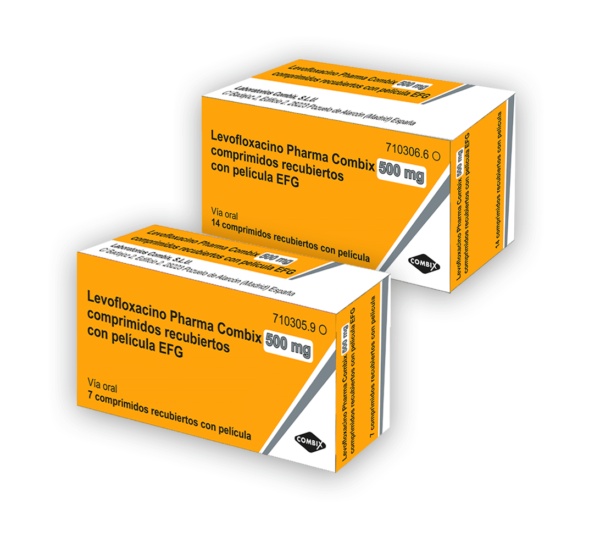
It is available in cardboard boxes with PVC/PVDC-Aluminum blisters containing 7 and 14 film-coated tablets.
Only some pack sizes may be marketed.
Marketing authorization holder and manufacturer
Marketing authorization holder
Laboratorios Combix, S.L.U.
C/Badajoz 2, Edificio 2
28223 Pozuelo de Alarcón (Madrid)
Spain
Manufacturer
Zydus France
ZAC Les Hautes Patures
Parc d'activités des Peupliers
25 Rue des Peupliers
92000 Nanterre
France
or
Centre Spécialités Pharmaceutiques
ZAC des Suzots
35 rue de la Chapelle
63450 Saint Amant Tallende
France
Date of last revision of this leaflet: September 2024
Detailed and updated information on this medication is available on the website of the Spanish Agency for Medicines and Health Products (AEMPS) http://www.aemps.gob.es/.
-

- Country of registration
- Dosage formTABLET, 500 mg
- ATC codeJ01MA12
- Average pharmacy price26.23 EUR
- Active substance
- Prescription requiredYes
- Manufacturer
- This information is for reference only and does not constitute medical advice. Always consult a doctor before taking any medication. Oladoctor is not responsible for medical decisions based on this content.
- Alternatives to LEVOFLOXACIN PHARMA COMBIX 500 mg FILM-COATED TABLETSDosage form: TABLET, 500 mgActive substance: levofloxacinManufacturer: Especialidades Farmaceuticas Centrum S.A.Prescription requiredDosage form: TABLET, 500 mgActive substance: levofloxacinManufacturer: Mabo Farma S.A.Prescription requiredDosage form: TABLET, 500 mgActive substance: levofloxacinManufacturer: Accord Healthcare S.L.U.Prescription required


Online doctors for LEVOFLOXACIN PHARMA COMBIX 500 mg FILM-COATED TABLETS
Discuss questions about LEVOFLOXACIN PHARMA COMBIX 500 mg FILM-COATED TABLETS, including use, safety considerations and prescription review, subject to medical assessment and local regulations.









Get LEVOFLOXACIN PHARMA COMBIX 500 mg FILM-COATED TABLETS Prescription Online
Fill in a 2-min form
Tell us your symptoms, history, and what medicine you're requesting.
Pick a doctor or let us assign
Choose a specialist or we'll match you with the next available doctor.
Doctor reviews your case
Usually within 30 minutes. They may ask follow-up questions via chat.
Collect from any pharmacy
Electronic prescription sent to your email — valid across Spain.
Frequently Asked Questions
LEVOFLOXACIN PHARMA COMBIX 500 mg FILM-COATED TABLETS requires a prescription in Spain. You can check with a doctor online whether this medicine may be appropriate for your situation.
The active ingredient in LEVOFLOXACIN PHARMA COMBIX 500 mg FILM-COATED TABLETS is levofloxacin. This information helps identify medicines with the same composition but different brand names.
The average pharmacy price for LEVOFLOXACIN PHARMA COMBIX 500 mg FILM-COATED TABLETS is around 26.23 EUR. Prices may vary depending on the manufacturer and dosage form.
LEVOFLOXACIN PHARMA COMBIX 500 mg FILM-COATED TABLETS is manufactured by Laboratorios Combix S.L.U.. Pharmacy brands and packaging may differ depending on the distributor.
Doctors such as Family doctors, Psychiatrists, Dermatologists, Cardiologists, Endocrinologists, Gastroenterologists, Pulmonologists, Nephrologists, Rheumatologists, Hematologists, Infectious disease physicians, Allergists, Geriatricians, Paediatricians, Oncologists may assess whether LEVOFLOXACIN PHARMA COMBIX 500 mg FILM-COATED TABLETS is appropriate, depending on your situation and local regulations. You can book an online consultation to discuss your symptoms and possible next steps.
Spain has a well-developed healthcare infrastructure across major cities such as Madrid, Barcelona, Valencia, and Seville. Pharmacies are widely available and operate under strict regulations, ensuring access to prescribed medications.
You can buy LEVOFLOXACIN PHARMA COMBIX 500 mg FILM-COATED TABLETS in Madrid, Barcelona, Seville, or Valencia at any local pharmacy with a valid prescription.
To obtain a prescription, you can use Oladoctor:
Other medicines with the same active substance (levofloxacin) include ASEY 500 mg FILM-COATED TABLETS, BACTYFLOX 500 MG FILM-COATED TABLETS, LEVOFLOXACIN ACCORD 500 mg FILM-COATED TABLETS. These may have different brand names or formulations but contain the same therapeutic ingredient. Always consult a doctor before switching or starting a new medicine.
