


LATANOPROST VIATRIS 50 micrograms/ml eye drops solution



How to use LATANOPROST VIATRIS 50 micrograms/ml eye drops solution
Translated with AI
This page provides general information and does not replace a doctor’s consultation. Always consult a doctor before taking any medication. Seek urgent medical care if symptoms are severe.
Show originalContents of the leaflet
Introduction
Package Leaflet: Information for the Patient
Latanoprost Viatris 50 micrograms/ml eye drops, solution
latanoprost
Read all of this leaflet carefully before you start using this medicine because it contains important information for you.
- Keep this leaflet, you may need to read it again.
- If you have any further questions, ask your doctor, or the doctor treating your child, or your pharmacist.
- This medicine has been prescribed for you, or for your child, do not pass it on to others, as it may harm them, even if their symptoms are the same as yours.
- If you experience any side effects, talk to your doctor, or the doctor treating your child, or your pharmacist, even if they are not listed in this leaflet. See section 4.
Contents of the package leaflet:
- What is Latanoprost Viatris and what is it used for
- What you need to know before you use Latanoprost Viatris
- How to use Latanoprost Viatris
- Possible side effects
- Storage of Latanoprost Viatris
- Contents of the pack and other information
1. What is Latanoprost Viatris and what is it used for
The active substance of Latanoprost Viatris is latanoprost, which belongs to a group of medicines known as prostaglandins. Latanoprost Viatris is a medicine that reduces intraocular pressure by increasing the natural outflow of fluid from the inside of the eye into the circulatory system.
Latanoprost is an eye drop solution that is administered to patients who suffer from a disease known as open-angle glaucoma, which causes an increase in pressure inside the eye.
Latanoprost is also used to treat increased pressure inside the eye and glaucoma in children and infants of all ages.

2. What you need to know before you use Latanoprost Viatris
Latanoprost Viatris can be used in adult men and women (including elderly patients) and in children from birth to 18 years. Latanoprost Viatris has not been investigated in premature children (less than 36 weeks of gestation).
Do not use Latanoprost Viatris
- If you are allergic to latanoprost, benzalkonium chloride, or any of the other ingredients of this medicine (listed in section 6).
Warnings and precautions
Consult your doctor, or the doctor treating your child, or your pharmacist before starting to use Latanoprost Viatris, or before using this medicine in your child, if you think any of the following apply to you or your child:
- If you or your child have severe asthma or uncontrolled asthma.
- If you or your child have a form of glaucoma known as 'chronic angle-closure glaucoma'.
- If you or your child have glaucoma and at the same time do not have a lens or have an artificial lens, or if your eye or your child's eye is aphakic (lacking a lens) or pseudoaphakic with a broken posterior capsule or anterior chamber lens.
- If you or your child have glaucoma caused by the formation of pigments in the angle of the anterior chamber of the eye.
- If you or your child have glaucoma caused by ocular inflammation or the formation of new blood vessels inside the eye.
- If you or your child have congenital glaucoma.
- If you or your child have known risk factors for swelling in the back of the eye (macular edema) or inflammation of the iris (iritis/uveitis), for example, if you have a vascular disorder that affects the eyes or retinal anomalies, such as those resulting from diabetes.
- If you have a disorder in which the front of the eye (cornea) may be affected.
- If you or your child are about to have or have had eye surgery (including cataract surgery).
- If you or your child have suffered or are suffering from a viral eye infection caused by the herpes simplex virus (HSV), especially if this was caused by the use of prostaglandin analogs.
- If you or your child have eye problems (such as eye pain, irritation, or inflammation, or blurred vision).
- If you or your child have dry eye, in which case your doctor will monitor you closely.
- If you or your child wear contact lenses. You can still use Latanoprost Viatris, but follow the instructions for contact lens users in section 3.
There is no experience with latanoprost treatment in acute attacks of angle-closure glaucoma.
Consult your doctor if any of the above circumstances have occurred or are occurring to you.
Using Latanoprost Viatris with other medicines
Tell your doctor, or the doctor treating your child, or your pharmacist if you or your child are using or have recently used or may need to use any other medicines, including those obtained without a prescription. Latanoprost Viatris may interact with other medicines:
Latanoprost Viatris may affect the effect of prostaglandins or prostaglandin derivatives (used to treat ocular hypertension). It is not recommended to combine them with Latanoprost Viatris, as it may increase intraocular pressure.
Pregnancy and breastfeeding
Pregnancy
If you are pregnant, think you may be pregnant, or plan to become pregnant, consult your doctor or pharmacist before using this medicine.
It may affect the fetus. Latanoprost Viatris should not be used during pregnancy.
Breastfeeding
If you are breastfeeding, consult your doctor or pharmacist before using this medicine.
Latanoprost may pass into breast milk and therefore may affect the breastfed child. Latanoprost Viatris should not be used during breastfeeding.
Driving and using machines
As with other eye drops, if you experience blurred vision when applying the drops, wait until this clears before driving or using machines.
Latanoprost Viatris contains phosphates, benzalkonium chloride, and sodium
This medicine contains 6.34 milligrams of phosphate per milliliter and 0.2 milligrams of benzalkonium chloride per milliliter.
If you have severe damage to the transparent layer of the front of the eye (cornea), phosphates may cause, in very rare cases, corneal opacification due to calcium accumulation during treatment.
Benzalkonium chloride may be absorbed by soft contact lenses and may also alter the color of soft contact lenses. You should remove contact lenses before application and wait at least 15 minutes before putting them back.
Benzalkonium chloride may also cause eye irritation, especially if you have dry eyes or corneal disorders (the transparent layer in the front of the eye). If you feel an abnormal sensation in the eyes, itching, or eye pain after using this medicine, talk to your doctor.
This medicine contains less than 23 mg (1 mmol) of sodium per ml; i.e., it is essentially "sodium-free".
3. How to use Latanoprost Viatris
Follow exactly the instructions for administration of this medicine given by your doctor, or the doctor treating your child, or your pharmacist. Consult your doctor, or the doctor treating your child, or your pharmacist if you have any doubts.
The recommended dose for adults (including elderly patients) and children is one drop in the affected eye(s) once daily, preferably in the evening. If you need to use other eye drops, they should be applied with an interval of at least five minutes.
Be careful when squeezing the bottle, so that only one drop is introduced into the affected eye. Do not use latanoprost more than once a day, as it may decrease the effect of the treatment if administered more frequently.
To administer latanoprost properly, follow these steps:
- Wash your hands and sit or stand comfortably.
- Remove the cap.
- Gently separate the lower eyelid of the eye to be treated with your finger.
- Place the tip of the bottle close to the eye, but without touching it.
- Squeeze the bottle carefully so that only one drop is introduced into the eye. Remove your finger from the lower eyelid.
- Press the edge of the affected eye, near the nose, with your finger. Apply pressure for 1 minute, keeping your eye closed.
- Repeat the operation in the other eye, if your doctor has indicated it.
- Put the cap back on the bottle.
If you use more Latanoprost Viatris than you should
Be careful when squeezing the bottle, so that only one drop is introduced into the affected eye. If too many drops are applied to the eye, you may feel a slight irritation in it, and the eye may water and redden. This should disappear, but if you are concerned, contact your doctor or the doctor treating your child for advice.
In case of overdose or accidental ingestion, consult your doctor or the doctor treating your child, or your pharmacist or call the Toxicology Information Service, phone: 91 562 04 20. You may feel sick, dizzy, tired, short of breath, or notice stomach pain and sweating.
If you forget to use Latanoprost Viatris
Do not use a double dose to make up for forgotten doses. If you forget to apply the eye drops at the usual time, wait until the time indicated for the next dose. Do not administer an extra drop in the eye to make up for the forgotten dose.
If you stop using Latanoprost Viatris
You should talk to your doctor or the doctor treating your child if you want to stop latanoprost.
If you wear contact lenses:
If you or your child wear contact lenses, you should remove them before applying latanoprost. Do not put them back until 15 minutes after applying latanoprost. A preservative in latanoprost called benzalkonium chloride may cause eye irritation and alter the color of soft contact lenses.
If you have any other questions about the use of this medicine, ask your doctor, pediatrician, or pharmacist.

4. Possible side effects
Like all medicines, this medicine can cause side effects, although not everybody gets them.
If you experience any of the following side effects, stop using the medicine and consult your doctor or go to the emergency department of the nearest hospital as soon as possible:
Uncommon(may affect up to 1 in 100 people):
- Inflammation of the upper or middle layer of the eye, which you may notice as eye pain, blurred vision, sensitivity to light, watering, or eye redness, possibly with floating cells in your vision.
- Swelling in the back of the eye (macular edema) or fluid-filled cysts in the back of the eye.
- Chest pain, which may spread to the arms, neck, or jaw, chest discomfort with a feeling of pressure or heaviness, difficulty breathing, or a feeling of discomfort (nausea). These effects may be signs of angina, which means that your heart is not getting enough blood.
Rare(may affect up to 1 in 1,000 people):
- Viral eye infection caused by the herpes simplex virus (HSV), associated with inflammation/irritation of the eye surface (keratitis).
Other possible side effects:
Very common(may affect more than 1 in 10 people):
- Change in eye color (darkening and becoming more brown).
- Red eyes.
- Eye irritation: burning sensation, gritty (itching), itching, and stinging in the eyes; you may feel as if you have something in your eye. If you experience eye irritation severe enough to make your eyes water excessively, or to make you consider stopping this medicine, talk to your doctor, pharmacist, or nurse immediately (within a maximum of one week). It may be necessary to review your treatment to ensure you are receiving the appropriate treatment for your condition.
- Darkening, thickening, lengthening, or increase in the number of eyelashes and eyelid hair.
Common(may affect up to 1 in 10 people):
- Erosion or damage to the upper layer (cornea) of the eye (punctate keratitis), which usually occurs without noticeable symptoms. Your doctor or optician may notice this when looking at the surface of the eye.
- Inflammation of the eyelid margins with crusts that cause the eyelids to stick together.
- Eye pain.
- Increased sensitivity to light in the eyes.
- Itching, redness, or watering of the eye with a sticky film on the eyelashes (conjunctivitis).
Uncommon(may affect up to 1 in 100 people):
- Headache.
- Dizziness.
- Swelling of the eyelids.
- Dry eye.
- Blurred vision.
- Rapid heartbeats that feel like stabbing in the chest (palpitations).
- Sudden chest tightness caused by muscle spasms and swelling of the respiratory tract linings, often with cough or cough with mucus (asthma).
- Difficulty breathing (dyspnea).
- Rash.
- Muscle pain and joint pain.
- Chest pain.
- Nausea.
- Vomiting.
Rare(may affect up to 1 in 1,000 people):
- Swelling and damage to the cornea (corneal edema).
- Swelling around the eye (periorbital edema).
- Eyelashes turned inward, which may occasionally cause eye irritation.
- A new layer of eyelashes growing behind the existing eyelashes.
- A fluid-filled cyst within the colored part of the eye (iris cyst).
- Worsening of asthma.
- Rash on the eyelids.
- Darkening of the eyelid skin.
- Itching of the skin.
Very rare(may affect up to 1 in 10,000 people):
- Changes in the skin and tissues surrounding the eye, causing deep skin folds.
- In very rare cases, some patients with severe damage to the transparent layer of the front of the eye (cornea) have developed cloudy patches in the cornea due to calcium accumulation during treatment.
Other side effects in children and adolescents
The most frequently observed side effects in children are runny nose and itching of the nose, and fever.
Reporting of side effects:
If you experience any side effects, talk to your doctor or pharmacist, even if they are not listed in this leaflet. You can also report them directly through the Spanish Pharmacovigilance System for Human Use Medicines: https://www.notificaram.es. By reporting side effects, you can help provide more information on the safety of this medicine.
5. Storage of Latanoprost Viatris
Keep this medicine out of the sight and reach of children.
Do not use this medicine after the expiry date which is stated on the label and carton after EXP. The expiry date is the last day of the month stated.
Store in a refrigerator (between 2°C and 8°C).
Keep the bottle in the outer carton to protect it from light.
After opening the bottle: Do not store above 25°C. The product should be discarded 4 weeks after opening, even if it is not empty.
Medicines should not be disposed of via wastewater or household waste. Return the containers and any unused medicines to the SIGRE collection point at your pharmacy. If you have any doubts, ask your pharmacist how to dispose of the containers and any unused medicines. This will help protect the environment.
6. Contents of the pack and other information
Composition of Latanoprost Viatris
The active substance is latanoprost.
1 ml of eye drop solution contains: 50 micrograms of latanoprost.
One drop contains approximately: 1.5 micrograms of latanoprost.
The other ingredients are benzalkonium chloride, sodium dihydrogen phosphate monohydrate, disodium phosphate, (see section 2, Latanoprost Viatris contains phosphates and benzalkonium chloride), sodium chloride, purified water.
Appearance and packaging of the product
Latanoprost Viatris is presented as a clear and colorless eye drop solution in a translucent low-density polyethylene dropper bottle with a white high-density polyethylene screw cap.
Each bottle contains 2.5 ml of eye drop solution, which corresponds to approximately 80 drops of solution.
Latanoprost Viatris is available in the following presentations: 1 x 2.5 ml, 3 x 2.5 ml, and 6 x 2.5 ml. Not all pack sizes may be marketed.
Marketing authorisation holder and manufacturer
Marketing authorisation holder:
Viatris Limited
Damastown Industrial Park
Mulhuddart, Dublin 15
Dublin
Ireland
Manufacturer:
Jadran Galenski Laboratorij d.d.
Svilno, 20
51000 Rijeka
Croatia
You can request more information about this medicine by contacting the local representative of the marketing authorisation holder:
Viatris Pharmaceuticals, S.L.U.
C/ General Aranaz, 86
28027 - Madrid
Spain
This medicine is authorised in the Member States of the European Economic Area under the following names:
Italy Latanoprost Mylan Pharmaceuticals 50 micrograms/ml Eye drops, solution
Spain Latanoprost Viatris 50 micrograms/ml eye drops, solution
Netherlands Latanoprost Mylan 0.05 mg/ml Eye drops, solution
This leaflet was last revised in:March 2022.
Detailed information on this medicine is available on the website of the Spanish Agency for Medicines and Health Products (AEMPS) https://www.aemps.gob.es/
- Country of registration
- Dosage formEYE DROP, 50 MG/ML
- ATC codeS01EE01
- Average pharmacy price6.51 EUR
- Active substance
- Prescription requiredYes
- Manufacturer
- This information is for reference only and does not constitute medical advice. Always consult a doctor before taking any medication. Oladoctor is not responsible for medical decisions based on this content.
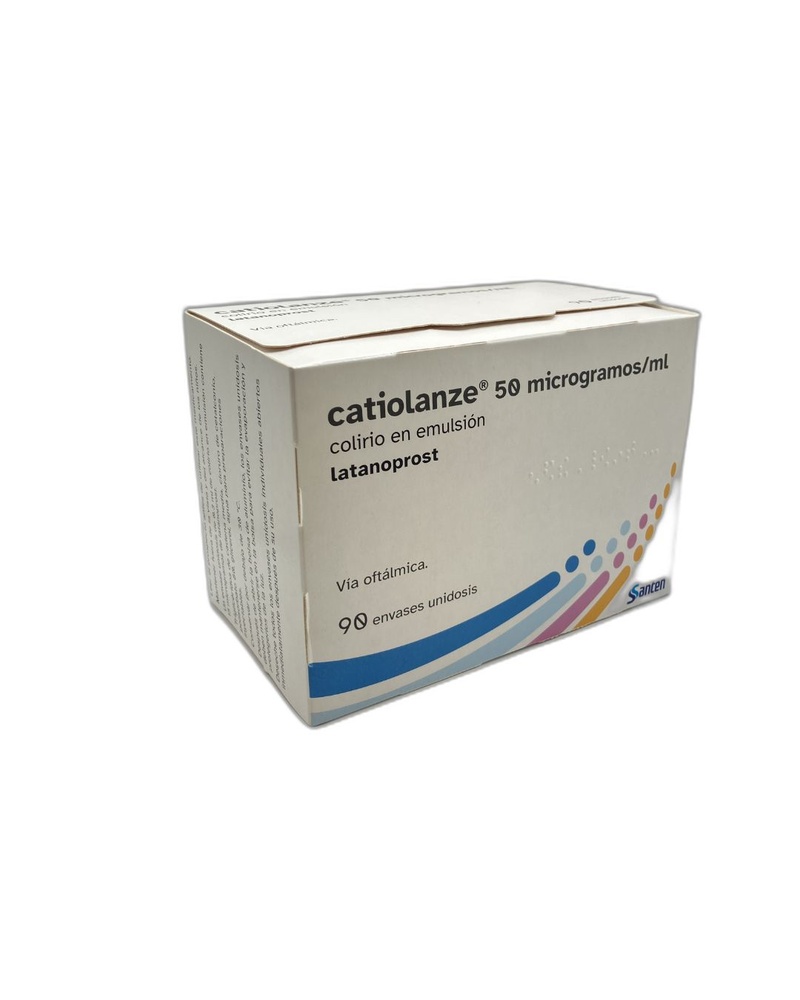
- Alternatives to LATANOPROST VIATRIS 50 micrograms/ml eye drops solutionDosage form: EYE DROP, 50 micrograms/mlActive substance: latanoprostManufacturer: Santen OyPrescription requiredDosage form: EYE DROP, 50 µg/mlActive substance: latanoprostManufacturer: Esteve Pharmaceuticals S.A.Prescription requiredDosage form: EYEDROP, 50 MG/MLActive substance: latanoprostManufacturer: Aurovitas Spain, S.A.U.Prescription required


Online doctors for LATANOPROST VIATRIS 50 micrograms/ml eye drops solution
Discuss questions about LATANOPROST VIATRIS 50 micrograms/ml eye drops solution, including use, safety considerations and prescription review, subject to medical assessment and local regulations.









Frequently Asked Questions
