


Latanest 50 µg/ml colirio solution

Prescription review online
A doctor will review your case and decide whether a prescription is medically appropriate.

Talk to a doctor about this medicine
Discuss your symptoms and possible next steps in a quick online consultation.



How to use LATANEST 50 micrograms/ml eye drops solution
Contents of the leaflet
- Introduction
- What is Latanest and what is it used for
- What you need to know before you use Latanest
- How to use Latanest
- Possible side effects
- Storing Latanest
- Contents of the pack and other information
Introduction
Package Leaflet: Information for the User
Latanest 50 micrograms/ml eye drops, solution
Latanoprost
Read all of this leaflet carefully before you start using this medicine because it contains important information for you.
- Keep this leaflet, you may need to read it again. If you have any further questions, ask your doctor, pharmacist, or nurse.
- This medicine has been prescribed for you or your child, do not pass it on to others, it may harm them, even if their symptoms are the same as yours.
- If you or your child get any side effects, talk to your doctor, pharmacist, or nurse. This includes any possible side effects not listed in this leaflet. See section 4.
Contents of the package leaflet
- What is Latanest and what is it used for
- What you need to know before you use Latanest
- How to use Latanest
- Possible side effects
- Storing Latanest
- Contents of the pack and other information
1. What is Latanest and what is it used for
Latanest belongs to a group of medicines known as prostaglandin analogues. It works by increasing the natural outflow of fluid from the eye into the bloodstream.
Latanest is used to treat conditions known as open-angle glaucoma and ocular hypertensionin adults. Both of these conditions are linked to an increase in pressure within the eye, which can lead to problems with your sight.
Latanest is also used to treat increased pressure in the eye and glaucoma in babies and children of all ages.
Latanest can be used in adult men and women (including the elderly) and in children from birth to 18 years of age. Latanest has not been studied in premature infants (less than 36 weeks gestation).
Latanest eye drops, solution is a sterile solution that does not contain preservatives.

Not sure if this medicine is right for you?
Discuss your symptoms and treatment with a doctor online.
2. What you need to know before you use Latanest
Do not use Latanest:
- If you are allergic (hypersensitive) to latanoprost or any of the other ingredients of this medicine (listed in section 6).
Warnings and precautions
If you think any of the following apply to you or your child, tell your doctor, or the doctor treating your child, or your pharmacist before using Latanest:
- If you or your child have had or are going to have eye surgery (including cataract surgery).
- If you or your child have eye problems (such as eye pain, irritation or inflammation, blurred vision).
- If you or your child have dry eyes.
- If you or your child have severe asthma or uncontrolled asthma.
- If you or your child wear contact lenses. You can still use Latanest but follow the instructions in section 3 for contact lens wearers.
- If you have had a viral infection of the eye caused by the herpes simplex virus (HSV).
Other medicines and Latanest
Latanest may have interactions with other medicines. Tell your doctor, or the doctor treating your child, or your pharmacist if you or your child are using or have recently used other medicines (or eye drops), including those obtained without a prescription.
Pregnancy and breast-feeding
Pregnancy
Do not use Latanest if you are pregnant. If you are pregnant or breast-feeding, think you may be pregnant or are planning to have a baby, ask your doctor or pharmacist for advice before using this medicine.
Breast-feeding
Do not use Latanest if you are breast-feeding.
Driving and using machines
When using Latanest, you may experience blurred vision for a short time. If this happens, do not drive or use tools or machines until your vision is clear again.
Latanest containsmacrogolglycerol hydroxystearate 40
This medicine contains macrogolglycerol hydroxystearate 40, which may cause skin reactions.
Latanest containsphosphate buffer
This medicine contains 6.35 mg of phosphates in each ml of solution.
If you have severe damage to the clear layer on the front of your eye (cornea), treatment with phosphates, in very rare cases, may cause blurred vision due to calcium deposits.
3. How to use Latanest
Follow exactly the instructions given to you by your doctor, or the doctor treating your child. Ask your doctor, or the doctor treating your child, or your pharmacist if you are unsure.
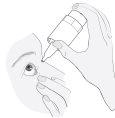
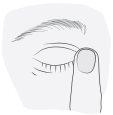
The recommended dose for adults (including the elderly) and children is one drop once a day in the affected eye(s). The best time to instil the product is in the evening.
Do not use Latanest more than once a day, because the effectiveness of the treatment may decrease if it is administered more frequently.
Use Latanest as instructed by your doctor or the doctor treating your child until they tell you to stop.
Contact lens wearers
If you or your child wear contact lenses, remove them before using Latanest. Wait 15 minutes after applying Latanest before putting the contact lenses back in.
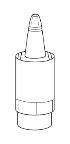
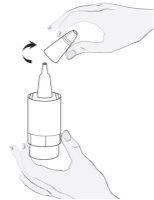
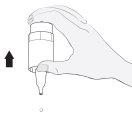
Instructions for use
1a
1b |
|
|
|
3 |
|
4 |
|
5 |
|
2.5 ml: 5 ml: |
 2
2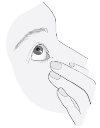
If you use Latanest with other eye drops
Wait at least 5 minutes between using Latanest and other eye drops.
If you use more Latanest than you should
If you have applied more drops in the eye than you should, you may feel a mild irritation in the eye and your eyes may become red and watery. This should go away, but if you are worried, contact your doctor or the doctor treating your child.
In case of accidental ingestion by you or your child, contact your doctor or pharmacist as soon as possible, or call the Toxicology Information Service, phone: 91 562 04 20.
If you forget to use Latanest
Continue with the next dose as usual. Do not apply an extra drop in the eye to make up for the missed dose. If you are unsure, ask your doctor or pharmacist.
If you stop using Latanest
If you want to stop using Latanest, talk to your doctor or the doctor treating your child.
If you have any questions about using this product, ask your doctor or pharmacist.

Started taking the medicine and have questions?
Discuss your symptoms and treatment with a doctor online.
4. Possible side effects
Like all medicines, this medicine can cause side effects, although not everybody gets them.
The following side effects have been seen with the use of eye drops containing the active substance latanoprost:
Very common side effects(may affect more than 1 in 10 people):
- Gradual change in eye color by increasing the amount of brown pigment in the colored part of the eye known as the iris. If you have mixed-color eyes (blue-brown, grey-brown, yellow-brown or green-brown) you are more likely to experience this change than if your eyes are a single color (blue, grey, green or brown). The change in eye color takes years to develop, although it can usually be seen after 8 months of treatment. The change in eye color may be permanent and may be more noticeable if Latanest is used in one eye only. The change in eye color does not seem to be associated with any problems. The change in eye color does not progress once Latanest treatment is stopped.
- Redness of the eye.
- Ocular irritation (feeling of burning, feeling of grit in the eye, itching, stinging and feeling of something in the eye). If you experience severe ocular irritation that makes your eyes water excessively, or makes you consider stopping treatment, contact your doctor, pharmacist, or nurse as soon as possible (within a week). You may need to have your treatment reviewed to ensure you are receiving the right treatment for your condition.
- Gradual change in the eyelashes of the treated eye and the fine hair around the treated eye, usually seen in patients of Japanese origin. These changes include an increase in color (darkening), length, thickness and number of eyelashes.
Common side effects(may affect up to 1 in 10 people):
- Irritation or erosion of the surface of the eye, inflammation of the eyelid (blepharitis), eye pain and sensitivity to light (photophobia), conjunctivitis.
Uncommon side effects(may affect up to 1 in 100 people):
- Swelling of the eyelids, dry eyes, inflammation or irritation of the surface of the eye (keratitis), blurred vision, inflammation of the colored part of the eye (uveitis), swelling of the retina (macular edema).
- Skin rash.
- Chest pain (angina), feeling your heartbeat (palpitations).
- Asthma, difficulty breathing (dyspnea).
- Chest pain.
- Headache, dizziness.
- Muscle pain, joint pain.
- Feeling sick (nausea).
- Being sick (vomiting).
Rare side effects(may affect up to 1 in 1,000 people):
- Inflammation of the iris (iritis), symptoms of swelling or injury/damage to the surface of the eye, swelling around the eye (periorbital edema), misdirected eyelashes or extra row of eyelashes, scarring on the surface of the eye, accumulation of fluid in the colored part of the eye (iris cyst).
- Skin reactions on the eyelids, darkening of the skin of the eyelids.
- Worsening of asthma.
- Intense itching of the skin.
- Development of a viral infection of the eye caused by the herpes simplex virus (HSV).
Very rare side effects(may affect up to 1 in 10,000 people):
- Worsening of angina in patients who also have heart problems, appearance of sunken eyes (greater depth of the eyelid sulcus).
Side effects seen in children more frequently than in adults are runny nose, itchy nose and fever.
If you have severe damage to the clear layer on the front of your eye (cornea), treatment with phosphates, in very rare cases, may cause blurred vision due to calcium deposits.
Reporting of side effects:
If you get any side effects, talk to your doctor, pharmacist or nurse. This includes any possible side effects not listed in this leaflet. You can also report side effects directly via the Spanish Pharmacovigilance System for Human Use Medicines: https://www.notificaram.es
By reporting side effects, you can help provide more information on the safety of this medicine.
5. Storing Latanest
Keep this medicine out of the sight and reach of children.
Do not use this medicine after the expiry date which is stated on the carton and bottle after EXP. The expiry date is the last day of the month shown.
Store below 25°C.
After first opening, this medicine does not require any special storage conditions.
2.5 ml:
You must discard the bottle after 4 weeks of first opening, to prevent infections. Write the date you opened the bottle on the carton and on the bottle in the space provided.
5 ml:
You must discard the bottle after 8 weeks of first opening, to prevent infections. Write the date you opened the bottle on the carton and on the bottle in the space provided.
Medicines should not be disposed of via wastewater or household waste. Ask your pharmacist how to dispose of medicines no longer required. These measures will help protect the environment.
6. Contents of the pack and other information
What Latanest contains
- The active substance is latanoprost tartrate. 1 ml of solution contains 50 micrograms of latanoprost.
- The other ingredients are: macrogolglycerol hydroxystearate 40, sodium chloride, disodium edetate, sodium dihydrogen phosphate dihydrate, anhydrous disodium phosphate, hydrochloric acid and/or sodium hydroxide (for pH adjustment), water for injections
Appearance and packaging
2.5 ml:
Latanest eye drops, solution is a clear, colorless solution, corresponding to approximately 80 drops of solution, free from visible particles.
It is available in cartons containing a 5 ml multidose bottle (HDPE) with a pump (PP, HDPE, LDPE) and a green pressure cylinder and cap (HDPE).
5 ml:
Latanest eye drops, solution is a clear, colorless solution, corresponding to approximately 160 drops of solution, free from visible particles.
It is available in cartons containing a 5 ml multidose bottle (HDPE) with a pump (PP, HDPE, LDPE) and a green pressure cylinder and cap (HDPE).
Pack sizes:
Carton with 1 or 3 bottles of 2.5 ml solution or 1 or 3 bottles of 5 ml solution.
Not all pack sizes may be marketed.
Marketing authorisation holder and manufacturer
Marketing authorisation holder
Esteve Pharmaceuticals, S.A.
Passeig de la Zona Franca, 109
08038 Barcelona
Manufacturer
Lomapharm GmbH
Langes Feld 5
31860 Emmerthal
Germany
Pharmathen S.A.
Dervenakion Str. 6
Pallini 15351
Attiki
Greece
This medicine is authorised in the Member States of the European Economic Area under the following names:
Denmark Tanafra
Cyprus Tanafra
France LATAZED 50 microgrammes/mL, collyre en solution
Germany Tanafra 50 Mikrogramm/ml Augentropfen, Lösung
Greece Tanafra
Italy LASTAFRY
Spain Latanest 50 micrograms/ml eye drops, solution
Date of last revision of this leaflet: September 2024
Detailed and up-to-date information on this medicine is available on the website of the Spanish Agency for Medicines and Health Products (AEMPS) http://www.aemps.gob.es/
- Country of registration
- Dosage formEYE DROP, 50 µg/ml
- ATC codeS01EE01
- Average pharmacy price13 EUR
- Active substance
- Prescription requiredYes
- Manufacturer
- CompositionMACROGOLGLICEROL, HIDROXIESTEARATO DE (25 mg mg), CLORURO DE SODIO (3,7 mg mg), EDETATO DE DISODIO (1,11 mg mg), DIHIDROGENOFOSFATO DE SODIO DIHIDRATO (9 mg mg), HIDROGENO FOSFATO DE DISODIO ANHIDRO (1,3 mg mg), HIDROXIDO DE SODIO (E 524) (C.S.P. 6,00 pH mg mg)
- This information is for reference only and does not constitute medical advice. Always consult a doctor before taking any medication. Oladoctor is not responsible for medical decisions based on this content.
- Alternatives to LATANEST 50 micrograms/ml eye drops solutionDosage form: EYE DROP, 50 micrograms/mlActive substance: latanoprostManufacturer: Santen OyPrescription requiredDosage form: EYEDROP, 50 MG/MLActive substance: latanoprostManufacturer: Aurovitas Spain, S.A.U.Prescription requiredDosage form: EYE DROP, 0.050 MG/MLActive substance: latanoprostManufacturer: Laboratorios Combix S.L.U.Prescription required
Online doctors for LATANEST 50 micrograms/ml eye drops solution
Discuss questions about LATANEST 50 micrograms/ml eye drops solution, including use, safety considerations and prescription review, subject to medical assessment and local regulations.









Frequently Asked Questions
LATANEST 50 micrograms/ml eye drops solution requires a prescription in Spain. You can check with a doctor online whether this medicine may be appropriate for your situation.
The active ingredient in LATANEST 50 micrograms/ml eye drops solution is latanoprost. This information helps identify medicines with the same composition but different brand names.
The average pharmacy price for LATANEST 50 micrograms/ml eye drops solution is around 13 EUR. Prices may vary depending on the manufacturer and dosage form.
LATANEST 50 micrograms/ml eye drops solution is manufactured by Esteve Pharmaceuticals S.A.. Pharmacy brands and packaging may differ depending on the distributor.
Doctors such as Family doctors, Psychiatrists, Dermatologists, Cardiologists, Endocrinologists, Gastroenterologists, Pulmonologists, Nephrologists, Rheumatologists, Hematologists, Infectious disease physicians, Allergists, Geriatricians, Paediatricians, Oncologists may assess whether LATANEST 50 micrograms/ml eye drops solution is appropriate, depending on your situation and local regulations. You can book an online consultation to discuss your symptoms and possible next steps.
The prescription is issued by a doctor after assessing your health. In Spain, LATANEST 50 micrograms/ml eye drops solution is then dispensed in pharmacies with that prescription. An online consultation does not guarantee that a prescription will be issued: the decision always rests with the doctor.
To request a review, you can use Oladoctor:
Other medicines with the same active substance (latanoprost) include CATIOLANZE 50 micrograms/ml EMULSION EYE DROPS, LATANOPROST AUROVITAS 50 micrograms/ml EYE DROPS SOLUTION, LATANOPROST COMBIX 50 micrograms/ml EYE DROPS SOLUTION. These may have different brand names or formulations but contain the same therapeutic ingredient. Always consult a doctor before switching or starting a new medicine.
