


Ketorolaco Kabi 30 mg/ml injectable solution

Prescription request online
A doctor will review your case and decide whether a prescription is medically appropriate.

Talk to a doctor about this medicine
Discuss your symptoms and possible next steps in a quick online consultation.



How to use KETOROLAC KABI 30 mg/ml INJECTABLE SOLUTION
Contents of the leaflet
- Introduction
- What is Ketorolaco Kabi and what is it used for
- What you need to know before you use Ketorolaco Kabi
- How to use Ketorolaco Kabi
- Possible side effects
- Storage of Ketorolaco Kabi
- Container Content and Additional Information
Introduction
Package Leaflet: Information for the User
Ketorolaco Kabi 30 mg/ml Solution for Injection EFG
ketorolaco trometamol
Read all of this leaflet carefully before you start taking this medicine because it contains important information for you.
|
Contents of the pack:
- What is Ketorolaco Kabi and what is it used for
- What you need to know before you use Ketorolaco Kabi
- How to use Ketorolaco Kabi
- Possible side effects
- Storage of Ketorolaco Kabi
- Contents of the pack and other information
1. What is Ketorolaco Kabi and what is it used for
Ketorolaco Kabi contains a medicine called ketorolaco trometamol. This is a "non-steroidal anti-inflammatory" (NSAID) medicine.
Ketorolaco is used in hospitals to relieve pain after operations in patients 16 years of age and older. Ketorolaco can reduce pain, swelling, redness and heat (inflammation).

Not sure if this medicine is right for you?
Discuss your symptoms and treatment with a doctor online.
2. What you need to know before you use Ketorolaco Kabi
You must not be given ketorolaco if you are allergic (hypersensitive) to:
- Ketorolaco trometamol or any of the other ingredients of this medicine (listed in section 6).
- Aspirin or other NSAIDs (such as ibuprofen or diclofenac).
You must not be given ketorolaco if:
- You are under 16 years of age.
- You have or have had stomach or intestine problems such as an ulcer or bleeding.
- You have serious liver or heart problems.
- You have moderate or severe kidney problems.
- You have ever had bleeding in your brain.
- You have a condition that makes you bleed easily, including a condition such as haemophilia.
- You are taking medicines to prevent blood clotting such as warfarin, heparin or clopidogrel.
- You have low blood volume (caused by bleeding or severe dehydration).
- You have asthma or allergies (such as hay fever) or have had face, lip, eye or tongue swelling in the past.
- You have or have had nose polyps.
- You are taking other NSAIDs, such as ibuprofen or aspirin.
- You are taking pentoxifylline (for circulation), probenecid (for gout) or lithium (for mental health problems).
- You plan to become pregnant, are pregnant, are in labour or are breast-feeding.
- You are about to have surgery.
- You have been told you have a high risk of bleeding after an operation or you are still bleeding after an operation.
Do not receive ketorolaco if you are in any of the above situations. If you are not sure, tell your doctor or nurse before you are given ketorolaco.
Ketorolaco contains alcohol and is therefore not suitable for epidural or intrathecal use (injection into the spine).
Warnings and precautions
Severe skin reactions have been reported with the use of NSAIDs, appearing as red patches, generalised redness of the skin, ulcers or widespread rash accompanied by symptoms such as fever (see section 4). The rash may progress to widespread blistering or peeling of the skin. The highest risk of severe skin reactions is in the first weeks of treatment, but can occur at any time, including after long-term use (see section 4). If you have developed a severe skin reaction while taking Ketorolaco Kabi, you must not restart treatment at any time. If you develop a skin rash or these symptoms, stop treatment with Ketorolaco Kabi and contact your doctor or seek medical attention immediately.
Talk to your doctor or nurse before you are given ketorolaco. If you have heart problems, a previous stroke or think you might be at risk of these conditions (for example, if you have high blood pressure, diabetes or high cholesterol or if you smoke), you should discuss your treatment with your doctor or nurse.
Tell your doctor if you have recently had or are going to have stomach or gut surgery before you are given/take/use Ketorolaco Kabi, as Ketorolaco Kabi may sometimes worsen the healing of gut wounds after surgery.
Consult your doctor or nurse before you are given ketorolaco if:
- You are an elderly person (you are more likely to suffer problems).
- You have kidney or liver problems.
- You have high blood pressure.
- You have blood vessel problems (arteries) in any part of your body.
- You have too much fat (lipids) in your blood (hyperlipidaemia).
- You have an autoimmune condition, such as 'systemic lupus erythematosus' (SLE, which causes joint pain, skin rashes and fever) and colitis or Crohn's disease (conditions that cause inflammation of the gut, abdominal pain, diarrhoea, vomiting and weight loss).
If you suffer from any of the above conditions, or if you are not sure, talk to your doctor or nurse before you are given ketorolaco.
Use in children and adolescents
Ketorolaco is not recommended for use in children under 16 years of age.
Use with other medicines
Tell your doctor, pharmacist or nurse if you are taking, or have recently taken, any other medicines, including those obtained without a prescription.
In particular, tell your doctor or nurse if you are taking any of the following medicines before you are given ketorolaco:
- Other NSAIDs, such as aspirin, ibuprofen or diclofenac.
- Medicines to prevent blood clotting, such as warfarin, heparin or clopidogrel.
- Pentoxifylline (for circulation).
- Probenecid (for gout).
- Lithium (for mental health problems).
If you are taking any of the above medicines, you must not be given ketorolaco.
Tell your doctor or nurse if you are taking:
- An "ACE inhibitor" or other medicine for high blood pressure, such as cilazapril, enalapril or propranolol.
- A diuretic (for fluid retention) (for high blood pressure), such as furosemide.
- A 'cardiac glycoside' (for heart problems), such as digoxin.
- A steroid (for swelling and inflammation), such as hydrocortisone, prednisolone and dexamethasone.
- A "quinolone antibiotic" (for infections), such as ciprofloxacin or moxifloxacin.
- Certain medicines for mental health problems "SSRIs", such as fluoxetine or citalopram.
- Methotrexate (used to treat skin problems, arthritis or cancer).
- Ciclosporin or tacrolimus (for skin problems or after an organ transplant).
- Zidovudine (used to treat AIDS and HIV infections).
- Mifepristone (used to terminate pregnancy or to induce labour if the baby has died).
If you are in any of the above situations, or if you are not sure, talk to your doctor or nurse before you are given ketorolaco.
Pregnancy, breast-feeding and fertility
If you are pregnant or breast-feeding, think you may be pregnant or are planning to have a baby, ask your doctor for advice before taking this medicine.
Do not take ketorolaco if you are in the last 3 months of pregnancy, as it may harm your baby or cause problems during delivery. It may cause kidney and heart problems for your baby. It may affect you and your baby's ability to clot and prolong or delay delivery more than expected. You must not take ketorolaco during the first 6 months of pregnancy unless it is strictly necessary and your doctor has told you to. If you need treatment during this period or while trying to become pregnant, you will need to take the lowest dose for the shortest possible time. From the 20th week of pregnancy, ketorolaco may cause kidney problems for your baby if taken for more than a few days, which may cause low levels of the fluid surrounding the baby (oligohydramnios). If you need treatment for more than a few days, your doctor may recommend additional checks.
Ketorolaco may make it more difficult to become pregnant. Tell your doctor if you are planning to become pregnant or if you are having problems becoming pregnant.
You must not be given ketorolaco if you are pregnant, in labour or breast-feeding.
Driving and using machines
Ketorolaco may cause you to feel tired, sleepy, dizzy, have problems with your balance or vision, depression or difficulty sleeping. Talk to your doctor if you experience any of these and do not drive or use tools or machines.
Ketorolaco Kabi contains sodium and alcohol
This medicine contains less than 23 mg of sodium (1mmol) per 1 ml ampoule, which is essentially "sodium-free".
This medicine contains 100 mg of alcohol (ethanol) per vial, which is equivalent to 100 mg/ml (9.9% p/v). The amount contained in 1 ml of this medicine is equivalent to less than 2.5 ml of beer or 1 ml of wine.
The small amount of alcohol in this medicine will not have a noticeable effect.
3. How to use Ketorolaco Kabi
Ketorolaco will be given to you by a doctor or nurse. It will be given by injection into a muscle (such as in your arm) or into a vein.
Medicines like ketorolaco may be associated with a small increased risk of heart attack ("myocardial infarction") or stroke. Any risk is more likely with higher doses and longer-term treatment.
The maximum treatment duration should be 2 days.
Use in children and adolescents
Ketorolaco is not recommended for use in children under 16 years of age.
Use in adults
- The usual initial dose is 10 mg.
- This may be followed by a dose of 10 to 30 mg every 4 to 6 hours, as needed.
- The maximum dose is 90 mg per day.
- Your doctor may also give you other painkillers (such as pethidine or morphine) if your pain is severe.
Use in patients over 65 years of age, or with kidney problems or who weigh less than 50 kg
- Your doctor will usually give you lower doses than those described for adults.
- The maximum dose is 60 mg per day.
- Your doctor may also give you other painkillers (such as pethidine or morphine) if your pain is severe.
If you have any further questions on the use of this product, ask your doctor or nurse.
Started taking the medicine and have questions?
Discuss your symptoms and treatment with a doctor online.
4. Possible side effects
Like all medicines, this medicine can cause side effects, although not everybody gets them.
Medicines like ketorolaco may be associated with a small increased risk of heart attack ("myocardial infarction") or stroke.
Serious side effects
Tell a doctor or nurse IMMEDIATELY if you get any of the following. You may need urgent medical treatment:
Severe stomach or gut problems, the signs include:
- Stomach bleeding, such as vomiting blood or fragments that look like coffee grounds.
- Rectal bleeding (back passage), such as black, tarry stools or stools with blood in them.
- Ulcers or holes that form in the stomach or gut. This may be seen as stomach upset with stomach pain, fever, feeling or being sick.
- Problems with your pancreas, such as severe stomach pain that spreads to your back.
- Worsening of ulcerative colitis or Crohn's disease, such as pain, diarrhoea, vomiting and weight loss.
Allergic reactions, the signs include:
- Sudden swelling of your throat, face, hands or feet.
- Difficulty breathing, chest tightness.
- Skin rash, blisters or itching.
Severe skin rashes, the signs include:
- A severe rash that develops quickly, with blisters or peeling of the skin and possibly blisters in the mouth, throat or eyes. You may also have fever, headache, cough and body aches at the same time.
Heart attack, the signs include:
- Chest pain that may spread to your neck and shoulders and down your left arm.
Stroke, the signs include:
- Muscle weakness and numbness. This may only occur on one side of your body.
- Sudden change in your sense of smell, taste, hearing or vision, confusion.
Meningitis, the signs include:
- Fever, feeling or being sick, stiff neck, headache, sensitivity to bright lights and confusion (more likely in people with autoimmune diseases such as systemic lupus erythematosus).
Liver problems, the signs include:
- Yellowing of your skin or the whites of your eyes (jaundice).
- Feeling tired, loss of appetite, feeling or being sick and pale stools (hepatitis) and problems (including hepatitis) shown in blood tests.
Urinary problems, the signs include:
- A feeling of fullness and the need to empty your bladder, but with difficulty emptying it.
If you notice any of the above serious side effects, tell a doctor or nurse immediately.
Other side effects
Tell your doctor or nurse if you get any of the following:
Stomach and gut
- Heartburn, indigestion, stomach pain, feeling or being sick, constipation, diarrhoea, wind.
- Belching or a feeling of being bloated.
Blood
- Bleeding from a wound after an operation or nosebleeds.
- A blood-filled swelling.
- Blood problems, such as too much potassium or lack of sodium.
- Blood problems, such as anaemia, low platelet count or changes in the number of white blood cells.
Mental health
- Difficulty sleeping or changes in your sleep patterns.
- Depression.
- Feeling anxious or nervous or extremely happy (euphoric).
- Seeing or possibly hearing things that really do not exist (hallucinations).
- Mental problems that can make you feel confused, agitated and disturbed and lose contact with reality.
Nervous system
- Headache.
- Seizures or convulsions, feeling dizzy or unsteady or drowsy.
- Feeling of pins and needles or numbness in your hands and feet.
- Difficulty with your memory or concentration.
Eyes and ears
- Changes in your vision, eye pain.
- Changes in your hearing, including ringing in the ears (tinnitus) and loss of hearing.
- Dizziness that causes problems with your balance.
Heart and circulation
- Swelling of your hands, feet or legs (oedema). This may lead to chest pain, tiredness, shortness of breath (heart failure).
- A feeling of a flutter in your heart (palpitations), slow heart beats or high blood pressure.
- Problems with the way your heart pumps blood around your body. The signs may include tiredness, shortness of breath, feeling faint.
Chest
- Difficulty breathing, including shortness of breath, wheezing or coughing.
- Swelling of your lungs.
Skin and hair
- Sensitivity to light, skin rashes that include redness, hives, acne and blisters on the body and face.
- Itching or sweating, pale or reddened skin (flushing).
Urinary system
- Blood in your urine or kidney problems.
- Going to the toilet more often to urinate, or going less often.
- Pain in your side.
Other
- Pain at the injection site.
- Thirst, dry mouth, changes in taste, fever, weight gain or loss.
- General feeling of being unwell or feeling tired.
- Mouth pain.
- Muscle spasms, pain or weakness.
- In women, problems becoming pregnant.
If any of the side effects get serious, or if you notice any side effects not listed in this leaflet, please tell your doctor or nurse.
Reporting of side effects
If you get any side effects, talk to your doctor, pharmacist or nurse. This includes any possible side effects not listed in this leaflet. You can also report side effects directly via the Spanish Medicines Vigilance System for Human Use: www.notificaRAM.es. By reporting side effects, you can help provide more information on the safety of this medicine.
5. Storage of Ketorolaco Kabi
Keep this medicine out of the sight and reach of children.
Do not use this medicine after the expiry date which is stated on the carton or on the label of the ampoules after EXP. The expiry date refers to the last day of that month.
Store the ampoules in the outer packaging to protect them from light.
Short-term storage at low temperatures (down to -20°C) is allowed for up to 3 weeks.
Before administration, the product must be inspected visually. Do not use this medicine if you notice particles.
Medicines should not be disposed of via wastewater or household waste. Return any unused medicine to a pharmacy for disposal. Ask your pharmacist how to dispose of medicines no longer required. This will help protect the environment.
6. Container Content and Additional Information
Composition of Ketorolaco Kabi:
- The active ingredient is ketorolac tromethamine. Each 1 ml of liquid medication contains 30 mg (milligrams) of ketorolac tromethamine.
- The other components are: ethanol (96 percent), sodium chloride, disodium edetate, sodium hydroxide or hydrochloric acid (1M solutions to adjust pH), water for injectable preparations.
Appearance of the Product and Container Content
Ketorolaco Kabi is a clear, slightly yellow injectable solution. This injectable solution can be further diluted to attenuate it before administration.
Ketorolaco Kabi is supplied in glass ampoules containing 1 ml of solution, in packs of 5, 6, or 10.
Only some package sizes may be marketed.
Marketing Authorization Holder:
Fresenius Kabi España, S.A.U.
Marina 16-18
08005 Barcelona
Spain
Manufacturer:
S.C. Rompharm Company S.R.L.
Str. Eroilor, no. 1A
075100, Otopeni, Ilfov County,
Romania
Date of Last Revision of this Leaflet: January 2024
"Detailed information on this medication is available on the website of the Spanish Agency for Medicines and Health Products (AEMPS) http://www.aemps.gob.es"
------------------------------------------------------------------------------------------------------------------------
The following information is intended only for healthcare professionals:
Posology and Method of Administration.
Ketorolac is administered by intravenous or intramuscular injection.
Adults
The recommended initial dose of ketorolac is 10 mg, followed by a dose of 10 to 30 mg every 4 to 6 hours, as needed. The total daily dose should not exceed 90 mg. The maximum duration of treatment should not exceed two days.
Elderly
The elderly have a higher risk of suffering from the serious consequences of adverse reactions. The total daily dose should not exceed 60 mg (see section 4.4).
Pediatric Population
Ketorolac is not recommended for use in children under 16 years of age.
Renal Impairment
Ketorolac is contraindicated in moderate to severe renal impairment; and a reduced dose should be administered in patients with mild renal impairment (not exceeding an IV or IM dose of 60 mg/day).
Incompatibilities
Ketorolac should not be mixed in a small volume (e.g., in a syringe) with morphine sulfate, meperidine hydrochloride, promethazine hydrochloride, or hydroxyzine hydrochloride, as precipitation of ketorolac may occur.
Ketorolac is compatible with 0.9% sodium chloride, 5% glucose, Ringer's 5%, and Ringer's lactate solutions. The compatibility of ketorolac with other medications is unknown.
Special Precautions for Storage
Keep the ampoules in the outer packaging to protect them from light.
Short-term periods of low temperatures (up to 3 weeks) up to -20°C are allowed.
Special Precautions for Disposal
There are no special instructions.
Any unused medicinal product or waste material should be disposed of in accordance with local requirements.
- Country of registration
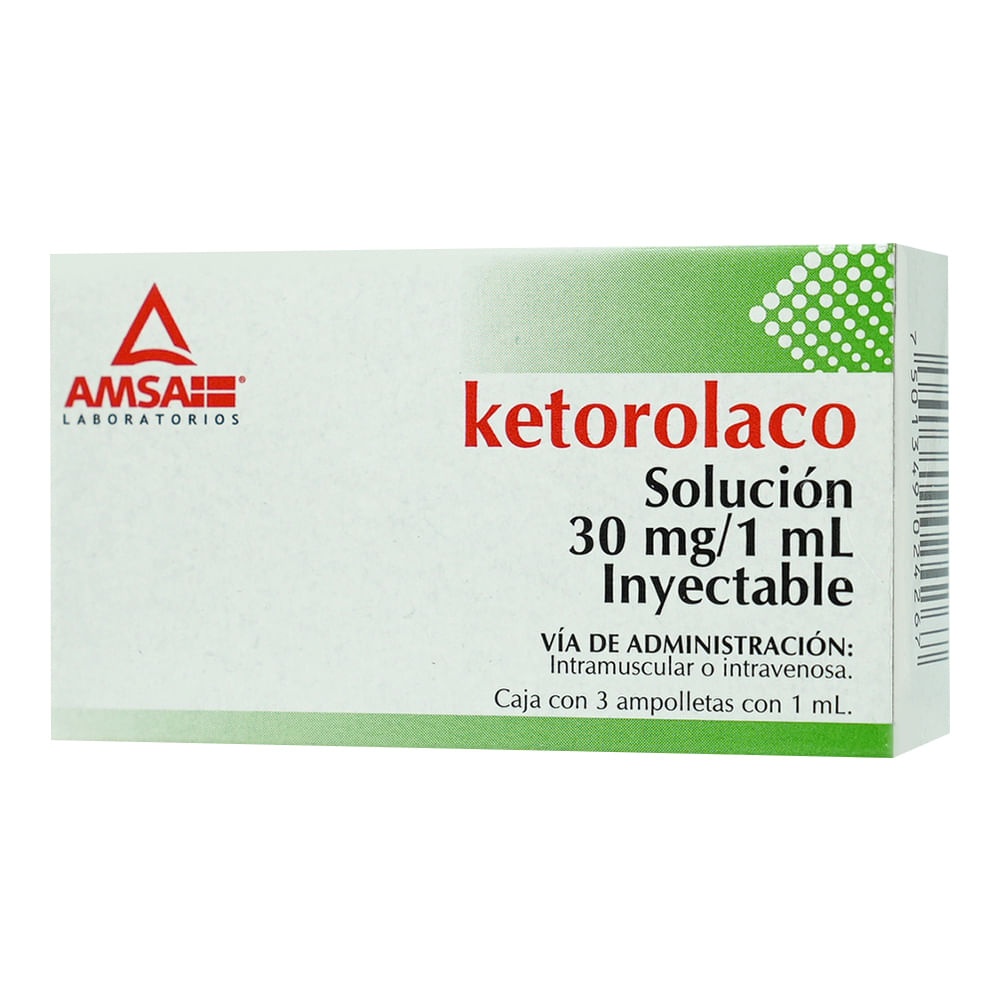
- Dosage formINJECTABLE, 30 mg/ml
- ATC codeM01AB15
- Active substance
- Prescription requiredYes
- Manufacturer
- CompositionETANOL AL 96% (100 mg/ml mg), CLORURO DE SODIO (4.35 mg/ml mg), EDETATO DE DISODIO (0,5 mg/ml mg), ACIDO CLORHIDRICO/HIDROXIDO DE SODIO (csp pH mg)
- This information is for reference only and does not constitute medical advice. Always consult a doctor before taking any medication. Oladoctor is not responsible for medical decisions based on this content.
- Alternatives to KETOROLAC KABI 30 mg/ml INJECTABLE SOLUTIONDosage form: INJECTABLE, 30 mg/mLActive substance: ketorolacManufacturer: Laboratorios Normon S.A.Prescription requiredDosage form: TABLET, 10 mgActive substance: ketorolacManufacturer: Neuraxpharm Spain S.L.Prescription requiredDosage form: INJECTABLE, 30 mgActive substance: ketorolacManufacturer: Atnahs Pharma Netherlands Bv.Prescription required
Online doctors for KETOROLAC KABI 30 mg/ml INJECTABLE SOLUTION
Discuss questions about KETOROLAC KABI 30 mg/ml INJECTABLE SOLUTION, including use, safety considerations and whether a prescription is appropriate, subject to medical assessment and local regulations.









Frequently Asked Questions
KETOROLAC KABI 30 mg/ml INJECTABLE SOLUTION requires a prescription in Spain. You can check with a doctor online whether this medicine may be appropriate for your situation.
The active ingredient in KETOROLAC KABI 30 mg/ml INJECTABLE SOLUTION is ketorolac. This information helps identify medicines with the same composition but different brand names.
KETOROLAC KABI 30 mg/ml INJECTABLE SOLUTION is manufactured by Fresenius Kabi España, S.A.U.. Pharmacy brands and packaging may differ depending on the distributor.
Doctors such as Family doctors, Psychiatrists, Dermatologists, Cardiologists, Endocrinologists, Gastroenterologists, Pulmonologists, Nephrologists, Rheumatologists, Hematologists, Infectious disease physicians, Allergists, Geriatricians, Paediatricians, Oncologists may assess whether KETOROLAC KABI 30 mg/ml INJECTABLE SOLUTION is appropriate, depending on your situation and local regulations. You can book an online consultation to discuss your symptoms and possible next steps.
The prescription is issued by a doctor after assessing your health. In Spain, KETOROLAC KABI 30 mg/ml INJECTABLE SOLUTION is then dispensed in pharmacies with that prescription. An online consultation does not guarantee that a prescription will be issued: the decision always rests with the doctor.
To request an assessment, you can use Oladoctor:
Other medicines with the same active substance (ketorolac) include KETOROLAC TROMETHAMINE NORMON 30 mg/ml INJECTABLE SOLUTION, KETOROLAC TROMETHAMINE QUALIGEN 10 mg FILM-COATED TABLETS, TORADOL 30 mg/1 ml INJECTABLE SOLUTION. These may have different brand names or formulations but contain the same therapeutic ingredient. Always consult a doctor before switching or starting a new medicine.
