



JAKAVI 20 mg Tablets

Prescription review online
A doctor will review your case and decide whether a prescription is medically appropriate.

Talk to a doctor about this medicine
Discuss your symptoms and possible next steps in a quick online consultation.



How to use JAKAVI 20 mg TABLETS
Contents of the leaflet
- Introduction
- What is Jakavi and what is it used for
- What you need to know before you take Jakavi
- How to take Jakavi
- Possible side effects
- Storage of Jakavi
- Container contents and additional information
Introduction
Patient Information: Summary of Product Characteristics
Jakavi 5mg tablets
Jakavi 10mg tablets
Jakavi 15mg tablets
Jakavi 20mg tablets
ruxolitinib
Read all of this leaflet carefully before you start taking this medicine because it contains important information for you.
- Keep this leaflet, you may need to read it again.
- If you have any further questions, ask your doctor or pharmacist.
- This medicine has been prescribed for you only. Do not pass it on to others. It may harm them, even if their signs of illness are the same as yours.
- If you get any side effects, talk to your doctor or pharmacist. This includes any possible side effects not listed in this leaflet. See section 4.
- The information in this leaflet is for you (or your child if the leaflet is being read by someone else), although the leaflet refers to 'you'.
Contents of the pack
- What is Jakavi and what is it used for
- What you need to know before you take Jakavi
- How to take Jakavi
- Possible side effects
- Storage of Jakavi
- Contents of the pack and other information
1. What is Jakavi and what is it used for
Jakavi contains the active substance ruxolitinib.
Jakavi is used to treat adult patients with an enlarged spleen or with symptoms related to myelofibrosis, a rare form of blood cancer.
Jakavi is also used to treat adult patients with polycythaemia vera who are resistant to or intolerant of hydroxyurea.
Jakavi is also used to treat:
- children from 28 days of age or older and adults with acute graft-versus-host disease and
- children from 6 months of age or older and adults with chronic graft-versus-host disease.
There are two forms of graft-versus-host disease: an early form called acute graft-versus-host disease that usually develops shortly after transplantation and can affect the skin, liver, and gastrointestinal tract, and a later form called chronic graft-versus-host disease, which develops later, usually weeks to months after transplantation. With chronic graft-versus-host disease, almost any organ can be affected.
How Jakavi works
One of the characteristics of myelofibrosis is an enlarged spleen. Myelofibrosis is a condition of the bone marrow in which the marrow is replaced by scar tissue. The altered marrow cannot produce enough normal blood cells, and as a result, the spleen becomes significantly enlarged. By blocking the action of certain enzymes (called Janus kinases), Jakavi can reduce the size of the spleen in patients with myelofibrosis and relieve symptoms such as fever, night sweats, bone pain, and weight loss in patients with myelofibrosis. Jakavi may help reduce the risk of serious blood or vascular complications.
Polycythaemia vera is a condition of the bone marrow in which the marrow produces too many red blood cells. The blood becomes thicker as a result of the increased red blood cells. Jakavi can relieve symptoms, reduce spleen size, and reduce the volume of red blood cells produced in patients with polycythaemia vera by selectively blocking certain enzymes called Janus-associated kinases (JAK1 and JAK2), and thus potentially reduce the risk of serious blood or vascular complications.
Graft-versus-host disease is a complication that occurs after a transplant, when specific cells (T cells) from the donor graft (e.g. from bone marrow) do not recognize the recipient's cells and organs and attack them. Jakavi reduces the signs and symptoms of both acute and chronic forms of graft-versus-host disease by selectively blocking the enzymes called Janus-associated kinases (JAK1 and JAK2), leading to an improvement in the disease and survival of transplanted cells.
If you have any questions about how Jakavi works or why you have been prescribed this medicine, ask your doctor.

Not sure if this medicine is right for you?
Discuss your symptoms and treatment with a doctor online.
2. What you need to know before you take Jakavi
Follow carefully all instructions given to you by your doctor or pharmacist. These may be different from the general information contained in this leaflet.
Do not take Jakavi
- if you are allergic to ruxolitinib or any of the other ingredients of this medicine (listed in section 6)
- if you are pregnant or breast-feeding (see section 2 “Pregnancy, breast-feeding and fertility”)
Warnings and precautions
Tell your doctor or pharmacist before you start taking Jakavi if:
- you have any infection. It may be necessary to treat the infection before starting treatment with Jakavi
- you have had tuberculosis or have been in close contact with someone who has or has had tuberculosis. Your doctor may perform tests to see if you have tuberculosis or any other infection
- you have had hepatitis B
- you have kidney or liver problems, as your doctor may need to adjust your dose of Jakavi
- you have had cancer, particularly skin cancer
- you have had heart problems
- you are over 65 years old. Patients over 65 years old may have a higher risk of heart problems, including heart attack, and some types of cancer
- you smoke or have smoked in the past
Tell your doctor or pharmacist during treatment with Jakavi if:
- you develop fever, chills, or other symptoms of infection
- you develop a chronic cough with bloody sputum, fever, night sweats, and weight loss (these may be signs of tuberculosis)
- you develop any of the following symptoms or if someone close to you notices that you have any of these symptoms: confusion or difficulty reasoning, loss of balance or difficulty walking, lack of coordination (clumsiness), difficulty speaking, decreased strength or weakness on one side of your body, blurred vision and/or loss of vision. These may be signs of a serious brain infection and your doctor may recommend additional tests and follow-up)
- you develop a painful skin rash with blisters (these are signs of herpes)
- you have any changes in your skin. This may require closer monitoring, as some types of cancer (non-melanoma) have been reported
- you experience sudden shortness of breath or difficulty breathing, chest pain or pain in the upper back, swelling in the legs or arms, pain or tenderness in the legs, redness or discoloration of the legs or arms, may be signs of blood clots in the veins
Children and adolescents
This medicine is not intended for use in children or adolescents under 18 years of age with myelofibrosis or polycythaemia vera, as it has not been studied in this age group.
For the treatment of graft-versus-host disease, Jakavi may be used in patients 28 days of age or older.
Other medicines and Jakavi
Tell your doctor or pharmacist if you are taking, have recently taken, or might take any other medicines. While taking Jakavi, do not start taking a new medicine without first talking to the doctor who prescribed Jakavi. This includes prescription medicines, non-prescription medicines, and herbal or alternative medicines.
It is particularly important that you mention medicines that contain any of the following active substances, as your doctor may need to adjust your dose of Jakavi.
The following medicines may increase the risk of side effects with Jakavi:
- Some medicines used to treat infections:
- medicines used to treat fungal diseases (such as ketoconazole, itraconazole, posaconazole, fluconazole, and voriconazole)
- antibiotics used to treat bacterial infections (such as clarithromycin, telithromycin, ciprofloxacin, or erythromycin)
- medicines used to treat viral infections, including HIV/AIDS (such as amprenavir, atazanavir, indinavir, lopinavir/ritonavir, nelfinavir, ritonavir, saquinavir), medicines used to treat hepatitis C (boceprevir, telaprevir)
- a medicine used to treat depression (nefazodone)
- medicines used to treat high blood pressure (hypertension) and chest pressure or heaviness (angina pectoris) (mibefradil or diltiazem)
- a medicine used to treat stomach acid (cimetidine)
- a medicine used to treat heart disease (avasimibe)
- medicines used to treat seizures or fits (phenytoin, carbamazepine, or phenobarbital and other antiepileptics)
- medicines used to treat tuberculosis (rifabutin or rifampicin)
- a herbal product used to treat depression (St. John's Wort (Hypericum perforatum))
Check with your doctor if you are not sure if the above applies to you.
Pregnancy, breast-feeding, and fertility
Pregnancy
- If you are pregnant or think you may be pregnant or plan to become pregnant, consult your doctor or pharmacist before using this medicine.
- Do not take Jakavi during pregnancy (see section 2 “Do not take Jakavi”).
Breast-feeding
- Do not breast-feed while being treated with Jakavi (see section 2 “Do not take Jakavi”). Consult your doctor.
Fertility
- Jakavi is not recommended for women who may become pregnant and are not using contraception. Discuss with your doctor the most suitable contraception to avoid becoming pregnant while being treated with Jakavi.
- Inform your doctor if you become pregnant while taking Jakavi.
Driving and using machines
If you experience dizziness after taking Jakavi, do not drive or use machines.
Jakavi contains lactose and sodium
Jakavi contains lactose (milk sugar). If your doctor has told you that you have an intolerance to some sugars, consult them before taking this medicine.
This medicine contains less than 1 mmol of sodium (23 mg) per tablet; this is essentially “sodium-free”.
3. How to take Jakavi
Follow exactly the instructions of administration of this medicine given to you by your doctor or pharmacist. If you are not sure, consult your doctor or pharmacist again.
Before starting treatment with Jakavi and during treatment, your doctor will ask you to have blood tests to determine the best dose, to see how you respond to treatment, and if Jakavi is having any side effects. Your doctor may need to adjust the dose or interrupt treatment. Before starting your treatment and during treatment with Jakavi, your doctor will check that you do not have signs or symptoms of infection.
Myelofibrosis
- Adults: The recommended starting dose in myelofibrosis is 5 mg to 20 mg twice a day. The maximum dose is 25 mg twice a day in adults.
Polycythaemia vera
- Adults: The recommended starting dose in polycythaemia vera is 10 mg twice a day. The maximum dose is 25 mg twice a day in adults.
Graft-versus-host disease
- Children from 6 to less than 12 years: The recommended starting dose in graft-versus-host disease is 5 mg twice a day in patients from 6 to 12 years
- Children from 12 years and older and adults: The recommended starting dose in graft-versus-host disease is 10 mg twice a day for patients 12 years or older.
If you have problems swallowing the whole tablets and for children under 6 years, there is an oral solution. Ask your doctor or pharmacist.
You should take Jakavi every day at the same time, with or without food.
Your doctor will always tell you exactly how many Jakavi tablets to take.
You should continue to take Jakavi for as long as your doctor tells you. This is a long-term treatment.
If you take more Jakavi than you should
If you accidentally take more Jakavi than your doctor has prescribed, contact your doctor or pharmacist immediately.
If you forget to take Jakavi
If you miss a dose, simply take the next dose at the scheduled time. Do not take a double dose to make up for a forgotten dose.
If you have any other questions on the use of this medicine, ask your doctor or pharmacist.

Started taking the medicine and have questions?
Discuss your symptoms and treatment with a doctor online.
4. Possible side effects
Like all medicines, Jakavi can cause side effects, although not everybody gets them.
Most side effects of Jakavi are mild to moderate and usually disappear after a few days to a few weeks of treatment.
Myelofibrosis and polycythaemia vera
Some side effects can be serious
Seek medical attention immediately before taking the next dose if you notice any of the following serious side effects:
Very common (may affect more than 1 in 10 people):
- any sign of bleeding in the stomach or intestine, such as black stools or blood in your stools, or vomiting blood
- unexpected bruising and/or bleeding, unusual tiredness, difficulty breathing when exercising or at rest, pale skin, or frequent infections - possible symptoms of blood disorders
- painful rash with blisters - possible symptoms of herpes (herpes zoster)
- fever, chills, or other symptoms of infection
- low red blood cell count (anaemia), low white blood cell count (neutropenia), or low platelet count (thrombocytopenia)
Common (may affect up to 1 in 10 people)
- any sign of bleeding in the brain, such as sudden changes in levels of consciousness, persistent headache, numbness, tingling, weakness, or paralysis
Other side effects with Jakavi
Other possible side effects are listed below. If you experience these side effects, talk to your doctor or pharmacist.
Very common (may affect more than 1 in 10 patients):
- high levels of cholesterol or fat in the blood (hypertriglyceridaemia)
- abnormal liver function test results
- dizziness
- headache
- urinary tract infections
- weight gain
- fever, cough, difficulty or pain when breathing, wheezing, chest pain when breathing - possible symptoms of pneumonia
- high blood pressure (hypertension), which may also cause dizziness or headaches
- constipation
- high levels of lipase in the blood
Common (may affect up to 1 in 10 patients):
- low levels of all three types of blood cells - red blood cells, white blood cells, and platelets (pancytopenia)
- passing gas frequently (flatulence)
Uncommon (may affect up to 1 in 100 patients):
- tuberculosis
- recurrent hepatitis B infection (which can cause yellowing of the skin and eyes, dark urine, pain in the upper right side of the abdomen, fever, and feeling sick or nauseous)
Graft-versus-host disease
Some side effects can be serious
Seek medical attention immediately before taking the next dose if you notice any of the following serious side effects:
Very common (may affect more than 1 in 10 people):
- signs of infection with fever, including:
- muscle pain, skin redness, and/or difficulty breathing (cytomegalovirus infection)
- pain when urinating (urinary tract infection)
- rapid heartbeat, confusion, and rapid breathing (sepsis, which is a disease associated with infection and widespread inflammation)
- frequent infections, fever, chills, sore throat, or mouth ulcers
- spontaneous bleeding or bruising - possible symptoms of thrombocytopenia caused by low platelet levels
Other side effects
Very common (may affect more than 1 in 10 patients):
- headache
- high blood pressure (hypertension)
- abnormal blood test results:
- high levels of lipase and/or amylase
- high levels of cholesterol
- abnormal liver function
- high levels of the muscle enzyme creatine phosphokinase in the blood
- high levels of creatinine, an enzyme that indicates that your kidneys are not working properly
- low levels of all three types of blood cells - red blood cells, white blood cells, and platelets (pancytopenia)
- feeling sick (nausea)
- fatigue, tiredness, paleness - possible symptoms of anaemia caused by low red blood cell levels
Common (may affect up to 1 in 10 patients):
- fever, muscle pain, or pain or difficulty when urinating, blurred vision, cough, cold, or difficulty breathing - possible symptoms of BK virus infection
- weight gain
- constipation
Reporting of side effects
If you experience any side effects, talk to your doctor or pharmacist. This includes any possible side effects not listed in this leaflet. You can also report side effects directly via the national reporting system listed in Annex V. By reporting side effects, you can help provide more information on the safety of this medicine.
5. Storage of Jakavi
Keep this medicine out of the sight and reach of children.
Do not use this medicine after the expiry date which is stated on the carton or blister after “EXP”.
Do not store above 30°C.
Medicines should not be disposed of via wastewater or household waste. Ask your pharmacist how to dispose of medicines no longer required. These measures will help protect the environment.
6. Container contents and additional information
Jakavi composition
- The active substance of Jakavi is ruxolitinib.
- Each 5 mg Jakavi tablet contains 5 mg of ruxolitinib.
- Each 10 mg Jakavi tablet contains 10 mg of ruxolitinib.
- Each 15 mg Jakavi tablet contains 15 mg of ruxolitinib.
- Each 20 mg Jakavi tablet contains 20 mg of ruxolitinib.
- The other ingredients are: microcrystalline cellulose, magnesium stearate, anhydrous colloidal silica, sodium starch glycolate (see section 2), povidone, hydroxypropylcellulose, lactose monohydrate (see section 2).
Product appearance and container contents
Jakavi 5 mg tablets are round, white to off-white tablets with «NVR» engraved on one side and «L5» engraved on the other side.
Jakavi 10 mg tablets are round, white to off-white tablets with «NVR» engraved on one side and «L10» engraved on the other side.
Jakavi 15 mg tablets are oval, white to off-white tablets with «NVR» engraved on one side and «L15» engraved on the other side.
Jakavi 20 mg tablets are elongated, white to off-white tablets with «NVR» engraved on one side and «L20» engraved on the other side.
Jakavi tablets are available in blister packs containing 14 or 56 tablets or multiple packs containing 168 tablets (3 packs of 56).
Only some pack sizes may be marketed in your country.
Marketing authorisation holder
Novartis Europharm Limited
Vista Building
Elm Park, Merrion Road
Dublin 4
Ireland
Manufacturer
Novartis Farmacéutica S.A.
Gran Via de les Corts Catalanes, 764
08013 Barcelona
Spain
Novartis Pharmaceutical Manufacturing LLC
Verovškova ulica 57
1000 Ljubljana
Slovenia
Novartis Pharma GmbH
Roonstrasse 25
90429 Nürnberg
Germany
Novartis Pharma GmbH
Sophie-Germain-Strasse 10
90443 Nürnberg
Germany
You can request more information about this medicinal product by contacting the local representative of the marketing authorisation holder:
België/Belgique/Belgien Novartis Pharma N.V. Tél/Tel: +32 2 246 16 11 | Lietuva SIA Novartis Baltics Lietuvos filialas Tel: +370 5 269 16 50 |
| Luxembourg/Luxemburg Novartis Pharma N.V. Tél/Tel: +32 2 246 16 11 |
Ceská republika Novartis s.r.o. Tel: +420 225 775 111 | Magyarország Novartis Hungária Kft. Tel.: +36 1 457 65 00 |
Danmark Novartis Healthcare A/S Tlf.: +45 39 16 84 00 | Malta Novartis Pharma Services Inc. Tel: +356 2122 2872 |
Deutschland Novartis Pharma GmbH Tel: +49 911 273 0 | Nederland Novartis Pharma B.V. Tel: +31 88 04 52 111 |
Eesti SIA Novartis Baltics Eesti filiaal Tel: +372 66 30 810 | Norge Novartis Norge AS Tlf: +47 23 05 20 00 |
Ελλάδα Novartis (Hellas) A.E.B.E. Τηλ: +30 210 281 17 12 | Österreich Novartis Pharma GmbH Tel: +43 1 86 6570 |
España Novartis Farmacéutica, S.A. Tel: +34 93 306 42 00 | Polska Novartis Poland Sp. z o.o. Tel.: +48 22 375 4888 |
France Novartis Pharma S.A.S. Tél: +33 1 55 47 66 00 | Portugal Novartis Farma ‑ Produtos Farmacêuticos, S.A. Tel: +351 21 000 8600 |
Hrvatska Novartis Hrvatska d.o.o. Tel. +385 1 6274 220 | România Novartis Pharma Services Romania SRL Tel: +40 21 31299 01 |
Ireland Novartis Ireland Limited Tel: +353 1 260 12 55 | Slovenija Novartis Pharma Services Inc. Tel: +386 1 300 75 50 |
Ísland Vistor hf. Sími: +354 535 7000 | Slovenská republika Novartis Slovakia s.r.o. Tel: +421 2 5542 5439 |
Italia Novartis Farma S.p.A. Tel: +39 02 96 54 1 | Suomi/Finland Novartis Finland Oy Puh/Tel: +358 (0)10 6133 200 |
Κύπρος Novartis Pharma Services Inc. Τηλ: +357 22 690 690 | Sverige Novartis Sverige AB Tel: +46 8 732 32 00 |
Latvija SIA Novartis Baltics Tel: +371 67 887 070 | https://www.ema.europa.eu |
Date of last revision of this leaflet:
Other sources of information
Detailed information on this medicinal product is available on the European Medicines Agency website: https://www.ema.europa.eu
- Country of registration
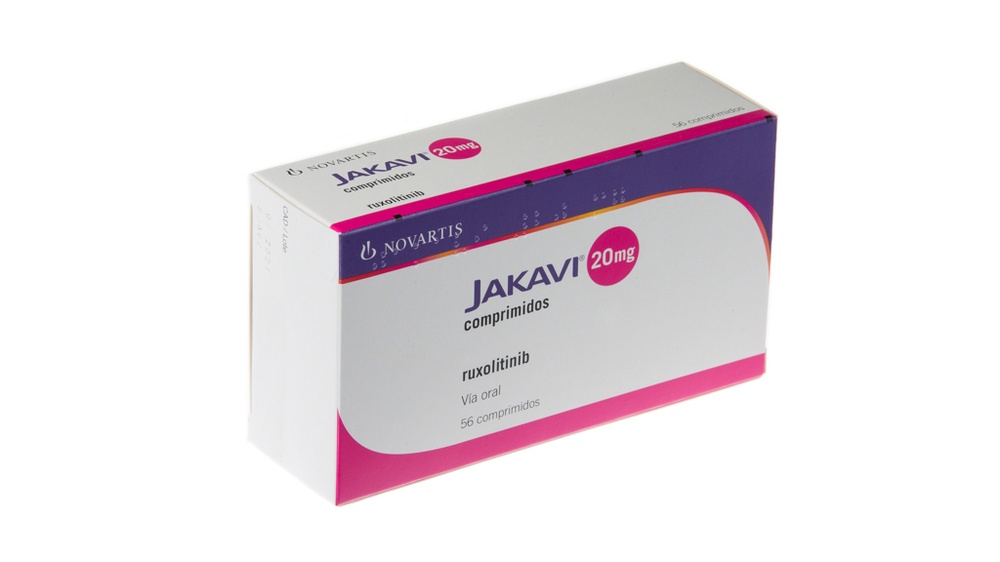
- Dosage formTABLET, 20 mg
- ATC codeL01EJ01
- Active substance
- Prescription requiredYes
- Manufacturer
- CompositionLACTOSA MONOHIDRATO (285,80 mg mg), CARBOXIMETILALMIDON SODICO (19,20 mg mg)
- This information is for reference only and does not constitute medical advice. Always consult a doctor before taking any medication. Oladoctor is not responsible for medical decisions based on this content.
- Alternatives to JAKAVI 20 mg TABLETSDosage form: TABLET, 10 mgActive substance: ruxolitinibManufacturer: Novartis Europharm LimitedPrescription requiredDosage form: TABLET, 15 mgActive substance: ruxolitinibManufacturer: Novartis Europharm LimitedPrescription requiredDosage form: TABLET, 5 mgActive substance: ruxolitinibManufacturer: Novartis Europharm LimitedPrescription required
Get JAKAVI 20 mg TABLETS Prescription Online
Fill in a 2-min form
Tell us your symptoms, history, and what medicine you're requesting.
Pick a doctor or let us assign
Choose a specialist or we'll match you with the next available doctor.
Doctor reviews your case
Usually within 30 minutes. They may ask follow-up questions via chat.
Collect from any pharmacy
Electronic prescription sent to your email — valid across Spain.
Frequently Asked Questions
JAKAVI 20 mg TABLETS requires a prescription in Spain. You can check with a doctor online whether this medicine may be appropriate for your situation.
The active ingredient in JAKAVI 20 mg TABLETS is ruxolitinib. This information helps identify medicines with the same composition but different brand names.
JAKAVI 20 mg TABLETS is manufactured by Novartis Europharm Limited. Pharmacy brands and packaging may differ depending on the distributor.
Doctors such as Family doctors, Psychiatrists, Dermatologists, Cardiologists, Endocrinologists, Gastroenterologists, Pulmonologists, Nephrologists, Rheumatologists, Hematologists, Infectious disease physicians, Allergists, Geriatricians, Paediatricians, Oncologists may assess whether JAKAVI 20 mg TABLETS is appropriate, depending on your situation and local regulations. You can book an online consultation to discuss your symptoms and possible next steps.
Spain has a well-developed healthcare infrastructure across major cities such as Madrid, Barcelona, Valencia, and Seville. Pharmacies are widely available and operate under strict regulations, ensuring access to prescribed medications.
You can buy JAKAVI 20 mg TABLETS in Madrid, Barcelona, Seville, or Valencia at any local pharmacy with a valid prescription.
To obtain a prescription, you can use Oladoctor:
Other medicines with the same active substance (ruxolitinib) include JAKAVI 10 mg TABLETS, JAKAVI 15 mg TABLETS, JAKAVI 5 mg TABLETS. These may have different brand names or formulations but contain the same therapeutic ingredient. Always consult a doctor before switching or starting a new medicine.
