



INACID 25 mg Hard Capsules

Prescription review online
A doctor will review your case and decide whether a prescription is medically appropriate.

Talk to a doctor about this medicine
Discuss your symptoms and possible next steps in a quick online consultation.



How to use INACID 25 mg HARD CAPSULES
Contents of the leaflet
- Introduction
- What is Inacid and what is it used for
- What you need to know before you start taking Inacid
- How to take Inacid
- Possible side effects
- Storing Inacid
- Packaging Contents and Additional Information
Introduction
Package Leaflet: Information for the Patient
Inacid 25 mg Hard Capsules
Indomethacin
Read all of this leaflet carefully before you start taking this medicine because it contains important information for you.
- Keep this leaflet, you may need to read it again. If you have any further questions, ask your doctor or pharmacist.
- This medicine has been prescribed for you only. Do not pass it on to others. It may harm them, even if their signs of illness are the same as yours.
- If you get any side effects, talk to your doctor or pharmacist. This includes any possible side effects not listed in this leaflet. See section 4.
Contents of the pack
- What is Inacid and what is it used for
- What you need to know before you take Inacid
- How to take Inacid
- Possible side effects
- Storing Inacid
- Contents of the pack and other information
1. What is Inacid and what is it used for
Inacid contains indomethacin as the active substance, which belongs to a class of medicines called non-steroidal anti-inflammatory and anti-rheumatic medicines.
Inacid is indicated for symptomatic treatment in patients suffering from:
- Rheumatoid arthritis, ankylosing spondylitis (inflammation that affects the joints of the spine) and osteoarthritis.
- Acute attack of gout.
- Acute musculoskeletal processes.
- Post-traumatic inflammation, pain, and swelling situations.

Not sure if this medicine is right for you?
Discuss your symptoms and treatment with a doctor online.
2. What you need to know before you start taking Inacid
Do not take Inacid:
- if you are allergic to indomethacin or any of the other ingredients of this medicine (listed in section 6),
- if acetylsalicylic acid or other non-steroidal anti-inflammatory medicines (NSAIDs) have caused you asthma, rhinitis, urticaria, or other allergic reactions,
- if you have a history of gastrointestinal bleeding or perforation related to previous treatments with NSAIDs,
- if you have active or recurrent peptic ulcer/gastrointestinal bleeding,
- if you have severe heart disease,
- if you are in the third trimester of pregnancy or if you are breastfeeding your child,
- if you are undergoing treatment for perioperative pain in the case of coronary artery bypass grafting (CABG), surgery to treat a blocked heart artery,
- if you are under 14 years old.
Warnings and precautions
Consult your doctor or pharmacist before starting to take this medicine.
You should avoid taking Inacid with other NSAIDs, including other anti-inflammatory medicines such as selective cyclo-oxygenase-2 (COX-2) inhibitors.
Tell your doctor if you suffer or have suffered from any of the following conditions:
- Gastrointestinal bleeding, ulcers, or perforations in the stomach or intestine.
- Hypertension, heart problems, or if you have had a stroke.
- Severe skin disorders.
- Any severe liver disease or abnormal liver tests.
- Renal failure.
- Bleeding or other blood coagulation problems.
- Psychiatric disorders, epilepsy, or Parkinson's disease.
- Infections.
- Blood disorders, such as a decrease in white blood cells, red blood cells, or platelets.
- Allergy to lactose or any other component of Inacid 25 mg capsules.
Tell your doctor
- If you are taking medicines that alter blood coagulation, such as corticosteroids, oral anticoagulants, or antiplatelet agents of the acetylsalicylic acid type. You should also discuss the use of other medicines that may increase the risk of such bleeding, such as corticosteroids and selective serotonin reuptake inhibitors.
- If you suffer from Crohn's disease or ulcerative colitis, as indomethacin-type medicines can worsen these conditions. If you experience abdominal pain, diarrhea, or vomiting, stop taking Inacid and inform your doctor immediately.
Gastrointestinal risks:
The most frequent adverse effects that occur with medicines like Inacid are gastrointestinal: peptic ulcers, gastrointestinal bleeding, perforations (in some cases fatal), especially in elderly people. Less frequently, gastritis has been observed. These can occur at any time during treatment with or without prior warning.
The risk of gastrointestinal bleeding is higher when high doses are used, if you have a history of peptic ulcers, or if you are elderly. In these cases, your doctor will consider the possibility of associating a stomach-protecting medicine.
If you experience abdominal pain, vomiting blood, or material that looks like coffee grounds, or black stools, these may be symptoms of gastrointestinal bleeding. Stop taking Inacid and seek medical help immediately.
Cardiovascular risks:
Medicines like Inacid may be associated with a moderate increase in the risk of suffering a heart attack (myocardial infarction) or stroke. This risk is more likely to occur when high doses are used and treatments are prolonged. Your doctor may monitor your blood pressure, as Inacid may cause it to increase.
It is important that you take the lowest dose of Inacid that relieves/controls your symptoms for the minimum necessary time.
If you have heart problems, have had a heart attack, a history of strokes, or think you may be at risk for these conditions (for example, you have high blood pressure, suffer from diabetes, have high cholesterol, or are a smoker), you should discuss this treatment with your doctor.
Risk of severe skin reactions:
Medicines like Inacid may be associated, in very rare cases, with severe skin reactions such as Stevens-Johnson syndrome and toxic epidermal necrolysis.
The highest risk of suffering these reactions is at the beginning of treatment (usually within the first month of treatment). If you experience skin rashes, possibly with blister formation or mucosal ulcers (for example, in the mouth), or other symptoms of an allergic reaction, stop taking Inacid and consult your doctor immediately.
Risk of liver reactions:
Medicines like Inacid may be associated with liver disorders that cause yellowing of the skin and eyes, sometimes with high fever or swelling and sensitivity of the upper abdomen.
Vision:
If you have blurred vision while taking Inacid, stop taking Inacid and inform your doctor.
Other precautions:
Tell your doctor if you have a headache, possibly with dizziness and drowsiness after taking Inacid.
In some cases, Inacid may worsen psychiatric disorders, epilepsy, and Parkinson's disease. Therefore, if you suffer from any of these disorders and notice a worsening, you should discuss this treatment with your doctor.
Like other non-steroidal anti-inflammatory medicines, Inacid may mask the symptoms of an infection.
Your doctor may indicate the need for blood tests during treatment with Inacid to monitor your blood cells, liver function, kidney function, or blood levels of other medicines.
Children and adolescents
Do not administer to children under 14 years old.
Using Inacid with other medicines
Tell your doctor or pharmacist if you are taking or have recently taken or might take any other medicines.
Certain medicines may interact with Inacid. In these cases, it may be necessary to change the dose or interrupt treatment with one of the other medicines.
This is especially important if you are taking:
- Anticoagulants, antiplatelet agents (to prevent blood coagulation).
- Corticosteroids (e.g., cortisone, prednisone) (used to treat various types of inflammation or autoimmune diseases).
- Selective serotonin reuptake inhibitors (to treat depression).
- Acetylsalicylic acid (aspirin) or other NSAIDs, including selective COX-2 inhibitors, and diflunisal (used to treat fever, pain, or inflammation).
- Probenecid (used to treat gout).
- Methotrexate (to treat certain types of cancer, psoriasis, or rheumatic diseases).
- Cyclosporin (used to suppress the immune system).
- Lithium (used to treat a certain type of depression).
- Diuretics, angiotensin II receptor antagonists, angiotensin-converting enzyme (ACE) inhibitors, renin inhibitors (medicines to treat high blood pressure).
- Digoxin (for the treatment of heart conditions).
- Phenylpropanolamine (appetite suppressant).
Pregnancy, breastfeeding, and fertility
If you are pregnant or breastfeeding, think you may be pregnant, or are planning to have a baby, ask your doctor for advice before taking this medicine.
Do not take Inacid if you are in the last 3 months of pregnancy, as it may harm the fetus or cause problems during delivery. It may cause kidney and heart problems in your fetus. It may affect your tendency and that of your baby to bleed and delay or prolong delivery more than expected. You should not take Inacid during the first 6 months of pregnancy unless it is clearly necessary and as indicated by your doctor. If you need treatment during this period or while trying to become pregnant, you will take the minimum dose for the shortest possible time. If you take it for more than a few days from the 20th week of pregnancy, Inacid may cause kidney problems in your fetus, which can cause low levels of amniotic fluid surrounding the baby (oligohydramnios) or narrowing of a blood vessel (ductus arteriosus) in the baby's heart. If you need treatment for more than a few days, your doctor may recommend additional checks.
Because the administration of medicines like Inacid has been associated with a higher risk of congenital anomalies/spontaneous abortions, its administration is not recommended during the first and second trimester of pregnancy, unless it is strictly necessary. In these cases, the dose and duration of treatment will be limited to the minimum possible.
Breastfeeding
Indomethacin is secreted in breast milk, therefore, you should not take this medicine if you are breastfeeding.
Fertility
Inacid may decrease your ability to conceive. Inform your doctor if you are planning to have a baby or if you have any problems becoming pregnant.
Driving and using machines
Inacid may cause drowsiness, dizziness, and blurred vision. In these cases, do not drive or use any tools or machinery that require you to be alert.
Inacid contains lactose
This medicine contains lactose. If you have an intolerance to certain sugars, consult your doctor before taking this medicine.
3. How to take Inacid
Follow exactly the administration instructions of this medicine indicated by your doctor. In case of doubt, consult your doctor or pharmacist again.
Your doctor will indicate the dose you should take and the duration of the treatment. It is important that you use the lowest dose that controls your pain and do not take Inacid for longer than necessary to control the symptoms.
The recommended dose is:
Adults
The usual dose is 50 mg to 200 mg of indomethacin per day, administered in divided doses.
Rheumatoid arthritis, ankylosing spondylitis, and osteoarthritis:25 mg of indomethacin (1 capsule) every 8-12 hours. If necessary, your doctor may gradually increase the dose in increments of 25 mg or 50 mg up to a maximum of 200 mg of indomethacin per day.
Acute attack of gout:50 mg of indomethacin (2 capsules) every 8 hours, up to a maximum of 200 mg per day and until the disappearance of symptoms. It should only be used during the period of acute pain.
Musculoskeletal processes, muscle pain, and inflammation:25 mg of indomethacin (1 capsule) every 6 or 8 hours, until the symptoms disappear (1-2 weeks).
Maximum daily dose
Do not take more than 200 mg of indomethacin per day.
Elderly
Your doctor may prescribe a lower daily dose and reduce the duration of treatment.
Use in children and adolescents
Inacid should not be used in children under 14 years old.
Patients with kidney problems
If you have any kidney disease, consult your doctor before taking this medicine.
Method of administration:
Oral.
The capsules should be swallowed whole with or after a meal, and with sufficient amount of water or other liquid to reduce the risk of stomach upset.
If you take more Inacid than you should
In case of overdose or accidental ingestion, consult your doctor or pharmacist immediately or call the Toxicology Information Service, Phone: 91 562 04 20, indicating the medicine and the amount ingested.
If you forget to take Inacid
Do not take a double dose to make up for the forgotten dose.
If you have any further questions on the use of this medicine, ask your doctor or pharmacist.
If you stop taking Inacid
If you have any doubts about the use of this medicine, ask your doctor or pharmacist.

Started taking the medicine and have questions?
Discuss your symptoms and treatment with a doctor online.
4. Possible side effects
Like all medicines, this medicine can cause side effects, although not everybody gets them.
If you experience any of these side effects, stop taking this medicine and go to your doctor.
- Severe allergic reaction, such as swelling of the face, lips, or throat, wheezing, or difficulty breathing, sudden drop in blood pressure, skin rashes.
- Severe abdominal pain (stomach pain) or other abdominal symptoms.
- Blood in stools.
- Black stools.
- Vomiting blood or dark material that looks like coffee grounds.
- Jaundice (yellowing of the skin and the white part of the eyes).
- Blisters or peeling of the skin.
- Irregular red spots on the skin of the hands and arms.
The following side effects have been reported:
Very common (may affect more than 1 in 10 people).
Headache, dizziness, drowsiness, vertigo.
Common (may affect up to 1 in 10 people).
Depression, fatigue or tiredness, nausea, loss of appetite, vomiting, indigestion, stomach pain, constipation, diarrhea.
Uncommon (may affect up to 1 in 100 people).
Ringing in the ears, hearing disorders, disorders of liver enzyme test results, abdominal pain, bleeding, or perforation of the large intestine, inflammation of the mouth, stomach irritation, flatulence, swelling due to fluid retention, hair loss.
Rare (may affect up to 1 in 1,000 people).
Itching of the skin, urticaria, inflammation of blood vessels, skin rash, sudden difficulty breathing, asthma, fluid in the lungs, psychological disorders, delirium, confusion, anxiety, fainting, drowsiness, tingling or numbness in the limbs, speech problems, insomnia, worsening of epilepsy or Parkinson's disease, involuntary muscle movements, muscle weakness, convulsions, coma, blurred vision, double vision, eye pain, hearing loss, rapid heartbeat, irregular heartbeat, heart failure, chest pain, high blood pressure, low blood pressure, hepatitis, liver disorders, gastrointestinal ulcers in the esophagus, stomach, or small or large intestine, blood in the urine, vaginal bleeding, breast enlargement (also in men), breast tenderness, flushing, sweating, nosebleeds, elevated potassium or glucose levels in the blood, glucose in the urine, high levels of urea in the blood.
Very rare (may affect up to 1 in 10,000 people).
Decrease in white blood cells, deficiency of a type of white blood cells, deficiency of red blood cells, decrease in platelets, bleeding in the skin, coagulation disorders, deposits in the cornea of the eye, retinal changes, abnormal protein levels in the urine, kidney disorders, kidney failure.
Frequency not known (cannot be estimated from the available data).
Pancreatitis.
Reporting of side effects
If you experience any side effects, talk to your doctor or pharmacist, even if it is possible side effects that are not listed in this leaflet. You can also report them directly through the Spanish Pharmacovigilance System for Human Use Medicines: https://www.notificaram.es.
By reporting side effects, you can help provide more information on the safety of this medicine.
5. Storing Inacid
Keep this medicine out of the sight and reach of children.
Do not use this medicine after the expiry date which is stated on the carton after EXP. The expiry date is the last day of the month shown.
Medicines should not be disposed of via wastewater or household waste. Ask your pharmacist how to dispose of medicines no longer required. These measures will help protect the environment.
No special storage conditions are required.
6. Packaging Contents and Additional Information
Composition of Inacid 25 mg
- The active ingredient is indomethacin. Each capsule contains 25 mg of indomethacin.
- The other components (excipients) are: lactose monohydrate, lecithin, magnesium stearate, anhydrous colloidal silica, gelatin, titanium dioxide (E171), and yellow iron oxide (E172).
Appearance of the Product and Packaging Contents
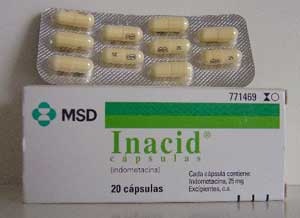
The capsules are hard gelatin capsules of a light ivory color.
Inacid 25 mg capsules are packaged in PVC/aluminum blisters, presented in cardboard boxes containing 20 or 50 hard capsules.
Marketing Authorization Holder and Manufacturer
Marketing Authorization Holder
H.A.C. PHARMA
Péricentre II-
43, Avenue de la Côte de Nacre
14000 CAEN
France
Manufacturer
allphamed Pharbil Arzneimittel GmbH
Hildebrandstrasse 10-12
37081 Göttingen, Germany
You can request more information about this medication by contacting the local representative of the marketing authorization holder:
Euromed Pharma Spain, S.L.C/Eduard Maristany, 430-432
08918 Badalona
Barcelona - Spain
Tel: + 34 932 684 208
Fax: + 34 933 150 469
Date of the last revision of this prospectus:December 2022
Detailed and updated information about this medication is available on the website of the Spanish Agency for Medicines and Health Products (AEMPS) http://www.aemps.gob.es
- Country of registration
- Dosage formCAPSULE, 25 mg
- ATC codeM01AB01
- Average pharmacy price1.55 EUR
- Active substance
- Prescription requiredYes
- Manufacturer
- CompositionLACTOSA (212 mg mg)
- This information is for reference only and does not constitute medical advice. Always consult a doctor before taking any medication. Oladoctor is not responsible for medical decisions based on this content.
- Alternatives to INACID 25 mg HARD CAPSULESDosage form: SUPPOSITORY, 100 mgActive substance: indometacinManufacturer: Especialidades Farmaceuticas Centrum S.A.Prescription requiredDosage form: SUPPOSITORY, 100 mgActive substance: indometacinManufacturer: Laboratorios Llorens S.L.Prescription requiredDosage form: CAPSULE, 25 mgActive substance: indometacinManufacturer: Laboratorios Llorens S.L.Prescription required
Online doctors for INACID 25 mg HARD CAPSULES
Discuss questions about INACID 25 mg HARD CAPSULES, including use, safety considerations and prescription review, subject to medical assessment and local regulations.









Get INACID 25 mg HARD CAPSULES Prescription Online
Fill in a 2-min form
Tell us your symptoms, history, and what medicine you're requesting.
Pick a doctor or let us assign
Choose a specialist or we'll match you with the next available doctor.
Doctor reviews your case
Usually within 30 minutes. They may ask follow-up questions via chat.
Collect from any pharmacy
Electronic prescription sent to your email — valid across Spain.
Frequently Asked Questions
INACID 25 mg HARD CAPSULES requires a prescription in Spain. You can check with a doctor online whether this medicine may be appropriate for your situation.
The active ingredient in INACID 25 mg HARD CAPSULES is indometacin. This information helps identify medicines with the same composition but different brand names.
The average pharmacy price for INACID 25 mg HARD CAPSULES is around 1.55 EUR. Prices may vary depending on the manufacturer and dosage form.
INACID 25 mg HARD CAPSULES is manufactured by H.A.C. Pharma. Pharmacy brands and packaging may differ depending on the distributor.
Doctors such as Family doctors, Psychiatrists, Dermatologists, Cardiologists, Endocrinologists, Gastroenterologists, Pulmonologists, Nephrologists, Rheumatologists, Hematologists, Infectious disease physicians, Allergists, Geriatricians, Paediatricians, Oncologists may assess whether INACID 25 mg HARD CAPSULES is appropriate, depending on your situation and local regulations. You can book an online consultation to discuss your symptoms and possible next steps.
Spain has a well-developed healthcare infrastructure across major cities such as Madrid, Barcelona, Valencia, and Seville. Pharmacies are widely available and operate under strict regulations, ensuring access to prescribed medications.
You can buy INACID 25 mg HARD CAPSULES in Madrid, Barcelona, Seville, or Valencia at any local pharmacy with a valid prescription.
To obtain a prescription, you can use Oladoctor:
Other medicines with the same active substance (indometacin) include ALIVIOSIN 100 mg SUPPOSITORIES, ARTRINOVO 100 mg SUPPOSITORIES, ARTRINOVO 25 mg HARD CAPSULES. These may have different brand names or formulations but contain the same therapeutic ingredient. Always consult a doctor before switching or starting a new medicine.
