



IMLYGIC 1x10⁸ UFP/ml Injectable solution

Prescription review online
A doctor will review your case and decide whether a prescription is medically appropriate.

Talk to a doctor about this medicine
Discuss your symptoms and possible next steps in a quick online consultation.



How to use IMLYGIC 1x10⁸ UFP/ml injectable solution
Contents of the leaflet
- Introduction
- What is Imlygic and what is it used for
- What you need to know before and during treatment with Imlygic
- How Imlygic will be administered
- Possible side effects
- Storage of Imlygic
- Container Contents and Additional Information
Introduction
Package Leaflet: Information for the Patient
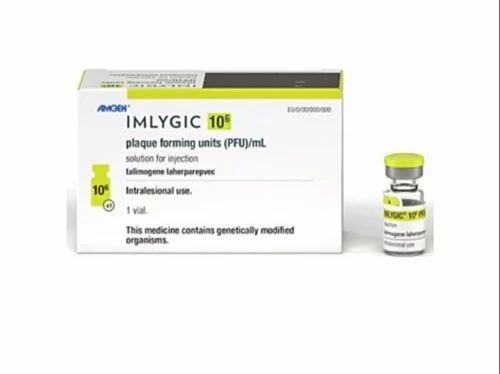
Imlygic 106plaque-forming units (PFU)/ml injectable solution
Imlygic 108plaque-forming units (PFU)/ml injectable solution
Talimogene laherparepvec
Read all of this leaflet carefully before you start using this medicine because it contains important information for you.
Keep this leaflet, you may need to read it again.
- Keep this leaflet, you may need to read it again.
- If you have any further questions, ask your healthcare professional (doctor or nurse).
- If you experience any side effects, talk to your doctor, pharmacist or nurse. This includes any possible side effects not listed in this leaflet. See section 4.
- Your doctor will give you a Patient Alert Card. Read it carefully and follow the instructions on it.
- Always show the Patient Alert Card to the doctor or nurse who is treating you or when you go to hospital.
Contents of the pack
- What is Imlygic and what is it used for
- What you need to know before and during treatment with Imlygic
- How Imlygic will be administered
- Possible side effects
- Storage of Imlygic
- Contents of the pack and other information
1. What is Imlygic and what is it used for
Imlygic is used to treat adults with a type of skin cancer called melanoma that has spread to the skin or to the lymph nodes, when surgery is not an option.
The active substance of Imlygic is talimogene laherparepvec, a weakened form of the herpes simplex virus type 1 (HSV-1), commonly known as the cold sore virus. To obtain Imlygic from HSV-1, the virus has been modified so that it multiplies more effectively in tumor cells than in normal cells. This causes the destruction of infected tumor cells. This medicine also works by helping your immune system to recognize and destroy tumors throughout your body.

Not sure if this medicine is right for you?
Discuss your symptoms and treatment with a doctor online.
2. What you need to know before and during treatment with Imlygic
Imlygic must not be administered to you:
- if you are allergic to talimogene laherparepvec or to any of the other components of this medicine (listed in section 6).
- if your healthcare professional has told you that your immune system is severely weakened.
Warnings and precautions
Talk to your healthcare professional before you are given this medicine.
Potentially life-threatening herpes infection
A potentially life-threatening herpes infection can occur, including spread to any part of the body away from the injection site (disseminated herpetic infection). If you have any new or worsening symptoms, tell your healthcare professional immediately. Tell your healthcare professional if you have or have had a weakened immune system, if you have HIV/AIDS, blood or bone marrow cancer, or if you are taking steroids or other medicines that suppress your immune system, as you may be at higher risk of having a potentially life-threatening herpes infection.
Accidental spread of Imlygic to you or others
Imlygic can spread to other parts of your body or to other people through direct contact with your bodily fluids or injection sites.
You must do the following to avoid spreading Imlygic to other areas of your body or to people close to you (such as household members, caregivers, sexual partner, or anyone you share a bed with):
- Avoid direct contact between your injection sites or bodily fluids (e.g. blood and urine) and people close to you (e.g. use latex condoms when having sex, avoid kissing someone if you or they have an open sore in the mouth) while you are being treated with this medicine and for 30 days after the last dose.
- Avoid touching or scratching the injection sites.
- Keep the injection sites covered with air- and water-resistant dressings at all times. Put the dressings on as your healthcare professional has instructed you. If the dressing comes loose or falls off, replace it immediately with a clean dressing.
- Put all used dressings and cleaning materials in a sealed plastic bag and throw them away with your household waste.
You must tell people close to you to:
- Avoid direct contact with your injection sites and bodily fluids.
- Wear gloves when changing your dressing.
If people close to you accidentally come into contact with Imlygic, they should wash the affected area of the body with soap and water and/or a disinfectant. If they experience signs or symptoms of herpetic infection, they should contact their healthcare professional. In case of suspected herpetic lesions (blisters or ulcers), the Marketing Authorisation Holder provides patients or their close contacts with the option to undergo additional tests to characterise the infection. Ask your healthcare professional.
Pregnant or immunocompromised people and newborns
Make sure that pregnant or immunocompromised people do not touch the injection sites, used dressings or cleaning materials. Keep used dressings and cleaning materials away from newborns.
Herpetic infection
Herpes labialis or other more serious herpetic infection can occur during or after treatment with Imlygic. Signs and symptoms related to treatment with Imlygic may be the same as those of herpetic infections and include, among others, pain, burning or tingling in a blister around the mouth, genitals, fingers or ears, eye pain, sensitivity to light, eye discharge or blurred vision, weakness in the arms or legs, excessive sleepiness (feeling drowsy) and mental confusion. If you notice these signs or any new symptoms, you should follow standard hygiene guidelines to avoid viral transmission to others. In case of suspected herpetic lesions (blisters or ulcers), the Marketing Authorisation Holder provides patients or their close contacts with the option to undergo additional tests to characterise the infection. Ask your healthcare professional.
Infection and slow healing at the injection site
Imlygic can cause infection at the injection site. Signs and symptoms of infection include pain, redness, warmth, swelling, discharge or an open sore (ulcer), fever and chills. The injection site may take longer than usual to heal. You should tell your healthcare professional if you notice any of these symptoms.
Autoimmune reactions
Imlygic can cause autoimmune reactions (an overactive response of the body's immune system). Some people taking this medicine have developed inflammation of the kidneys (glomerulonephritis), narrowing or blockage of blood vessels (vasculitis), inflammation of the lungs (pneumonitis), worsening of skin scaling (psoriasis), and skin areas without any colour (vitiligo). Tell your healthcare professional if you have a history of autoimmune diseases.
Plasmacytoma
Imlygic can cause the accumulation of cancerous white blood cells in or near the injection site (plasmacytoma). Tell your healthcare professional if you have a history of blood cancer, including multiple myeloma.
Breathing difficulties
If you have a tumour in the neck, your healthcare professional may warn you that you may experience compression of the airways during treatment.
Patients without prior herpetic infection
If you have never had a herpetic infection, you are more likely to experience fever, chills and pseudogripal syndrome in the first 6 treatment periods.
Children and adolescents
The use of Imlygic has been studied in children and young people from 7 to ≤ 21 years with advanced tumours that are not in the central nervous system and are suitable for direct injection. The use of Imlygic has not been studied in children under 7 years.
Using Imlygic with other medicines
Tell your healthcare professional if you are taking, have recently taken or might take any other medicines, including medicines to treat or prevent herpetic infections, such as aciclovir. Aciclovir and other antiviral treatments may reduce the effects of Imlygic.
Pregnancy and breastfeeding
Talk to your healthcare professional if you:
- think you might be pregnant; or
- are planning to become pregnant.
Your healthcare professional will decide if Imlygic is suitable for you.
If you are pregnant or breastfeeding, talk to your healthcare professional before you are given this medicine. Imlygic may harm your baby.
Women of childbearing potential must use effective contraceptive methods to avoid becoming pregnant during treatment with Imlygic. Talk to your healthcare professional about suitable contraceptive methods.
It is not known if Imlygic passes into breast milk. If you are breastfeeding or plan to breastfeed, talk to your healthcare professional. Your healthcare professional will help you decide whether to stop breastfeeding or stop Imlygic treatment, taking into account the benefits of breastfeeding for your baby and the benefits of Imlygic for you.
Driving and using machines
During treatment with Imlygic, you may experience symptoms such as dizziness or confusion. This may affect your ability to drive or use machines. Be careful when driving or using machines until you are sure that this medicine does not affect you negatively.
Imlygic contains sodium and sorbitol
This medicine contains 7.7 mg of sodium (main component of cooking/table salt) in each 1 ml vial. This is equivalent to 0.4% of the maximum recommended daily intake of sodium for an adult.
This medicine contains 20 mg of sorbitol in each 1 ml vial.
3. How Imlygic will be administered
This medicine will be administered in a healthcare setting under the supervision of a healthcare professional. The recommended initial dose is up to 4 ml of Imlygic at a concentration of 10^6 (1 million) PFU/ml. Subsequent doses will be up to 4 ml of Imlygic at a concentration of 10^8 (100 million) PFU/ml.
Your healthcare professional will inject this medicine directly into your tumours with a needle and syringe. You will receive the second injection 3 weeks after the first injection. After that, you will receive injections every 2 weeks while you have tumours.
Your healthcare professional will decide which tumours to inject and may not inject all of them. Your tumours may increase in size and new tumours may appear while you are being treated with Imlygic.
You should expect to be treated with Imlygic for at least 6 months or more.
If you miss a dose of Imlygic
It is important for you to attend all your appointments to receive this medicine. If you have missed an appointment, ask your healthcare professional when to schedule your next dose.

Started taking the medicine and have questions?
Discuss your symptoms and treatment with a doctor online.
4. Possible side effects
Like all medicines, this medicine can cause side effects, although not everybody gets them.
Keeping wounds clean and covered may help prevent bacterial infections (cellulitis) at the injection site.
Cases of pseudogripal syndrome, fever and chills have been observed in patients treated with Imlygic. These symptoms usually disappear within 72 hours after treatment.
The following side effects have been reported in patients treated with Imlygic:
Very common(may affect more than 1 in 10 people):
- Tissue inflammation (peripheral oedema)
- Headache
- Cough
- Vomiting, diarrhoea, constipation, nausea
- Muscle pain (myalgia), joint pain/inflammation (arthritis), limb pain
- Pseudogripal syndrome, fever (pyrexia), chills, fatigue, pain
- Pain, redness, bleeding, swelling, inflammation, discharge, suppuration and warmth at the injection site
Common(may affect up to 1 in 10 people):
- Bacterial infection (cellulitis), cold sore (herpes oral)
- Tumour pain, infected tumour
- Weakness, headache, dizziness and paleness (low red blood cell count: anaemia)
- Immune system-related side effects:
- fever, fatigue, weight loss, muscle and joint pain (narrowing or blockage of blood vessels: vasculitis)
- difficulty breathing, cough, fatigue, loss of appetite, unintended weight loss (inflammation of the lungs: pneumonitis)
- increased skin patches that are dry, red and covered with silvery scales: (worsening of skin scaling: worsening of psoriasis)
- pink or red urine and foamy urine, high blood pressure, fluid retention (inflammation of the kidneys: glomerulonephritis)
- Dehydration
- Confusion, anxiety, depression, dizziness, difficulty sleeping (insomnia)
- Ear, throat, abdominal, groin, back and armpit pain
- Increased heart rate at rest (tachycardia)
- Pain, swelling, warmth and pain on palpation in a leg or arm due to a blood clot in a vein (deep vein thrombosis), high blood pressure (hypertension), flushing of the face (rubefaction)
- Difficulty breathing (dyspnoea), upper respiratory tract infection
- Abdominal discomfort
- Skin areas without any colour (vitiligo), skin rash, inflamed skin (dermatitis)
- General malaise
- Weight loss
- Wound complication, discharge, bruising (contusion), pain after procedure
Uncommon(may affect up to 1 in 100 people):
- Infection at the injection site
- Cancerous white blood cell tumour growing in or near the injection site (plasmacytoma)
- Herpetic eye infection (herpetic keratitis)
- Compression of airways (obstructive airway disorder)
- Allergic reaction (hypersensitivity)
Reporting of side effects
If you experience any side effects, talk to your doctor, pharmacist or nurse. This includes any possible side effects not listed in this leaflet. You can also report side effects directly via the national reporting system listed in Appendix V. By reporting side effects, you can help provide more information on the safety of this medicine.
5. Storage of Imlygic
Imlygic will be stored by healthcare professionals in their healthcare setting.
Do not use this medicine after the expiry date which is stated on the label and carton after EXP. The expiry date is the last day of the month shown.
Store and transport frozen between -90 °C and -70 °C.
Keep in the original packaging to protect from light.
This medicine contains genetically modified cells. Local guidelines should be followed.
6. Container Contents and Additional Information
Imlygic Composition
- The active ingredient is talimogene laherparepvec.
Each vial contains 1 ml of extractable solution at a nominal concentration of 1 x 10^6 (1 million) plaque-forming units (PFU)/ml or 1 x 10^8 (100 million) PFU/ml.
- The other components are sodium dihydrogen phosphate dihydrate, disodium phosphate dihydrate, sodium chloride, myo-inositol, sorbitol (E420), and water for injectable preparations (see section 2).
Appearance of Imlygic and Container Contents
Imlygic is a clear to semi-transparent liquid (10^6 PFU/ml) or semi-transparent to opaque (10^8 PFU/ml). It is supplied as 1 ml of preservative-free solution in a single-use vial (cyclic olefin polymer plastic) with a stopper (chlorobutyl rubber) and seal (aluminum) with a flip-off cap (polypropylene).
The vial cap has a color code: light green for the 10^6 PFU/ml vial and royal blue for the 10^8 PFU/ml vial.
Marketing Authorization Holder and Manufacturer
Amgen Europe B.V.
Minervum 7061
4817 ZK Breda
Netherlands
Marketing Authorization Holder
Amgen Europe B.V.
Minervum 7061
4817 ZK Breda
Netherlands
Manufacturer
Amgen NV
Telecomlaan 5-7
1831 Diegem
Belgium
You can request more information about this medicinal product by contacting the local representative of the marketing authorization holder:
|
Date of Last Revision of this Prospectus:
Other Sources of Information
Detailed information on this medicinal product is available on the European Medicines Agency website: http://www.ema.europa.eu.
This information is intended only for healthcare professionals:
This medicinal product contains genetically modified organisms. Personal protective equipment (e.g., protective coat or laboratory coat, safety glasses or face shield, and gloves) should be used during preparation or administration of talimogene laherparepvec.
After administration, change gloves before applying occlusive dressings to the injected lesions. Clean the outside of the occlusive dressing with an alcohol swab. It is recommended to keep the injection sites covered with an airtight and watertight dressing at all times, if possible.
Thawing of Imlygic Vials
- Prior to use, thaw frozen Imlygic vials at room temperature (between 20°C and 25°C) until Imlygic is liquid. The time to complete thawing of the vial is expected to be between 30 and 70 minutes, depending on the room temperature. Gently swirl. DO NOT shake.
- The vials should be thawed and stored in their original packaging until administration to protect them from light.
After Thawing
- After thawing, administer Imlygic as soon as possible.
- Once thawed, Imlygic is stable when stored at temperatures between 2°C and 25°C, protected from light, in the original vial, in a syringe, or in the vial followed by a storage time in a syringe. Do not exceed the storage times specified in Table 1 and Table 2.
- If thawed Imlygic is stored in the original vial followed by a storage time in a syringe:
- the same temperature range should be maintained throughout the storage period until administration.
- the storage time in the syringe at room temperature up to 25°C should not exceed 2 hours for the 10^6 (1 million) PFU/ml dose and 4 hours for the 10^8 (100 million) PFU/ml dose (see Table 1).
- the maximum cumulative storage time (storage time in vial plus storage time in syringe) should not exceed the durations specified in Table 2.
- Once thawed, Imlygic should not be re-frozen. Discard any thawed Imlygic vial or syringe stored for longer than specified below.
Table 1. Maximum Storage Time in Syringe of Thawed Imlygic
10^6 (1 million) PFU/ml | 10^8 (100 million) PFU/ml | |
between 2°C and 8°C | 8 hours | 8 hours |
up to 25°C | 2 hours | 4 hours |
Table 2. Maximum Cumulative Storage Time (Storage Time in Vial plus Storage Time in Syringe) of Thawed Imlygic
10^6 (1 million) PFU/ml | 10^8 (100 million) PFU/ml | |
between 2°C and 8°C | 24 hours | 1 week (7 days) |
up to 25°C | 12 hours | 24 hours |
Disposal of unused medicinal product and all materials that have come into contact with it should be done in accordance with local regulations.
- Country of registration
- Dosage formINJECTABLE, 1x10e8 UFP/ML
- ATC codeL01XL02
- Active substance
- Prescription requiredYes
- Manufacturer
- CompositionHIDROGENOFOSFATO DE SODIO DIHIDRATO (15,36 mg mg), DIHIDROGENOFOSFATO DE SODIO DIHIDRATO (2,44 mg mg), CLORURO DE SODIO (8,50 mg mg), SORBITOL (20,00 mg mg)
- This information is for reference only and does not constitute medical advice. Always consult a doctor before taking any medication. Oladoctor is not responsible for medical decisions based on this content.
- Alternatives to IMLYGIC 1x10⁸ UFP/ml injectable solutionDosage form: INJECTABLE, 1x10^6 UFP/MLActive substance: talimogene laherparepvecManufacturer: Amgen Europe B.V.Prescription requiredDosage form: INJECTABLE PERFUSION, 260 - 500 × 10^6 cellsActive substance: idecabtagene vicleucelManufacturer: Bristol-Myers Squibb Pharma EeigPrescription requiredDosage form: INJECTABLE PERFUSION, 1.1-70x10^6/1.1-70x10^6 cells/mlActive substance: lisocabtagene maraleucelManufacturer: Bristol-Myers Squibb Pharma EeigPrescription required
Online doctors for IMLYGIC 1x10⁸ UFP/ml injectable solution
Discuss questions about IMLYGIC 1x10⁸ UFP/ml injectable solution, including use, safety considerations and prescription review, subject to medical assessment and local regulations.
Get IMLYGIC 1x10⁸ UFP/ml injectable solution Prescription Online
Fill in a 2-min form
Tell us your symptoms, history, and what medicine you're requesting.
Pick a doctor or let us assign
Choose a specialist or we'll match you with the next available doctor.
Doctor reviews your case
Usually within 30 minutes. They may ask follow-up questions via chat.
Collect from any pharmacy
Electronic prescription sent to your email — valid across Spain.
Frequently Asked Questions
IMLYGIC 1x10⁸ UFP/ml injectable solution requires a prescription in Spain. You can check with a doctor online whether this medicine may be appropriate for your situation.
The active ingredient in IMLYGIC 1x10⁸ UFP/ml injectable solution is talimogene laherparepvec. This information helps identify medicines with the same composition but different brand names.
IMLYGIC 1x10⁸ UFP/ml injectable solution is manufactured by Amgen Europe B.V.. Pharmacy brands and packaging may differ depending on the distributor.
Doctors such as Family doctors, Psychiatrists, Dermatologists, Cardiologists, Endocrinologists, Gastroenterologists, Pulmonologists, Nephrologists, Rheumatologists, Hematologists, Infectious disease physicians, Allergists, Geriatricians, Paediatricians, Oncologists may assess whether IMLYGIC 1x10⁸ UFP/ml injectable solution is appropriate, depending on your situation and local regulations. You can book an online consultation to discuss your symptoms and possible next steps.
Spain has a well-developed healthcare infrastructure across major cities such as Madrid, Barcelona, Valencia, and Seville. Pharmacies are widely available and operate under strict regulations, ensuring access to prescribed medications.
You can buy IMLYGIC 1x10⁸ UFP/ml injectable solution in Madrid, Barcelona, Seville, or Valencia at any local pharmacy with a valid prescription.
To obtain a prescription, you can use Oladoctor:
Other medicines with the same active substance (talimogene laherparepvec) include IMLYGIC 1x10⁶ UFP/ml injectable solution, ABECMA 260-500 x 10e6 cells for infusion, BREYANZI 1.1-70 × 10⁶ cells/mL / 1.1-70 × 10⁶ cells/mL Dispersion for Infusion. These may have different brand names or formulations but contain the same therapeutic ingredient. Always consult a doctor before switching or starting a new medicine.
